The Legislative Yuan
Press Release
March 16, 2023
You Si-kun: Seeking solid Taiwan-US relations and a joint defense of the universal values of peace and democracy.
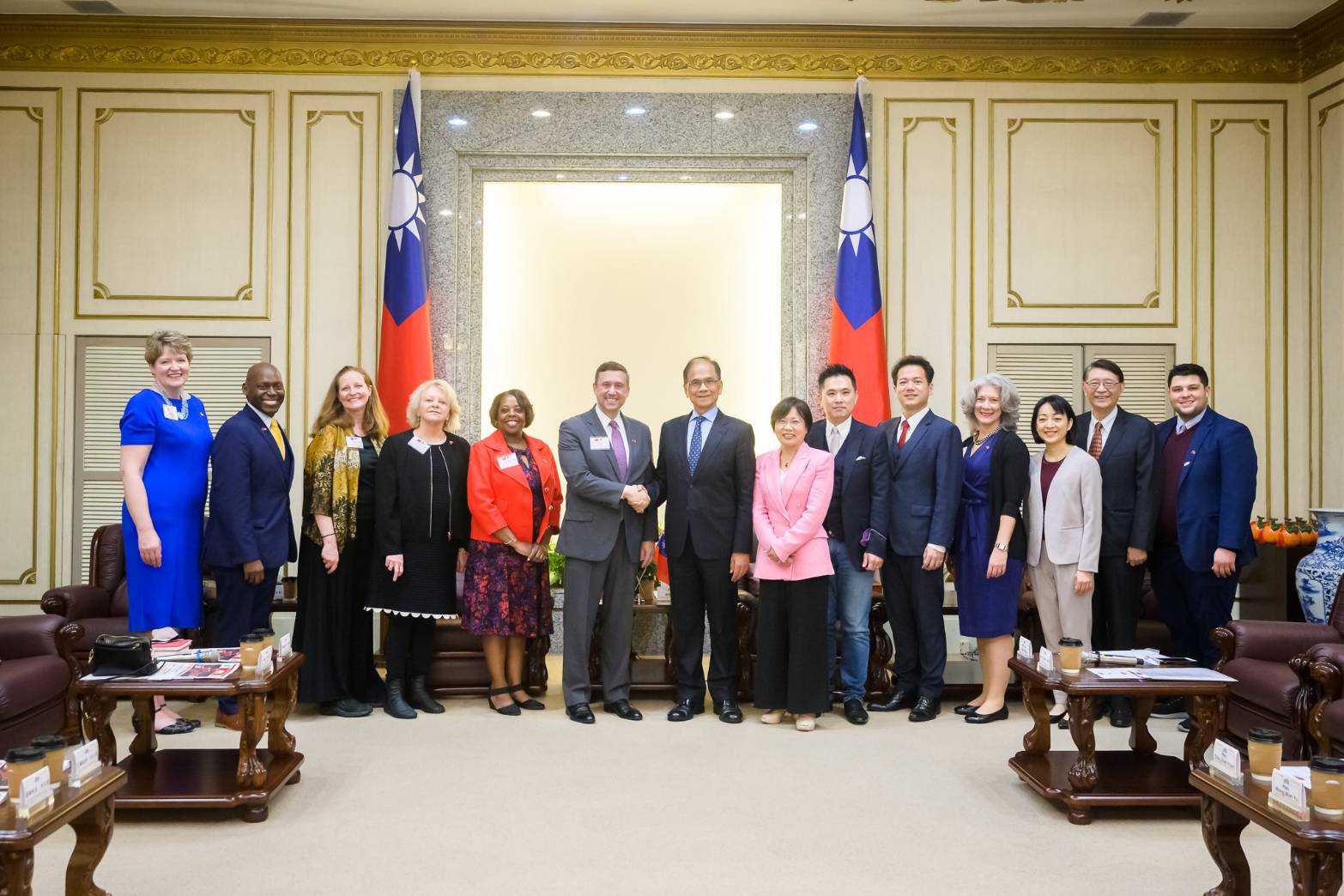
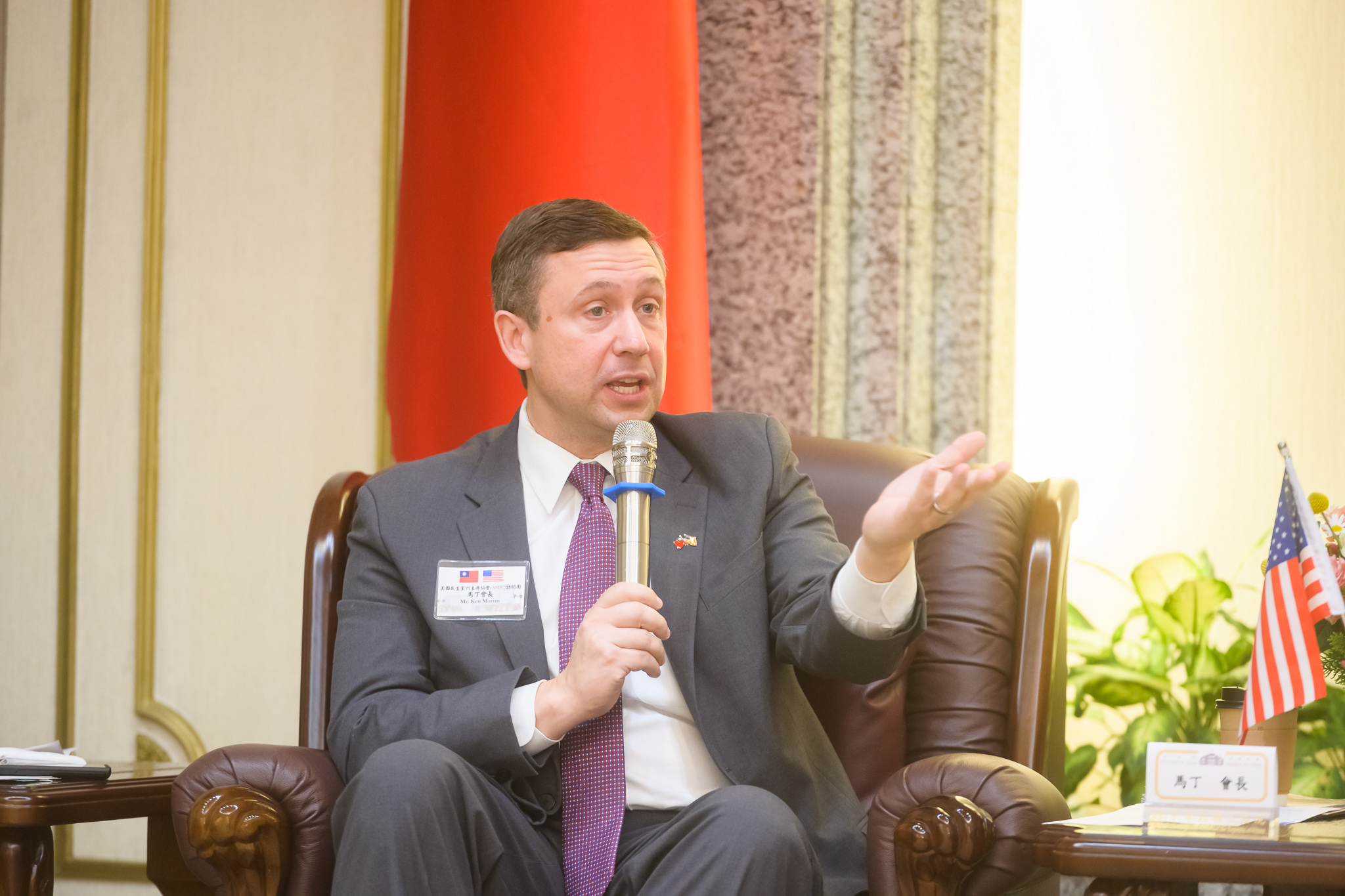
Accompanied by Legislators Liu Shyh-fang, Chen I-hsin, Chiu Chen-yuan, and Wang Wan-yu; Legislative Yuan Secretary General Lin Jih-jia, Consultant Chou Ya-shu, and Secretariat Director Kung Ping-chieh, Legislative Yuan President You Si-kun welcomed an Association of State Democratic Committees (ASDC) delegation led by President Ken Martin.
In his remarks, President You welcomed the delegation on behalf of Taiwan’s legislature. He said that the ASDC had passed resolutions supporting Taiwan’s participation in the International Civil Aviation Association and the World Health Organization and in support of the Taiwan Relations Act and the Six Assurances in 2013, 2017, and 2019. Last March, thanks to the efforts of President Martin, the ASDC passed a fourth round of resolutions promoting support for Taiwan based on the Taiwan Relations Act and the Six Assurances. President You pointed out that, prior to the pandemic, the ASDC had regularly sent a delegation to Taiwan annually; he particularly mentioned the years 2017 to 2019. On behalf of Taiwan’s Legislative Yuan, he expressed his sincere appreciation to the organization.
President You shared his position that China is an authoritarian regime. Since China’s economic rise, the Chinese Communist Party has adopted repression at home and aggression abroad. Its traditional political stance can be summarized as “there cannot be two suns in the sky nor two emperors on the Earth” and “all lands under heaven belong to the emperor; the people of those lands are subject to the emperor.” And it maintains a vengeful attitude of “even though a thousand miles away, those who affront China must pay.” After Xi Jinping took office, he renounced Deng Xiaoping’s strategy of biding time and hiding capabilities and Hu Jintao’s strategy of a peaceful rise. Xi’s so-called Chinese dream is overcast by the hope that the vast Pacific Ocean can accommodate the two major powers and involves wolf-warrior diplomacy. The Belt and Road Initiative has turned many countries into colonies. China has militarized the South China Sea, broken its pledge to maintain Hong Kong’s “one country, two systems,” and indirectly provided assistance to Russia in that nation’s aggression against Ukraine. Such actions have raised tensions across the Indo-Pacific region and threatened global peace.
President You continued by sharing that Taiwan’s democracy is the result of hard work over a century. Taiwan’s free and democratic nature are recognized by the international community. Credit for this goes to the persistence and fighting spirit of the Taiwanese people for generations. He said he thanked the US for its support at crucial moments, one of which was September 28, 1986, the date on which the Democratic Progressive Party (DPP) was founded at the Grand Hotel in Taipei. Because the US paid close attention to these developments, President Chiang Ching-kuo announced on October 7 that martial law would end and the ban on political parties would be lifted in 1987. Thus, the DPP was successfully founded.
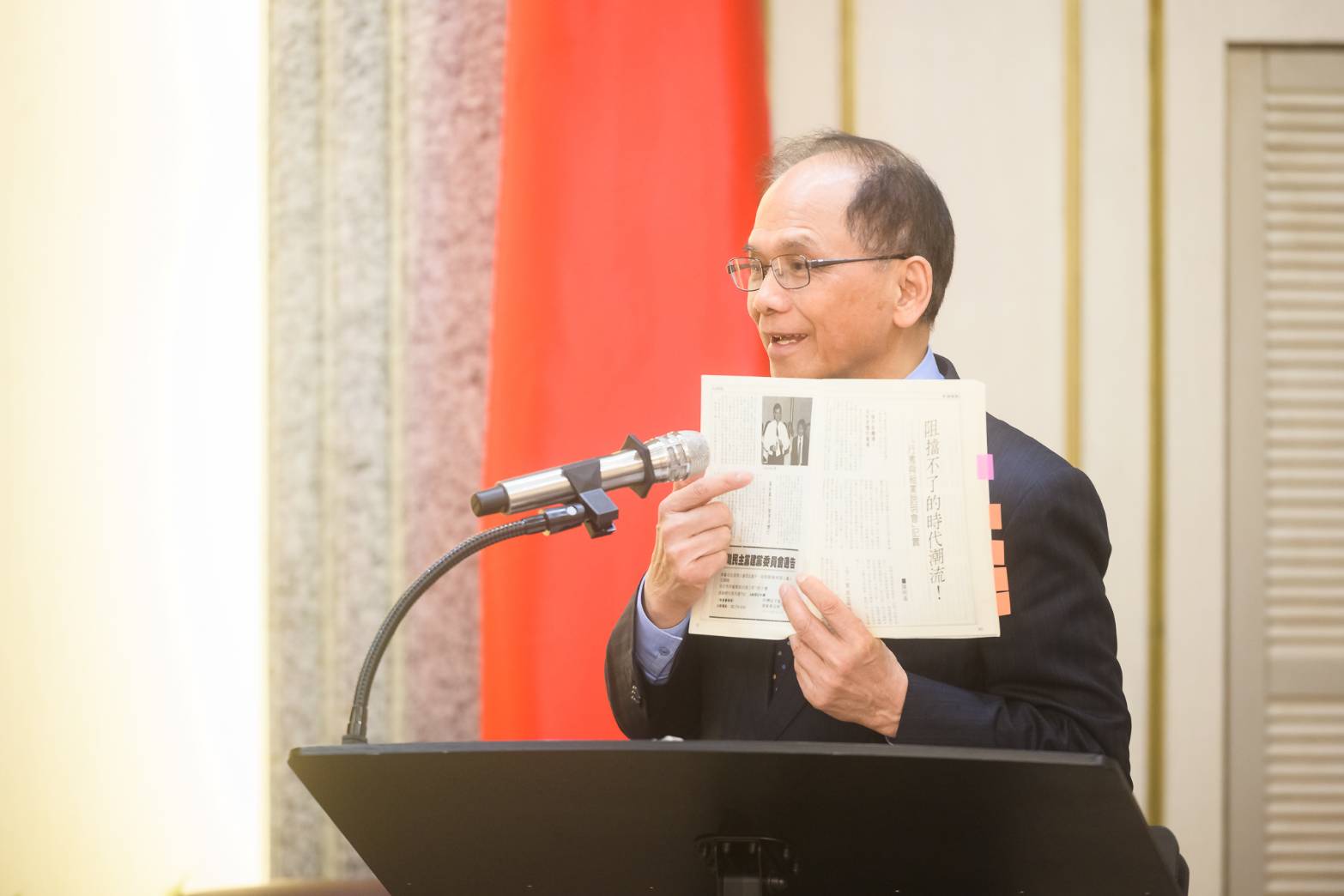
President You continue by sharing that when the DPP was founded 36 years ago, there was a very important American friend of Taiwan’s. This was National Democratic Institute President J. Brian Atwood. He shared that, 40 days before the founding of the DPP, from August 12 to 14, 1986, when the Chiang administration launched three large-scale, anti-riot joint exercises involving military, intelligence, military police, and police in Taipei, Mr. Atwood had shown himself bold in attending a meeting on forming an opposition party held by Tangwai members at Taipei Municipal Chun Shan Elementary School on August 15. President You recalled sharing the stage with him as well as Mr. Atwood’s remarks to a 10,000-strong audience. He, Atwood, proclaimed, “During my visit to Taiwan, I find many people have been arrested because they have been fighting for basic human rights such as assembly, speech, and criticizing the government. In the United States, these are the basic rights of free speech anywhere. This is the essence of democracy.” He added: “If Taiwan wants to have successful democratic politics, the key is how to pursue this and how to fight for it.” His statement greatly boosted morale. President You said he believes that Atwood’s appearance is the reason that Chiang Ching-kuo did not round up those involved in forming the DPP and was therefore key to the party’s successful founding.
President You then underscored that democracy is about rule of law and abiding by the law. Considering Taiwan-US relations, the US’s Taiwan policy has centered on the Taiwan Relations Act since 1979. After the adoption of the Taiwan Travel Act and the Asia Reassurance Initiative Act by the US Congress in 2018, the TAIPEI Act and Taiwan Assurance Act were also passed. US Taiwan policy has now evolved from being composed of one act and three communiqués to five acts, six assurances, and three communiqués. You said that he hopes Taiwan-US relations will be further enhanced through closer cooperation on defending the universal values of peace, democracy, and freedom.
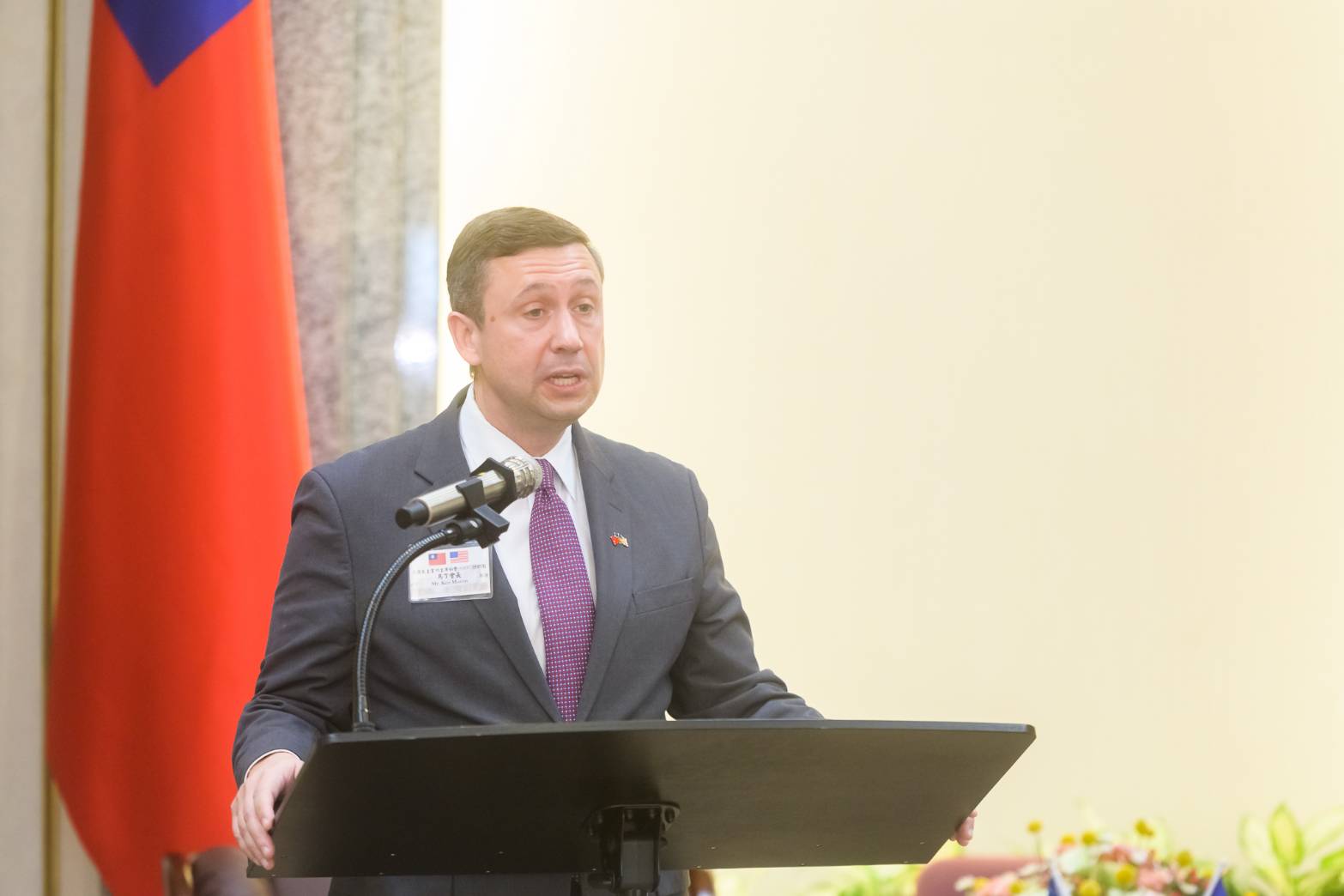
President Martin then spoke, thanking President You, the legislators present, and the Legislative Yuan for the warm welcome. He said he had been impressed by Taiwan’s hospitality during his stay. The US is a staunched supporter of Taiwan’s democracy. The Taiwan Relations Act demonstrates the US’s strong commitment to Taiwan, while Taiwan’s democracy demonstrates its resilience. The US is committed to promoting fairness, democracy, and freedom. He then lamented the erosion of the democratic landscape in recent years, but praised Taiwan as a democratic role model in the Asia-Pacific region. The US shares values with Taiwan and cooperates closely with it and will firmly support democracy and freedom in the face of authoritarian regimes.
Martin also mentioned the Ministry of Foreign Affairs banquet the previous evening, attended by representatives of many nongovernmental organizations promoting gender equality. This was, he said, a sharp contrast to China and Russia, where the value of diversity is being destroyed. He was touched to see Taiwan have different voices engage in peaceful dialogue. No democratic country, he said, is perfect. The US continues to improve and hopes to be an inspiration for other democracies. He was impressed that Taiwan continues to consolidate its democracy and thrive in spite of threats from its neighbor. He wanted to express his support to the people of Taiwan. The US will continue to abide by its commitments under the Taiwan Relations Act and make joint efforts with Taiwan.
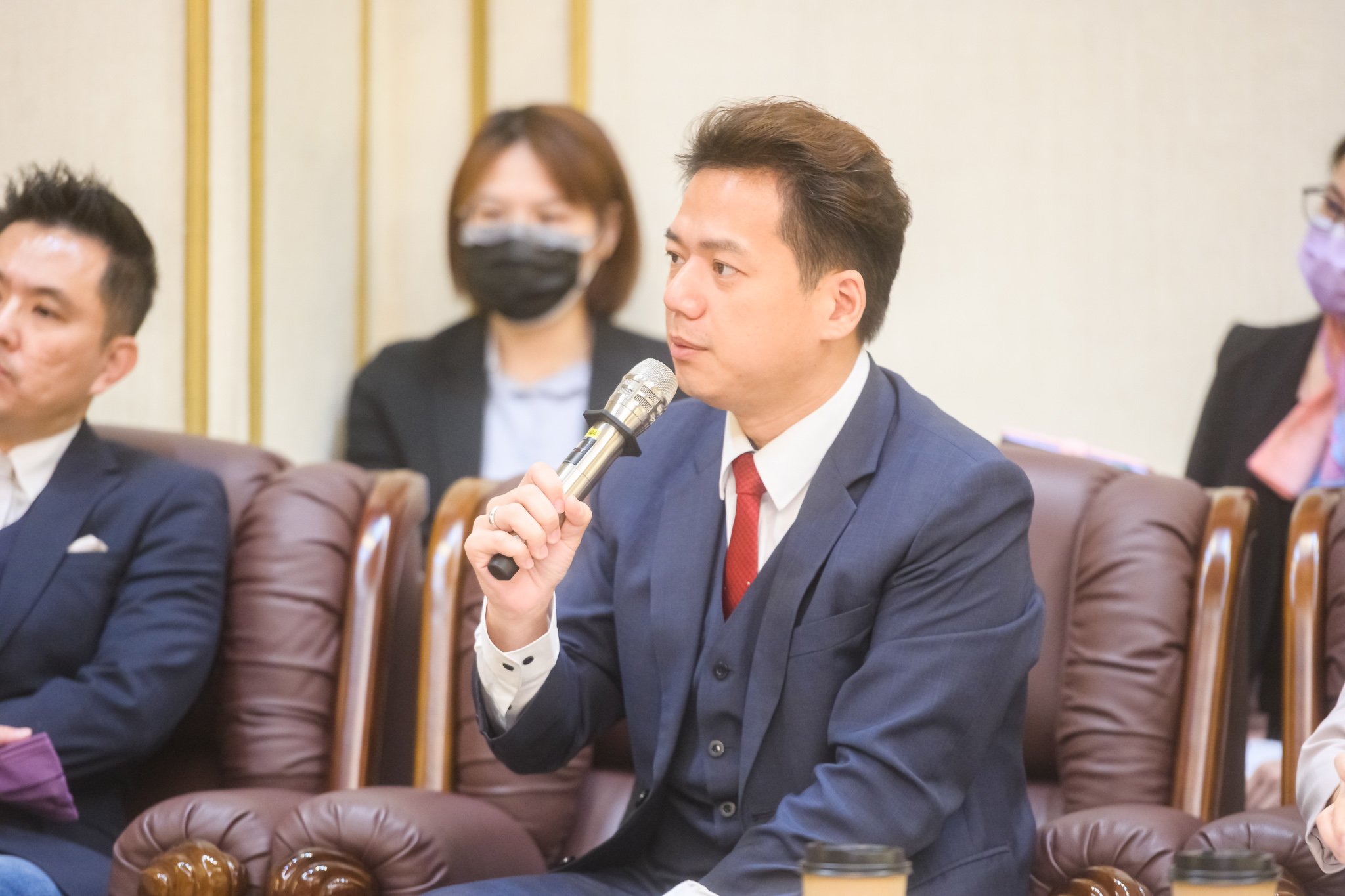
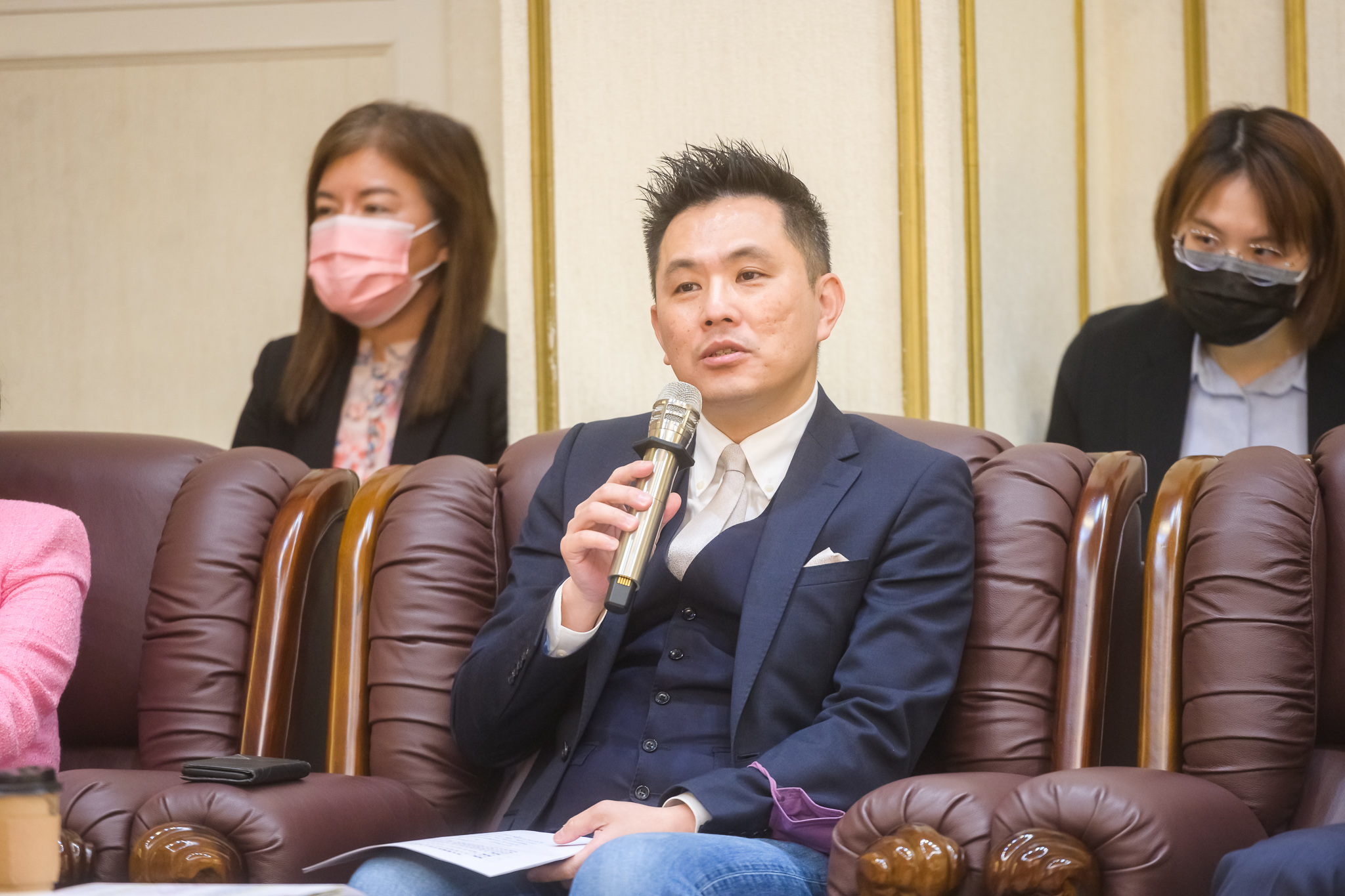
Legislator Wang Wan-yu stated that the New Power Party is a young political party that hopes to promote Taiwan’s normalization and defend the universal values of democracy and freedom. As a center-left party, the New Power Party supports gender equality, fairness, and justice. She said she attaches great importance to parliamentary exchanges and hopes to have more such exchanges that help the world better understand Taiwan. She said that she had earned her master’s degree in the US and worked in the high-tech industry for 10 years. Now as Taiwan faces the CCP’s autocratic expansionism, she said she believes the US is one of Taiwan’s most important friends and hopes for more opportunities to work together and defend democracy.
Legislator Chiu Chen-yuan followed by saying that the Taiwan People’s Party (TPP) is a party based on science and defending Taiwan’s sovereignty. He said he believes there are three main points for promoting Taiwan-US relations: defending democracy and freedom, maintaining regional peace, and deepening cooperation in various fields. He also mentioned that the major difference between Taiwan and the CCP is Taiwan’s inclusiveness and commitment to diversity. He said he hoped that the US would convey Taiwan’s stance internationally, mentioning that TPP Chairman Ko Wen-je would visit the US in April. He closed by expressing hope for more Taiwan-US exchanges and cooperation.
Legislator Chen I-hsin stated that President You’s remarks had been a lesson in Taiwanese history. He added that the KMT of today is different to days gone by, as it has made a great effort to become a democratic political party. Although it is not the ruling party, it supports democracy and freedom, which are among Taiwan’s collective values. The KMT hopes for dialogue with the Beijing government and to continue to promote communication through diplomatic channels to reduce tension. He mentioned that the KMT lost power in the previous two elections but still fights for democracy. He closed by again welcoming the members of delegation to visit Taiwan more often and to seek more opportunities for exchanges.
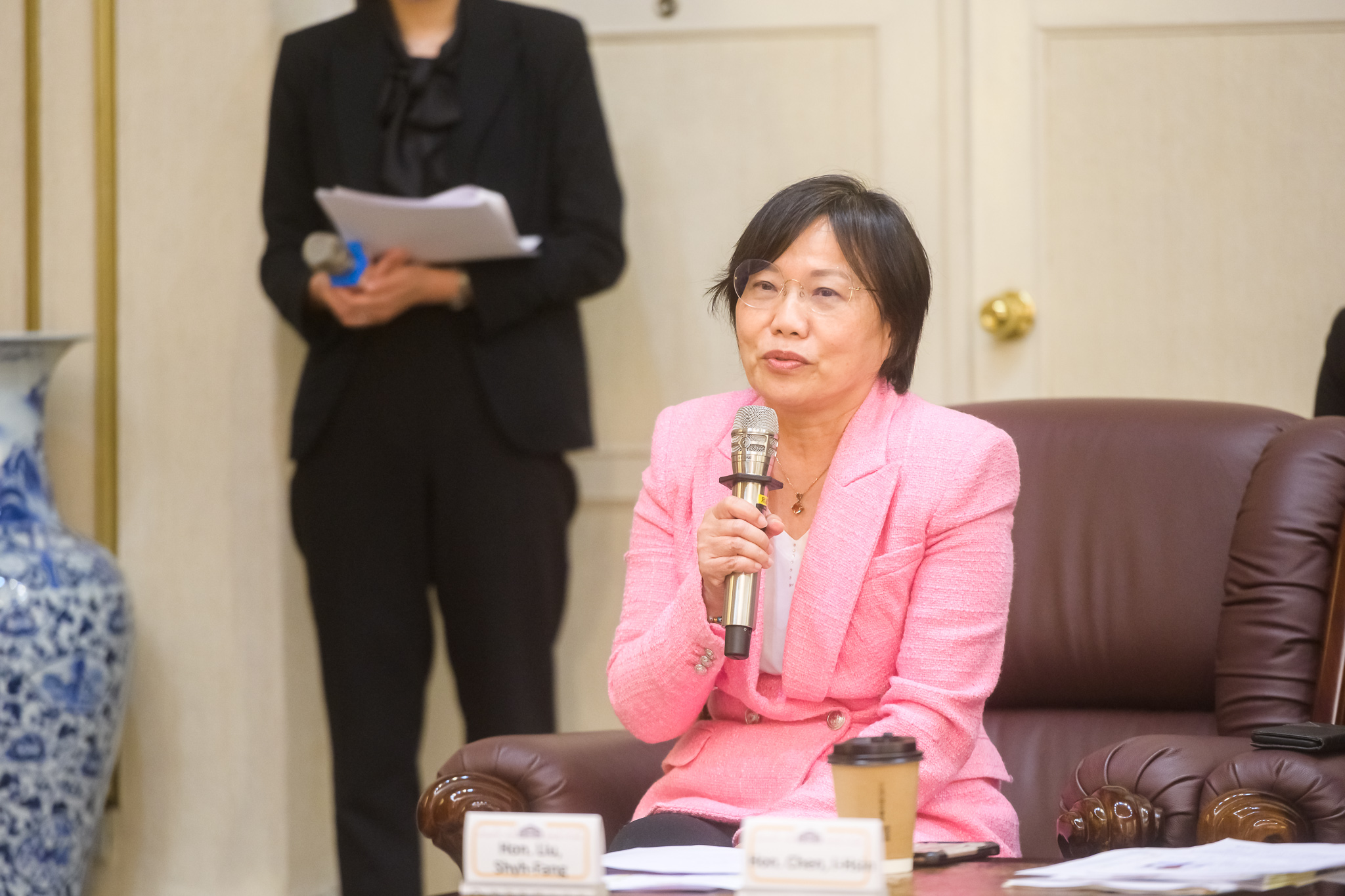
Legislator Liu Shyh-fang said that President You is a founder of the DPP as well as a senior party member. She expressed her respect for President You. She had visited the Democratic National Committee twice and understood US democratic politics. She studied in Oklahoma, and therefore feels a connection to Chairperson Andrews. She believed that Taiwan not only faces a serious military threat from the CCP but also the problem of misinformation and cognitive warfare. Yet Taiwan adheres to a democratic and free system based on inclusiveness and openness and takes every chance to engage the world while standing with democracies everywhere.
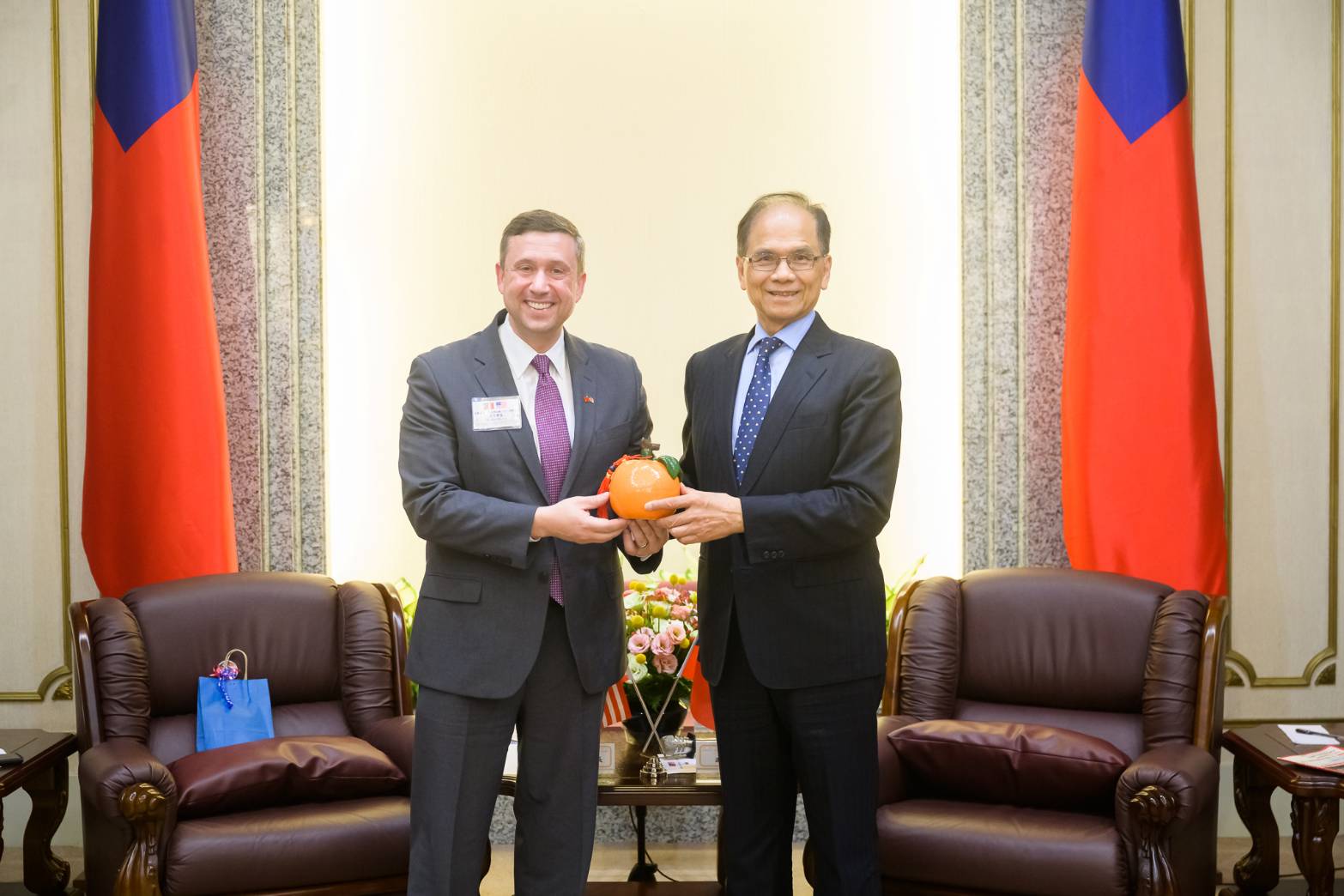
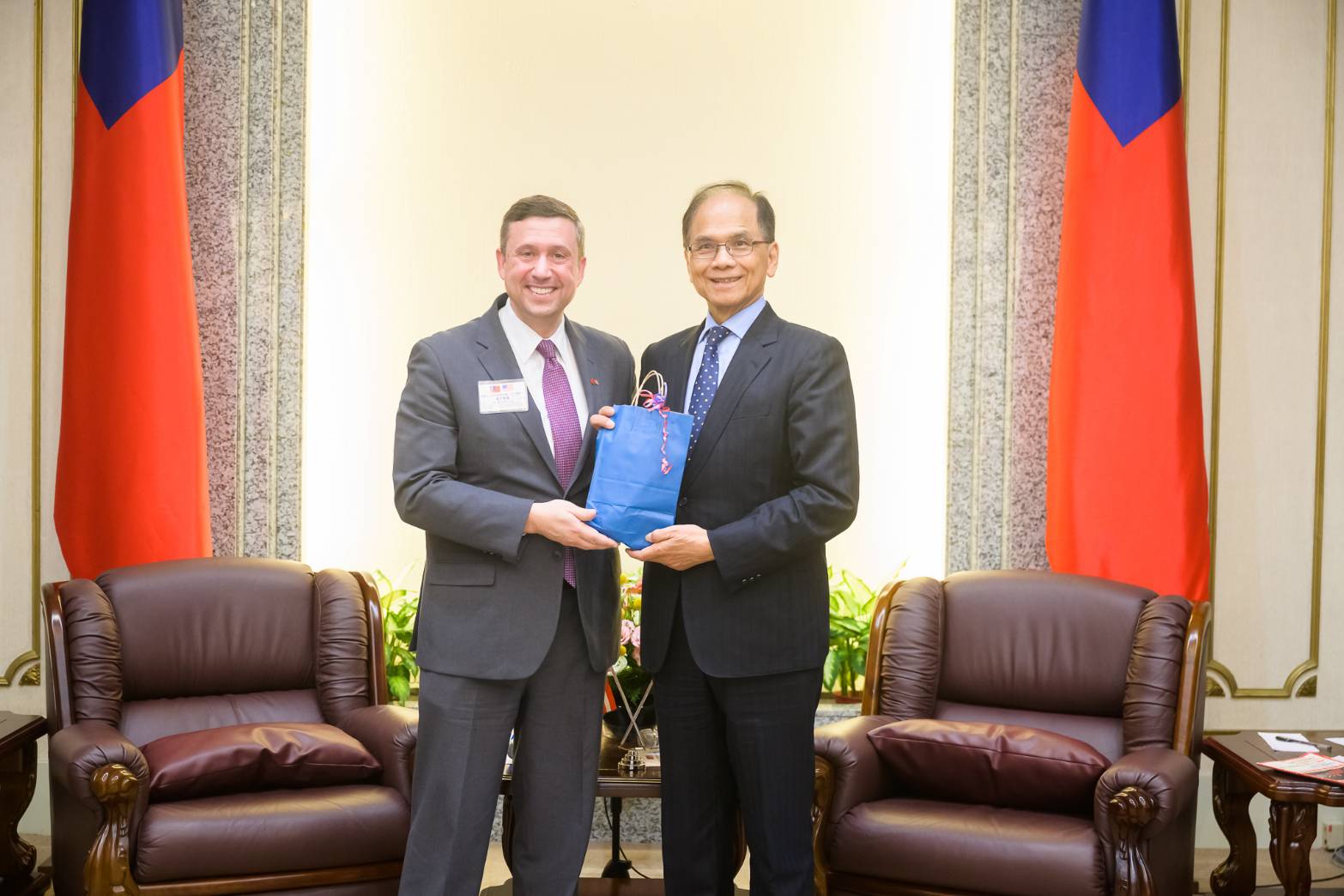
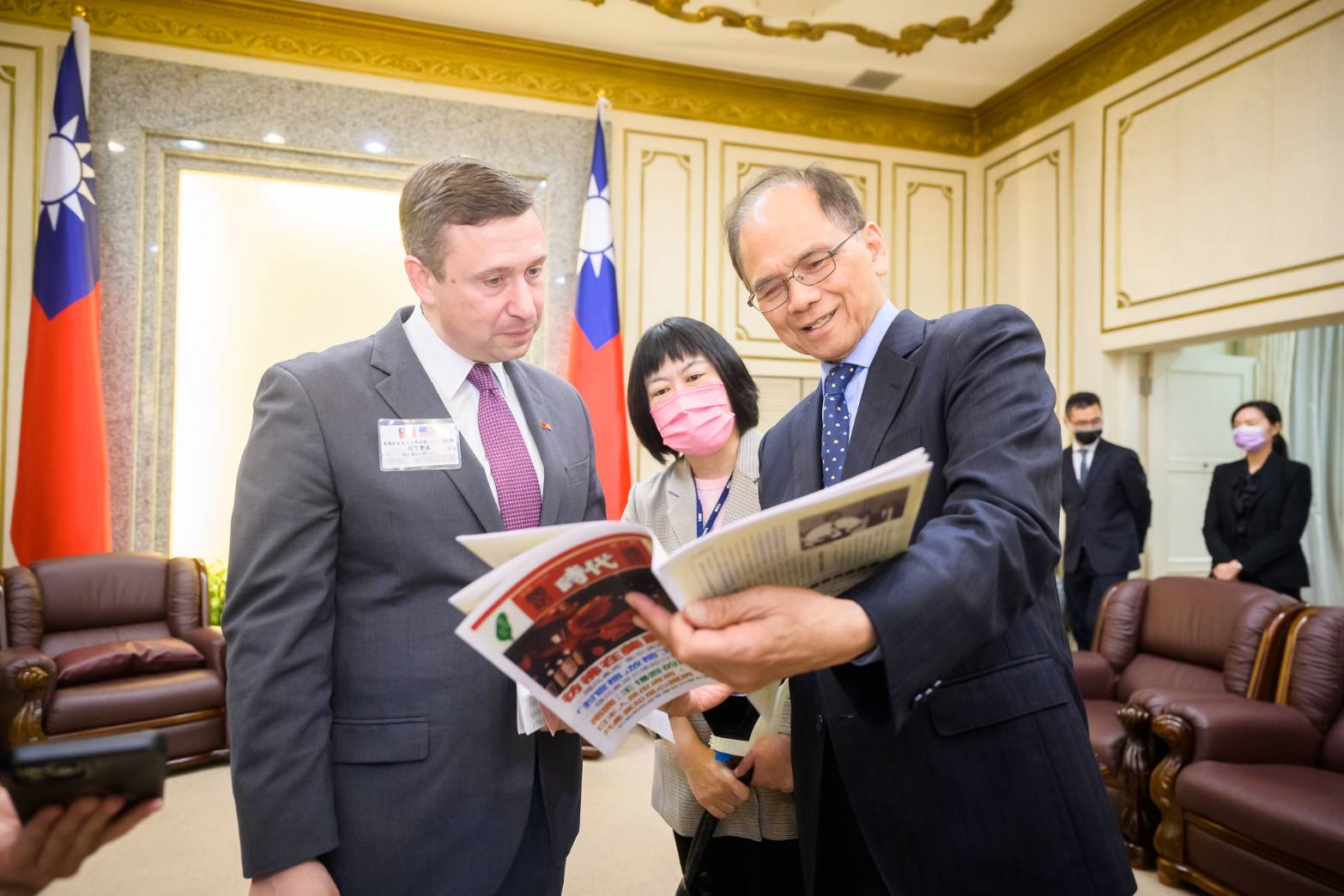
The two sides then exchanged views on fighting misinformation and cyberattacks and bolstering the electoral system. The luncheon concluded at 12 p.m. after a presentation of gifts and group photos.
A translation of President You's remarks follows:
ASDC President Martin; Chairwoman Swecker; Chairwoman Andrews; Chairwoman Carroll; Chairman Elridge; Chairman Uhlenhake; Chairman Glidden; Chairman Velasquez; Vice Chairman Mata; Legislators Liu Shyh-fang and Chen I-hsin; Taiwan People’s Party Whip Chiu Chen-yuan; New Power Party Whip Wang Wan-yu; Secretary General Lin; Consultant Chou; distinguished guests; ladies and gentlemen: Good morning!
It is a privilege to meet with the ASDC delegation led by President Martin. On behalf of Taiwan’s legislature, I want to extend a very warm welcome to you all.
The ASDC passed resolutions supporting Taiwan’s participation in ICAO and the WHO as well as affirming the Taiwan Relations Act and Six Assurances in 2013, 2017, and 2019. Last March, thanks to the efforts of President Martin, the ASDC passed resolutions supporting Taiwan for the fourth time and reiterating a commitment to Taiwan based on the Taiwan Relations Act and the Six Assurances. Before the pandemic, the ASDC had sent a delegation to Taiwan annually; particularly 2017 to 2019. On behalf of Taiwan’s Legislative Yuan, I want to express my sincere appreciation for your efforts.
China is an authoritarian regime. With China’s economic rise, the CCP has adopted repression at home and aggression abroad. Its traditional political stance can be summarized as “there cannot be two suns in the sky nor two emperors on the Earth” and “all lands under heaven belong to the emperor; the people of those lands are subject to the emperor.” It also maintains the vengeful attitude of “even though a thousand miles away, those who affront China must pay.” After Xi Jinping took office, he renounced Deng Xiaoping’s concept that China should bide its time and hide its strengths, as well as Hu Jintao’s concept of China’s having a peaceful rise. The so-called Chinese dream is a hope that the vast Pacific Ocean can accommodate the two major powers. To this end, China employs wolf-warrior diplomacy. The Belt and Road Initiative has driven many countries to become economic colonies. China has militarized the South China Sea, broken its pledge to maintain Hong Kong’s “one country, two systems” arrangement, and provided indirect assistance for Russia’s aggression against Ukraine. These actions have increased tensions in the Indo-Pacific region and threatened global peace.
Taiwan’s democracy is the result of hard work over a century. Taiwan’s free and democratic nature is recognized by the international community. Credit for this goes to the persistence and fighting spirit of the Taiwanese people for generations. I want to take this opportunity to thank the US for its support at crucial moments. One of these was September 28, 1986, the date on which the Democratic Progressive Party was founded at the Grand Hotel. It was because the US paid close attention to these developments that Chiang Ching-kuo announced on October 7 that martial law would end and the ban on political parties would be lifted in 1987. It is thanks to this that the Democratic Progressive Party (DPP) was successfully founded.
When I consider the DPP’s founding 36 years ago, I think of a very important American friend. This was National Democratic Institute President J. Brian Atwood. I recall vividly that, 40 days before the founding of the DPP, from August 12 to 14, 1986, the Chiang government held three large-scale, anti-riot joint exercises involving military, intelligence, military police, and police in Taipei. Mr. Atwood was therefore brave to attend a meeting on forming an opposition party held by Tangwai members at Taipei Municipal Chun Shan Elementary School on August 15. We shared the same stage at the meeting. After my speech, I remember he said to the 10,000-strong audience: “During my visit to Taiwan, I find many people have been arrested because they have been fighting for basic human rights such as assembly, speech, and criticizing the government. In the United States, these are the basic rights of free speech anywhere. This is the essence of democracy.” He added: “If Taiwan wants to have successful democratic politics, the key is how to pursue this and how to fight for it.” His statement greatly boosted morale. The meeting did not let out until 11 p.m. I firmly believe that his appearance was the main reason why Chiang Ching-kuo did not round us up and was a key reason the DPP was successfully founded.
The ideal of having Taiwanese be their own masters has been supported by the United States. On behalf of Taiwan’s legislature, I thank the people and government of the United States. I also want to pay my respects to Mr. Atwood and to all of you. As a veteran fighter for democracy, and the chair of the DPP formation meeting at the Grand Hotel on September 28, 1986, I hope that you will convey my appreciation to Mr. Atwood as well as my sincere invitation to him to visit Taiwan and see his old friends again. I look forward to hosting him here.
The United States is one of the most important democratic countries in the world and a role model for all democracies. Democracy is about rule of law and abiding by the law. Looking at Taiwan-US relations, American Taiwan policy has been guided by the Taiwan Relations Act since 1979. After the passage of the Taiwan Travel Act and Asia Reassurance Initiative Act by the US Congress in 2018, the TAIPEI Act and Taiwan Assurance Act also entered into force. US Taiwan policy has now evolved from being composed of one act and three communiqués to five acts, six assurances, and three communiqués. However, US government statements about Taiwan-US relations remain unchanged. As a friend of the United States and a proponent of democracy and the rule of law, I remain confused as to why this is.
Nonetheless, I express my sincere appreciation to the US for its attention to and support of the people of Taiwan in pursuing democracy and freedom, and for its assistance in maintaining security across the Taiwan Strait over many decades as it promotes exchanges in economics, technology, and culture. I hope that Taiwan and US will continue to support each other in defending the universal values of peace, democracy, and freedom. I also wish that Taiwan-US relations will be everlasting, and all of you have a pleasant stay and every success. Thank you!