The Legislative Yuan
Press Release
March 14, 2023
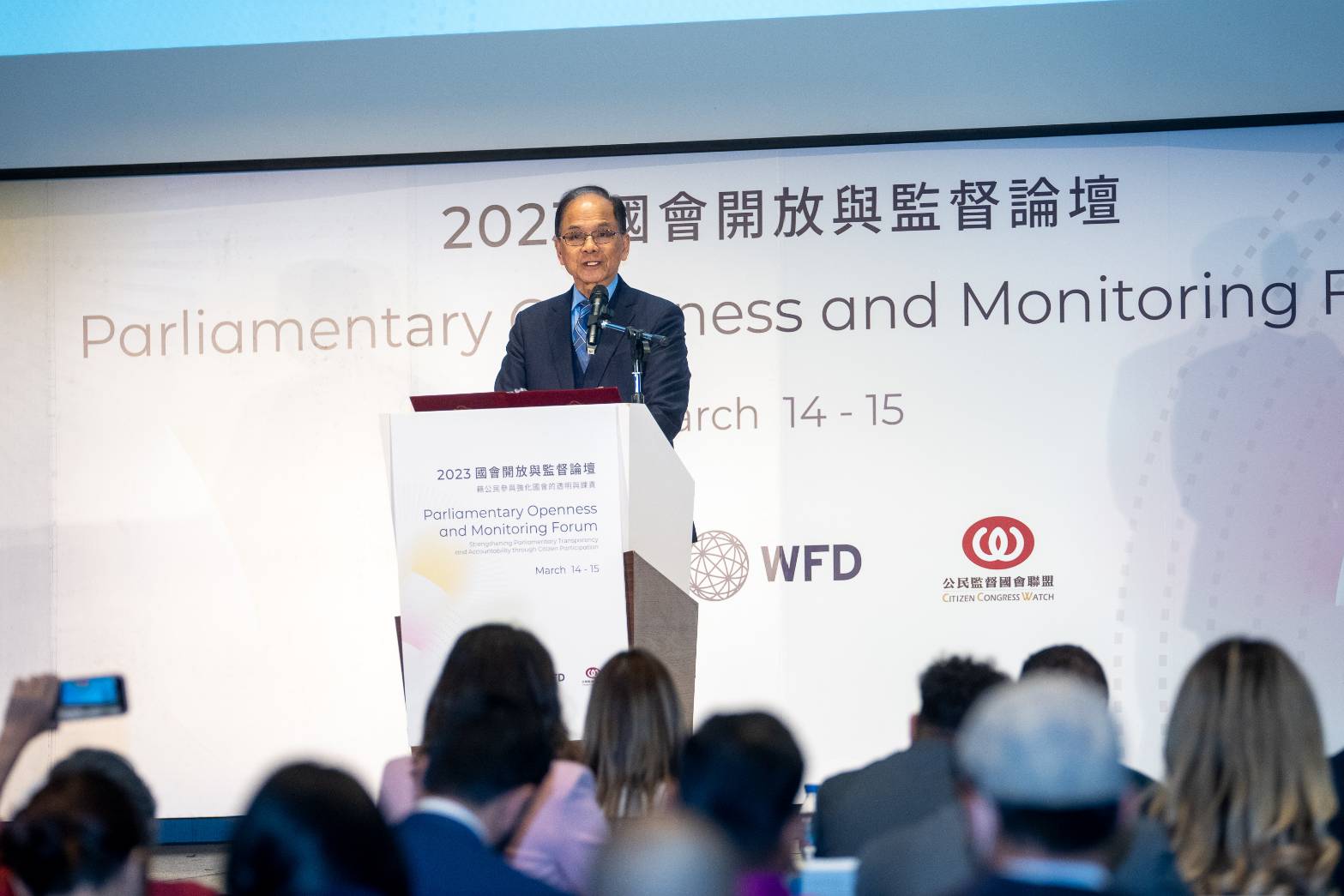
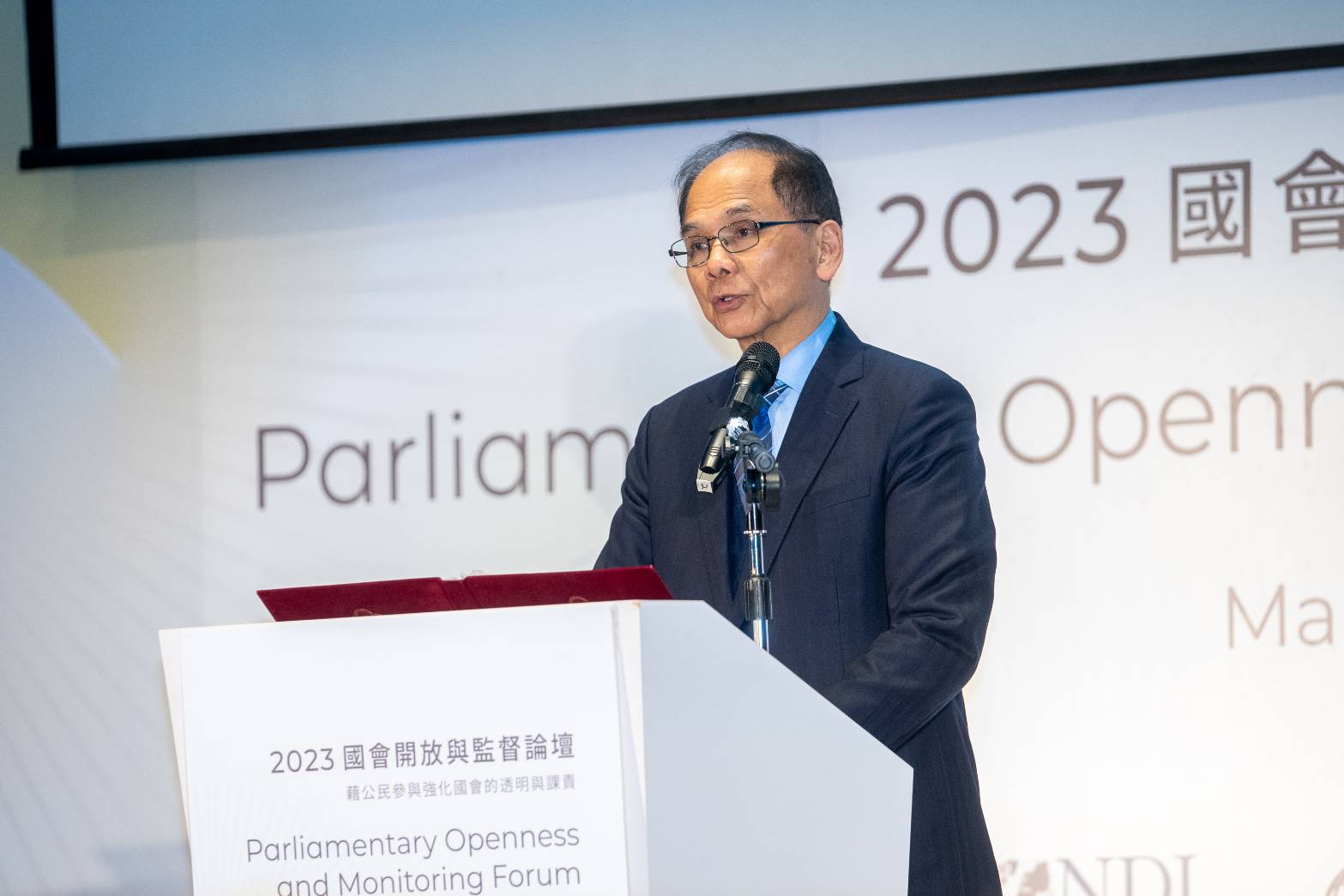
President You Si-kun attends
2023 Parliamentary Openness and Monitoring Forum opening ceremony
You Si-kun: Building a better world requires having more people enjoy freedom and democracy.
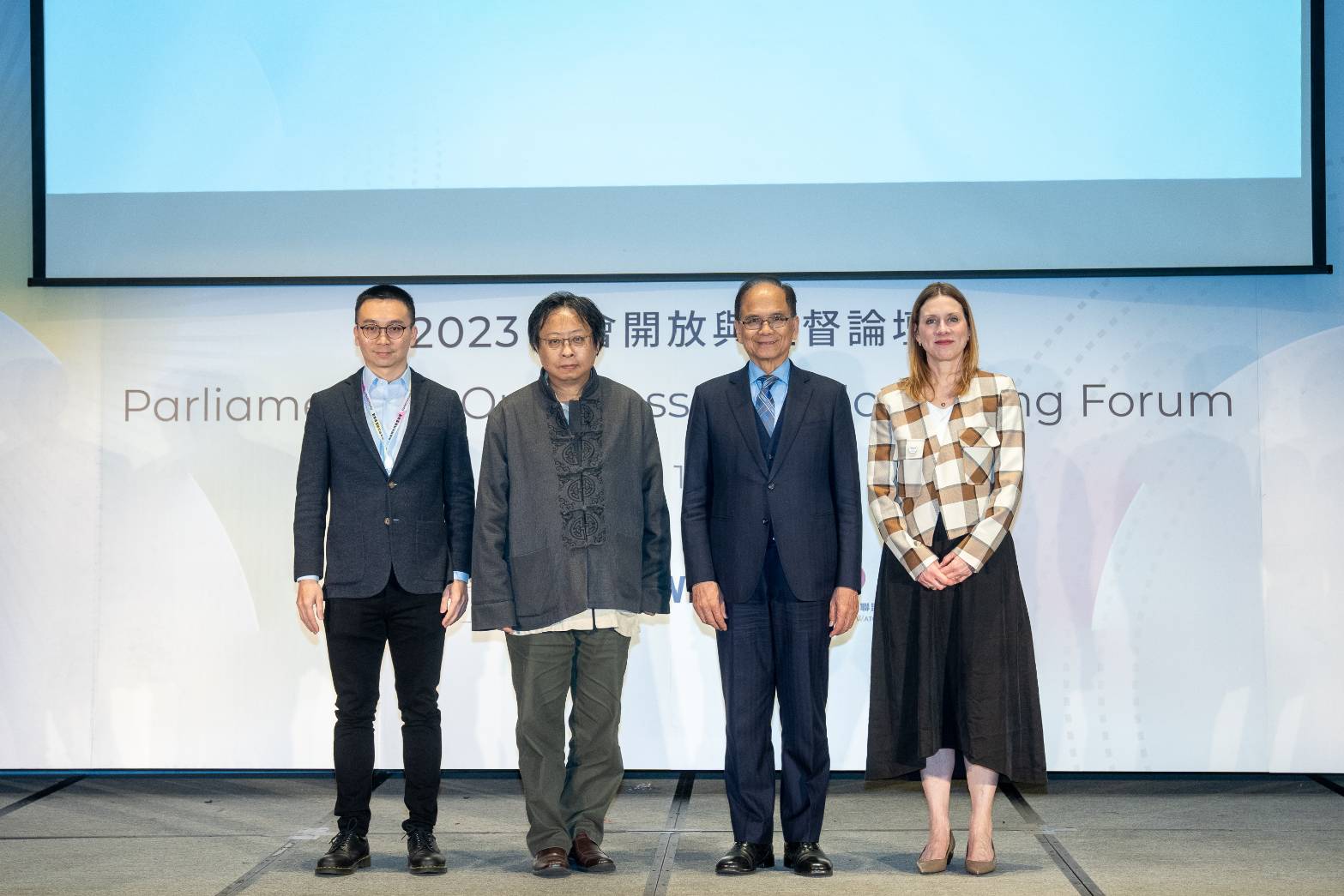
Accompanied by Legislators Lo Chih-cheng, Wang Wan-yu, and Lin Szu-ming, Legislative Yuan President You Si-kun attended the opening ceremony of the 2023 Parliamentary Openness and Monitoring Forum co-hosted by Congress Citizen Watch (CCW), the National Democratic Institute (NDI) and the Westminster Foundation for Democracy (WFD) at the Hilton Taipei Sinban on March 14 at 9 a.m. CCW Chairman Tseng Chien-yuan, NDI Chief Programs Officer Stephanie Rust, and WFD Director for Asia-Pacific and the Americas Matthew Hedges were also on hand.
In his remarks, President You started by saying he was privileged to be with representatives of the CCW as well as experts and scholars from five continents. On behalf of Taiwan’s legislature, he welcomed all the distinguished guests.
He said that, while Taiwan is not a member of the Open Government Partnership (OGP) and has not signed the Open Parliament Declaration, Taiwan’s legislature has moved down the path of openness and transparency since 2016. Live broadcasts of parliamentary sittings are broadcast via television and the Internet. Soon after he took office as President of the Legislative Yuan, You said, he had shepherded the creation of an open parliament committee that works with civil groups on drafting a Taiwan Open Parliament Action Plan that meets international standards. Moreover, Taiwan became Asia’s first non-member of the OGP to host an Open Parliament Forum in 2021. Such instances fully demonstrate Taiwan’s strong determination to pursue a free, democratic, and open congress.
President You stated that accomplishments under the four major directions of the action plan include: First, uninterrupted live broadcasts of Legislative Yuan sittings (including cross-party negotiations and committee meetings, as well as the “parliamentary channel 2.0” created using new media). Second, full disclosure of parliamentary procedures to help the public search the legislative gazettes. Third, promoting a culture of integrity and efficiency in parliament to encourage legislators to be whistleblowers and reveal conflicts of interest. Fourth, establishing a petition and advocacy platform for citizens to expand public participation in parliamentary operations.
President You declared that open governments and open parliaments constitute a global trend. Through transparency, participation, accountability, and inclusion, parliaments are not simply a venue for elected representatives and government officials, but a place where citizens can express their opinions. Taiwan follows the rule of law. When there is a more transparent parliament, citizens have readier access to information and a greater chance to participate in the lawmaking processes that help determine their future. Put another way, a sound parliament promotes sound democracy, which is a core value Taiwan adheres to closely.
President You pointed out that Taiwan stands on the front line resisting autocracy in the Indo-Pacific region. Over the past three years, Taiwan has faced the difficult challenge posed by the pandemic just like other countries. Taiwan also faces the threats of misinformation, cyberattacks, economic coercion, and cognitive warfare from an authoritarian regime. In recent years, the global democratic landscape has shrunk. According to the 2023 Freedom in the World report released by Freedom House, global democracy has been declining for 17 consecutive years, Countries which saw freedom erode now outnumber those seeing increased freedom. Reversing this trend is a common task for democracies worldwide.
According to the Democracy Index 2022 by the Economist Intelligence Unit, Taiwan is a full-fledged democracy, ranking 10th among the 167 countries and territories surveyed and first in Asia. In addition, according to the 2023 Freedom in the World report mentioned above, Taiwan is tied for 17th with Germany, Iceland, Estonia, and Chile as a free country, and behind only Japan in Asia. Starting during the Age of Discovery, Taiwan was colonized by the Netherlands, Spain, Ming-dynasty China, Qing-dynasty China, Japan, and the Chiang Kai-shek family. Taiwan has never been its own master. Thus, it is comforting to see that Taiwan’s democracy has been internationally recognized.
President You stressed that Taiwan’s democracy is the result of efforts over a century. The experience winning freedom and democracy enjoyed by the people of Taiwan differs from that of other countries. Taiwan experienced repression and massacres, so the results were earned as the result of the blood and tears shed by our forebearers. Therefore the people of Taiwan value this achievement highly. Taiwan hopes to help people under authoritarian regimes enjoy freedom. To create a better world, President You stressed, more people must enjoy freedom and democracy.
He concluded his remarks by stating that the forum focuses on new approaches to global parliamentary oversight. With the distinguished guests’ participation, new life will be infused into the movement. He expressed hope that the CCW would share its experiences with the international community to improve the global democratic landscape. In closing, he thanked the CCW, NDI, and WFD for their hard work organizing the conference. He also thanked Taiwan’s 113 legislators for their contributions. Parliamentary self-discipline, he closed, is not enough, as oversight is needed, making the work of the CCW indispensable. He thanked the CCW for its longstanding efforts to oversee Taiwan’s legislature.
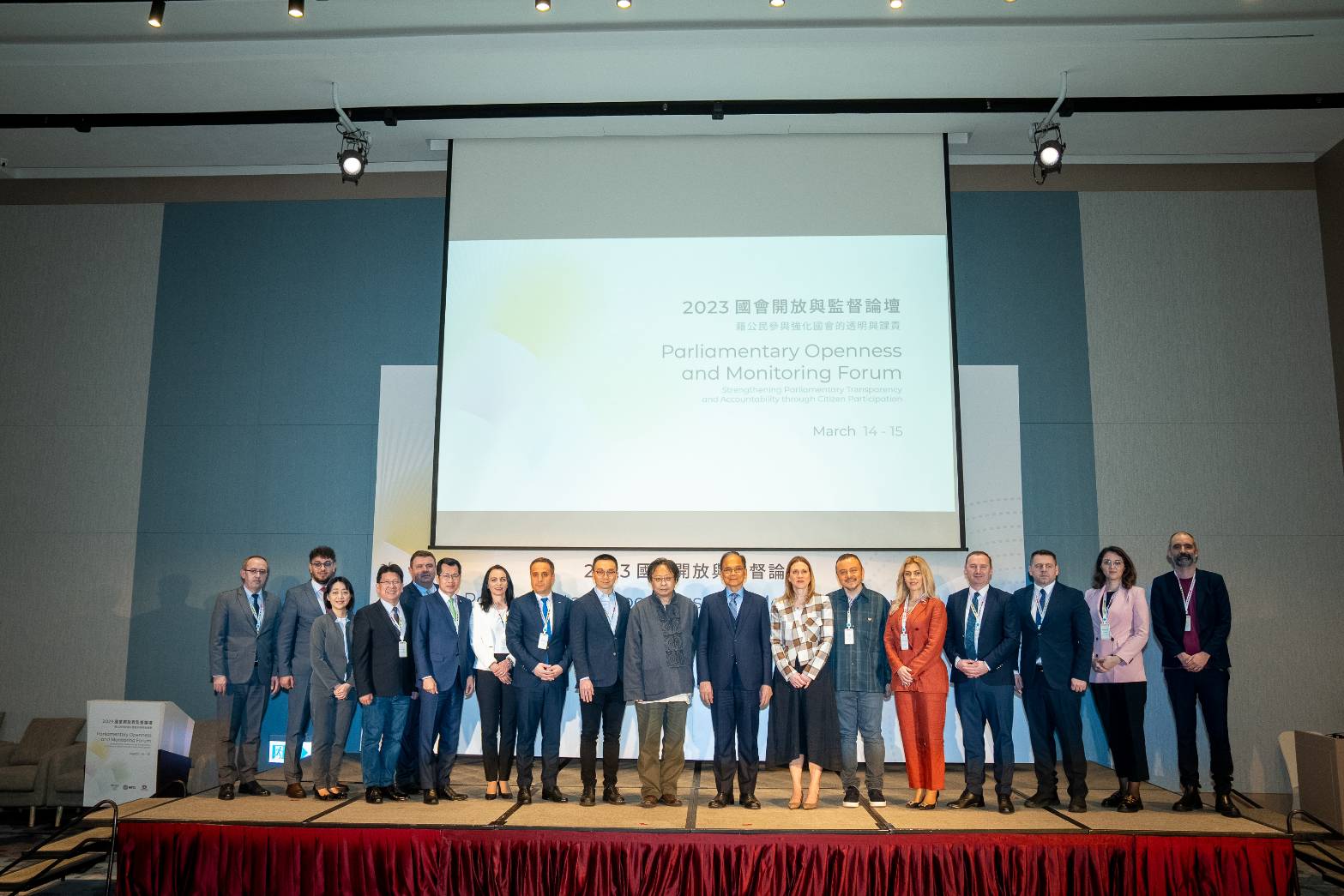
After President You posed for a group photo with the distinguished guests, the opening ceremony concluded at 9:30 a.m.
A translation of President You’s remarks follows:
CCW Chairman Tseng Chien-yuan; NDI Chief Programs Officer Stephanie Rust; WFD Director for Asia-Pacific and the Americas Matthew Hedges; Legislators Lo Chih-cheng, Wang Wan-yu, and Lin Szu-ming; distinguished guests from all over the world; members of the media: Good morning!
I am You Si-kun, President of Taiwan’s Legislative Yuan. It is my great privilege to be here with the representatives of the CCW as well as experts and scholars from all over the world. I welcome you all on behalf of Taiwan’s legislature.
Taiwan is not a member of the Open Government Partnership (OGP) and has not signed the Open Parliament Declaration. However, our legislature has continued to move solidly along the path of openness and transparency since 2016. We broadcast live parliamentary sittings on television and via the Internet. And I shepherded the creation of an open parliament committee after taking office as President of the Legislative Yuan. This has allowed close cooperation with civil groups to draft a Taiwan Open Parliament Action Plan in line with international standards. Moreover, Taiwan hosted the 2021 Open Parliament Forum, becoming the first non-member of the OGP in Asia to do so. Such moves demonstrate Taiwan’s will and determination to pursue a free, democratic, and open legislature.
Accomplishments already seen under the action plan include: First, uninterrupted live broadcasts of Legislative Yuan sittings (including cross-party negotiations and committee meetings, as well as the “parliamentary channel 2.0” created using new media). Second, full disclosure of parliamentary procedures to help the public search the legislative gazettes. Third, promoting a culture of integrity and efficiency in parliament to encourage legislators to be whistleblowers and reveal conflicts of interest. Fourth, establishing a petition and advocacy platform for citizens to expand public participation in parliamentary operations.
Open governments and parliaments are a global trend. Through transparency, participation, accountability, and inclusion, parliaments will not just be a venue for elected representatives and government officials, but a place where citizens can express their opinions. Taiwan follows the rule of law. When there is a more transparent parliament, citizens have readier access to information and a greater chance to participate in the lawmaking processes that help determine their future. Put another way, a sound parliament promotes sound democracy, which is a core value that Taiwan adheres to closely.
Taiwan stands on the front line resisting autocracy in the Indo-Pacific. Over the past three years, Taiwan has faced the difficult challenge posed by the pandemic just like other countries. Taiwan also faces the threats of misinformation, cyberattacks, economic coercion, and cognitive warfare from an authoritarian regime. In recent years, the global democratic landscape has shrunk. According to the 2023 Freedom in the World report by Freedom House, global democracy has been declining for 17 consecutive years. Countries which saw freedom erode now outnumber those seeing increasing freedom. Reversing this trend is a common task for democracies worldwide.
According to the Democracy Index 2022 published by the Economist Intelligence Unit, Taiwan is a full-fledged democracy. Taiwan ranks 10th among the 167 countries and territories surveyed and first in Asia. In addition, according to the 2023 Freedom in the World report mentioned above, Taiwan was tied at 17th with Germany, Iceland, Estonia, and Chile, and behind only Japan in Asia. Starting during the Age of Discovery, Taiwan was colonized by the Netherlands, Spain, Ming-dynasty China, Qing-dynasty China, Japan, and the Chiang Kai-shek family. Taiwan has never been its own master. Thus, it is comforting to see that Taiwan’s democracy has been internationally recognized.
Taiwan’s democracy is the result of efforts made over a century. The experience winning freedom and democracy enjoyed by the people of Taiwan differs from that of other countries. Taiwan experienced repression and massacres; so the results were earned as the result of the blood and tears shed by our forebearers. Therefore, the people of Taiwan value this achievement highly. Taiwan hopes to help people under authoritarian regimes enjoy freedom. We believe that in order to create a better world, more people must enjoy freedom and democracy.
This forum focuses on taking new approaches to parliamentary oversight around the world. I believe that with your participation, new sparks will be seen. I also hope that the CCW will continue to share its experiences with the international community and help consolidate the global democratic landscape. In closing, I wish the Forum great success and all of you the best of health and happiness.