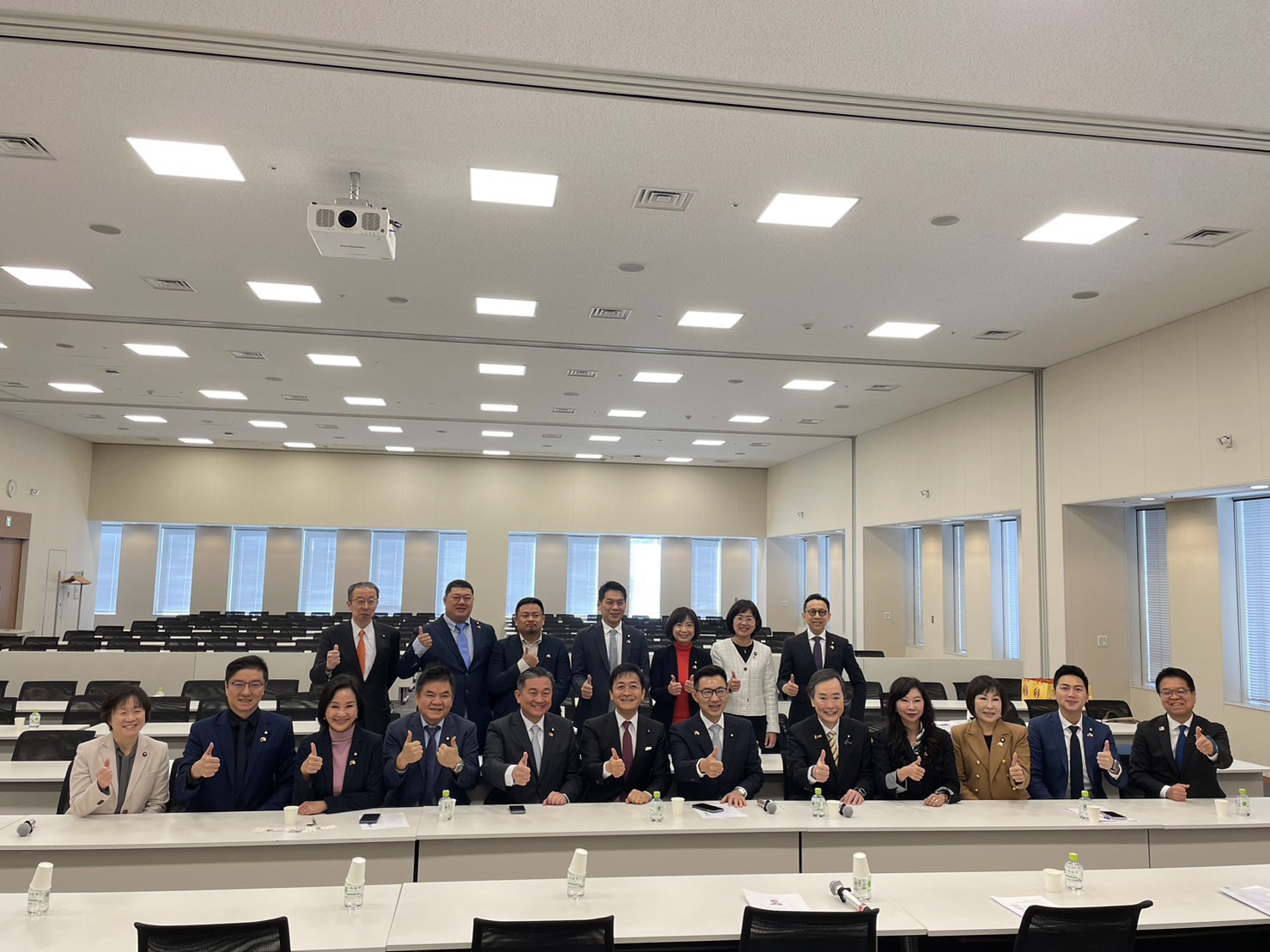
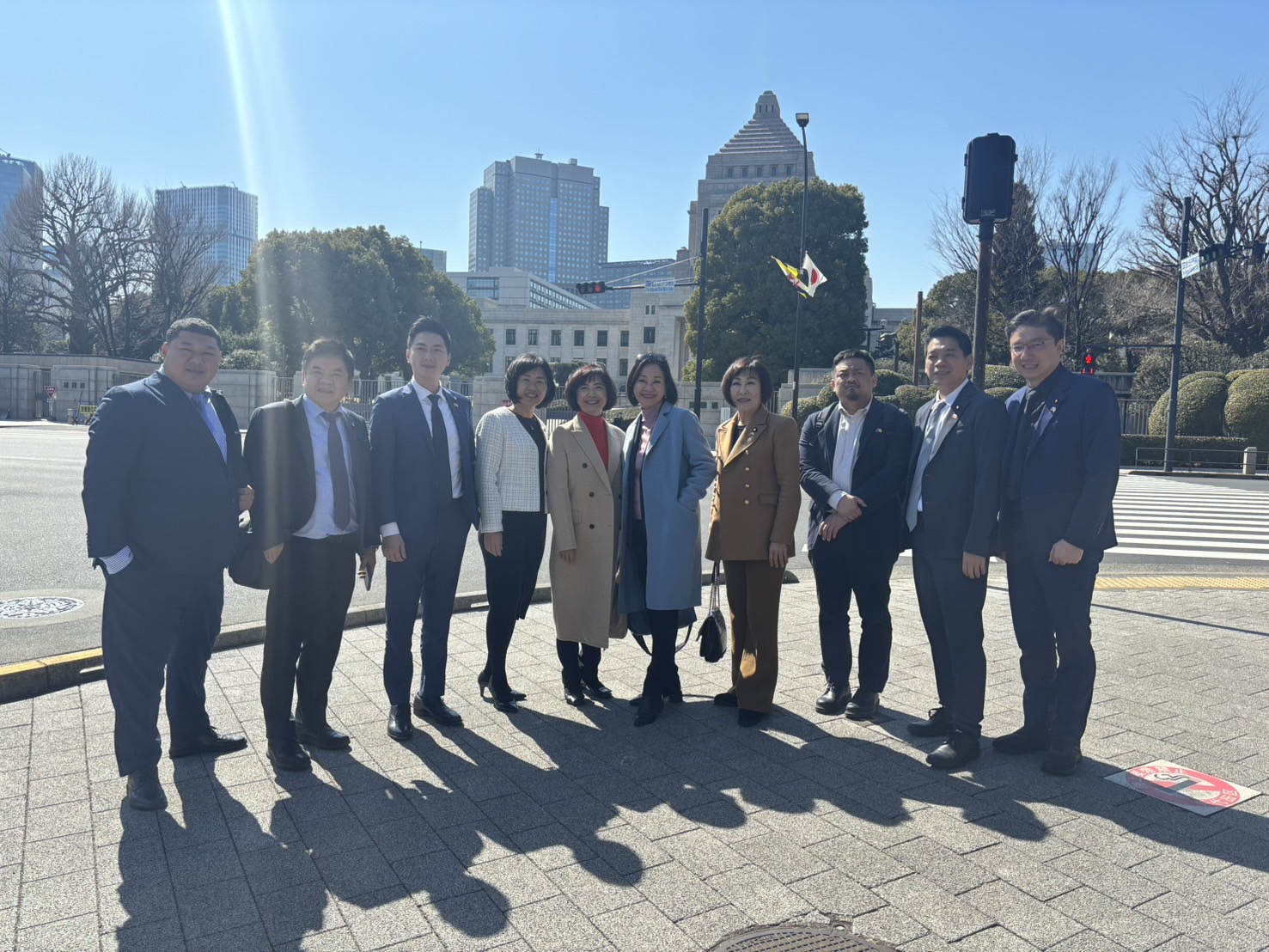
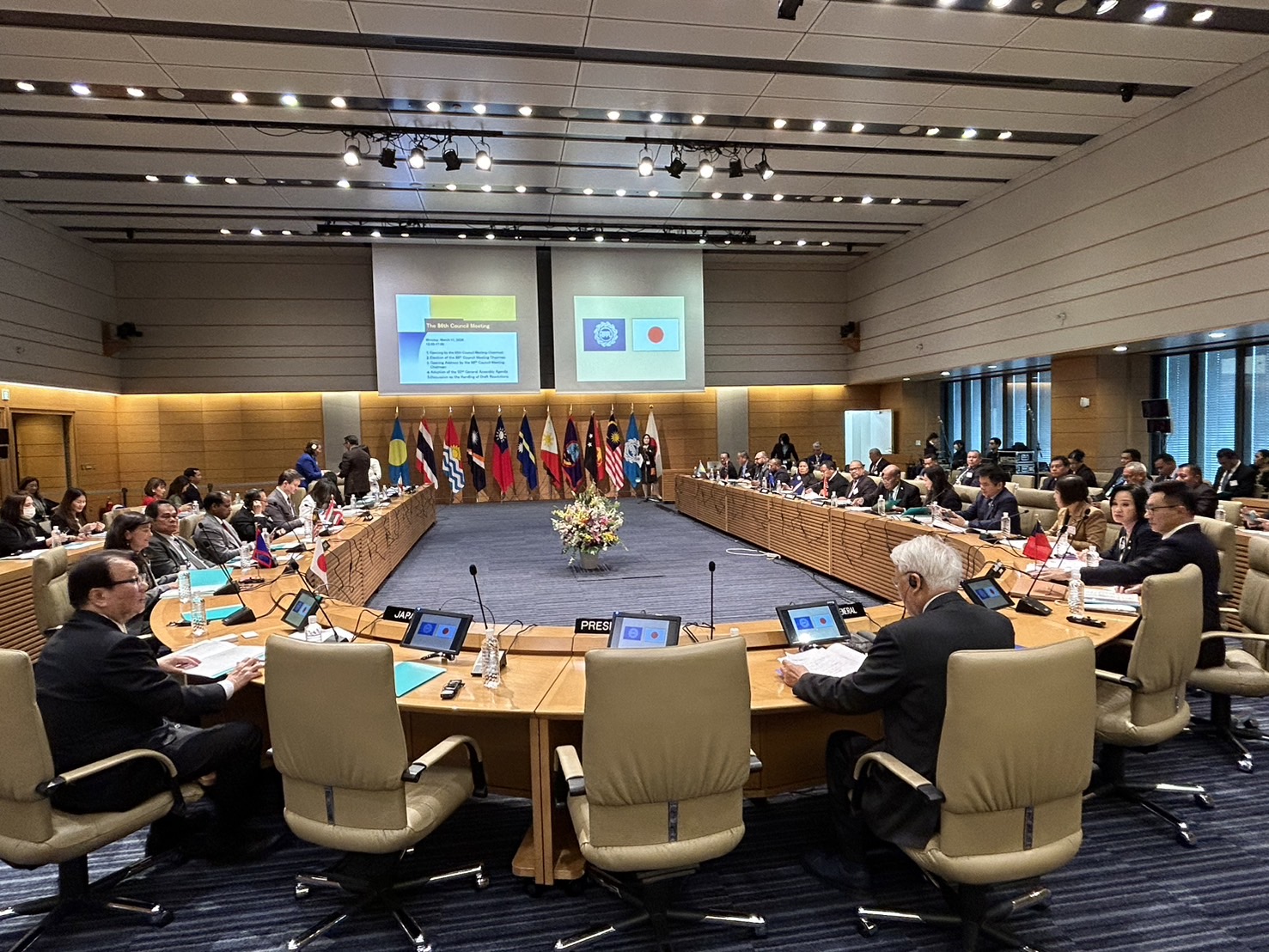
Taiwan’s cross-party legislative delegation led by Vice President Dr. Johnny C. Chiang of the Legislative Yuan attended the Asian-Pacific Parliamentarians’ Union (APPU) meetings in Japan. On the second day of the trip, the delegation made a courtesy call on the morning of March 11 to Representative Yuichiro Tamaki, leader of the Democratic Party for the People (DPFP) and Vice President Taro Aso of the Liberal Democratic Party (LDP), along with several party leaders. In the afternoon, the delegation conducted a trilateral talk with delegations from Japan and Palau, before attending the 86th APPU Council Meeting.
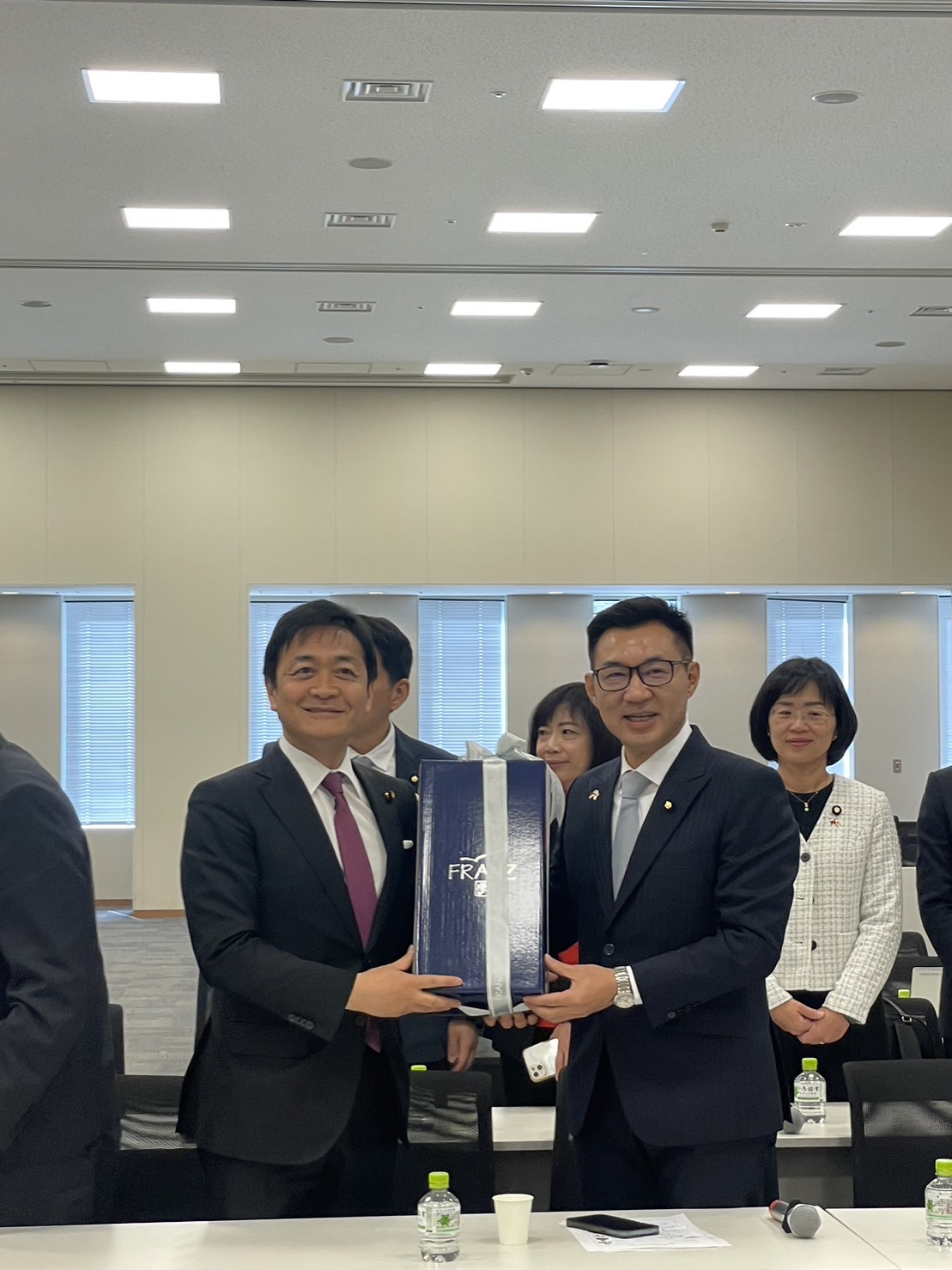
Representative Tamaki and Vice President Aso both received Taiwan’s delegation composed of cross-party legislators of the new Legislature with a warm welcome. Representative Tamaki expressed gratitude to Taiwan’s assistance in the disaster relief when Japan experienced the strong earthquake in 2011 and the one at Noto Peninsula. He emphasized that the DPFP has always adopted pragmatic and security-enhancing policies for diplomacy and economic development, therefore attaching great importance to relations with Taiwan. On top of that, after the launch of TSMC’s factory in Kumamoto in February, the Japanese people have learned more about the importance of the partnerships between Taiwan and Japan when it comes to economy, trade, and security. Representative Tamaki also stated that diplomacy of all levels between the two nations involve people-to-people interactions of good will. It is hoped that the interaction with Taiwan’s legislative delegation at present could bring our bilateral relations to new heights.
In response, Vice President Chiang stated this delegation is the first visiting group after the (11th) new Legislature was sworn in, and it is hoped that the courtesy call could lead to deepened relations between the two nations. As Representative Tamaki mentioned the strong earthquake hitting Japan in 2011, Vice President Chiang added that he was then Director of the Government Information Office under the Executive Yuan and also the government spokesperson, and he personally participated in the fundraising campaigns and the preparation for disaster relief for Japan. Since the earthquake in 2011, Taiwan and Japan have grown closer to each other, both in the private sector and between the government authorities. Regarding the earthquake at Noto Peninsula, Vice President Chiang once again expressed deep condolences and his hope that the affected area could be rebuilt soon, so that people could return to everyday life.
Vice President Chiang continued to mention that the theme of the APPU meeting this year is Climate Change- Prevention and Mitigation for Large-scale Disasters, which made the meeting a platform for Taiwan, Japan, and the other attending nations to increase collaborations when it comes to disaster mitigation. Furthermore, the Asia-Pacific region is currently facing severe challenges including pandemics, food and energy security, and geopolitical changes. All these require the joint efforts of all nations involved, so that there could be comprehensive countermeasures in place. Vice President Chiang stressed that besides strengthening Taiwan-Japan relations, Taiwan will continue to strive for meaningful participation in events, agreements, and meetings held by international organizations such as the UNFCCC, WHO, ICAO, and INTERPOL, and it is hoped that Japan could also continue to speak up for Taiwan. In closing, Vice President Chiang once again thanked Representative Tamaki and the representatives and councilors of the DPFP for taking time out of their tight schedule to meet with the delegation and that he looks forward to meeting with the members present in Taiwan in the near future. The visit concluded after 1 hour with engaged exchanges of views on the stability across the Taiwan Strait and measures to prevent false information.
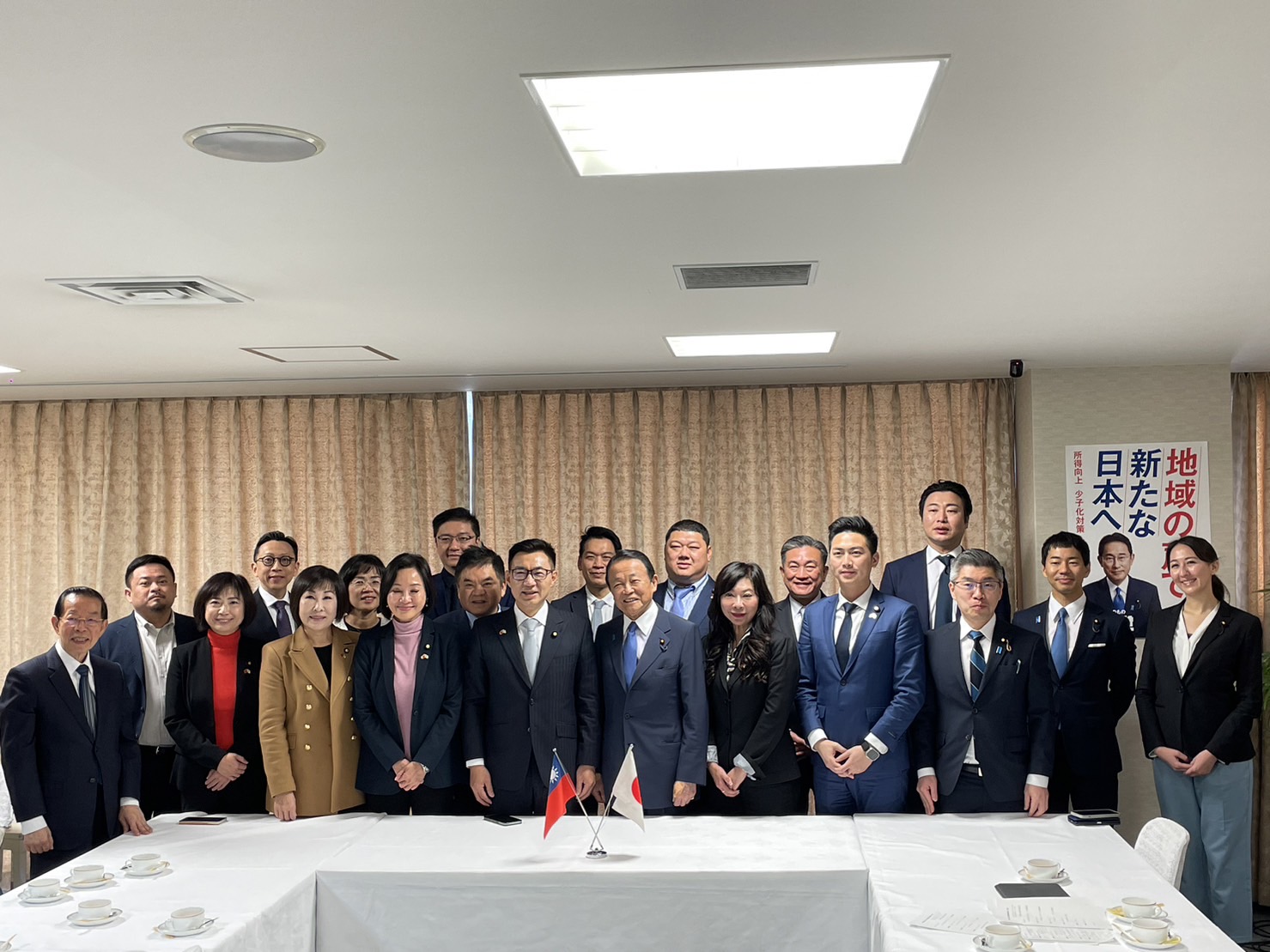
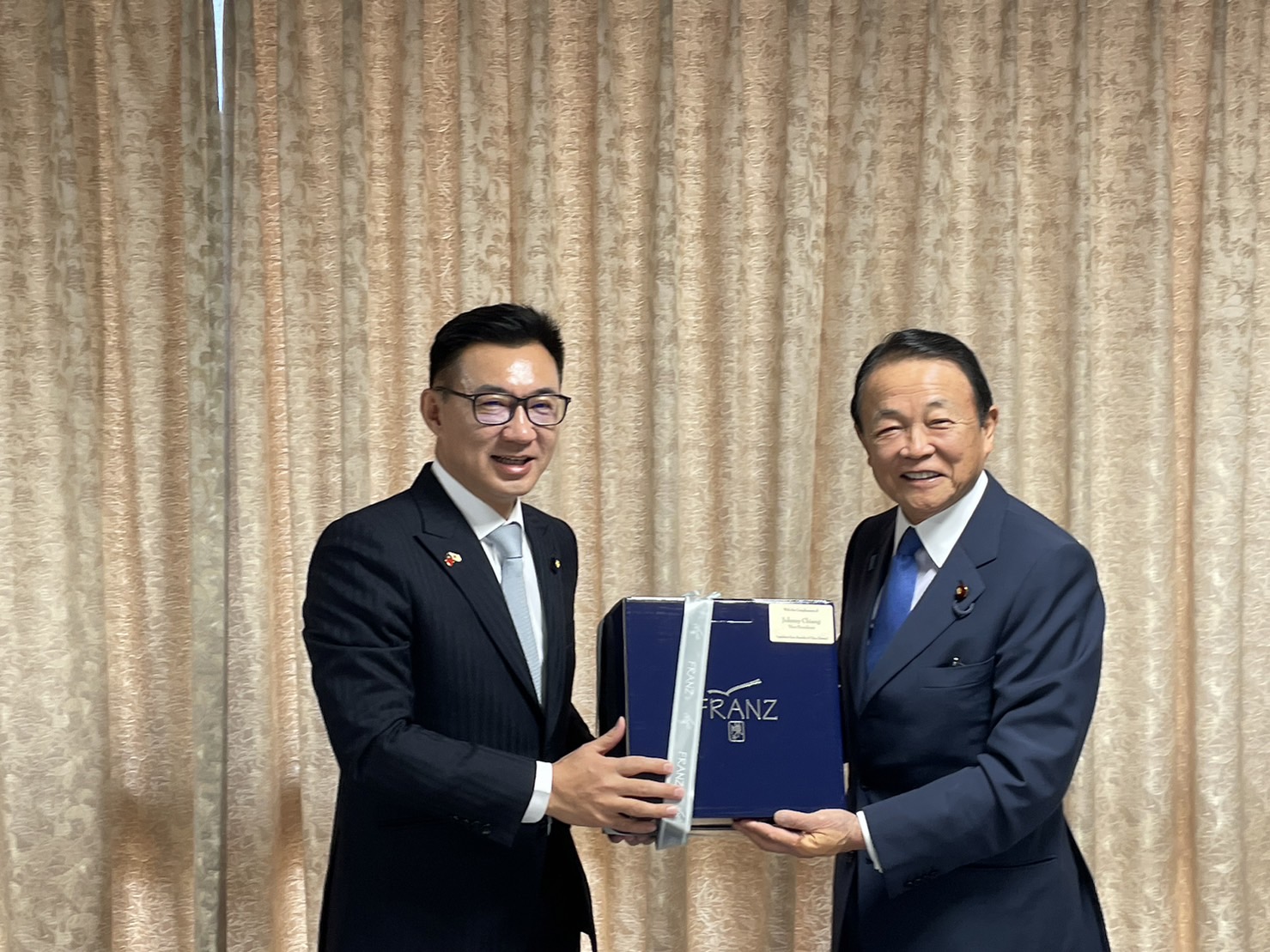
Following the first event, the delegation visited Vice President Taro Aso and party members of the LDP at the party headquarters. Vice President Aso pointed out that in recent years, the Taiwan issue and tensions across the Taiwan Strait have been a great concern to the United States and Taiwan’s neighboring countries including Australia, Japan, South Korea, and India. Aso stated that China’s defense budget has increased 50 times in recent years; should China invade Taiwan, it would have to rely on its navy. However, looking back at China’s modern history, it has little experience in naval warfare. On the contrary, navy is Japan’s main combat force, and the US-Japan alliance has deployed multiple aircraft carriers in the Asia-Pacific region to maintain regional peace. Vice President Aso has always advocated that Japan’s Self-Defense Forces should receive further training. Japanese Prime Minister Fumio Kishida and his cabinet have also decided to increase the defense budget from 1% to 2% of GDP in the following five years. Vice President Aso stressed that Japan must join hands with the United States, the Philippines, South Korea, and Australia to deter China’s military aggression. He also looks forward to Japan’s young parliamentarians exchanging ideas with Taiwan’s political parties and establishing platforms for close interactions. Should something happen to Taiwan, any agreements or partnerships between the two nations could come in handy.
Vice President Chiang stated that Vice President Aso visited Taiwan for the Ketagalan Forum in 2023 and mentioned that Taiwan is Japan’s most important partner and friend, also stating that stability across the Taiwan Strait is indispensable for international security and prosperity. Taiwan will take a proactive stand to seek cooperation in security with like-minded nations, such as the United States and Japan, which could bring stability and welfare to the region. Vice President Chiang added that although Japan cut off diplomatic ties with the Republic of China in the 1970s, relations between Taiwan and Japan have only been increasingly deepened and strengthened. A good example would be the fact that Taiwanese people visiting Japan in 2023 reached over 4.6 million in total. On top of that, Taiwan’ s new Legislature choosing Japan for its first overseas visit for promoting legislative diplomacy also shows that the two nations are more than just economic and trade partners, but also partners on regional security and several universal values, as the two nations see eye to eye when it comes to freedom, human rights, and rule of law. In closing, Vice President Chiang once again thanked Vice President Aso and the members of the LDP for receiving the delegation. It is hoped that our partnerships could lead to more tangible results in the future. The visit concluded after 45 minutes with engaged exchanges of views on the practices of mechanisms for security communications between Taiwan, the United States, and Japan.
Later on, our delegation engaged in a follow-up meeting with leaders from the LDP Youth Division during a luncheon at the banquet room. Acting Director Kazuhiro Fujii of the Youth Division introduced that the lunch was made using local ingredients from the Noto Peninsula in Ishikawa Prefecture, a gesture of support for the area affected by the earthquake earlier this year. During the lunch, there was an exchange of ideas on the two nations’ domestic issues including declining birthrate, inflation, and wage increase. The luncheon concluded in warmth and joy, before our delegation changed venue to a conference room for a trilateral talk with delegations from Japan and Palau.
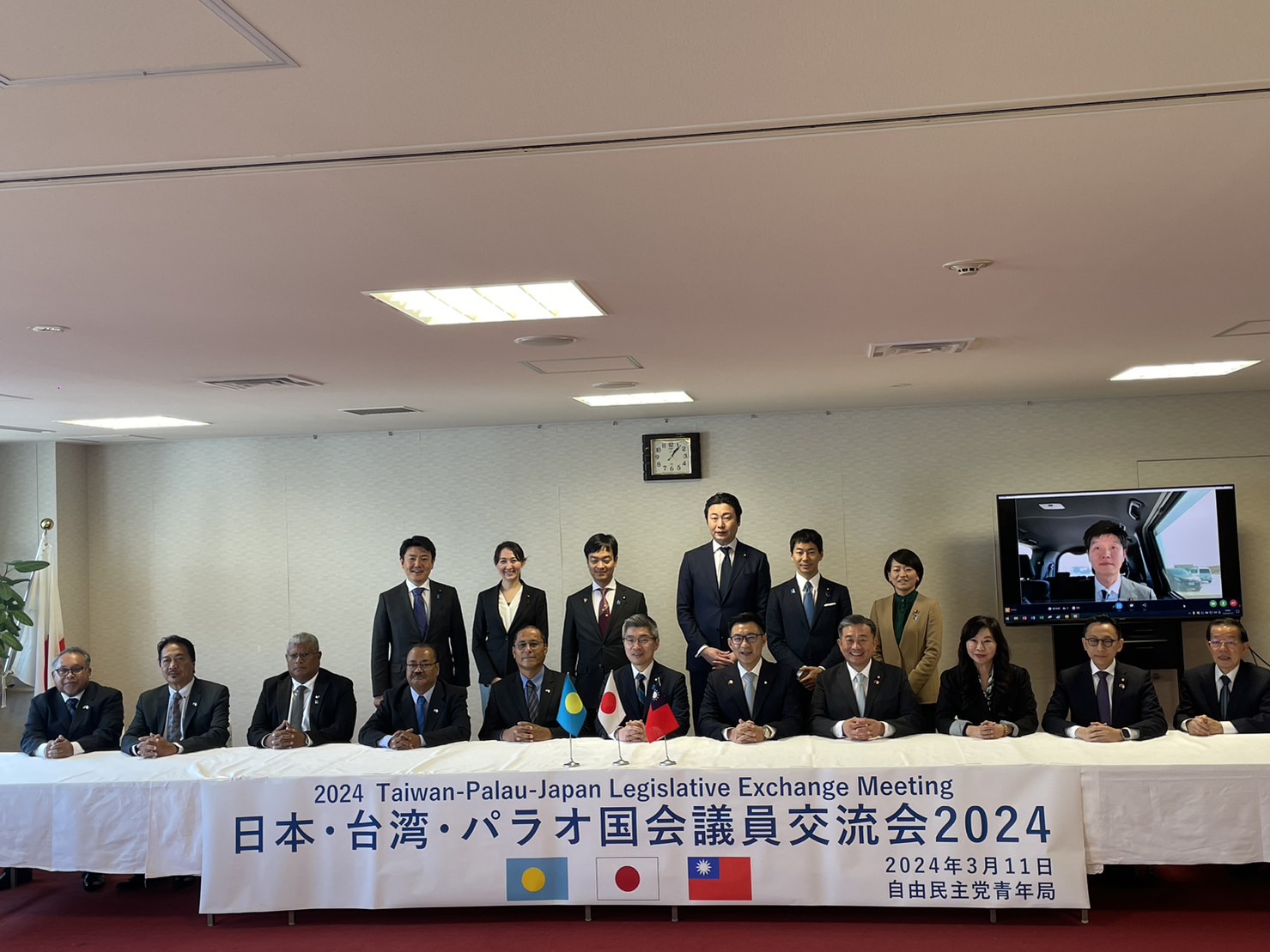
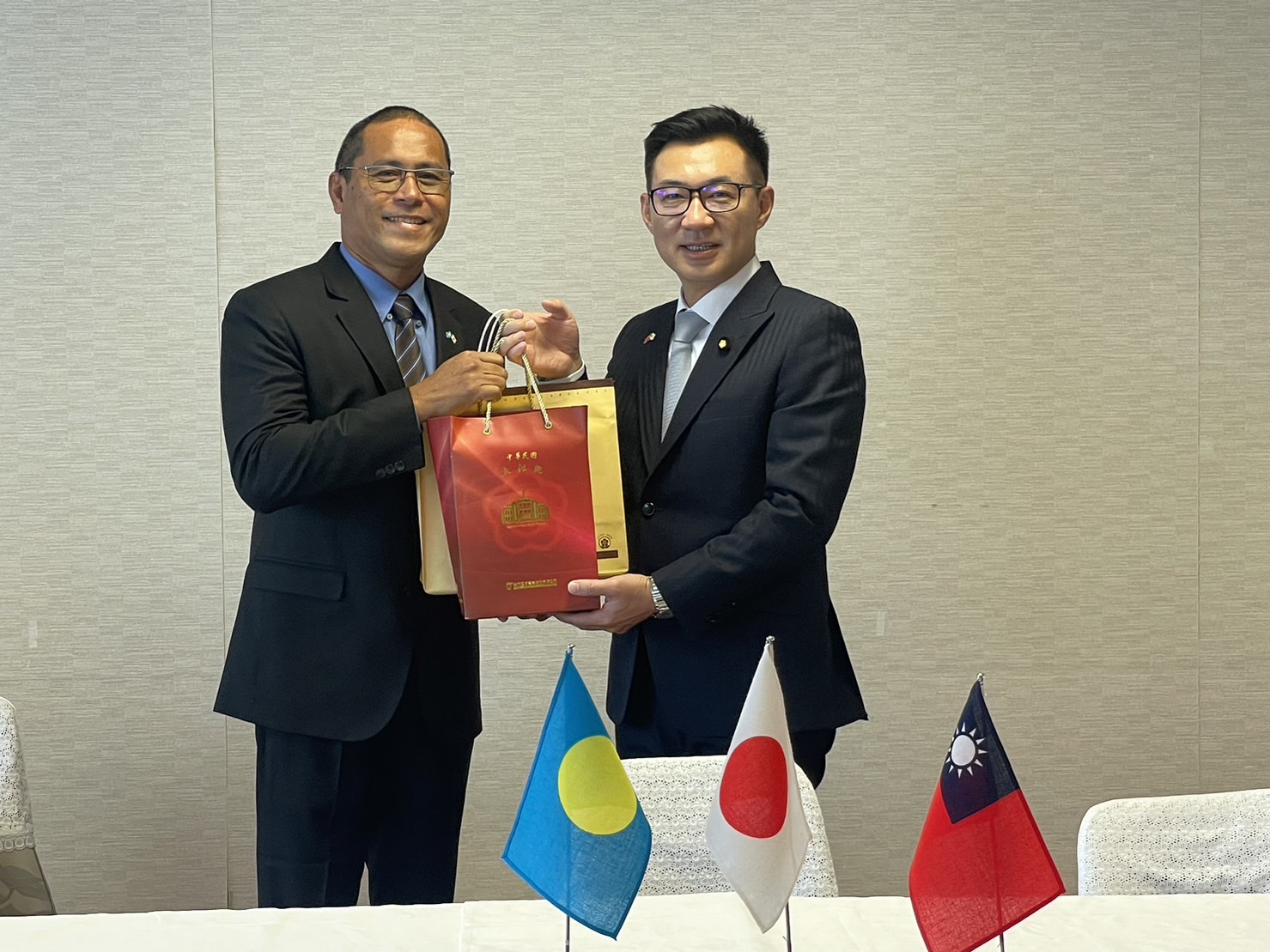
After group photos with representatives from Taiwan, Japan, and Palau and an exchange of tokens of appreciation, Acting Director Kazuhiro Fujii welcomed the legislators from Taiwan and Palau for visiting the LDP headquarters for a trilateral talk. In his remark, Vice President Chiang expressed that it was an honor to be invited to the talk, especially because he was planning to attend the parliamentarian exchange between Taiwan, Japan, and Palau in August 2023 , but was unable to be present due to a schedule conflict. He has been told that there were fruitful results from the meeting. For this reason, it was a good occasion for another exchange between parliamentarians from the three nations on the eve of the APPU General Assembly, and he looked forward to the discussions that followed. In closing, Vice President Chiang thanked the Japan delegation again for inviting the Taiwan and Palau delegations for the trilateral meeting.
Delegate Secilil Eldebechel of the House of Delegates of Palau also expressed that it was significant for everyone to come together to work on issues including economic development and challenges in climate change. With mutual trust built with each other, we could work for the prosperity of our countries and the next generation. Delegate Eldebechel concluded by also thanking Japan for taking this opportunity to bring together everyone to exchange experiences. During the meeting, Delegate Eldebechel also extended gratitude to Taiwan for the launch of the travel bubble and the increase of flights to Palau by China Airlines during the COVID-19 pandemic. After the opening remarks, the meeting commenced with representatives from the three parties exchanging views on several topics, including Taiwan’s membership in international organizations such as the UNFCCC, cooperation between Taiwan, Japan, and Palau on economic initiatives, tourism endeavors, and climate issues, as well as energy security and food crisis. The meeting concluded after one hour and a half with a fruitful discussion.
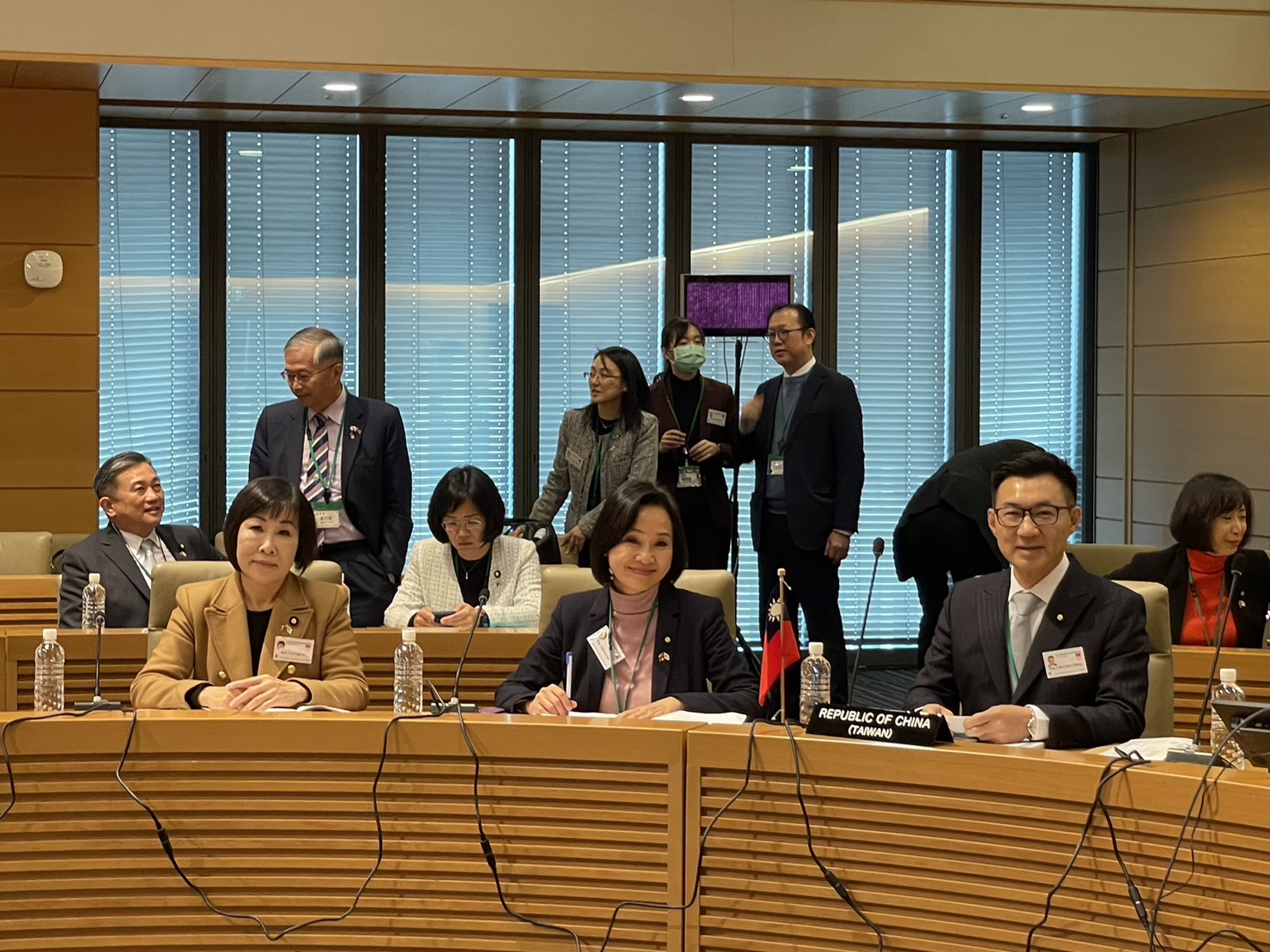
Right after the trilateral talk, our delegation attended the 86th APPU Council Meeting, which was attended by delegations from 11 member states. The meeting commenced with an opening remark by Representative Taberannang Timeonn from Kiribati, the Chairperson of the 85th APPU Council, followed by a unanimous agreement with a round of applause to elect Councilor Junzo Yamamoto from Japan as the Chairperson of the 86th Council. After that, the meeting covered a preview of the agenda for the 52nd General Assembly taking place the next day, the agreement drafts proposed by all participating nations, and the announcement of the host country for the next APPU meeting. All three agreement drafts proposed by Taiwan were included for discussion in the agenda at the General Assembly the next day, and the council meeting concluded after 1 hour.