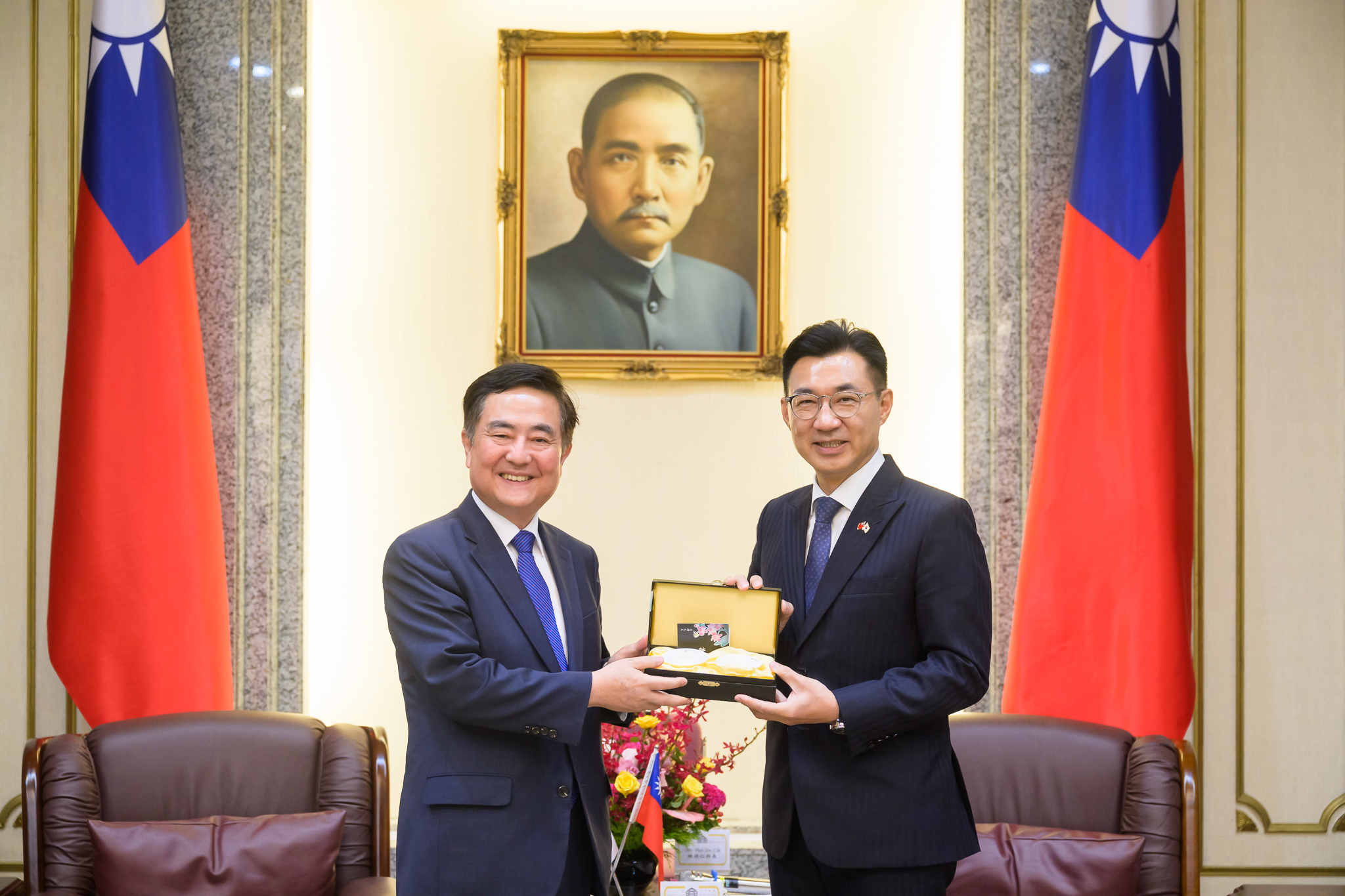
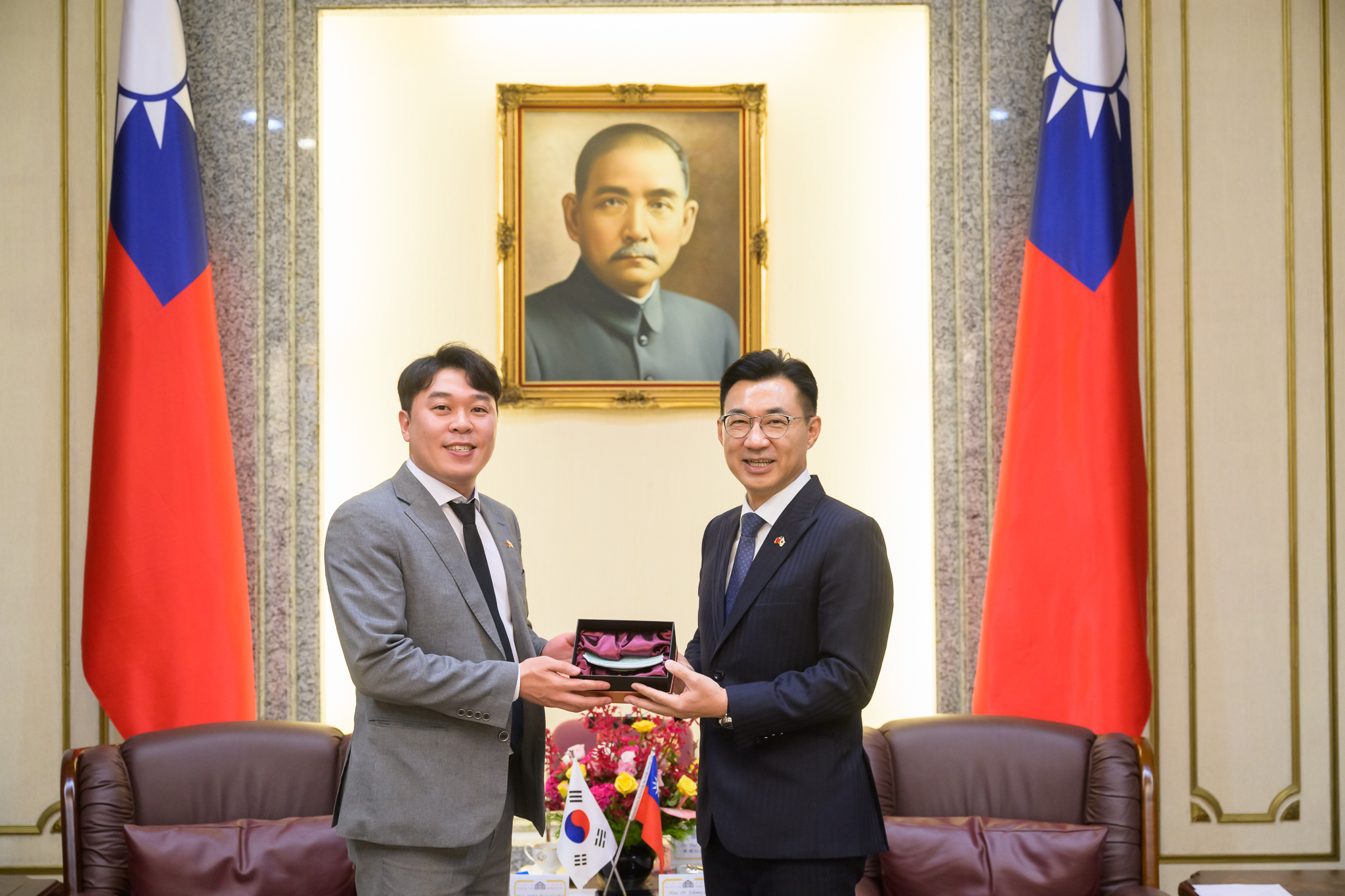
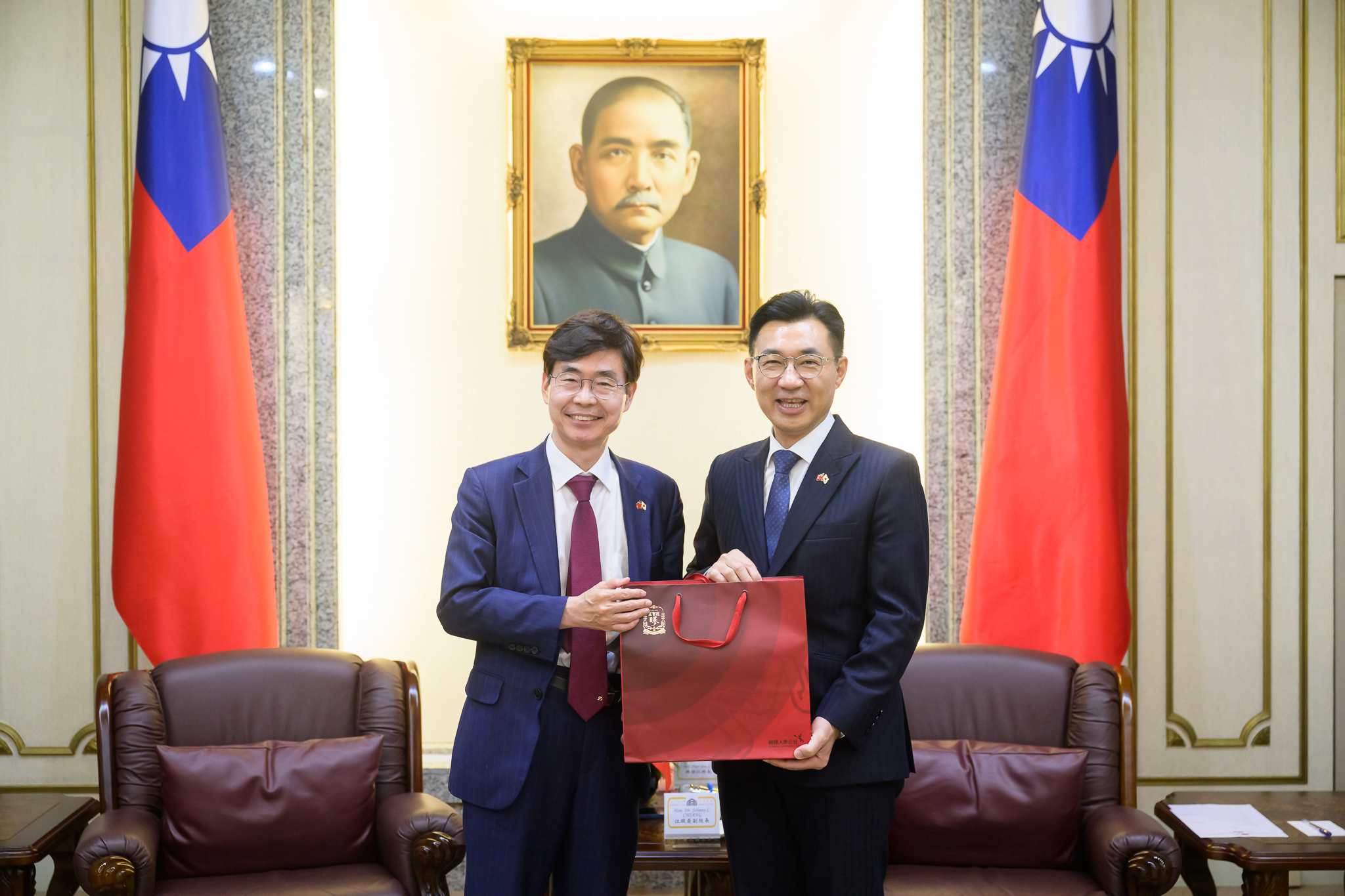
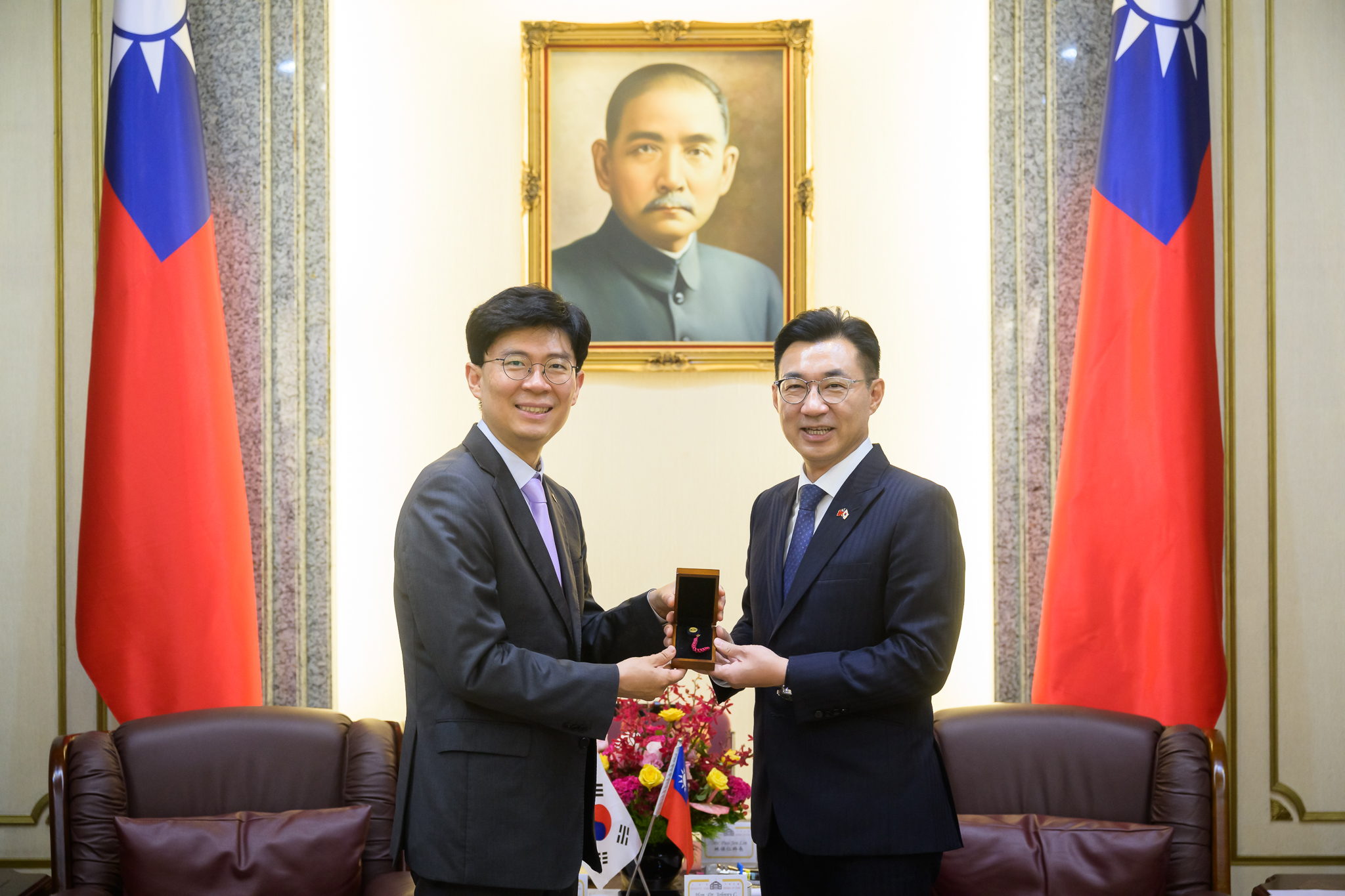
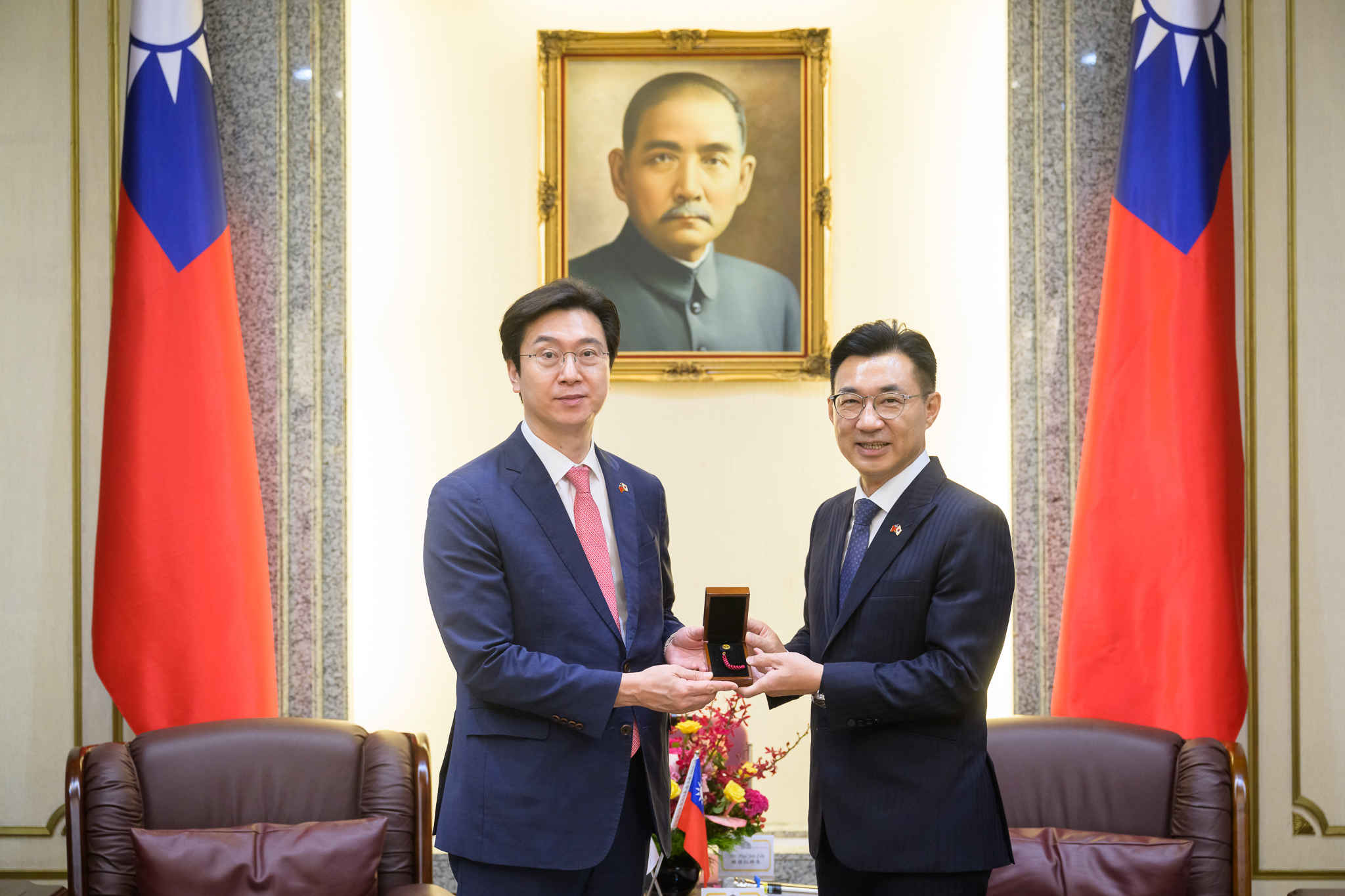
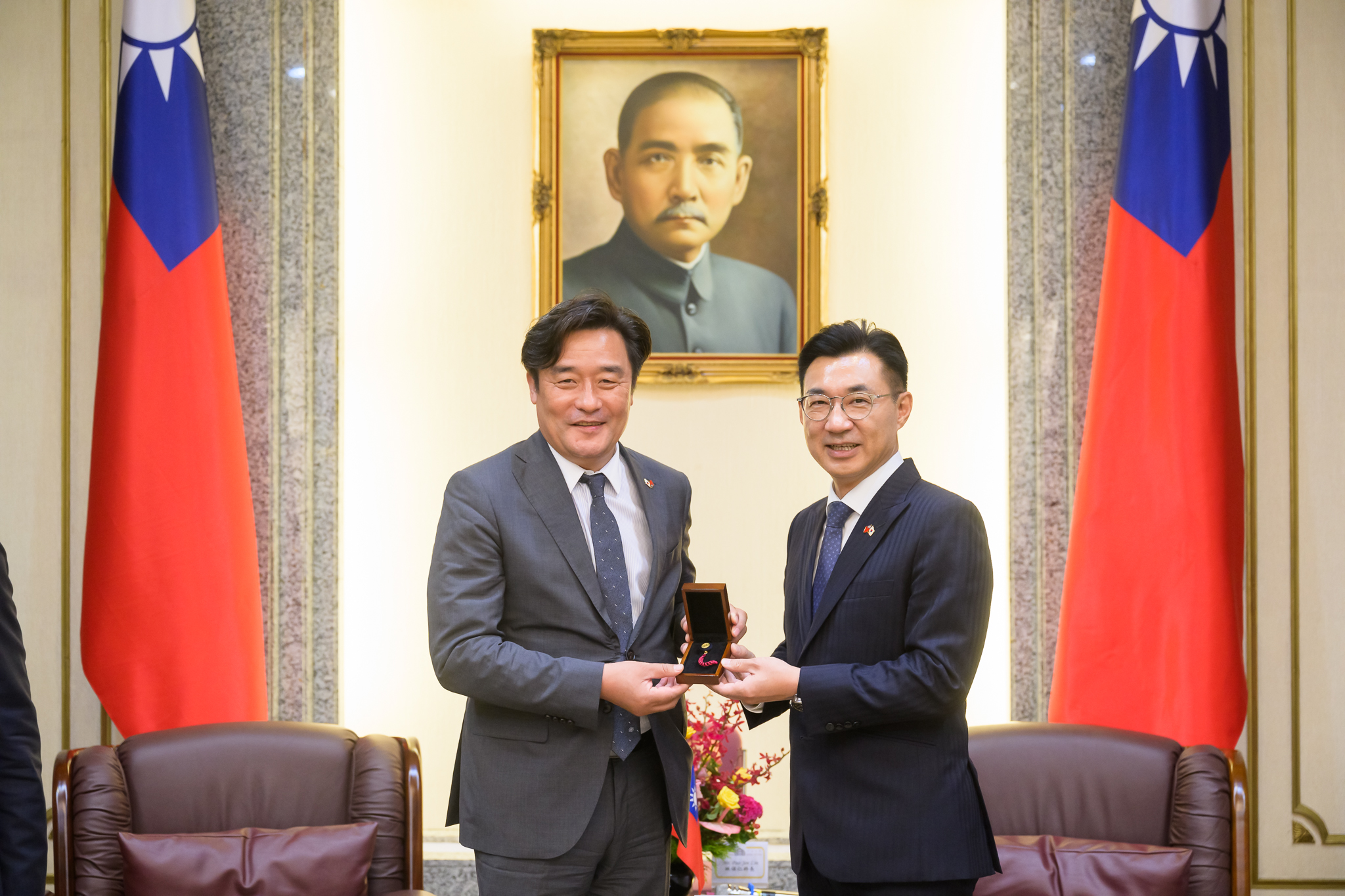
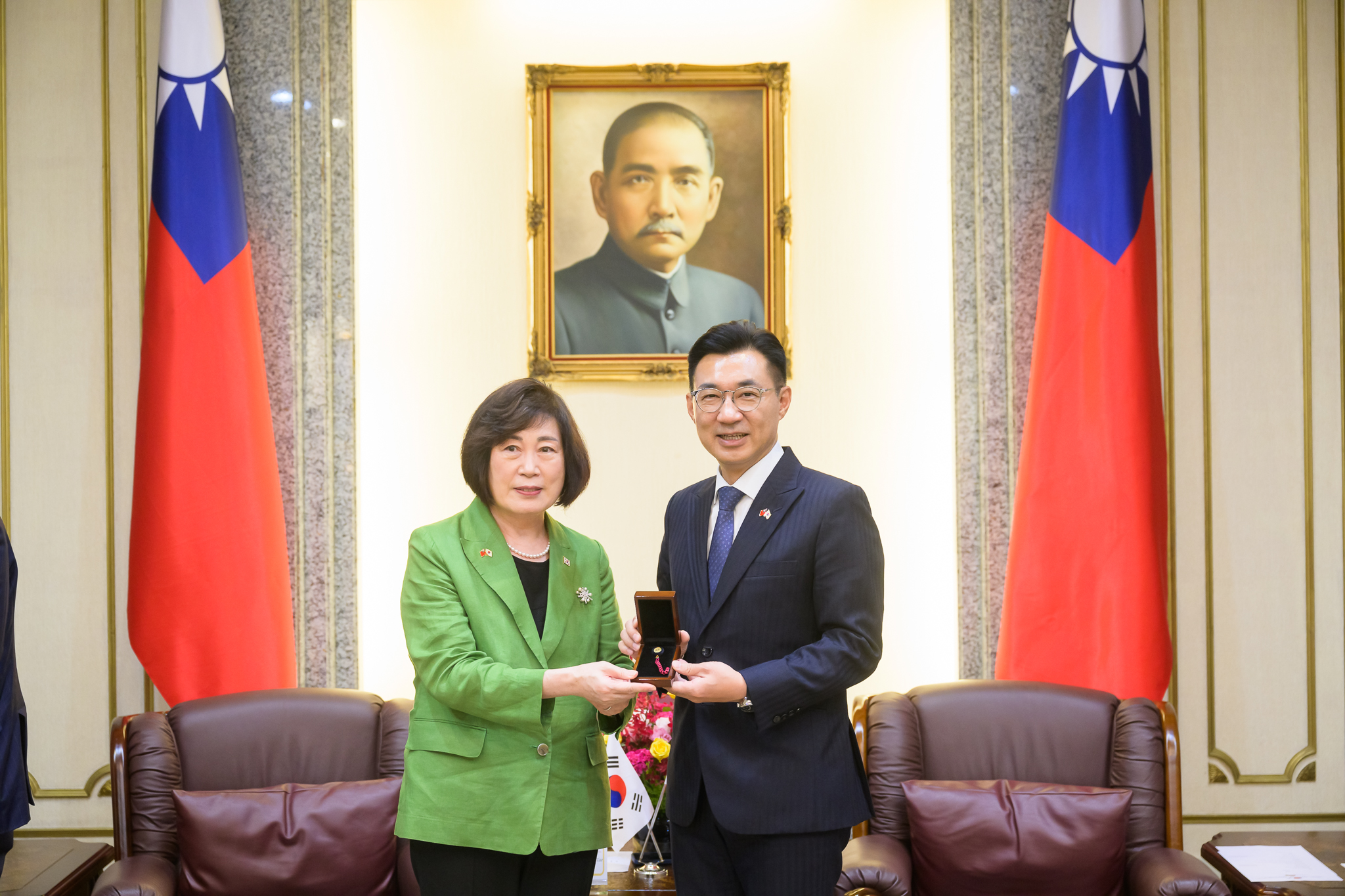
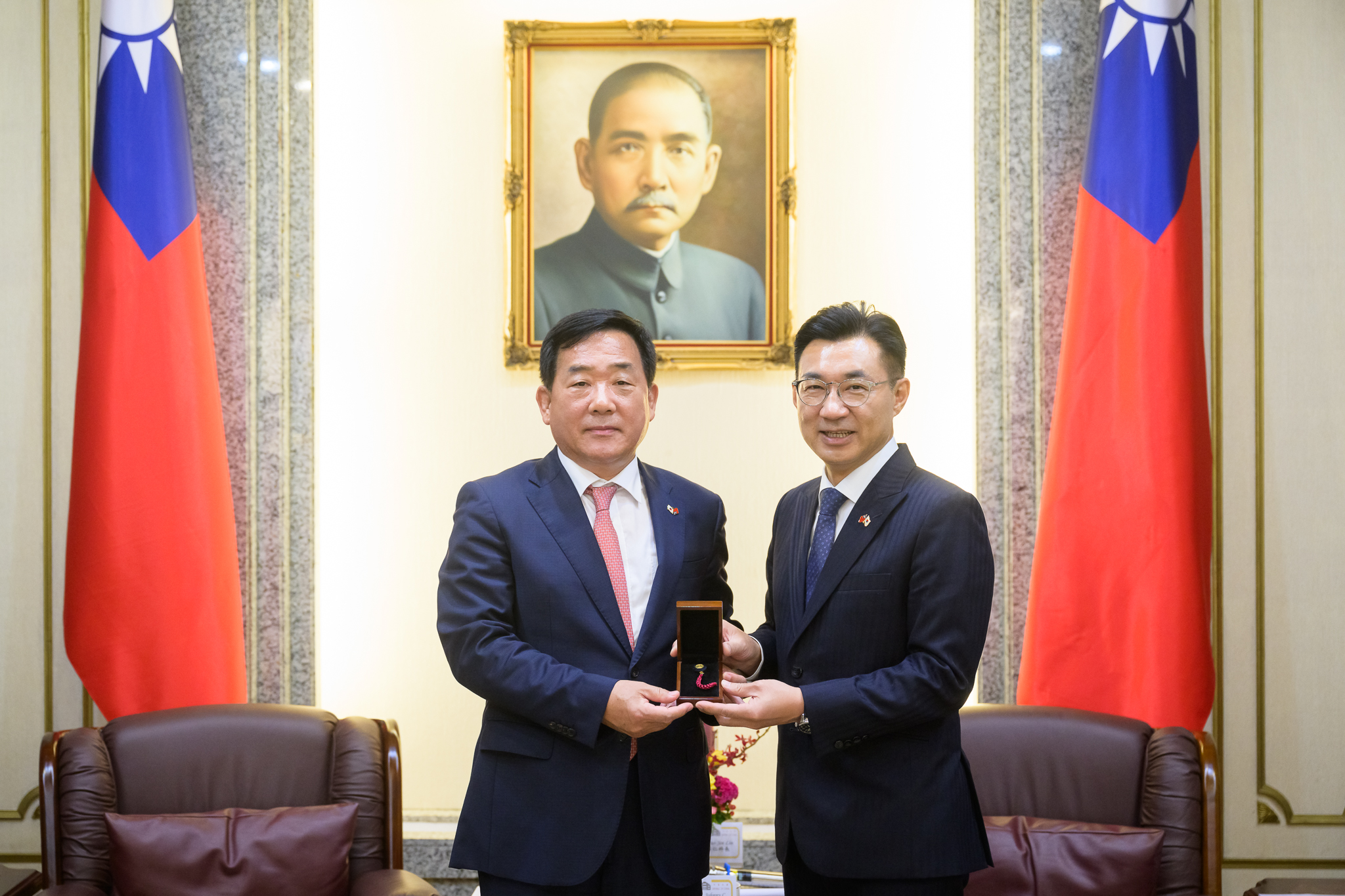
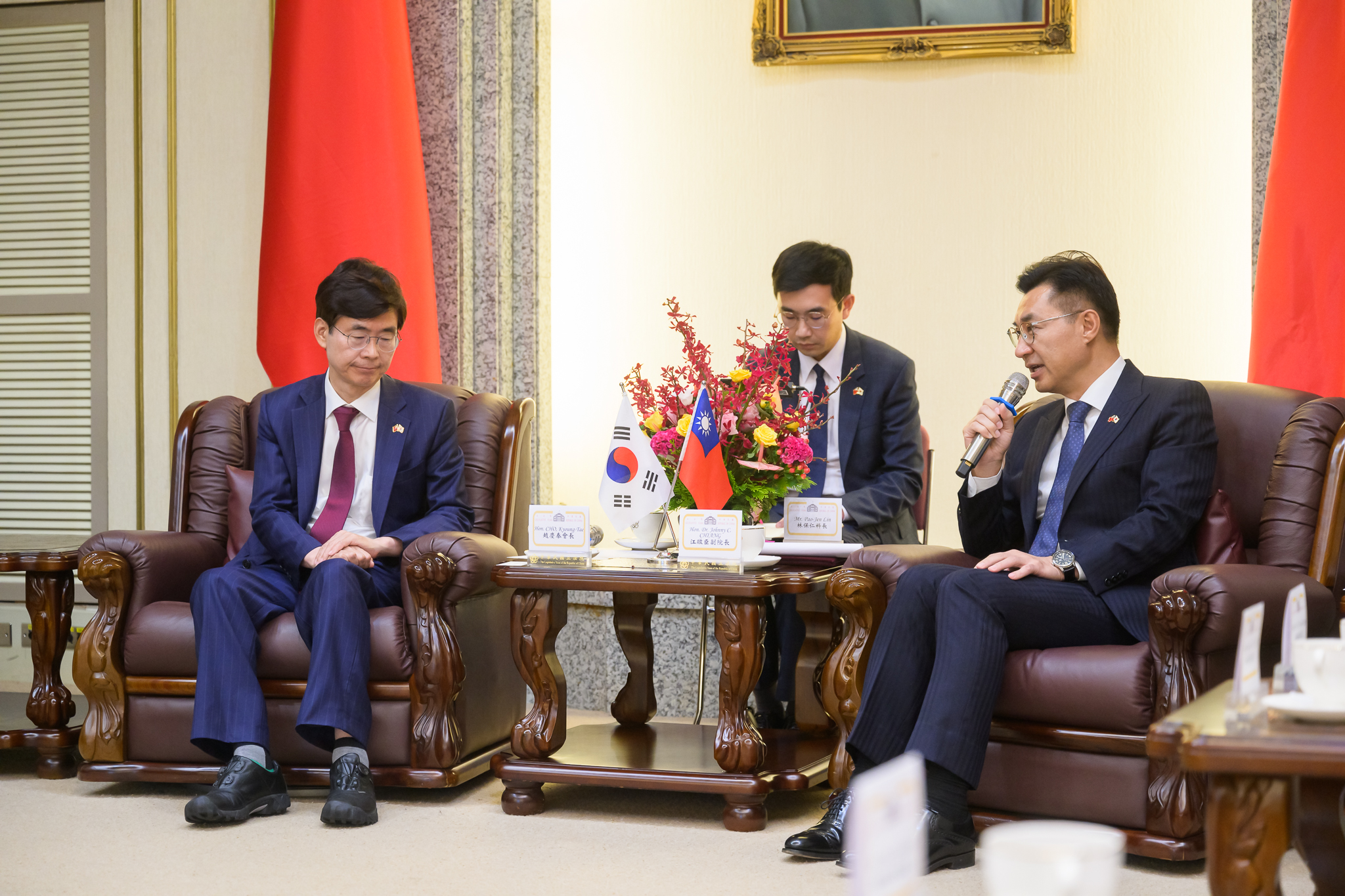
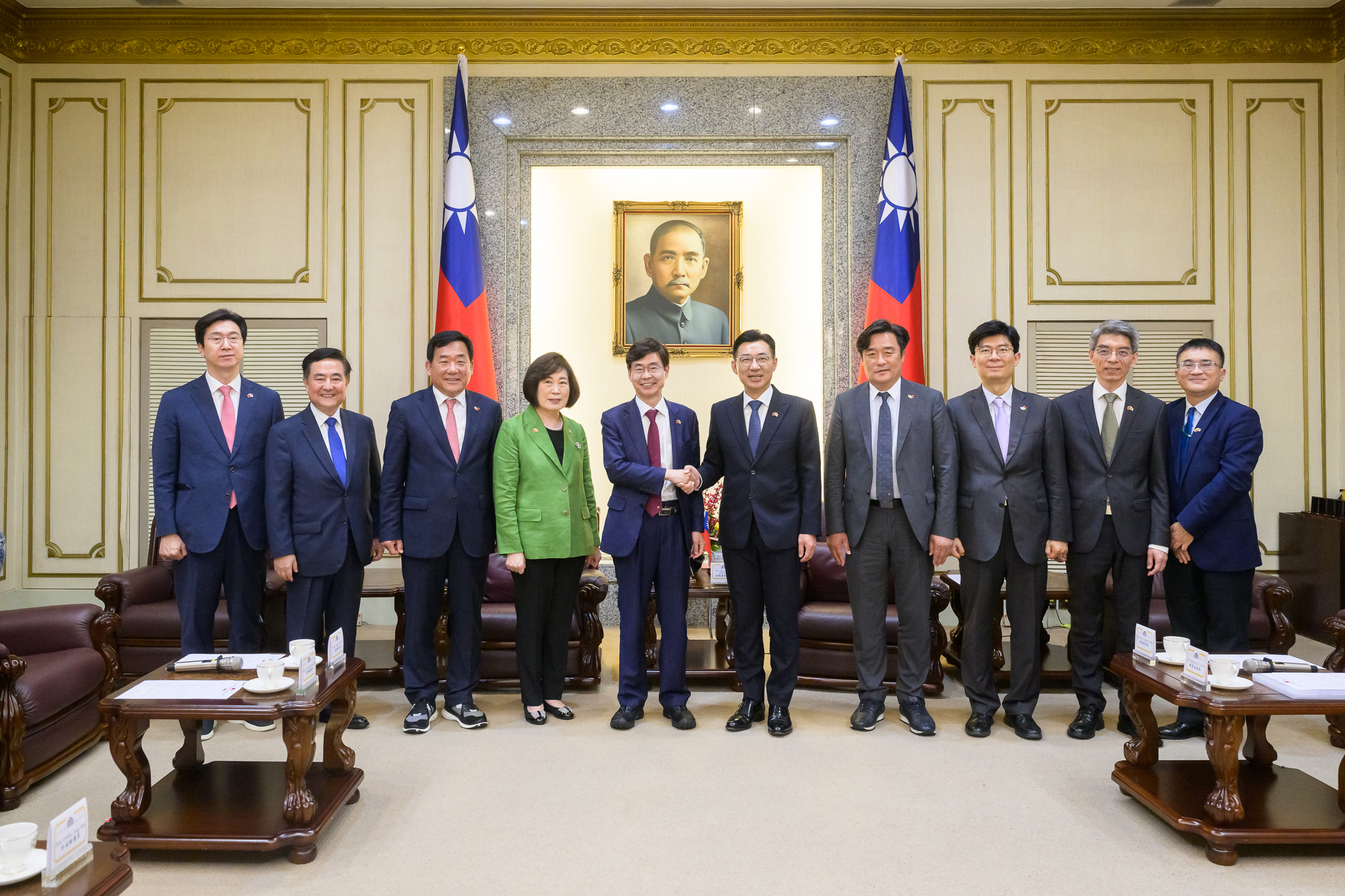
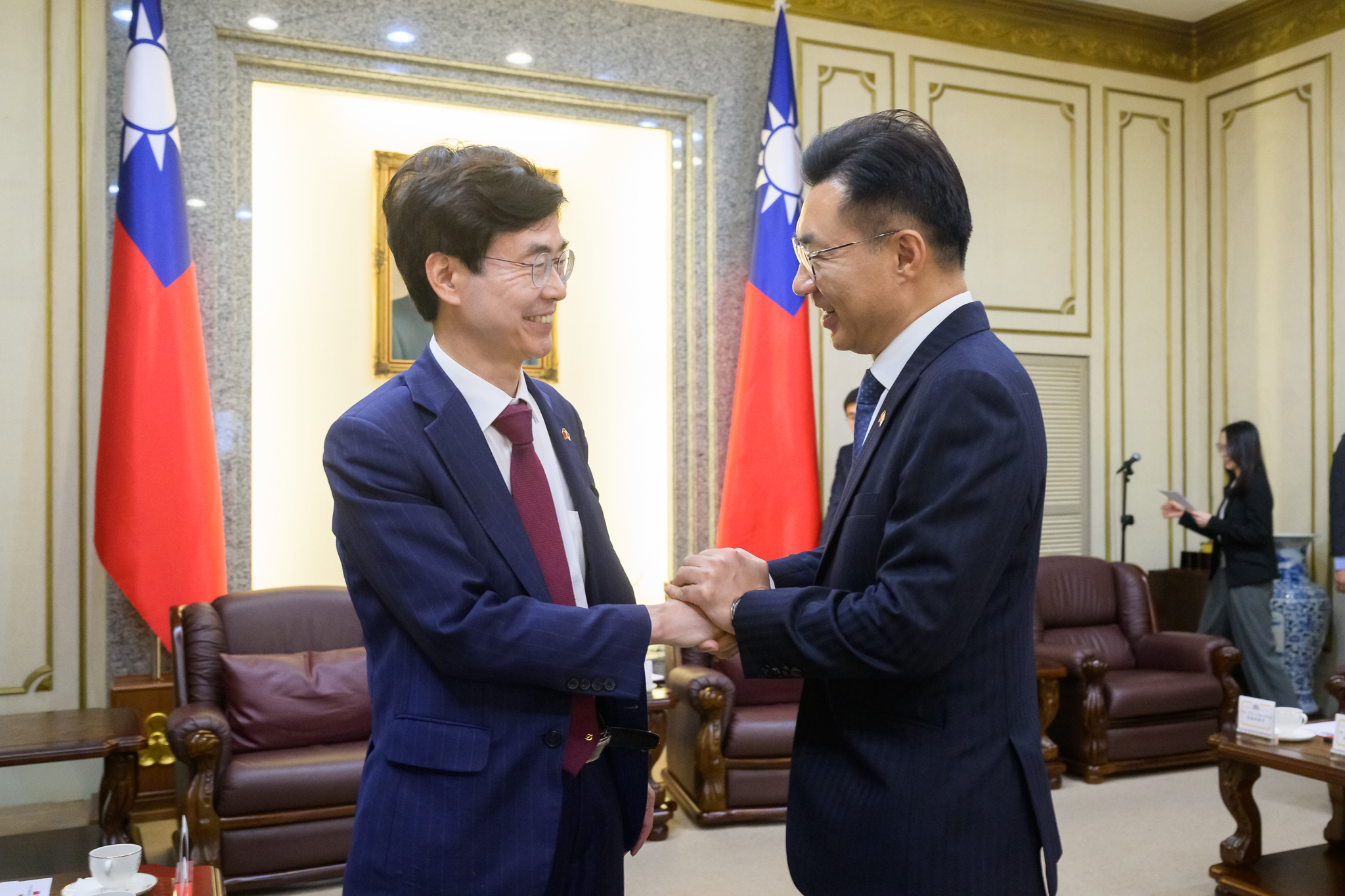
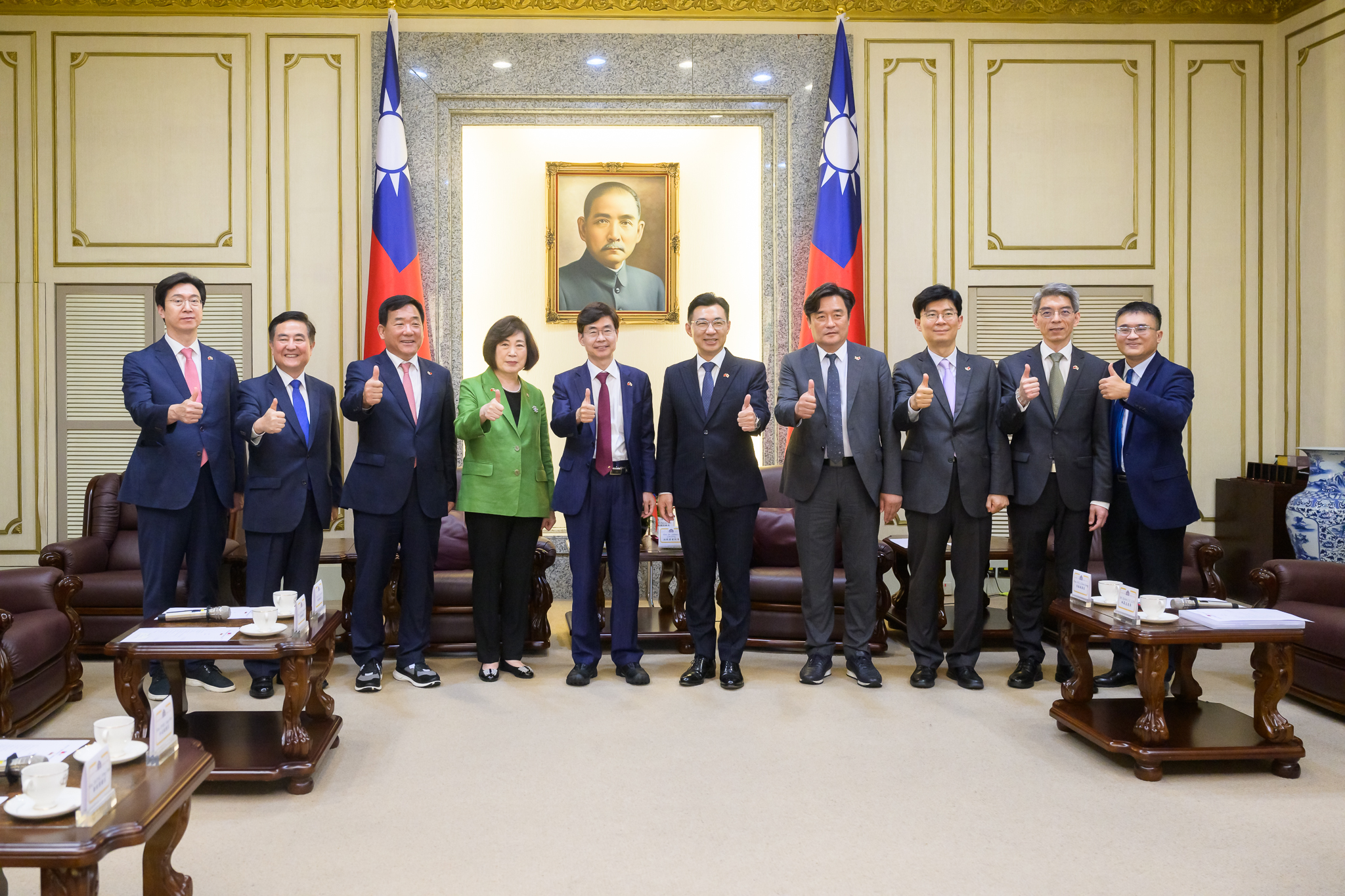
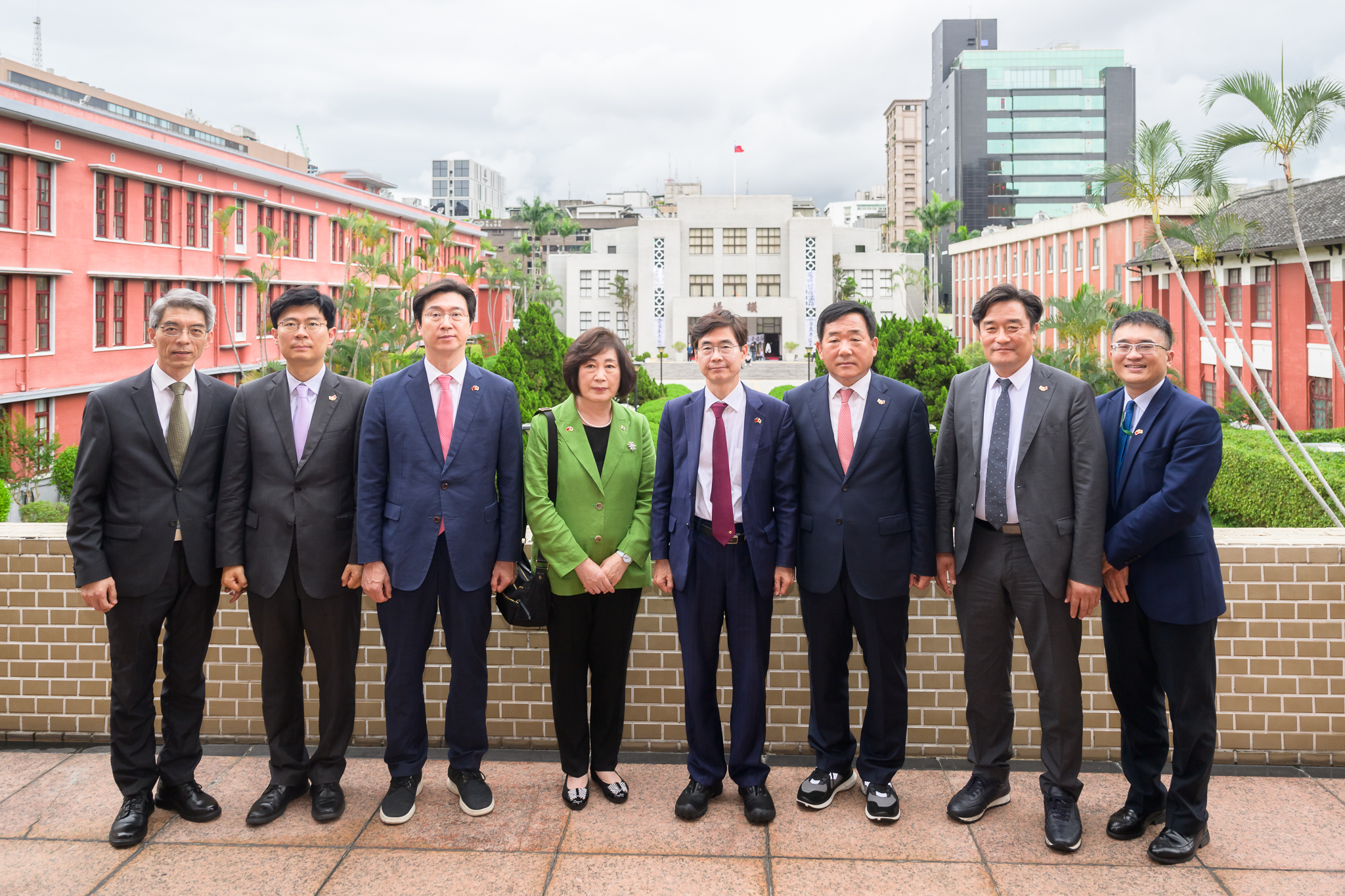
Vice President Dr. Johnny C. Chiang met with the delegation of the Korea-Taiwan Parliamentary Friendship Association led by Chairperson Cho Kyoung-tae from the National Assembly of the Republic of Korea this afternoon (May 21). In attendance were Representative Lee Eun-ho of the Korean Mission in Taipei, Deputy Director-General of the Ministry of Foreign Affairs’ Department of East Asian and Pacific Affairs, Chen Chun-chi, and Director of the International Affairs Department of the Legislative Yuan, Kevin C.F. Lin.
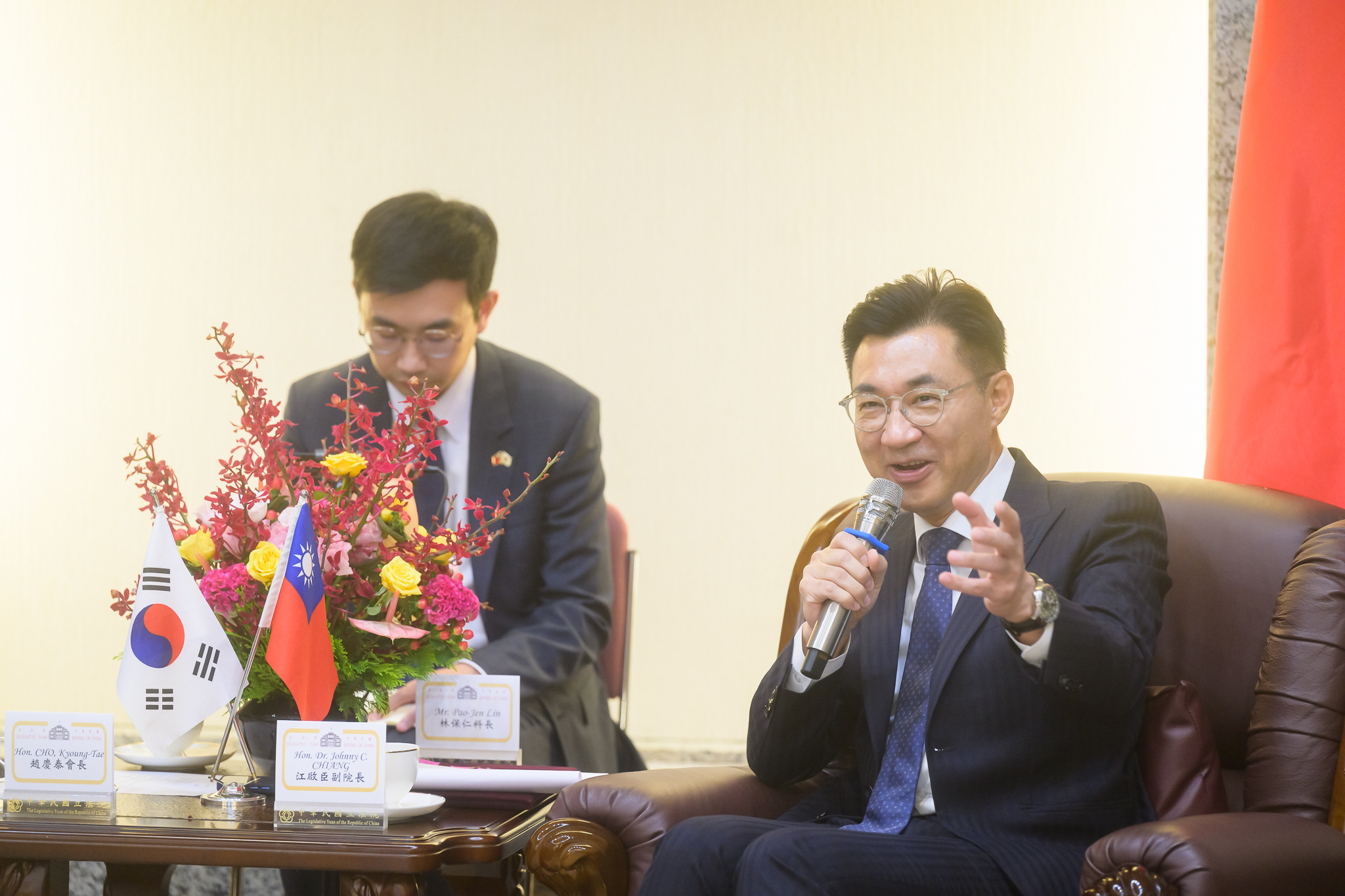
Vice President Chiang first extended a warm welcome to the guests on behalf of President Daniel K.Y. Han, explaining that President Han was presiding over an important meeting today. Thus, on behalf of President Han and the Legislative Yuan, he expressed a sincere welcome to the distinguished friends from South Korea.
In his remarks, Vice President Chiang stated that the Republic of Korea and the Republic of China (Taiwan) have maintained strong relations, particularly through vibrant interactions between their people. Over the past few years, South Korean cuisine, culture, sports, tourism, and aesthetics medicine, has been immensely popular in Taiwan. Bilateral interactions have seen significant progress, especially with the increase in mutual tourism. The number of Taiwanese tourists visiting South Korea has been steadily recovering post-pandemic, while the number of South Korean tourists visiting Taiwan has also reached new highs in the past two years. Furthermore, the South Korean film and television industry is highly popular in Taiwan, and Taiwanese film, television productions, and culinary culture are gradually gaining appreciation among the South Korean public. Vice President Chiang expressed his belief that the visiting delegation would be able to fully experience the vibrant interactions and exchanges between the people of both countries during their visit in Taiwan.
Vice President Chiang mentioned that he had visited the South Korean National Assembly over a decade ago and admired the unique parliamentary complex. He noted that this serves as an important reference for Taiwan's future plans to relocate or rebuild its own parliament. Vice President Chiang continued by stating that, in addition to civilian exchanges, geopolitical factors in recent years have led to increasingly close interactions between the Taiwanese and South Korean governments on economic, trade, and security issues. The current Legislative Yuan has established the "Taiwan-South Korea Parliamentary Friendship Association," with Legislator Lin Te-fu serving as the chairperson. Although Legislator Lin could not attend today due to a meeting, he will lead a delegation to visit South Korea in the future, aiming for more concrete exchanges with the South Korean National Assembly.
Vice President Chiang continued, stating that the delegation's visit to attend the inauguration ceremony of Taiwan's 16th President and Vice President is profoundly significant. It symbolizes the beginning of a new phase in the bilateral relationship, and he looks forward to more substantial exchanges in the future. Many legislators in the Legislative Yuan have a keen interest in South Korea, often visiting for study tours or vacations during their busy schedules. He warmly welcomed South Korean National Assembly members to organize future visits to Taiwan, assuring that President Han and the legislators would offer the utmost hospitality.
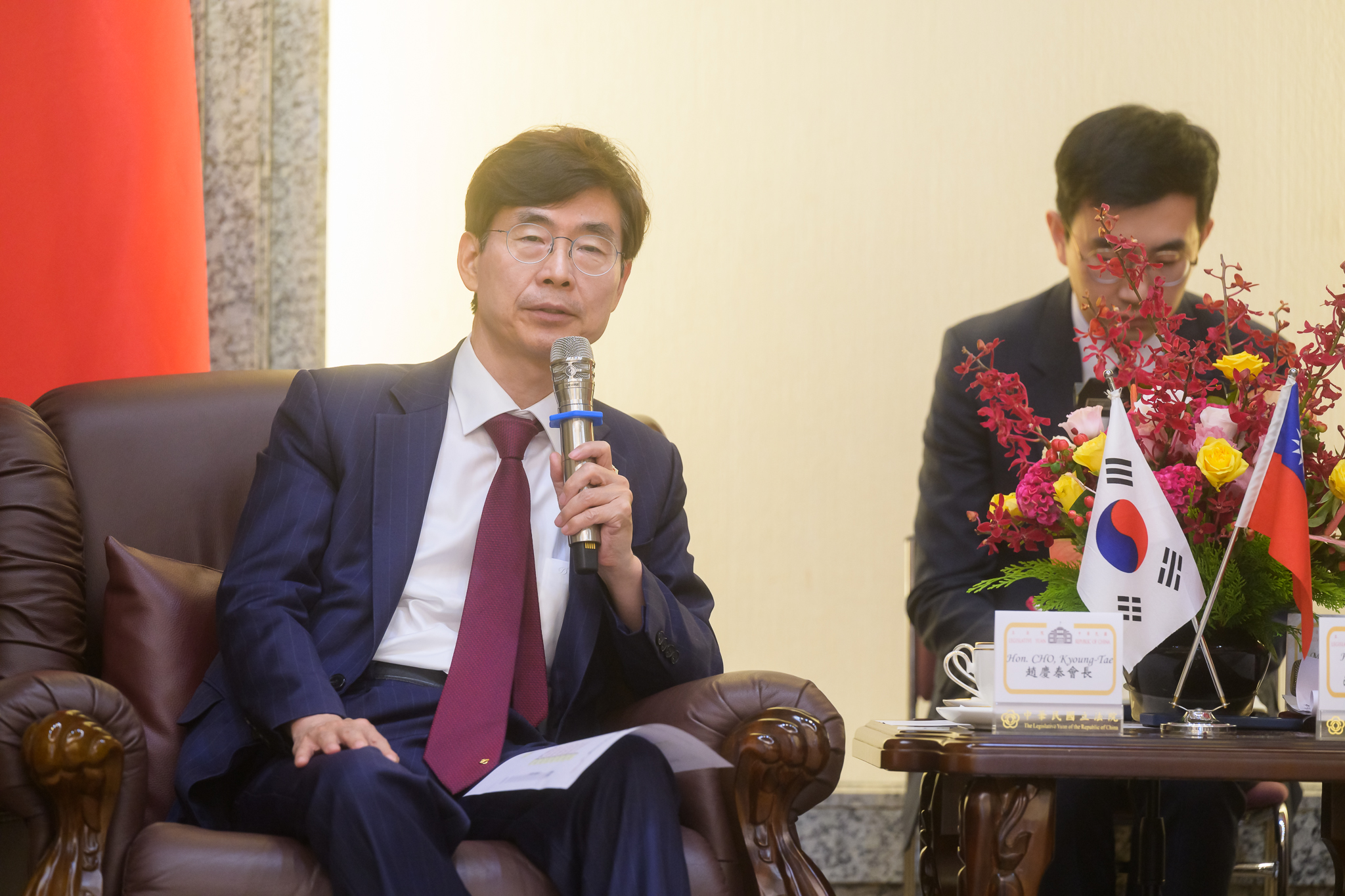
Chairperson Cho Kyoung-tae began his remarks by expressing his gratitude to Vice President Chiang for taking the time to meet with the delegation. He mentioned that during the inauguration ceremony the previous day, he personally witnessed President Han presenting the national seals, the Seal of Honor, and the official stamps to President Lai Ching-te, marking the completion of the formal inauguration. Chairperson Cho remarked that the democratic standards displayed during the inauguration are aspects South Korea can learn from Taiwan. Observing the intense debates among various party caucuses in the Legislative Yuan on specific issues today, while it might appear chaotic to the public, is actually a manifestation of democratic development. He noted that similar chaotic scenes often occur in the South Korean National Assembly, reflecting the concrete embodiment of democratic spirit. Chairperson Cho expressed hope that Taiwan's political parties could step back and engage in rational discussions to showcase a mature democracy. He concluded by emphasizing that the members of the visiting delegation were undaunted by pressures from China and took concrete actions to support democratic Taiwan. He reiterated his gratitude to Vice President Chiang for the warm reception.
During the bilateral exchange, member of the National Assembly of South Korea Chung Kyung-hee expressed gratitude for the warm welcome from various sectors in Taiwan. Echoing Chairperson Cho's sentiments, she emphasized that the delegation's visit to Taiwan was a stance against China's pressure. She highlighted that neither nations nor individuals should forget the support and kindness they have received. In the future, she will continue to actively promote parliamentary exchanges between the two countries as Deputy Chairperson of the Korea-Taiwan Parliamentary Friendship Association, alongside Chairperson Cho.
Member of the National Assembly Park Sung-min continued by stating that he has never forgotten the support given by the Republic of China during Korea's most challenging times and that he will actively support Taiwan in the future. Member of the National Assembly Jeong Dong-man expressed his honor at attending the inauguration of Taiwan's President and Vice President, noting that his constituency is in Busan, where there is a significant Taiwanese community. Although this is his first visit to Taiwan, he noted that there are two Korean channels on Taiwanese television, indicating the importance of cultural exchange. He will continue to support Chairperson Cho in promoting parliamentary and cultural exchanges between Taiwan and Korea. Vice President Chiang responded by noting that many Taiwanese TV channels air Korean dramas, and Korean entertainment groups frequently hold sold-out concerts in Taiwan. In recent years, Taiwanese media has also been actively expanding into the Korean market. He believes there is still significant potential for bilateral cooperation and looks forward to enhancing such exchanges through parliamentary diplomacy.
Member of the National Assembly Kang Min-kuk expressed a hope for robust future exchanges between Taiwan and South Korea, using their deep historical ties as a foundation for further development. He anticipates that the bilateral relationship will continue to advance. Member of the National Assembly Cho Jung-hun shared that his constituency is in Seoul’s Mapo District, a popular destination for Taiwanese tourists. He mentioned that half of the customers at his favorite restaurant, known for its potato and rib soup, are Taiwanese. Although this is his first visit to Taiwan, he already feels a strong sense of familiarity with the country. He expressed a desire to promote Taiwan-Korea cultural exchanges within the National Assembly. He noted that the Hong Kong film industry was once very popular in Korea, but the development of culture is closely tied to freedom and democracy. Due to political factors, many of Hong Kong's cultural achievements are no longer present. Taiwan and Korea, both sharing democratic freedoms and rule of law, are expected to increase their cultural exchanges and work together to promote these values worldwide.
Vice President Chiang responded by noting that prior to the pandemic, annual tourism exchanges between Taiwan and Korea exceeded one million people. After the pandemic, the number of Taiwanese tourists visiting Korea quickly rebounded, and the number of Korean visitors to Taiwan has also significantly increased. The influence of cultural and film industries should not be underestimated, and he believes that Taiwan will be able to promote more future stars of the film industry to take the stage in Korea. Additionally, Taiwan possesses cultural soft power that rivals Hong Kong’s. In recent years, several Korean television programs have filmed Taiwan’s attractions and cuisine, with culinary offerings of his hometown, Taichung, featured as well. He believes that through bilateral parliamentary exchanges, there will be more opportunities for innovation and flexibility. Due to the geographical proximity between Taiwan and South Korea, parliamentary exchanges should occur more frequently. He hopes to have another opportunity to visit South Korea in the future to further deepen cooperation and bilateral friendship.
As the meeting drew to a close, Vice President Chiang specially introduced Kevin C.F. Lin, Director of the International Affairs Department, who had previously served at the Busan office and has deep connections with South Korea. He is an excellent bridge between the South Korean National Assembly of South Korea and the Legislative Yuan of the Republic of China (Taiwan). He mentioned that should there be any need for assistance in the future, the National Assembly and the Legislative Yuan can maintain contact through the International Affairs Department.
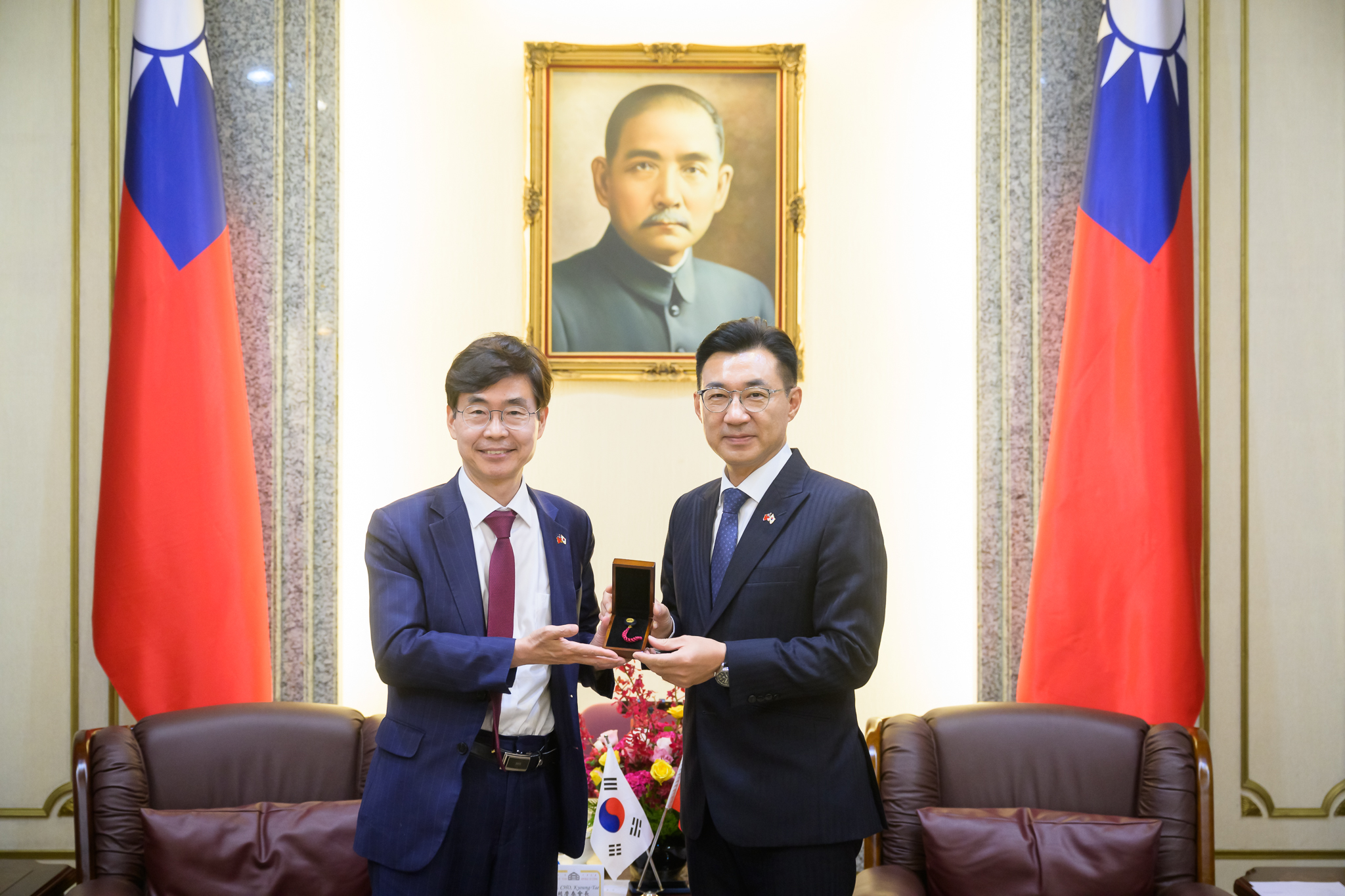
The visit lasted approximately 40 minutes and was marked by a warm and friendly atmosphere. Vice President Chiang and Chairperson Cho exchanged commemorative gifts, bringing the meeting to a successful conclusion.