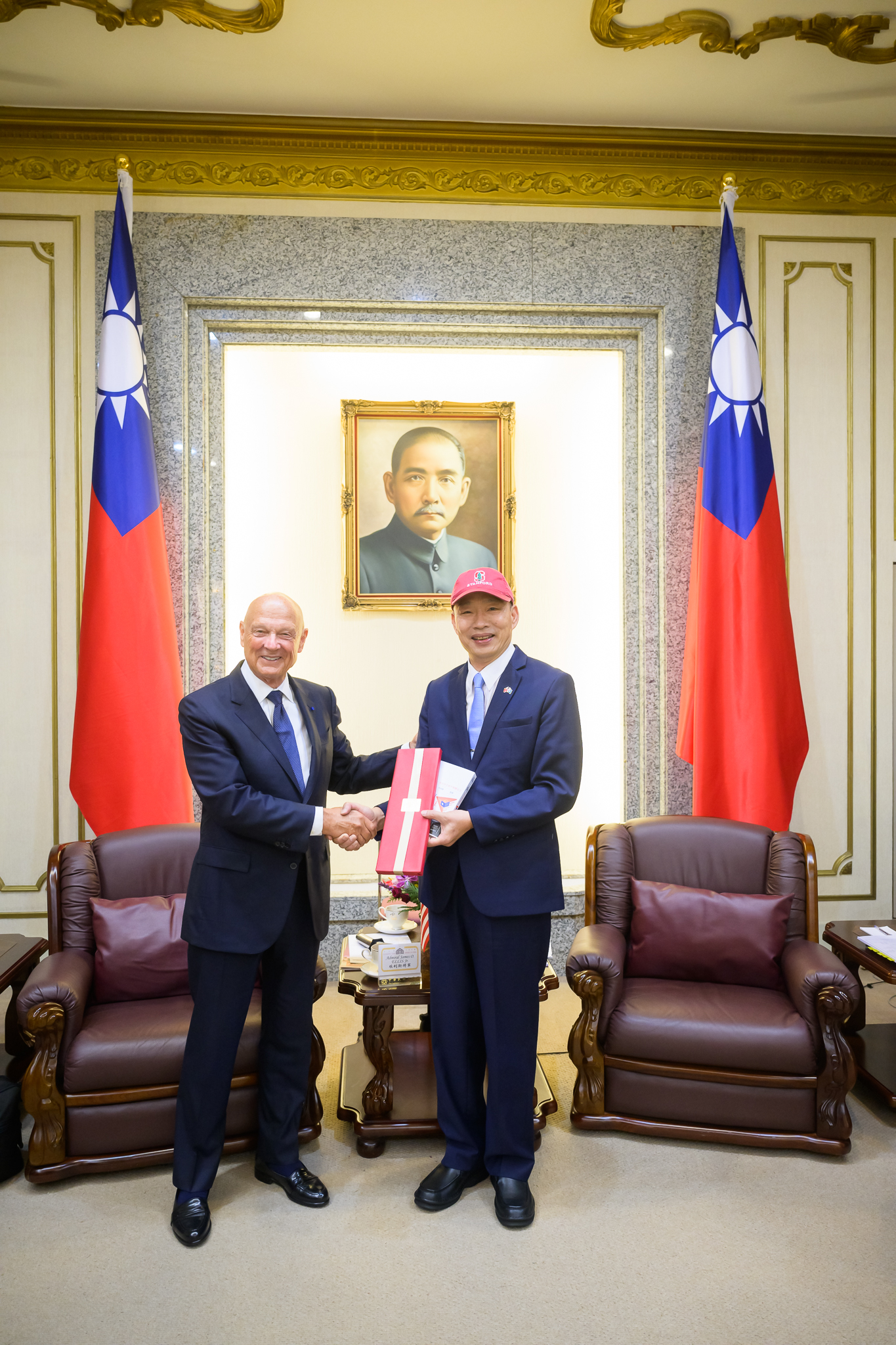
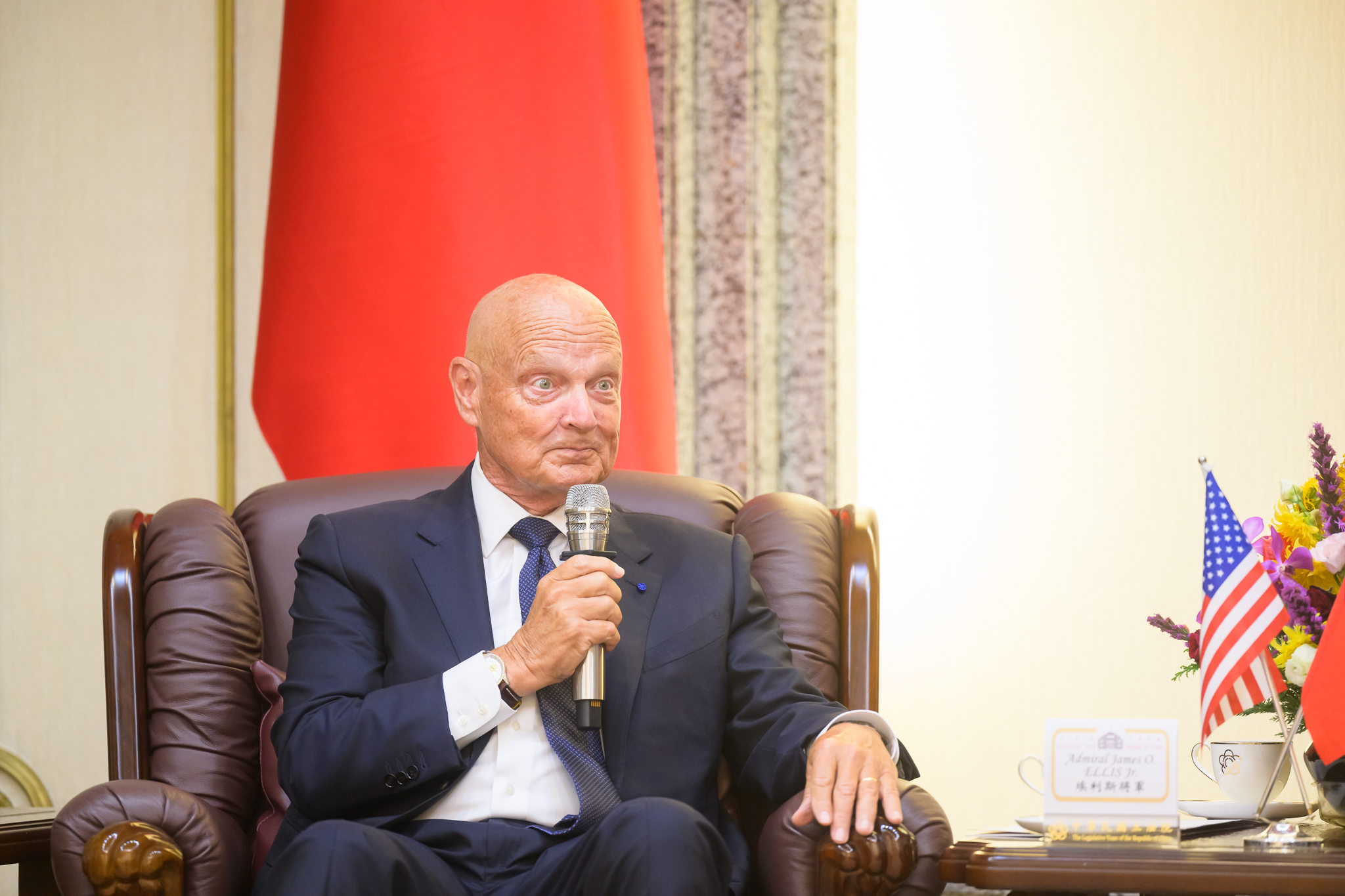
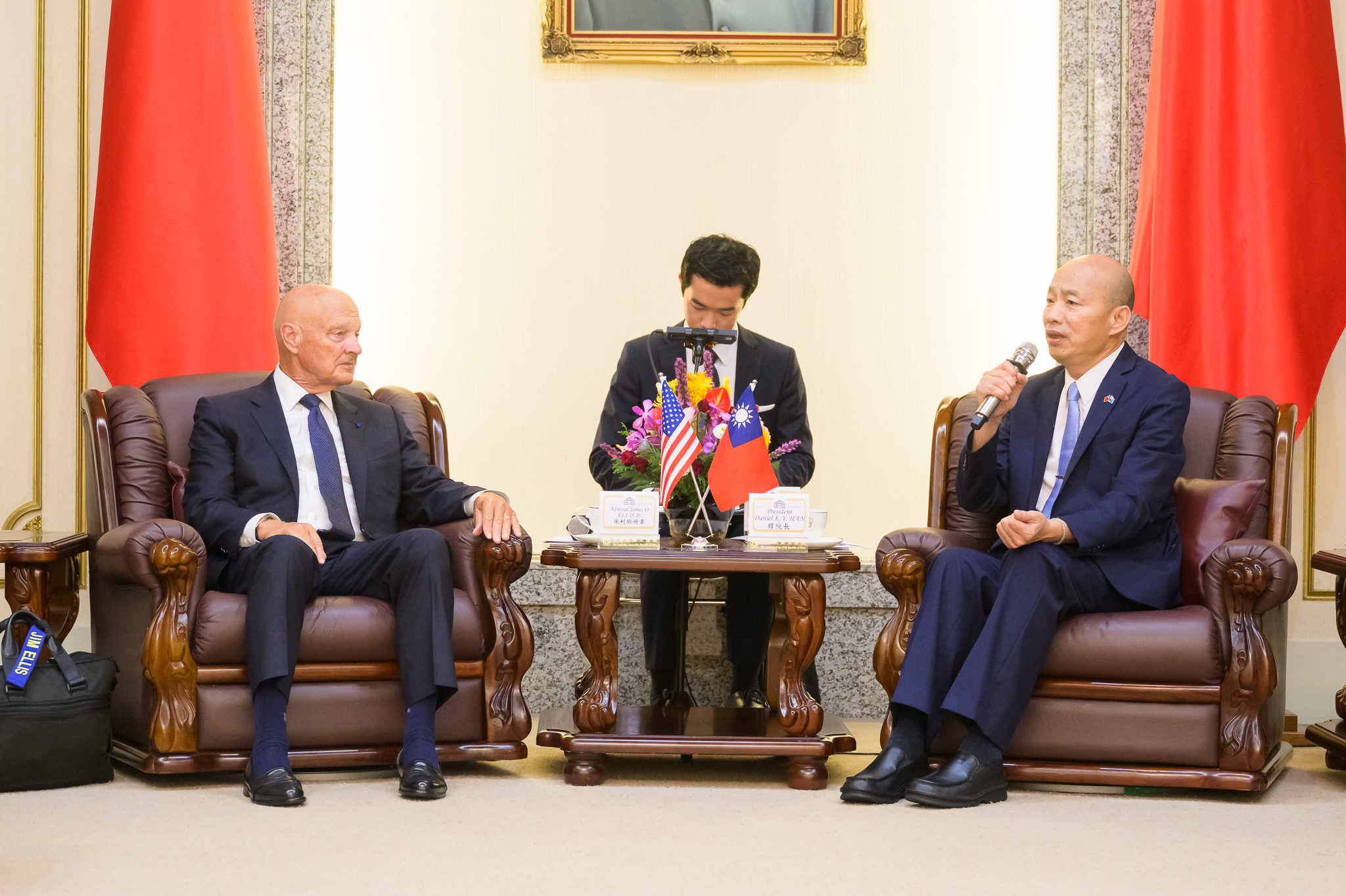
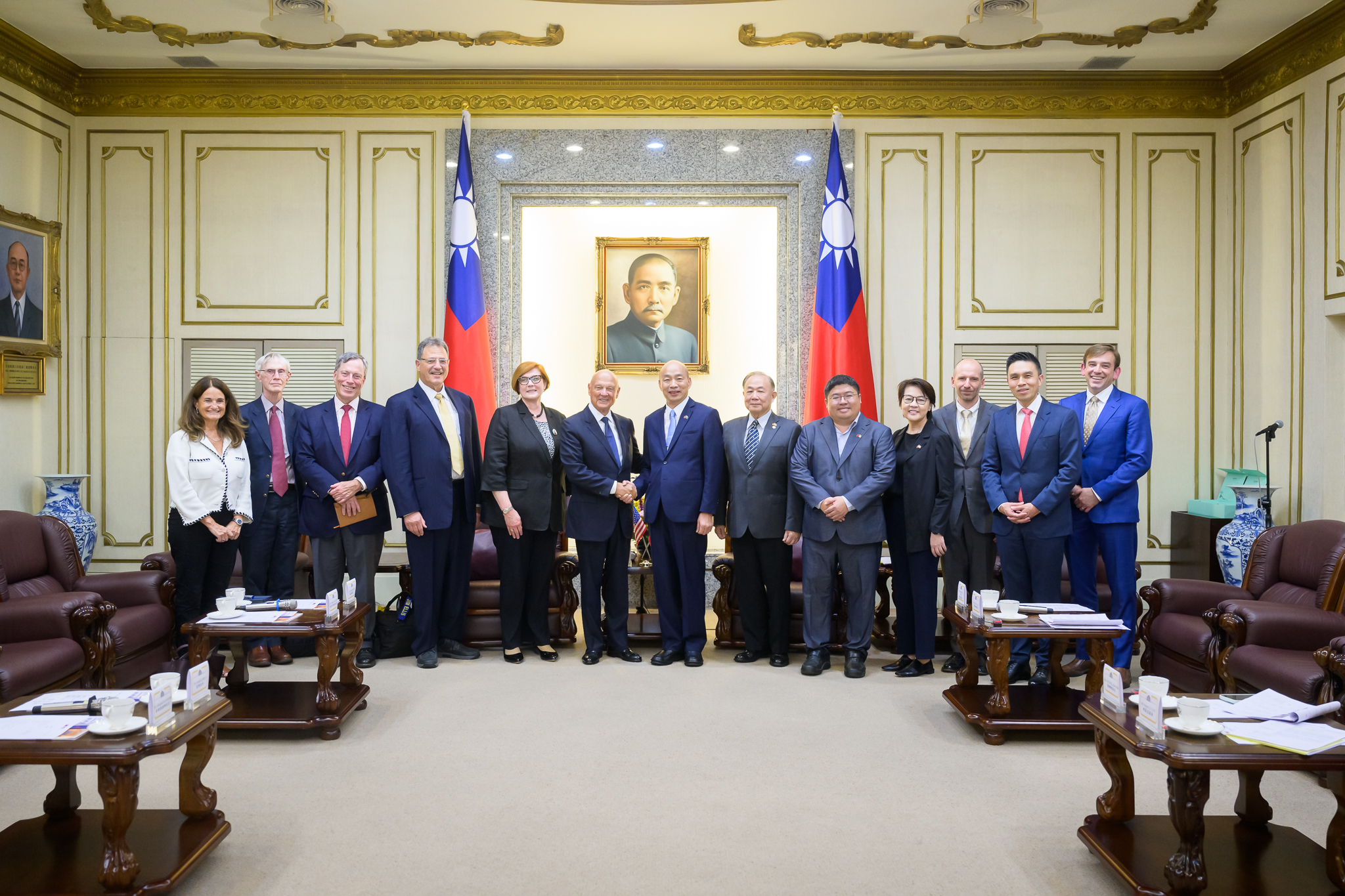
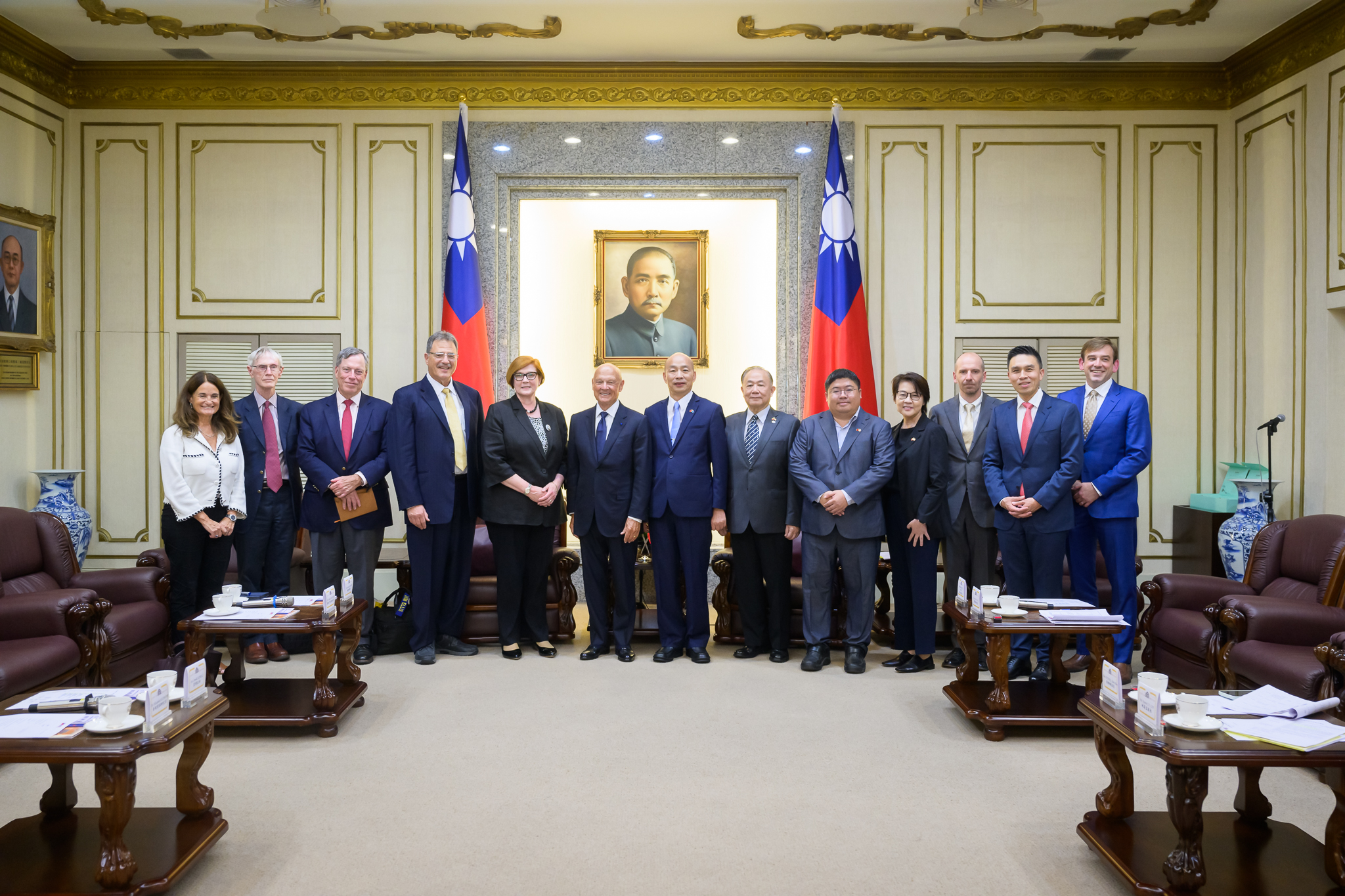
On the afternoon of September 10, President Daniel K.Y. Han of the Legislative Yuan met with a delegation from the Hoover Institution at Stanford University. Accompanied by KMT Legislator Chen Yeong-Kang, DPP Legislator Tsai Yi-Yu, and TPP Legislator Huang Shan-Shan, as well as Director of the International Affairs Office Kevin C.F. Lin, President Han engaged with Admiral James O. Ellis Jr. and Professor Larry Diamond, the heads of the nine-member delegation.
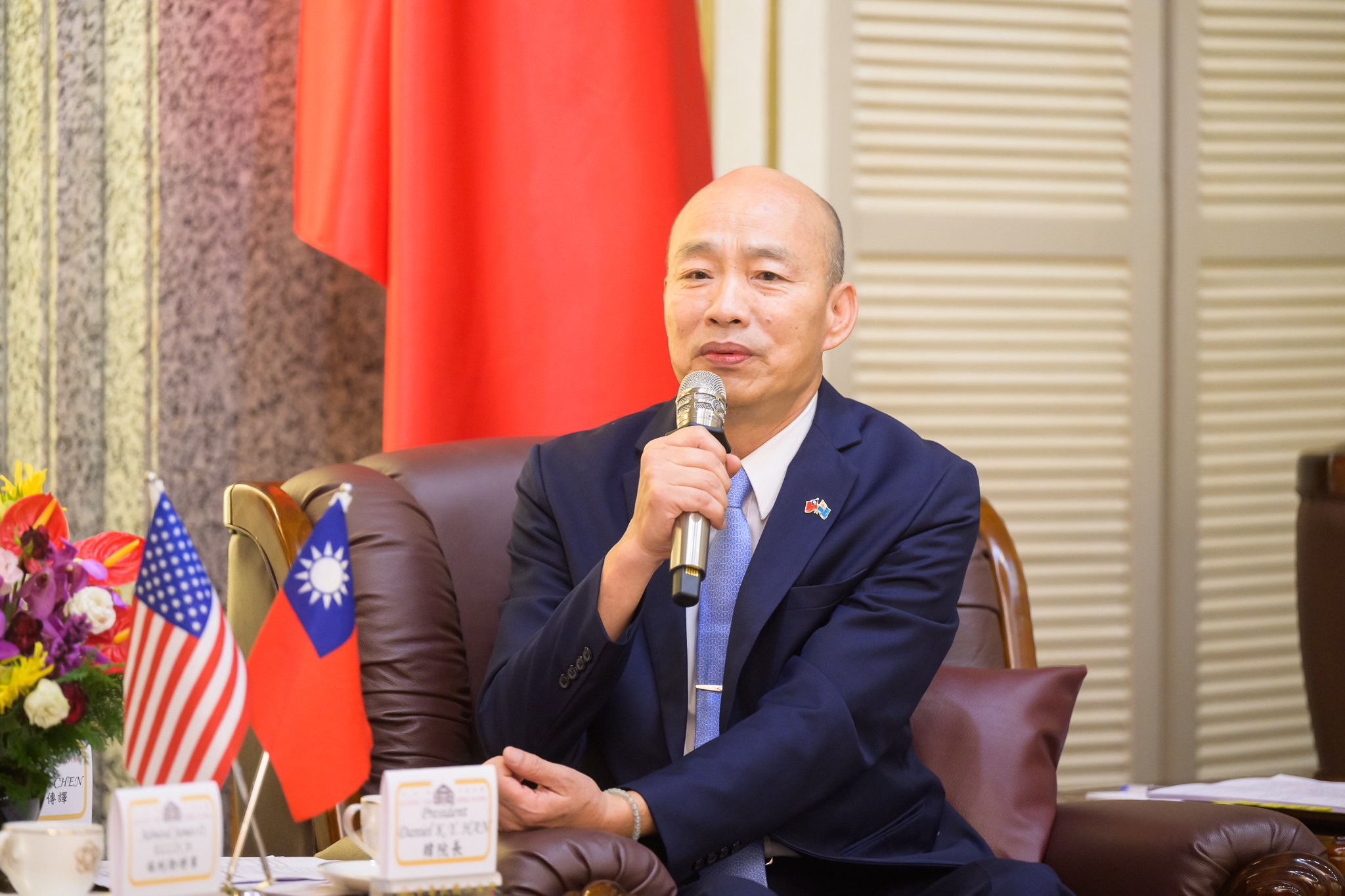
President Han first extended a warm welcome to the guests. After taking a group photo with the attending legislators and guests, he noted that the presence of cross-party legislators today symbolizes the Legislative Yuan’s high regard for the visiting delegation. He went on to explain that the Legislative Yuan is a unicameral parliament, with 47 of its 113 members being female, representing a significant 41% of the total seats. Furthermore, although legislators may hold differing opinions on certain bills, promoting parliamentary diplomacy remains our united, nonpartisan goal. We all warmly welcome friends from all over the world with the utmost enthusiasm.
President Han went on to say that the Hoover Institution at Stanford University is one of the world's top ten think tanks specializing in public policy research, providing influential recommendations to the U.S. government and serving as a crucial channel for global understanding of the Taiwan Strait situation. He was delighted to seize this opportunity to promote exchanges between both sides. President Han specifically mentioned to the guests that due to the declining birth rate in Taiwan, 15 universities have been forced to cease admissions and close. He welcomed the idea of Stanford University establishing a branch in Taiwan, making use of the existing campuses and facilities. This would not only benefit local Taiwanese students but also attract young talent from neighboring countries to study in Taiwan, thereby fostering cooperation in higher education and talent development between both sides.
During his speech, Admiral James O. Ellis Jr. expressed his deep gratitude for the warm welcome from President Han and the attending legislators. He referenced Professor Larry Diamond's observation that Taiwan's thriving multi-party system serves as a significant model of democracy, particularly exemplifying the spirit of "politics stops at the water's edge," even more so than in the U.S. He recalled his visit to Taiwan two years ago with Professor Diamond, during which they discussed supporting the expansion of academic collaboration between Taiwan and the U.S. and recognized multiple opportunities for exchanges. He humorously added that if Stanford University were to establish a branch in Taiwan, he would be the first to sign up to serve as an associate professor, eliciting knowing smiles from the guests present.
During the bilateral exchanges, Legislator Chen Yeong-Kang expressed gratitude for the support the U.S. has extended to Taiwan over the past several decades. He stated that the KMT will fully support the passage of the national defense budget and its smart utilization, emphasizing that it is not just about procuring weapons but also about sending Taiwanese talent to the U.S. for training, operation, and maintenance of these weapons. Through education, training, and the establishment of logistical support capabilities, the aim is to enhance Taiwan's military defense and combat capabilities.
Legislator Tsai Yi-Yu shared with the guests his observations and insights from his recent parliamentary diplomacy trip to Mongolia. He expressed that this experience deepened his understanding of how both Mongolia and Taiwan are situated on the frontlines of geopolitical dynamics and extended his appreciation to the U.S. for its unwavering support of Taiwan in international forums. He also noted his pleasure at the recent passage of the "Taiwan Conflict Deterrence Act" by the U.S. House of Representatives and mentioned that the "US-Taiwan Initiative on 21st-Century Trade" is soon set to enter substantive negotiations in its second phase. He sincerely hopes for deeper exchanges and cooperation between Taiwan and the U.S. across various industries and political issues.
Legislator Huang Shan-Shan stated that the TPP is also actively working to establish channels for communication and exchanges with the U.S. In light of the global threat posed by China, she expressed her hope of collaborating with the U.S. to jointly seek collaborative solutions that defend industrial development.
The two sides then broadly exchanged views on topics such as the functioning and development of democracy, the impact of the U.S. elections on Taiwan, and regional security cooperation. In conclusion, President Han summarized that safeguarding the Republic of China (Taiwan), cherishing the democratic system, and maintaining strong ties with the U.S. are the three key pillars for protecting Taiwan. He emphasized that the dimmer Taiwan's presence on the international stage, the more perilous its situation becomes, while a brighter international presence ensures greater security. He added that the Legislative Yuan will continue to work through parliamentary diplomacy to protect Taiwan.
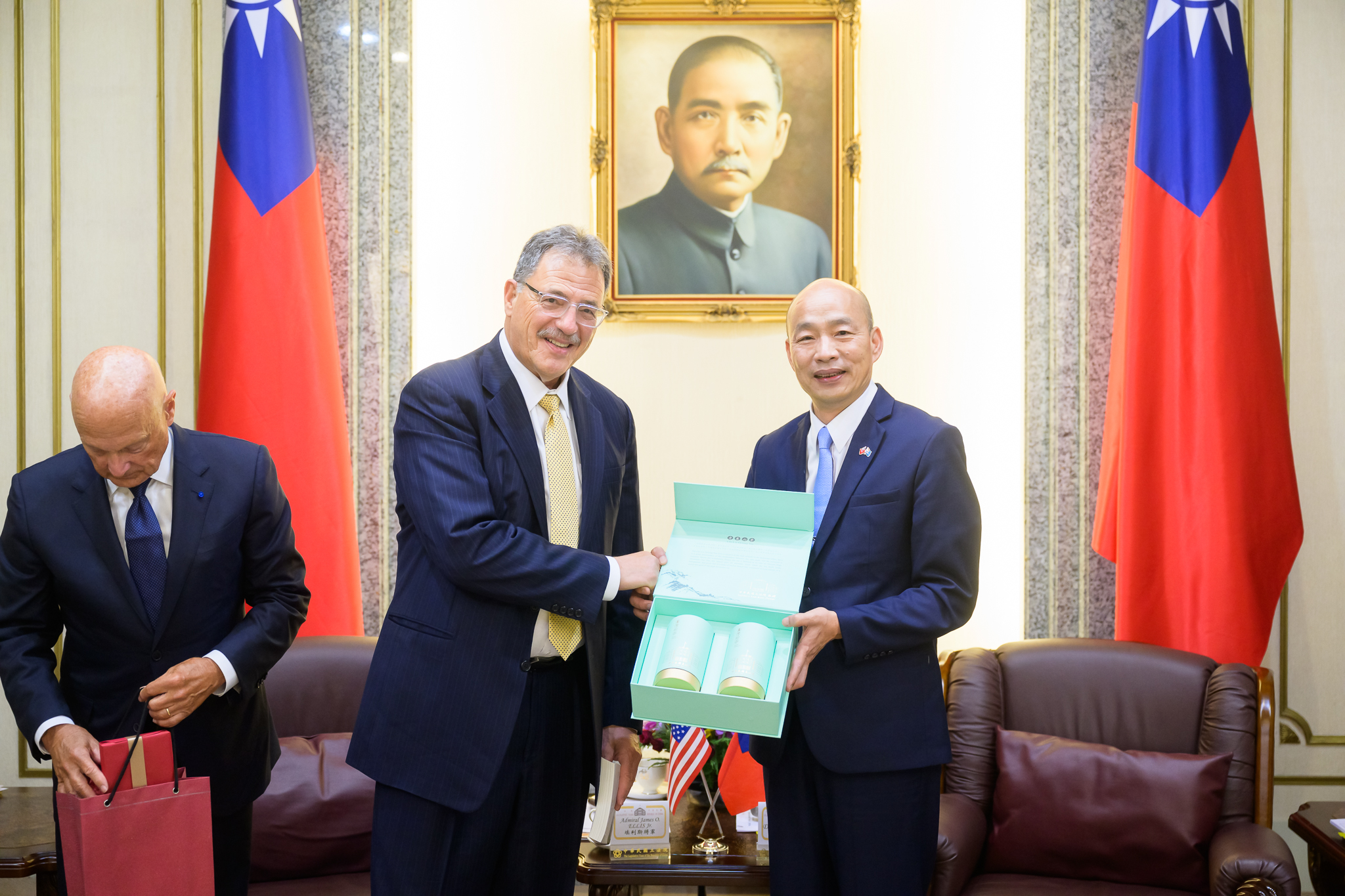
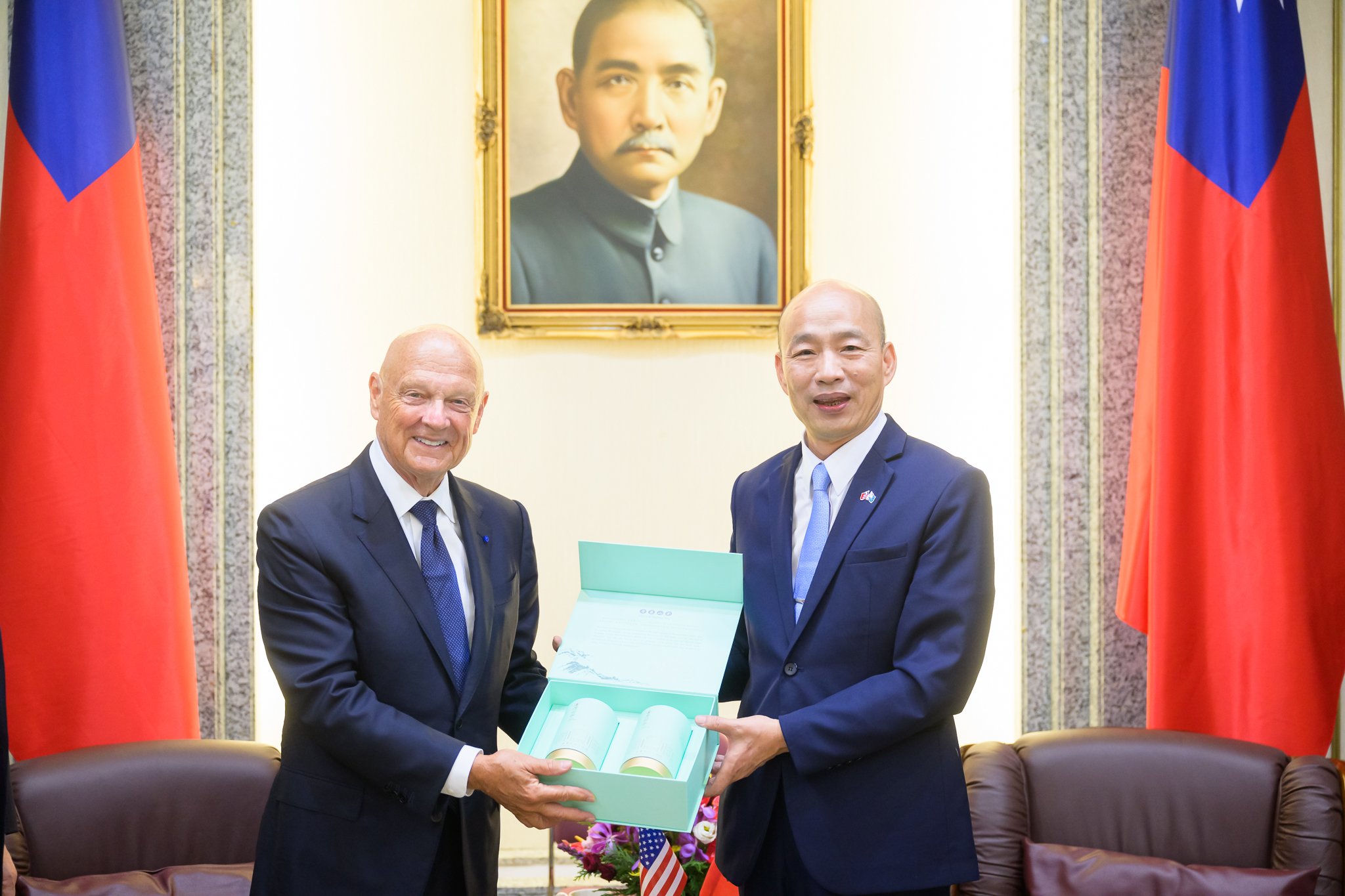
The meeting lasted about 40 minutes in a friendly and pleasant atmosphere. It concluded successfully with both sides exchanging gifts and taking a group photo to commemorate the occasion.