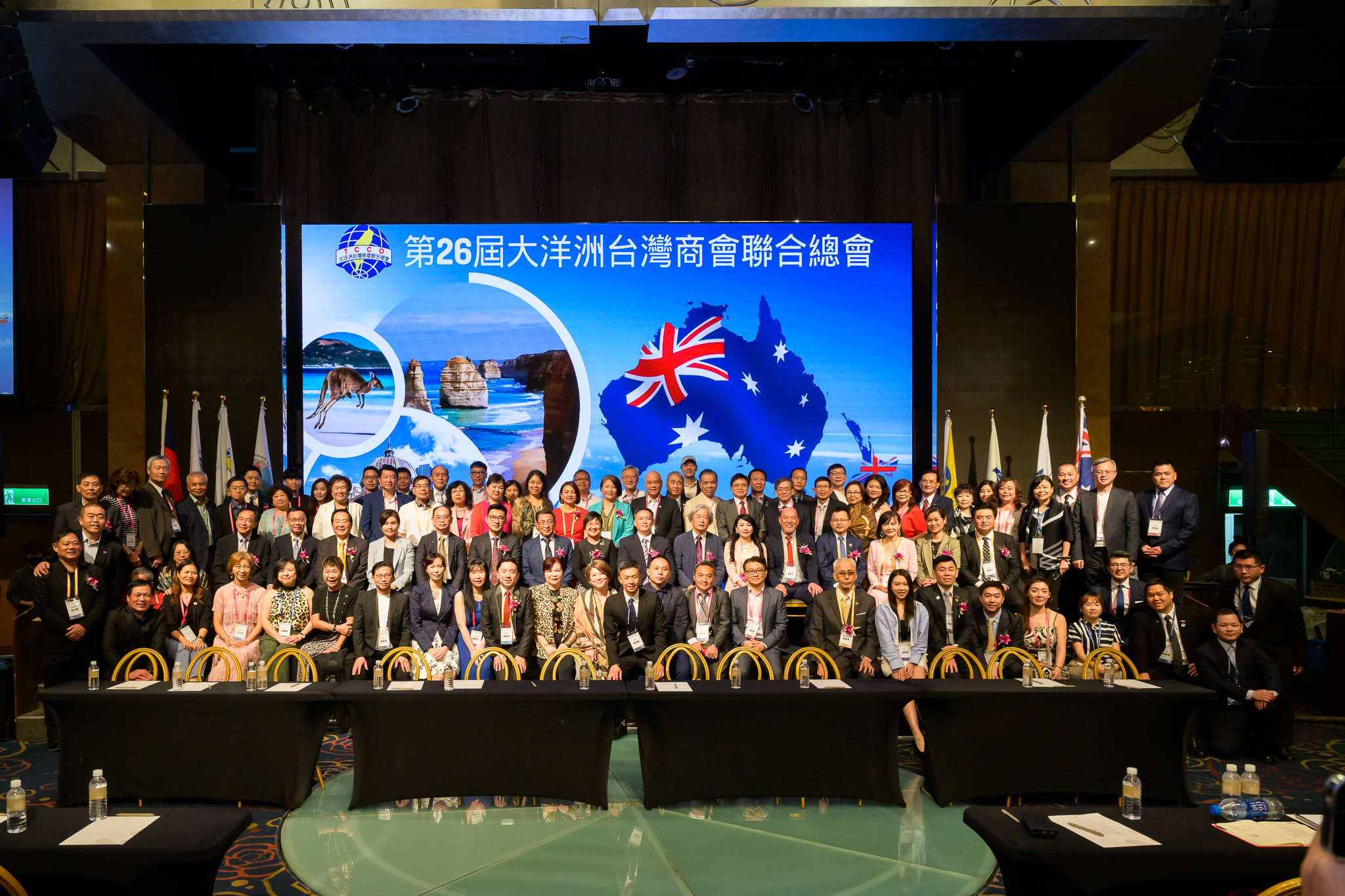
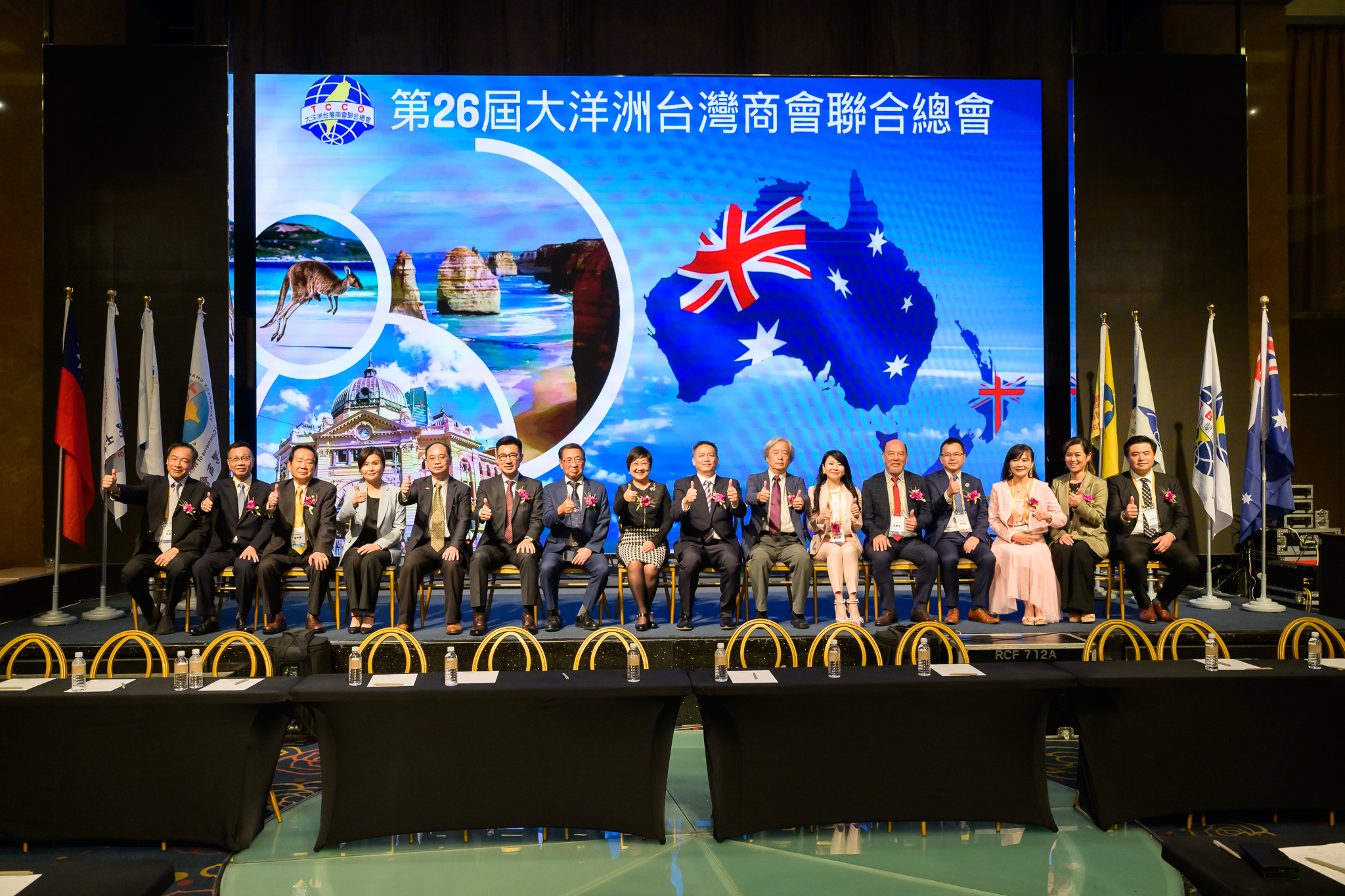
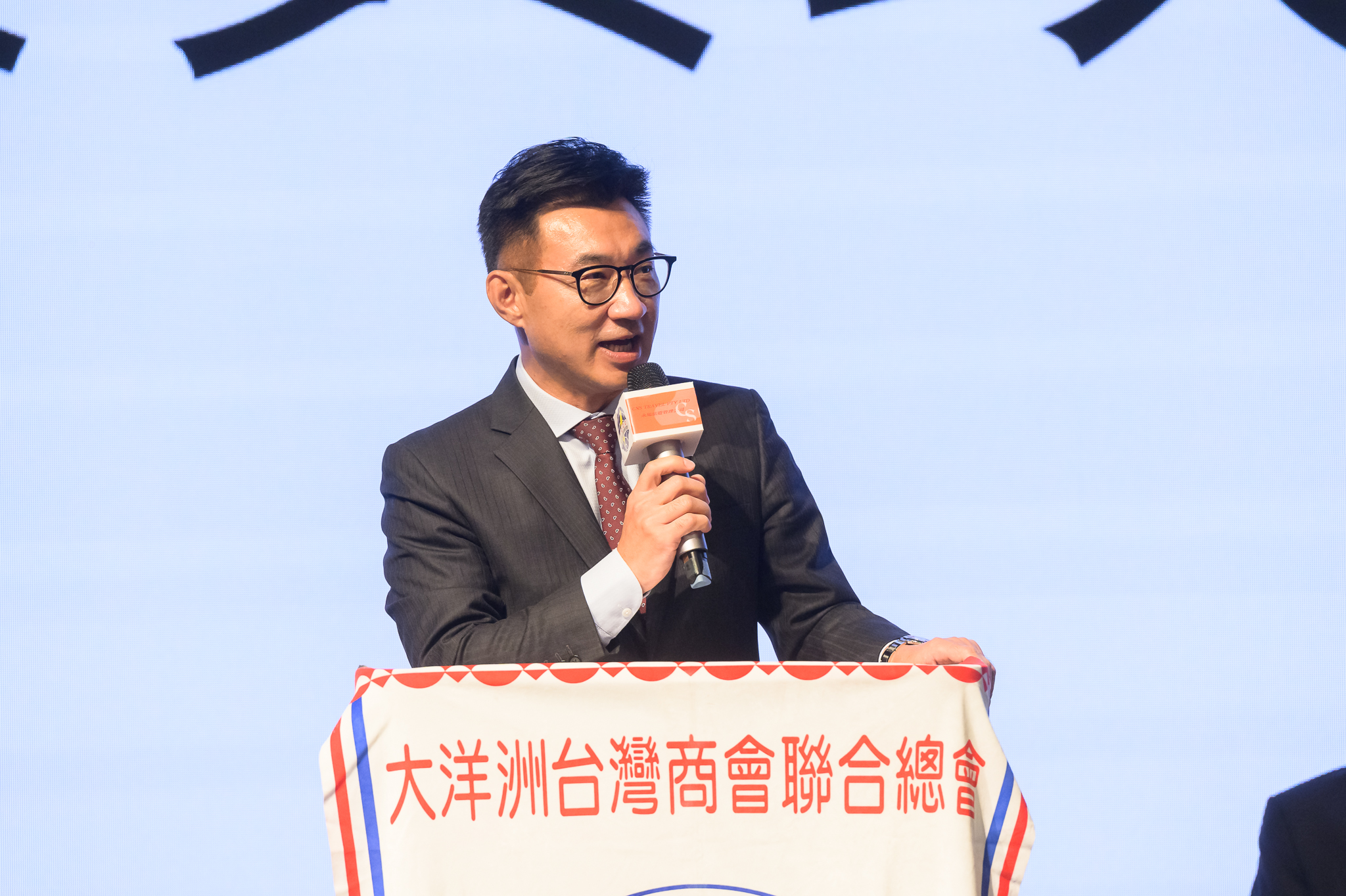
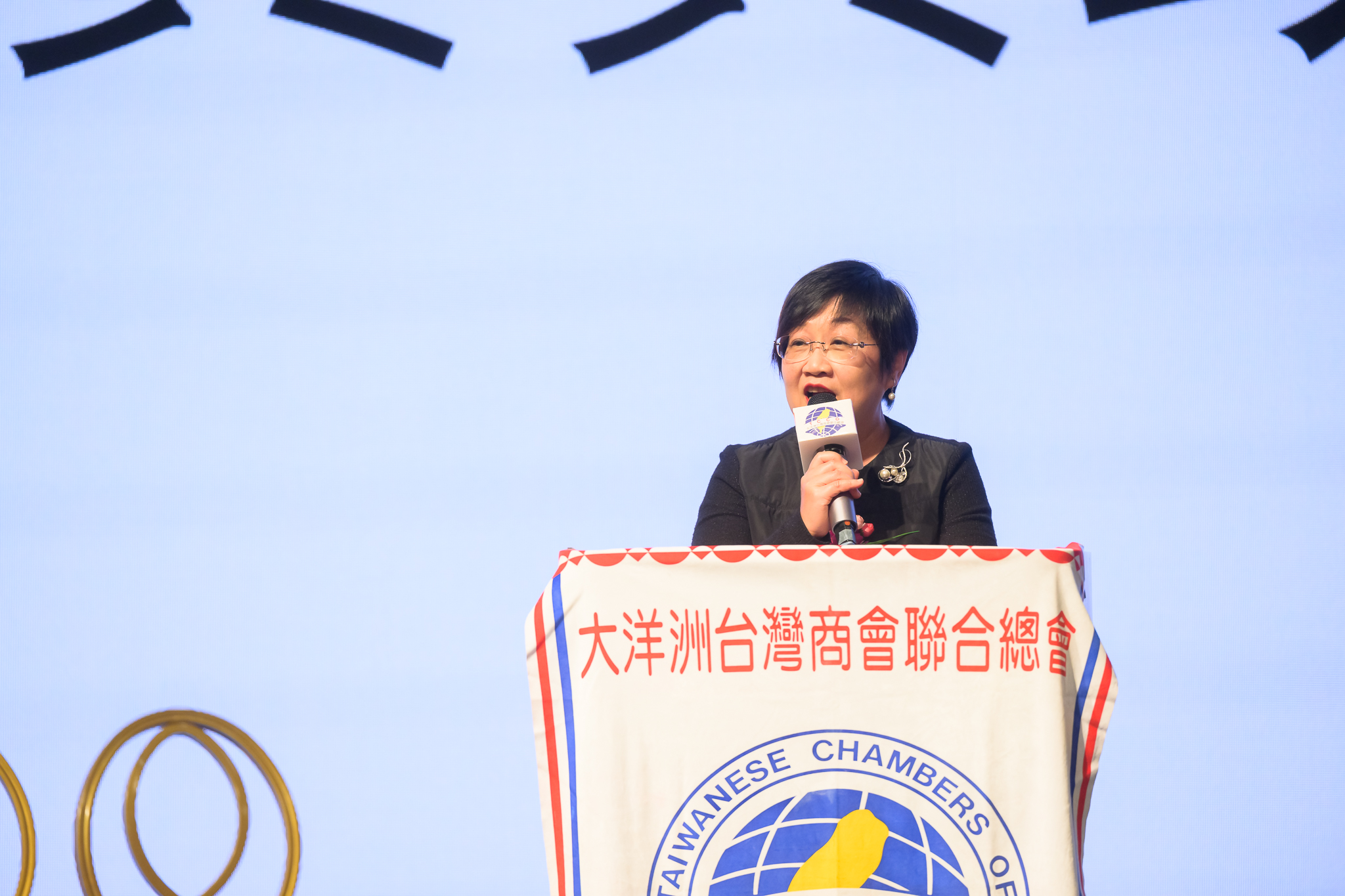
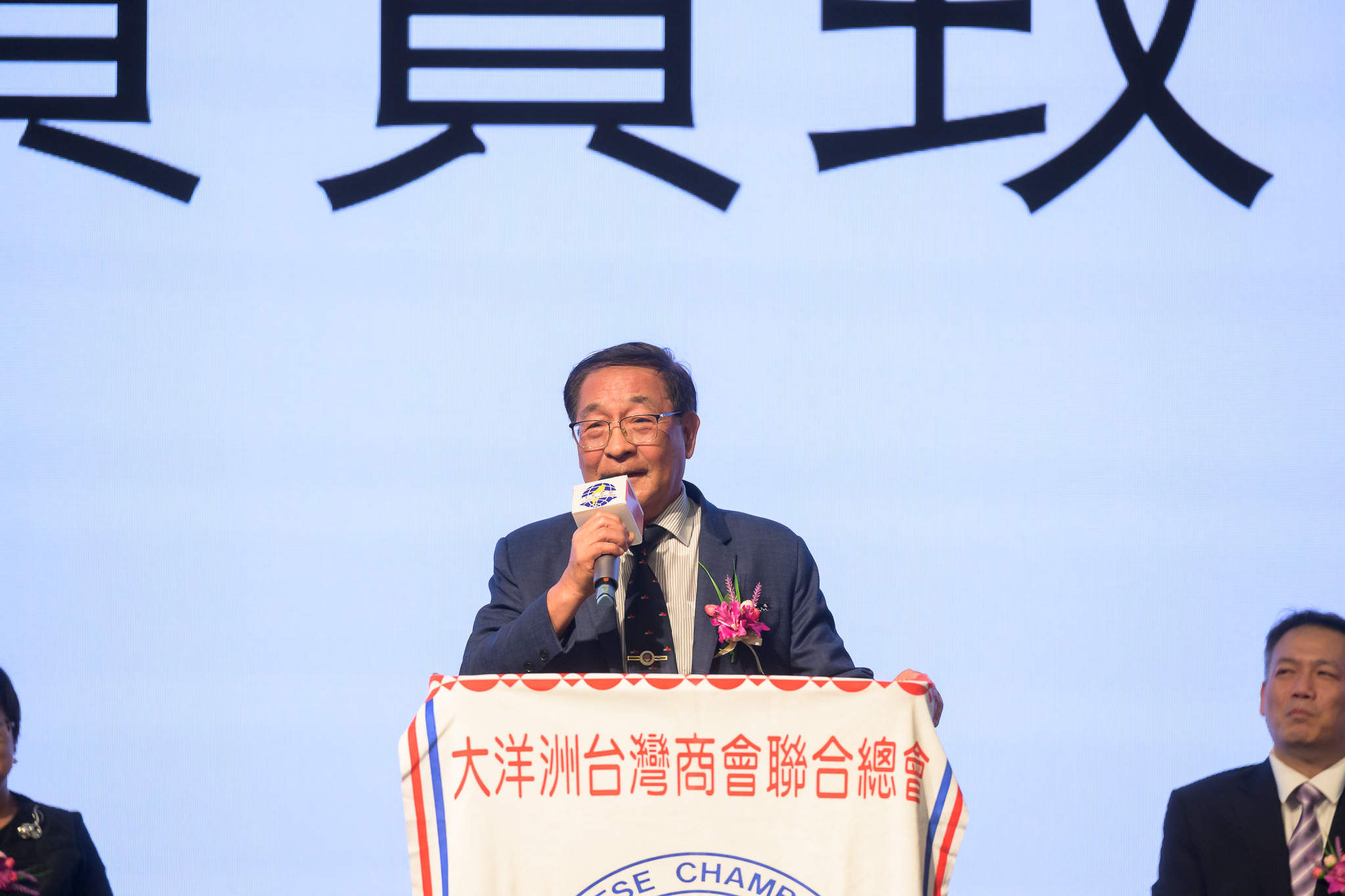
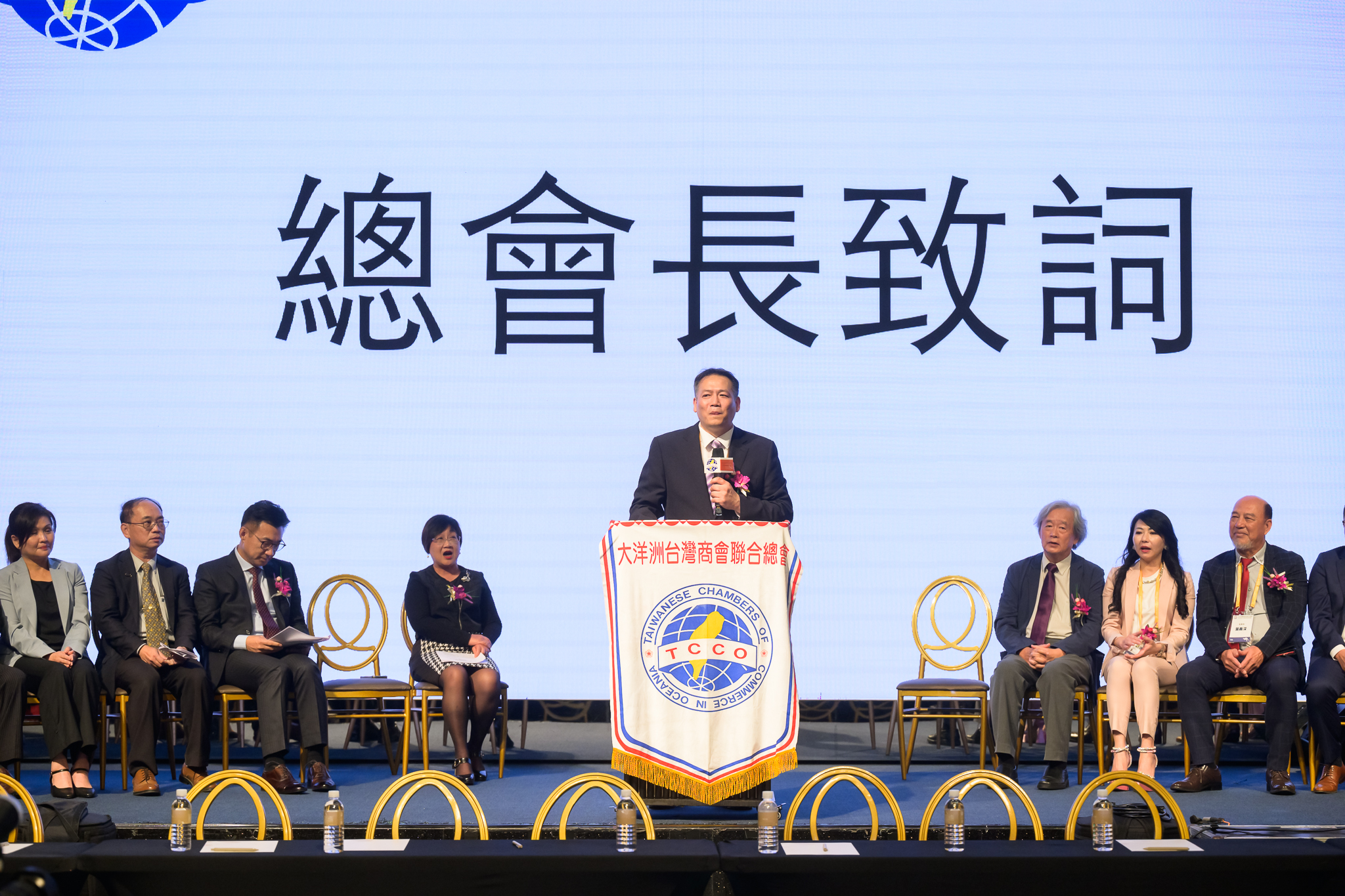
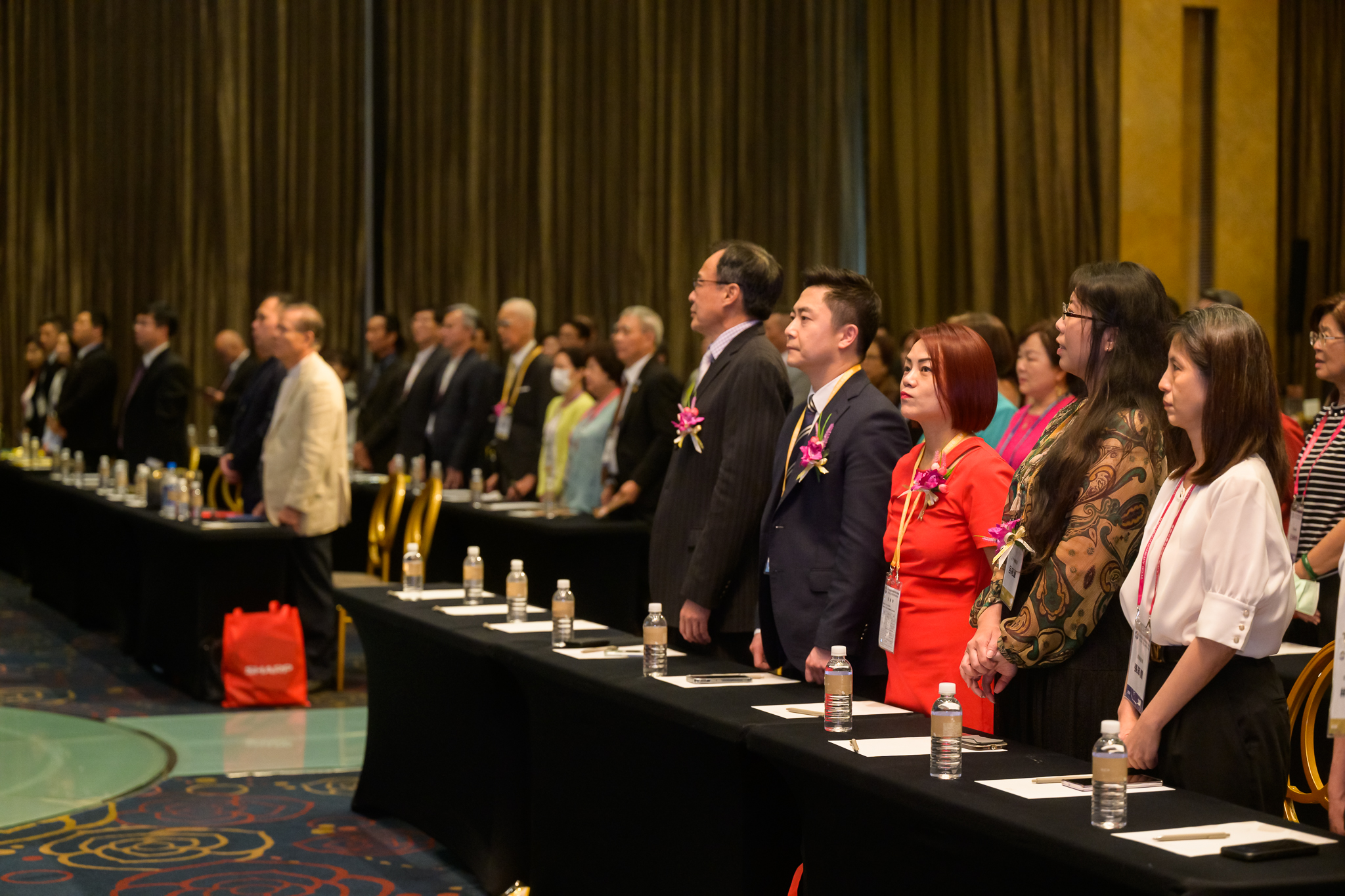
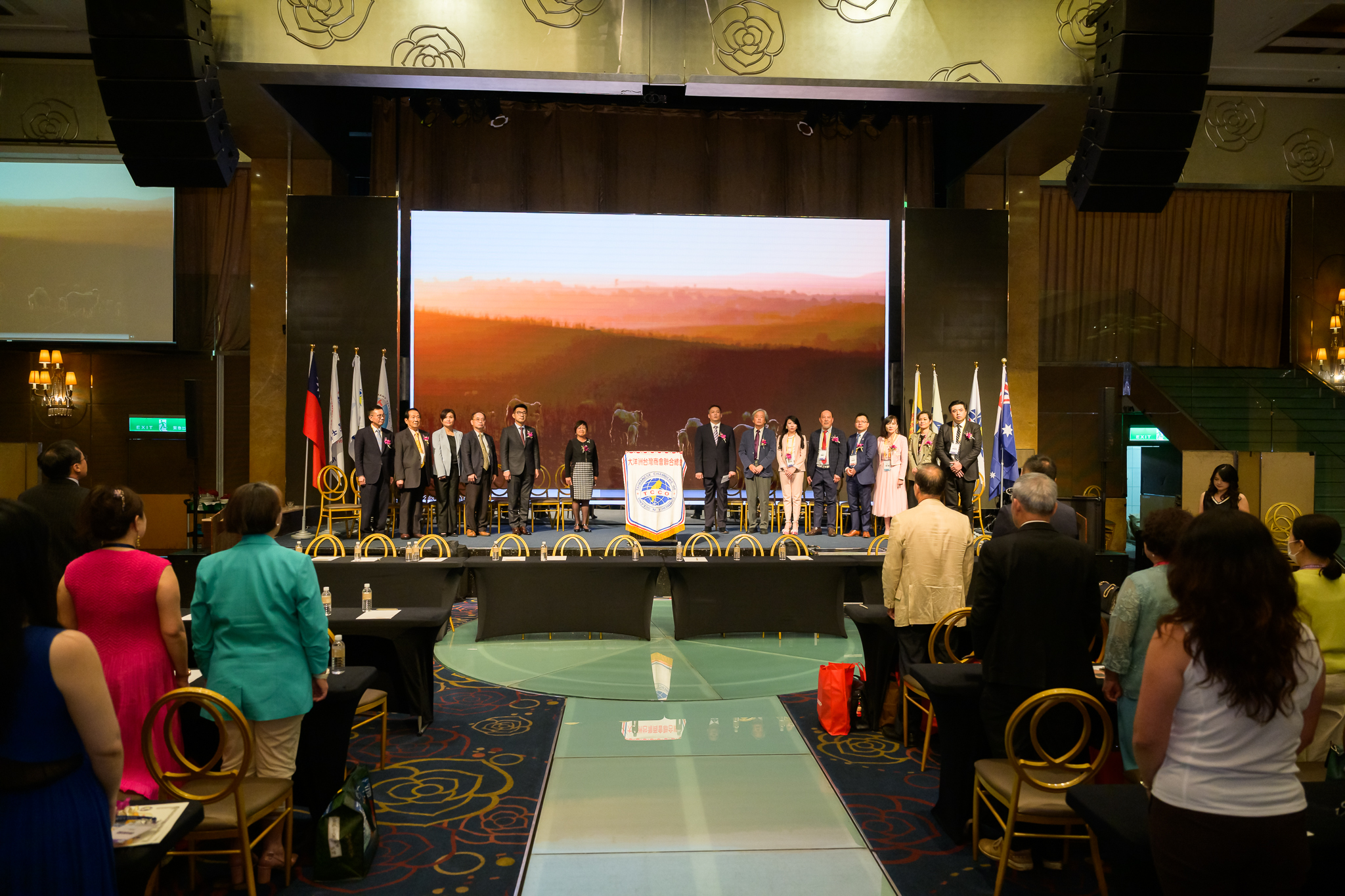
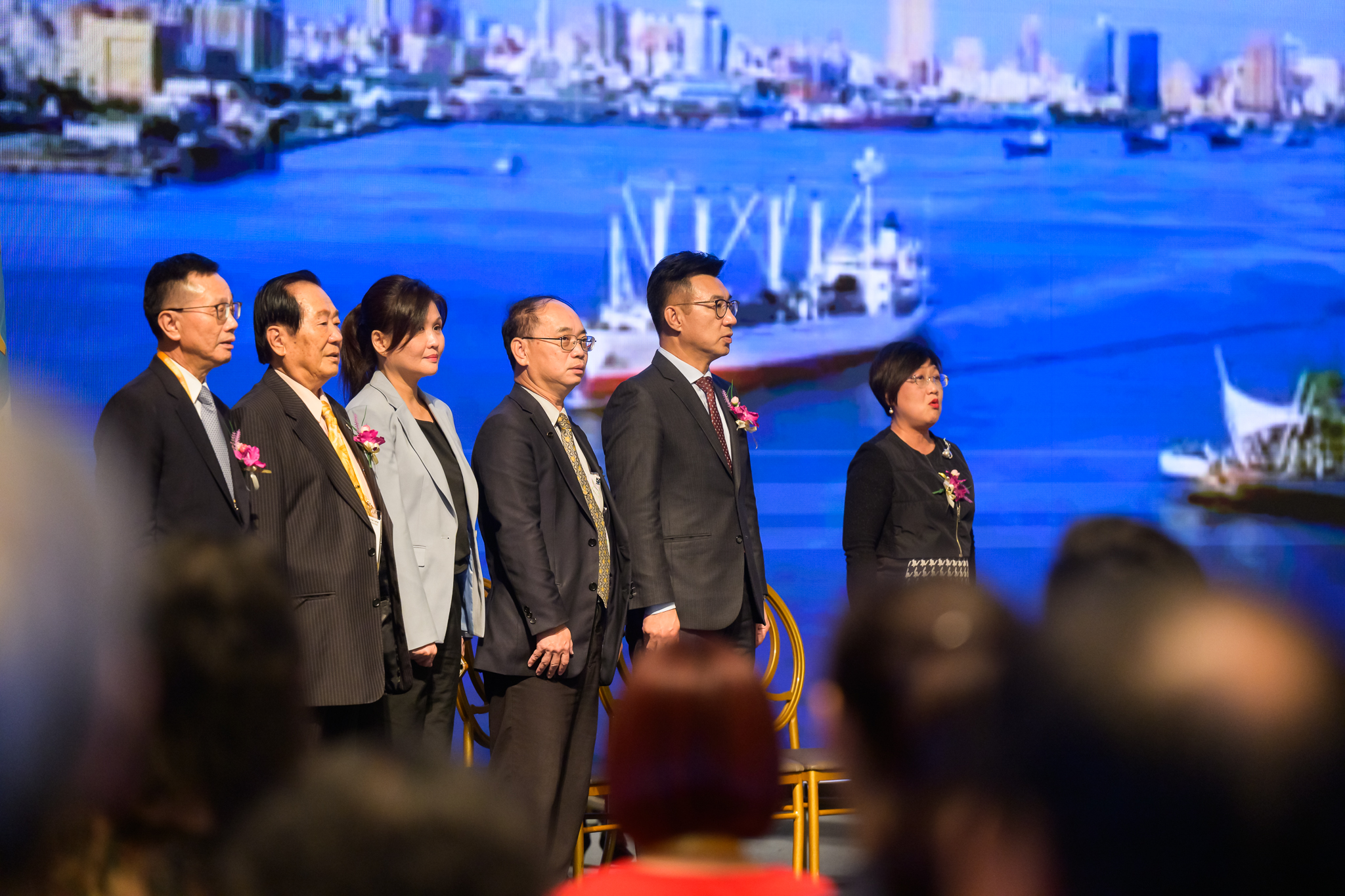
On the afternoon of September 23 at 4 pm, Vice President of the Legislative Yuan Johnny C. Chiang attended the opening ceremony of the 2nd board meeting of the 26th Taiwanese Chambers of Commerce in Oceania (TCCO), held at the Denwell Sky 1. Distinguished guests in attendance included Minister Hsu Chia-Ching of the Overseas Community Affairs Council (OCAC), National Policy Advisor to the President Jason Lin, Director-General Emile M. P. Chang of the Department of Investment Promotion under the Ministry of Economic Affairs, and Deputy Commissioner Wu Hsin-Pei of the Department of Economic Development under the Taipei City Government. Also present were President Steven Lee of the World Taiwanese Chambers of Commerce (WTCC), President Frank Chang of the TCCO, and Taiwanese business partners from around the world.
In his remarks, Vice President Chiang warmly welcomed the Taiwanese businesses “back home.” As President of the 11th Association of Overseas Taiwanese Businessmen of the Legislative Yuan of Republic of China (Taiwan), along with three other cross-party vice presidents, he sincerely encouraged everyone to frequently return to Taiwan. Taiwan is the home for all Taiwanese businesspeople and the warmest safe haven. Its doors are always open, welcoming everyone to return and reunite frequently. Vice President Chiang expressed his deep appreciation for the hard work and dedication of all the overseas compatriots, particularly the members of the TCCO. Though Oceania has a relatively small population, it spans vast oceans and landmasses. More importantly, its economic output is impressive, and its potential for future development is boundless. Vice President Chiang highlighted that two former presidents of the TCCO have served as National Policy Advisors to the President, underscoring the region's unique position within the Taiwanese business community.
Vice President Chiang continued by noting that although Oceania is geographically distant from Taiwan, the two sides exhibit an outstanding level of economic and trade complementarity. Taiwan imports a significant amount of natural gas, minerals, seafood, and agricultural products from Australia. New Zealand, on the other hand, is one of only two countries in the world to have signed a free trade agreement with Taiwan, namely the 2013 Agreement between New Zealand and the Separate Customs Territory of Taiwan, Penghu, Kinmen, and Matsu on Economic Cooperation (ANZTEC). The other country that has signed a free trade agreement with Taiwan is Singapore. These facts clearly demonstrate the high degree of economic and trade complementarity between Oceania and Taiwan, highlighting the vast potential for future cooperation in international trade and economic relations.
Vice President Chiang emphasized that the Comprehensive and Progressive Agreement for Trans-Pacific Partnership (CPTPP), which is currently the focus of global attention, initially originated from the Trans-Pacific Strategic Economic Partnership Agreement (TPSEP or P4), signed by New Zealand, Brunei, Chile, and Singapore in 2005. This agreement gradually expanded into the CPTPP today. This underscores Oceania's enduring commitment to openness and liberalization in international trade, which not only supports the development of Taiwanese businesses but also positions all present Taiwanese businesspeople as vital participants in the ongoing restructuring of global supply chains. Despite the many challenges that lie ahead, there are also numerous opportunities for development. I believe that you will be able to take the initiative and ultimately achieve success.
Vice President Chiang praised that overseas compatriots are the "mothers of nation-building," while the Taiwanese business community is the "mother of economic development." TSMC is Taiwan’s “Mountain of Protection,” while Taiwanese businesspeople are the critical guardians of our country. Taiwanese businesspeople play a crucial role in the global industrial chain. As our businesses showcase irreplaceable significance across various sectors, the security of Taiwan is naturally ensured. From this perspective, the government should provide Taiwanese businesspeople with greater resources and support in the interest of safeguarding national security.
Vice President Chiang further mentioned that over the past two months, he has undertaken three parliamentary diplomatic visits. At the end of July, he visited the Czech Republic, Spain, and Italy. The day after returning to Taiwan, he led a cross-party delegation to Japan to engage in the first-ever soccer parliamentary diplomacy by the Legislative Yuan. He then led a delegation to Texas, U.S. During these three visits, he met with a range of individuals, including parliamentary speakers, city mayors, industry representatives, and scholars from think tanks. Notably, they consistently expressed concern about two key issues: Taiwan's security and the investment and development of the semiconductor industry. The concerns regarding these issues are reflected in concrete actions: the Texas Secretary of State is actively seeking more opportunities for future cooperation with Taiwan. Czech Senate President Miloš Vystrčil has noted TSMC's fab establishment in Dresden, Germany, and the Czech Republic is enthusiastic about expanding cooperation with Taiwan in both upstream and downstream semiconductor supply chains. Japanese lawmakers are also welcoming continued Taiwanese investments in Japan. Although Taiwan does not have formal diplomatic relations with these countries, initiatives such as deepening economic cooperation, training technological talent, and strengthening the resilience of supply chains not only demonstrate Taiwan's substantial economic influence but also contribute to enhancing its international status and security.
Vice President Chiang concluded by expressing his heartfelt gratitude to all the Taiwanese businessmen for their contributions to Taiwan. He also extended a sincere invitation for everyone to actively participate in the WTCC Legislative Yuan Banquet, which will be held on September 27 in Kaohsiung. After Minister Hsu Chia-Ching and other distinguished guests delivered their remarks, Vice President Chiang posed for photographs with attendees, exchanging warm wishes. The opening ceremony lasted approximately one hour, creating a lively and cordial atmosphere, and concluded successfully.