

Vice President Johnny C. Chiang meets 14-person delegation from the German Marshall Fund (GMF); Vice President Chiang: Taiwan's democracy is resilient, and we hope for continued deepening of Taiwan-U.S. relations
Vice President Johnny C. Chiang of the Legislative Yuan met with a 14-member delegation from the German Marshall Fund of the United States (GMF) Taiwan-U.S. Policy Program (TUPP) on the afternoon of February 18. He was accompanied by KMT Legislator Lin Chien-Chi, DPP Legislator Fan Yun, International Affairs Department Director Kevin C.F. Lin, and Ministry of Foreign Affairs Senior Adviser Ho Jen-Chieh. The delegation was led by Bonnie Glaser, Director of the GMF’s Indo-Pacific Program.
Vice President Chiang warmly welcomed the delegation and specially prepared Taichung’s famous sun cakes to help the delegation members experience Taiwan’s warmth and hospitality. He also encouraged them to take the opportunity to explore the island’s unique night market culture. Vice President Chiang noted that the new legislative session had just begun, with the 11th Legislative Yuan entering an unprecedented landscape where no single party holds a majority. He also observed that the U.S. executive and legislative branches were undergoing changes, drawing significant global attention to U.S. policy directions and their impact on international political and economic developments. Vice President Chiang highlighted that the two legislators present were distinguished experts with doctoral degrees in their respective fields. He expressed confidence that this exchange would foster deeper mutual understanding and strengthen the bonds of friendship.
Director Bonnie Glaser expressed her gratitude to Vice President Chiang and the two legislators for taking the time to meet with the delegation. She explained that the GMF TUPP program aims to cultivate young professionals from the United States and Europe. This visit, she noted, would provide many delegation members with their first opportunity to gain a deeper understanding of Taiwan’s political and economic landscape while fostering future exchanges and cooperation between the two sides. In addition to meetings with government agencies and the Legislative Yuan, the delegation will visit the Hsinchu Science Park and Taiwan Semiconductor Manufacturing Company (TSMC) to gain deeper insights into Taiwan’s developments in technology, economic growth, and regional cooperation.
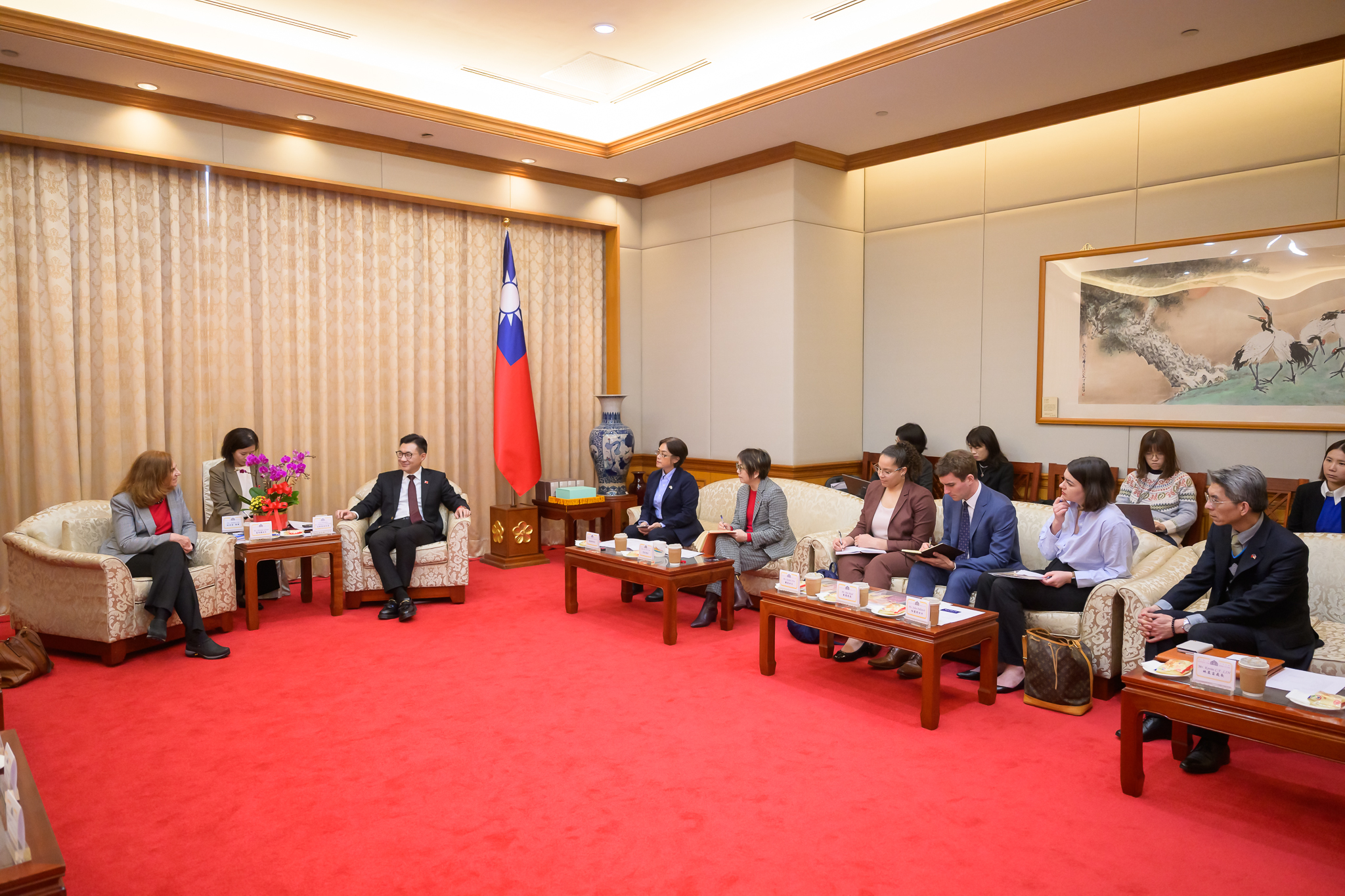
During the open exchanges, Director Glaser and the delegation members focused primarily on Taiwan’s legislative processes and public policy issues. They engaged in extensive discussions with Vice President Chiang and the legislators on various topics, including transparency in the Legislative Yuan’s passage of bills, the financial status of Taiwan Power Company, Taiwan’s energy policy, the national defense budget, and the progress of legislation related to AI technology development.
Vice President Chiang emphasized the Legislative Yuan’s commitment to transparency and stated that efforts would continue to enhance the disclosure of information on bills passed in the third reading, ensuring that the public remains informed about Taiwan’s legislative process in real time. He further noted that energy policy and the operational status of Taiwan Power Company are key areas of public concern. The Legislative Yuan will continue to fulfill its oversight responsibilities, ensuring that the government maintains a stable power supply to support sustainable industrial development while safeguarding the financial soundness of Taiwan Power Company. Vice President Chiang further explained, in response to inquiries, that the annual defense budget is crucial to national security. He noted that the reduction in the executive branch’s proposed defense budget for the 2025 fiscal year was the lowest in the past five years. He emphasized that, in exercising its mandate, the Legislative Yuan must strike a balance between safeguarding national security and ensuring the well-being of the people during the budget review process. In conclusion, Vice President Chiang emphasized that while there had been debates among legislative caucuses over various issues in the past year, Taiwan’s democracy remains resilient and Taiwan is a trustworthy partner. He expressed hope that Taiwan and the United States would continue working together to deepen substantive cooperation for mutual benefit and shared prosperity.
Regarding the priority bills that parties plan to advance in the current legislative session, Legislator Lin Chien-Chi stated that the KMT caucus is currently focused on issues related to AI technology development, energy policy, and the long-term care system. She also expressed hope that amendments to certain laws would enhance the quality of life and well-being of the public. Legislator Fan Yun stated that the DPP caucus also prioritizes issues related to technological innovation and talent recruitment, aiming to establish a stronger foundation for Taiwan’s long-term industrial competitiveness through relevant legislation. She further emphasized the party’s commitment to advancing other key bills that directly impact public well-being.
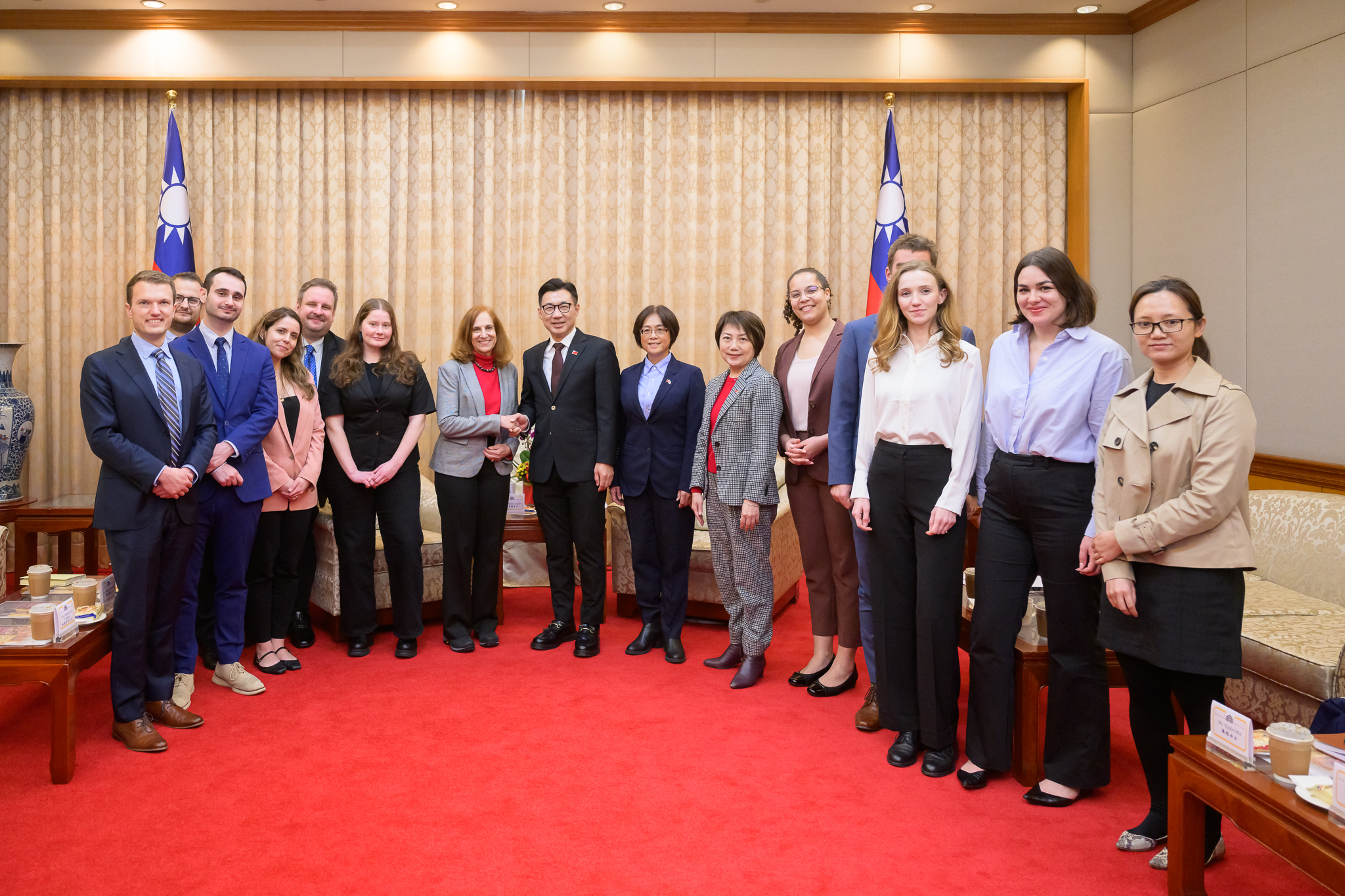
The meeting lasted approximately 60 minutes in a cordial atmosphere. It concluded successfully with both sides exchanging gifts and taking a group photo to commemorate the occasion.
Vice President Chiang warmly welcomed the delegation and specially prepared Taichung’s famous sun cakes to help the delegation members experience Taiwan’s warmth and hospitality. He also encouraged them to take the opportunity to explore the island’s unique night market culture. Vice President Chiang noted that the new legislative session had just begun, with the 11th Legislative Yuan entering an unprecedented landscape where no single party holds a majority. He also observed that the U.S. executive and legislative branches were undergoing changes, drawing significant global attention to U.S. policy directions and their impact on international political and economic developments. Vice President Chiang highlighted that the two legislators present were distinguished experts with doctoral degrees in their respective fields. He expressed confidence that this exchange would foster deeper mutual understanding and strengthen the bonds of friendship.
Director Bonnie Glaser expressed her gratitude to Vice President Chiang and the two legislators for taking the time to meet with the delegation. She explained that the GMF TUPP program aims to cultivate young professionals from the United States and Europe. This visit, she noted, would provide many delegation members with their first opportunity to gain a deeper understanding of Taiwan’s political and economic landscape while fostering future exchanges and cooperation between the two sides. In addition to meetings with government agencies and the Legislative Yuan, the delegation will visit the Hsinchu Science Park and Taiwan Semiconductor Manufacturing Company (TSMC) to gain deeper insights into Taiwan’s developments in technology, economic growth, and regional cooperation.
During the open exchanges, Director Glaser and the delegation members focused primarily on Taiwan’s legislative processes and public policy issues. They engaged in extensive discussions with Vice President Chiang and the legislators on various topics, including transparency in the Legislative Yuan’s passage of bills, the financial status of Taiwan Power Company, Taiwan’s energy policy, the national defense budget, and the progress of legislation related to AI technology development.
Vice President Chiang emphasized the Legislative Yuan’s commitment to transparency and stated that efforts would continue to enhance the disclosure of information on bills passed in the third reading, ensuring that the public remains informed about Taiwan’s legislative process in real time. He further noted that energy policy and the operational status of Taiwan Power Company are key areas of public concern. The Legislative Yuan will continue to fulfill its oversight responsibilities, ensuring that the government maintains a stable power supply to support sustainable industrial development while safeguarding the financial soundness of Taiwan Power Company. Vice President Chiang further explained, in response to inquiries, that the annual defense budget is crucial to national security. He noted that the reduction in the executive branch’s proposed defense budget for the 2025 fiscal year was the lowest in the past five years. He emphasized that, in exercising its mandate, the Legislative Yuan must strike a balance between safeguarding national security and ensuring the well-being of the people during the budget review process. In conclusion, Vice President Chiang emphasized that while there had been debates among legislative caucuses over various issues in the past year, Taiwan’s democracy remains resilient and Taiwan is a trustworthy partner. He expressed hope that Taiwan and the United States would continue working together to deepen substantive cooperation for mutual benefit and shared prosperity.
Regarding the priority bills that parties plan to advance in the current legislative session, Legislator Lin Chien-Chi stated that the KMT caucus is currently focused on issues related to AI technology development, energy policy, and the long-term care system. She also expressed hope that amendments to certain laws would enhance the quality of life and well-being of the public. Legislator Fan Yun stated that the DPP caucus also prioritizes issues related to technological innovation and talent recruitment, aiming to establish a stronger foundation for Taiwan’s long-term industrial competitiveness through relevant legislation. She further emphasized the party’s commitment to advancing other key bills that directly impact public well-being.
The meeting lasted approximately 60 minutes in a cordial atmosphere. It concluded successfully with both sides exchanging gifts and taking a group photo to commemorate the occasion.