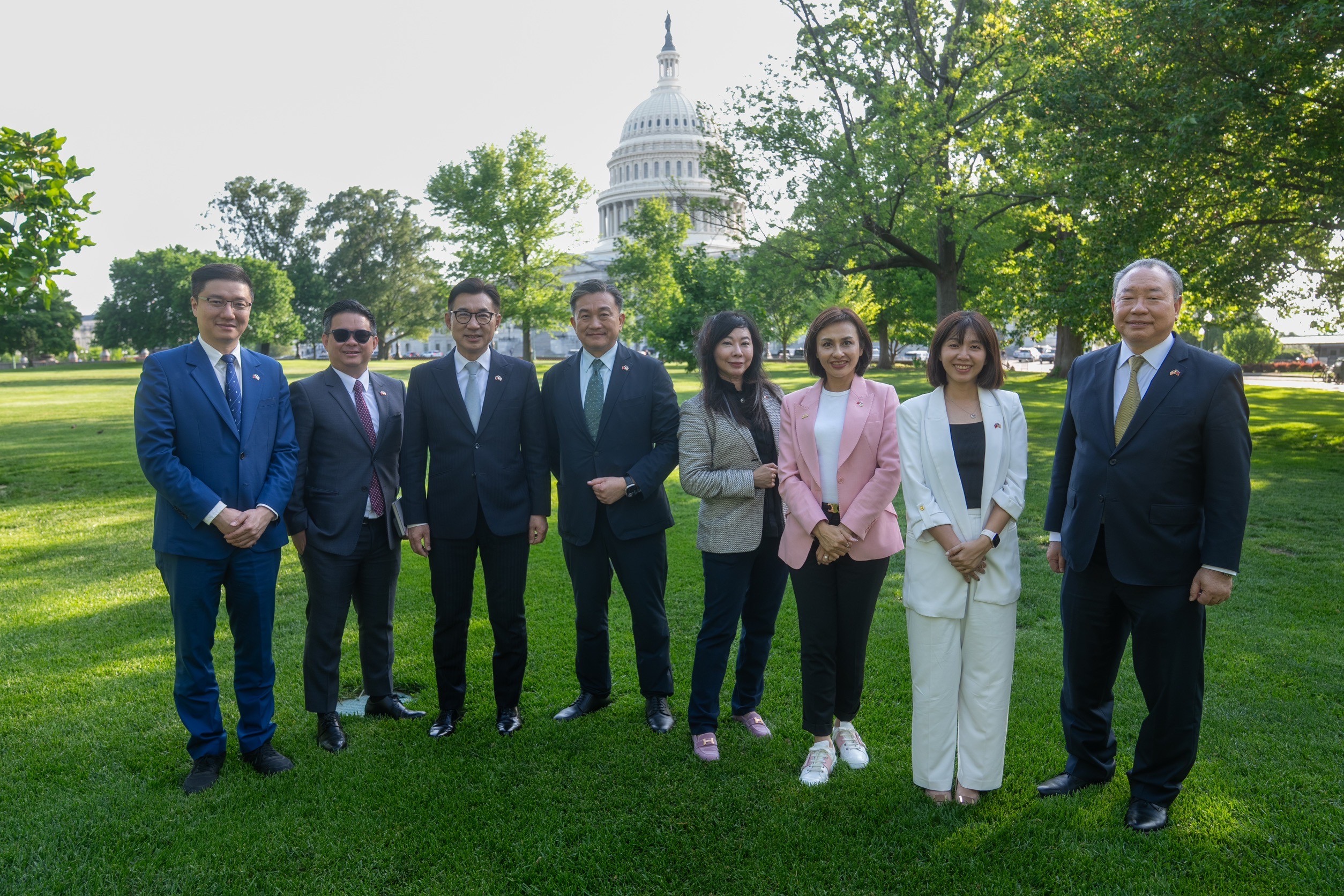
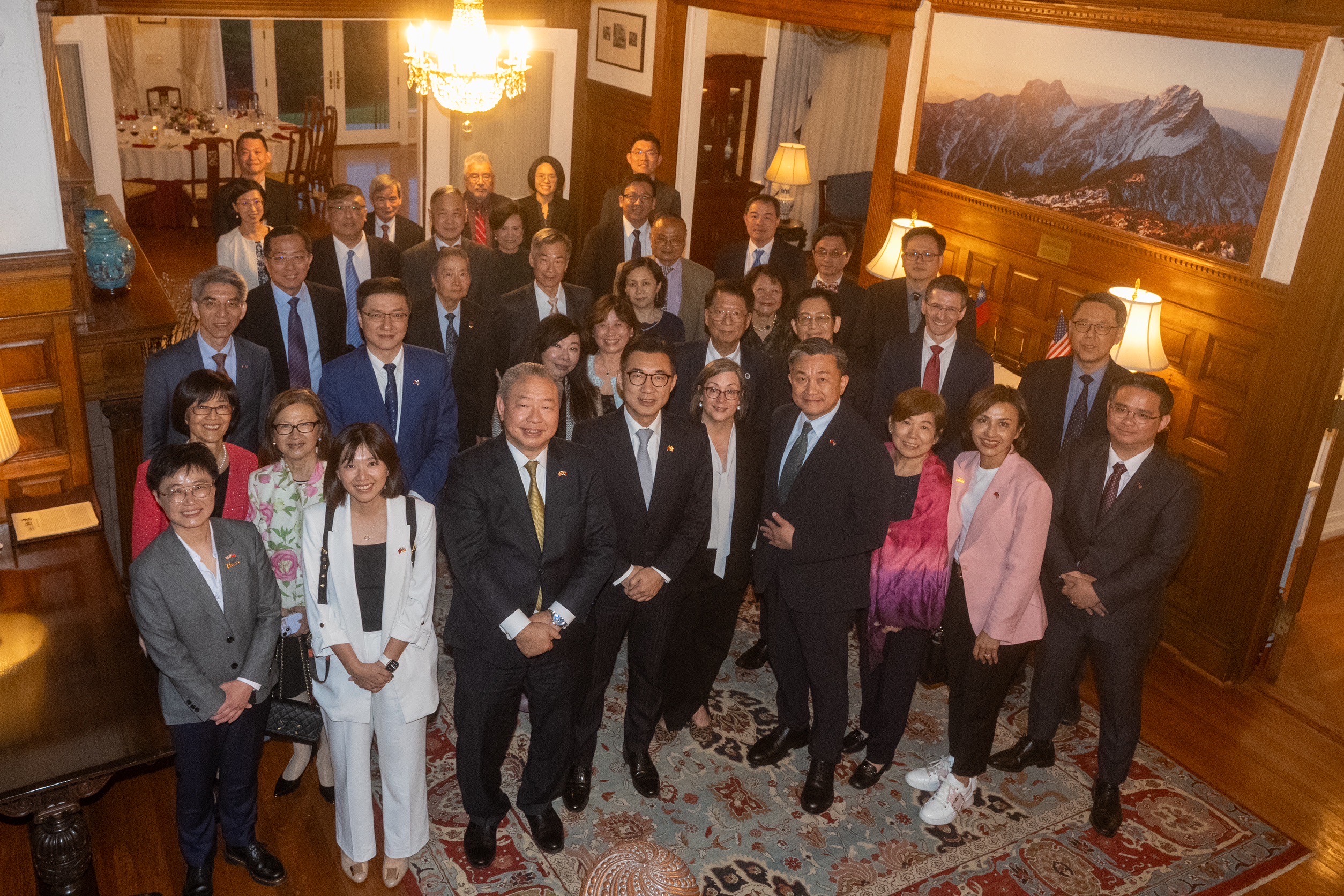
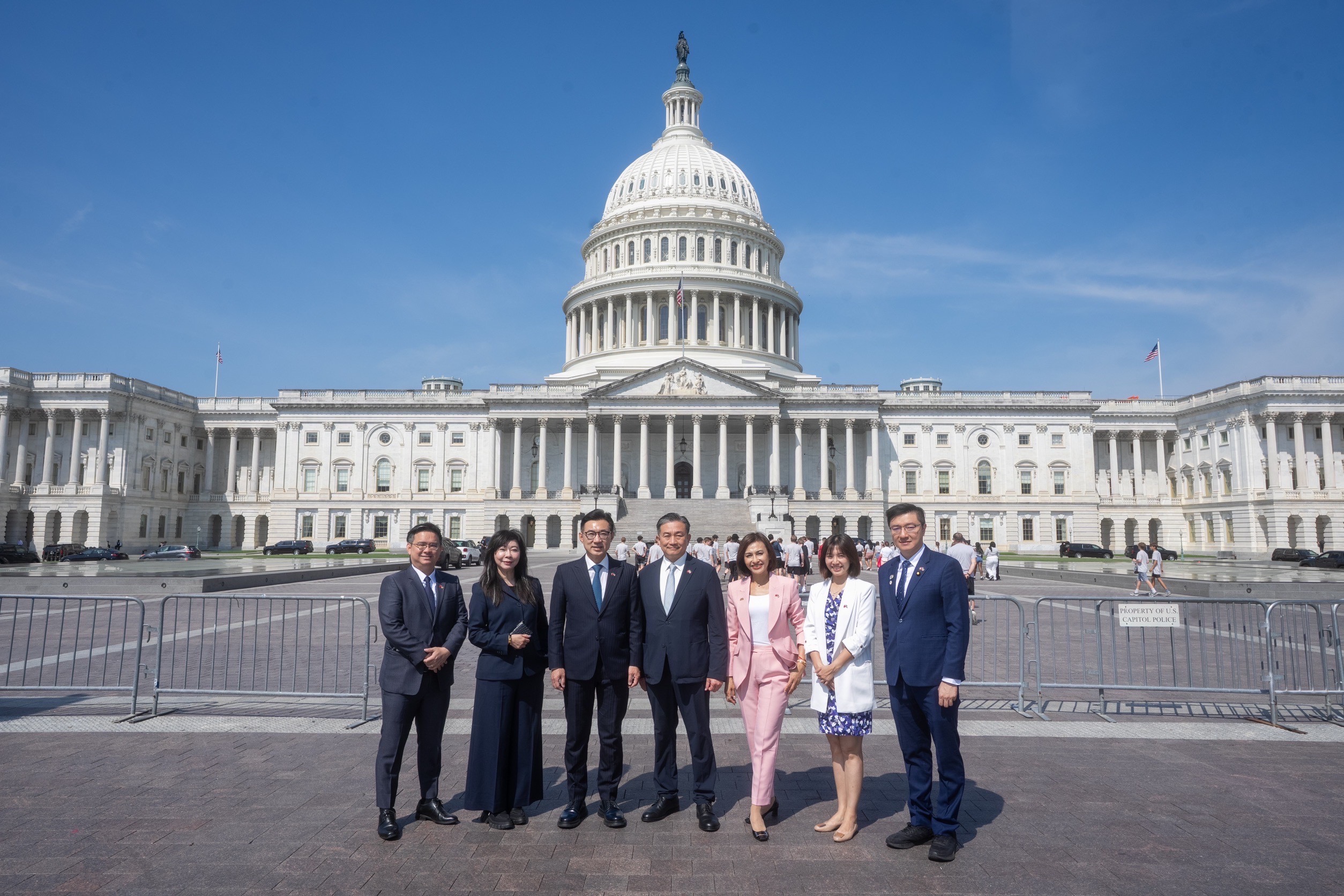
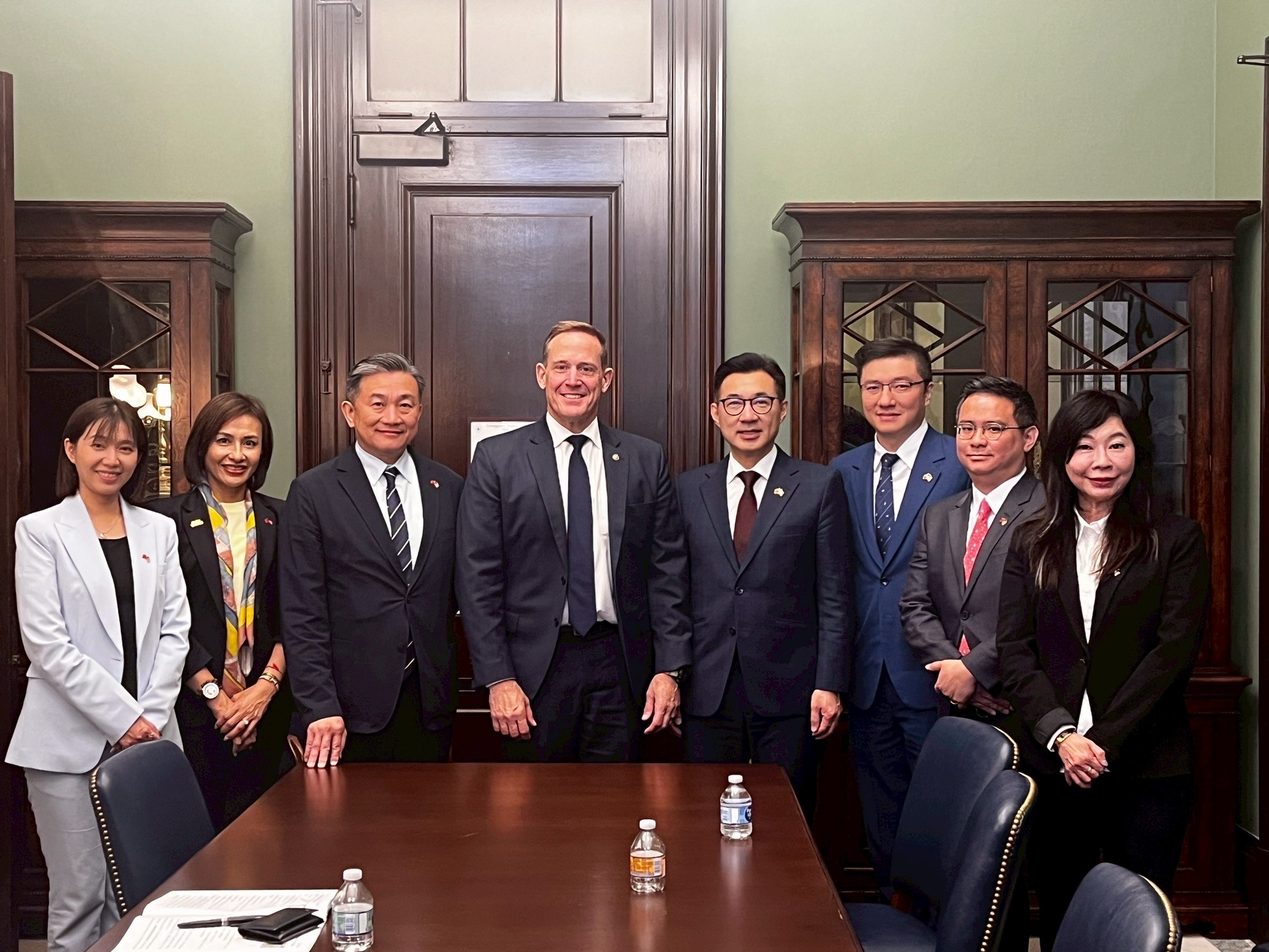
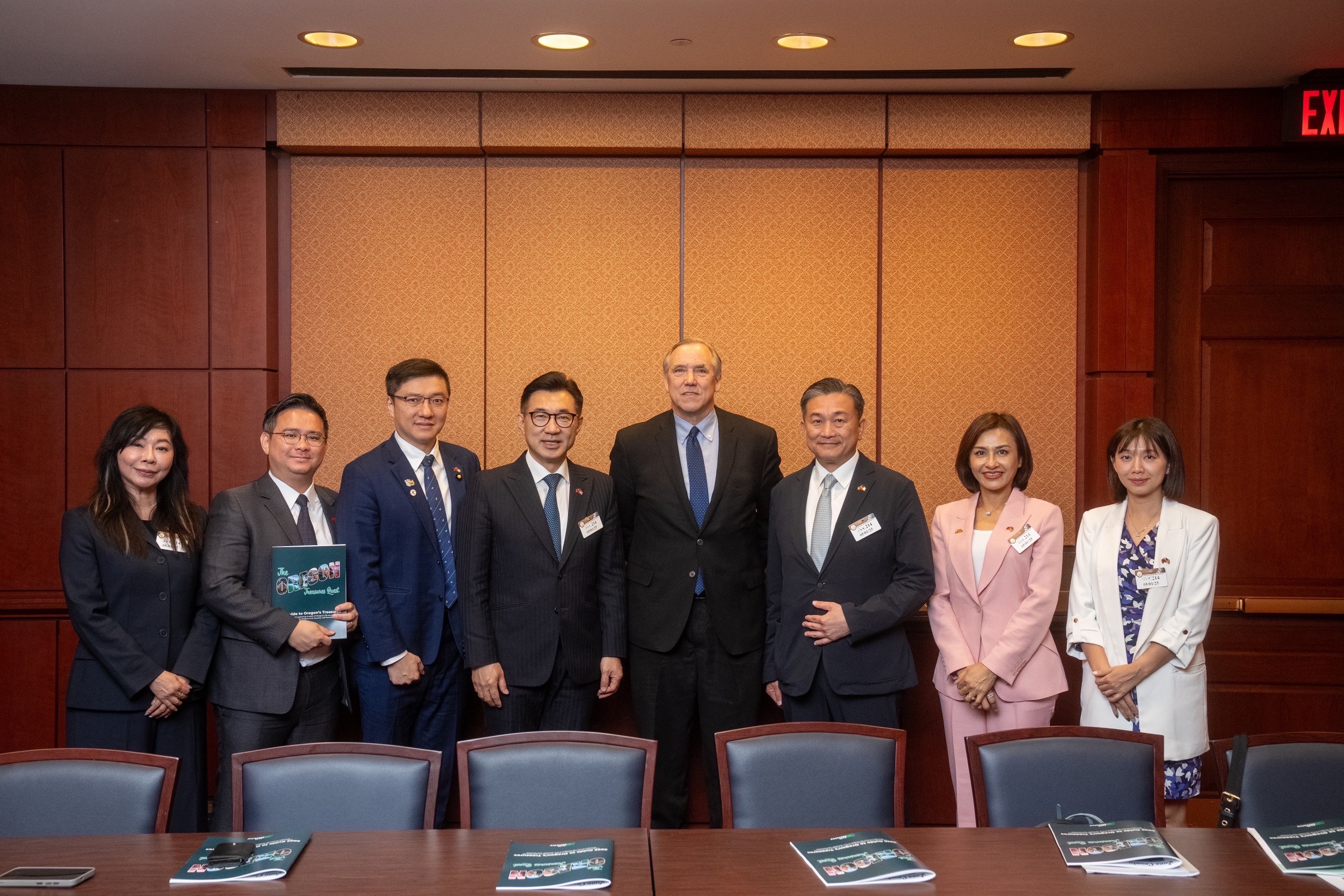
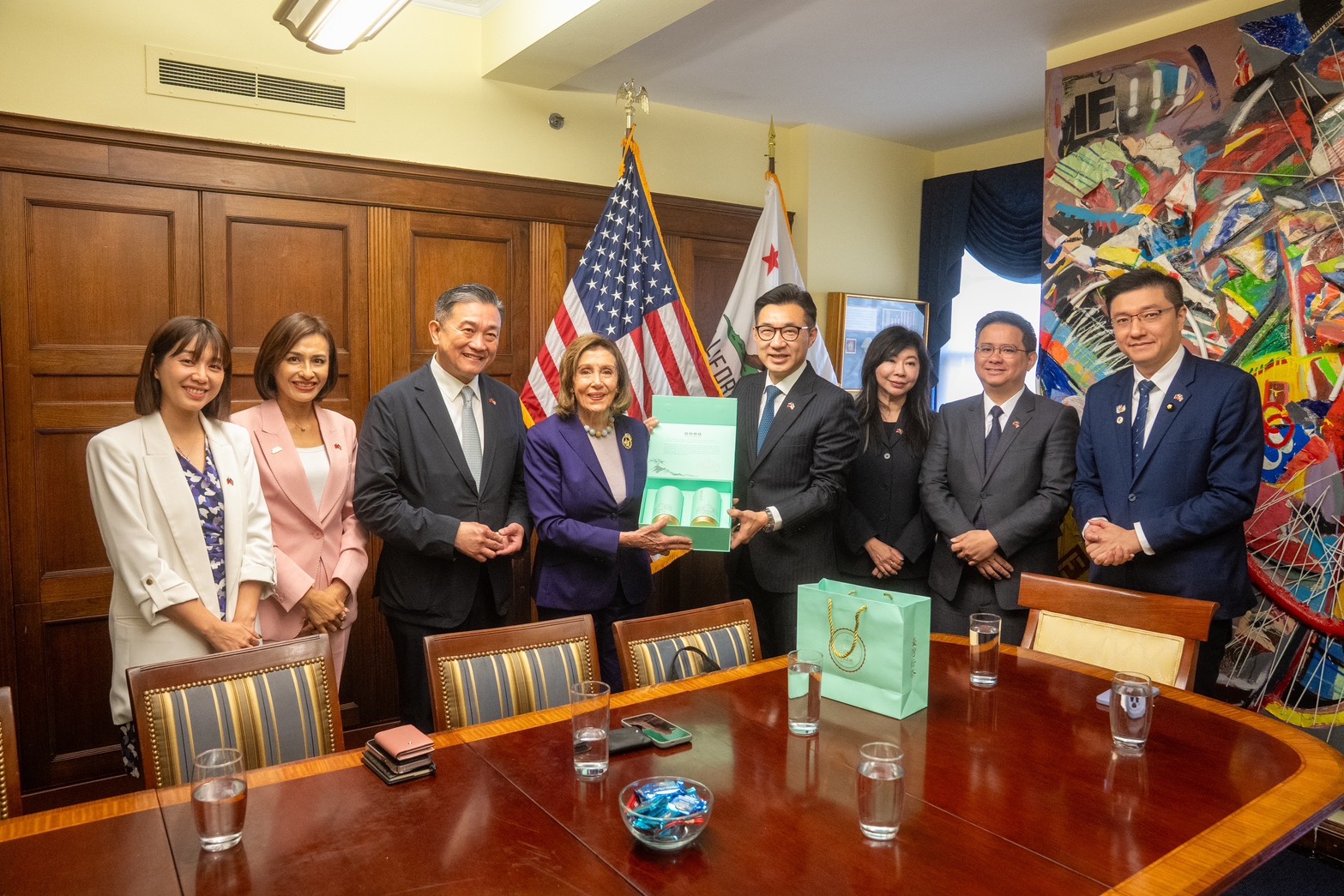
Vice President Dr. Johnny C. Chiang of the Legislative Yuan led a cross-party delegation of seven legislators from the Legislative Yuan USA Caucus and the Foreign Affairs and National Defense Committee on a visit to Washington, D.C. from April 27 to May 2, 2025, to promote parliamentary diplomacy and strengthen Taiwan-U.S. relations. The delegation was led by DPP Legislator Dr. Wang Ting-Yu, Co-Chair of the Legislative Yuan USA Caucus, with Vice President Dr. Johnny C. Chiang serving as Honorary Leader. Members of the delegation included KMT Legislators Chang Chih-Lu and Huang Chien-Hao, DPP Legislators Chiu Yi-Ying and Ngalim Tiunn, and TPP Legislator Lin Yi-Chun.
Over the course of five working days, the delegation, accompanied by Representative Alexander Tah-Ray Yui, Minister Andrea Yang and Minister Johnson Sen Chiang, and staff from the Taipei Economic and Cultural Representative Office in the United States (TECRO), engaged in a tightly scheduled series of meetings with senior officials from the U.S. administration, members of the U.S. Senate and House of Representatives, think tank scholars, industry leaders, and representatives of the overseas Taiwanese community. In total, the delegation met with nine senators and three members of the House of Representatives, including Co-Chair of the Senate Taiwan Caucus Senator Thom Tillis, as well as Senators Tim Sheehy, James Lankford, Ted Budd, Marsha Blackburn, John Curtis, and Jeff Merkley. They also had chance encounters with Senators Chris Coons and Ed Markey, both of whom have previously visited Taiwan. Additionally, the delegation held meetings with Co-Chairs of the Congressional Taiwan Caucus Representatives Mario Díaz-Balart and Ami Bera, as well as with Speaker Emerita Nancy Pelosi. The aforementioned federal legislators serve on key committees related to commerce, defense, foreign affairs, and finance. Their support is instrumental in advancing the Taiwan-U.S. Avoidance of Double Taxation Agreement (ADTA), which is currently under review in the U.S. Senate, and in further strengthening the Taiwan-U.S. partnership. The delegation also held meetings with representatives from key Washington-based institutions, including the Heritage Foundation, the Hudson Institute, the National Association of Manufacturers (NAM), the U.S.-Taiwan Business Council (USTBC), and Meta. In these engagements, the delegation conveyed Taiwan’s positions on the Trump administration’s “reciprocal tariff” policy, the Taiwan-U.S. ADTA, and security in the Taiwan Strait. The delegation also listened to perspectives and recommendations from various U.S. stakeholders, while actively seeking broader support.
On the final day of the visit, Vice President Chiang, accompanied by members of the delegation, briefed members of the Chinese-language media in Washington, D.C. at their hotel, highlighting the significance of the visit and its key accomplishments. Speaking on the topic of Taiwan-U.S. trade and tariff issues, Vice President Chiang stated that the delegation had thoroughly conveyed Taiwan’s concerns to the U.S. regarding the reciprocal tariff policy and the uncertainties surrounding bilateral trade. The U.S. side clearly articulated its export control measures and expressed serious concern over the transshipment of Chinese goods to circumvent export restrictions. It called on key trading partners, including Taiwan, to stand together with the United States in close cooperation. The delegation also conveyed Taiwan’s strong hope that the ADTA legislation would be scheduled for consideration in the U.S. Senate as soon as possible. This position was met with understanding and support from the senators and executive branch officials with whom the delegation met. Vice President Chiang further stated that the delegation had conveyed Taiwan’s firm commitment to enhancing its self-defense capabilities and its willingness to increase energy purchases. He earnestly expressed the hope that the United States would consider including Taiwan’s arms procurements in the overall bilateral trade figures to help balance trade between the two sides.
DPP Legislator Dr. Wang Ting-Yu, Co-Chair of the Legislative Yuan USA Caucus, remarked that the delegation met with the chairs of the Congressional Taiwan Caucus in both the Senate and House, key opinion leaders, senior officials responsible for Taiwan affairs within the U.S. administration, and prominent scholars from mainstream think tanks. The discussions were in-depth and highly productive. He emphasized that the delegation conveyed a clear message: Taiwan is a trustworthy and reliable partner of the United States. This visit once again demonstrated that national interests transcend partisan lines, and it reflected Taiwan’s unified front in advancing its international engagement. Such efforts, he noted, are instrumental in helping stakeholders across the U.S. gain a comprehensive understanding of Taiwan’s concerns regarding economic and security issues. DPP Legislator Dr. Wang Ting-Yu further emphasized that the U.S. recognizes Taiwan as an irreplaceable partner—one that cannot be traded, bargained, or exchanged in negotiations with other economies. Taiwan hopes to begin negotiations with the United States at the earliest opportunity. The U.S. side has expressed strong concern over the issue of transshipment and export control circumvention, and has conveyed its expectation that a bilateral cooperation mechanism be established to ensure Taiwan’s full alignment with U.S. export restrictions. Regarding the issue of avoiding double taxation, the delegation affirmed that Taiwan’s executive and legislative branches are united in their position and earnestly hope that the U.S. Senate will complete the legislative process as soon as possible. Doing so would strengthen Taiwan-U.S. economic and trade relations, promote bilateral investment, and create a win-win outcome for both sides.
TPP Legislator Lin Yi-Chun remarked that the visit was highly fruitful. While different political parties in Taiwan may hold divergent views on domestic issues, they stand united on the international stage in prioritizing national interests. She emphasized the importance of garnering continuous support from the international community for democratic Taiwan.
KMT Legislator Huang Chien-Hao stated that Senator Marsha Blackburn is currently advancing the “Taiwan Travel and Tourism Coordination Act,” which proposes the feasibility of establishing a U.S. preclearance facility in Taiwan. If enacted, Taiwan would become the first country in Asia to offer direct preclearance for entry into the United States. He expressed hope that the relevant administrative agencies will continue active dialogue and cooperation with the U.S. to facilitate the bill’s passage and enhance bilateral tourism exchanges between Taiwan and the United States.
DPP Legislator Chiu Yi-Ying noted that the U.S. side expressed particular concern over Taiwan’s national defense budget and its resolve for self-defense. She stated that the delegation had provided a detailed explanation on these matters. The issue of transshipment to circumvent origin labeling was also a matter of serious concern for U.S. administration officials. Taiwan’s relevant authorities should further strengthen regulations on transshipment and ensure the effective implementation and revision of applicable laws.
DPP Legislator Ngalim Tiunn remarked that the United States is deeply concerned about the overall level of preparedness among both the military and civilian sectors in Taiwan regarding national defense and security. She emphasized that relevant agencies should review whether there is room for further improvement in the current strategies for all-out defense mobilization and societal resilience, in order to build a more comprehensive national security and defense network.
KMT Legislator Chang Chih-Lu stated that the visit to the United States underscored the rock-solid nature of the Taiwan-U.S. partnership. In addition to clearly conveying Taiwan’s positions on national defense, security, and economic negotiations, the delegation also emphasized to the U.S. side the threats posed by China’s frequent military exercises to the stability of the Taiwan Strait and to Taiwan’s Coast Guard. He added that the delegation would bring back the relevant insights gained during the visit to help inform domestic discussions on strengthening the procurement of Coast Guard equipment and enhancing Taiwan’s maritime defense capabilities.
In response to media inquiries regarding the current progress of Taiwan-U.S. trade negotiations, the Trump administration’s strategic positioning of Taiwan, and the potential imposition of tariffs on semiconductors, the delegation stated that such negotiations are under the purview of the executive branch. The ultimate goal, they emphasized, is to safeguard national interests by identifying common ground between Taiwan and the United States and achieving a balanced bilateral trade relationship. Furthermore, the “Interim National Defense Strategic Guidance” released by the Trump administration in March of this year clearly underscored the importance of Taiwan. The U.S. has also demonstrated its commitment to security in the Taiwan Strait through its close attention to Taiwan’s national defense budget. As such, the defense budget serves as a key indicator of Taiwan’s determination to strengthen its self-defense. Members of the delegation will continue to engage with U.S. lawmakers to highlight the multi-partisan support in Taiwan for advancing Taiwan-U.S. cooperation. In addition, the delegation conveyed to the U.S. side Taiwan’s hope that tariffs on exports of high-tech products to the United States will ultimately be resolved in a manner that is also favorable to Taiwan.
The delegation members unanimously expressed their gratitude to the Ministry of Foreign Affairs, the TECRO, and other relevant missions for their thorough planning and comprehensive support, which contributed to the successful completion of this parliamentary diplomacy visit. The delegation returned to Taiwan in the early hours of May 4.