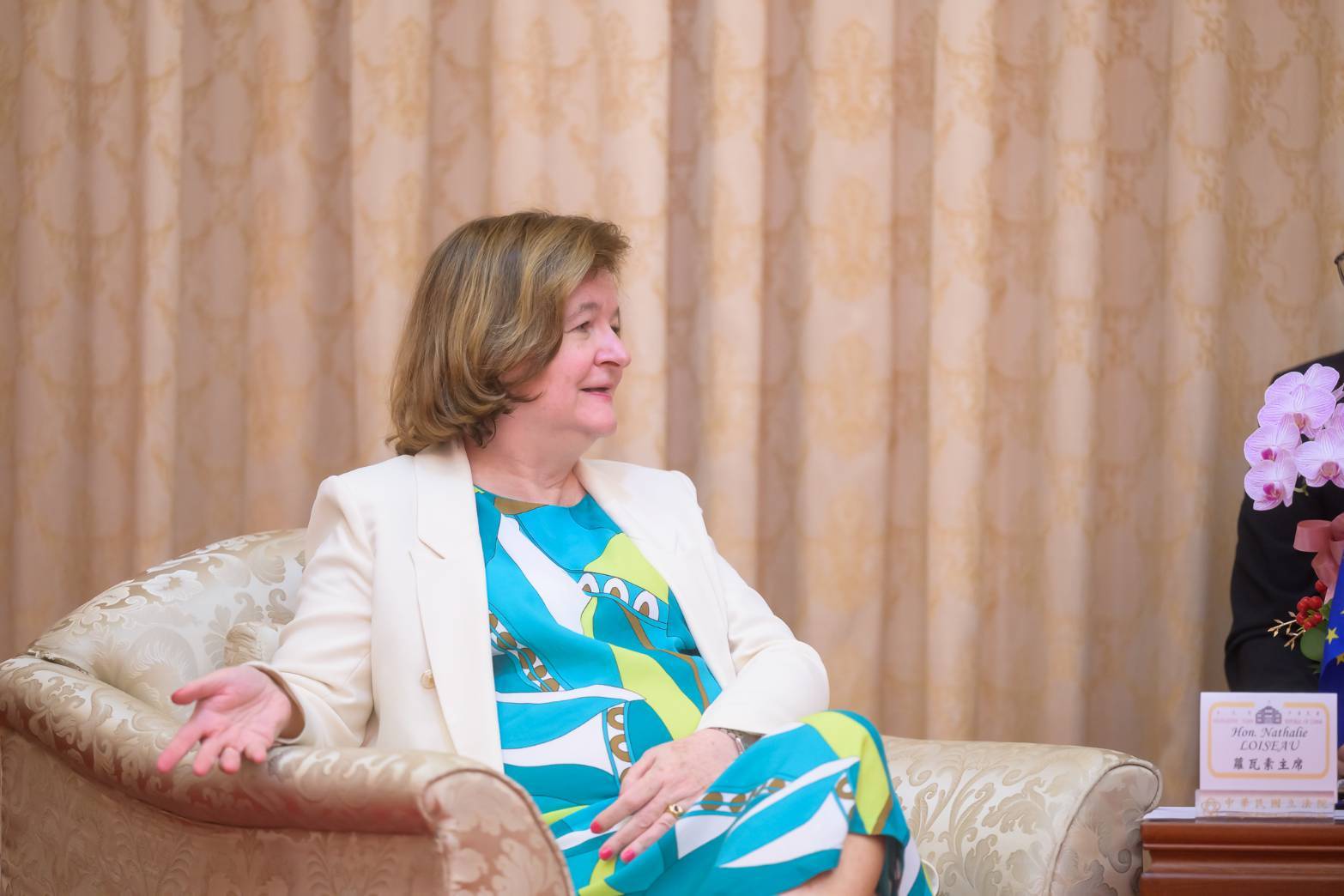
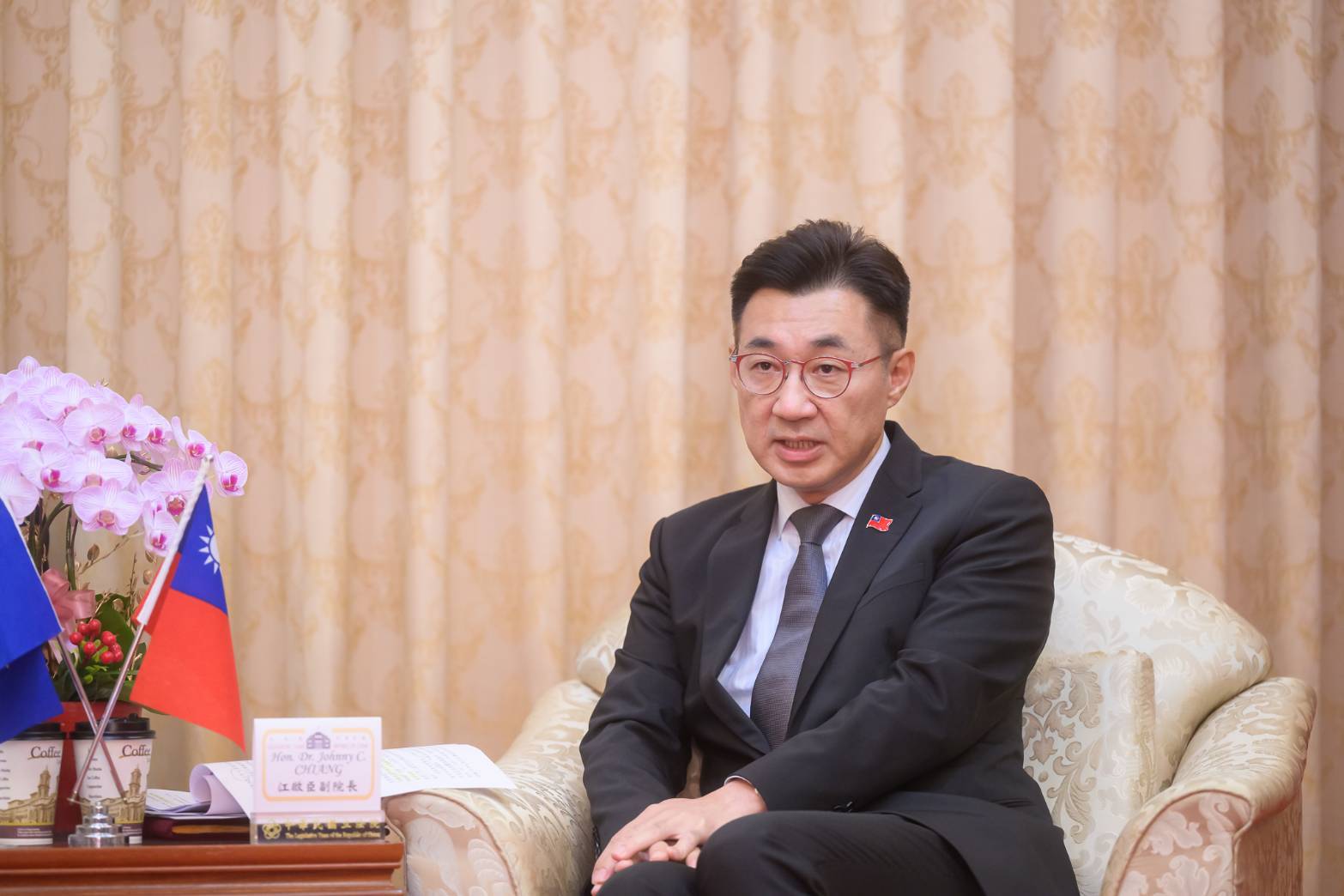
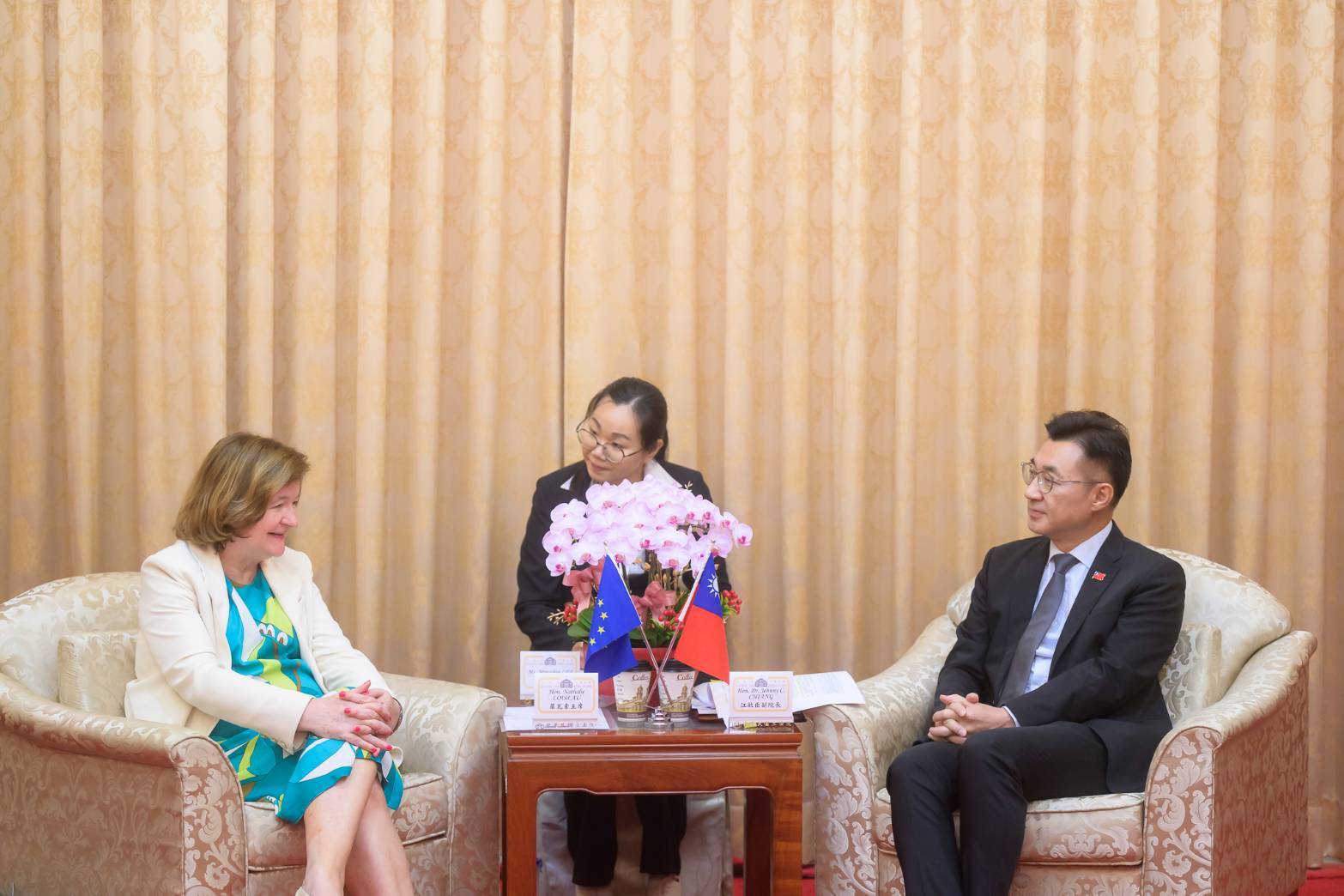
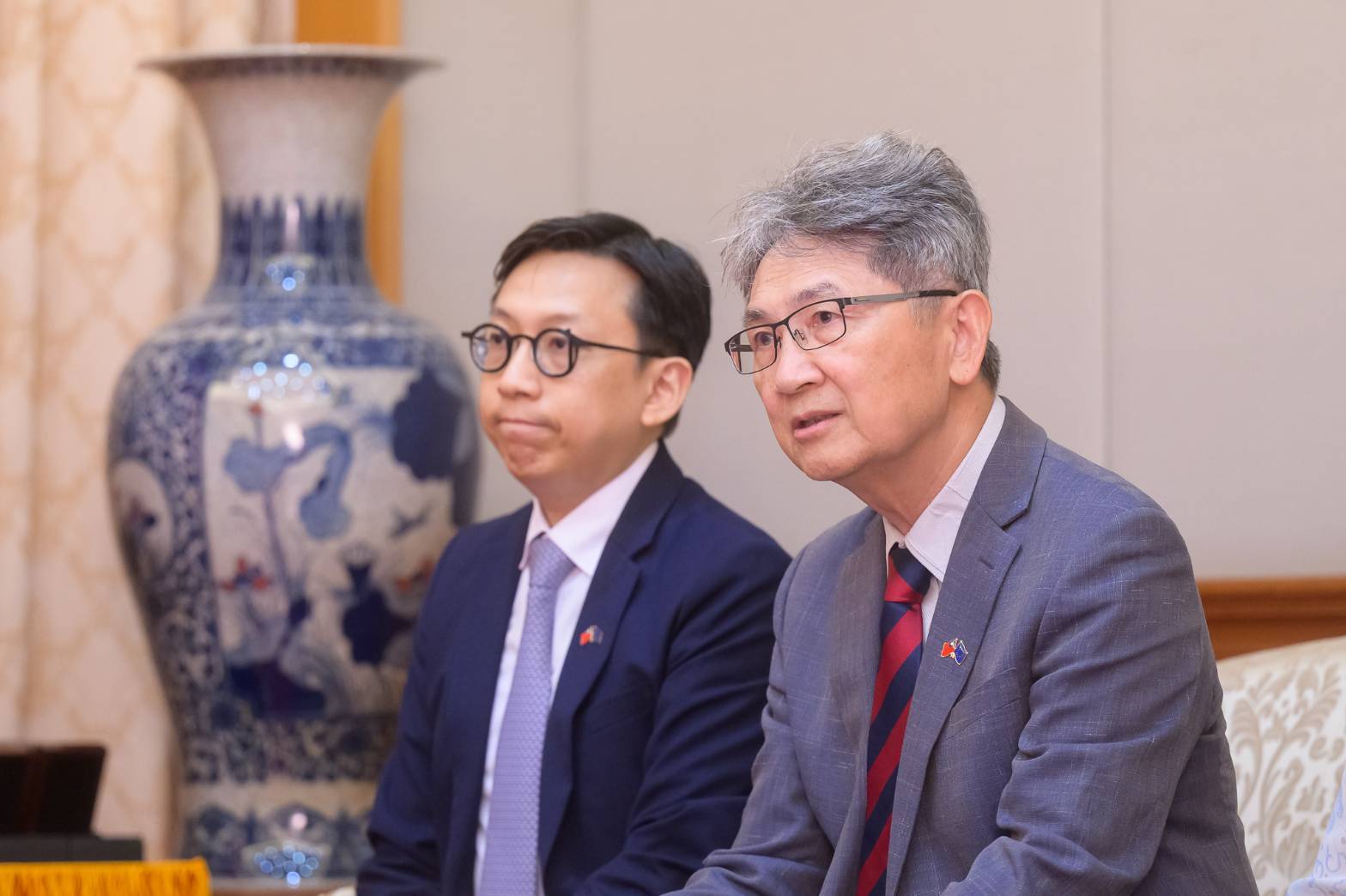
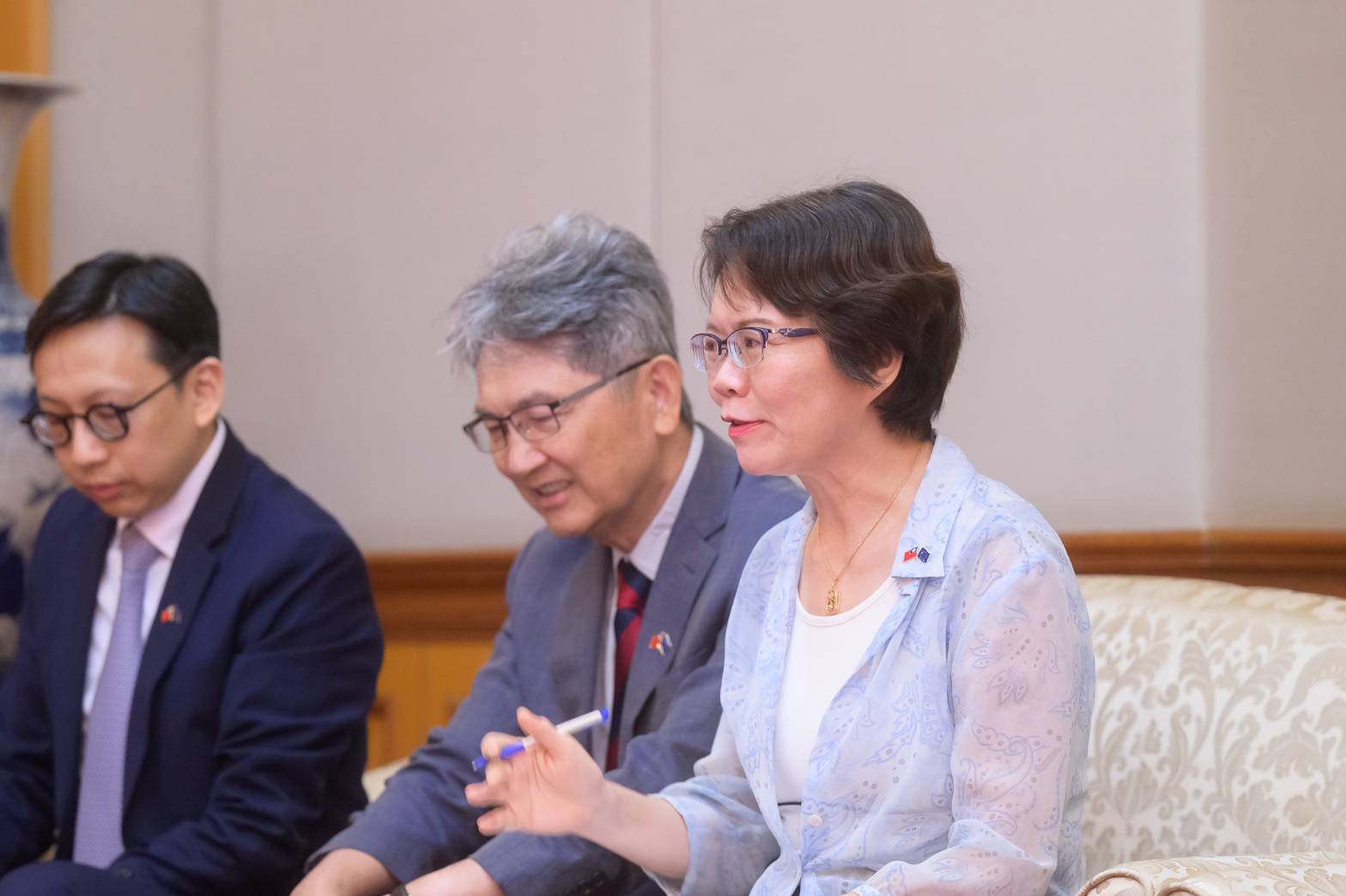
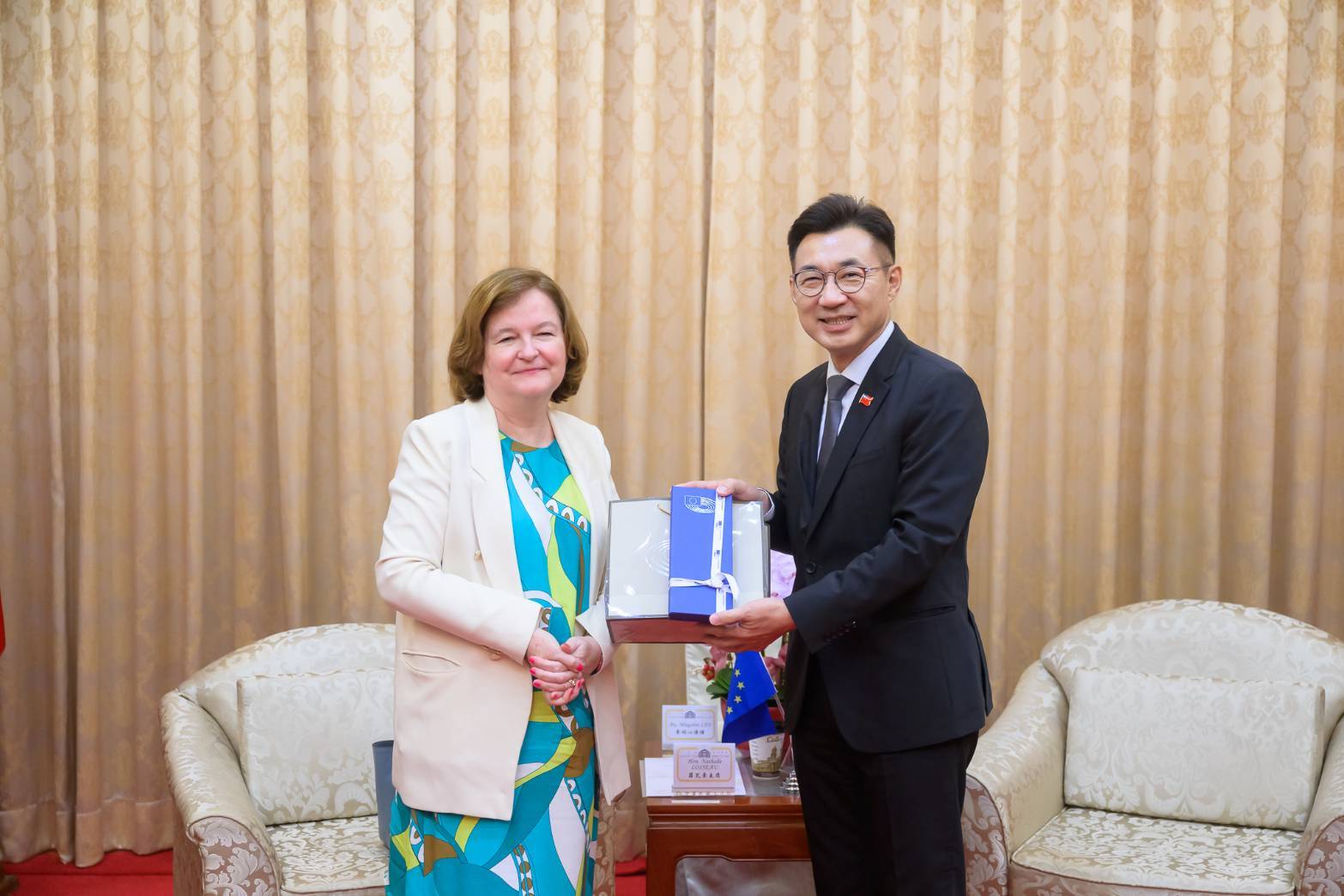
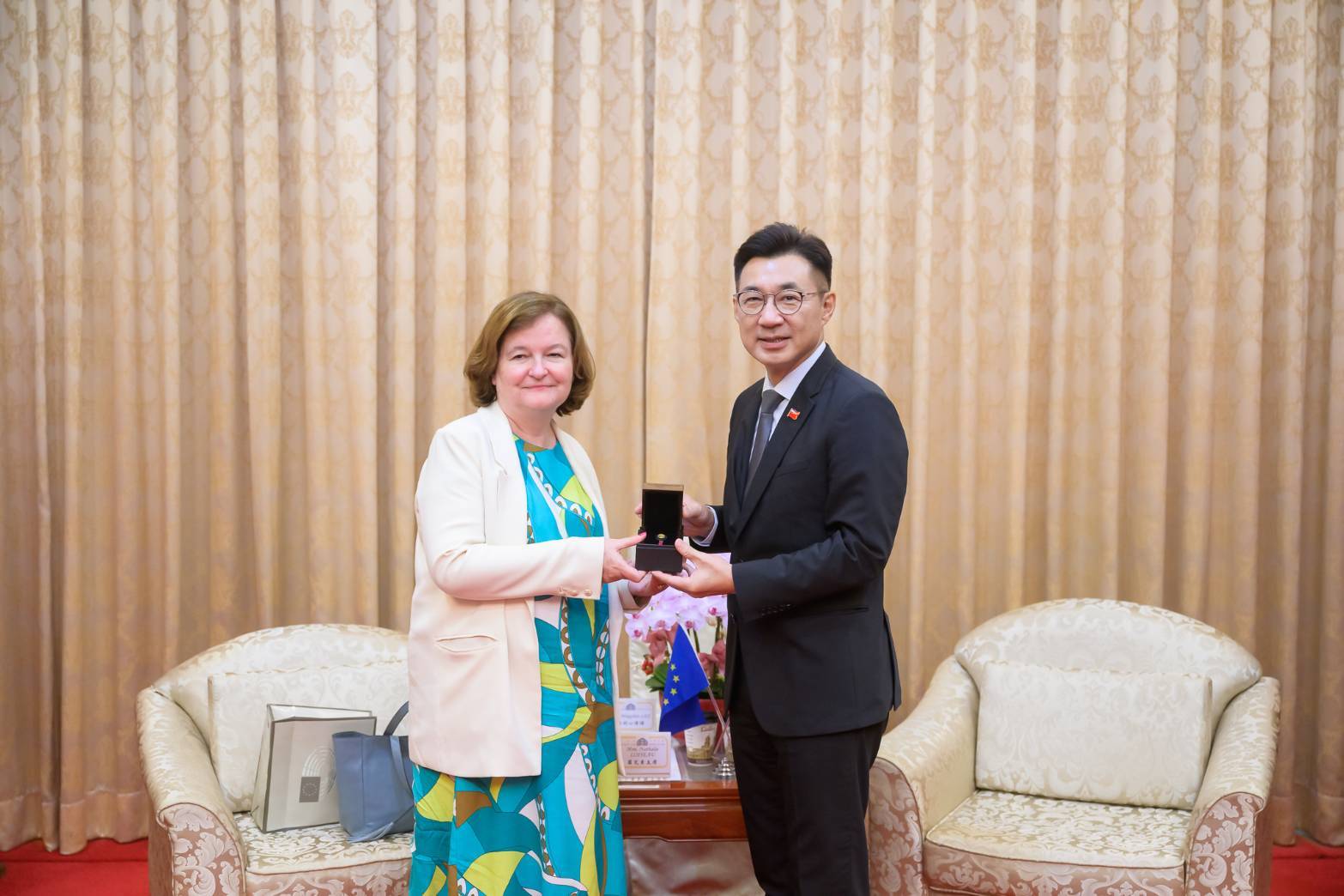
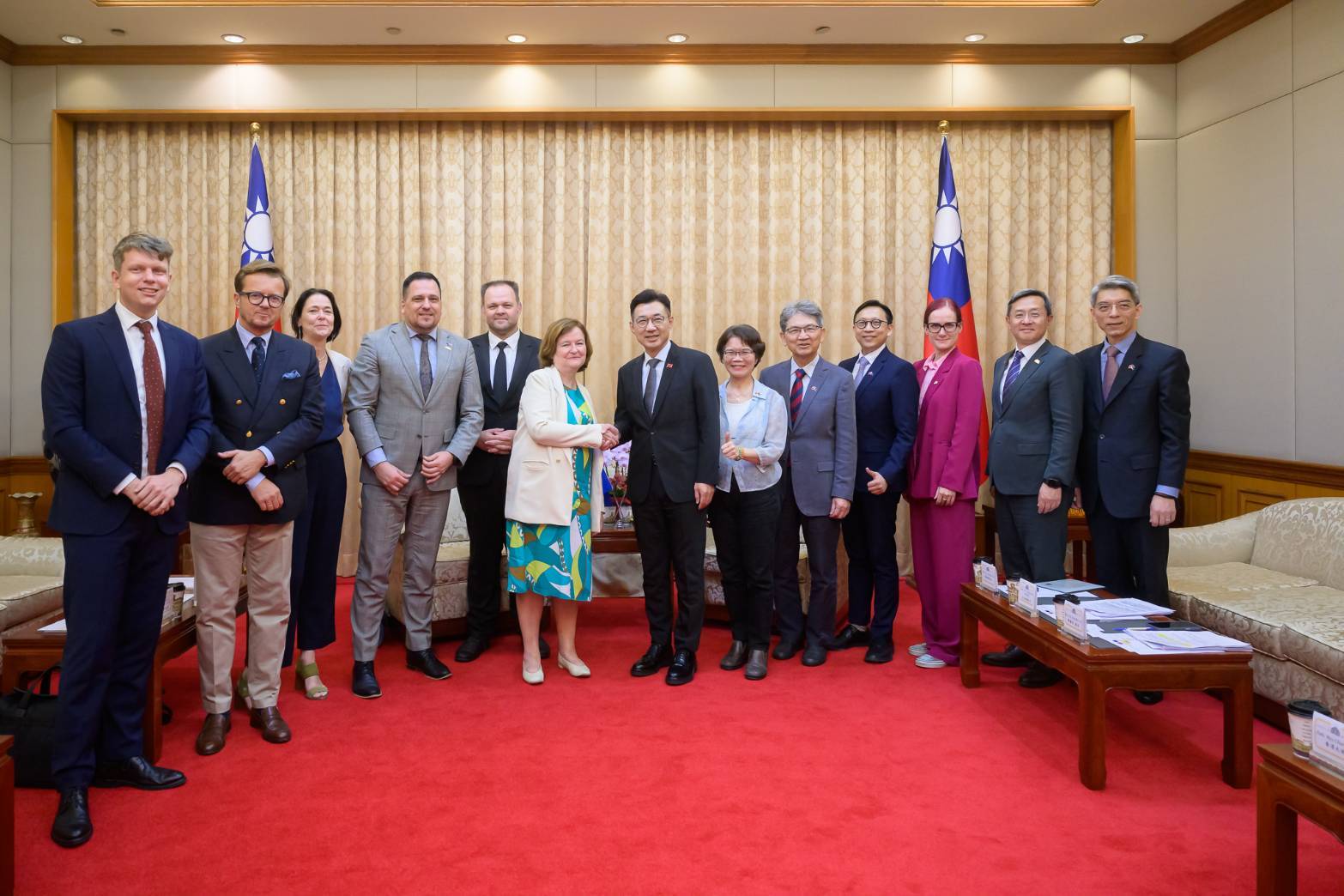
On the morning of July 8, Legislative Yuan Vice President Johnny C. Chiang received the first delegation of seven parliamentary staffers from the “European Valued Important Partnership” (EVIP) program. He was accompanied by KMT Legislator Adm. Chen Yeong-Kang and Secretary Chen Ching-Fang of the Department of International Affairs. Deputy Secretary General Josephine Lee of the Ministry of Foreign Affairs’ Department of European Affairs also joined the meeting.
Vice President Chiang began by noting that many European countries have long maintained strong ties with Taiwan, rooted in deep historical ties and enduring friendship, which serve as important assets for strengthening bilateral cooperation. He emphasized that this visit would help the delegation gain a better understanding of Taiwan’s democratic system and legislative processes, opening new possibilities for collaboration between Taiwan and Europe. Vice President Chiang further highlighted the crucial role parliamentary staff play in policymaking and legislation, and noted that Taiwan highly values exchanges with staffers from foreign legislatures, as such interactions deepen understanding of policy details and advance meaningful international cooperation.
He went on to mention that earlier this morning, the U.S. government issued letters regarding the reciprocal tariff policy to 14 countries worldwide, and that many European nations and Taiwan continue to engage in dialogue with the United States on tariff-related matters. Given the interconnected nature of the global economy, Vice President Chiang stressed that any major shift in trade policy can have far-reaching implications. At such a critical time, he said, it is imperative for Taiwan and Europe to join hands and address these challenges together.
Beyond economic ties, Vice President Chiang expressed Taiwan’s hope to build closer partnerships with European nations in areas such as security, social affairs, and public policy. He underscored that the EU is a vital economic and security partner to Taiwan and that its role is indispensable. He hoped that the European parliament staffers would bring home the insights and experiences gained from this visit, fostering greater understanding and support for Taiwan. In closing, he expressed hope that this in-depth exchange would lay a stronger foundation for future Taiwan-Europe cooperation across multiple domains.
Harry Warren, Senior Parliamentary Researcher at the British Parliament and head of the delegation, said that although the group includes members from different European countries, they are united by a common interest in and support for Taiwan. Many of them have been involved in parliamentary motions backing Taiwan’s participation in UN-related matters and have consistently voiced support for Taiwan’s international presence. He also recalled meeting Vice President Chiang previously in London and remarked that support for Taiwan within the British Parliament is both strong and widespread—a sentiment he believes is shared in many other European countries.
Warren added that the purpose of the visit was to gain deeper insights into Taiwan’s current situation and policy directions through open dialogue with the Legislative Yuan and other sectors. He noted that delegation member Alina Godz works for Ukrainian lawmaker Kira Rudik—the first Ukrainian MP to visit Taiwan—signifying closer Taiwan-Ukraine ties and Taiwan’s rising importance in European foreign policy. He further shared that the delegation had met with DPP representatives the previous day and was now seeking more diverse perspectives from across the political spectrum to further enhance Taiwan-Europe exchanges and collaboration. He concluded by thanking Vice President Chiang and the Legislative Yuan for their warm reception and expressed hope to continue advancing substantive cooperation between Taiwan and Europe in democracy, economic development, and global affairs.
Legislator Chen expressed gratitude for Europe’s longstanding support for Taiwan’s democratic development and regional security. He emphasized that as the global landscape continues to shift rapidly, Taiwan and Europe must strengthen their cooperation, particularly in national defense, societal resilience, and talent cultivation. He noted that the international landscape is constantly changing, with geopolitics, economic, and strategic issues intertwined, making it essential for the global community to come together and respond.
Legislator Chen went on to note that although Taiwan’s legislature consists of parties with different political stances, all share a strong commitment to regional security and democratic values. However, due to a lack of cross-party consensus on specific approaches to enhancing societal resilience, some key policies remain pending in this legislative session. He stressed that increases in defense spending should go beyond hardware procurement and focus on cultivating and training talent. He also expressed hope that more Taiwanese youth could study military and security-related subjects in Europe to deepen the foundation for bilateral cooperation. In closing, he again thanked the delegation for their visit and looked forward to expanding tangible collaboration between Taiwan and Europe in the areas of democracy, defense, and regional security.
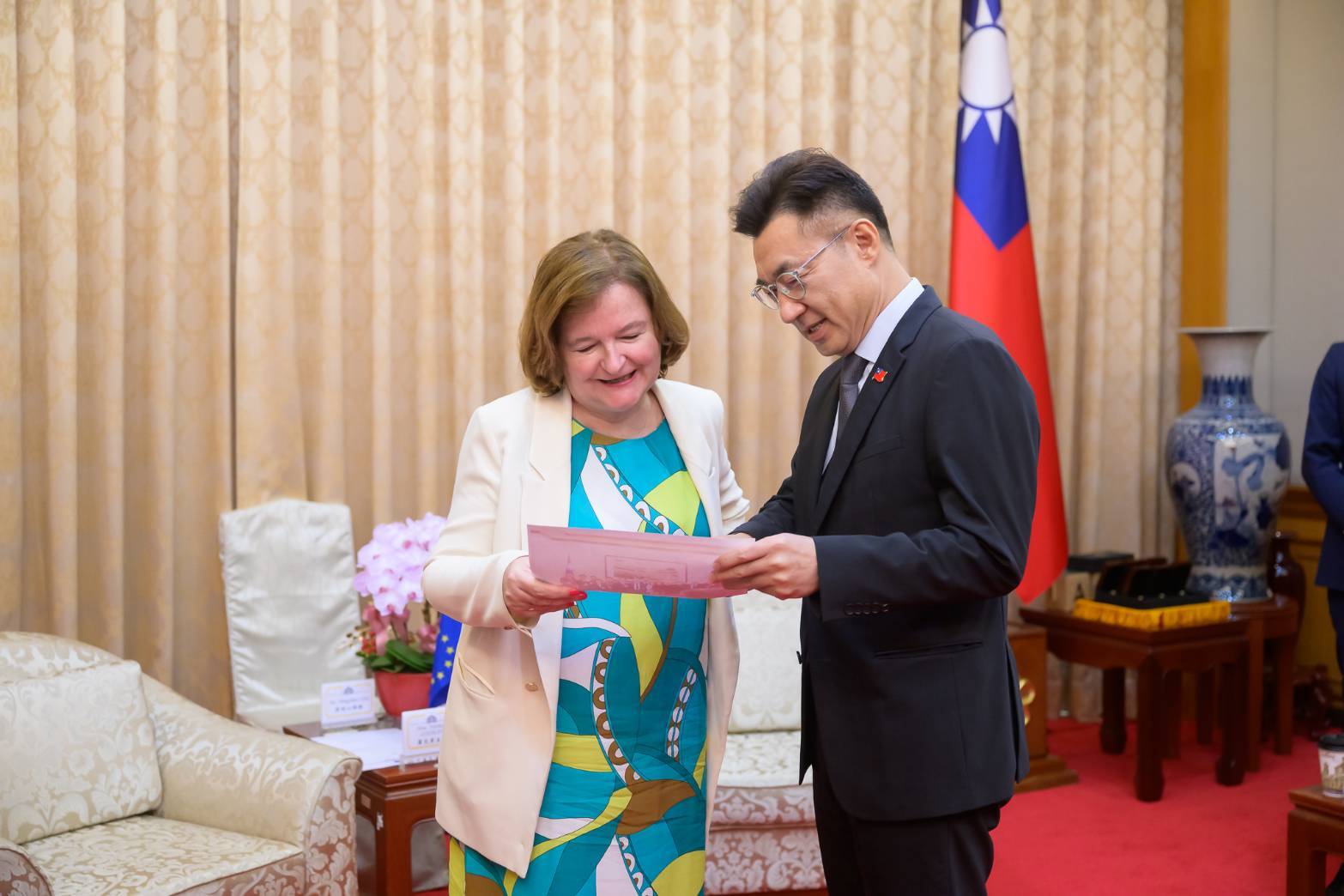
The two sides then exchanged views on increasing defense budgets, national security strategies, the Russia-Ukraine war and military aid, and the United States’ strategic role in the Indo-Pacific region. The hour-long meeting concluded in a warm and engaging atmosphere, with the exchange of commemorative gifts and a group photo marking the occasion.