

Vice President Johnny C. Chiang of the Legislative Yuan meets delegation from the Latvia-Taiwan Parliamentary Friendship Group; Vice President Chiang: We are grateful for your steadfast support of Taiwan and look forward to deepening bilateral relations between Taiwan and Latvia

On the afternoon of August 12, Vice President Johnny C. Chiang of the Legislative Yuan, accompanied by Chair of the Taiwan-Nordic Countries and Baltic States Parliamentary Friendship Association Legislator Dr. Chiu Chih-Wei, KMT Legislator Chen Yeong-Kang, DPP Legislator Kuo Yu-Ching, Taiwan People’s Party Legislator Lin Kuo-Chen, Deputy Director-General Yang Fang-Ling of the Department of International Affairs, Deputy Minister Amb. François Chihchung Wu, and Deputy Secretary-General of the Department of European Affairs Josephine Lee of the Ministry of Foreign Affairs, met with an eight-member delegation from the Latvia-Taiwan Parliamentary Friendship Group.

Vice President Chiang, on behalf of the Legislative Yuan and President Daniel K.Y. Han, extended a warm welcome to the visiting delegation. He then joined the attending legislators in a group photograph with the delegation members and presented the guests with Taichung’s renowned sun cakes as a token of appreciation. Vice President Chiang remarked that although Taiwan and Latvia are geographically distant, their peoples are far from strangers, as both sides uphold the shared values of democracy, freedom, and human rights. He expressed particular gratitude to Chair Ingrīda Circene and the members of the Latvia-Taiwan Parliamentary Friendship Group for their longstanding support of Taiwan’s participation in international organizations such as the World Health Assembly (WHA) and the World Health Organization (WHO). He further conveyed his hope that continued deepening of parliamentary exchanges would strengthen the bonds of friendship between the peoples of the two countries and advance substantive cooperation.
Vice President Chiang emphasized his expectation of bilateral relations between civil society and governments being further advanced in the future. He expressed the hope that the Latvian government might establish an office in Taiwan as an important platform to promote bilateral cooperation, thereby fostering exchanges in education, trade, and culture. As a member of the European Union, Latvia can work with Taiwan to explore diverse avenues of cooperation in addressing challenges in the international trade environment and tariff regimes. Vice President Chiang concluded by encouraging the delegation to experience Taiwan’s culinary delights and local scenery during their stay, thereby deepening their understanding of the nation.

In her remarks, Chair Ingrīda Circene noted that while this was the first visit to Taiwan for the other members of the delegation, it marked her own fourth visit. She underscored that Latvia-Taiwan relations are founded upon shared values, with both sides closely aligned in their commitment to human rights, democracy, and the rule of law. She highlighted that 18 of the 100 members of the Latvian Parliament have joined the Latvia-Taiwan Parliamentary Friendship Group, underscoring Latvia’s strong attention to and support for Taiwan. Since she first began engaging with Taiwan affairs 20 years ago, bilateral cooperation has expanded from areas such as social welfare, healthcare, and cultural organizations to now encompass defense industries, high-tech sectors, unmanned aerial vehicles, artificial intelligence (AI), and the economy. She noted that bilateral cooperation in science and technology was first launched in 2000, when the Ministry of Education and Science signed a cooperation framework with Taiwan. This initiative encompassed exchanges on national science and research policies, as well as reciprocal visits by students and scholars. Chair Circene concluded by expressing her hope for Taiwan’s enduring stability and the continued strengthening of its democracy and peace.
Legislator Irma Kalniņa observed that nations across the world are currently confronted with grave international challenges. She emphasized that Latvia, together with the other two Baltic States, Poland, and Sweden, stands on the front line in facing the threat of Russian expansion. Latvia has increased its defense budget to 5 percent of GDP, and although this places pressure on Latvia’s economy, it remains steadfast in its support for Ukraine, with confidence that history will vindicate this choice. Legislator Ugis Rotbergs underscored that national defense and security are Latvia’s foremost concerns. Owing to its strategic location, Latvia—like Taiwan—faces threats of hybrid warfare as well as challenges in safeguarding critical infrastructure such as undersea cables. He stressed the necessity of enhancing protection and response capabilities through cooperation with allied partners.

During the bilateral exchanges, Legislator Dr. Chiu Chih-Wei recalled leading a delegation to Latvia in 2024, where he met with several of the legislators present and was warmly received, a testament to the close ties between the two parliaments. He further noted that both Taiwan and Latvia cherish democracy, freedom, and human rights, and that they share similarly challenging geopolitical environments, with the Baltic States facing threats from Russia in a situation closely resembling that of Taiwan. He added that Taiwan and Latvia possess complementary strengths in the high-tech and semiconductor industries, offering opportunities to deepen cooperation in areas of asymmetric warfare such as unmanned aerial vehicles (UAV) and unmanned vessels. He also expressed the hope of establishing a regular parliamentary exchange platform to address issues of common concern.

Legislator Chen Yeong-Kang observed that the current international situation is complex and volatile, with both Taiwan and Latvia facing external threats and security challenges. He stressed the necessity of continued strengthening of cooperation in national defense and technological innovation. He emphasized that beyond enhancing defense hardware, it is also essential to strengthen the protection of information and communications technology and critical infrastructure, while ensuring that democracy and the rule of law serve as the foundation for applying technology and formulating policy. At the same time, he advocated for actively developing emerging technologies such as UAVs and unmanned underwater vehicles (UUVs), while also deepening educational exchanges to comprehensively enhance the scope and capacity of bilateral cooperation.

Legislator Kuo Yu-Ching expressed her gratitude for the warm reception extended by the Latvia-Taiwan Parliamentary Friendship Group during her visit last year, and commended Latvia’s beautiful environment and its profound friendship toward Taiwan. She observed that, grounded in their shared values of democracy, freedom, and human rights, and in light of their similar geopolitical challenges, the two sides can strengthen cooperation in areas such as education and semiconductors. By fostering talent exchanges and complementary industrial supply chains, bilateral relations can be further consolidated.
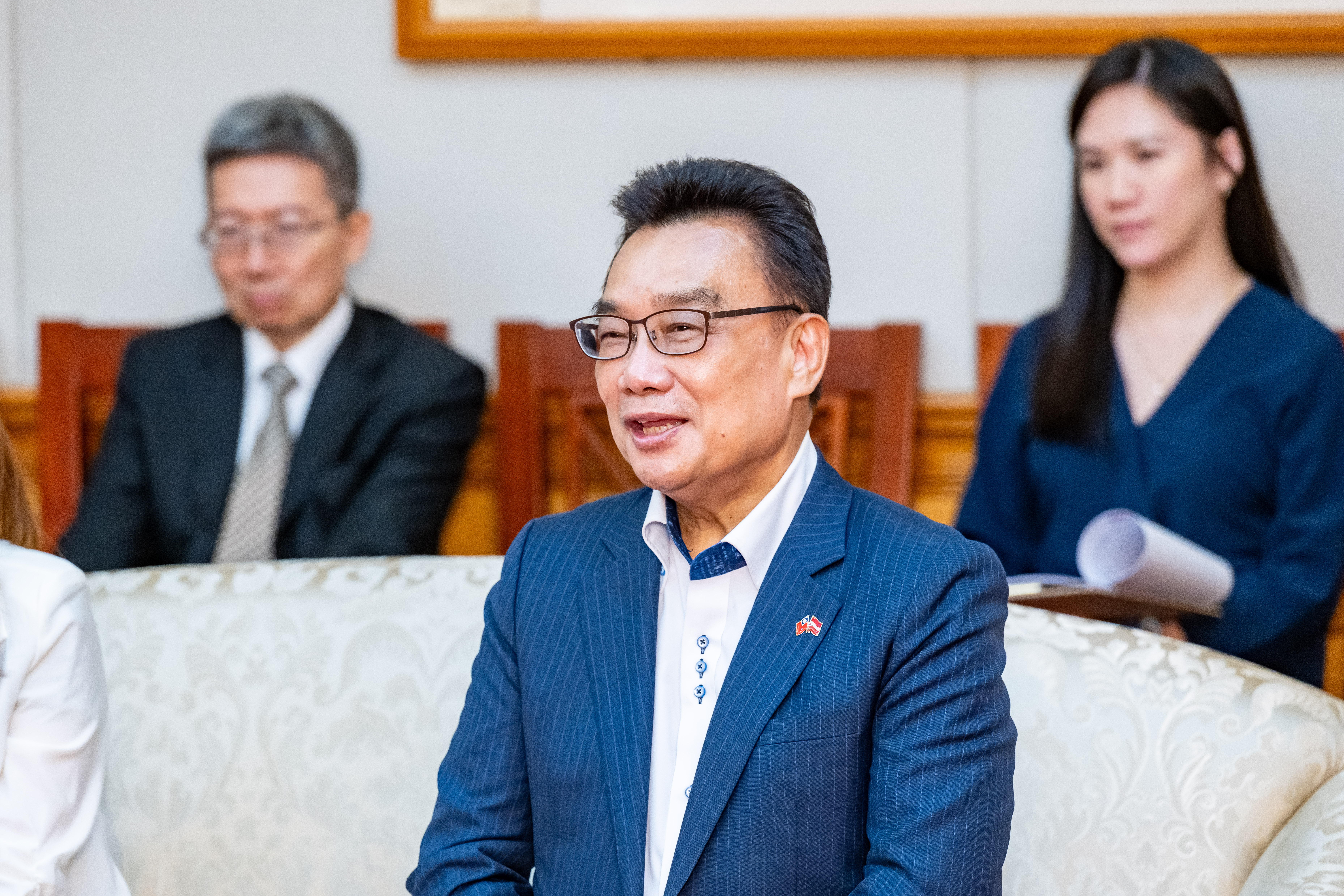
Legislator Lin Kuo-Chen recalled his visit to Latvia as a Taipei City Councilor, noting that he was deeply impressed by the country’s culture and development. He expressed the hope that closer cooperation could be established in fields such as culture and trade, extending parliamentary interactions to the societal and industrial levels, thereby fostering a comprehensive partnership.
The two sides also engaged in extensive and in-depth exchanges of views on issues including congressional diplomacy, national defense and security, self-defense, high-tech industries, trade and economic cooperation, and educational collaboration. The meeting lasted approximately 60 minutes and concluded successfully with the exchange of commemorative gifts and a group photograph.




Vice President Chiang, on behalf of the Legislative Yuan and President Daniel K.Y. Han, extended a warm welcome to the visiting delegation. He then joined the attending legislators in a group photograph with the delegation members and presented the guests with Taichung’s renowned sun cakes as a token of appreciation. Vice President Chiang remarked that although Taiwan and Latvia are geographically distant, their peoples are far from strangers, as both sides uphold the shared values of democracy, freedom, and human rights. He expressed particular gratitude to Chair Ingrīda Circene and the members of the Latvia-Taiwan Parliamentary Friendship Group for their longstanding support of Taiwan’s participation in international organizations such as the World Health Assembly (WHA) and the World Health Organization (WHO). He further conveyed his hope that continued deepening of parliamentary exchanges would strengthen the bonds of friendship between the peoples of the two countries and advance substantive cooperation.
Vice President Chiang emphasized his expectation of bilateral relations between civil society and governments being further advanced in the future. He expressed the hope that the Latvian government might establish an office in Taiwan as an important platform to promote bilateral cooperation, thereby fostering exchanges in education, trade, and culture. As a member of the European Union, Latvia can work with Taiwan to explore diverse avenues of cooperation in addressing challenges in the international trade environment and tariff regimes. Vice President Chiang concluded by encouraging the delegation to experience Taiwan’s culinary delights and local scenery during their stay, thereby deepening their understanding of the nation.
In her remarks, Chair Ingrīda Circene noted that while this was the first visit to Taiwan for the other members of the delegation, it marked her own fourth visit. She underscored that Latvia-Taiwan relations are founded upon shared values, with both sides closely aligned in their commitment to human rights, democracy, and the rule of law. She highlighted that 18 of the 100 members of the Latvian Parliament have joined the Latvia-Taiwan Parliamentary Friendship Group, underscoring Latvia’s strong attention to and support for Taiwan. Since she first began engaging with Taiwan affairs 20 years ago, bilateral cooperation has expanded from areas such as social welfare, healthcare, and cultural organizations to now encompass defense industries, high-tech sectors, unmanned aerial vehicles, artificial intelligence (AI), and the economy. She noted that bilateral cooperation in science and technology was first launched in 2000, when the Ministry of Education and Science signed a cooperation framework with Taiwan. This initiative encompassed exchanges on national science and research policies, as well as reciprocal visits by students and scholars. Chair Circene concluded by expressing her hope for Taiwan’s enduring stability and the continued strengthening of its democracy and peace.
Legislator Irma Kalniņa observed that nations across the world are currently confronted with grave international challenges. She emphasized that Latvia, together with the other two Baltic States, Poland, and Sweden, stands on the front line in facing the threat of Russian expansion. Latvia has increased its defense budget to 5 percent of GDP, and although this places pressure on Latvia’s economy, it remains steadfast in its support for Ukraine, with confidence that history will vindicate this choice. Legislator Ugis Rotbergs underscored that national defense and security are Latvia’s foremost concerns. Owing to its strategic location, Latvia—like Taiwan—faces threats of hybrid warfare as well as challenges in safeguarding critical infrastructure such as undersea cables. He stressed the necessity of enhancing protection and response capabilities through cooperation with allied partners.
During the bilateral exchanges, Legislator Dr. Chiu Chih-Wei recalled leading a delegation to Latvia in 2024, where he met with several of the legislators present and was warmly received, a testament to the close ties between the two parliaments. He further noted that both Taiwan and Latvia cherish democracy, freedom, and human rights, and that they share similarly challenging geopolitical environments, with the Baltic States facing threats from Russia in a situation closely resembling that of Taiwan. He added that Taiwan and Latvia possess complementary strengths in the high-tech and semiconductor industries, offering opportunities to deepen cooperation in areas of asymmetric warfare such as unmanned aerial vehicles (UAV) and unmanned vessels. He also expressed the hope of establishing a regular parliamentary exchange platform to address issues of common concern.
Legislator Chen Yeong-Kang observed that the current international situation is complex and volatile, with both Taiwan and Latvia facing external threats and security challenges. He stressed the necessity of continued strengthening of cooperation in national defense and technological innovation. He emphasized that beyond enhancing defense hardware, it is also essential to strengthen the protection of information and communications technology and critical infrastructure, while ensuring that democracy and the rule of law serve as the foundation for applying technology and formulating policy. At the same time, he advocated for actively developing emerging technologies such as UAVs and unmanned underwater vehicles (UUVs), while also deepening educational exchanges to comprehensively enhance the scope and capacity of bilateral cooperation.
Legislator Kuo Yu-Ching expressed her gratitude for the warm reception extended by the Latvia-Taiwan Parliamentary Friendship Group during her visit last year, and commended Latvia’s beautiful environment and its profound friendship toward Taiwan. She observed that, grounded in their shared values of democracy, freedom, and human rights, and in light of their similar geopolitical challenges, the two sides can strengthen cooperation in areas such as education and semiconductors. By fostering talent exchanges and complementary industrial supply chains, bilateral relations can be further consolidated.
Legislator Lin Kuo-Chen recalled his visit to Latvia as a Taipei City Councilor, noting that he was deeply impressed by the country’s culture and development. He expressed the hope that closer cooperation could be established in fields such as culture and trade, extending parliamentary interactions to the societal and industrial levels, thereby fostering a comprehensive partnership.
The two sides also engaged in extensive and in-depth exchanges of views on issues including congressional diplomacy, national defense and security, self-defense, high-tech industries, trade and economic cooperation, and educational collaboration. The meeting lasted approximately 60 minutes and concluded successfully with the exchange of commemorative gifts and a group photograph.