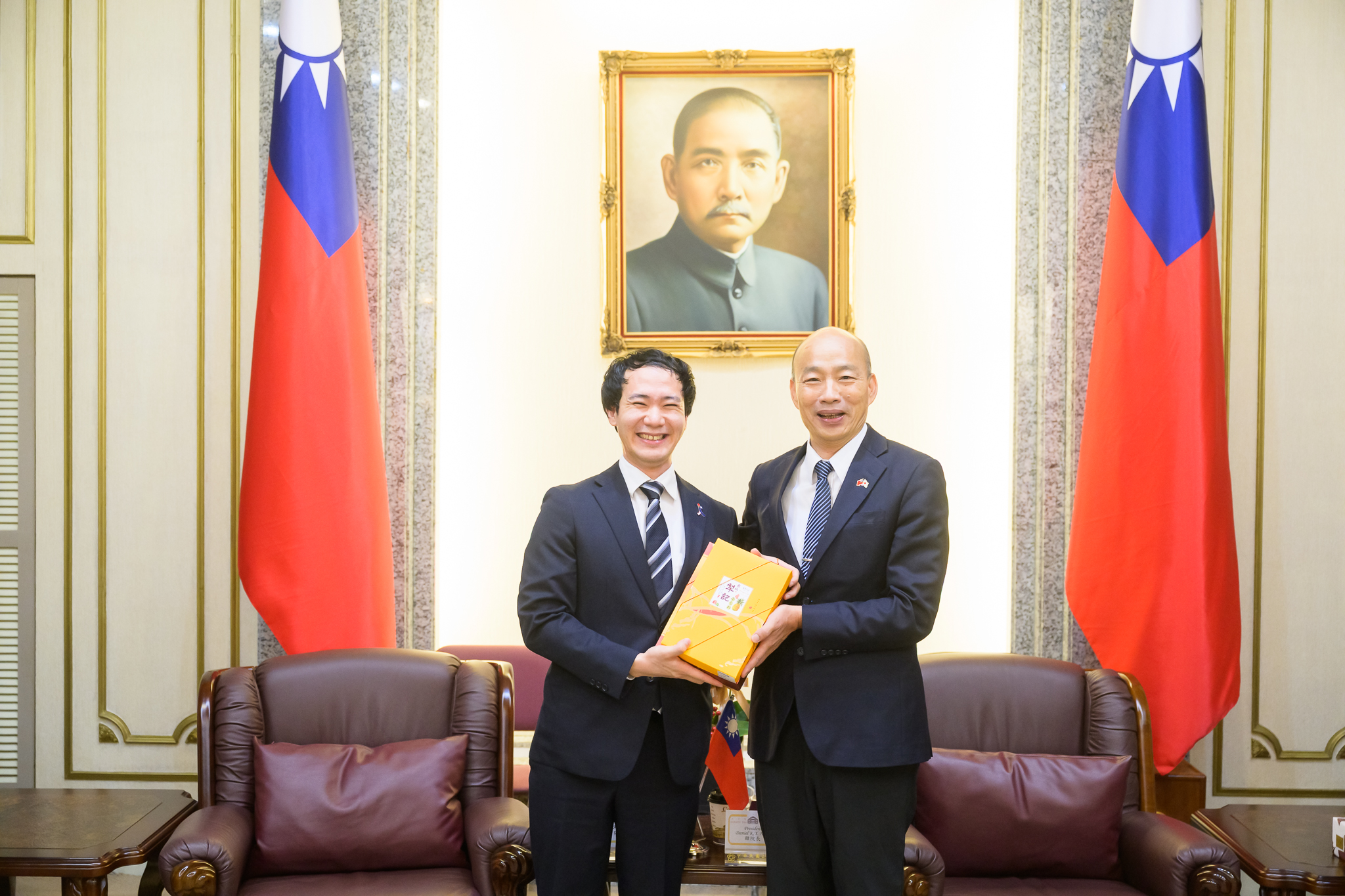
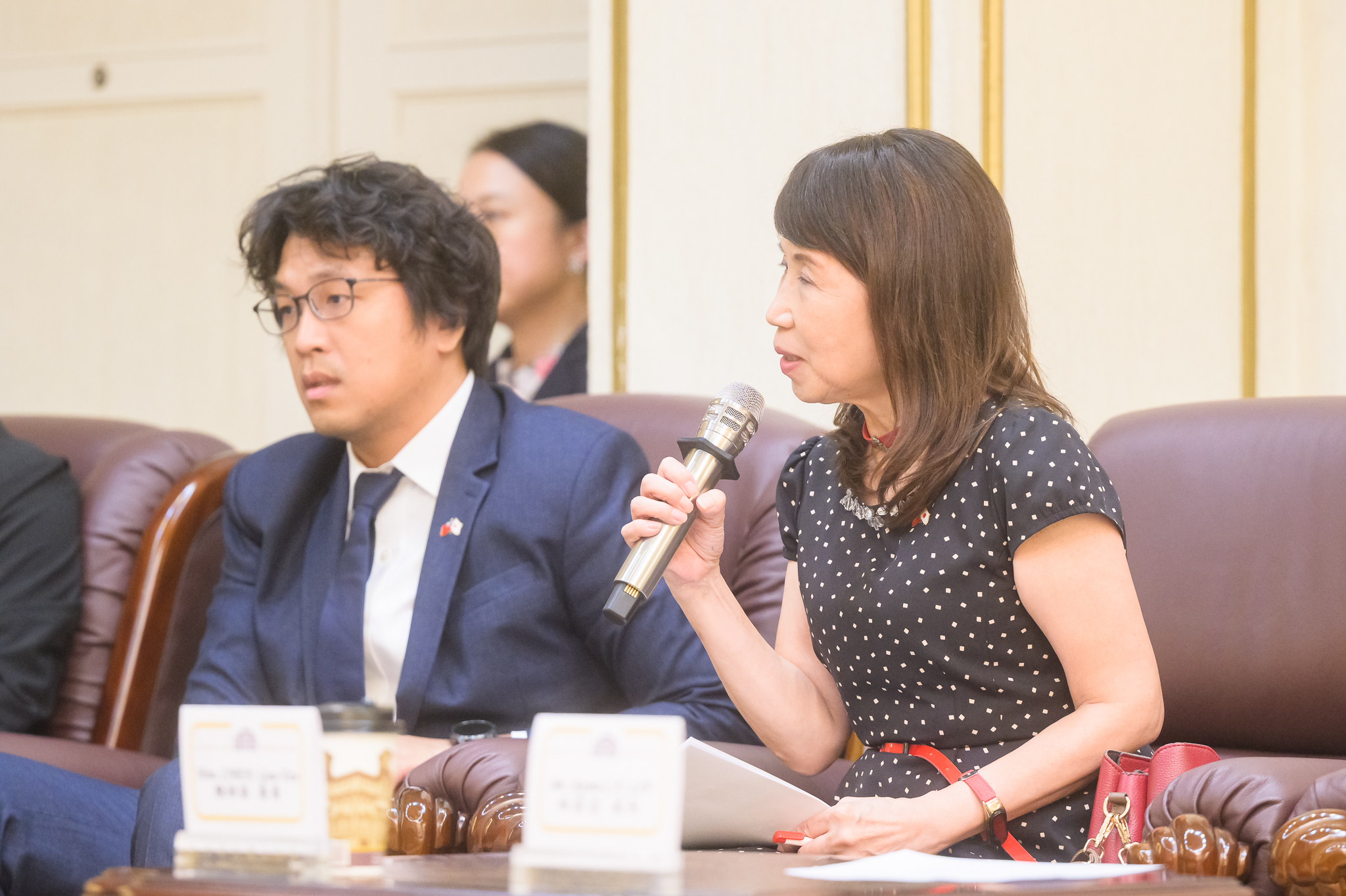
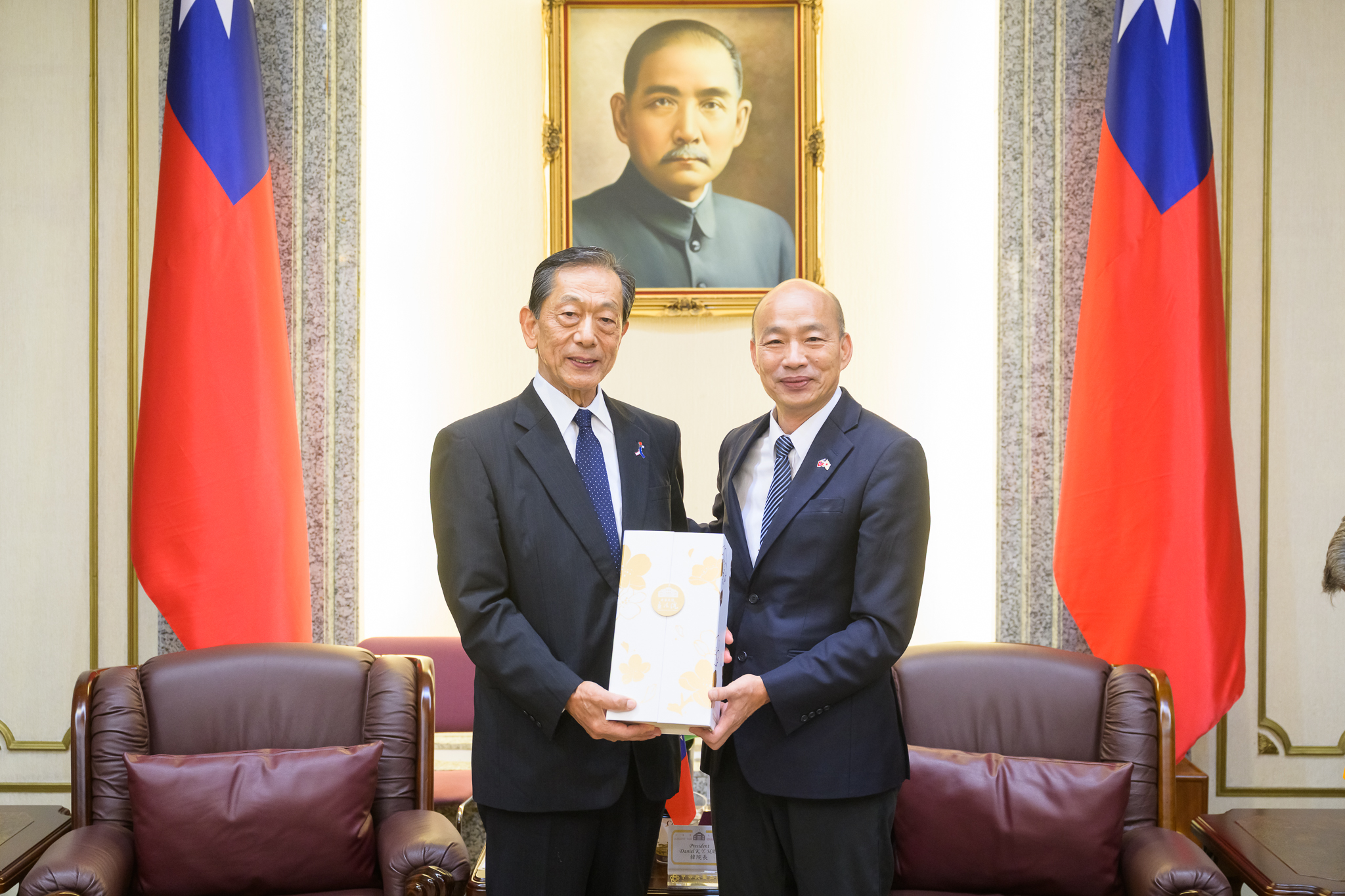
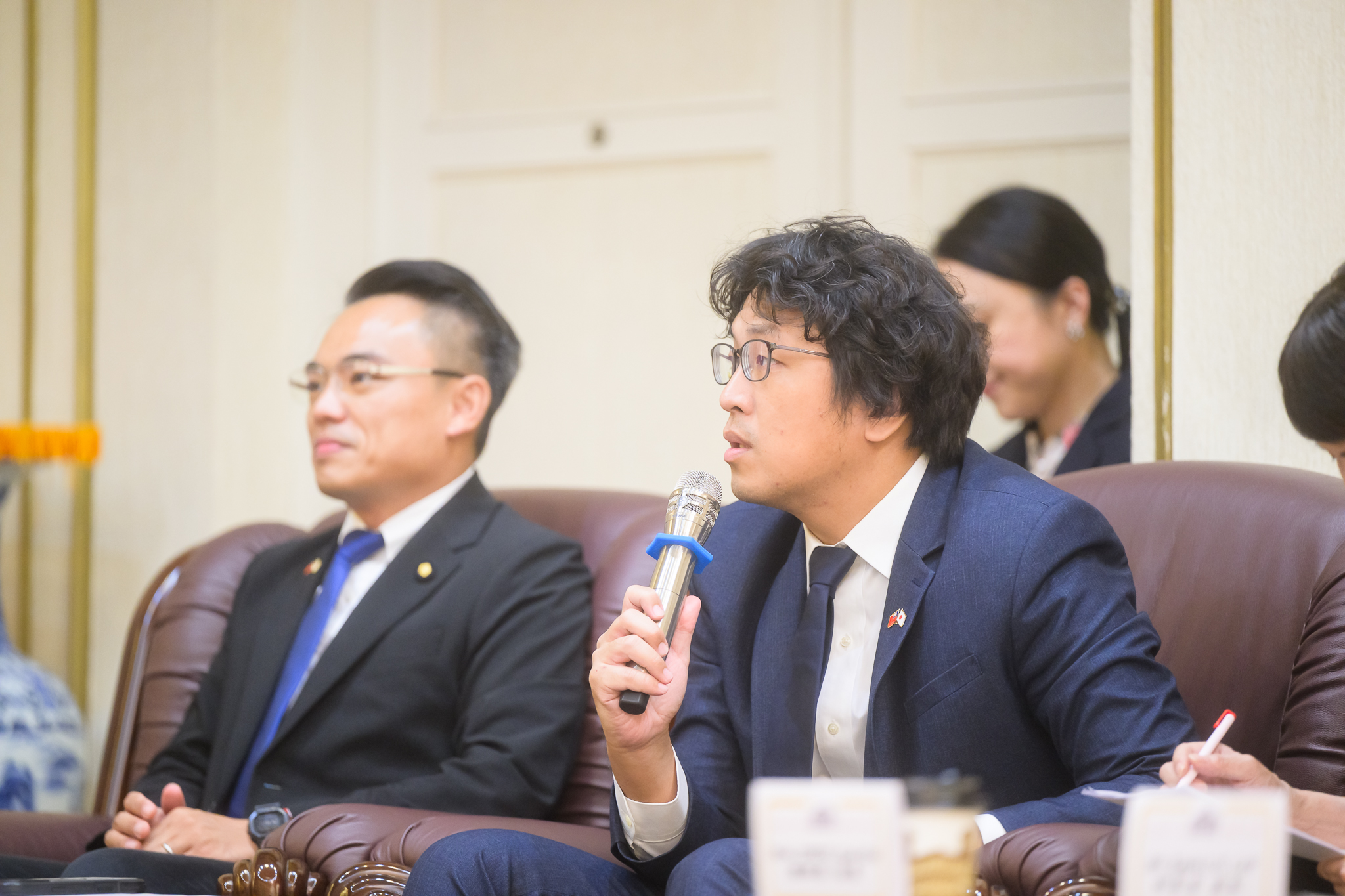
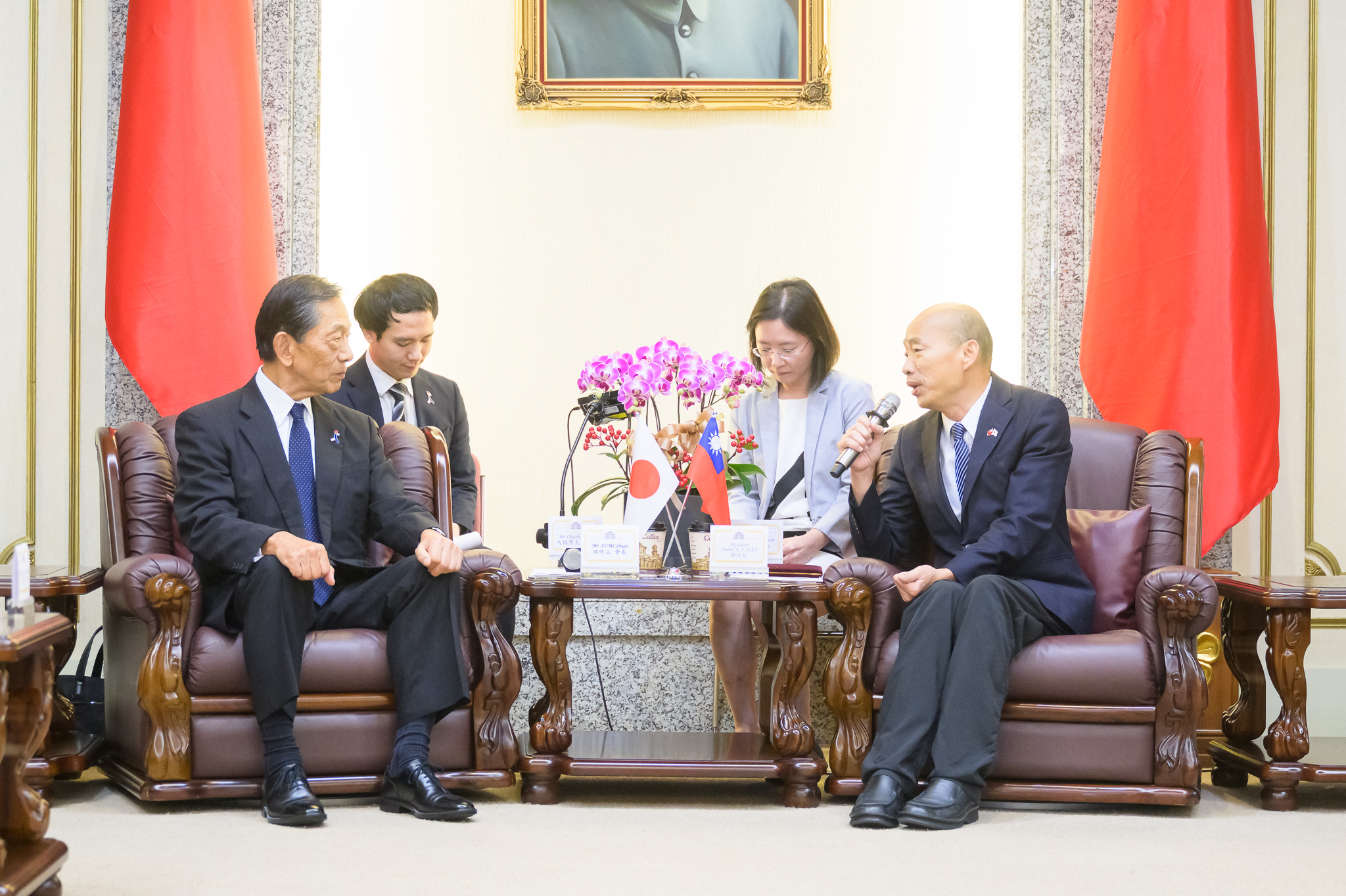
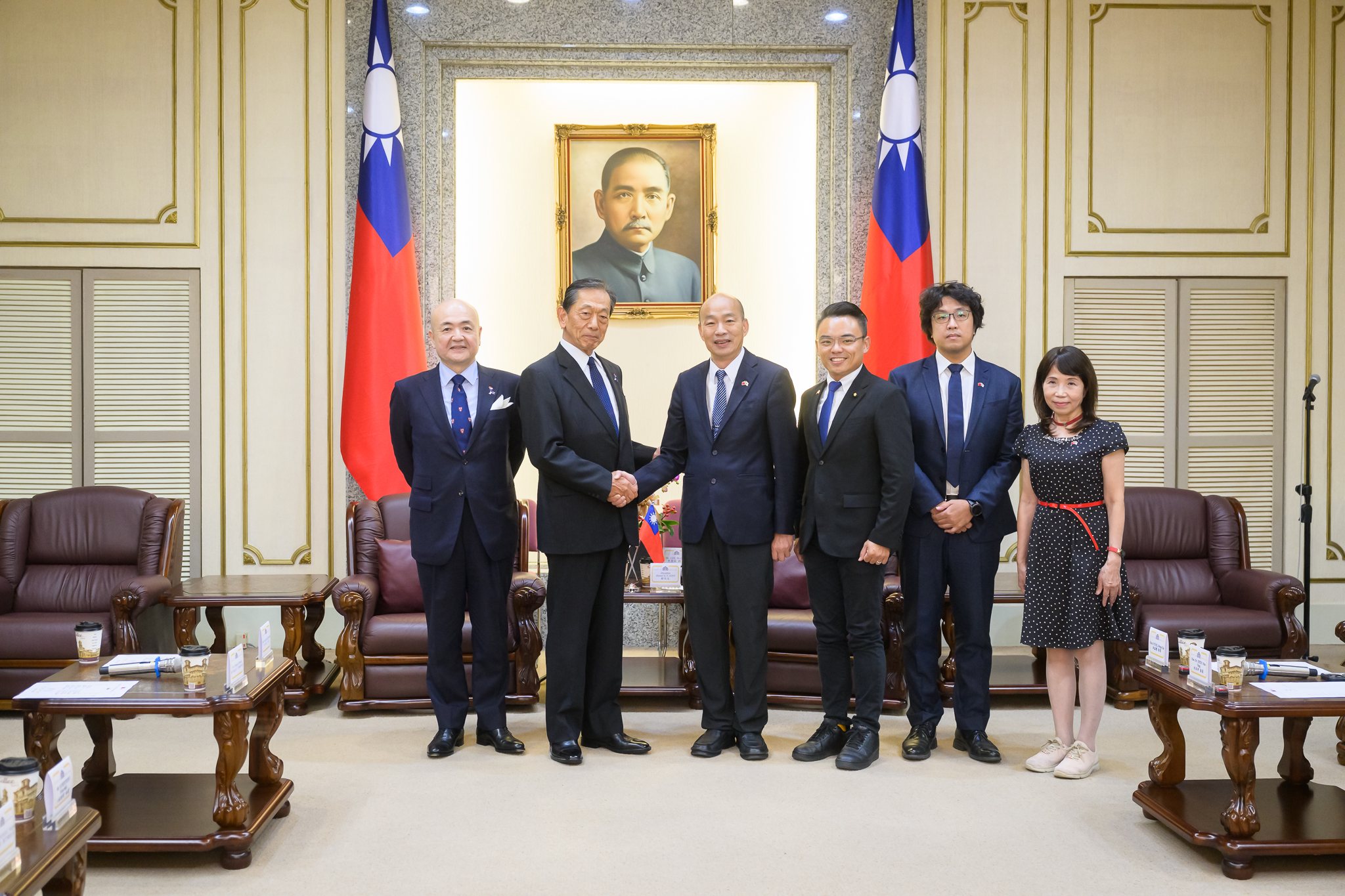
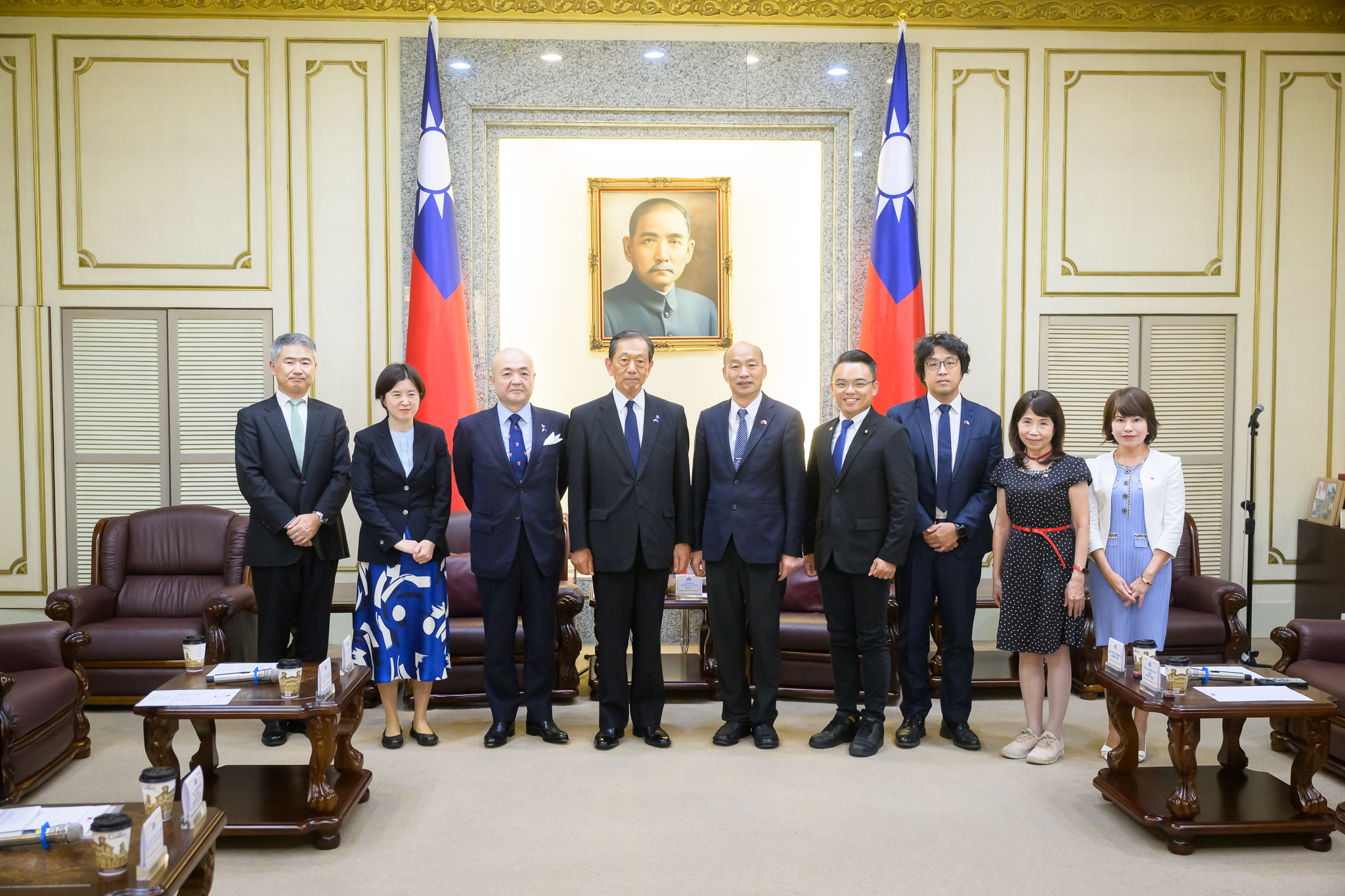
On the afternoon of September 17, President Daniel K.Y. Han (韓國瑜) of the Legislative Yuan received a three-member delegation from the Japan-Taiwan Exchange Association, led by its newly appointed Chairman, Mr. Sumi Shuzo. The meeting was attended by Vice President of the Japan-Taiwan Friendship Association KMT Legislator Hung Mong-Kai, DPP Legislator Dr. Puma Shen, TPP Legislator Chen Gau-Tzu, Director Kevin C.F. Lin of the Department of International Affairs, Deputy Secretary-General Lin Yu-Hui of the Ministry of Foreign Affairs’ Taiwan-Japan Relations Association, and Ambassador Katayama Kazuyuki of the Japan-Taiwan Exchange Association Taipei Office.
President Han first extended his sincere welcome to Chairman Sumi for his special visit, highlighting that the reception, attended by legislators from all three party caucuses, fully demonstrates the Legislative Yuan’s strong cross-party commitment to deepening Taiwan-Japan relations. President Han further remarked that Chairman Sumi not only embodies the qualities of a distinguished entrepreneur but also carries an impressive, star-like presence that leaves a lasting impression. President Han briefed Chairman Sumi on the Legislative Yuan’s current (11th) membership of 113 legislators, noting that as many as 85 cross-party members have joined the Taiwan-Japan Parliamentary Friendship Association. As the largest friendship association within the Legislative Yuan, it underscores Taiwan’s strong emphasis on its relationship with Japan.
President Han further noted that, according to statistics from the Japan National Tourism Organization (JNTO), over the past year more than 6.04 million Taiwanese traveled to Japan—nearly 30 percent of Taiwan’s 23 million population—demonstrating the vibrancy of bilateral exchanges. He also emphasized that the scale and quality of such extensive people-to-people exchanges merit the continued attention and concerted efforts of both countries’ political, academic, and business communities. President Han concluded by expressing special gratitude to former Chairman Ohashi Mitsuo, who, since assuming the chairmanship of the Japan-Taiwan Exchange Association in 2011, has devoted 14 years to advancing bilateral exchanges and cooperation, making outstanding contributions and laying a solid foundation for Taiwan-Japan relations. He also expressed the hope that the newly appointed Chairman Sumi will continue to exercise his influence in supporting the deepening of Taiwan-Japan exchanges and bilateral friendship, jointly ushering Taiwan-Japan relations to new heights.
Chairman Sumi expressed his gratitude to President Han and the cross-party legislators for their warm reception amidst their busy schedules, and stated that, upon succeeding former Chairman Ohashi, he has felt the weight of his responsibilities acutely. He further noted that the current international landscape is increasingly complex, with escalating armed conflicts in regions such as Ukraine and the Middle East, while global trade faces severe challenges. Against this backdrop, he emphasized that Taiwan and Japan share closely aligned values and should therefore deepen their cooperation, jointly defending universal values such as freedom, democracy, and the rule of law, while leveraging this foundation to promote regional stability and economic prosperity.
Chairman Sumi emphasized that the spirit of “wa” (harmony) forms the solid foundation of the deep mutual trust between Taiwan and Japan. He added that Taiwan and Japan both face threats from natural disasters such as earthquakes and typhoons, and that when the Great East Japan Earthquake struck in 2011, Taiwan was among the first to offer assistance. An act of warm support, he mentioned, that remains deeply etched in the hearts of the Japanese people to this day. He further observed that both Taiwan and Japan are currently facing multiple challenges, including a shrinking labor force and increasing pressures on social insurance systems due to low birth rates and population aging. In addition, Chairman Sumi added that critical issues such as global warming, carbon neutrality, and energy supply require cross-national deliberation and coordination. Accordingly, he stressed that Taiwan and Japan should continue to work hand in hand to seek pragmatic and sustainable solutions, steadily deepening their partnership and advancing bilateral cooperation amid these challenges.
Chairman Sumi concluded by emphasizing that the deepening of Taiwan-Japan relations relies on the shared support of the peoples of both countries. He specifically noted, with great satisfaction, that surveys indicate as many as 76 percent of Taiwanese hold a favorable view of Japan. Although the number of Japanese visitors to Taiwan has not yet returned to pre-pandemic levels, he pledged that during his tenure as Chairman, he will continue to actively promote exchanges, further invigorating Taiwan-Japan interactions, and creating new opportunities for cooperation upon the foundation of their already strong friendship.
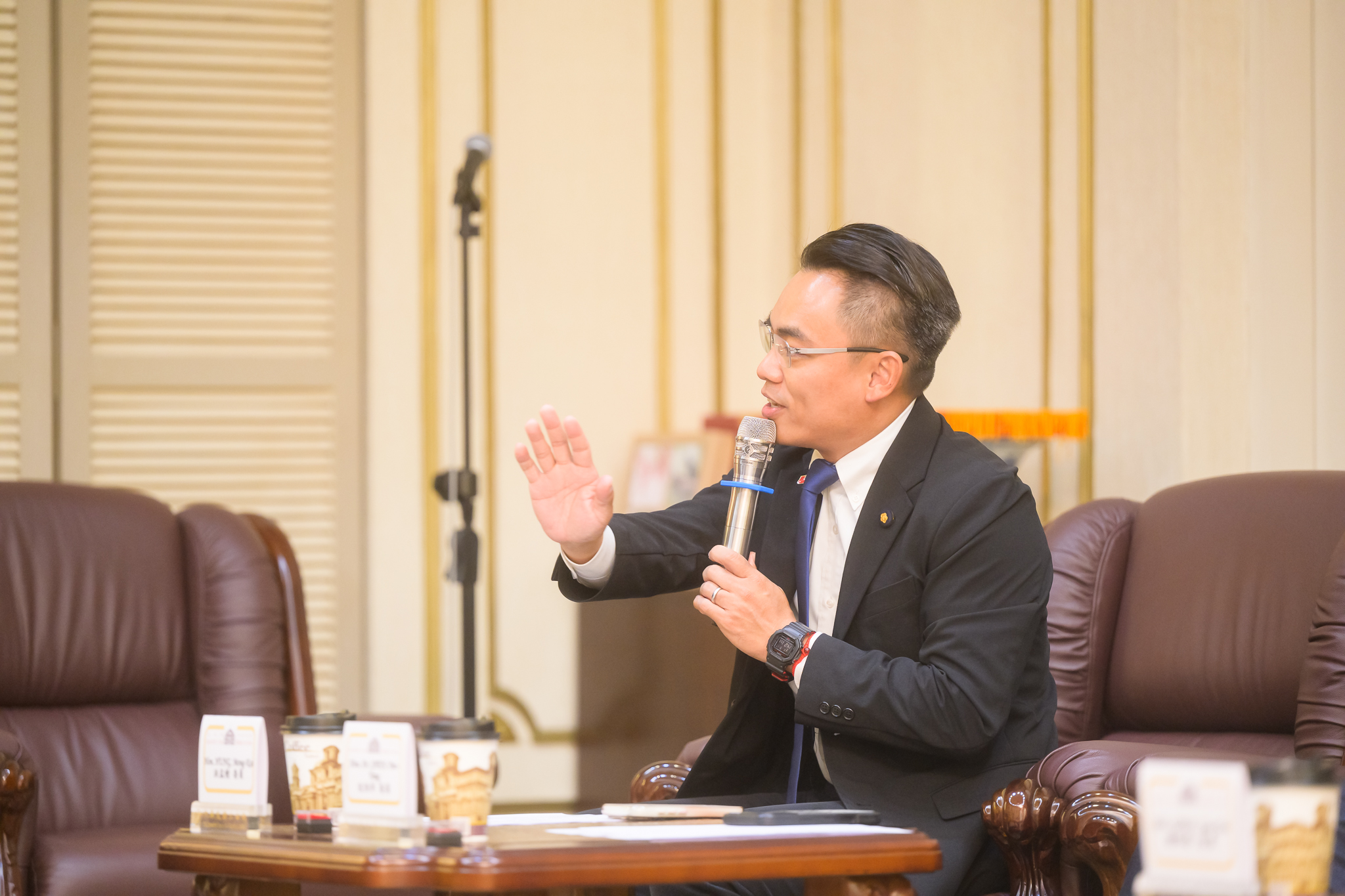
During the bilateral exchange, Legislator Hung remarked that, as a representative of the Kuomintang’s youth, he is particularly mindful of two major challenges currently facing the world: first, international political conflicts; second, issues affecting global trade. He highlighted that the power struggles among major nations have caused profound shifts in international relations. In light of this challenging landscape, he mentioned, Taiwan and Japan should strengthen their cooperation to avoid becoming unnecessary casualties amid these changing circumstances. Secondly, Legislator Hung emphasized that joining the Comprehensive and Progressive Agreement for Trans-Pacific Partnership (CPTPP) is a shared aspiration of Taiwan’s 23 million people. He expressed a sincere hope that Chairman Sumi will leverage his influence to assist Taiwan in achieving this important goal, enabling the nation to become a member of Team Asia and, alongside Japan as an ally, jointly foster economic prosperity. Finally, Legislator Hung noted that Taiwan recently established its Ministry of Sports in September of this year. He expressed his strong belief that sports exchanges between Taiwan and Japan represent a promising avenue for future bilateral cooperation.
Legislator Shen noted that the ruling Democratic Progressive Party formally established the DPP Youth group earlier this year and has begun actively promoting exchanges with Japanese political parties. He emphasized, however, that in addition to interactions between political parties, exchanges between the governments and civil society are equally important. He also shared his personal experience, noting that his area of expertise is national security and that, prior to serving as a legislator, he was invited as a scholar to participate in the “Mount Fuji Conference” in Japan. He noted that the conference serves as a key platform for dialogue between the government and business sectors, carrying significant influence. At present, although Taiwan, the United States, and Japan have already engaged in discussions on various regional security issues through the Global Cooperation and Training Framework (GCTF), he encouraged Taiwan and Japan to jointly promote future conferences involving government, parliament, business, and civil society. Such initiatives would establish a cross-sectoral platform for collaboration, working together to safeguard national security and regional stability.
Legislator Chen shared that both of her parents were educated under the Japanese system, giving her a deep cultural and emotional connection with Japan. She expressed her heartfelt appreciation for Japan’s continued advocacy on behalf of Taiwan in the international arena in recent years. She also echoed Chairman Sumi’s remarks on natural disaster issues, noting that Taiwan-Japan relations differ from interactions with other countries, reflecting a level of genuine care akin to that of family. She noted that Taiwan is currently confronting the issue of energy transition, prompting many citizens to reconsider existing energy policies. Given that both Taiwan and Japan face challenges related to nuclear energy, she highlighted that Japan’s experience offers valuable lessons for Taiwan. She expressed the hope that Taiwan and Japan will share insights and work together to explore optimal solutions for energy and sustainable development.
The two sides subsequently engaged in extensive exchanges of views on topics including the application of artificial intelligence, energy security, and economic and trade cooperation. The meeting, which lasted approximately one hour, was conducted in a warm and cordial atmosphere, and concluded successfully following the exchange of commemorative gifts and a group photograph.