

Vice President Johnny C. Chiang of the Legislative Yuan receives delegation from U.S. think tank, Institute for Indo-Pacific Security; Vice President Chiang: Taiwan is an indispensable strategic partner of the United States, and we look forward to working together to safeguard peace and stability in the Taiwan Strait and Indo-Pacific.
On the morning of September 25, Vice President Dr. Johnny C. Chiang (江啟臣) of the Legislative Yuan, accompanied by KMT Legislator Adm. Chen Yeong-Kang, DPP Legislator Chen Kuan-Ting, Legislator TPP Chen Gao-Tzu, Secretary Chen Ching-Fang of the Department of International Affairs, and Consul General Chang Chia-Cheng of the Ministry of Foreign Affairs’ North American Affairs Department, received a six-member delegation from the U.S. think tank, the Institute for Indo-Pacific Security (IIPS).
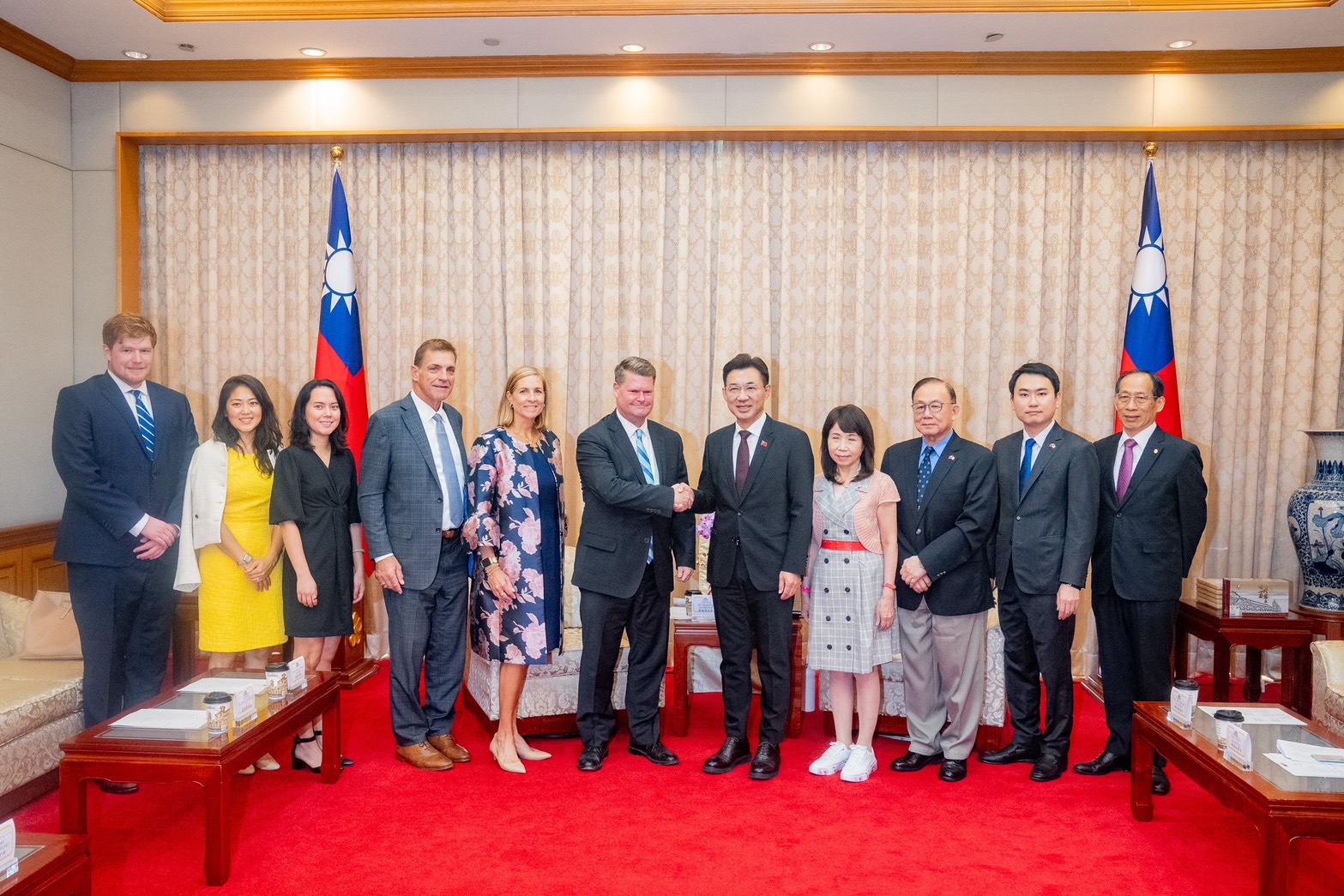
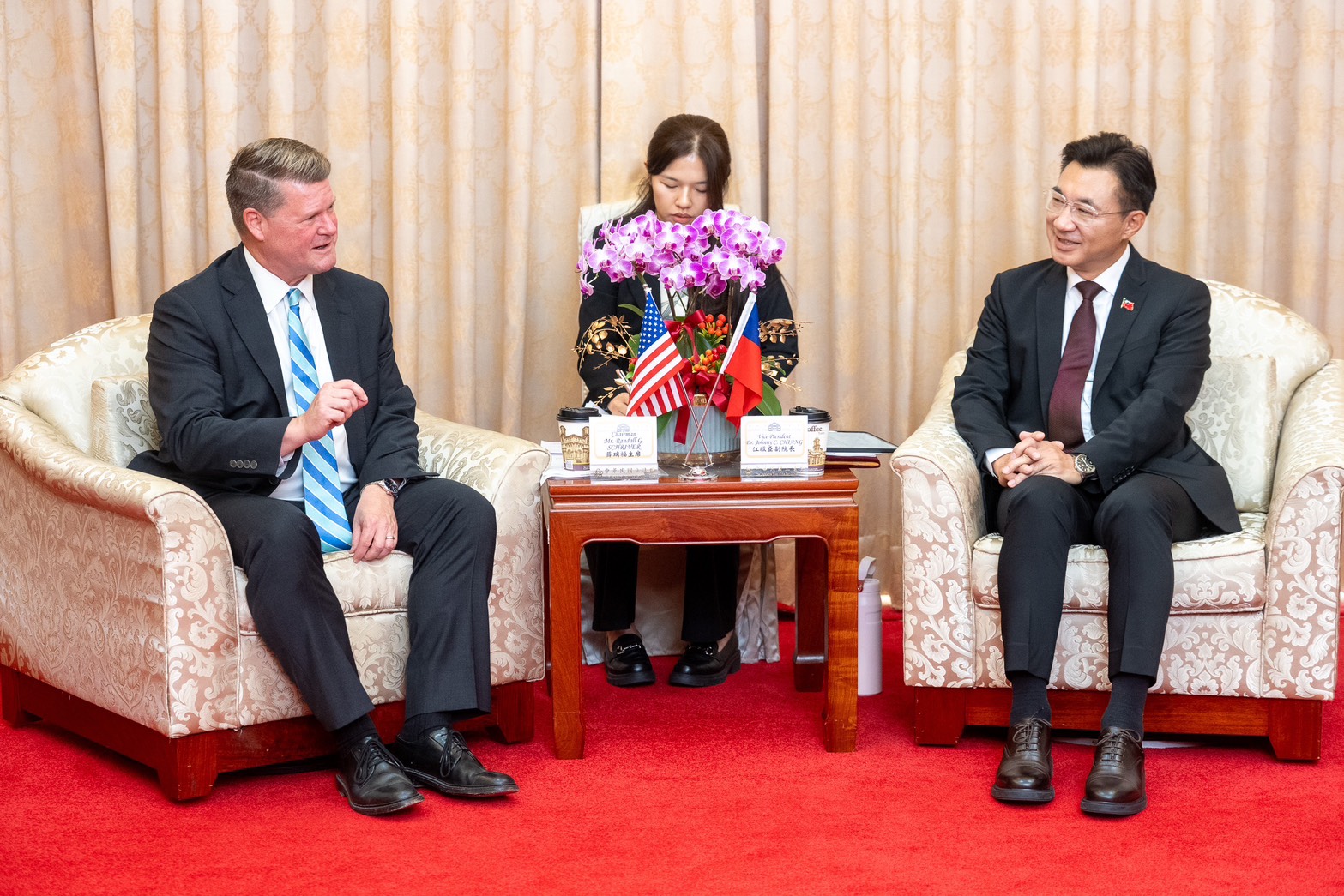
Following group photos with participating legislators and the guests, Vice President Chiang stated that he was deeply honored to represent President of the Legislative Yuan, Daniel K.Y. Han (韓國瑜), alongside cross-party legislators, in extending a warm welcome to the delegation from the IIPS and its Chairman Randall Schriver. He expressed gratitude to Chairman Schriver for his longstanding and steadfast support of Taiwan and security in the Indo-Pacific region, noting that in April 2024, Chairman Schriver led a delegation to Taiwan and was received at the Legislative Yuan, with him accompanying President Han in hosting the visit. He recalled Chairman Schriver’s remark that the strongest consensus between the Republicans and Democrats in the United States is their shared commitment to safeguarding Taiwan’s freedom and democracy; this commitment is not only about protecting the rights of the Taiwanese people, but also about securing the interests of the American people. He expressed concurrence with this view and looked forward to continued joint efforts to uphold Taiwan’s freedom and democracy as well as prosperity and stability across the Asia-Pacific region.
Vice President Chiang further noted that, effective May 1, 2025, the “Project 2049 Institute” was renamed the “Institute for Indo-Pacific Security.” He emphasized that this change underscores the increasingly complex strategic dynamics in the Indo-Pacific region and reflects the increased commitment of the IIPS to regional peace and stability. He went on to note that the friendship between Taiwan and the United States is grounded in the shared universal values of democracy, freedom, human rights, and the rule of law, as well as in the determination to safeguard peace, stability, and prosperity in the Indo-Pacific region. He expressed profound gratitude to the U.S. government and Congress for their fulfillment of security commitments to Taiwan under the Taiwan Relations Act and the Six Assurances. He further acknowledged the continuation of normalized arms sales, the advancement of the National Defense Authorization Act (NDAA), the provision of Foreign Military Financing (FMF), and the use of Presidential Drawdown Authority (PDA) to assist Taiwan, all of which demonstrate the importance the United States places on strengthening Taiwan’s defense capabilities. He stressed that Taiwan occupies a critical strategic position in the first island chain of the Western Pacific and plays a pivotal strategic role in the global economy, particularly in sectors such as semiconductors and supply chains; for example, TSMC’s advanced chip manufacturing and the efficient assembly of cloud servers attest to why Taiwan is an indispensable strategic partner of the United States. In terms of self-defense, he added, the Taiwanese government has announced that next year’s national defense budget will exceed 3% of GDP; the Legislative Yuan will continue to oversee the government, engaging in cross-party communication and discussion to jointly support the defense budget.
Vice President Chiang concluded by expressing hope for more exchanges between the legislatures of both sides on issues of mutual concern, including national defense, stability in the Taiwan Strait and the broader region, social resilience, and energy security. He also looked forward to continued U.S. support for Taiwan’s international participation, thereby enhancing Taiwan’s visibility and strengthening its deterrence and defense capabilities.
Chairman Schriver thanked Vice President Chiang and the attending legislators for taking the time to meet with the delegation. In addition to expressing condolences and concern over the floods in Hualien, he also offered prayers for the relief efforts. He noted that it gave him great delight to meet with legislators from across party lines today, reflecting the diversity of views within the Legislative Yuan. Chairman Schriver quoted a famous saying by John Wooden, the renowned basketball coach from UCLA: “Be quick, but don’t hurry.” He pointed out that the national defense budget is closely tied to major national security concerns; while many issues are urgent, the Legislative Yuan, as the representative of public opinion, also bears the responsibility of overseeing the government to ensure that resources are effectively allocated to appropriate projects. He noted that the IIPS is dedicated to studying the evolution of warfare and Taiwan’s needs, and he expressed hope for continued promotion of Taiwan–U.S. dialogue and cooperation in the future.
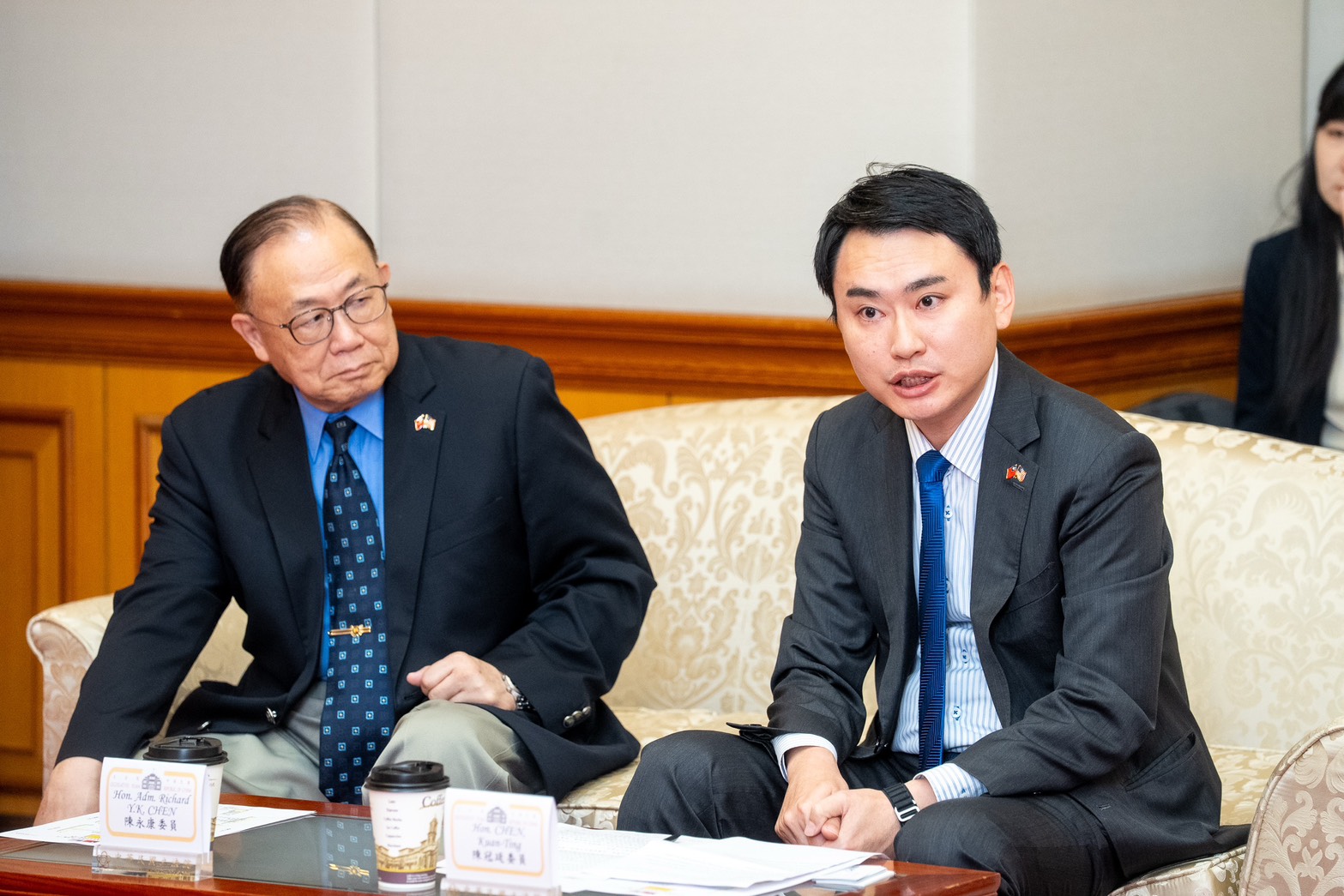
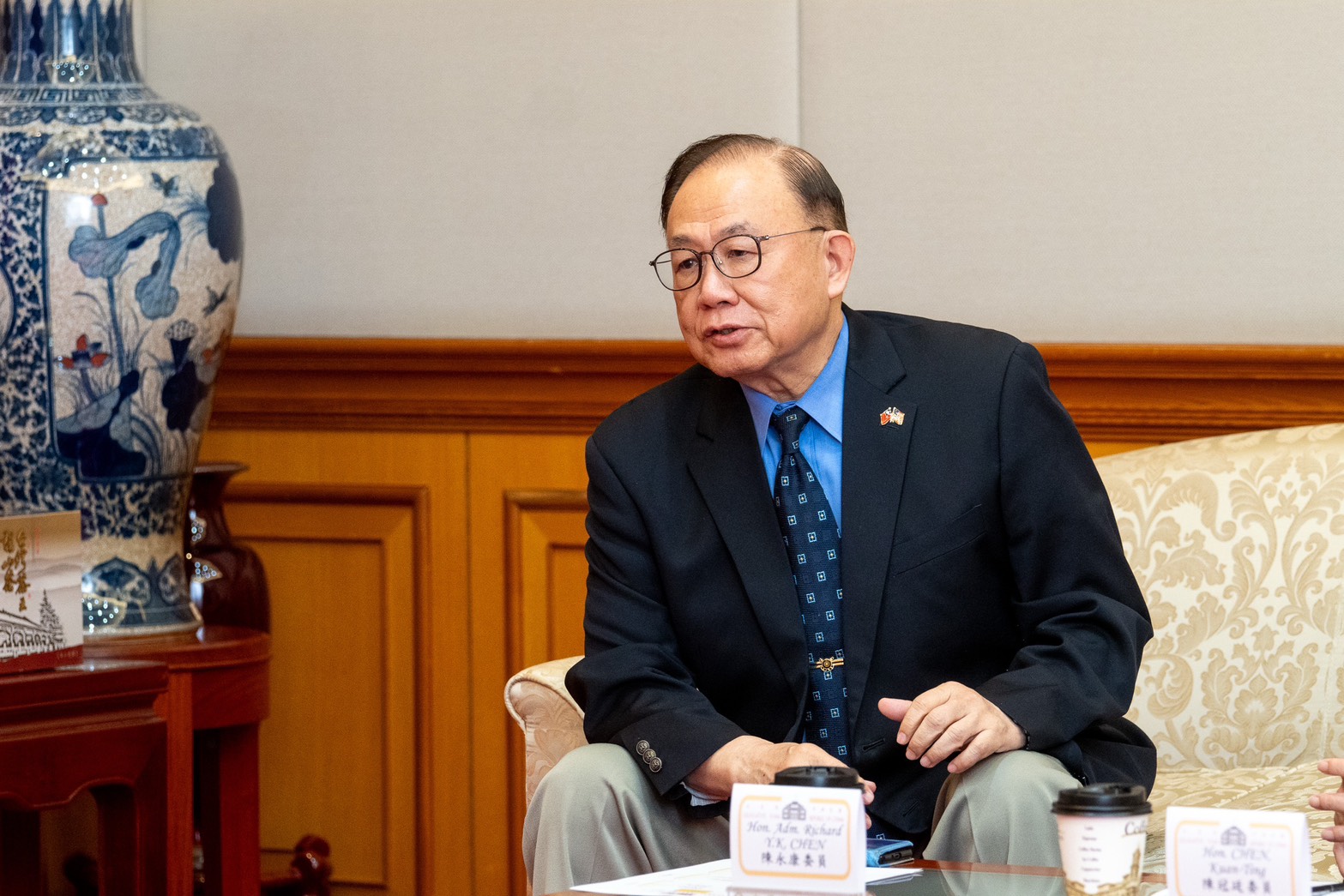
During the bilateral exchanges, Legislator Chen Yeong-Kang underscored that regional stability is of paramount importance in the face of international challenges. He conveyed his sincere appreciation to the U.S. friends for their many years of support for Taiwan and agreed with the proposal to increase the defense budget's proportion. He stressed that besides the procurement of weapons, the enhancement of Taiwan’s overall defense capabilities is equally important, including comprehensive training for relevant personnel and the ability to communicate and coordinate across different systems. Legislator Chen Yeong-Kang also remarked that Taiwan’s current deployment of unmanned aerial vehicles and autonomous weapons remains insufficient, with issues also arising in inter‑service integration and approaches for future enhancement. He voiced his hope that the U.S. will sustain its support and training efforts, thereby helping to advance Taiwan’s comprehensive defense capacity.
Legislator Chen Kuan‑Ting warmly welcomed the distinguished guests and introduced developments in his constituency of Chiayi, which is actively advancing the “Asia UAV AI Innovation Application R&D Center” (Space Chiayi). He noted that within the next two years, a large‑scale systems production park will be established near the center. He sincerely invited the American friends for a visit in the future to help raise the visibility of the project, and expressed his hope that it will attract participation from research institutions, the defense industry, and start‑up companies. Furthermore, with regard to the share of the national defense budget, Legislator Chen Kuan‑Ting expressed his hope for continued dialogue and communication in order to gain greater support and understanding from his constituents.
Representing the TPP, Legislator Chen Gao‑Tzu offered a cordial welcome to the delegation and thanked Chairman Schriver and the IIPS for their concern regarding Indo‑Pacific issues and Taiwan’s security. She pointed out that China’s rise has already posed a threat to regional peace and stability, and that Taiwan, more than any other country, is acutely aware of and attentive to China’s activities in the region. She emphasized that Taiwan should adopt a dual course of action; on the one hand, we must prevent unwarranted military confrontations, and on the other, we must enhance our defense capabilities. She explained that two years ago, then Chairman of the TPP, Ko Wen‑Je, had put forward the concept of “Taiwan’s autonomy and cross‑strait peace” in support of raising the defense budget to 3% of the GDP, and continuing to oversee the priorities and content of the budget, with the aim of enhancing security and stability for both Taiwan and the Indo‑Pacific region.
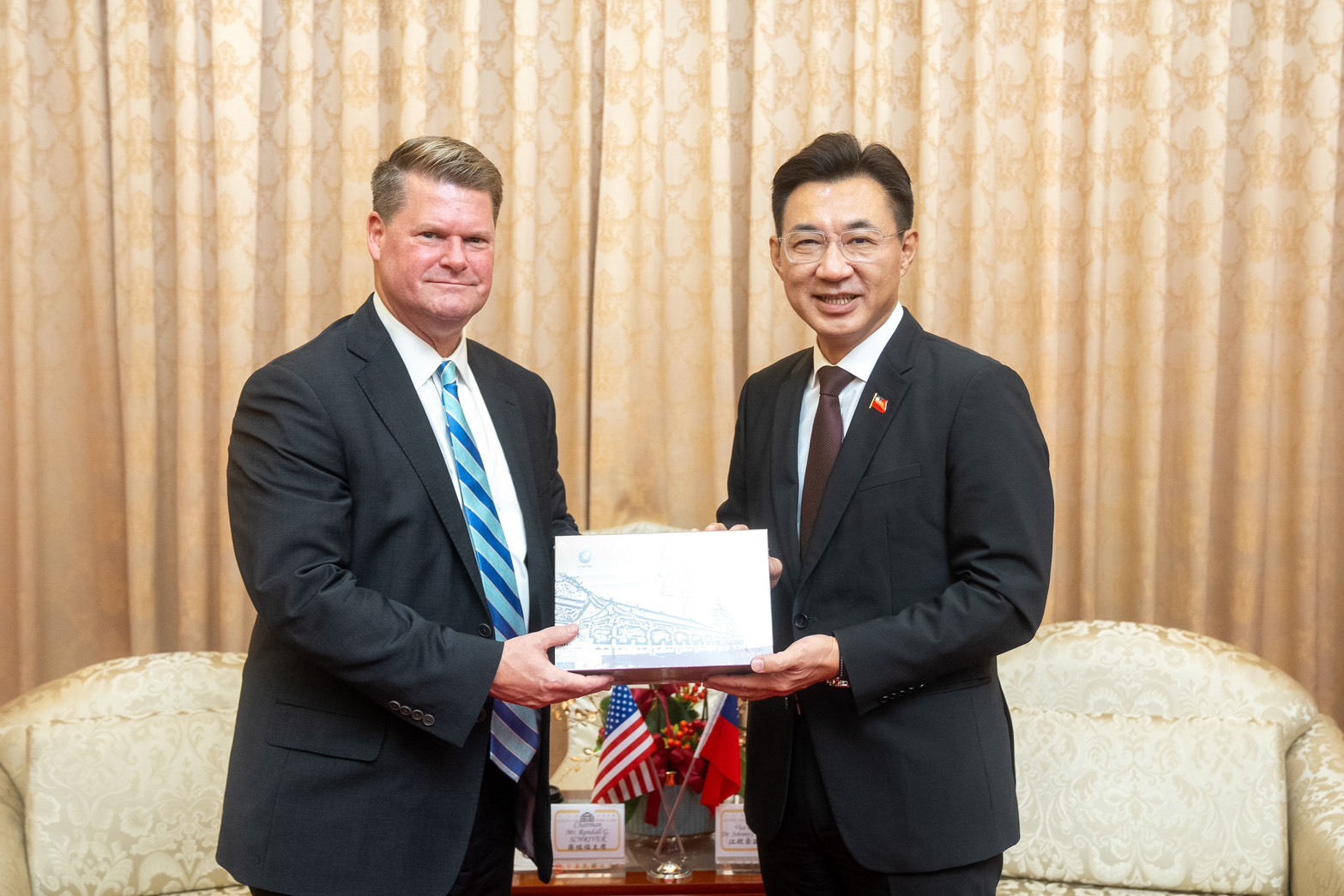
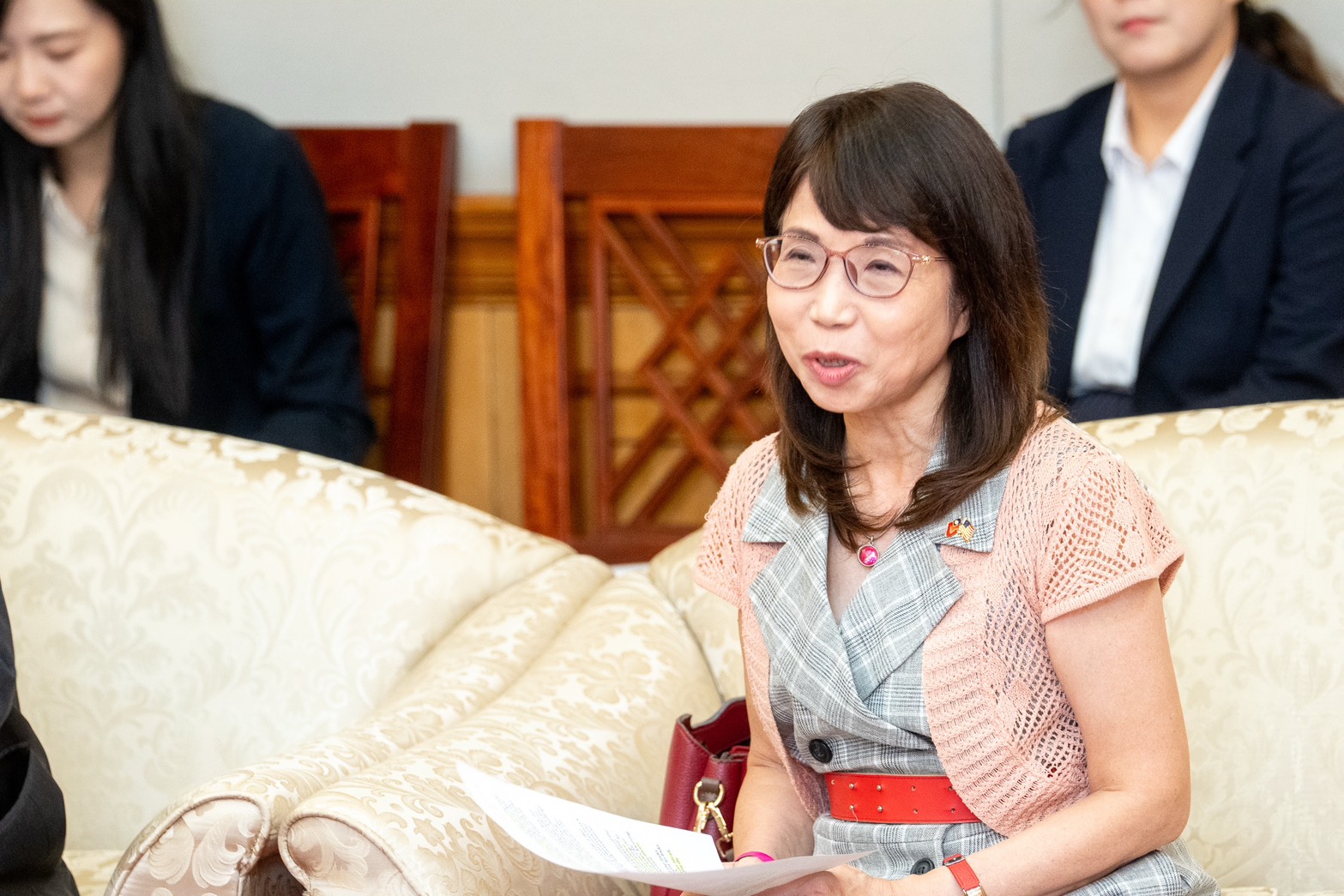
During the bilateral exchange that followed, the visiting guests also engaged in extensive discussions on issues such as Taiwan–U.S. tariffs, military cooperation, and cross‑party communication within the Legislative Yuan. The meeting lasted approximately one hour in a warm and friendly atmosphere. It concluded successfully with both sides exchanging commemorative gifts and taking group photos.
Following group photos with participating legislators and the guests, Vice President Chiang stated that he was deeply honored to represent President of the Legislative Yuan, Daniel K.Y. Han (韓國瑜), alongside cross-party legislators, in extending a warm welcome to the delegation from the IIPS and its Chairman Randall Schriver. He expressed gratitude to Chairman Schriver for his longstanding and steadfast support of Taiwan and security in the Indo-Pacific region, noting that in April 2024, Chairman Schriver led a delegation to Taiwan and was received at the Legislative Yuan, with him accompanying President Han in hosting the visit. He recalled Chairman Schriver’s remark that the strongest consensus between the Republicans and Democrats in the United States is their shared commitment to safeguarding Taiwan’s freedom and democracy; this commitment is not only about protecting the rights of the Taiwanese people, but also about securing the interests of the American people. He expressed concurrence with this view and looked forward to continued joint efforts to uphold Taiwan’s freedom and democracy as well as prosperity and stability across the Asia-Pacific region.
Vice President Chiang further noted that, effective May 1, 2025, the “Project 2049 Institute” was renamed the “Institute for Indo-Pacific Security.” He emphasized that this change underscores the increasingly complex strategic dynamics in the Indo-Pacific region and reflects the increased commitment of the IIPS to regional peace and stability. He went on to note that the friendship between Taiwan and the United States is grounded in the shared universal values of democracy, freedom, human rights, and the rule of law, as well as in the determination to safeguard peace, stability, and prosperity in the Indo-Pacific region. He expressed profound gratitude to the U.S. government and Congress for their fulfillment of security commitments to Taiwan under the Taiwan Relations Act and the Six Assurances. He further acknowledged the continuation of normalized arms sales, the advancement of the National Defense Authorization Act (NDAA), the provision of Foreign Military Financing (FMF), and the use of Presidential Drawdown Authority (PDA) to assist Taiwan, all of which demonstrate the importance the United States places on strengthening Taiwan’s defense capabilities. He stressed that Taiwan occupies a critical strategic position in the first island chain of the Western Pacific and plays a pivotal strategic role in the global economy, particularly in sectors such as semiconductors and supply chains; for example, TSMC’s advanced chip manufacturing and the efficient assembly of cloud servers attest to why Taiwan is an indispensable strategic partner of the United States. In terms of self-defense, he added, the Taiwanese government has announced that next year’s national defense budget will exceed 3% of GDP; the Legislative Yuan will continue to oversee the government, engaging in cross-party communication and discussion to jointly support the defense budget.
Vice President Chiang concluded by expressing hope for more exchanges between the legislatures of both sides on issues of mutual concern, including national defense, stability in the Taiwan Strait and the broader region, social resilience, and energy security. He also looked forward to continued U.S. support for Taiwan’s international participation, thereby enhancing Taiwan’s visibility and strengthening its deterrence and defense capabilities.
Chairman Schriver thanked Vice President Chiang and the attending legislators for taking the time to meet with the delegation. In addition to expressing condolences and concern over the floods in Hualien, he also offered prayers for the relief efforts. He noted that it gave him great delight to meet with legislators from across party lines today, reflecting the diversity of views within the Legislative Yuan. Chairman Schriver quoted a famous saying by John Wooden, the renowned basketball coach from UCLA: “Be quick, but don’t hurry.” He pointed out that the national defense budget is closely tied to major national security concerns; while many issues are urgent, the Legislative Yuan, as the representative of public opinion, also bears the responsibility of overseeing the government to ensure that resources are effectively allocated to appropriate projects. He noted that the IIPS is dedicated to studying the evolution of warfare and Taiwan’s needs, and he expressed hope for continued promotion of Taiwan–U.S. dialogue and cooperation in the future.
During the bilateral exchanges, Legislator Chen Yeong-Kang underscored that regional stability is of paramount importance in the face of international challenges. He conveyed his sincere appreciation to the U.S. friends for their many years of support for Taiwan and agreed with the proposal to increase the defense budget's proportion. He stressed that besides the procurement of weapons, the enhancement of Taiwan’s overall defense capabilities is equally important, including comprehensive training for relevant personnel and the ability to communicate and coordinate across different systems. Legislator Chen Yeong-Kang also remarked that Taiwan’s current deployment of unmanned aerial vehicles and autonomous weapons remains insufficient, with issues also arising in inter‑service integration and approaches for future enhancement. He voiced his hope that the U.S. will sustain its support and training efforts, thereby helping to advance Taiwan’s comprehensive defense capacity.
Legislator Chen Kuan‑Ting warmly welcomed the distinguished guests and introduced developments in his constituency of Chiayi, which is actively advancing the “Asia UAV AI Innovation Application R&D Center” (Space Chiayi). He noted that within the next two years, a large‑scale systems production park will be established near the center. He sincerely invited the American friends for a visit in the future to help raise the visibility of the project, and expressed his hope that it will attract participation from research institutions, the defense industry, and start‑up companies. Furthermore, with regard to the share of the national defense budget, Legislator Chen Kuan‑Ting expressed his hope for continued dialogue and communication in order to gain greater support and understanding from his constituents.
Representing the TPP, Legislator Chen Gao‑Tzu offered a cordial welcome to the delegation and thanked Chairman Schriver and the IIPS for their concern regarding Indo‑Pacific issues and Taiwan’s security. She pointed out that China’s rise has already posed a threat to regional peace and stability, and that Taiwan, more than any other country, is acutely aware of and attentive to China’s activities in the region. She emphasized that Taiwan should adopt a dual course of action; on the one hand, we must prevent unwarranted military confrontations, and on the other, we must enhance our defense capabilities. She explained that two years ago, then Chairman of the TPP, Ko Wen‑Je, had put forward the concept of “Taiwan’s autonomy and cross‑strait peace” in support of raising the defense budget to 3% of the GDP, and continuing to oversee the priorities and content of the budget, with the aim of enhancing security and stability for both Taiwan and the Indo‑Pacific region.
During the bilateral exchange that followed, the visiting guests also engaged in extensive discussions on issues such as Taiwan–U.S. tariffs, military cooperation, and cross‑party communication within the Legislative Yuan. The meeting lasted approximately one hour in a warm and friendly atmosphere. It concluded successfully with both sides exchanging commemorative gifts and taking group photos.