

Legislative Yuan President Daniel K.Y. Han and his delegation attended a networking event hosted by the Japan-ROC Diet Members’ Consultative Council. Legislative Yuan President Han: We thank the Japan-ROC Diet Members’ Consultative Council for serving as a parliamentary bridge between Taiwan and Japan over the past 70 years and we look forward to an everlasting friendship between our two nations.
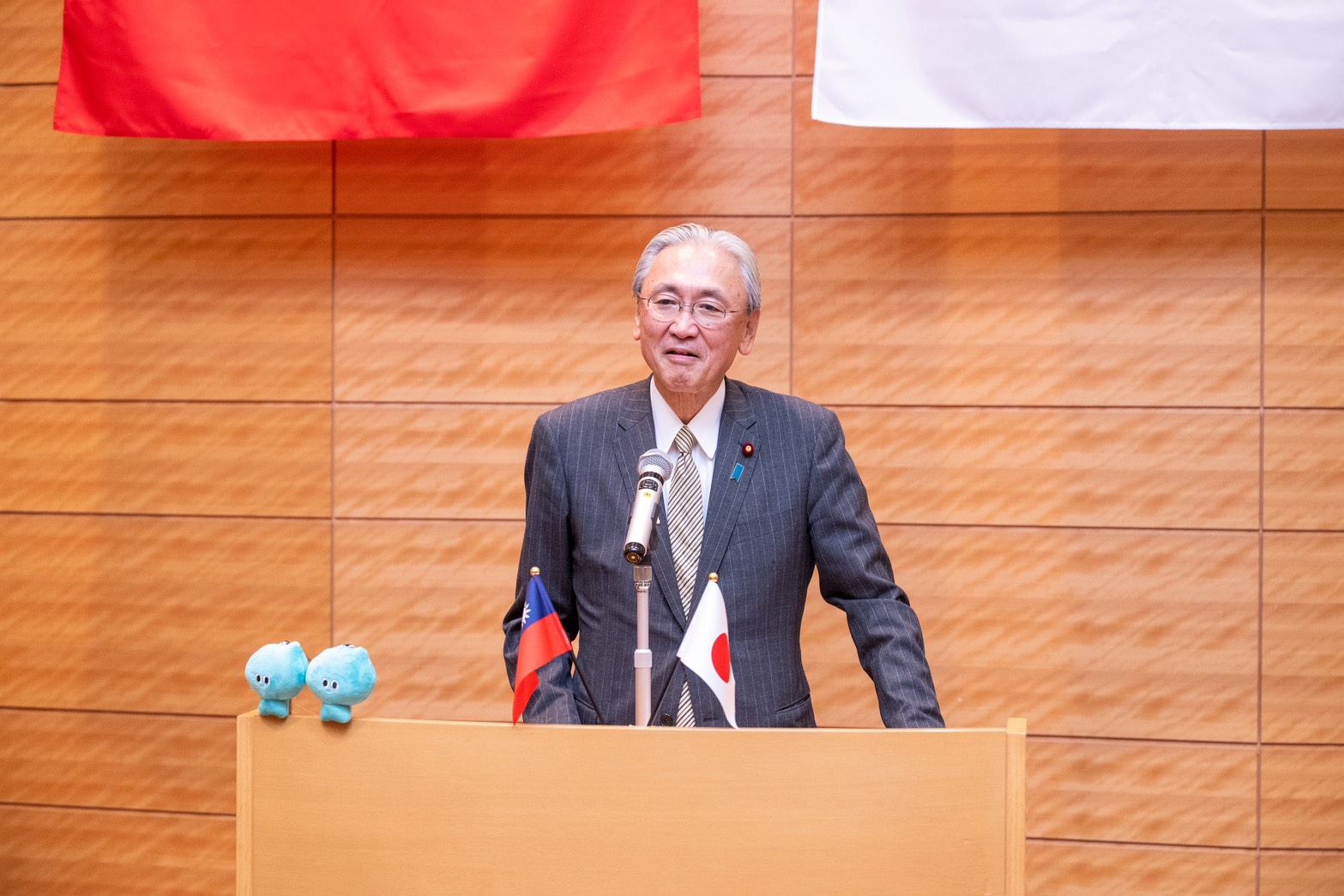
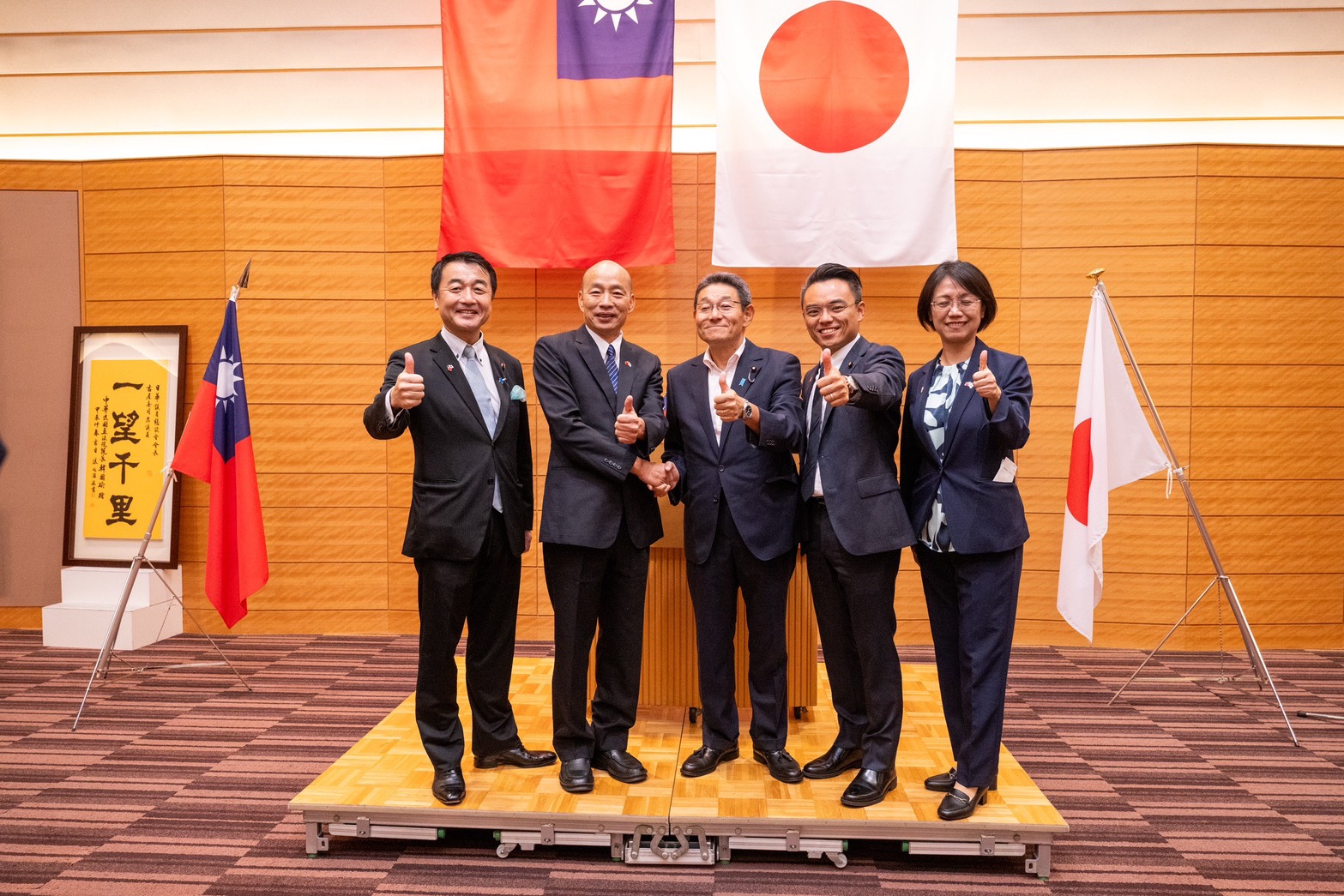
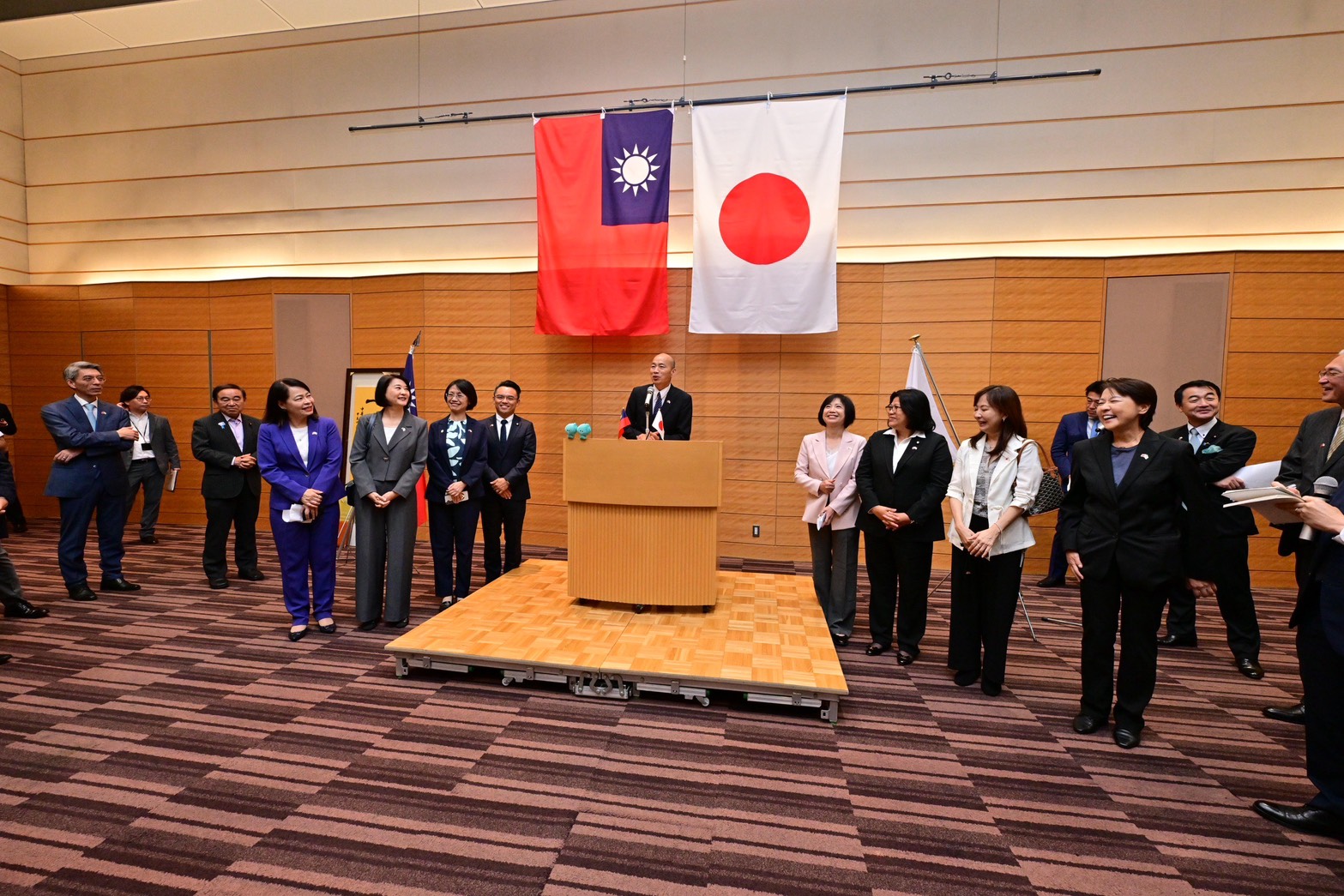
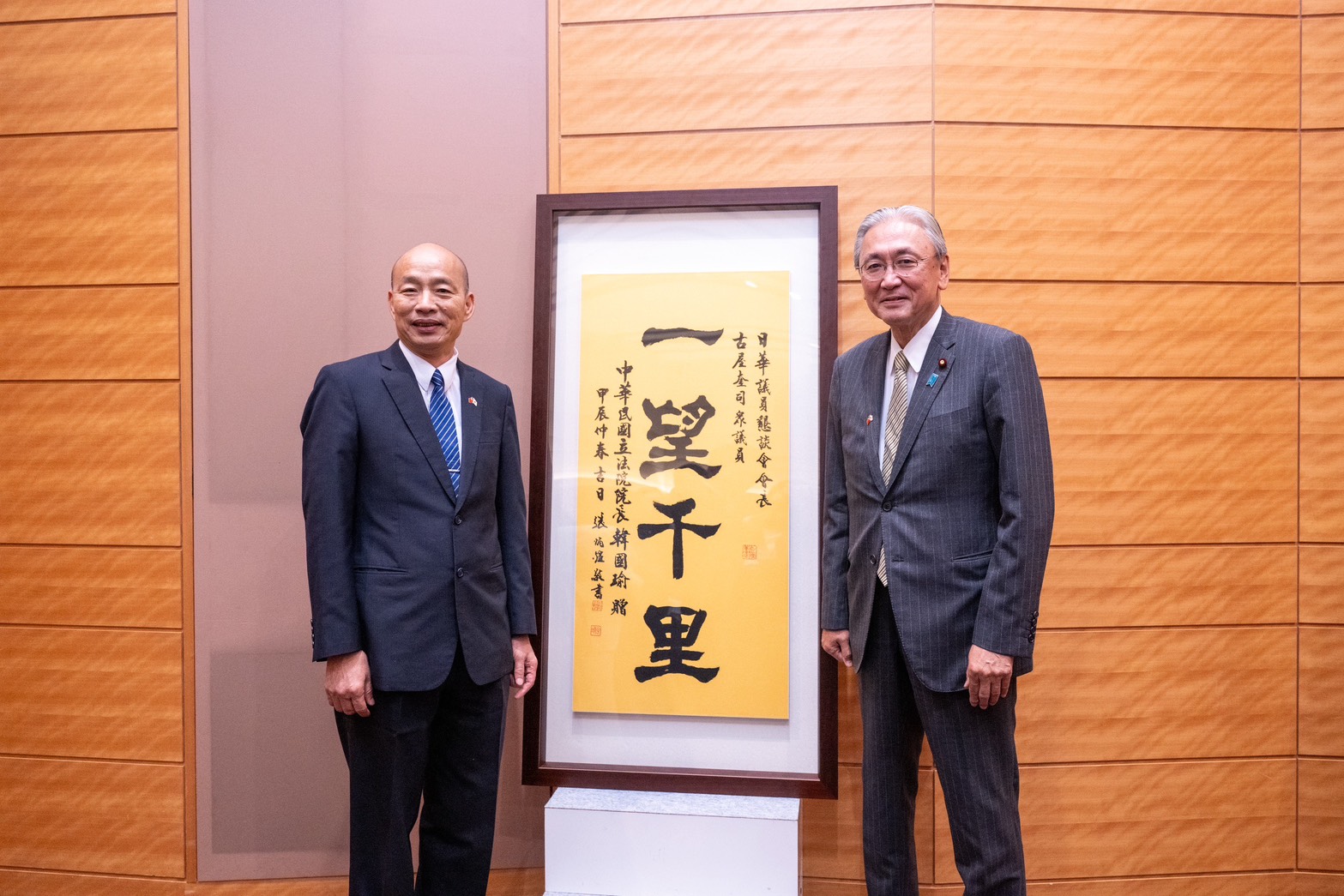
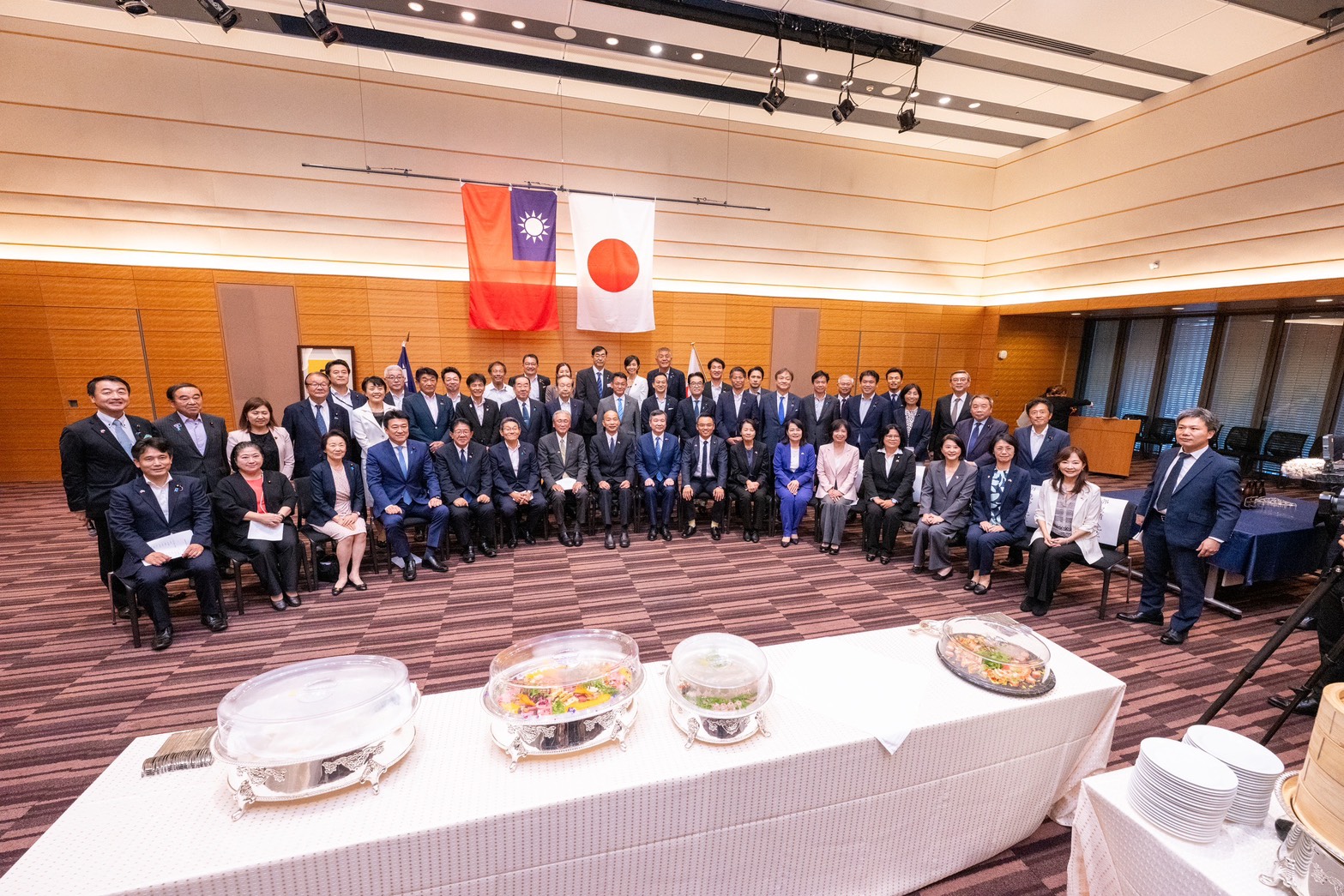
At 5:00 p.m. on September 25 (Japan time), Legislative Yuan President Daniel K.Y. Han (韓國瑜), heading a cross‑party delegation of 11 legislators from the Taiwan–Japan Friendship Association and accompanied by Ambassador Lee Yi‑Yang, attended a networking event at the First Members’ Office Building of Japan’s House of Representatives. Presided over by Keiji Furuya, Chairman of the Japan–ROC Diet Members’ Consultative Council, the gathering was attended by 67 Diet members of the Council, who offered a warm welcome to the Taiwanese delegation. Parliamentarians from both countries first posed for group photos, holding the national flags of Taiwan and Japan as a sign of close bilateral ties. Chairman Furuya then showed to President Han the calligraphy work A Thousand Miles in Sight—a gift from President Han last year—and invited him to take a commemorative photo together, a gesture symbolizing the enduring nature of Taiwan–Japan friendship.
Chairman Furuya expressed his great pleasure in hosting the welcome gathering. He also noted that Representative Hajime Sasaki had talked about the disastrous floods that had struck Hualien two days earlier, and he took the opportunity to convey his deepest condolences. Taiwan and Japan are both nations frequently affected by natural disasters, and have consistently stood by each other in time of such challenges. Adversity reveals true friendship, and it is in this spirit that Taiwan has proven to be Japan’s true friend.
Chairman Furuya went on to say that in order to deepen Taiwan-Japan friendship, the Japan–ROC Diet Members’ Consultative Council has organized working groups with various topics; the Exchange Between Women Working Group headed by Diet member Yamaguchi, for example, was one of these working groups. In addition, with regard to the registration of Taiwan–Japan transnational marriages, thanks to the years of dedicated efforts by Mr. Hirofumi Takinami, member of the House of Councillors, the nationality column in the spouse registration system was amended to include “Taiwan” as an option, benefiting 70,000 people. Meanwhile, the Local Exchange Working Group has been actively promoting exchange programs for Japanese junior high school students to visit Taiwan in order to enhance mutual understanding between youth of the two nations. As for bilateral trade and business, he mentioned that TSMC’s fabrication plant in Kumamoto has been a great achievement, and affirmed that the company has reinvigorated the local economy.
Chairman Furuya concluded by noting that both Japan and Taiwan must face challenges from harsh regional circumstances. He stated his belief that Taiwan and Japan must enhance collaboration with like-minded allies, including the U.S. and Australia, to safeguard peace and stability in East Asia. Echoing the words of the late Prime Minister Abe—“A Taiwan contingency is a Japan contingency”—he emphasized that deeper bilateral cooperation is indispensable for shaping regional developments. Chairman Furuya also announced that in October this year, he will lead the largest Japan–ROC Diet Members’ Consultative Council delegation to Taiwan for the National Day celebrations. He expressed his eager anticipation of meeting once again with President Han of the Legislative Yuan and Taiwan’s legislators. Finally, he offered his best wishes for Taiwan–Japan relations to move toward a brighter future, as symbolized by the calligraphy A Thousand Miles in Sight, representing a vision imbued with hope and momentum.
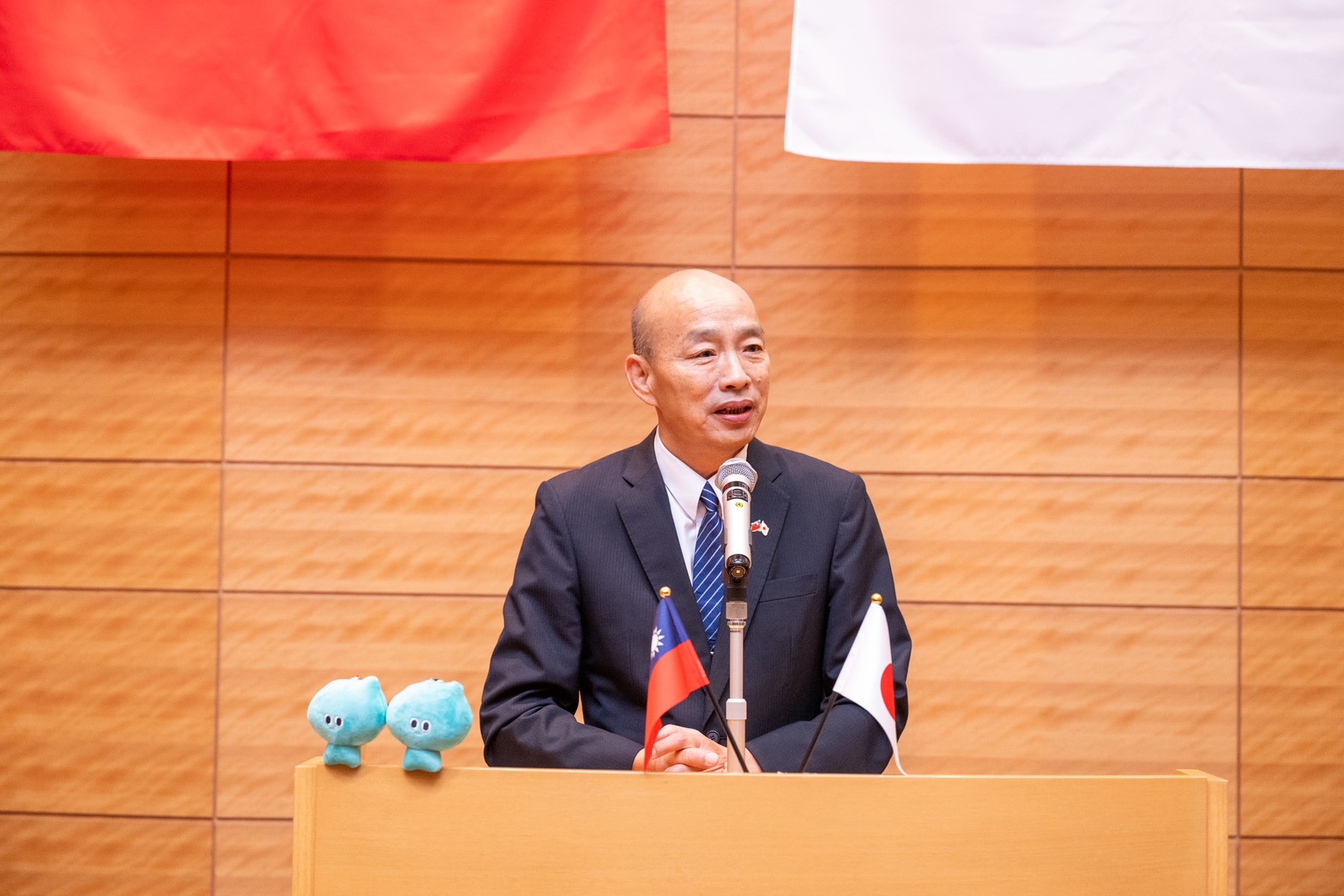
Then, President Han took the floor and began his remarks by recalling Chairman Furuya’s first visit to Taiwan last year, noting that he was deeply impressed by the Chairman’s graceful and elegant demeanor. He further pointed out that approximately 290 members of the Japanese Diet have joined the Japan–ROC Diet Members’ Consultative Council, and that Taiwan’s unicameral Legislative Yuan has only 113 seats, making the representation and influence of each legislator highly significant. He introduced to the audience this cross-party delegation, which was formed by three major caucuses of the Legislative Yuan, including five legislators from the Kuomingtang (KMT): Hung Mong-Kai, Hsu Yu-Chen, Wang Hung-Wei, Dr. Weng Hsiao-Ling, and Dr. Lin Chien-Chi; four legislators from the Democratic Progressive Party (DPP): Ho Hsin-Chun, Dr. Chuang Jui-Hsiung, Wang Mei-Hui, and Kuo Yu-Ching; and one legislator from the Taiwan People’s Party (TPP): Huang Shan-Shan. President Han highlighted that women make up 42.5% of the current Legislative Yuan, reflecting the diversity and maturity of Taiwan’s democratic politics as well as its outstanding achievements in gender equality. The three parties may take different stances on domestic issues, he added, but they always stand together on foreign affairs, working hand in hand to build a healthier and more mature democratic state.
He remarked that Taiwan accounts only for 0.03% of the world’s land area and 0.3% of the global population, but its industrial output represents about 3% of the global total, underscoring Taiwan’s significance in the international economy. President Han further stressed that Taiwan’s democratic evolution has drawn much attention from Chinese-speaking communities across the globe. He noted that as many as 2,100 reporters and digital media professionals have registered at the Legislative Yuan, a vivid demonstration of the high level of international interest in Taiwan and its democratic advancement. President Han went on to mention that the world is watching Taiwan’s continuous progress in democracy and steadfast commitment to freedom, and consequently all legislators share a common sense of mission to continue advancing the cause of democracy.
In closing, President Han extended his sincere gratitude to Chairman Furuya and the attending Diet members, recognizing the Japan–ROC Diet Members’ Consultative Council for its contributions over the last 70 years as the most important bridge between the parliaments of Taiwan and Japan. He lauded the Council for fostering close exchanges between Taiwan’s Legislative Yuan and Japan’s National Diet. In particular, he thanked the Council for its prompt expression of sympathy following the Hualien earthquake. He expressed his hope that the people of Hualien will weather the aftermath of the recent typhoon safe and sound, and he emphasized his expectation that Taiwan–Japan ties will continue to flourish, enduring with renewed vitality.
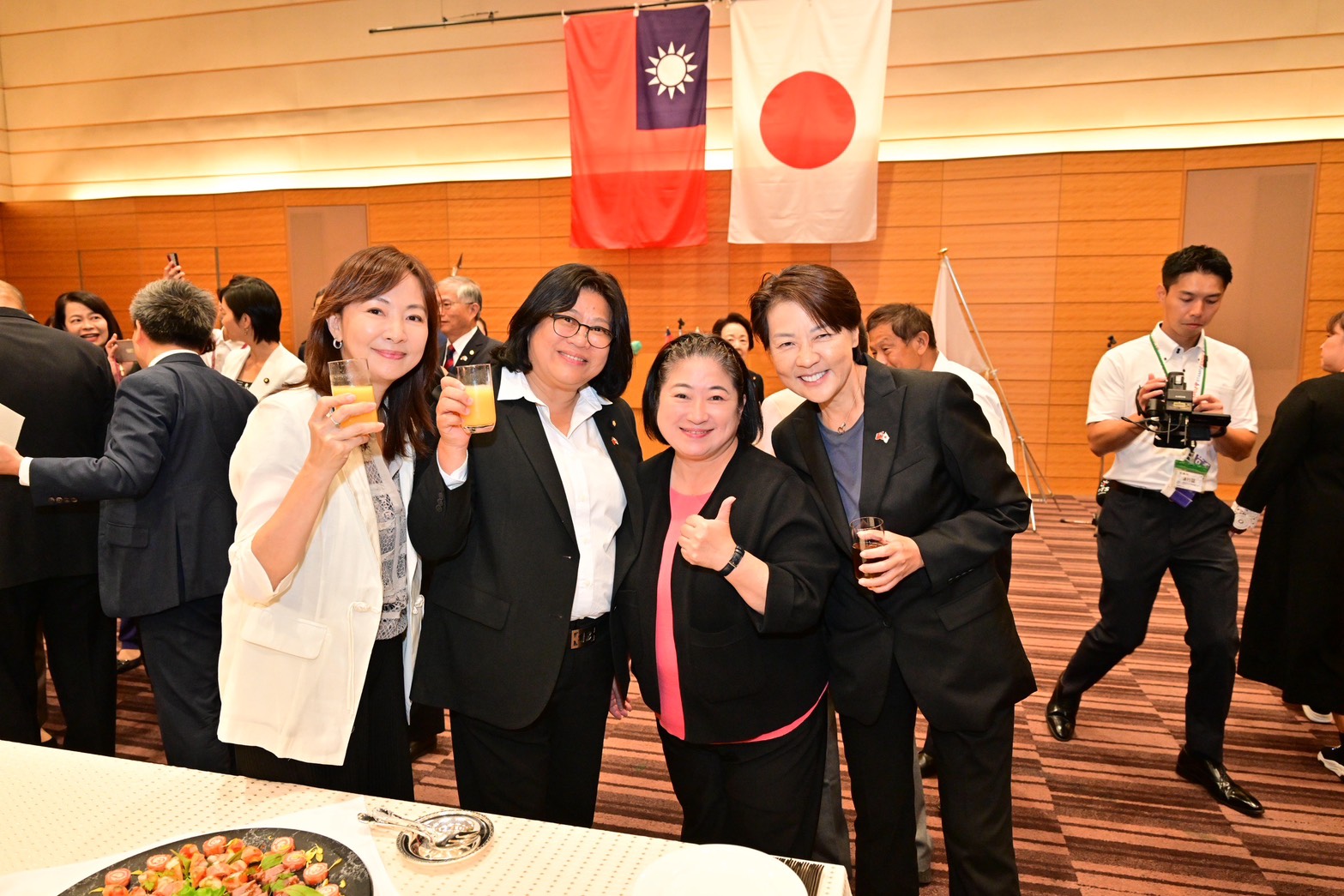
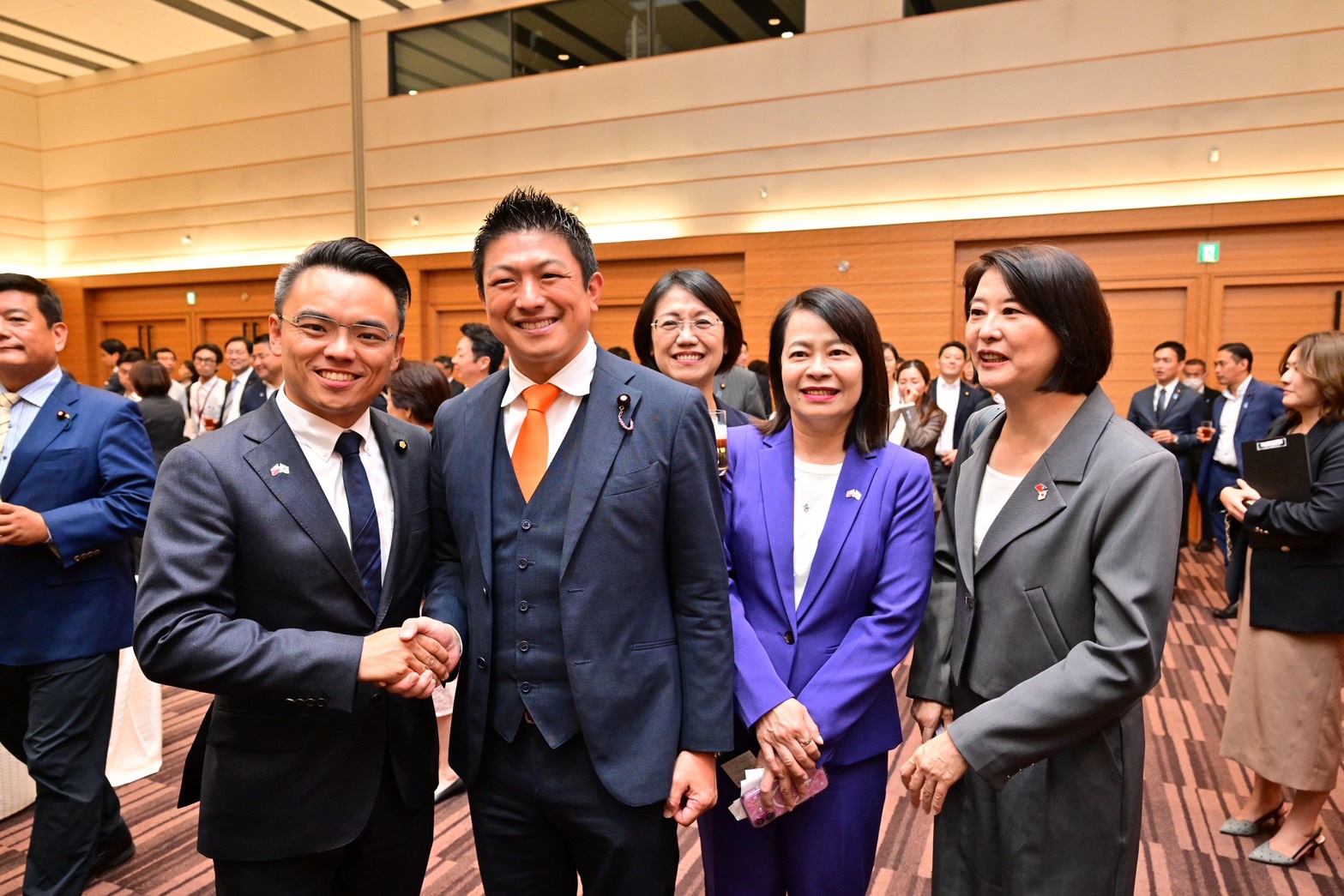
Following this, Ambassador Lee Yi‑Yang of Taipei Economic and Cultural Representative Office in Japan proposed a toast, inviting the parliamentarians to raise their glasses and enjoy artisan sake from across Japan, graciously offered by then-Prime Minister Shigeru Ishiba and other Diet members. President Han and the delegates shared cordial exchanges with Chairman Furuya and Japanese Diet members. The atmosphere was warm and congenial, with many commemorative photos taken together. The event concluded successfully after about two hours.
Chairman Furuya expressed his great pleasure in hosting the welcome gathering. He also noted that Representative Hajime Sasaki had talked about the disastrous floods that had struck Hualien two days earlier, and he took the opportunity to convey his deepest condolences. Taiwan and Japan are both nations frequently affected by natural disasters, and have consistently stood by each other in time of such challenges. Adversity reveals true friendship, and it is in this spirit that Taiwan has proven to be Japan’s true friend.
Chairman Furuya went on to say that in order to deepen Taiwan-Japan friendship, the Japan–ROC Diet Members’ Consultative Council has organized working groups with various topics; the Exchange Between Women Working Group headed by Diet member Yamaguchi, for example, was one of these working groups. In addition, with regard to the registration of Taiwan–Japan transnational marriages, thanks to the years of dedicated efforts by Mr. Hirofumi Takinami, member of the House of Councillors, the nationality column in the spouse registration system was amended to include “Taiwan” as an option, benefiting 70,000 people. Meanwhile, the Local Exchange Working Group has been actively promoting exchange programs for Japanese junior high school students to visit Taiwan in order to enhance mutual understanding between youth of the two nations. As for bilateral trade and business, he mentioned that TSMC’s fabrication plant in Kumamoto has been a great achievement, and affirmed that the company has reinvigorated the local economy.
Chairman Furuya concluded by noting that both Japan and Taiwan must face challenges from harsh regional circumstances. He stated his belief that Taiwan and Japan must enhance collaboration with like-minded allies, including the U.S. and Australia, to safeguard peace and stability in East Asia. Echoing the words of the late Prime Minister Abe—“A Taiwan contingency is a Japan contingency”—he emphasized that deeper bilateral cooperation is indispensable for shaping regional developments. Chairman Furuya also announced that in October this year, he will lead the largest Japan–ROC Diet Members’ Consultative Council delegation to Taiwan for the National Day celebrations. He expressed his eager anticipation of meeting once again with President Han of the Legislative Yuan and Taiwan’s legislators. Finally, he offered his best wishes for Taiwan–Japan relations to move toward a brighter future, as symbolized by the calligraphy A Thousand Miles in Sight, representing a vision imbued with hope and momentum.
Then, President Han took the floor and began his remarks by recalling Chairman Furuya’s first visit to Taiwan last year, noting that he was deeply impressed by the Chairman’s graceful and elegant demeanor. He further pointed out that approximately 290 members of the Japanese Diet have joined the Japan–ROC Diet Members’ Consultative Council, and that Taiwan’s unicameral Legislative Yuan has only 113 seats, making the representation and influence of each legislator highly significant. He introduced to the audience this cross-party delegation, which was formed by three major caucuses of the Legislative Yuan, including five legislators from the Kuomingtang (KMT): Hung Mong-Kai, Hsu Yu-Chen, Wang Hung-Wei, Dr. Weng Hsiao-Ling, and Dr. Lin Chien-Chi; four legislators from the Democratic Progressive Party (DPP): Ho Hsin-Chun, Dr. Chuang Jui-Hsiung, Wang Mei-Hui, and Kuo Yu-Ching; and one legislator from the Taiwan People’s Party (TPP): Huang Shan-Shan. President Han highlighted that women make up 42.5% of the current Legislative Yuan, reflecting the diversity and maturity of Taiwan’s democratic politics as well as its outstanding achievements in gender equality. The three parties may take different stances on domestic issues, he added, but they always stand together on foreign affairs, working hand in hand to build a healthier and more mature democratic state.
He remarked that Taiwan accounts only for 0.03% of the world’s land area and 0.3% of the global population, but its industrial output represents about 3% of the global total, underscoring Taiwan’s significance in the international economy. President Han further stressed that Taiwan’s democratic evolution has drawn much attention from Chinese-speaking communities across the globe. He noted that as many as 2,100 reporters and digital media professionals have registered at the Legislative Yuan, a vivid demonstration of the high level of international interest in Taiwan and its democratic advancement. President Han went on to mention that the world is watching Taiwan’s continuous progress in democracy and steadfast commitment to freedom, and consequently all legislators share a common sense of mission to continue advancing the cause of democracy.
In closing, President Han extended his sincere gratitude to Chairman Furuya and the attending Diet members, recognizing the Japan–ROC Diet Members’ Consultative Council for its contributions over the last 70 years as the most important bridge between the parliaments of Taiwan and Japan. He lauded the Council for fostering close exchanges between Taiwan’s Legislative Yuan and Japan’s National Diet. In particular, he thanked the Council for its prompt expression of sympathy following the Hualien earthquake. He expressed his hope that the people of Hualien will weather the aftermath of the recent typhoon safe and sound, and he emphasized his expectation that Taiwan–Japan ties will continue to flourish, enduring with renewed vitality.
Following this, Ambassador Lee Yi‑Yang of Taipei Economic and Cultural Representative Office in Japan proposed a toast, inviting the parliamentarians to raise their glasses and enjoy artisan sake from across Japan, graciously offered by then-Prime Minister Shigeru Ishiba and other Diet members. President Han and the delegates shared cordial exchanges with Chairman Furuya and Japanese Diet members. The atmosphere was warm and congenial, with many commemorative photos taken together. The event concluded successfully after about two hours.