

Deputy Secretary General Chang Yu-Jung of the Legislative Yuan receives delegation of U.S. Mid-Atlantic state legislative leaders
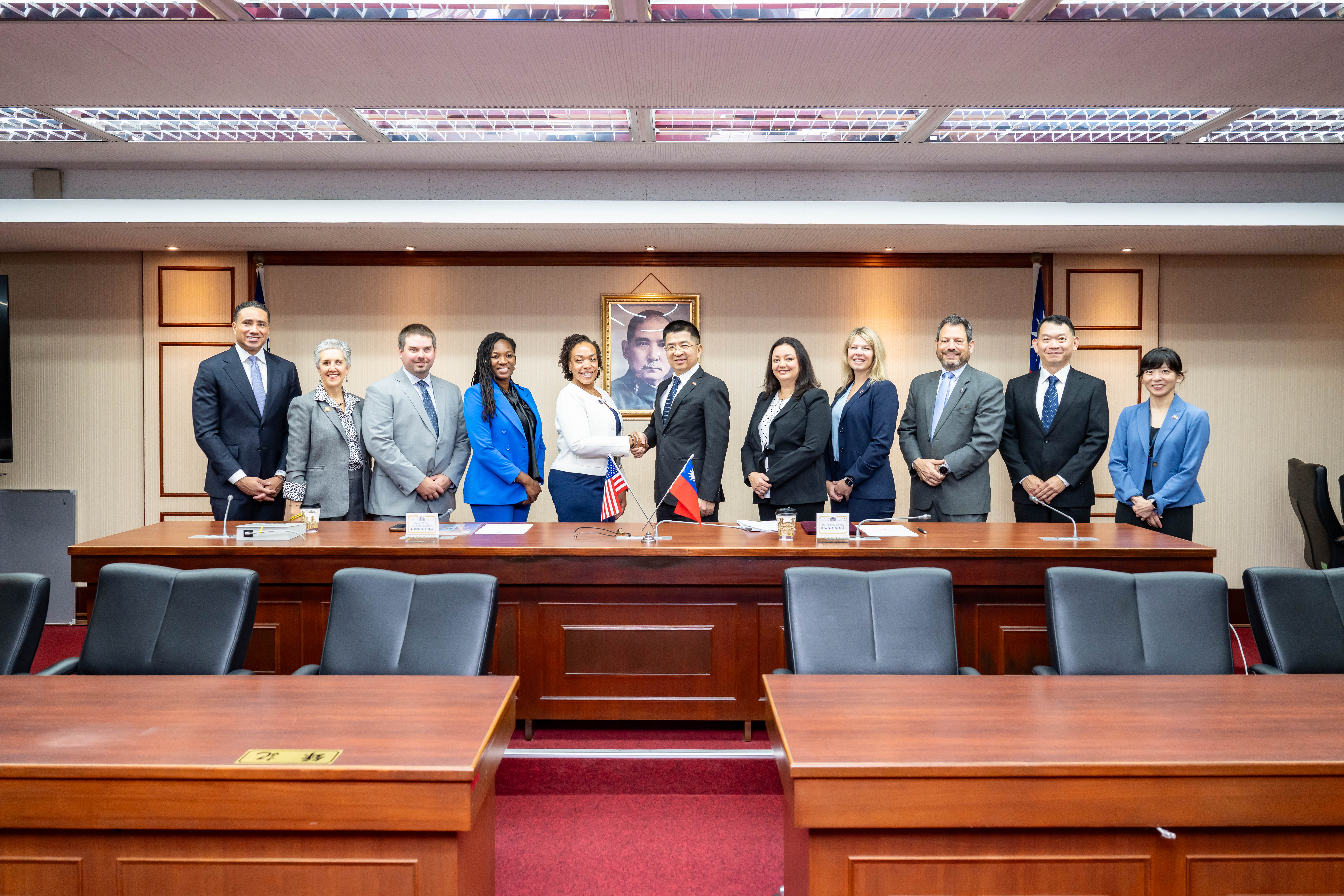
On the morning of October 21, Deputy Secretary General Dr. Chang Yu-Jung (張裕榮) of the Legislative Yuan received a delegation of U.S. Mid-Atlantic state legislative leaders.

Deputy Secretary General Chang first extended a warm welcome, on behalf of the Legislative Yuan of the Republic of China (Taiwan) and Legislative Yuan President Daniel K.Y. Han (韓國瑜), to the visiting legislative leaders from the four U.S. states of Maryland, Virginia, Delaware, and West Virginia. He noted that President Han attaches great importance to the delegation’s visit but was unable to receive the delegation in person due to his obligation to preside over a plenary sitting of the Legislative Yuan, and therefore asked him to convey his greetings. Deputy Secretary General Chang pointed out that Mid-Atlantic state legislative leaders have long been committed to advancing legislation and public service in their respective states and serve as vital pillars of the U.S. democratic system. He expressed sincere appreciation for their longstanding friendship with and support for Taiwan, and voiced his hope that through today’s exchange, mutual understanding would be enhanced and cooperation further deepened, enabling Taiwan–U.S. relations to expand and strengthen comprehensively from the state level to the federal level.
Deputy Secretary General Chang emphasized that exchanges and cooperation between Taiwan and the Mid-Atlantic states of the U.S. have grown increasingly close in recent years. Taiwan and Maryland have achieved fruitful results in educational and cultural exchanges. In 2024, Taiwan’s Ministry of Education signed a memorandum of understanding on educational cooperation with the state of Maryland, continuing to promote bilateral exchanges between primary and secondary schools as well as the dispatch of Mandarin language teachers. National Taiwan Normal University has also signed a cooperation agreement with the University of Maryland under the Taiwan Huayu BEST Program to jointly promote Mandarin language education and cultural exchanges. Virginia, a major technology and aerospace hub on the U.S. East Coast, is home to clusters of defense, energy, and digital industries, and is highly complementary to Taiwan in areas such as semiconductors, information and communications technology, and smart manufacturing, offering strong potential for deeper industrial supply chain cooperation. Delaware has long placed emphasis on corporate law and biotechnology innovation, presenting opportunities for Taiwan and Delaware to jointly create new prospects in the biotechnology sector. West Virginia, meanwhile, has been actively expanding its economic and trade relations with Taiwan and has expressed its willingness to deepen cooperation in areas including aerospace, automotive manufacturing, energy, and agriculture.
Deputy Secretary General Chang further noted that he was pleased to see that Maryland, Virginia, and West Virginia have all established offices in Taiwan to actively promote bilateral cooperation. He encouraged Delaware to consider setting up a representative office in Taiwan as well, expressing confidence that such a move would greatly contribute to strengthening substantive bilateral relations. In closing, he encouraged the delegation to visit other parts of Taiwan to experience firsthand the sincerity and warmth of the Taiwanese people, to witness Taiwan’s democratic vitality and social resilience, and to leave with lasting and positive memories.
Speaking on behalf of the legislators from the four Mid-Atlantic states, delegation head and Speaker of the Delaware House of Representatives Melissa Minor-Brown expressed her gratitude to Deputy Secretary General Chang for the warm reception. She stated that the delegation places great importance on Taiwan–U.S. friendship and hopes that this visit will help build an even stronger partnership, enabling both sides to expand cooperation in areas such as innovation, education, trade, technology, and culture. She concluded by wishing for enduring friendship between Taiwan and the U.S.
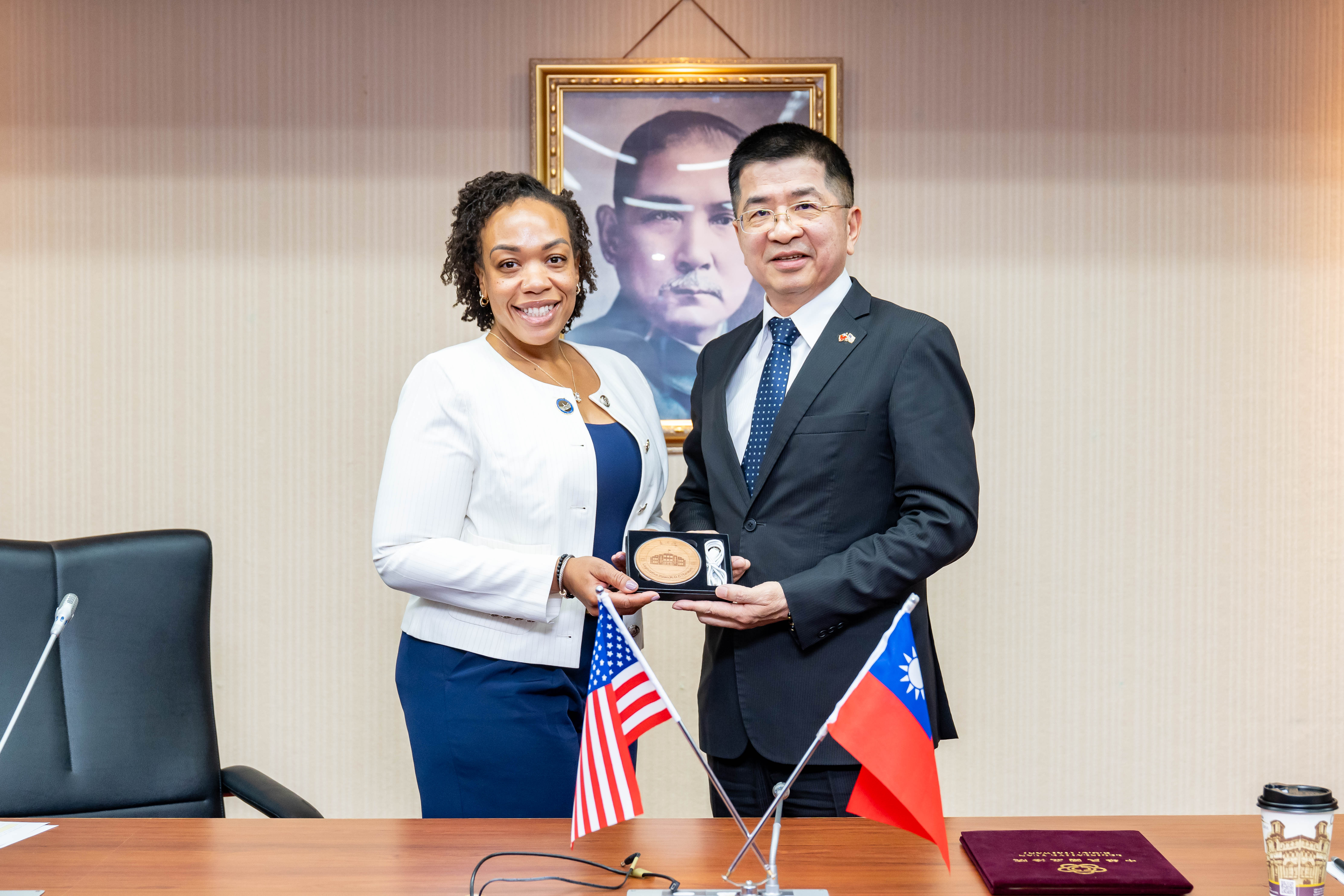
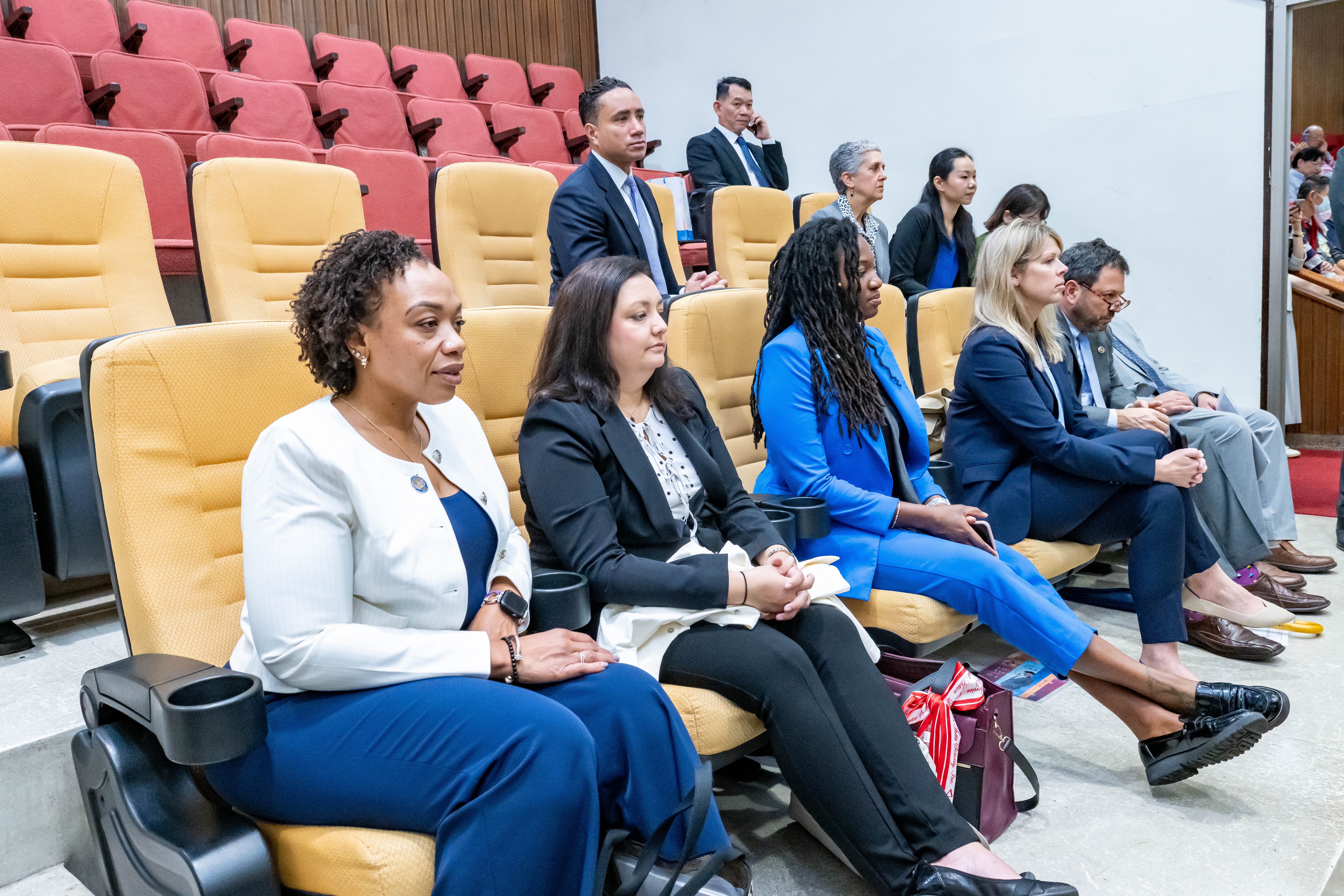
The two sides subsequently engaged in extensive discussions on a wide range of topics including the Legislative Yuan’s mechanisms for cooperation and negotiation, the composition of legislators and electoral affairs, the parliamentary assistant system, legislative priorities for the current session, and measures to encourage youth participation in politics. The meeting lasted approximately one hour and was conducted in a warm and friendly atmosphere. It concluded with an exchange of commemorative gifts, followed by arrangements for the delegation to observe a plenary sitting in the Legislative Yuan chamber, bringing the exchange to a successful close.
Deputy Secretary General Chang first extended a warm welcome, on behalf of the Legislative Yuan of the Republic of China (Taiwan) and Legislative Yuan President Daniel K.Y. Han (韓國瑜), to the visiting legislative leaders from the four U.S. states of Maryland, Virginia, Delaware, and West Virginia. He noted that President Han attaches great importance to the delegation’s visit but was unable to receive the delegation in person due to his obligation to preside over a plenary sitting of the Legislative Yuan, and therefore asked him to convey his greetings. Deputy Secretary General Chang pointed out that Mid-Atlantic state legislative leaders have long been committed to advancing legislation and public service in their respective states and serve as vital pillars of the U.S. democratic system. He expressed sincere appreciation for their longstanding friendship with and support for Taiwan, and voiced his hope that through today’s exchange, mutual understanding would be enhanced and cooperation further deepened, enabling Taiwan–U.S. relations to expand and strengthen comprehensively from the state level to the federal level.
Deputy Secretary General Chang emphasized that exchanges and cooperation between Taiwan and the Mid-Atlantic states of the U.S. have grown increasingly close in recent years. Taiwan and Maryland have achieved fruitful results in educational and cultural exchanges. In 2024, Taiwan’s Ministry of Education signed a memorandum of understanding on educational cooperation with the state of Maryland, continuing to promote bilateral exchanges between primary and secondary schools as well as the dispatch of Mandarin language teachers. National Taiwan Normal University has also signed a cooperation agreement with the University of Maryland under the Taiwan Huayu BEST Program to jointly promote Mandarin language education and cultural exchanges. Virginia, a major technology and aerospace hub on the U.S. East Coast, is home to clusters of defense, energy, and digital industries, and is highly complementary to Taiwan in areas such as semiconductors, information and communications technology, and smart manufacturing, offering strong potential for deeper industrial supply chain cooperation. Delaware has long placed emphasis on corporate law and biotechnology innovation, presenting opportunities for Taiwan and Delaware to jointly create new prospects in the biotechnology sector. West Virginia, meanwhile, has been actively expanding its economic and trade relations with Taiwan and has expressed its willingness to deepen cooperation in areas including aerospace, automotive manufacturing, energy, and agriculture.
Deputy Secretary General Chang further noted that he was pleased to see that Maryland, Virginia, and West Virginia have all established offices in Taiwan to actively promote bilateral cooperation. He encouraged Delaware to consider setting up a representative office in Taiwan as well, expressing confidence that such a move would greatly contribute to strengthening substantive bilateral relations. In closing, he encouraged the delegation to visit other parts of Taiwan to experience firsthand the sincerity and warmth of the Taiwanese people, to witness Taiwan’s democratic vitality and social resilience, and to leave with lasting and positive memories.
Speaking on behalf of the legislators from the four Mid-Atlantic states, delegation head and Speaker of the Delaware House of Representatives Melissa Minor-Brown expressed her gratitude to Deputy Secretary General Chang for the warm reception. She stated that the delegation places great importance on Taiwan–U.S. friendship and hopes that this visit will help build an even stronger partnership, enabling both sides to expand cooperation in areas such as innovation, education, trade, technology, and culture. She concluded by wishing for enduring friendship between Taiwan and the U.S.
The two sides subsequently engaged in extensive discussions on a wide range of topics including the Legislative Yuan’s mechanisms for cooperation and negotiation, the composition of legislators and electoral affairs, the parliamentary assistant system, legislative priorities for the current session, and measures to encourage youth participation in politics. The meeting lasted approximately one hour and was conducted in a warm and friendly atmosphere. It concluded with an exchange of commemorative gifts, followed by arrangements for the delegation to observe a plenary sitting in the Legislative Yuan chamber, bringing the exchange to a successful close.