

Vice President Johnny C. Chiang of the Legislative Yuan hosts luncheon for three-member delegation of Portuguese cross-party parliamentarians; Vice President Chiang: We thank the Portuguese parliamentary delegation for strengthening the ties of friendship with Taiwan and hope to expand exchanges in diverse fields.
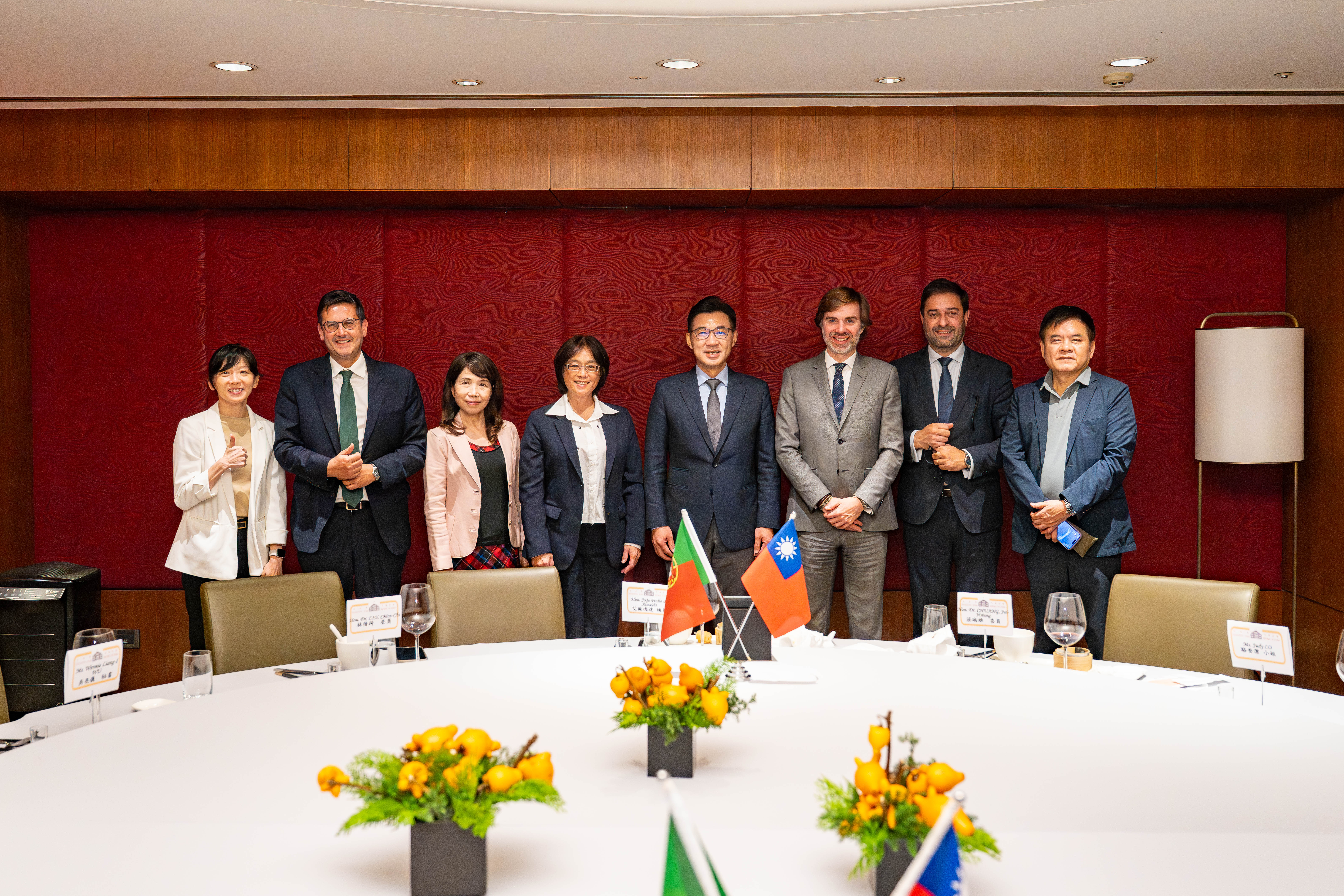


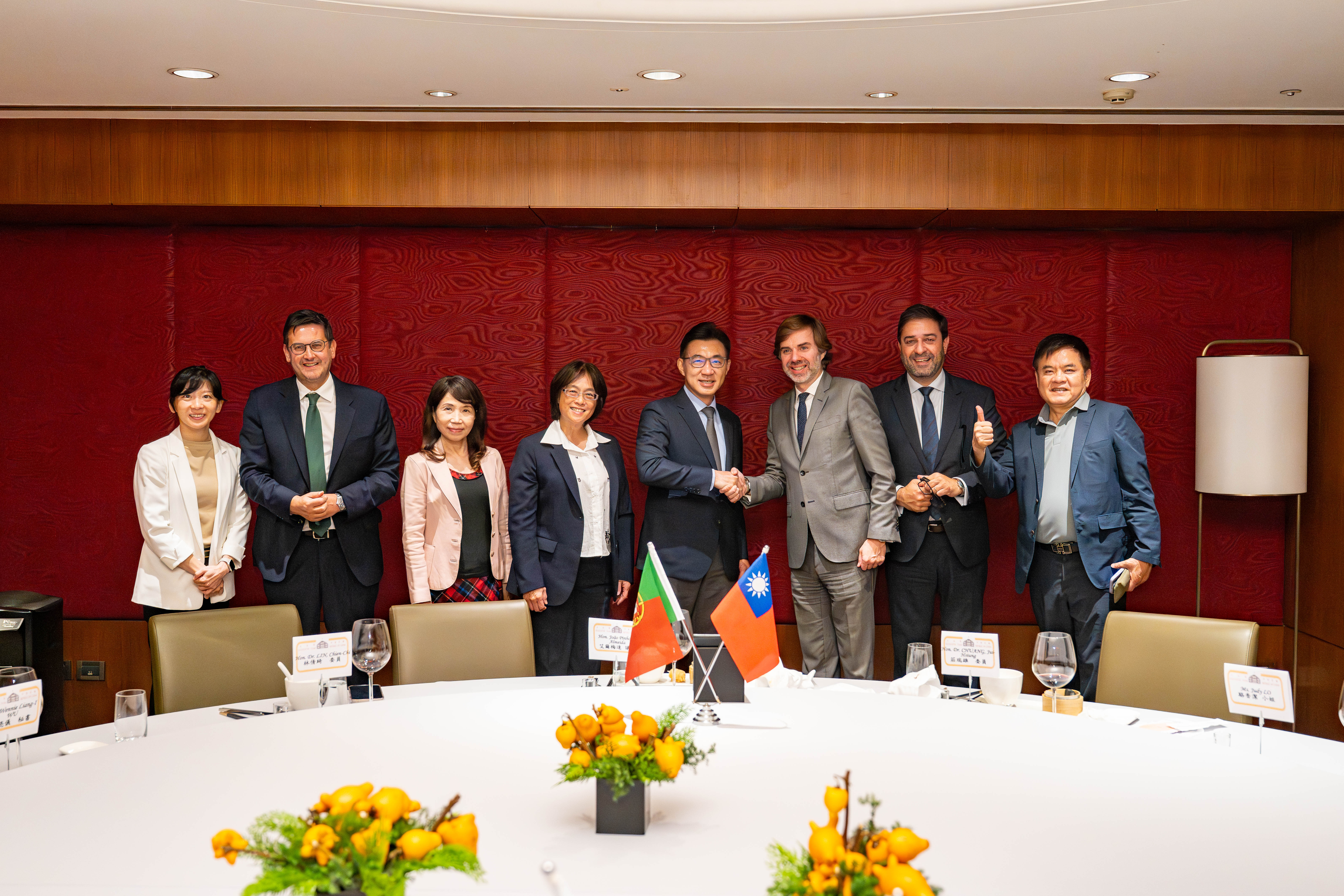
At noon on December 2, Legislative Yuan Vice President Dr. Johnny C. Chiang (江啟臣) accompanied by KMT Legislator Dr. Lin Chien-Chi, DPP Legislator Dr. Chuang Jui-Hsiung, and TPP Legislator Chen Gau-Tzu, received a three-member delegation of Portuguese cross-party parliamentarians.
On behalf of the Legislative Yuan and its President Daniel K.Y. Han (韓國瑜), Vice President Chiang first extended a sincere welcome to the Portuguese parliamentary delegation for organizing this cross-party visit to Taiwan. He expressed his great pleasure at hosting the distinguished guests from Portugal. Recalling his first visit to Portugal in 2004 as a scholar, during which he visited universities and foreign affairs departments and participated in bilateral forums, Vice President Chiang noted that the trip left him with a lasting impression of Portugal’s political and economic development as well as its rich culinary culture. He also highlighted the deep historical ties between Taiwan and Portugal, noting that 500 years ago, Portuguese sailors sailing past Taiwan exclaimed “Formosa” (Beautiful Isle), a tribute that established Taiwan’s reputation for beauty on the global stage.
Vice President Chiang continued by stating that Taiwan possesses a robust mechanism for democratic oversight and a high level of transparency. As a result, Taiwan’s government is subjected to constant public and media scrutiny, a defining characteristic of Taiwanese society. He added that Taiwan faces similar challenges regarding climate and environmental change. He expressed hope that Taiwan could draw upon Portugal’s experience in green energy policy, energy strategy, and sustainable practices as a key reference for advancing Taiwan’s energy transition.
In his concluding remarks, Vice President Chiang once again thanked Portugal for organizing the cross-party delegation and expressed hope that both sides would expand exchanges across a broader range of fields. Noting that the delegation would also visit Taichung and Sun Moon Lake in Nantou, he hoped that the guests would experience Taiwan’s natural scenery and cultural diversity firsthand. He highlighted that many historical sites and cultural narratives across Taiwan have profound connections with European maritime nations, including Spain and the Netherlands. He believed that the visit would contribute to a more comprehensive understanding of Taiwanese society. He also hoped that Portugal would consider establishing a representative office in Taiwan to facilitate further exchanges.
Head of Delegation MP João Pinho de Almeida stated in his remarks that he was delighted to visit Taiwan again following his first visit in 2003, and felt very honored by the warm reception extended by the Legislative Yuan. He stated that although Portugal and Taiwan have not established formal diplomatic ties, relations between the two sides are becoming increasingly close, and Portugal is willing to expand cooperation with Taiwan in more fields. MP Almeida emphasized that the cross-party nature of the parliamentary delegation reflects the high importance Portuguese political sphere attaches to Taiwan. He hoped that by understanding Taiwan’s current situation firsthand, they could jointly promote the deepening of Taiwan-Portugal relations and continue to consolidate support for Taiwan at the EU level.
MP Almeida further noted that Taiwan’s strong performance in the global economy is evident to all, and he encouraged more dialogue and discussion between the two countries in economy and trade. He pointed out that Portugal has clear regulations on investment screening, political procedures, and administrative processes. He suggested that cooperation in the economic and green energy sectors could lay the groundwork for higher-level interactions, such as ministerial dialogue. He added that Portugal boasts natural advantages in wind and solar energy and has effectively invested in hydropower, granting it a competitive edge in energy mix and electricity prices compared to Germany and Russia. He hoped to share relevant experiences with Taiwan and explore broader possibilities for cooperation.
Legislator Lin greeted the guests in Portuguese, noting that she would be launching the “R.O.C.- Portugal Inter-Parliamentary Amity Association of the Legislative Yuan” this Friday (December 5), serving as its Chair. She described it as a meaningful occasion to welcome the Portuguese delegation at this time. Legislator Lin also shared that she had visited Portugal twice, including completing the Portuguese Way pilgrimage, and was deeply impressed by the local cultural landscape. She noted that Portuguese Fado music is internationally renowned and hoped that Taiwan and Portugal could deepen exchanges in culture and sustainability.
Legislator Chuang stated that although Taiwan and Portugal are small and medium-sized countries, they both demonstrate strong economic and industrial capabilities. He noted that Portugal has advantages in the green energy sector, while Taiwan is globally renowned for its semiconductor industry, anchored by giants like TSMC. He hoped that Taiwan and Portugal could strengthen industrial cooperation in the green energy supply chain. Legislator Chuang shared that as a former high school soccer player, he immediately associates Portugal with world famous star Cristiano Ronaldo, expressing admiration for his commanding presence on the field.
Legislator Chen noted that while Portugal is roughly three times the size of Taiwan, its population is less than half. Although neither Taiwan nor Portugal is a major power in their respective regions, they share many similarities in culture, society, and policy. Legislator Chen mentioned that Taiwan is at a critical stage in its energy transition and hoped that both sides would strengthen cooperation and draw upon Portugal's successful cases to jointly maintain environmental sustainability.
During the meeting, both sides exchanged views on a wide range of issues, including declining birthrates, cross-strait relations, education and culture, immigration policy, and social security. The discussion was in-depth and pragmatic. The luncheon lasted approximately 90 minutes and concluded successfully in a harmonious and warm atmosphere following an exchange of commemorative gifts and a group photo.
On behalf of the Legislative Yuan and its President Daniel K.Y. Han (韓國瑜), Vice President Chiang first extended a sincere welcome to the Portuguese parliamentary delegation for organizing this cross-party visit to Taiwan. He expressed his great pleasure at hosting the distinguished guests from Portugal. Recalling his first visit to Portugal in 2004 as a scholar, during which he visited universities and foreign affairs departments and participated in bilateral forums, Vice President Chiang noted that the trip left him with a lasting impression of Portugal’s political and economic development as well as its rich culinary culture. He also highlighted the deep historical ties between Taiwan and Portugal, noting that 500 years ago, Portuguese sailors sailing past Taiwan exclaimed “Formosa” (Beautiful Isle), a tribute that established Taiwan’s reputation for beauty on the global stage.
Vice President Chiang continued by stating that Taiwan possesses a robust mechanism for democratic oversight and a high level of transparency. As a result, Taiwan’s government is subjected to constant public and media scrutiny, a defining characteristic of Taiwanese society. He added that Taiwan faces similar challenges regarding climate and environmental change. He expressed hope that Taiwan could draw upon Portugal’s experience in green energy policy, energy strategy, and sustainable practices as a key reference for advancing Taiwan’s energy transition.
In his concluding remarks, Vice President Chiang once again thanked Portugal for organizing the cross-party delegation and expressed hope that both sides would expand exchanges across a broader range of fields. Noting that the delegation would also visit Taichung and Sun Moon Lake in Nantou, he hoped that the guests would experience Taiwan’s natural scenery and cultural diversity firsthand. He highlighted that many historical sites and cultural narratives across Taiwan have profound connections with European maritime nations, including Spain and the Netherlands. He believed that the visit would contribute to a more comprehensive understanding of Taiwanese society. He also hoped that Portugal would consider establishing a representative office in Taiwan to facilitate further exchanges.
Head of Delegation MP João Pinho de Almeida stated in his remarks that he was delighted to visit Taiwan again following his first visit in 2003, and felt very honored by the warm reception extended by the Legislative Yuan. He stated that although Portugal and Taiwan have not established formal diplomatic ties, relations between the two sides are becoming increasingly close, and Portugal is willing to expand cooperation with Taiwan in more fields. MP Almeida emphasized that the cross-party nature of the parliamentary delegation reflects the high importance Portuguese political sphere attaches to Taiwan. He hoped that by understanding Taiwan’s current situation firsthand, they could jointly promote the deepening of Taiwan-Portugal relations and continue to consolidate support for Taiwan at the EU level.
MP Almeida further noted that Taiwan’s strong performance in the global economy is evident to all, and he encouraged more dialogue and discussion between the two countries in economy and trade. He pointed out that Portugal has clear regulations on investment screening, political procedures, and administrative processes. He suggested that cooperation in the economic and green energy sectors could lay the groundwork for higher-level interactions, such as ministerial dialogue. He added that Portugal boasts natural advantages in wind and solar energy and has effectively invested in hydropower, granting it a competitive edge in energy mix and electricity prices compared to Germany and Russia. He hoped to share relevant experiences with Taiwan and explore broader possibilities for cooperation.
Legislator Lin greeted the guests in Portuguese, noting that she would be launching the “R.O.C.- Portugal Inter-Parliamentary Amity Association of the Legislative Yuan” this Friday (December 5), serving as its Chair. She described it as a meaningful occasion to welcome the Portuguese delegation at this time. Legislator Lin also shared that she had visited Portugal twice, including completing the Portuguese Way pilgrimage, and was deeply impressed by the local cultural landscape. She noted that Portuguese Fado music is internationally renowned and hoped that Taiwan and Portugal could deepen exchanges in culture and sustainability.
Legislator Chuang stated that although Taiwan and Portugal are small and medium-sized countries, they both demonstrate strong economic and industrial capabilities. He noted that Portugal has advantages in the green energy sector, while Taiwan is globally renowned for its semiconductor industry, anchored by giants like TSMC. He hoped that Taiwan and Portugal could strengthen industrial cooperation in the green energy supply chain. Legislator Chuang shared that as a former high school soccer player, he immediately associates Portugal with world famous star Cristiano Ronaldo, expressing admiration for his commanding presence on the field.
Legislator Chen noted that while Portugal is roughly three times the size of Taiwan, its population is less than half. Although neither Taiwan nor Portugal is a major power in their respective regions, they share many similarities in culture, society, and policy. Legislator Chen mentioned that Taiwan is at a critical stage in its energy transition and hoped that both sides would strengthen cooperation and draw upon Portugal's successful cases to jointly maintain environmental sustainability.
During the meeting, both sides exchanged views on a wide range of issues, including declining birthrates, cross-strait relations, education and culture, immigration policy, and social security. The discussion was in-depth and pragmatic. The luncheon lasted approximately 90 minutes and concluded successfully in a harmonious and warm atmosphere following an exchange of commemorative gifts and a group photo.