

President Daniel K.Y. Han of the Legislative Yuan meets with Austrian Cross-Party Parliamentary Delegation; President Han: We hope to expand cooperation in diverse industrial fields between Taiwan and Austria, working together to create a prosperous future.

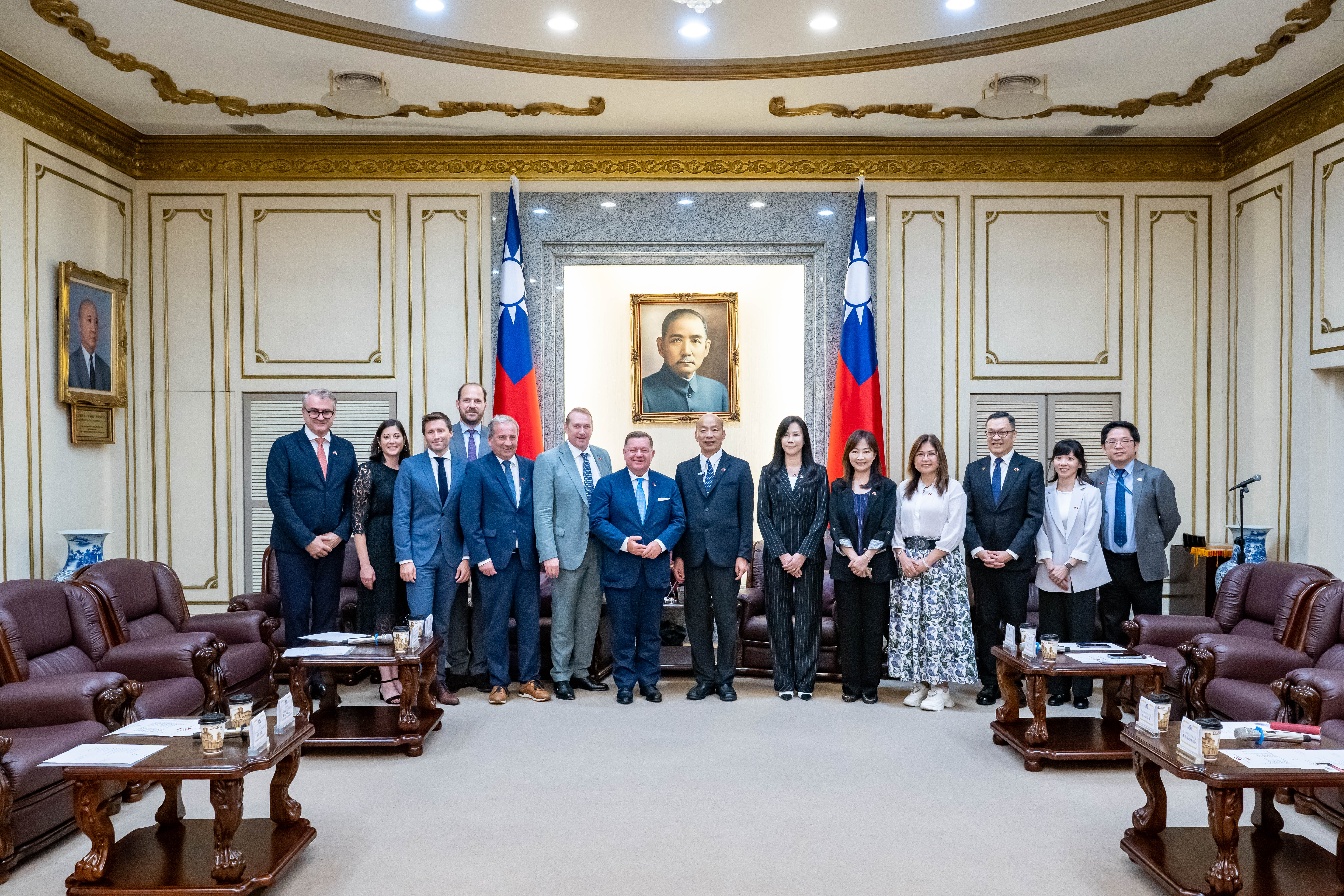


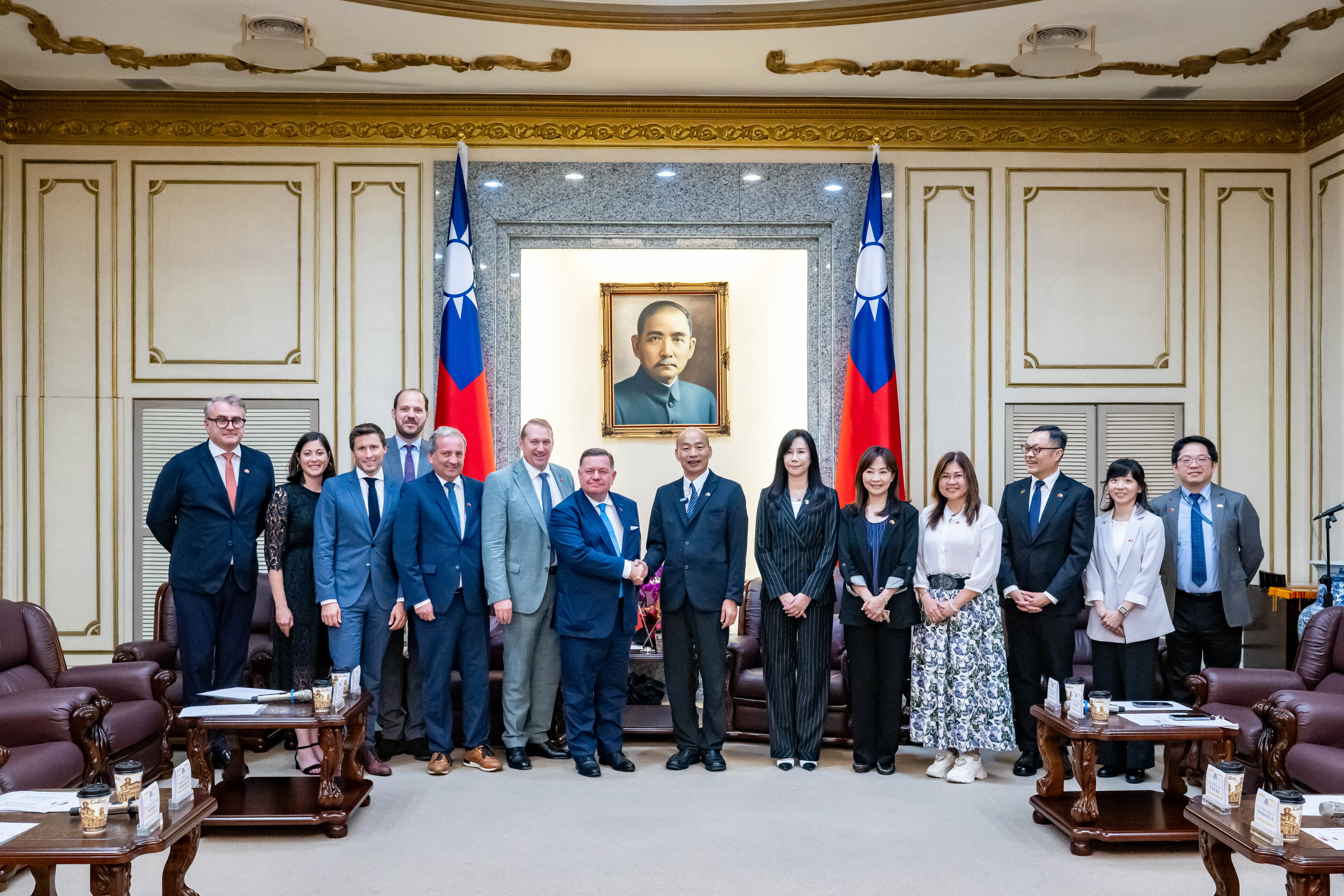
On the afternoon of October 1, President Daniel K.Y. Han (韓國瑜) of the Legislative Yuan, accompanied by Chair of the "R.O.C. (Taiwan) – Austria Inter-Parliamentary Amity Association" KMT Legislator Wan Mei-Ling, DPP Legislator Kuo Yu-Ching, TPP Legislator Mai Yu-Chen, and Deputy Minister of Foreign Affairs Chen Ming-Chi, met with a seven-member delegation led by Werner Amon, Chair of the Austria-Taiwan Friendship Group, and Austrian cross-party parliamentarians.
President Han first extended a sincere welcome to Chair Amon, emphasizing that this marked his ninth visit to Taiwan, demonstrating his deep understanding of the country. He expressed hope that the parliamentarians visiting for the first time would also depart with a positive impression of Taiwan. He noted that the Legislative Yuan is comprised of 113 seats, and the participation of legislators from all three major party caucuses today fully demonstrates the importance attached to deepening Taiwan-Austria relations across party lines. Furthermore, he highlighted that all attending legislators were women, reflecting the Legislative Yuan’s excellence in gender equality. With female legislators holding 42.5% of all seats, he noted that this underscores the diversity of Taiwan’s political participation and its significant achievements in promoting gender equity.
President Han stated that the Taiwanese people have always held a favorable impression of Austria, noting that world-renowned composers such as Mozart and Beethoven are household names in Taiwan. He recalled that in September, Legislative Yuan Vice President Dr. Johnny C. Chiang (江啟臣) led a cross-party delegation to the Czech Republic for the opening ceremony of the "100 Treasures, 100 Stories" exhibition from the National Palace Museum. Following this, the Belvedere Palace (Schloss Belvedere) in Austria will collaborate with the National Museum of Taiwan History to host the "A Century of Viennese Flower Paintings" exhibition in December, which is highly anticipated. President Han also pointed out that Austria is currently Taiwan's 10th largest trading partner in Europe, expressing hope that bilateral relations will continue to deepen and thrive upon this existing foundation.
In his concluding remarks, President Han emphasized that although Taiwan accounts for only three ten-thousandths of the world's land area, much like a small egg that appears ordinary on the outside, it nurtures a vibrant and vigorous vitality within. To illustrate, President Han likened TSMC to a dazzling sunset glow, drawing global attention to Taiwan's semiconductor technology; however, Taiwan also possesses many industries like roses blooming at one's feet. He stressed that although such industries keep a low profile, they silently display beauty and value while holding leading positions in the global market. He added that from daily necessities to sports equipment and kitchenware, Taiwan possesses many industries hailed as the world's "Hidden Champions." He hoped that Taiwan and Austria could expand cooperation in diverse industrial fields, working together to create a mutually beneficial situation and a more prosperous future.
Chair Amon began his remarks by expressing his deep gratitude to President Han and the cross-party legislators for the warm reception, stating it was a great honor to visit the Legislative Yuan today. He emphasized that he fell in love with the land of Taiwan 25 years ago and has been dedicated to deepening bilateral relations, including promoting the establishment of the Austria-Taiwan Friendship Group five years ago to strengthen exchanges.
Chair Amon noted that while Austria's land area is similar to Taiwan's, the bilateral trade volume stands at approximately US$2 billion. He suggested this figure may be historically underestimated, as some Taiwanese businesses use China as an operational hub. He agreed that Taiwan and Austria should strengthen direct bilateral cooperation and deepen exchanges in fields such as education, trade, and culture. He also expressed pleasure at the implementation of the Working Holiday Program and noted that both sides are actively advancing an agreement on the mutual recognition of driver's licenses, which is expected to see progress by the end of this year.
Finally, Chair Amon addressed the challenging international landscape. He noted that as Austria is not far from Ukraine, it acutely feels the impact of the war on the broader European situation. He observed that the actions of authoritarian blocs are becoming increasingly unpredictable, prompting nations to increase defense budgets to guard against hostile moves, and urged like-minded democratic countries to strengthen cooperation and jointly maintain international order.
During the exchange, Legislator Wan noted that Taoyuan International Airport, the delegation's point of entry and departure, is located in her hometown. She sincerely invited Chair Amon and the delegation to visit Taoyuan on their next trip. She also pointed out that exchanges between Taiwan and Austria in culture, education, and arts are becoming increasingly close. Echoing Chair Amon’ s remarks, she recalled visiting Austria for the first time 25 years ago. She mentioned the recent establishment of the "R.O.C. (Taiwan) – Austria Inter-Parliamentary Amity Association" and hoped to further deepen educational and cultural cooperation, encouraging more Taiwanese students to study at renowned institutions such as the University of Vienna.
Legislator Kuo mentioned that prior to serving as a legislator, she had taken her child to Vienna to participate in the Summa Cum Laude Festival, leaving her with a deep impression of Austria. She noted that Taiwan is facing severe external challenges, particularly threats from China, and hoped that Taiwan and the Austrian government could strengthen cooperation to jointly safeguard democracy and freedom.
Legislator Mai shared that although Taiwan and Austria are geographically distant, they share universal values of democracy, freedom, and human rights. She described Taiwan as a diverse, friendly society with high international recognition, possessing world class advantages in healthcare and technology. She suggested this creates a complementary relationship with Austria's strengths in culture and education. She also hoped that parliamentarians visiting for the first time would observe Taiwan from different perspectives and promote cooperation in medical and trade sectors to build a more solid partnership.

Both sides subsequently exchanged views on a wide range of topics including urban development, economic and trade cooperation, democracy and the rule of law, and green energy and environmental protection. The meeting, which lasted approximately one hour, was conducted in a warm and friendly atmosphere, and concluded successfully following the exchange of commemorative gifts and a group photo.
President Han first extended a sincere welcome to Chair Amon, emphasizing that this marked his ninth visit to Taiwan, demonstrating his deep understanding of the country. He expressed hope that the parliamentarians visiting for the first time would also depart with a positive impression of Taiwan. He noted that the Legislative Yuan is comprised of 113 seats, and the participation of legislators from all three major party caucuses today fully demonstrates the importance attached to deepening Taiwan-Austria relations across party lines. Furthermore, he highlighted that all attending legislators were women, reflecting the Legislative Yuan’s excellence in gender equality. With female legislators holding 42.5% of all seats, he noted that this underscores the diversity of Taiwan’s political participation and its significant achievements in promoting gender equity.
President Han stated that the Taiwanese people have always held a favorable impression of Austria, noting that world-renowned composers such as Mozart and Beethoven are household names in Taiwan. He recalled that in September, Legislative Yuan Vice President Dr. Johnny C. Chiang (江啟臣) led a cross-party delegation to the Czech Republic for the opening ceremony of the "100 Treasures, 100 Stories" exhibition from the National Palace Museum. Following this, the Belvedere Palace (Schloss Belvedere) in Austria will collaborate with the National Museum of Taiwan History to host the "A Century of Viennese Flower Paintings" exhibition in December, which is highly anticipated. President Han also pointed out that Austria is currently Taiwan's 10th largest trading partner in Europe, expressing hope that bilateral relations will continue to deepen and thrive upon this existing foundation.
In his concluding remarks, President Han emphasized that although Taiwan accounts for only three ten-thousandths of the world's land area, much like a small egg that appears ordinary on the outside, it nurtures a vibrant and vigorous vitality within. To illustrate, President Han likened TSMC to a dazzling sunset glow, drawing global attention to Taiwan's semiconductor technology; however, Taiwan also possesses many industries like roses blooming at one's feet. He stressed that although such industries keep a low profile, they silently display beauty and value while holding leading positions in the global market. He added that from daily necessities to sports equipment and kitchenware, Taiwan possesses many industries hailed as the world's "Hidden Champions." He hoped that Taiwan and Austria could expand cooperation in diverse industrial fields, working together to create a mutually beneficial situation and a more prosperous future.
Chair Amon began his remarks by expressing his deep gratitude to President Han and the cross-party legislators for the warm reception, stating it was a great honor to visit the Legislative Yuan today. He emphasized that he fell in love with the land of Taiwan 25 years ago and has been dedicated to deepening bilateral relations, including promoting the establishment of the Austria-Taiwan Friendship Group five years ago to strengthen exchanges.
Chair Amon noted that while Austria's land area is similar to Taiwan's, the bilateral trade volume stands at approximately US$2 billion. He suggested this figure may be historically underestimated, as some Taiwanese businesses use China as an operational hub. He agreed that Taiwan and Austria should strengthen direct bilateral cooperation and deepen exchanges in fields such as education, trade, and culture. He also expressed pleasure at the implementation of the Working Holiday Program and noted that both sides are actively advancing an agreement on the mutual recognition of driver's licenses, which is expected to see progress by the end of this year.
Finally, Chair Amon addressed the challenging international landscape. He noted that as Austria is not far from Ukraine, it acutely feels the impact of the war on the broader European situation. He observed that the actions of authoritarian blocs are becoming increasingly unpredictable, prompting nations to increase defense budgets to guard against hostile moves, and urged like-minded democratic countries to strengthen cooperation and jointly maintain international order.
During the exchange, Legislator Wan noted that Taoyuan International Airport, the delegation's point of entry and departure, is located in her hometown. She sincerely invited Chair Amon and the delegation to visit Taoyuan on their next trip. She also pointed out that exchanges between Taiwan and Austria in culture, education, and arts are becoming increasingly close. Echoing Chair Amon’ s remarks, she recalled visiting Austria for the first time 25 years ago. She mentioned the recent establishment of the "R.O.C. (Taiwan) – Austria Inter-Parliamentary Amity Association" and hoped to further deepen educational and cultural cooperation, encouraging more Taiwanese students to study at renowned institutions such as the University of Vienna.
Legislator Kuo mentioned that prior to serving as a legislator, she had taken her child to Vienna to participate in the Summa Cum Laude Festival, leaving her with a deep impression of Austria. She noted that Taiwan is facing severe external challenges, particularly threats from China, and hoped that Taiwan and the Austrian government could strengthen cooperation to jointly safeguard democracy and freedom.
Legislator Mai shared that although Taiwan and Austria are geographically distant, they share universal values of democracy, freedom, and human rights. She described Taiwan as a diverse, friendly society with high international recognition, possessing world class advantages in healthcare and technology. She suggested this creates a complementary relationship with Austria's strengths in culture and education. She also hoped that parliamentarians visiting for the first time would observe Taiwan from different perspectives and promote cooperation in medical and trade sectors to build a more solid partnership.
Both sides subsequently exchanged views on a wide range of topics including urban development, economic and trade cooperation, democracy and the rule of law, and green energy and environmental protection. The meeting, which lasted approximately one hour, was conducted in a warm and friendly atmosphere, and concluded successfully following the exchange of commemorative gifts and a group photo.