

Legislative Yuan Vice President Dr. Johnny C. Chiang receives a delegation from the U.S.-Taiwan-European Next Generation Working Group of the Institute of East Asian Studies at the University of California, Berkeley
On the afternoon of June 1, Legislative Yuan Vice President Dr. Johnny C. Chiang (江啟臣), accompanied by KMT Legislators Adm. Chen Yeong-Kang, Chen Ching-Hui, and Niu Hsu-Ting, received a delegation from the U.S.-Taiwan-European Next Generation Working Group of the Institute of East Asian Studies at the University of California, Berkeley.
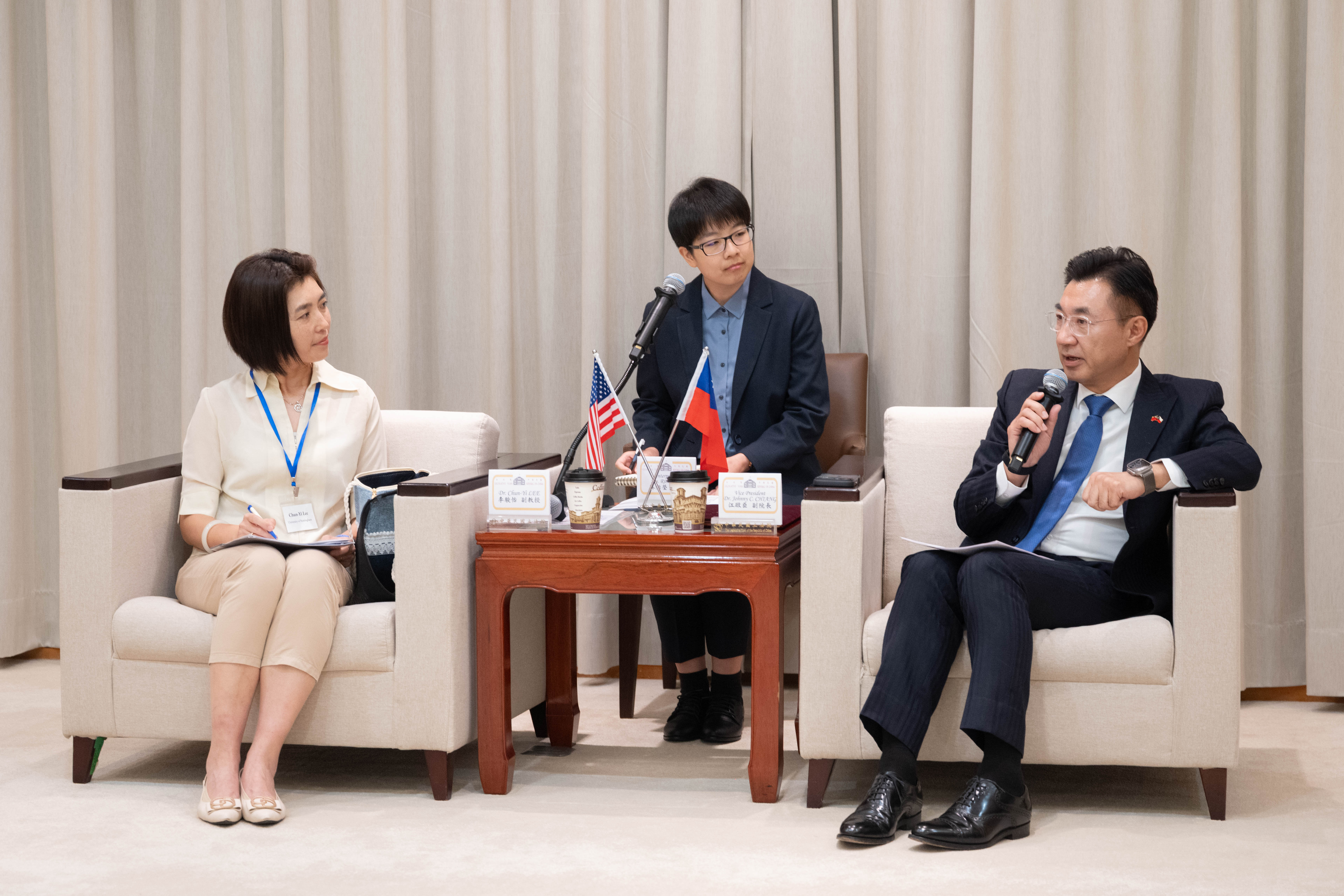
Delegation leader Dr. Chun-Yi Lee, Associate Professor at the University of Nottingham and Director of the Taiwan Studies Programme, thanked Vice President Chiang and the attending legislators for taking the time to receive the delegation. She noted that the delegation comprised the third cohort of research fellows of the U.S.-Taiwan-European Next Generation Working Group, whose members are all distinguished scholars and experts. Dr. Lee added that the purpose of the visit was to exchange views with the legislators on topics including relations between the U.S., Europe, and Taiwan, as well as the international landscape and strategies for inter-party cooperation.
In his remarks, Vice President Chiang first extended a warm welcome to the delegation on behalf of the Legislative Yuan. He noted that the international landscape has changed dramatically over the past two years, with security issues relating to energy, military capabilities, and the economy surpassing climate change as the foremost concerns of the world's major powers. Vice President Chiang said that although Taiwan faces challenges in the international political arena, it is home to the world's largest semiconductor industry, while the market capitalization of Taiwan's stock market has risen to become the fifth largest in the world, demonstrating Taiwan's significant economic influence. Vice President Chiang also stressed that, in the face of external challenges, the “3D Strategy” should be steadfastly pursued—upholding Democracy as the highest value, reinforcing Deterrence through Dialogue, and working together with the United States, Europe, and other like-minded partners to contribute to regional peace and global prosperity.

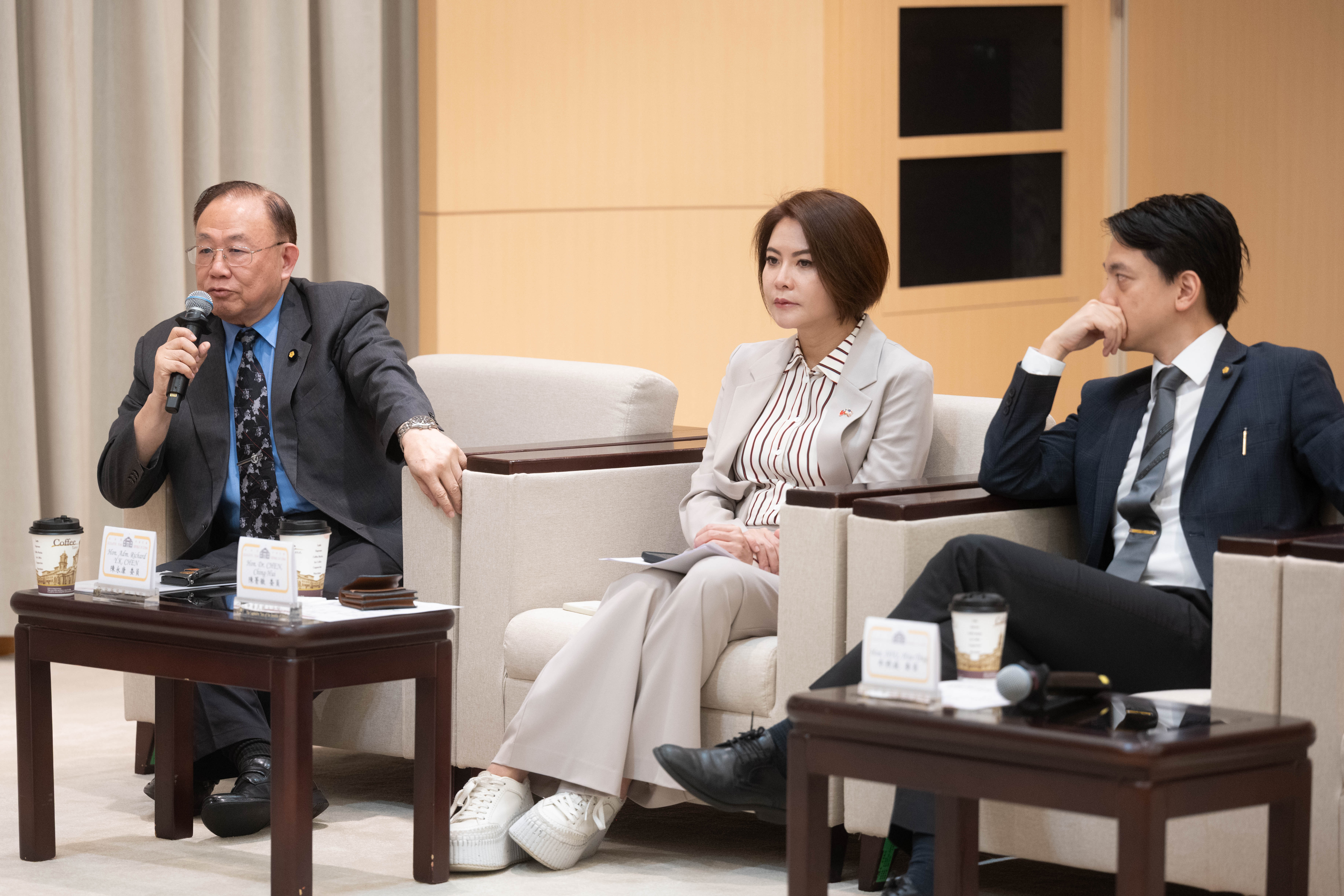
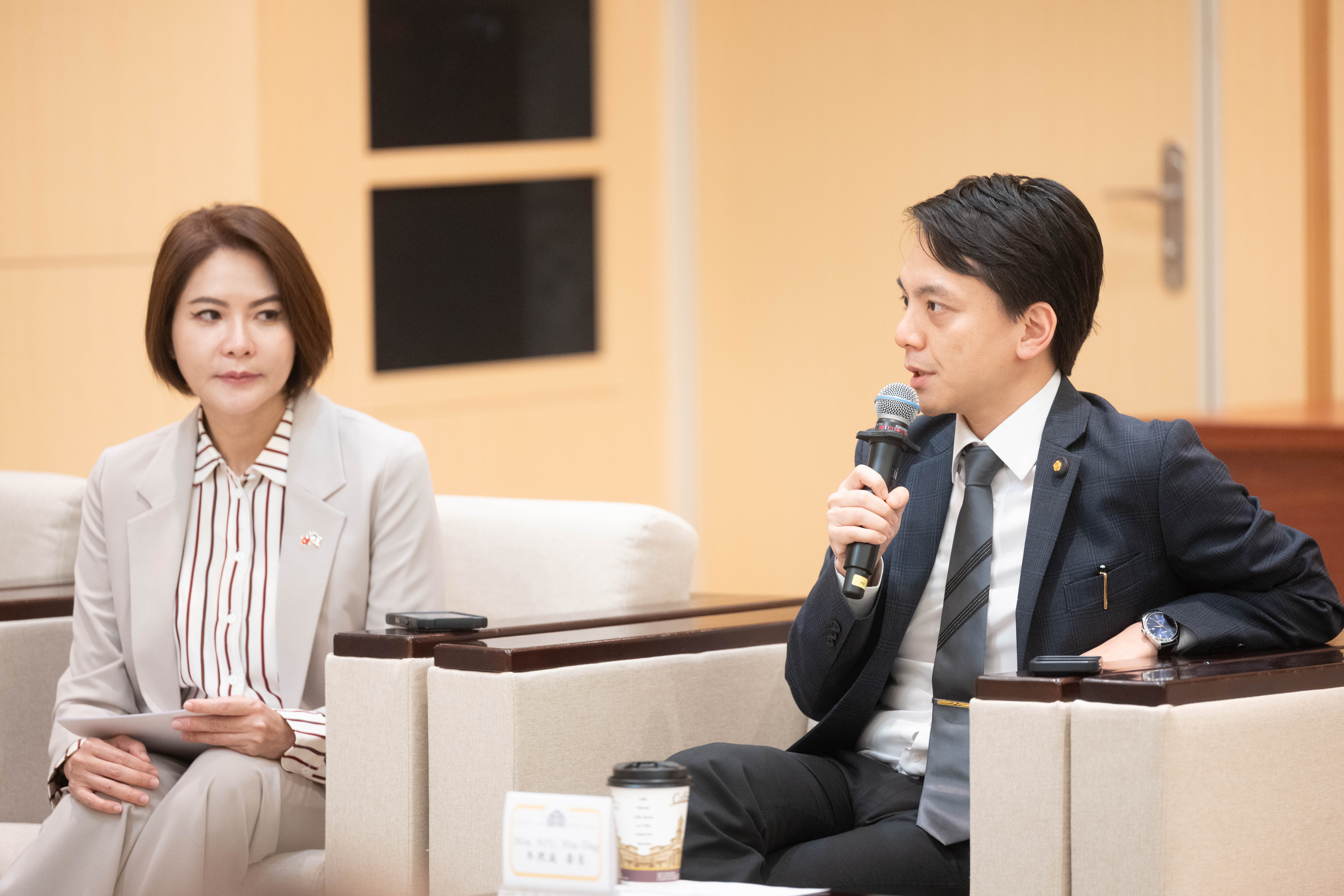
The two sides subsequently held extensive and in-depth discussions on a wide range of issues, including youth participation in politics, Taiwan-U.S. relations, inter-party cooperation, defense policy and arms procurement, and international assistance. The meeting lasted approximately one hour and featured lively discussions. Following the exchange of commemorative gifts and the taking of a group photograph, the visit concluded successfully. (2026/06/02)

Delegation leader Dr. Chun-Yi Lee, Associate Professor at the University of Nottingham and Director of the Taiwan Studies Programme, thanked Vice President Chiang and the attending legislators for taking the time to receive the delegation. She noted that the delegation comprised the third cohort of research fellows of the U.S.-Taiwan-European Next Generation Working Group, whose members are all distinguished scholars and experts. Dr. Lee added that the purpose of the visit was to exchange views with the legislators on topics including relations between the U.S., Europe, and Taiwan, as well as the international landscape and strategies for inter-party cooperation.
In his remarks, Vice President Chiang first extended a warm welcome to the delegation on behalf of the Legislative Yuan. He noted that the international landscape has changed dramatically over the past two years, with security issues relating to energy, military capabilities, and the economy surpassing climate change as the foremost concerns of the world's major powers. Vice President Chiang said that although Taiwan faces challenges in the international political arena, it is home to the world's largest semiconductor industry, while the market capitalization of Taiwan's stock market has risen to become the fifth largest in the world, demonstrating Taiwan's significant economic influence. Vice President Chiang also stressed that, in the face of external challenges, the “3D Strategy” should be steadfastly pursued—upholding Democracy as the highest value, reinforcing Deterrence through Dialogue, and working together with the United States, Europe, and other like-minded partners to contribute to regional peace and global prosperity.
The two sides subsequently held extensive and in-depth discussions on a wide range of issues, including youth participation in politics, Taiwan-U.S. relations, inter-party cooperation, defense policy and arms procurement, and international assistance. The meeting lasted approximately one hour and featured lively discussions. Following the exchange of commemorative gifts and the taking of a group photograph, the visit concluded successfully. (2026/06/02)