

Legislative Yuan President Daniel K.Y. Han receives a 10-member delegation from the Washington-based think tank, Institute for Indo-Pacific Security (IIPS); President Han: Taiwan looks forward to deepening the Taiwan-U.S. security partnership and working together to safeguard peace and stability in the Indo-Pacific
On the afternoon of July 30, Legislative Yuan President Daniel K.Y. Han (韓國瑜), accompanied by KMT Legislator Adm. Chen Yeong-Kang, DPP Legislator Chen Kuan-Ting, TPP Legislator Dr. Hung Yu-Hsiang, and Ministry of Foreign Affairs Counselor Bryan Chao-Lu Bing, received a 10-member delegation from the Washington-based think tank, Institute for Indo-Pacific Security (IIPS), led by Chairman Randall G. Schriver.
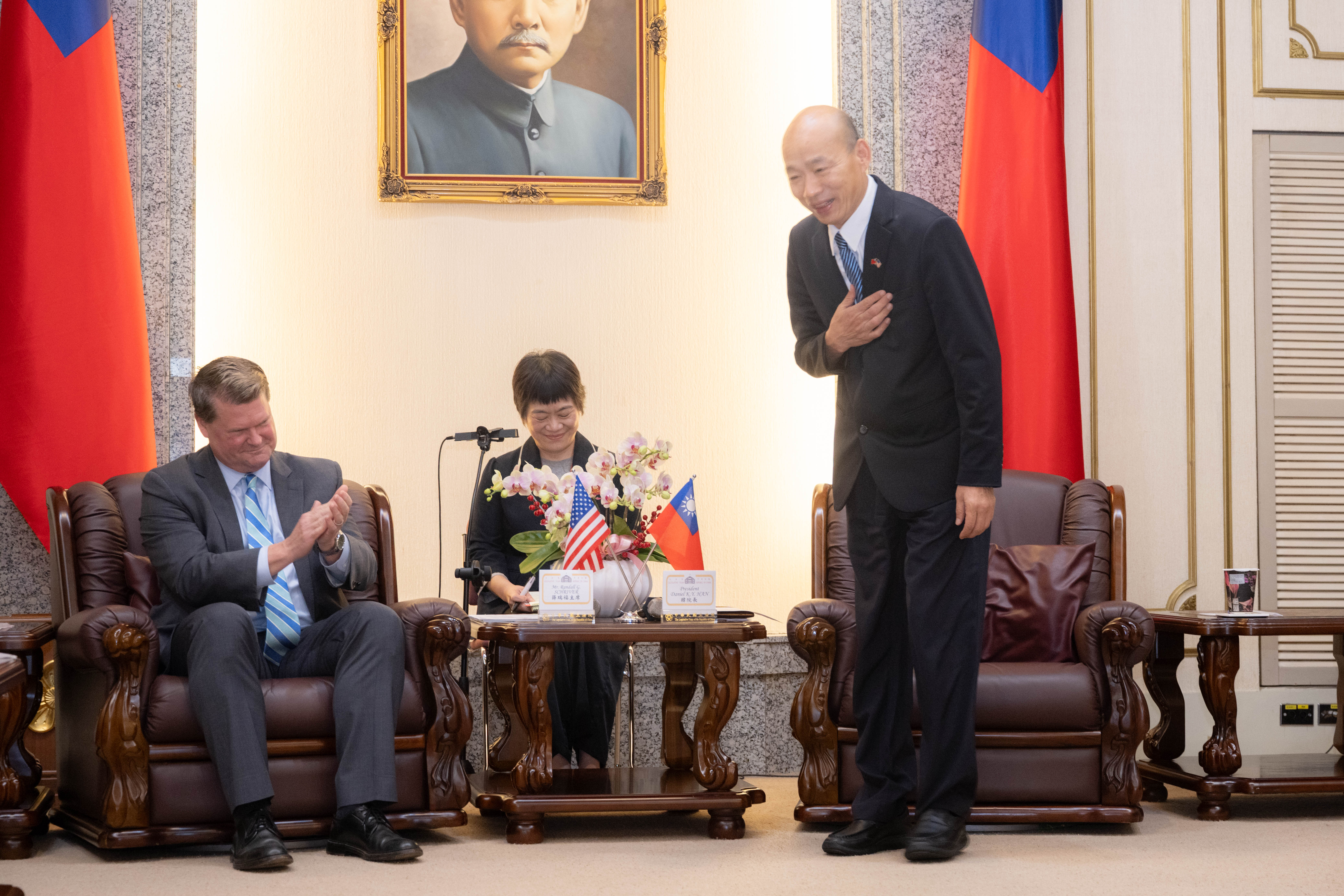
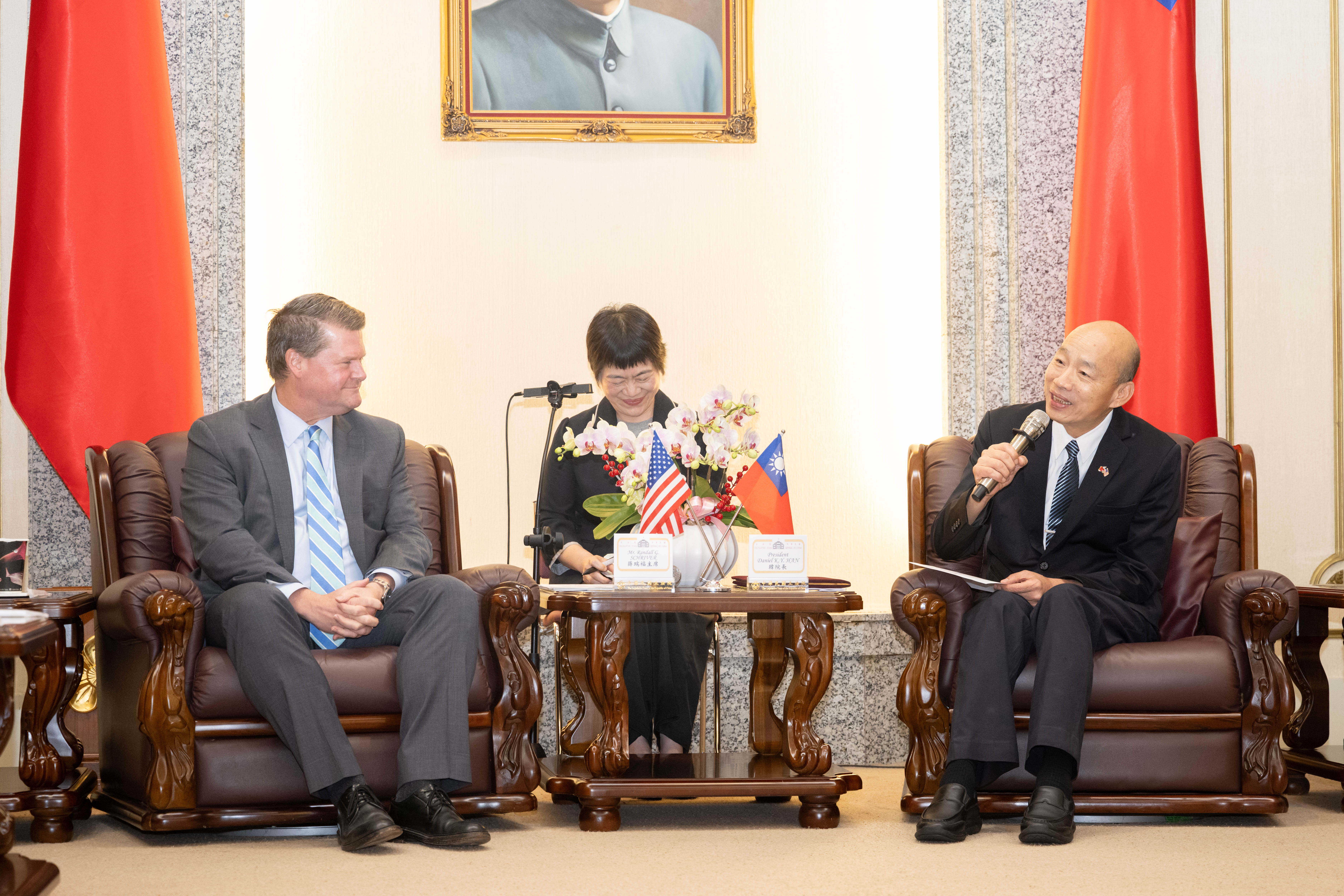
President Han opened the meeting by extending a warm welcome to Chairman Schriver for once again leading a delegation to visit the Legislative Yuan. He also introduced the guests to Taiwan’s famous bubble tea, hoping that Taiwan’s distinctive food culture would allow them to experience the warmth and friendliness of the Taiwanese people. President Han stated that IIPS has long focused on critical issues such as Indo-Pacific regional security, peace and stability across the Taiwan Strait, and Taiwan’s defense resilience. Over the years, he noted, IIPS has continued to support Taiwan and proactively promoted Taiwan-U.S. security cooperation, making significant contributions to the deepening of the bilateral partnership.
President Han further noted that Indo-Pacific security has become a focus of global attention. He expressed gratitude to the United States for its longstanding and steadfast support for Taiwan in areas including security, economy and trade, as well as education. He also briefed the guests on the current seat distribution among the three parties in the Legislative Yuan and the legislature’s operations. He pointed out that although the ruling and opposition parties may hold differing positions on domestic issues, they have reached a high degree of consensus on national defense and foreign affairs. He added that all parties prioritize national security and continue to support efforts to enhance Taiwan’s self-defense capabilities. On energy issues, President Han stated that a stable energy supply is vital to national security and industrial development. He noted that both the ruling and opposition parties, as well as relevant sectors of society, continue to discuss related policies in the hope of building social consensus. President Han also emphasized the notion that “God helps those who help themselves,” stating that only by continuously strengthening its self-defense capabilities and raising public awareness of all-out national defense can Taiwan effectively safeguard democracy, freedom, and regional peace and stability.
Chairman Schriver spoke highly of Taiwan’s democratic achievements and the mature functioning of its multiparty politics. He said that the U.S. recognizes Taiwan’s democratic development and respects the positions of all political parties, while closely following Taiwan’s efforts to enhance its defense capabilities, and hopes that relevant resources can be put in place as soon as possible.

During the bilateral exchange, Legislator Chen Yeong-Kang stated that Taiwan should continue strengthening the development of unmanned aerial vehicles (UAVs) and related industrial capabilities, while deepening Taiwan-U.S. cooperation in advanced technology, AI, and national defense. Regarding energy resilience, he recommended continuing to reinforce power transmission and distribution facilities, protective capabilities, and logistical preparedness in order to enhance overall defense resilience.
Legislator Chen Kuan-Ting stated that in the face of regional security challenges, Taiwan should accelerate the development of UAVs and related policies to continue improving its overall defense capabilities. He also noted that the executive branch has begun examining and assessing emerging energy technologies such as small modular reactors (SMRs). Going forward, the government will carefully evaluate various energy policies with due consideration given to safety, social consensus, and democratic procedures.
Legislator Hung shared his thoughts on his visit to the U.S. with President Han in June. He also conveyed suggestions from Taiwanese businesses in the U.S. regarding U.S. infrastructure and talent visas, expressing hope that continued improvements to the investment environment would help promote Taiwan-U.S. industrial cooperation. He further stated that energy security is closely tied to national competitiveness, and expressed support for enhancing Taiwan’s energy resilience and economic growth momentum through a diversified energy policy.

The two sides also exchanged extensive views on issues of mutual concern, including the Indo-Pacific regional security landscape, Taiwan’s defense resilience, Taiwan-U.S. security cooperation, UAV development, national defense and energy security, industrial resilience, and emerging technologies. The meeting lasted approximately one hour in a warm and friendly atmosphere and concluded successfully with an exchange of commemorative gifts and a group photo. (2026/07/30)


President Han opened the meeting by extending a warm welcome to Chairman Schriver for once again leading a delegation to visit the Legislative Yuan. He also introduced the guests to Taiwan’s famous bubble tea, hoping that Taiwan’s distinctive food culture would allow them to experience the warmth and friendliness of the Taiwanese people. President Han stated that IIPS has long focused on critical issues such as Indo-Pacific regional security, peace and stability across the Taiwan Strait, and Taiwan’s defense resilience. Over the years, he noted, IIPS has continued to support Taiwan and proactively promoted Taiwan-U.S. security cooperation, making significant contributions to the deepening of the bilateral partnership.
President Han further noted that Indo-Pacific security has become a focus of global attention. He expressed gratitude to the United States for its longstanding and steadfast support for Taiwan in areas including security, economy and trade, as well as education. He also briefed the guests on the current seat distribution among the three parties in the Legislative Yuan and the legislature’s operations. He pointed out that although the ruling and opposition parties may hold differing positions on domestic issues, they have reached a high degree of consensus on national defense and foreign affairs. He added that all parties prioritize national security and continue to support efforts to enhance Taiwan’s self-defense capabilities. On energy issues, President Han stated that a stable energy supply is vital to national security and industrial development. He noted that both the ruling and opposition parties, as well as relevant sectors of society, continue to discuss related policies in the hope of building social consensus. President Han also emphasized the notion that “God helps those who help themselves,” stating that only by continuously strengthening its self-defense capabilities and raising public awareness of all-out national defense can Taiwan effectively safeguard democracy, freedom, and regional peace and stability.
Chairman Schriver spoke highly of Taiwan’s democratic achievements and the mature functioning of its multiparty politics. He said that the U.S. recognizes Taiwan’s democratic development and respects the positions of all political parties, while closely following Taiwan’s efforts to enhance its defense capabilities, and hopes that relevant resources can be put in place as soon as possible.
During the bilateral exchange, Legislator Chen Yeong-Kang stated that Taiwan should continue strengthening the development of unmanned aerial vehicles (UAVs) and related industrial capabilities, while deepening Taiwan-U.S. cooperation in advanced technology, AI, and national defense. Regarding energy resilience, he recommended continuing to reinforce power transmission and distribution facilities, protective capabilities, and logistical preparedness in order to enhance overall defense resilience.
Legislator Chen Kuan-Ting stated that in the face of regional security challenges, Taiwan should accelerate the development of UAVs and related policies to continue improving its overall defense capabilities. He also noted that the executive branch has begun examining and assessing emerging energy technologies such as small modular reactors (SMRs). Going forward, the government will carefully evaluate various energy policies with due consideration given to safety, social consensus, and democratic procedures.
Legislator Hung shared his thoughts on his visit to the U.S. with President Han in June. He also conveyed suggestions from Taiwanese businesses in the U.S. regarding U.S. infrastructure and talent visas, expressing hope that continued improvements to the investment environment would help promote Taiwan-U.S. industrial cooperation. He further stated that energy security is closely tied to national competitiveness, and expressed support for enhancing Taiwan’s energy resilience and economic growth momentum through a diversified energy policy.
The two sides also exchanged extensive views on issues of mutual concern, including the Indo-Pacific regional security landscape, Taiwan’s defense resilience, Taiwan-U.S. security cooperation, UAV development, national defense and energy security, industrial resilience, and emerging technologies. The meeting lasted approximately one hour in a warm and friendly atmosphere and concluded successfully with an exchange of commemorative gifts and a group photo. (2026/07/30)