

"As NATO Expands Indo-Pacific Partnerships, Japan Gears Up for a Taiwan Strait Contingency"
刊載者:陳冠廷委員
刊載日期:2024/07/14
As tensions in the Taiwan Strait remain high, China's menacing rhetorical and military gestures remain a contentious issue for the Japanese people. Concerned about potential spillover effects, Japan is actively boosting the defense capabilities of the southwestern Yonaguni, Miyako, and Ishigaki islands located close to Taiwan.
Recognizing these dynamics, the Japan Forum for Strategic Studies held its 4th Taiwan Strait Crisis Policy Simulation to examine the implications of Taiwan contingency scenarios for Japan. The event attracted the participation of high-profile defense and security policy experts, including Itsunori Onodera, Japan’s former defense minister, and Adm. Lee Hsi-min (李喜明), former Chief of the General Staff of the ROC Armed Forces.
With a mission to promote comprehensive research on national strategy encompassing politics, economy, military, and science and technology, JFSS emphasizes the importance of multilateral coordination and cooperation within a lattice framework of alliances, including Japan, Taiwan, the Republic of Korea, and the United States. This year, the think tank expanded the participation of experts from NATO member states, including Central Eastern European countries, in light of deepening ties between Tokyo and the alliance.
“There is a growing realization in Europe that security and prosperity of the Euro-Atlantic and Indo-Pacific theaters are increasingly interconnected,” said Marcin Jerzewski, Taiwanese politics expert and European Values Center for Security Policy Taiwan Office Head who participated in the simulation. The Prague-headquartered center is the first and only European think tank with a permanent office in Taiwan, and it also actively collaborates with partners across East Asia, including Japan. “While NATO is assuredly not expanding into Indo-Pacific, partners in both theaters must develop a stronger capacity to coordinate on issues such as information sharing, threat assessments, resilience, combatting disinformation, and developing defense industrial bases,” he added.
While the NATO-Japan Individually Tailored Partnership Program, the primary tool for coordinating cooperation between the alliance and its Indo-Pacific partner, does not explicitly mention Taiwan, experts remark that the four priority issues enumerated within the framework reflect the nature of threats posed by China to Taiwan. This includes effective coordination in strategic communication and combating hostile information operations.
“As China exercises its “discourse power” (話語權), it actively distorts narratives about Taiwan and its indispensability for global peace and stability,” explains Kuan-Ting Chen (陳冠廷), Member of the Legislative Yuan who sits on the Foreign Affairs and National Defense Committee. “Despite Beijing’s manipulations, it is clear that stability in the Taiwan Strait is not merely a domestic Chinese issue. Rather, it is a shared objective of like-minded democratic partners who refuse to compromise political and economic freedoms that define contemporary Taiwan. This illustrates the importance of inviting experts from NATO member states to exercises such as the JFSS simulation.”
One of the outstanding tasks of the Japanese defense establishment is to promote understanding, especially among the general public, of how a Taiwan contingency might affect Japan’s security and the daily activities of regular citizens. The simulation allowed experts to consider the implications of regional tensions, mainly through the lens of cognitive warfare and economic coercion. At the same time, it highlighted the importance of deterrence and information sharing regarding the situation in the Taiwan Strait with partners in an inter-theater setting, encouraging the active participation of actors from the Euro-Atlantic region.
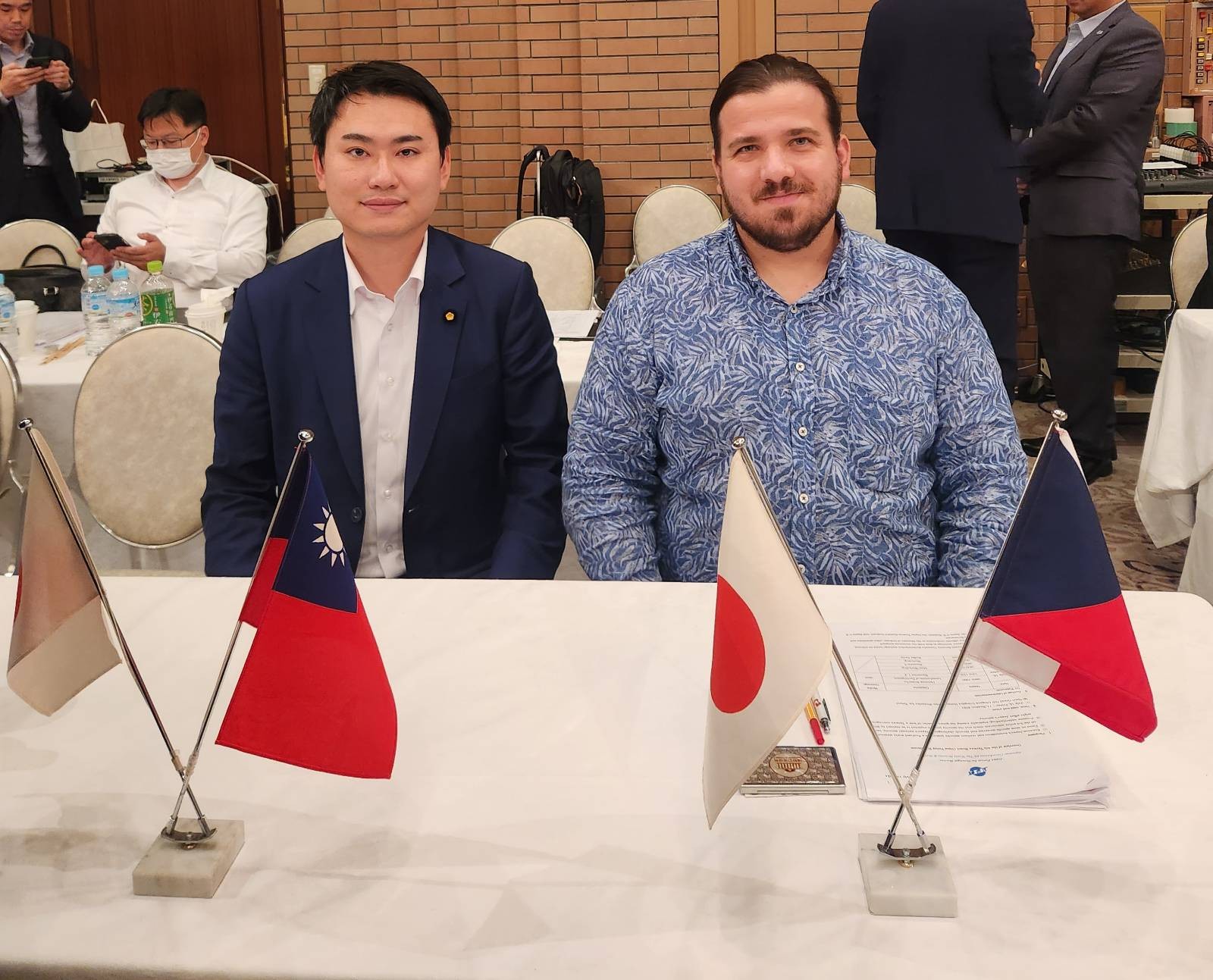
Recognizing these dynamics, the Japan Forum for Strategic Studies held its 4th Taiwan Strait Crisis Policy Simulation to examine the implications of Taiwan contingency scenarios for Japan. The event attracted the participation of high-profile defense and security policy experts, including Itsunori Onodera, Japan’s former defense minister, and Adm. Lee Hsi-min (李喜明), former Chief of the General Staff of the ROC Armed Forces.
With a mission to promote comprehensive research on national strategy encompassing politics, economy, military, and science and technology, JFSS emphasizes the importance of multilateral coordination and cooperation within a lattice framework of alliances, including Japan, Taiwan, the Republic of Korea, and the United States. This year, the think tank expanded the participation of experts from NATO member states, including Central Eastern European countries, in light of deepening ties between Tokyo and the alliance.
“There is a growing realization in Europe that security and prosperity of the Euro-Atlantic and Indo-Pacific theaters are increasingly interconnected,” said Marcin Jerzewski, Taiwanese politics expert and European Values Center for Security Policy Taiwan Office Head who participated in the simulation. The Prague-headquartered center is the first and only European think tank with a permanent office in Taiwan, and it also actively collaborates with partners across East Asia, including Japan. “While NATO is assuredly not expanding into Indo-Pacific, partners in both theaters must develop a stronger capacity to coordinate on issues such as information sharing, threat assessments, resilience, combatting disinformation, and developing defense industrial bases,” he added.
While the NATO-Japan Individually Tailored Partnership Program, the primary tool for coordinating cooperation between the alliance and its Indo-Pacific partner, does not explicitly mention Taiwan, experts remark that the four priority issues enumerated within the framework reflect the nature of threats posed by China to Taiwan. This includes effective coordination in strategic communication and combating hostile information operations.
“As China exercises its “discourse power” (話語權), it actively distorts narratives about Taiwan and its indispensability for global peace and stability,” explains Kuan-Ting Chen (陳冠廷), Member of the Legislative Yuan who sits on the Foreign Affairs and National Defense Committee. “Despite Beijing’s manipulations, it is clear that stability in the Taiwan Strait is not merely a domestic Chinese issue. Rather, it is a shared objective of like-minded democratic partners who refuse to compromise political and economic freedoms that define contemporary Taiwan. This illustrates the importance of inviting experts from NATO member states to exercises such as the JFSS simulation.”
One of the outstanding tasks of the Japanese defense establishment is to promote understanding, especially among the general public, of how a Taiwan contingency might affect Japan’s security and the daily activities of regular citizens. The simulation allowed experts to consider the implications of regional tensions, mainly through the lens of cognitive warfare and economic coercion. At the same time, it highlighted the importance of deterrence and information sharing regarding the situation in the Taiwan Strait with partners in an inter-theater setting, encouraging the active participation of actors from the Euro-Atlantic region.