

立法院韓國瑜院長接見美國外交政策全國委員會一行 韓國瑜:感謝美國重要智庫蒞院交流提供建言(President Daniel K.Y. Han of the Legislative Yuan meets with delegation from the National Committee on American Foreign Policy. President Han: We extend our gratitude to this key U.S. think tank for visiting the Legislative Yuan and offering insight)
立法院韓國瑜院長於本(12月5)日下午4時在江啟臣副院長、陳永康委員、沈伯洋委員、黃珊珊委員、國際事務處林晨富處長以及外交部北美司呂淑娥專門委員等人陪同下,接見美國外交政策全國委員會(NCAFP)一行7人。
President Daniel K.Y. Han of the Legislative Yuan, accompanied by Vice President Johnny C. Chiang, Legislators Chen Yeong-Kang, Puma Shen, and Huang Shan-Shan, as well as Director Kevin C.F. Lin of the International Affairs Department, and Senior Adviser Lu Shu-O of the Ministry of Foreign Affairs' Department of North American Affairs, met with a seven-member delegation from the National Committee on American Foreign Policy (NCAFP) at 4 p.m. on December 5.
韓院長首先向訪賓表達熱忱歡迎,並偕在場委員與訪賓合影後表示,江副院長及各黨團出席委員皆對國際關係學有專精且長期關注,充分展現立法院跨黨派對訪團的高度重視。院長續提及,「美國外交政策全國委員會」係由知名國際關係學者摩根索(Hans J. Morgenthau)及史瓦博(George Schwab)所共同創立,摩根索的著作是早年有志研究國際關係領域學子必讀的經典,非常榮幸有機會與在座專家學者就今年美國大選後之國際及亞太情勢等相關議題交換意見,期待接續的雙邊交流能激盪出智慧的火花。
President Han began by extending a warm welcome to the visitors and, after taking a group photo with the attending legislators and the delegation, remarked that Vice President Chiang and the participating legislators from various parties are highly knowledgeable and deeply engaged in international relations. This reflects the Legislative Yuan's strong cross-party emphasis on the significance of the visiting delegation. President Han further noted that the NCAFP was co-founded by renowned international relations scholars Hans J. Morgenthau and George Schwab. Morgenthau's works are considered classics, essential readings for aspiring students in the field of international relations. He expressed great honor in having the opportunity to exchange views with the esteemed experts and scholars present on topics such as the international and Asia-Pacific landscape following this year's U.S. election. President Han said he looked forward to continued bilateral exchanges that will spark insightful ideas.
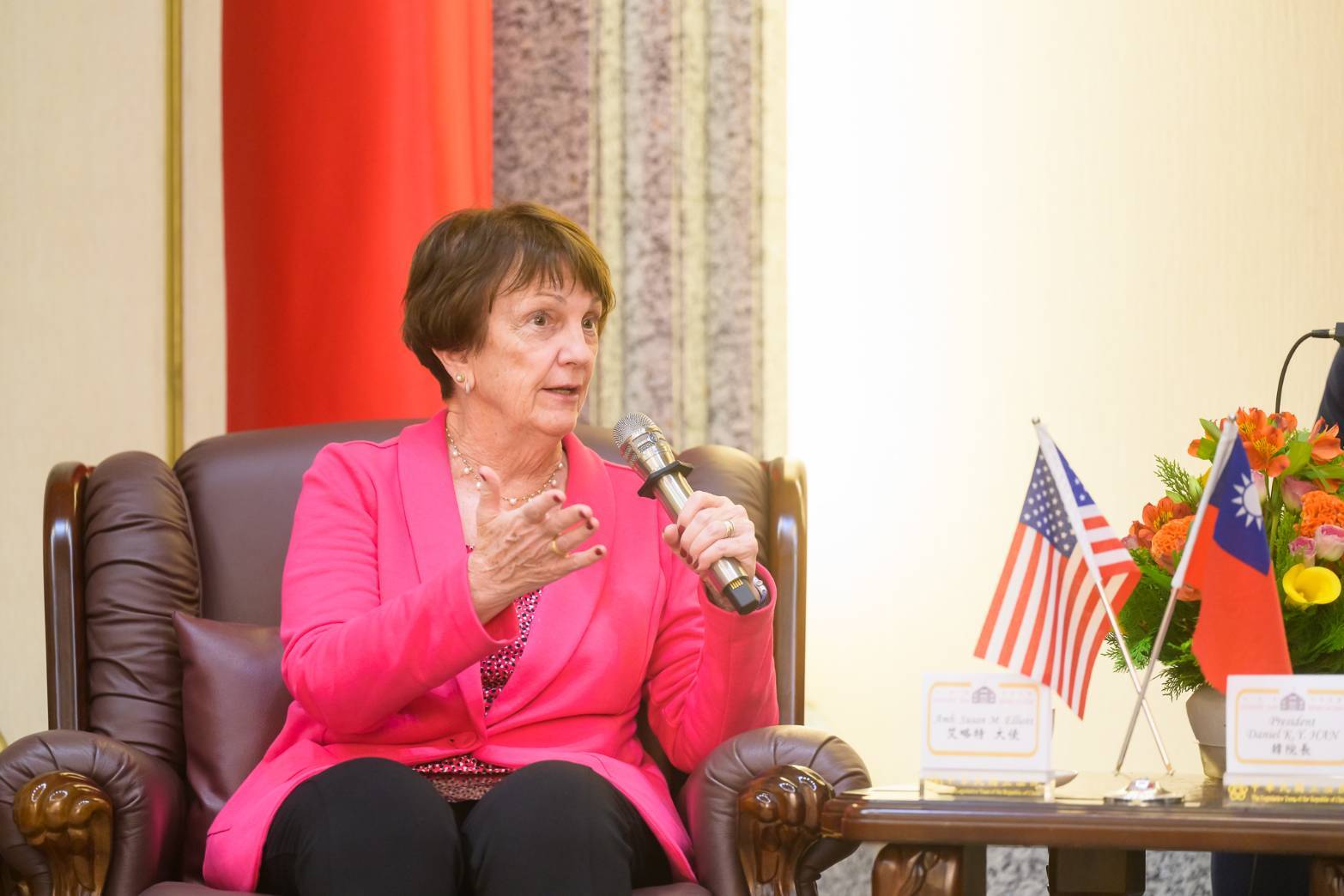
訪團團長艾略特大使感謝院長、副院長及各黨團委員撥冗接見與熱情歡迎,伊簡介NCAFP成立於1974年,至今已有50年歷史,目前智庫著重於推動二軌外交(Second Track Diplomacy),對於兩岸關係、美中關係及東北亞局勢均高度關注。艾大使繼謂,此次亞洲行將依序拜訪中國、台灣、韓國及日本,日前已造訪上海和北京,分別與中國外長王毅及國台辦主任宋濤等官員進行會談,主要聚焦台海情勢、美中關係、貿易失衡及全球關注焦點諸如烏俄戰爭、以哈戰爭及朝鮮半島危機等國際議題;她強調「美國外交政策全國委員會」的宗旨在於促進區域穩定與世界和平,在現今充滿各式挑戰的國際情勢下,維持對話交流至關重要,為避免誤判形勢甚至爆發衝突,相關各方應建立良性對話管道,以維護全球安全及和平。
Ambassador Susan M. Elliott, the head of the delegation, expressed her gratitude to President Han, Vice President Chiang, and legislators from various parties for their time and warm welcome. She introduced the NCAFP, which was established in 1974 and has a history spanning 50 years. The think tank currently focuses on advancing Second Track Diplomacy and places significant attention on cross-strait relations, U.S.-China relations, and the situation in Northeast Asia. Ambassador Elliott further stated that the delegation’s current trip to Asia includes visits to China, Taiwan, South Korea, and Japan. She mentioned that prior to arriving in Taiwan, the delegation had visited Shanghai and Beijing, where they held meetings with Chinese officials, including Foreign Minister Wang Yi and Director of the Taiwan Affairs Office Song Tao. The discussions primarily focused on the situation in the Taiwan Strait, U.S.-China relations, trade imbalances, and international issues of global concern, such as the Russia-Ukraine war, the Israel-Hamas conflict, and the crisis on the Korean Peninsula. She emphasized that the mission of the NCAFP is to promote regional stability and global peace. In today’s international landscape, marked by numerous challenges, maintaining dialogue and exchanges is of critical importance. To prevent misjudgments or even the outbreak of conflicts, all relevant parties should establish constructive communication channels to safeguard global security and peace.
江副院長表示,明(114)年1月美國總統當選人川普第二度就職後,其是否將延續拜登政府所提出之印太戰略或將作出調整,仍待觀察。繼指出,本年度迄今美國已超越中國,成為台灣最大的出口市場,但面對瞬息萬變的國際局勢及各方均不甚熟悉的川普新政府,盼訪賓就台灣宜如何因應提供寶貴建言,同時盼持續維持台美間良好的雙邊互動與合作。
Vice President Chiang stated that following the inauguration of U.S. President-elect Donald Trump for his second term in January 2025, it remains to be seen whether he will continue the Indo-Pacific strategy proposed by the Biden administration or introduce adjustments. He further pointed out that, as of this year, the U.S. has surpassed China to become Taiwan’s largest export market. However, given the rapidly changing international landscape and the relative unfamiliarity with the incoming Trump administration, he expressed hope that the visiting delegation can offer valuable insights on how Taiwan should respond. He also emphasized the importance of continuing to maintain strong bilateral interactions and cooperation between Taiwan and the U.S.
訪團成員分享稱,台灣朝野近期討論川普曾公開表示要求台灣提高國防預算支出佔國內生產毛額(GDP)之比率,他樂見台灣已增編國防預算並積極提升國防實力。另亦回應江副院長關心台灣與川普團隊建立聯繫管道的提問,他表示一開始可能沒那麼順暢,但是不論是公私部門,台灣可以不設限地和美國新政府各機關及權責單位進行接觸,只要管道越多,就越有機會和川普政府建立良性互動。
Members of the delegation shared that recent discussions in Taiwan’s political circles have touched on President Trump’s public remarks urging Taiwan to increase its defense budget to a certain percentage of GDP. They expressed approval of Taiwan’s efforts to allocate additional defense budget and actively strengthen its defense capabilities. In response to Vice President Chiang’s inquiry about establishing communication channels between Taiwan and the Trump administration, a delegation member noted that while the process may not be entirely smooth at the outset, Taiwan can engage with various agencies and authorities within the new U.S. administration across both public and private sectors without restrictions. He emphasized that the more channels Taiwan establishes, the greater the opportunity to foster constructive interactions with the Trump administration.
訪團另一成員研判,川普極可能維持單邊主義(unilteralism)及交易式外交,以取得美國最大利益為核心價值,至是否通盤規劃戰略性涉外政策則待進一步觀察;他以自身曾任職美國聯邦行政部門的經驗提出建議,台灣身處美中兩強競爭之中,宜設法在兩國間取得平衡,藉由交涉過程取得自身的談判籌碼;對於未來中美關係,他認為仍具高度不確定性,就美國的立場而言,可能不希望彼此關係太緊密,但也不樂見緊張升高,台灣可以善用自身的優勢,在大國博弈間取得權衡之道。續謂,川普第一任期時曾被詢問有關台灣軍購的議題,他僅回應說台灣是一個很好的顧客。訪賓繼詢及立法院審議我國明年度中央政府總預算案,特別是有關國造潛艦之預算問題。渠等認為,美台經貿關係應是川普政府對台政策的優先重點,台灣政府可以從川普角度思考,如何將台美經貿及國防採購之重要性同步提升,以創造雙贏的局面。
Another member of the delegation assessed that President Trump is highly likely to maintain a unilateral approach and transactional diplomacy, prioritizing the maximization of U.S. interests as his core value. However, whether he will adopt a comprehensive and strategically planned foreign policy remains to be further observed. Drawing on his experience serving in the U.S. federal executive branch, he advised that Taiwan, positioned amid the competition between the U.S. and China, should strive to maintain a balance between the two powers. By leveraging the negotiation process, Taiwan can secure its own bargaining chips. Regarding future U.S.-China relations, he noted that significant uncertainties remain. The U.S. is likely to avoid overly close ties with China while also seeking to prevent heightened tensions. He suggested that Taiwan could leverage its unique advantages to find a balanced path amid the power dynamics between major nations. He further remarked that during Trump’s first term, when questioned about Taiwan’s arms purchases, Trump simply responded by saying that Taiwan is a very good customer. The visitors further inquired about the Legislative Yuan's review of Taiwan's central government budgetary bills for the upcoming year, particularly regarding the budget allocation for the domestically-produced submarine program. They suggested that U.S.-Taiwan economic and trade relations should be a priority in the Trump administration's Taiwan policy. They advised the Taiwanese government to consider the situation from Trump’s perspective and explore ways to simultaneously enhance the importance of U.S.-Taiwan trade and defense procurement, creating a mutually beneficial, win-win scenario.
陳永康委員表示為全面提升台灣防衛能力,我方向美國探購先進武器時,也包含了應用軟體和關鍵零組件;除了硬實力外,也希望我方能選送優秀人才赴美接受相關軍事訓練,以熟悉採購武器的實際操作,藉此厚植台灣國防整備及作戰實力。沈伯洋委員回應有關立法院刻審查明年度中央政府總預算的相關進展表示,立法院外交及國防委員會預定於下週討論我國防預算案,他特別提及我國第一艘國造潛艦可能於明年下半年進行水下測試,其結果受各界矚目。黃珊珊委員則表示台灣民眾黨亦全力支持強化台灣國防能力,惟盼將相關預算作最有效的運用,兩岸間不應只有衝突,而應朝多元關係發展。
Legislator Chen Yeong-Kang stated that in order to comprehensively enhance Taiwan's defense capabilities, Taiwan's procurement of advanced weapons from the U.S. also includes software applications and critical components. He expressed his hope that, in addition to strengthening its hard power, Taiwan could send outstanding personnel to the U.S. for relevant military training. This would allow them to become proficient in the practical operation of procured weapons, thereby bolstering Taiwan's defense preparedness and operational capabilities. Legislator Puma Shen responded to inquiries about the progress of the Legislative Yuan's review of next year's central government budget, stating that the Foreign and National Defense Committee is scheduled to discuss Taiwan's defense budgetary bill next week. He specifically noted that Taiwan's first domestically-produced submarine is expected to undergo underwater testing in the second half of next year, an event that has drawn significant attention from various sectors. Legislator Huang Shan-Shan stated that the Taiwan People's Party fully supports efforts to strengthen Taiwan's defense capabilities. However, she emphasized the importance of utilizing the relevant budget in the most effective manner and expressed hope that cross-strait relations would not be limited to conflict but could evolve toward more diverse and constructive engagements.
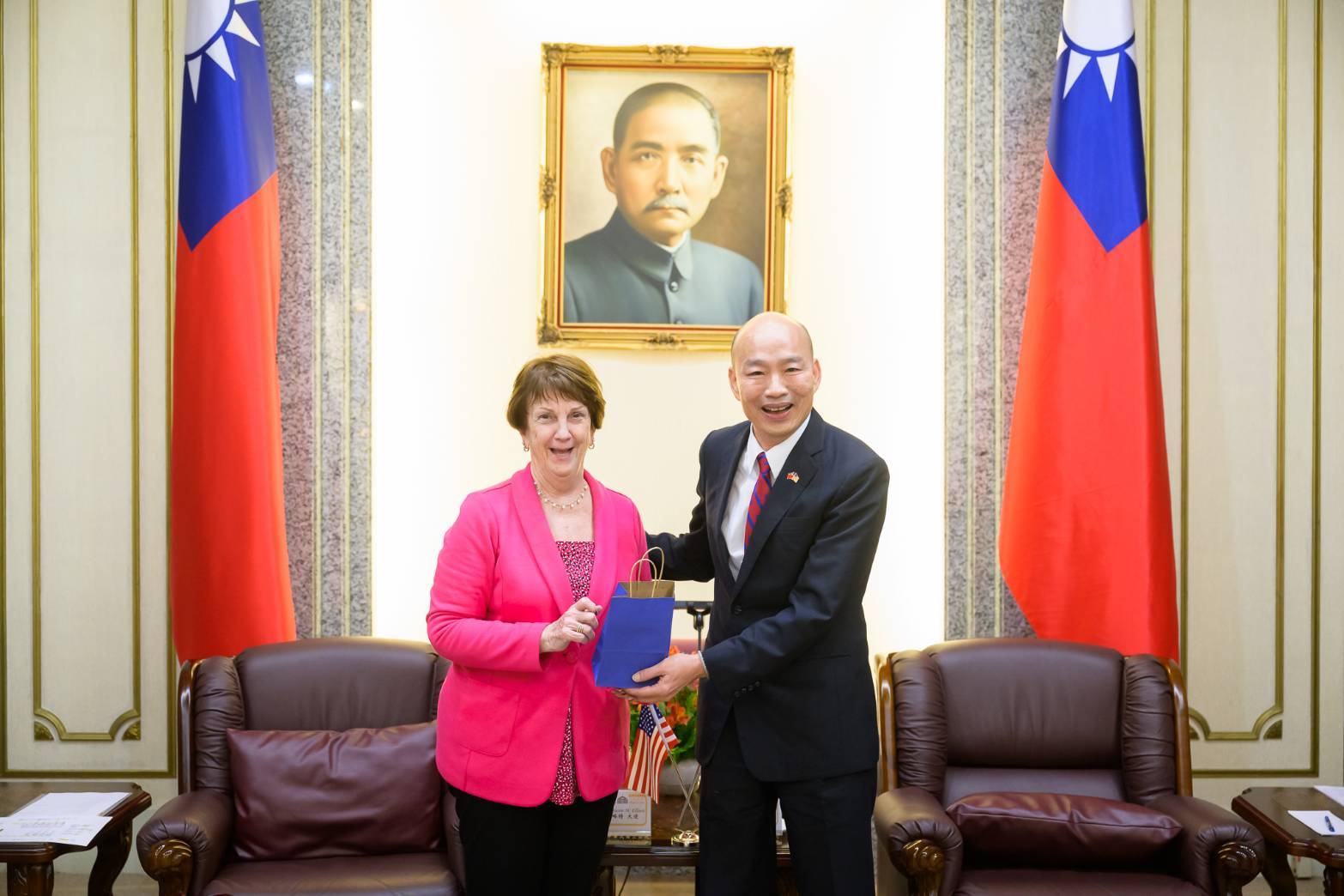
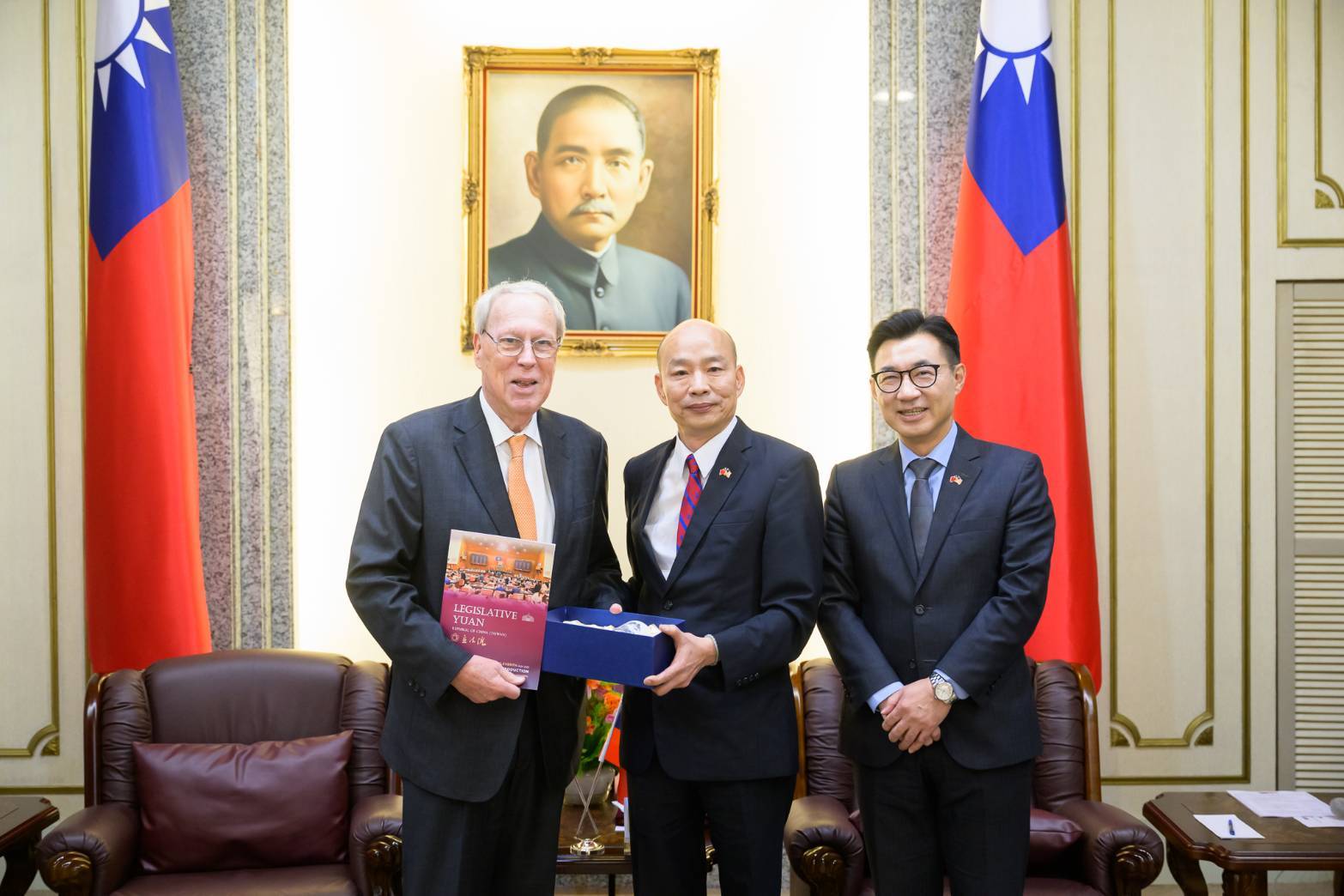
韓院長最後總結稱,現今國際情勢有如德州撲克的大國博弈關係,在聯合國193個會員國中,美國、俄羅斯、中國及歐盟尤其扮演著重要的角色,但這四個主角所面臨的內外挑戰及可用籌碼均不同,在博弈棋局中採取的策略亦迥異,可能有勝亦有敗。韓院長期盼未來得機造訪「美國外交政策全國委員會」,續就重要國際情勢等共同關心議題深入討論。雙方嗣就選後美國政經觀察、印太情勢、台美經貿關係及美國對台軍售等議題廣泛交換意見,氣氛友好熱絡,會晤歷約1小時,雙方互贈紀念品後為今日會晤劃下圓滿句點。
President Han concluded by likening the current international situation to a Texas Hold'em-style great power competition. Among the 193 United Nations member states, the United States, Russia, China, and the European Union play particularly pivotal roles. However, these four key players face differing internal and external challenges and possess unique bargaining chips, leading them to adopt distinct strategies in the geopolitical arena. As in any game of strategy, there are potential victories as well as defeats. President Han expressed his hope to visit the NCAFP in the future to continue in-depth discussions on important international developments and other topics of mutual concern. Both sides engaged in a wide-ranging exchange of views on post-election U.S. political and economic developments, the Indo-Pacific situation, U.S.-Taiwan economic and trade relations, and U.S. arms sales to Taiwan. The discussions were conducted in a friendly and lively atmosphere and lasted approximately one hour. The meeting concluded on a successful note with the exchange of commemorative gifts.

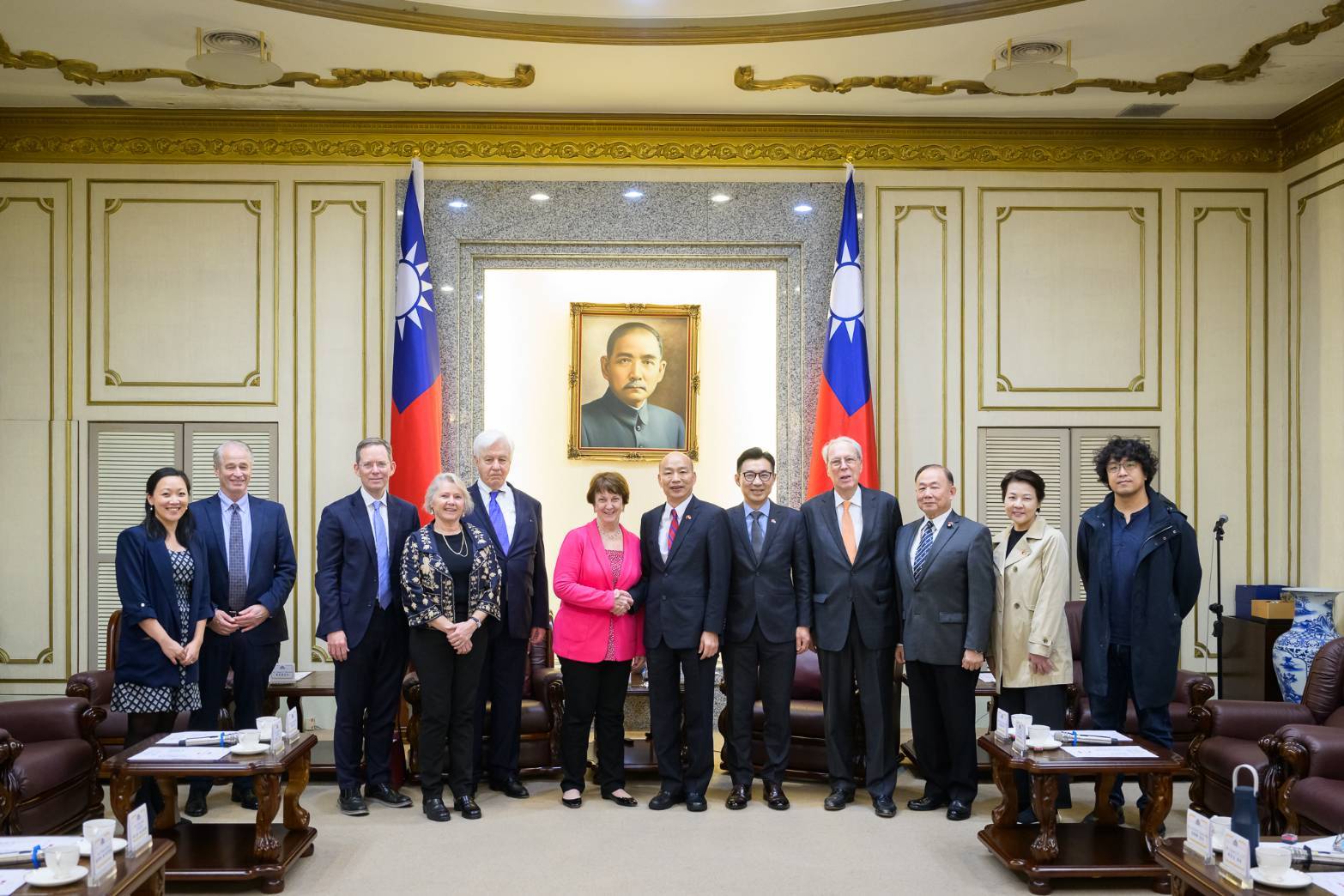




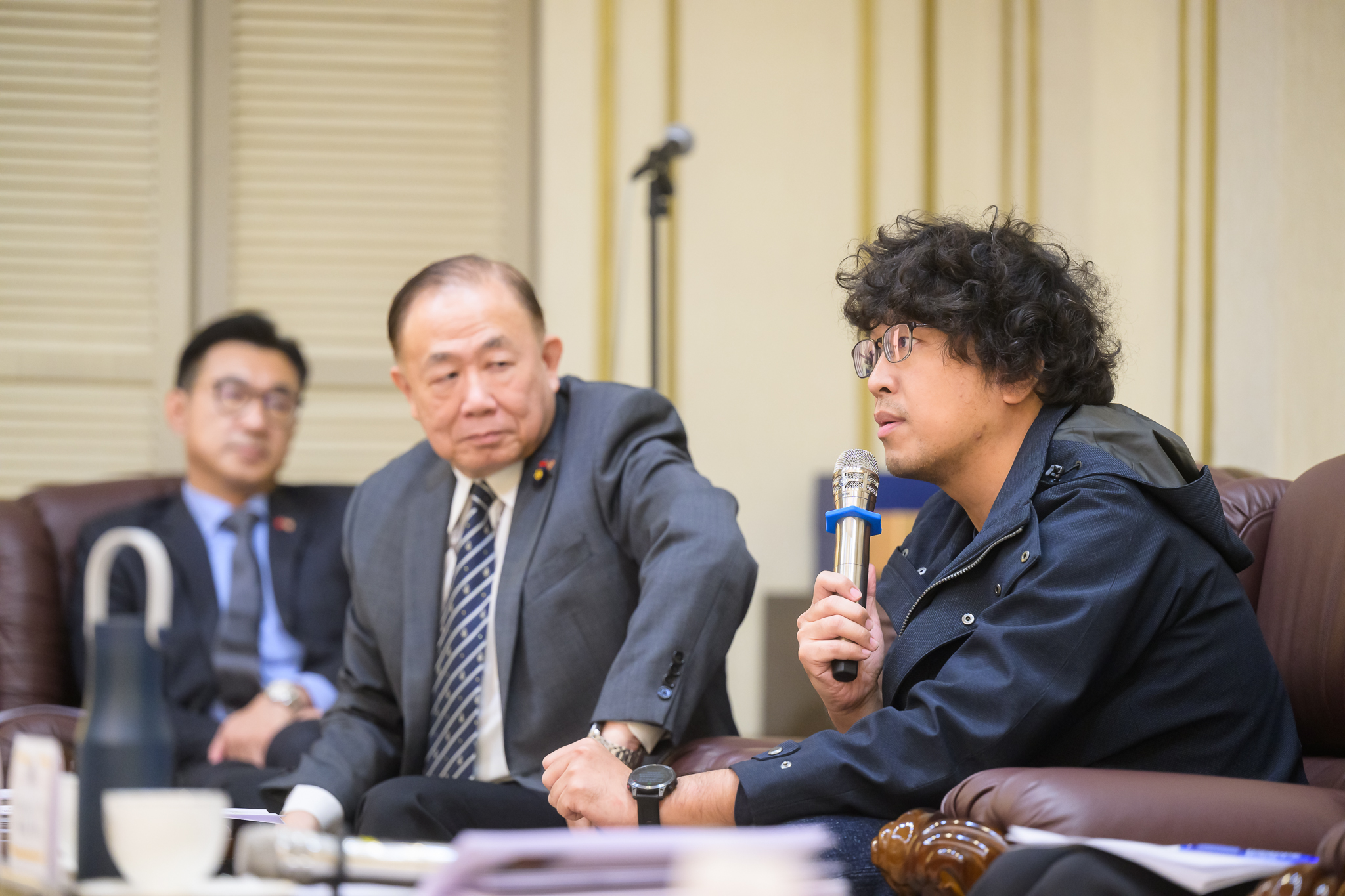
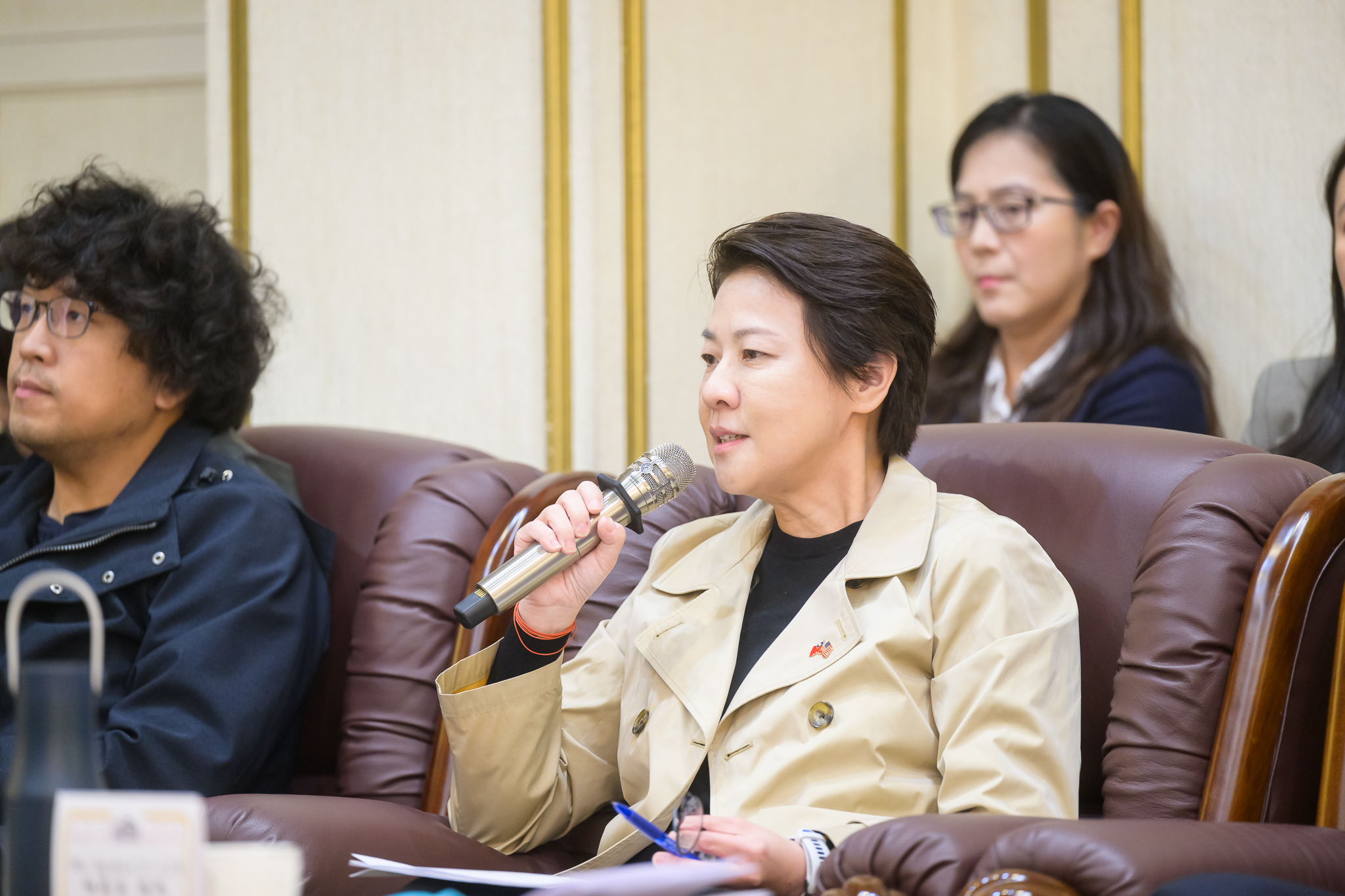
President Daniel K.Y. Han of the Legislative Yuan, accompanied by Vice President Johnny C. Chiang, Legislators Chen Yeong-Kang, Puma Shen, and Huang Shan-Shan, as well as Director Kevin C.F. Lin of the International Affairs Department, and Senior Adviser Lu Shu-O of the Ministry of Foreign Affairs' Department of North American Affairs, met with a seven-member delegation from the National Committee on American Foreign Policy (NCAFP) at 4 p.m. on December 5.
韓院長首先向訪賓表達熱忱歡迎,並偕在場委員與訪賓合影後表示,江副院長及各黨團出席委員皆對國際關係學有專精且長期關注,充分展現立法院跨黨派對訪團的高度重視。院長續提及,「美國外交政策全國委員會」係由知名國際關係學者摩根索(Hans J. Morgenthau)及史瓦博(George Schwab)所共同創立,摩根索的著作是早年有志研究國際關係領域學子必讀的經典,非常榮幸有機會與在座專家學者就今年美國大選後之國際及亞太情勢等相關議題交換意見,期待接續的雙邊交流能激盪出智慧的火花。
President Han began by extending a warm welcome to the visitors and, after taking a group photo with the attending legislators and the delegation, remarked that Vice President Chiang and the participating legislators from various parties are highly knowledgeable and deeply engaged in international relations. This reflects the Legislative Yuan's strong cross-party emphasis on the significance of the visiting delegation. President Han further noted that the NCAFP was co-founded by renowned international relations scholars Hans J. Morgenthau and George Schwab. Morgenthau's works are considered classics, essential readings for aspiring students in the field of international relations. He expressed great honor in having the opportunity to exchange views with the esteemed experts and scholars present on topics such as the international and Asia-Pacific landscape following this year's U.S. election. President Han said he looked forward to continued bilateral exchanges that will spark insightful ideas.
訪團團長艾略特大使感謝院長、副院長及各黨團委員撥冗接見與熱情歡迎,伊簡介NCAFP成立於1974年,至今已有50年歷史,目前智庫著重於推動二軌外交(Second Track Diplomacy),對於兩岸關係、美中關係及東北亞局勢均高度關注。艾大使繼謂,此次亞洲行將依序拜訪中國、台灣、韓國及日本,日前已造訪上海和北京,分別與中國外長王毅及國台辦主任宋濤等官員進行會談,主要聚焦台海情勢、美中關係、貿易失衡及全球關注焦點諸如烏俄戰爭、以哈戰爭及朝鮮半島危機等國際議題;她強調「美國外交政策全國委員會」的宗旨在於促進區域穩定與世界和平,在現今充滿各式挑戰的國際情勢下,維持對話交流至關重要,為避免誤判形勢甚至爆發衝突,相關各方應建立良性對話管道,以維護全球安全及和平。
Ambassador Susan M. Elliott, the head of the delegation, expressed her gratitude to President Han, Vice President Chiang, and legislators from various parties for their time and warm welcome. She introduced the NCAFP, which was established in 1974 and has a history spanning 50 years. The think tank currently focuses on advancing Second Track Diplomacy and places significant attention on cross-strait relations, U.S.-China relations, and the situation in Northeast Asia. Ambassador Elliott further stated that the delegation’s current trip to Asia includes visits to China, Taiwan, South Korea, and Japan. She mentioned that prior to arriving in Taiwan, the delegation had visited Shanghai and Beijing, where they held meetings with Chinese officials, including Foreign Minister Wang Yi and Director of the Taiwan Affairs Office Song Tao. The discussions primarily focused on the situation in the Taiwan Strait, U.S.-China relations, trade imbalances, and international issues of global concern, such as the Russia-Ukraine war, the Israel-Hamas conflict, and the crisis on the Korean Peninsula. She emphasized that the mission of the NCAFP is to promote regional stability and global peace. In today’s international landscape, marked by numerous challenges, maintaining dialogue and exchanges is of critical importance. To prevent misjudgments or even the outbreak of conflicts, all relevant parties should establish constructive communication channels to safeguard global security and peace.
江副院長表示,明(114)年1月美國總統當選人川普第二度就職後,其是否將延續拜登政府所提出之印太戰略或將作出調整,仍待觀察。繼指出,本年度迄今美國已超越中國,成為台灣最大的出口市場,但面對瞬息萬變的國際局勢及各方均不甚熟悉的川普新政府,盼訪賓就台灣宜如何因應提供寶貴建言,同時盼持續維持台美間良好的雙邊互動與合作。
Vice President Chiang stated that following the inauguration of U.S. President-elect Donald Trump for his second term in January 2025, it remains to be seen whether he will continue the Indo-Pacific strategy proposed by the Biden administration or introduce adjustments. He further pointed out that, as of this year, the U.S. has surpassed China to become Taiwan’s largest export market. However, given the rapidly changing international landscape and the relative unfamiliarity with the incoming Trump administration, he expressed hope that the visiting delegation can offer valuable insights on how Taiwan should respond. He also emphasized the importance of continuing to maintain strong bilateral interactions and cooperation between Taiwan and the U.S.
訪團成員分享稱,台灣朝野近期討論川普曾公開表示要求台灣提高國防預算支出佔國內生產毛額(GDP)之比率,他樂見台灣已增編國防預算並積極提升國防實力。另亦回應江副院長關心台灣與川普團隊建立聯繫管道的提問,他表示一開始可能沒那麼順暢,但是不論是公私部門,台灣可以不設限地和美國新政府各機關及權責單位進行接觸,只要管道越多,就越有機會和川普政府建立良性互動。
Members of the delegation shared that recent discussions in Taiwan’s political circles have touched on President Trump’s public remarks urging Taiwan to increase its defense budget to a certain percentage of GDP. They expressed approval of Taiwan’s efforts to allocate additional defense budget and actively strengthen its defense capabilities. In response to Vice President Chiang’s inquiry about establishing communication channels between Taiwan and the Trump administration, a delegation member noted that while the process may not be entirely smooth at the outset, Taiwan can engage with various agencies and authorities within the new U.S. administration across both public and private sectors without restrictions. He emphasized that the more channels Taiwan establishes, the greater the opportunity to foster constructive interactions with the Trump administration.
訪團另一成員研判,川普極可能維持單邊主義(unilteralism)及交易式外交,以取得美國最大利益為核心價值,至是否通盤規劃戰略性涉外政策則待進一步觀察;他以自身曾任職美國聯邦行政部門的經驗提出建議,台灣身處美中兩強競爭之中,宜設法在兩國間取得平衡,藉由交涉過程取得自身的談判籌碼;對於未來中美關係,他認為仍具高度不確定性,就美國的立場而言,可能不希望彼此關係太緊密,但也不樂見緊張升高,台灣可以善用自身的優勢,在大國博弈間取得權衡之道。續謂,川普第一任期時曾被詢問有關台灣軍購的議題,他僅回應說台灣是一個很好的顧客。訪賓繼詢及立法院審議我國明年度中央政府總預算案,特別是有關國造潛艦之預算問題。渠等認為,美台經貿關係應是川普政府對台政策的優先重點,台灣政府可以從川普角度思考,如何將台美經貿及國防採購之重要性同步提升,以創造雙贏的局面。
Another member of the delegation assessed that President Trump is highly likely to maintain a unilateral approach and transactional diplomacy, prioritizing the maximization of U.S. interests as his core value. However, whether he will adopt a comprehensive and strategically planned foreign policy remains to be further observed. Drawing on his experience serving in the U.S. federal executive branch, he advised that Taiwan, positioned amid the competition between the U.S. and China, should strive to maintain a balance between the two powers. By leveraging the negotiation process, Taiwan can secure its own bargaining chips. Regarding future U.S.-China relations, he noted that significant uncertainties remain. The U.S. is likely to avoid overly close ties with China while also seeking to prevent heightened tensions. He suggested that Taiwan could leverage its unique advantages to find a balanced path amid the power dynamics between major nations. He further remarked that during Trump’s first term, when questioned about Taiwan’s arms purchases, Trump simply responded by saying that Taiwan is a very good customer. The visitors further inquired about the Legislative Yuan's review of Taiwan's central government budgetary bills for the upcoming year, particularly regarding the budget allocation for the domestically-produced submarine program. They suggested that U.S.-Taiwan economic and trade relations should be a priority in the Trump administration's Taiwan policy. They advised the Taiwanese government to consider the situation from Trump’s perspective and explore ways to simultaneously enhance the importance of U.S.-Taiwan trade and defense procurement, creating a mutually beneficial, win-win scenario.
陳永康委員表示為全面提升台灣防衛能力,我方向美國探購先進武器時,也包含了應用軟體和關鍵零組件;除了硬實力外,也希望我方能選送優秀人才赴美接受相關軍事訓練,以熟悉採購武器的實際操作,藉此厚植台灣國防整備及作戰實力。沈伯洋委員回應有關立法院刻審查明年度中央政府總預算的相關進展表示,立法院外交及國防委員會預定於下週討論我國防預算案,他特別提及我國第一艘國造潛艦可能於明年下半年進行水下測試,其結果受各界矚目。黃珊珊委員則表示台灣民眾黨亦全力支持強化台灣國防能力,惟盼將相關預算作最有效的運用,兩岸間不應只有衝突,而應朝多元關係發展。
Legislator Chen Yeong-Kang stated that in order to comprehensively enhance Taiwan's defense capabilities, Taiwan's procurement of advanced weapons from the U.S. also includes software applications and critical components. He expressed his hope that, in addition to strengthening its hard power, Taiwan could send outstanding personnel to the U.S. for relevant military training. This would allow them to become proficient in the practical operation of procured weapons, thereby bolstering Taiwan's defense preparedness and operational capabilities. Legislator Puma Shen responded to inquiries about the progress of the Legislative Yuan's review of next year's central government budget, stating that the Foreign and National Defense Committee is scheduled to discuss Taiwan's defense budgetary bill next week. He specifically noted that Taiwan's first domestically-produced submarine is expected to undergo underwater testing in the second half of next year, an event that has drawn significant attention from various sectors. Legislator Huang Shan-Shan stated that the Taiwan People's Party fully supports efforts to strengthen Taiwan's defense capabilities. However, she emphasized the importance of utilizing the relevant budget in the most effective manner and expressed hope that cross-strait relations would not be limited to conflict but could evolve toward more diverse and constructive engagements.
韓院長最後總結稱,現今國際情勢有如德州撲克的大國博弈關係,在聯合國193個會員國中,美國、俄羅斯、中國及歐盟尤其扮演著重要的角色,但這四個主角所面臨的內外挑戰及可用籌碼均不同,在博弈棋局中採取的策略亦迥異,可能有勝亦有敗。韓院長期盼未來得機造訪「美國外交政策全國委員會」,續就重要國際情勢等共同關心議題深入討論。雙方嗣就選後美國政經觀察、印太情勢、台美經貿關係及美國對台軍售等議題廣泛交換意見,氣氛友好熱絡,會晤歷約1小時,雙方互贈紀念品後為今日會晤劃下圓滿句點。
President Han concluded by likening the current international situation to a Texas Hold'em-style great power competition. Among the 193 United Nations member states, the United States, Russia, China, and the European Union play particularly pivotal roles. However, these four key players face differing internal and external challenges and possess unique bargaining chips, leading them to adopt distinct strategies in the geopolitical arena. As in any game of strategy, there are potential victories as well as defeats. President Han expressed his hope to visit the NCAFP in the future to continue in-depth discussions on important international developments and other topics of mutual concern. Both sides engaged in a wide-ranging exchange of views on post-election U.S. political and economic developments, the Indo-Pacific situation, U.S.-Taiwan economic and trade relations, and U.S. arms sales to Taiwan. The discussions were conducted in a friendly and lively atmosphere and lasted approximately one hour. The meeting concluded on a successful note with the exchange of commemorative gifts.