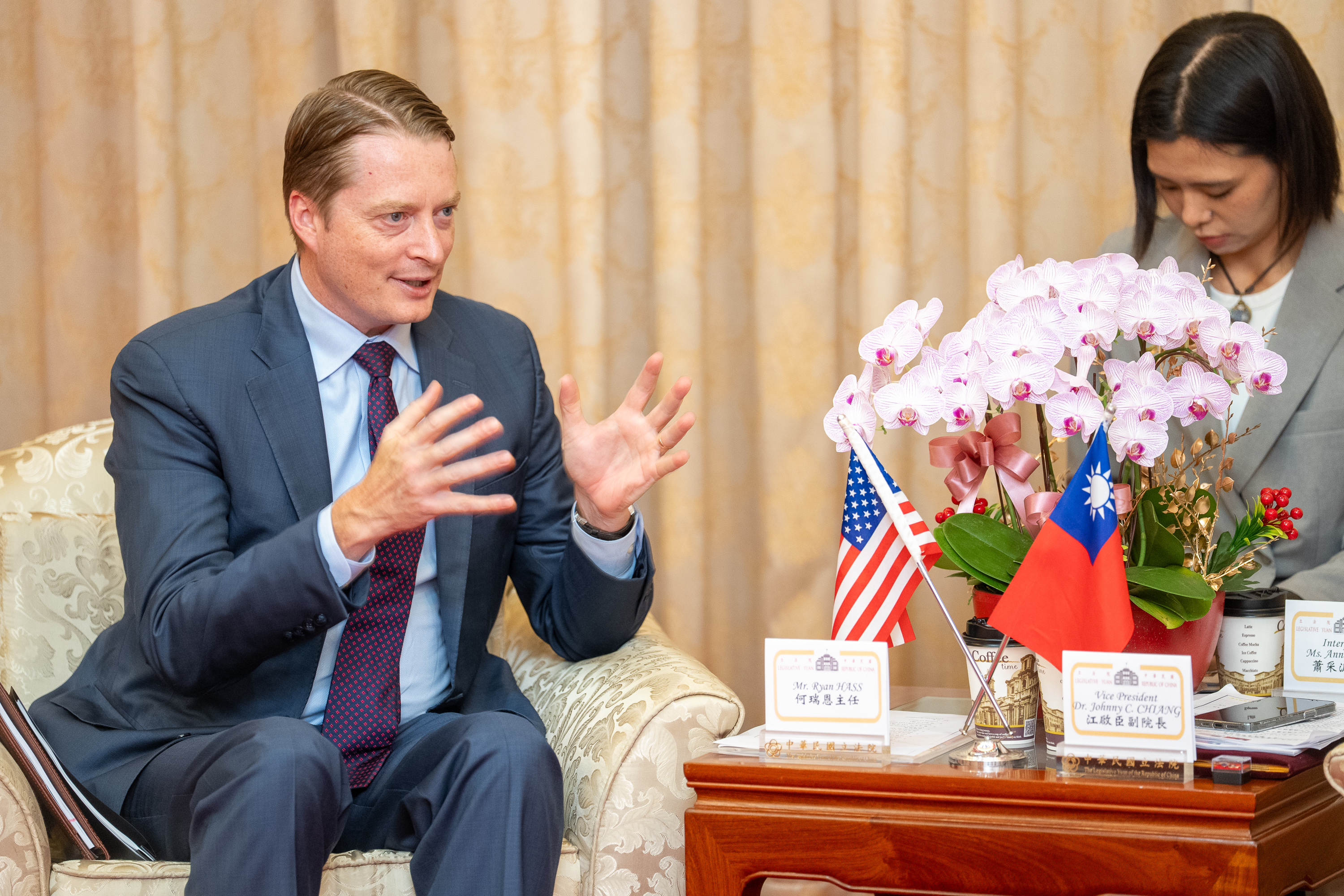
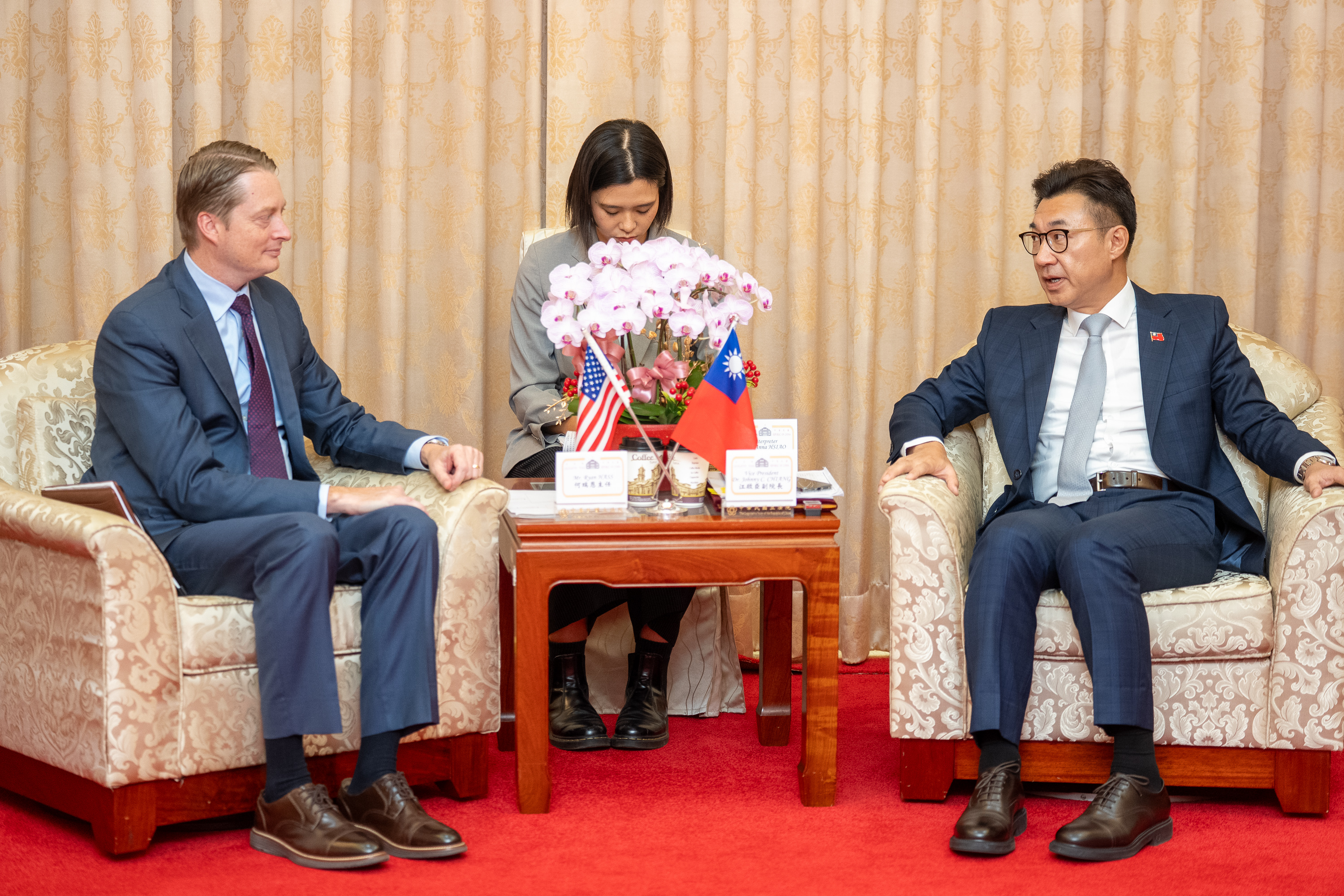
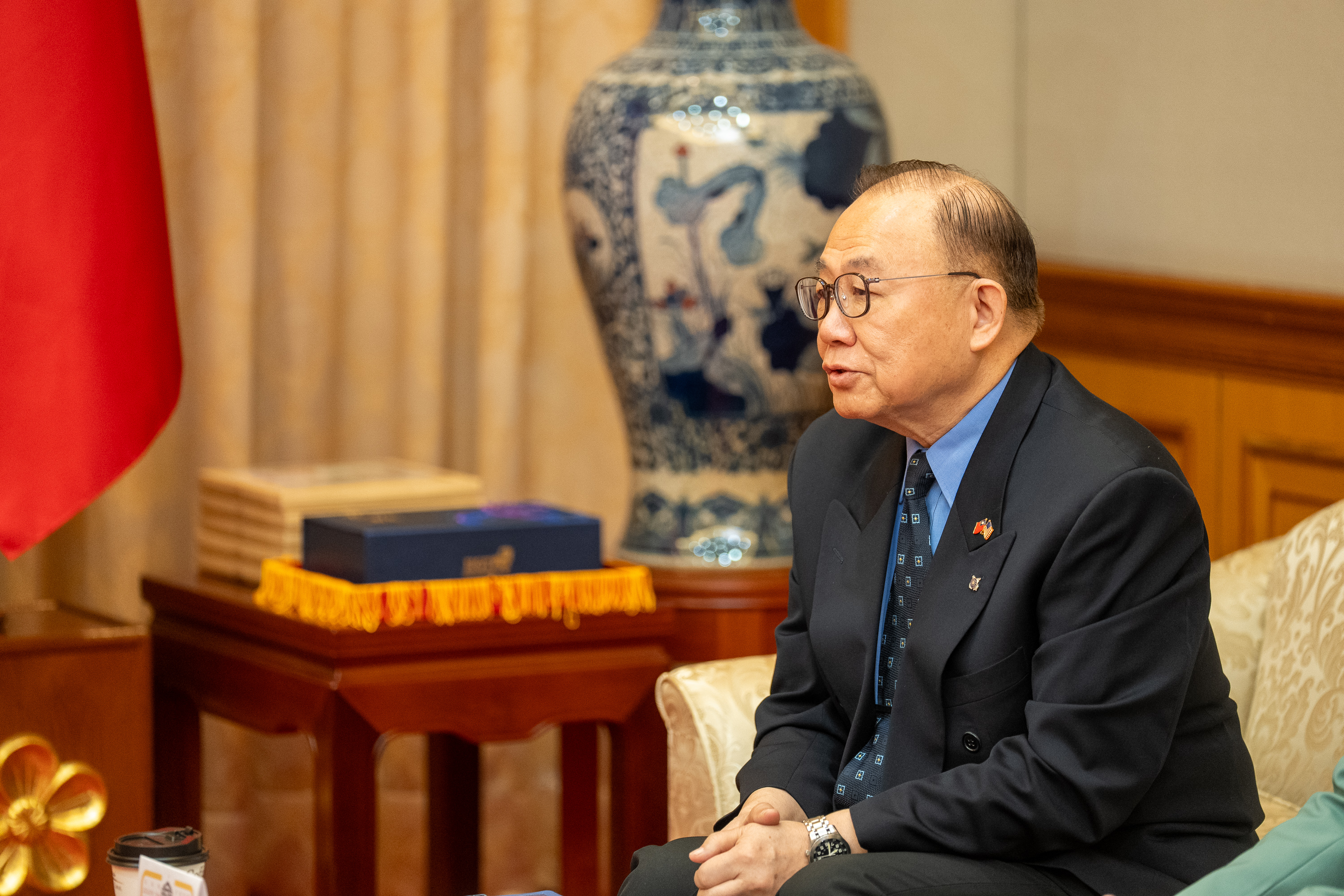
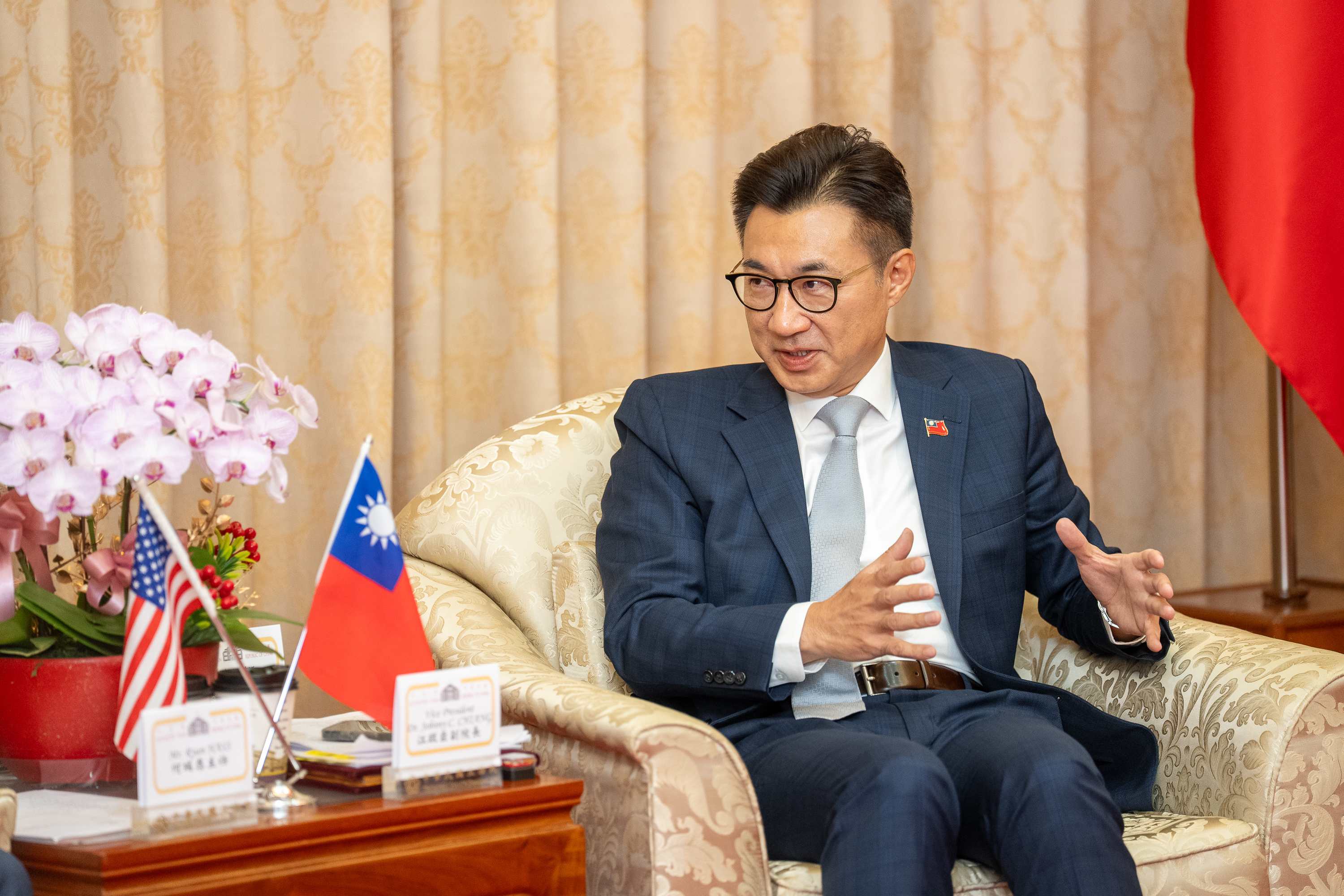
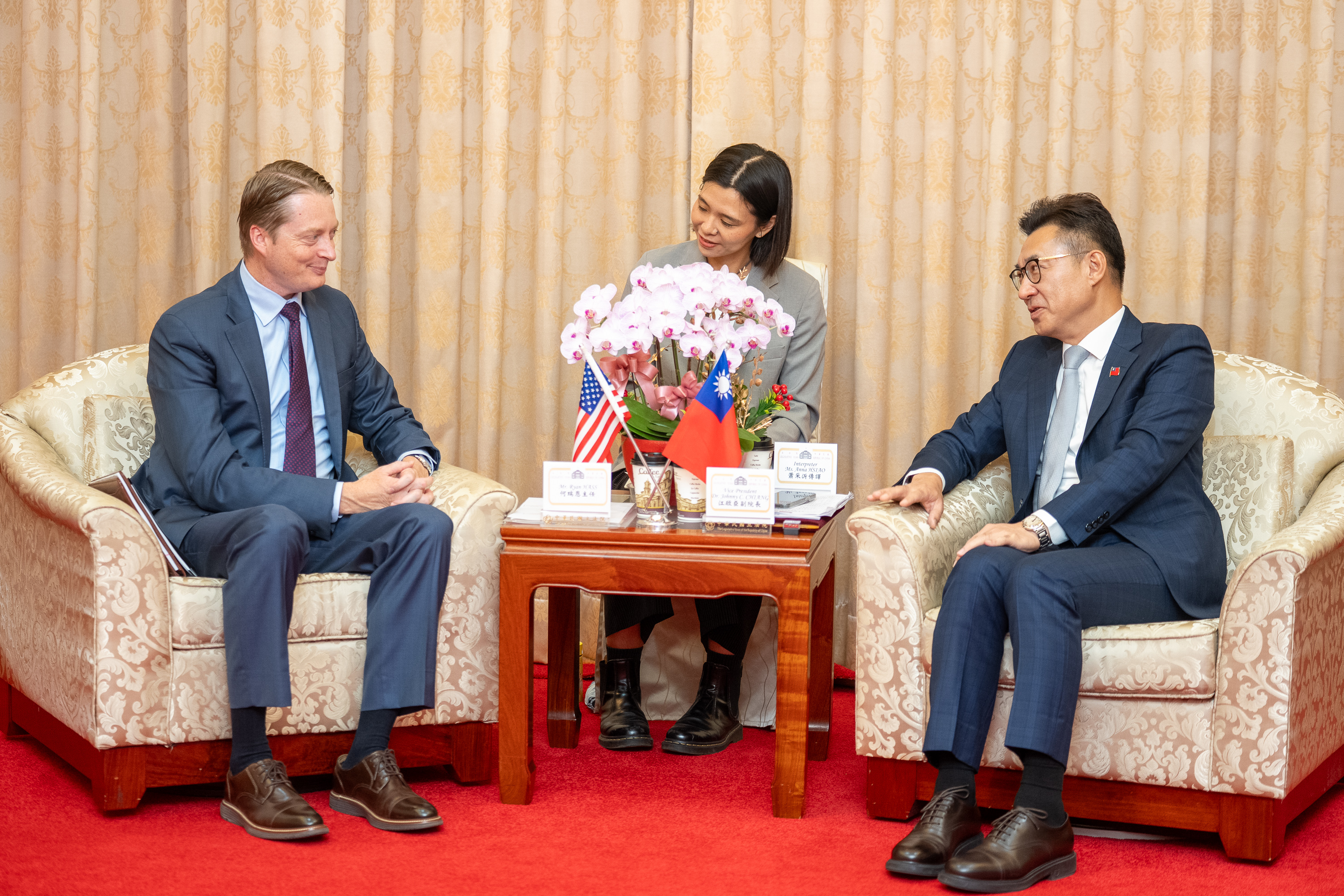
On the morning of August 13, Vice President Johnny C. Chiang of the Legislative Yuan, accompanied by KMT Legislator Adm. Chen Yeong-Kang, DPP Legislator Su Chiao-Hui, Department of International Affairs Director Kevin C.F. Lin, and Director-General Chang Chia-Cheng of the Ministry of Foreign Affairs, met with a six-member delegation of scholars and experts from the Brookings Institution.
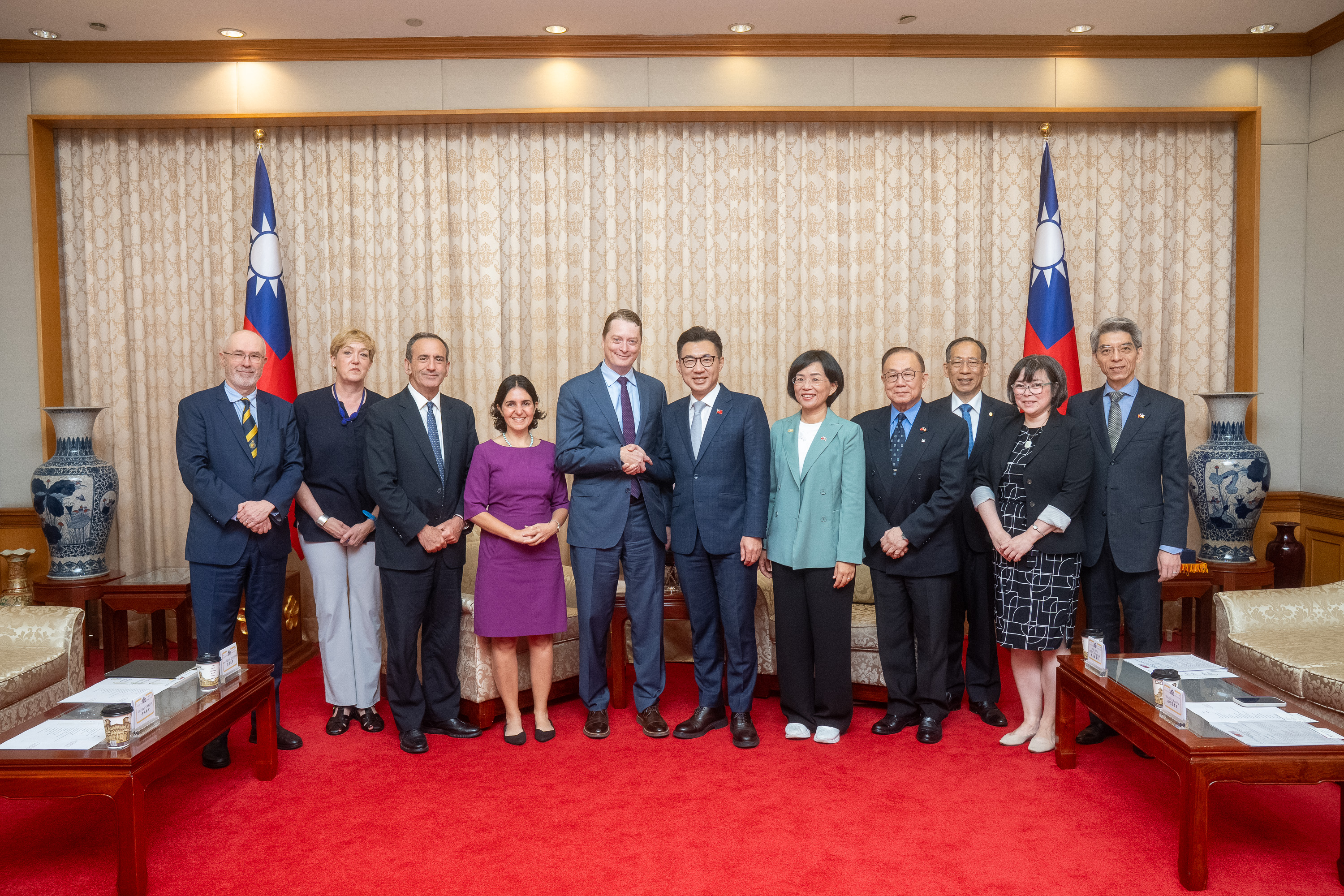
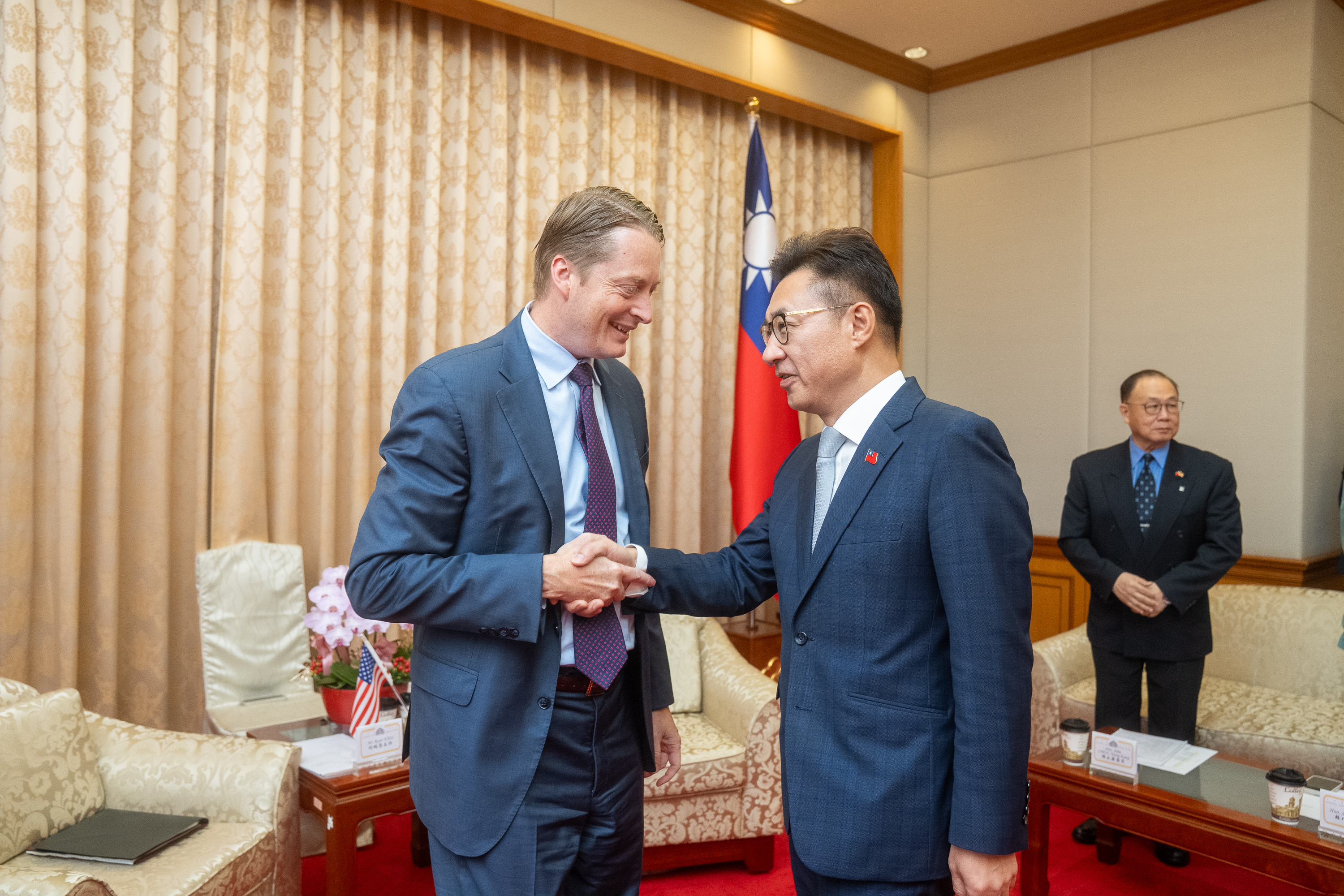
江副院長首先代表立法院及韓國瑜院長,誠摯歡迎訪賓蒞臨,並與在場委員及訪團成員合影留念。江副院長向訪賓介紹在場委員,並特別感謝美國政府長期對台各項支持,使雙邊關係得以逐步深化並穩定發展。江副院長進一步指出,近日美台關稅談判在國內引發媒體與民眾廣泛關注,尤其美方對台加徵「對等關稅」(Reciprocal Tariff),以他選區台中市為例,因屬於台灣工業與製造業重鎮,亦是許多中小企業聚集之地,他擔憂若台灣在既有關稅再加上對等關稅,將形成「雙重關稅」壓力,恐對企業造成嚴重衝擊,甚至導致工廠關閉風險。
Vice President Chiang, on behalf of the Legislative Yuan and President Daniel K.Y. Han, extended a warm welcome to the visiting delegation and joined the attending legislators and delegation members for a commemorative photograph. Vice President Chiang introduced the attending legislators to the delegation and expressed his deep appreciation for the longstanding support extended by the United States government to Taiwan, which has enabled the steady deepening and stable development of bilateral relations. Vice President Chiang further noted that the recent Taiwan-U.S. tariff negotiations have drawn widespread attention from both the media and the public. He highlighted concerns regarding the imposition of reciprocal tariffs by the United States, citing his own constituency of Taichung City as an example. As a hub of Taiwan’s industry and manufacturing, and home to many small and medium-sized enterprises, Taichung would face immense pressure if reciprocal tariffs were added on top of existing tariffs. He cautioned that such a scenario could result in a “double tariff” burden, posing severe challenges for businesses and even raising the risk of factory closures.
江副院長繼謂,過去5年來台灣對外市場的重心已逐漸由中國大陸轉向美國,雙邊貿易額呈現顯著成長。當前台美在工業與供應鏈領域具有高度互補性與合作潛力,他期盼關稅談判不僅能為雙方爭取最大利益,也能促使台美貿易關係持續深化,未來台灣如何兼顧國家利益與產業發展,已成為推動台美經貿合作的重要課題。
Vice President Chiang went on to state that over the past five years, the center of Taiwan’s external trade has gradually shifted from mainland China to the United States, with bilateral trade registering significant growth. At present, Taiwan and the United States enjoy a high degree of complementarity and potential for cooperation in industry and supply chains. Vice President Chiang expressed the hope that the tariff negotiations will not only secure the greatest benefits for both sides but also further deepen bilateral trade relations. Looking ahead, how Taiwan balances national interests with industrial development has become a critical issue in advancing Taiwan-U.S. economic and trade cooperation.
江副院長最後強調,台灣提升自我防衛決心絕非「搭便車」(Free-rider),而是利害關係人(Stakeholder),朝野各黨派對於提升國防預算佔GDP比例已有共識,並特別感謝美國民主黨聯邦眾議員克利什納穆希(Raja Krishnamoorthi)近日提出「對台六項保證法案」,主張將雷根政府時期的「六項保證」正式納入國內法。他期盼台美關係在《台灣關係法》(TRA)的基礎上不斷深化,並持續攜手推動雙邊各項合作,共創雙贏。
In conclusion, Vice President Chiang underscored that Taiwan’s commitment to strengthening its self-defense capabilities should by no means be construed as “free-riding,” but rather as assuming its role as a responsible stakeholder. He emphasized that parties across the political spectrum have reached a consensus on increasing the share of national defense spending as a proportion of GDP. He also extended particular appreciation to U.S. Democratic Representative Raja Krishnamoorthi for recently introducing the “Six Assurances to Taiwan Act,” which seeks to formally codify into U.S. domestic law the “Six Assurances” first articulated during the Reagan administration. He expressed the hope that Taiwan-U.S. relations will continue to deepen on the foundation of the Taiwan Relations Act, and that both sides will work hand in hand to advance bilateral cooperation in various fields, thereby achieving mutual benefit.
「布魯金斯研究所」成員在會談中表示,非常榮幸能訪問台灣,感謝立法院在百忙之中熱忱接待,並分享訪台期間不僅感受到人民的溫暖,也懷念鼎泰豐等具代表性的台灣美食。成員們除對川普新政及台美關稅協議提出若干觀察外,亦關注烏俄戰爭、中東局勢及美中台關係等議題,並對國際間區域衝突升溫表達憂慮,亦肯定台灣對台海和平穩定的貢獻。訪賓同時提醒,台灣須警惕中國在特定情境下可能持續對台施壓,並分享美方觀察經驗稱,當前許多島國正審慎評估自身安全與涉外議題,台灣身為印太區域之重要成員,應避免成為如烏克蘭、以色列般的國際衝突熱點。
Members of the Brookings Institution delegation stated during the meeting that they were deeply honored to visit Taiwan and expressed gratitude to the Legislative Yuan for its warm reception despite its busy schedule. They remarked that during their stay they not only experienced the warmth of the Taiwanese people but also fondly enjoyed Taiwan’s iconic cuisine, such as Din Tai Fung. In addition to offering several observations on the Trump administration’s new policies and the Taiwan-U.S. tariff agreement, the delegation also addressed issues such as the war in Ukraine, the situation in the Middle East, and cross-strait relations involving the United States, China, and Taiwan. They voiced concern over the escalation of regional conflicts worldwide and commended Taiwan for its contributions to peace and stability in the Taiwan Strait. The delegates also cautioned that Taiwan must remain vigilant against the possibility of continued pressure from China under certain circumstances. They further shared U.S. perspectives, noting that many island nations are currently conducting careful assessments of their own security and external affairs. As a key member of the Indo-Pacific region, Taiwan should endeavor to avoid becoming a flashpoint of international conflict akin to Ukraine or Israel.
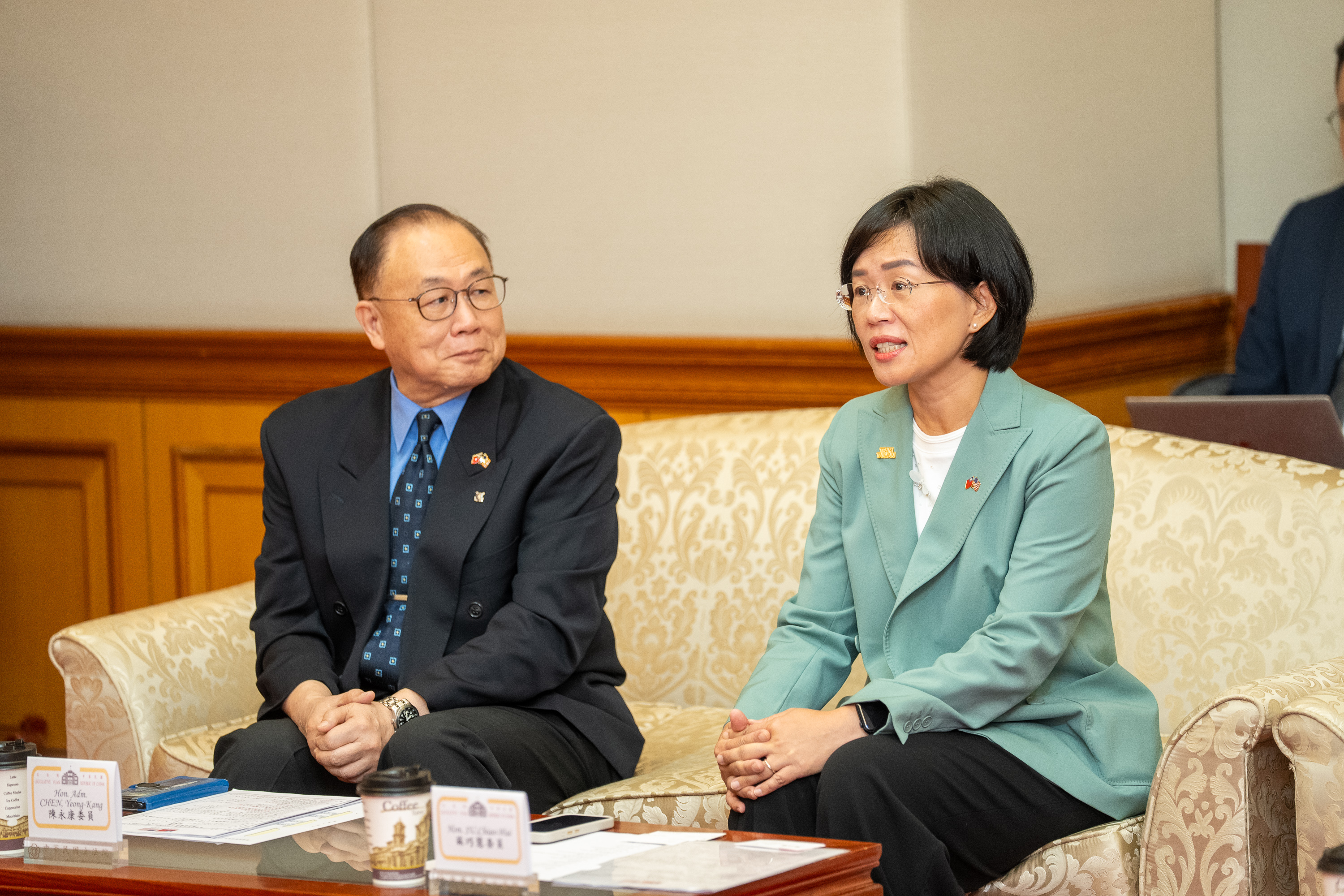
雙邊交流時,陳永康委員指出,身為外交及國防委員會成員,台灣國防預算正穩步成長,除擴充武器採購與軍備配置外,也應加強人員培訓與留才,期盼台美能攜手培育更多年輕優秀人才,持續深化國防安全交流,促進台海和平與區域永續發展。陳委員繼表示,面對複雜國際局勢與外部威脅,台灣亦須審慎考量面臨外來威脅時之能源供應問題,並認為台美也可強化資通訊與關鍵基礎設施防護之合作,同時以民主與法治為政策基礎,積極發展無人航空(Unmanned Aerial Vehicle, UAV)、無人水下載具(Unmanned Underwater Vehicles, UUV)等新興技術,提升雙邊合作能量。
During the bilateral exchange, Legislator Chen Yeong-Kang noted that, as a member of the Foreign Affairs and National Defense Committee, he has observed Taiwan’s defense budget steadily increasing. In addition to expanding weapons procurement and military deployments, he emphasized the importance of strengthening personnel training and talent retention. He expressed the hope that Taiwan and the United States can work together to cultivate more outstanding young professionals, thereby deepening defense and security exchanges and fostering peace in the Taiwan Strait as well as sustainable development in the region. Legislator Chen further stated that, in the face of a complex international environment and external threats, Taiwan must also carefully consider the issue of energy supply security when confronted with external pressures. He suggested that Taiwan and the United States could strengthen cooperation in protecting information and communications systems as well as critical infrastructure. At the same time, with democracy and the rule of law as guiding principles, both sides should actively pursue the development of emerging technologies such as unmanned aerial vehicles (UAVs) and unmanned underwater vehicles (UUVs), thereby enhancing the scope and capacity of bilateral cooperation.
蘇巧慧委員表示,面對複雜嚴峻的國際情勢,台灣應一致對外,堅守「挺台灣」(Team Taiwan)與「台灣優先」的共同立場。身為執政黨代表,她強調台灣除須增強國防實力外,亦應持續提升經濟實力,而此正與台美關稅談判結果息息相關。蘇委員進一步指出,強化國家社會韌性是執政黨當前的重要理念,例如今年漢光演習首次結合民間社會共同演習,即為有效提升全民防衛韌性的具體措施。
Legislator Su Chiao-Hui stated that, in the face of a complex and challenging international landscape, Taiwan must present a united front and firmly uphold the shared positions of “Team Taiwan” and “Taiwan First.” As a representative of the ruling party, she emphasized that Taiwan must not only strengthen its defense capabilities but also continue to enhance its economic strength, which is closely tied to the outcome of the Taiwan-U.S. tariff negotiations. Legislator Su further noted that strengthening national and societal resilience is a key principle of the ruling party at present. She cited as an example this year’s Han Kuang Exercises, which for the first time incorporated participation from civil society, describing it as a concrete measure to effectively enhance the resilience of the nation’s overall defense.
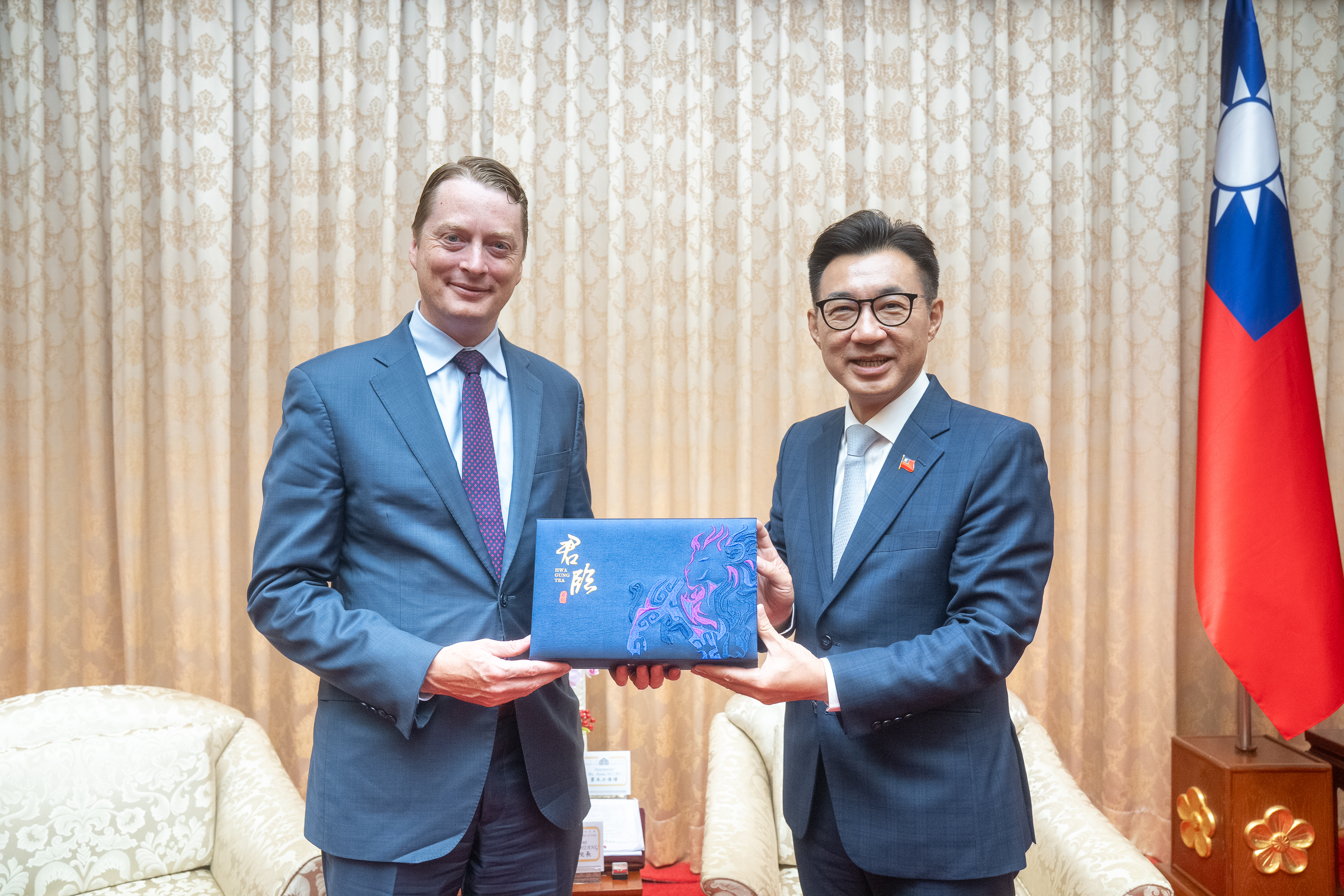
雙方另就兩岸關係、AI高科技、中國對台認知作戰、核武發展等議題,廣泛交換意見。此次會晤歷約60分鐘,在致贈紀念品與合影後圓滿結束。
The two sides also held extensive exchanges of views on issues including cross-strait relations, advanced AI technologies, China’s cognitive warfare against Taiwan, and nuclear weapons development. The meeting lasted approximately 60 minutes and concluded successfully with the exchange of commemorative gifts and a group photograph.