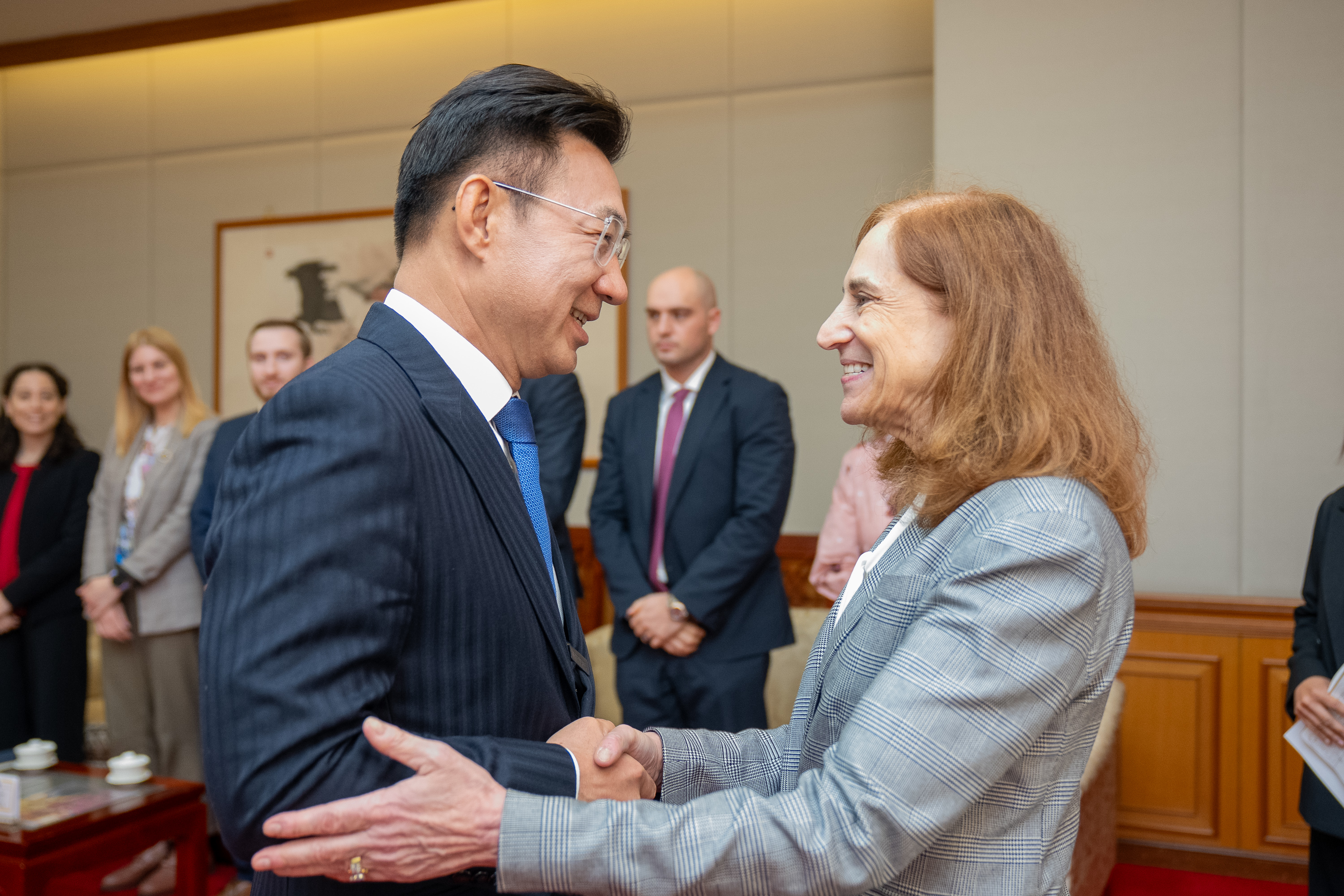
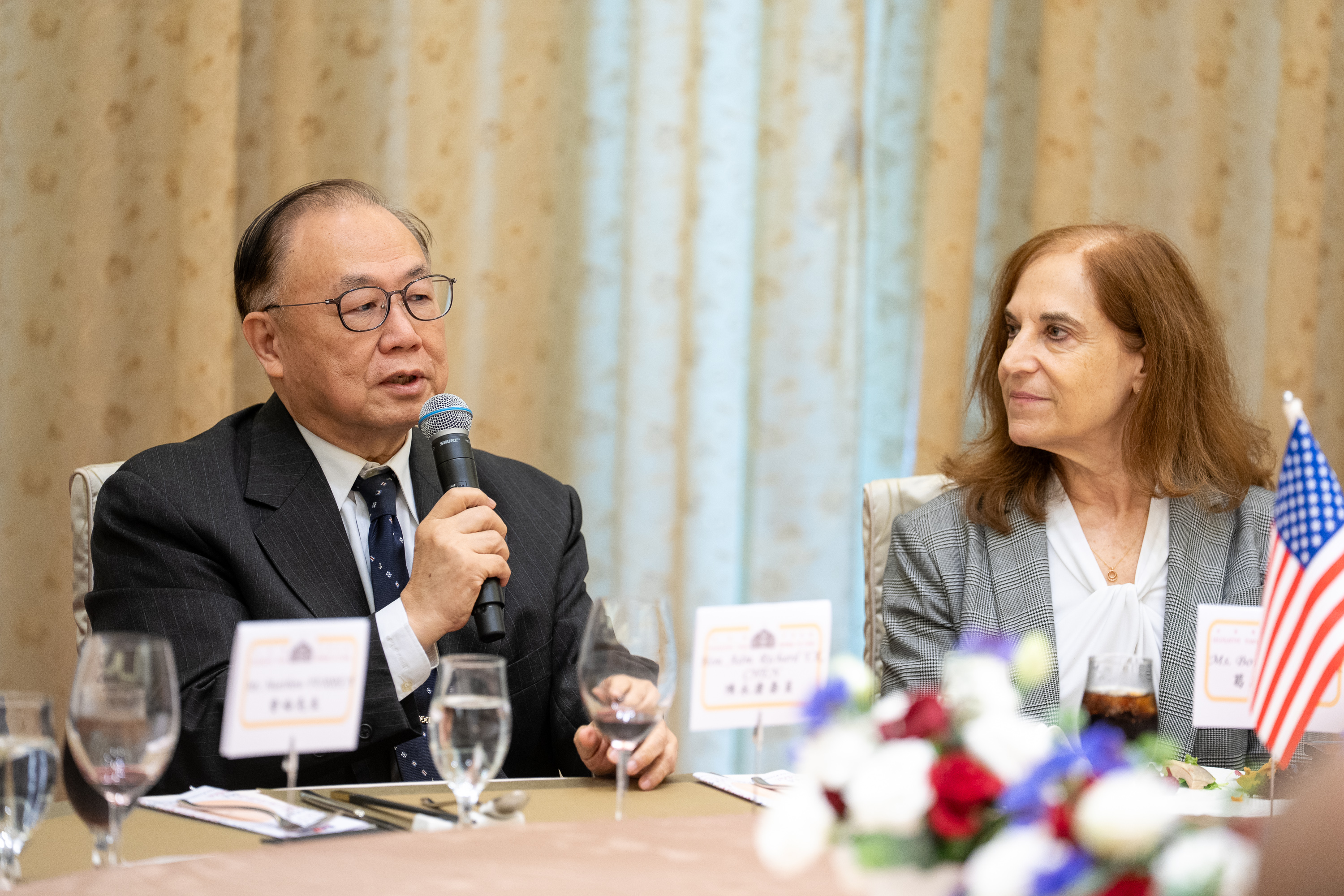
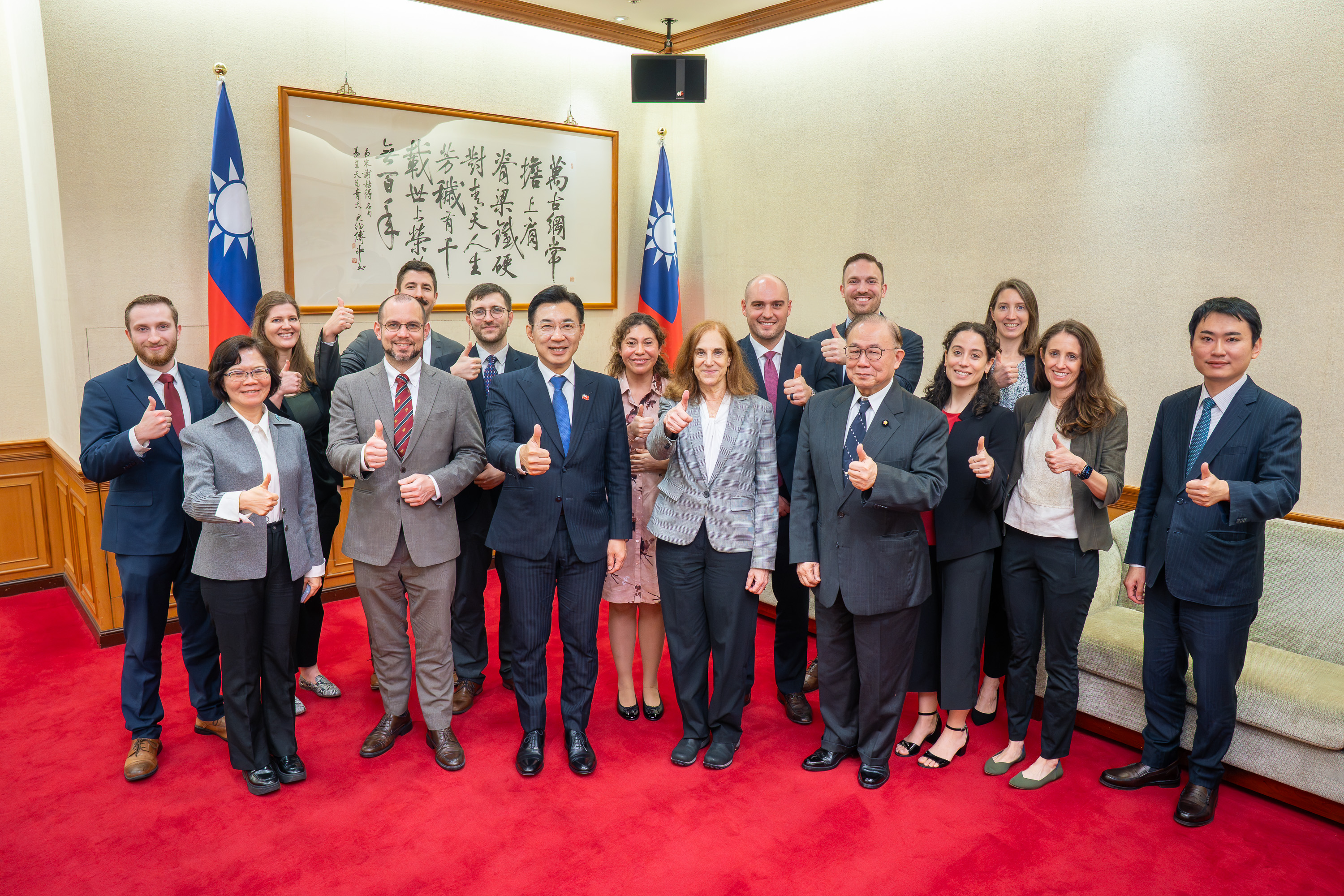
立法院江啟臣副院長於本(3月6)日中午,在國民黨陳永康委員、羅廷瑋委員、民進黨陳冠廷委員、民眾黨劉書彬委員等人陪同下,接見及款宴「德國馬歇爾基金會(German Marshall Fund of the United States, GMF)『台美歐政策計畫』(Taiwan-US-Europe Policy Program, TUPP)」訪團一行14人,該團由GMF印太計畫主任葛來儀(Bonnie Glaser)女士率領訪台。
At noon on March 6, Vice President Dr. Johnny C. Chiang (江啟臣) of the Legislative Yuan received and hosted a luncheon for a 14-member delegation from the Taiwan-U.S.-Europe Policy Program (TUPP) of the German Marshall Fund of the United States (GMF). The meeting was joined by KMT Legislators Adm. Chen Yeong-Kang and Lo Ting-Wei, DPP Legislator Chen Kuan-Ting, and TPP Legislator Dr. Liu Shu-Pin. The delegation was led by Ms. Bonnie Glaser, Managing Director of the Indo-Pacific Program at GMF.
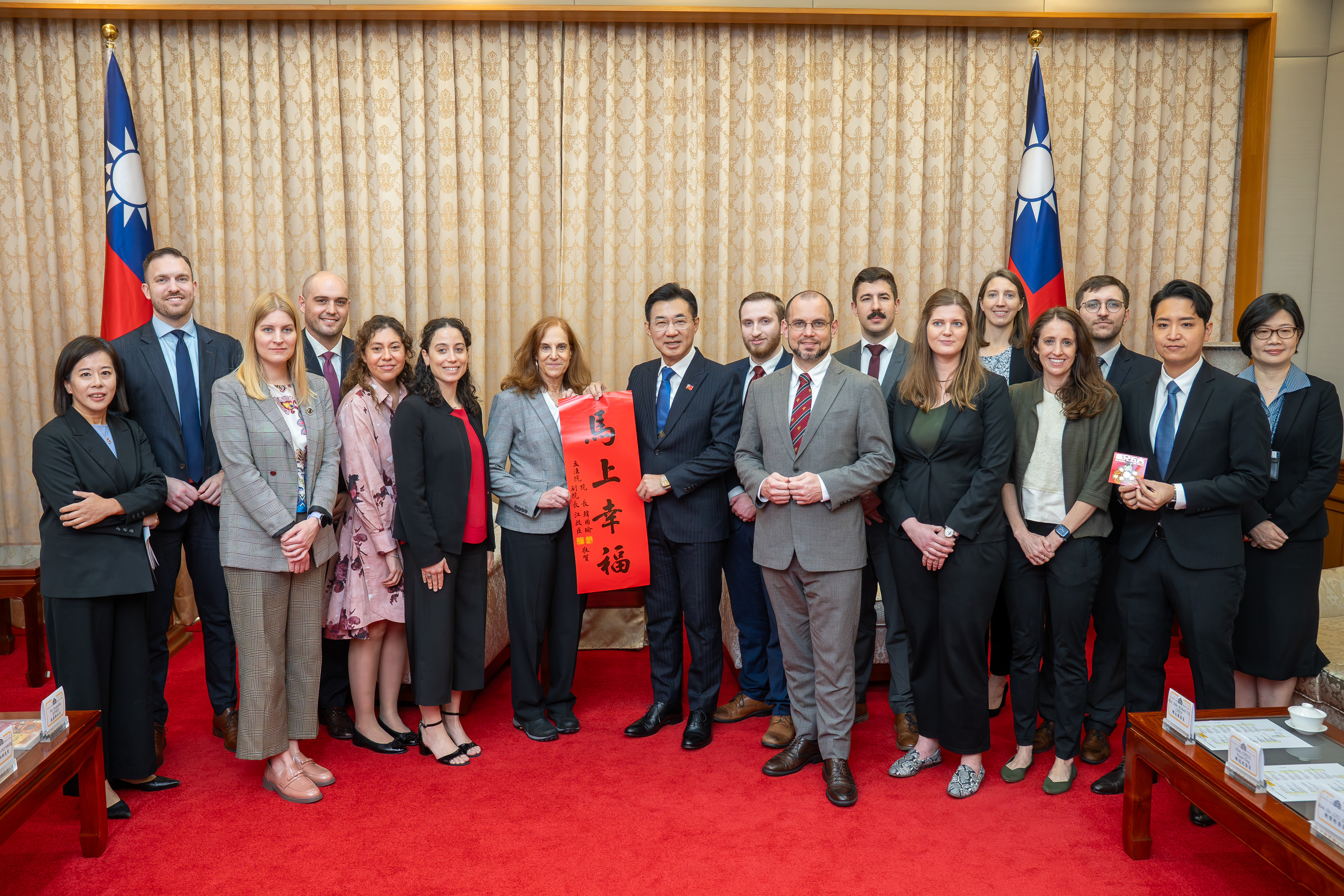
江副院長首先代表韓國瑜院長向訪團表達誠摯歡迎,並特別準備馬年新春小紅包及正、副院長聯名春聯,祝賀訪賓新年快樂、馬到成功,也希望讓訪賓感受台灣的人情味,並鼓勵訪賓有機會走訪台灣其他城市。江副院長表示,他日前曾邀請捷克前眾議長艾達莫娃(Markéta Pekarová Adamová)及美國在台協會(AIT)處長谷立言(Raymond Greene)造訪台中,參訪精密機械、機器人及人工智慧(AI)產業,並與產業代表交流,探討雙邊國家與企業未來合作機會。
Vice President Chiang began by extending a warm welcome to the delegation on behalf of Legislative Yuan President Daniel K.Y. Han (韓國瑜). To celebrate the Lunar New Year, Vice President Chiang presented the guests with festive red envelopes for the Year of the Horse and spring couplets jointly signed by President Han and himself, symbolizing their best wishes for the visitors’ success in the new year. He noted that these gifts were a gesture of Taiwan’s hospitality and encouraged the visitors to take the opportunity to explore other cities across Taiwan. Vice President Chiang also mentioned that he had recently invited former Speaker of the Czech Chamber of Deputies Markéta Pekarová Adamová and Director Raymond Greene of the American Institute in Taiwan (AIT) to visit Taichung. During the visit, they toured industries including precision machinery, robotics, and artificial intelligence and exchanged views with industry representatives on potential future opportunities for bilateral and industrial cooperation.
江副院長續表示,台灣製造業以中小企業為主,對市場變化與國際情勢相當敏感。去年以來,各界高度關注台美貿易談判情形,也關注台美對等貿易協定(Agreement on Reciprocal Trade, ART)可能帶來的影響;實則,以台美經貿關係的緊密及互補,台灣有望成為美國最信賴的經貿夥伴、創造雙贏。
Vice President Chiang further noted that Taiwan’s manufacturing sector is primarily composed of small and medium-sized enterprises, which are highly sensitive to market changes and developments in the international environment. Since last year, considerable attention has been given to Taiwan-U.S. trade negotiations and to the potential impact of the proposed Agreement on Reciprocal Trade (ART). In fact, given the close and complementary nature of Taiwan-U.S. economic and trade relations, Taiwan has the potential to become the United States’ most trusted economic and trade partner, creating mutually beneficial outcomes for both sides.
江副院長另指出,本次訪賓多為安全與國防領域專家,台灣目前面臨的安全局勢相當複雜且關鍵,針對各界對我國防特別預算的關心,在農曆春節期間,韓國瑜院長與他曾共同發表聲明,承諾將國防特別預算列為本會期最優先審議的議案之一。江副院長說明,目前立法院三黨皆未過半,相關政策須透過協商形成共識。儘管決策過程可能較為漫長,但這正是民主制度運作的一部分,相信最終仍能就國家安全所需資源達成共識。
Vice President Chiang also pointed out that many members of the visiting delegation specialize in security and defense issues and noted that Taiwan currently faces a complex and critical security environment. He added that, in response to the widespread attention surrounding Taiwan’s special defense budget, he and President Han had issued a joint statement during the Lunar New Year holiday committing to prioritize the examination of the special defense budget during the current legislative session. He explained that no single party currently holds a majority in the Legislative Yuan, and therefore policy decisions require consultation and consensus-building among parties. Although the decision-making process may take time, this is an inherent part of the democratic process, and he expressed confidence that consensus will ultimately be reached regarding the resources needed for national security.
最後,江副院長再次感謝葛來儀主任多年來帶領各界朋友訪台交流,並表示面對面的討論有助於增進彼此對政策的理解、縮短觀點差距,促進更具體的合作,並祝福大家在新的一年都能「馬上幸福」。
Vice President Chiang concluded by thanking Ms. Glaser for leading delegations of experts and friends to Taiwan over the years. He noted that face-to-face discussions help deepen mutual understanding of policy issues, narrow differences in perspectives, and promote more concrete cooperation. He also wished the guests happiness and success in the Year of the Horse.
GMF印太計畫主任葛來儀感謝江副院長及四位委員撥冗接見。她表示,目前各界高度關注台灣的特別國防預算議題,安全對每一位台灣人民而言都至關重要;過去八年來美國持續支持台灣的軍購需求,盼協助台灣進一步提升防衛能力,並對整體安全架構具有重要意義。
Ms. Glaser, Managing Director of the GMF’s Indo-Pacific Program, thanked Vice President Chiang and the four legislators for taking time to receive the delegation. She noted that Taiwan’s special defense budget has recently drawn significant attention and emphasized that security is of vital importance to the people of Taiwan. Over the past eight years, the United States has continued to support Taiwan’s defense procurement needs to help strengthen Taiwan’s defense capabilities, an effort she described as important to the broader security architecture.
陳永康委員表示,國民黨團與執政黨同樣支持提升國防預算,但對細節部分有不同見解,透過協商化解分歧正是民主政治運作的重要精神。陳委員指出,韓院長與江副院長均竭力推動政黨協商,他對本會期的議事運作具有信心。他除感謝美國對台灣民主的堅定支持外,更強調強化相關人力資源訓練及提升社會韌性的重要性,並認為台灣應制訂自身的國防安全戰略。
Legislator Adm. Chen Yeong-Kang stated that the KMT caucus, like the governing party, supports increasing the defense budget, although differences remain regarding specific details. Resolving such differences through consultation, he said, reflects the essence of democratic politics. Legislator Adm. Chen also noted that President Han and Vice President Chiang have been working diligently to promote cross-party consultations and expressed confidence in the parliamentary procedures during the current session. While expressing appreciation for the United States’ strong support for Taiwan’s democracy, he also emphasized the importance of strengthening personnel training and enhancing societal resilience, and suggested that Taiwan should develop its own national defense strategy.
陳冠廷委員表示其來自嘉義,該縣致力於打造無人機及航太產業,台灣目前規劃中的特別國防預算包含加強台美在無人機系統方面的軍購與合作。他強調,台灣中小企業具備卓越的製造能力,期盼在資金與技術對接後,台美雙方能共同投入無人機系統與平台的製造及維護。針對近期中國大陸無人機在南部及西南海域升級「灰色地帶」侵擾,陳委員認為,如何在避免衝突升級的前提下,建立精準且適當的應對原則,是當前必須審慎面對的關鍵議題。
DPP Legislator Chen Kuan-Ting, who represents Chiayi County, noted that the county has been actively developing drone and aerospace industries. He added that Taiwan’s planned special defense budget includes strengthening military procurement and cooperation with the United States in unmanned systems. He emphasized that Taiwan’s small and medium-sized enterprises possess strong manufacturing capabilities and expressed hope that with better alignment of capital and technology, Taiwan and the United States could jointly engage in the production and maintenance of unmanned systems and related platforms. Regarding recent escalations in gray zone activities involving China’s drones in the waters south and southwest of Taiwan, he added that establishing precise and appropriate response principles while avoiding escalations of conflict remains a key issue requiring careful consideration.
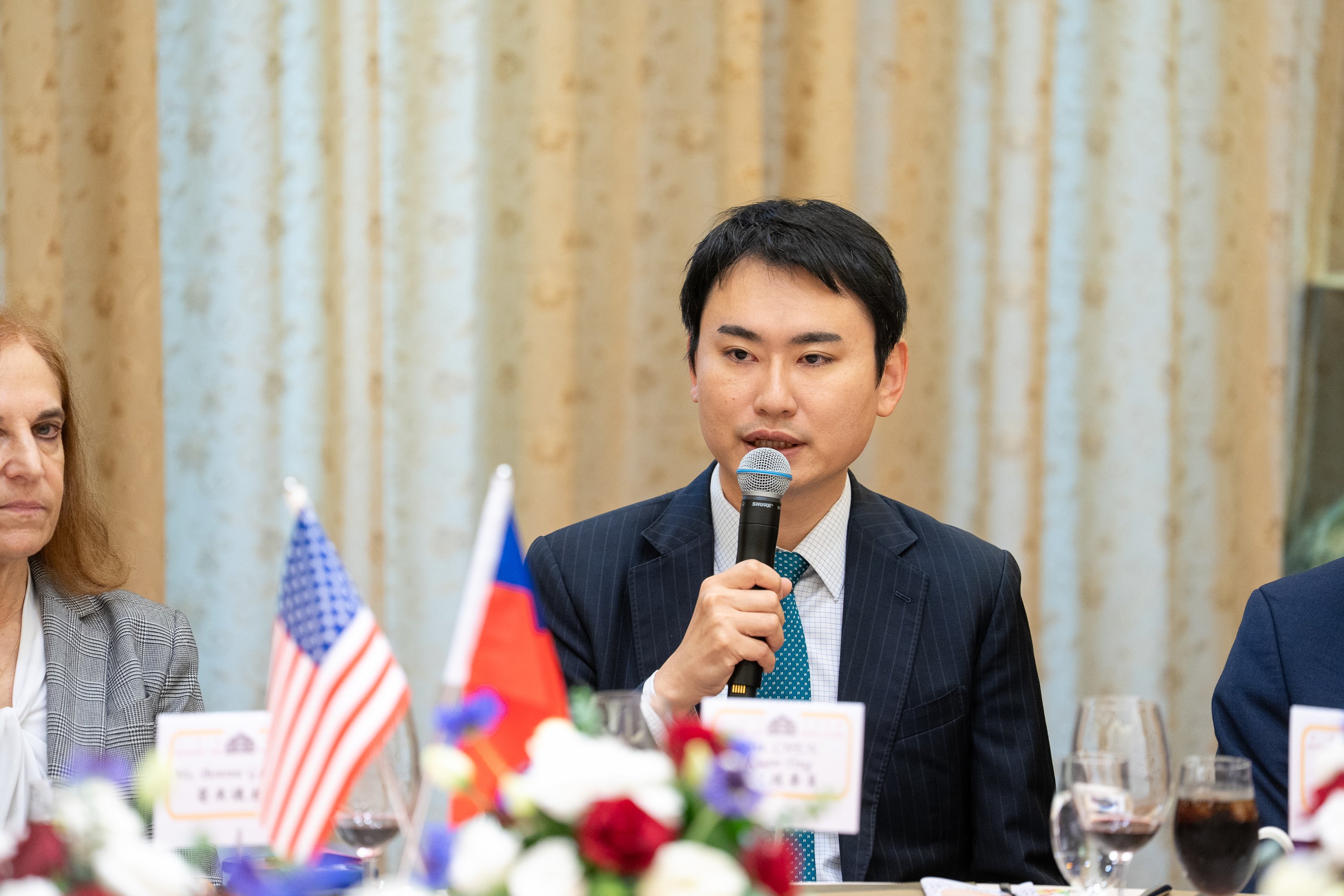
劉書彬委員說明民眾黨對軍購與國防預算的立場。她表示,該黨提出的預算規模介於國民黨與行政院版本之間,並主張應詳列軍購項目與金額,以一年一期方式編列,由行政院每年提出計畫送立法院審議,而非一次編列八年的預算,以利立法院有效監督。此外,目前政府整體預算約為三兆元,若國防預算提高至九千億元,可能排擠其他公共政策領域的支出,因此仍需審慎評估。
Legislator Dr. Liu Shu-Pin explained the TPP’s position on arms procurement and the defense budget. She noted that the budget proposal put forward by the party falls between the proposals of the KMT and the Executive Yuan. She argued that procurement items and funding amounts should be clearly specified, and that the budget should be allocated on an annual basis rather than as a single eight-year package. Under this approach, the Executive Yuan would submit plans to the Legislative Yuan each year for examination, allowing for more effective legislative oversight. She also pointed out that Taiwan’s overall government budget is about NT$3 trillion. Increasing the defense budget to NT$900 billion, she said, could crowd out spending in other policy areas and therefore requires careful evaluation.
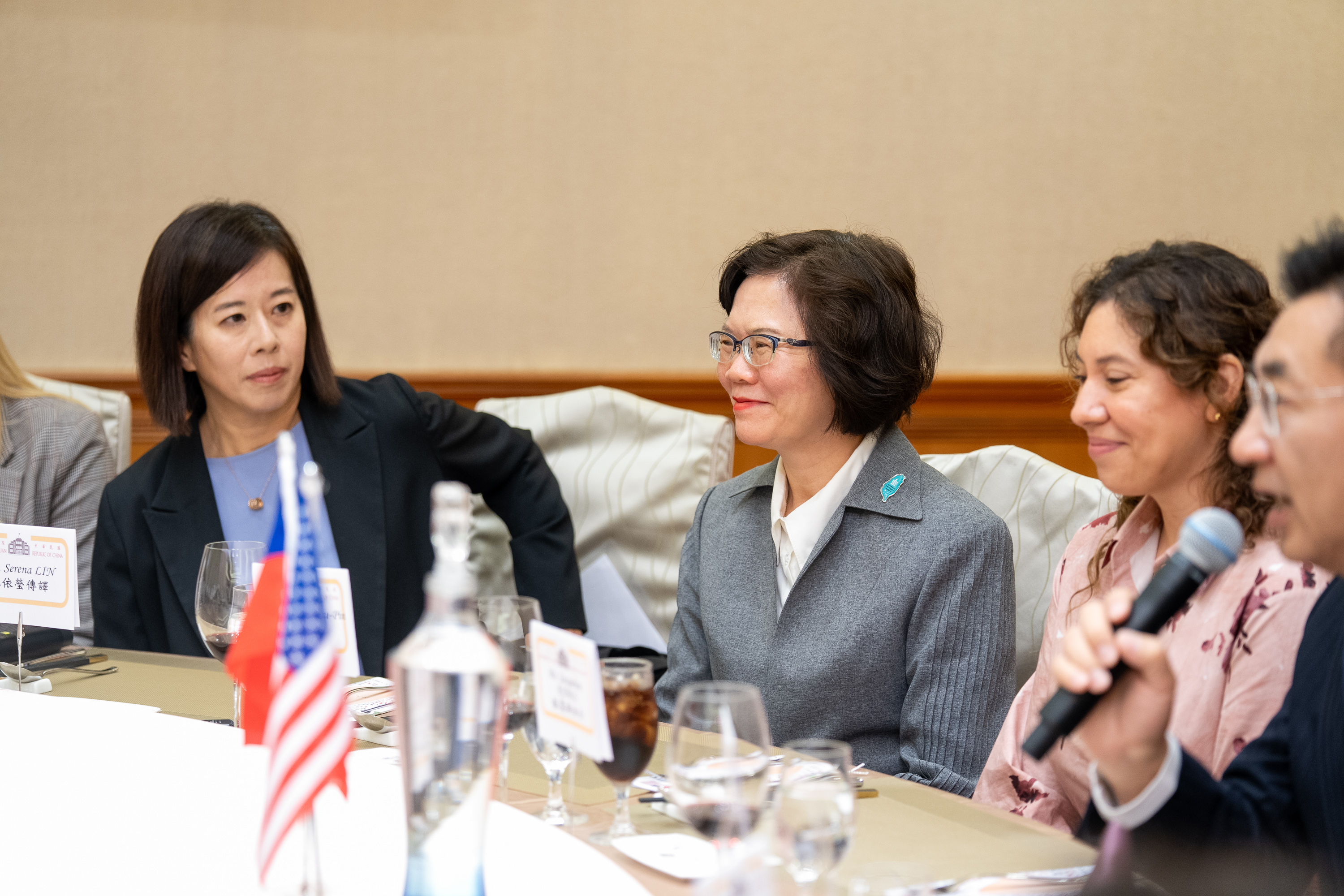
席間,雙方另就台灣面對的灰色地帶安全威脅、無人機產業與國際合作、台美軍事訓練與後勤整合、能源安全與核能政策、歐洲與台灣的產業合作機會,以及台美在AI、機器人與製造業領域的合作等議題交換意見。此次會談及午宴歷時約120分鐘,氣氛熱絡融洽,並於贈送禮品及合影留念後圓滿結束。(2026/03/06)
During the discussions, both sides exchanged views on a range of issues, including gray zone security threats that Taiwan is facing, the development of the unmanned systems industry and international cooperation, Taiwan-U.S. military training and logistics integration, energy security and nuclear energy policy, opportunities for industrial cooperation between Europe and Taiwan, and cooperation between Taiwan and the United States in areas such as artificial intelligence, robotics, and manufacturing. The meeting and luncheon lasted approximately two hours and concluded in a lively and cordial atmosphere following an exchange of gifts and a group photo. (2026/03/06)