

立法院韓國瑜院長接見華府智庫「印太安全研究所」(IIPS)訪團一行10人 韓國瑜:深化台美安全夥伴關係 攜手維護印太和平穩定 Legislative Yuan President Daniel K.Y. Han receives a 10-member delegation from the Washington-based think tank, Institute for Indo-Pacific Security (IIPS); President Han: Taiwan looks forward to deepening the Taiwan-U.S. security partnership and working together to safeguard peace and stability in the Indo-Pacific
立法院韓國瑜院長於本(7月30)日下午,在國民黨陳永康委員、民進黨陳冠廷委員、台灣民眾黨洪毓祥委員及外交部邴兆魯參事等人陪同下,接見華府智庫「印太安全研究所」(Institute for Indo-Pacific Security, IIPS)主席薛瑞福(Randall G. Schriver)率領訪團一行10人。
On the afternoon of July 30, Legislative Yuan President Daniel K.Y. Han (韓國瑜), accompanied by KMT Legislator Adm. Chen Yeong-Kang, DPP Legislator Chen Kuan-Ting, TPP Legislator Dr. Hung Yu-Hsiang, and Ministry of Foreign Affairs Counselor Bryan Chao-Lu Bing, received a 10-member delegation from the Washington-based think tank, Institute for Indo-Pacific Security (IIPS), led by Chairman Randall G. Schriver.
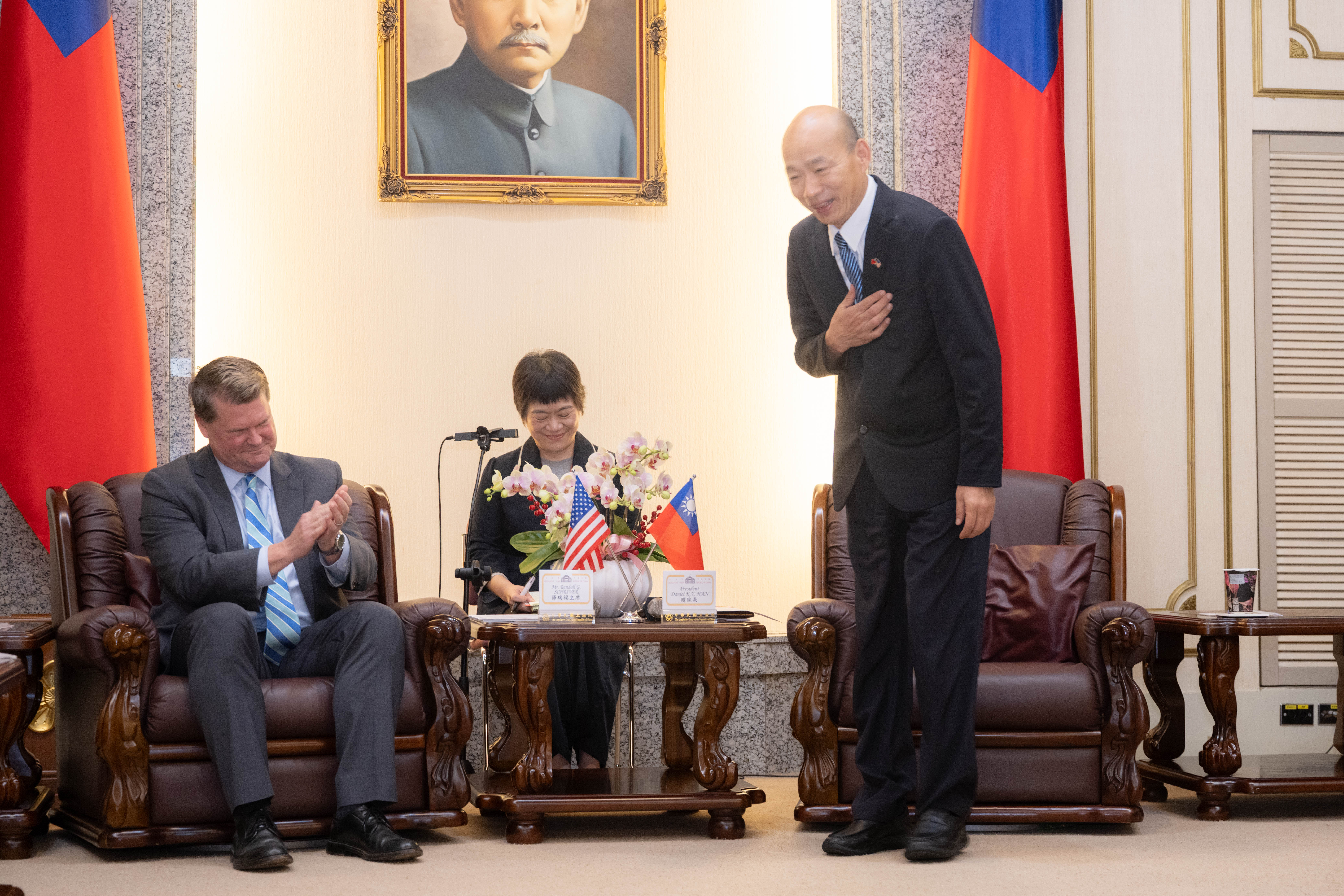
韓院長首先熱烈歡迎薛瑞福主席再次率團訪問立法院,並向訪賓介紹台灣著名的珍珠奶茶,盼藉由台灣特色飲食文化,讓訪賓感受台灣人民的熱情與友善。院長表示,IIPS長期關注印太區域安全、台海和平穩定及台灣防衛韌性等重要議題,多年來持續支持台灣,積極促進台美安全合作,對深化雙方夥伴關係貢獻良多。
President Han opened the meeting by extending a warm welcome to Chairman Schriver for once again leading a delegation to visit the Legislative Yuan. He also introduced the guests to Taiwan’s famous bubble tea, hoping that Taiwan’s distinctive food culture would allow them to experience the warmth and friendliness of the Taiwanese people. President Han stated that IIPS has long focused on critical issues such as Indo-Pacific regional security, peace and stability across the Taiwan Strait, and Taiwan’s defense resilience. Over the years, he noted, IIPS has continued to support Taiwan and proactively promoted Taiwan-U.S. security cooperation, making significant contributions to the deepening of the bilateral partnership.
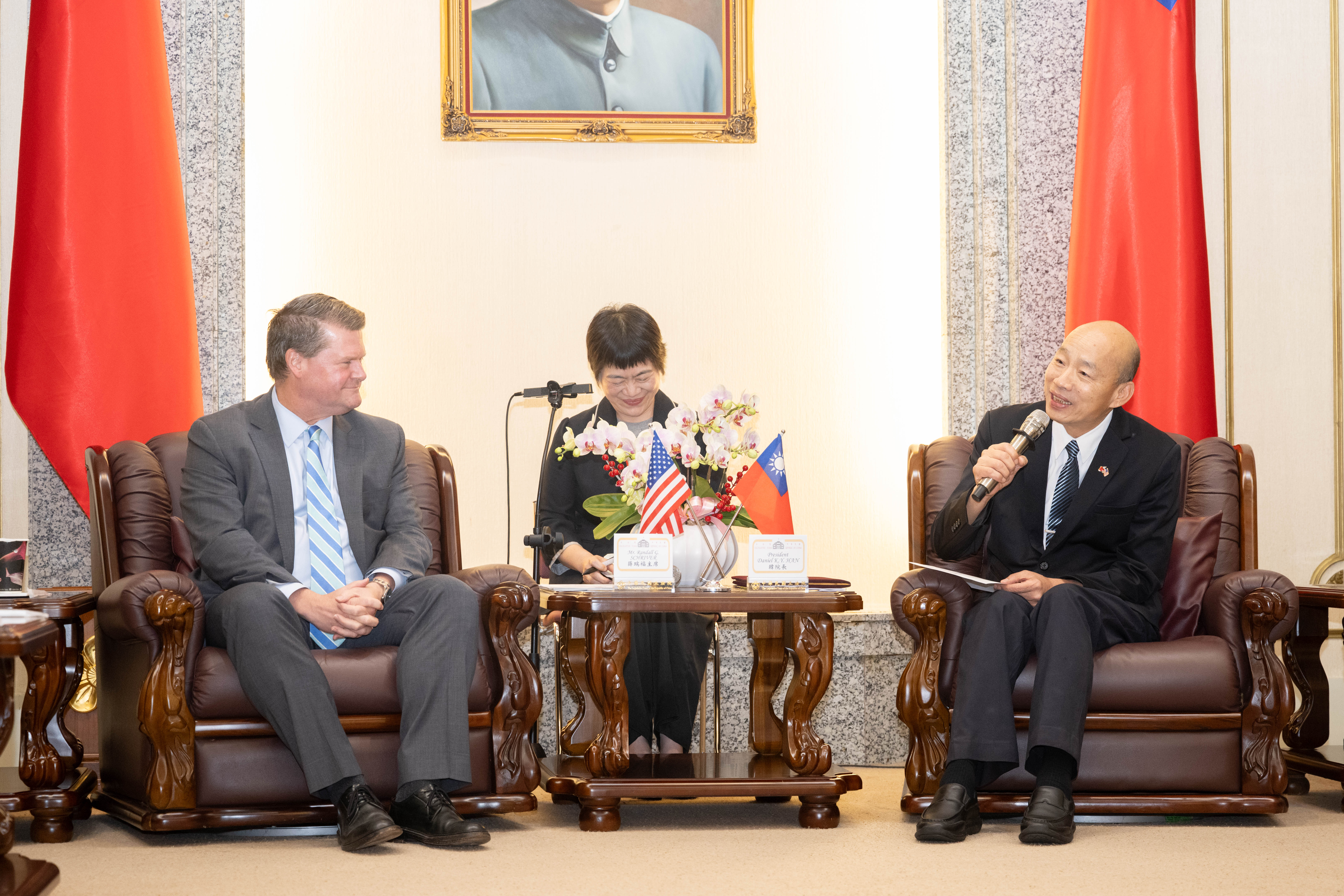
院長進一步表示,印太安全已成為全球關注焦點,感謝美國長期在安全、經貿及教育等領域對台灣的堅定支持。他並向訪賓介紹立法院目前三黨席次結構及國會運作情形,指出朝野政黨雖然在內政議題上是有不同立場,但在國防與外交事務上已有高度共識,並以國家安全為優先,持續支持提升台灣自我防衛能力。談及能源議題,院長亦表示,穩定的能源供應攸關國家安全及產業發展,朝野各界均持續就相關政策進行討論,期待凝聚社會共識。院長也強調「自助者天助」的理念,認為台灣唯有持續提升自我防衛能力及全民國防意識,才能有效維護民主自由及區域和平穩定。
President Han further noted that Indo-Pacific security has become a focus of global attention. He expressed gratitude to the United States for its longstanding and steadfast support for Taiwan in areas including security, economy and trade, as well as education. He also briefed the guests on the current seat distribution among the three parties in the Legislative Yuan and the legislature’s operations. He pointed out that although the ruling and opposition parties may hold differing positions on domestic issues, they have reached a high degree of consensus on national defense and foreign affairs. He added that all parties prioritize national security and continue to support efforts to enhance Taiwan’s self-defense capabilities. On energy issues, President Han stated that a stable energy supply is vital to national security and industrial development. He noted that both the ruling and opposition parties, as well as relevant sectors of society, continue to discuss related policies in the hope of building social consensus. President Han also emphasized the notion that “God helps those who help themselves,” stating that only by continuously strengthening its self-defense capabilities and raising public awareness of all-out national defense can Taiwan effectively safeguard democracy, freedom, and regional peace and stability.
薛瑞福主席高度肯定台灣民主發展成就及多黨政治的成熟運作,表示美方肯定台灣民主發展,更尊重各政黨立場,同時也關注台灣防衛能力的提升,期盼相關資源能儘速到位。
Chairman Schriver spoke highly of Taiwan’s democratic achievements and the mature functioning of its multiparty politics. He said that the U.S. recognizes Taiwan’s democratic development and respects the positions of all political parties, while closely following Taiwan’s efforts to enhance its defense capabilities, and hopes that relevant resources can be put in place as soon as possible.

雙邊交流時,陳永康委員認為應持續強化無人機發展及相關產業能量,並深化台美在先進科技、人工智慧及國防領域合作;另就能源韌性提出建言,建議持續強化輸配電設施、防護能力及後勤整備,提升整體防衛韌性。
During the bilateral exchange, Legislator Chen Yeong-Kang stated that Taiwan should continue strengthening the development of unmanned aerial vehicles (UAVs) and related industrial capabilities, while deepening Taiwan-U.S. cooperation in advanced technology, AI, and national defense. Regarding energy resilience, he recommended continuing to reinforce power transmission and distribution facilities, protective capabilities, and logistical preparedness in order to enhance overall defense resilience.

陳冠廷委員表示,面對區域安全挑戰,台灣應加速推動無人機發展及相關政策,持續提升整體防衛能力;另指出行政部門已就小型模組化反應爐 (SMR)等新興能源技術進行研議,未來將在兼顧安全、社會共識及民主程序的前提下,審慎評估各項能源政策。
Legislator Chen Kuan-Ting stated that in the face of regional security challenges, Taiwan should accelerate the development of UAVs and related policies to continue improving its overall defense capabilities. He also noted that the executive branch has begun examining and assessing emerging energy technologies such as small modular reactors (SMRs). Going forward, the government will carefully evaluate various energy policies with due consideration given to safety, social consensus, and democratic procedures.

洪毓祥委員分享上(6)月與院長赴美參訪心得,並轉達我在美台商對於美國基礎建設及人才簽證等議題的建議,期盼持續優化投資環境,促進台美產業合作;另表示能源安全攸關國家競爭力,支持透過多元能源政策,提升台灣能源韌性與經濟發展動能。
Legislator Hung shared his thoughts on his visit to the U.S. with President Han in June. He also conveyed suggestions from Taiwanese businesses in the U.S. regarding U.S. infrastructure and talent visas, expressing hope that continued improvements to the investment environment would help promote Taiwan-U.S. industrial cooperation. He further stated that energy security is closely tied to national competitiveness, and expressed support for enhancing Taiwan’s energy resilience and economic growth momentum through a diversified energy policy.

雙方並就印太區域安全情勢、台灣防衛韌性、台美安全合作、無人機發展、國防及能源安全、產業韌性,以及新興科技等共同關切議題廣泛交換意見。此次會晤歷時約1小時,氣氛熱絡友好,最後於互贈紀念品及合影後圓滿結束。(2026/07/30)
The two sides also exchanged extensive views on issues of mutual concern, including the Indo-Pacific regional security landscape, Taiwan’s defense resilience, Taiwan-U.S. security cooperation, UAV development, national defense and energy security, industrial resilience, and emerging technologies. The meeting lasted approximately one hour in a warm and friendly atmosphere and concluded successfully with an exchange of commemorative gifts and a group photo. (2026/07/30)
On the afternoon of July 30, Legislative Yuan President Daniel K.Y. Han (韓國瑜), accompanied by KMT Legislator Adm. Chen Yeong-Kang, DPP Legislator Chen Kuan-Ting, TPP Legislator Dr. Hung Yu-Hsiang, and Ministry of Foreign Affairs Counselor Bryan Chao-Lu Bing, received a 10-member delegation from the Washington-based think tank, Institute for Indo-Pacific Security (IIPS), led by Chairman Randall G. Schriver.
韓院長首先熱烈歡迎薛瑞福主席再次率團訪問立法院,並向訪賓介紹台灣著名的珍珠奶茶,盼藉由台灣特色飲食文化,讓訪賓感受台灣人民的熱情與友善。院長表示,IIPS長期關注印太區域安全、台海和平穩定及台灣防衛韌性等重要議題,多年來持續支持台灣,積極促進台美安全合作,對深化雙方夥伴關係貢獻良多。
President Han opened the meeting by extending a warm welcome to Chairman Schriver for once again leading a delegation to visit the Legislative Yuan. He also introduced the guests to Taiwan’s famous bubble tea, hoping that Taiwan’s distinctive food culture would allow them to experience the warmth and friendliness of the Taiwanese people. President Han stated that IIPS has long focused on critical issues such as Indo-Pacific regional security, peace and stability across the Taiwan Strait, and Taiwan’s defense resilience. Over the years, he noted, IIPS has continued to support Taiwan and proactively promoted Taiwan-U.S. security cooperation, making significant contributions to the deepening of the bilateral partnership.
院長進一步表示,印太安全已成為全球關注焦點,感謝美國長期在安全、經貿及教育等領域對台灣的堅定支持。他並向訪賓介紹立法院目前三黨席次結構及國會運作情形,指出朝野政黨雖然在內政議題上是有不同立場,但在國防與外交事務上已有高度共識,並以國家安全為優先,持續支持提升台灣自我防衛能力。談及能源議題,院長亦表示,穩定的能源供應攸關國家安全及產業發展,朝野各界均持續就相關政策進行討論,期待凝聚社會共識。院長也強調「自助者天助」的理念,認為台灣唯有持續提升自我防衛能力及全民國防意識,才能有效維護民主自由及區域和平穩定。
President Han further noted that Indo-Pacific security has become a focus of global attention. He expressed gratitude to the United States for its longstanding and steadfast support for Taiwan in areas including security, economy and trade, as well as education. He also briefed the guests on the current seat distribution among the three parties in the Legislative Yuan and the legislature’s operations. He pointed out that although the ruling and opposition parties may hold differing positions on domestic issues, they have reached a high degree of consensus on national defense and foreign affairs. He added that all parties prioritize national security and continue to support efforts to enhance Taiwan’s self-defense capabilities. On energy issues, President Han stated that a stable energy supply is vital to national security and industrial development. He noted that both the ruling and opposition parties, as well as relevant sectors of society, continue to discuss related policies in the hope of building social consensus. President Han also emphasized the notion that “God helps those who help themselves,” stating that only by continuously strengthening its self-defense capabilities and raising public awareness of all-out national defense can Taiwan effectively safeguard democracy, freedom, and regional peace and stability.
薛瑞福主席高度肯定台灣民主發展成就及多黨政治的成熟運作,表示美方肯定台灣民主發展,更尊重各政黨立場,同時也關注台灣防衛能力的提升,期盼相關資源能儘速到位。
Chairman Schriver spoke highly of Taiwan’s democratic achievements and the mature functioning of its multiparty politics. He said that the U.S. recognizes Taiwan’s democratic development and respects the positions of all political parties, while closely following Taiwan’s efforts to enhance its defense capabilities, and hopes that relevant resources can be put in place as soon as possible.
雙邊交流時,陳永康委員認為應持續強化無人機發展及相關產業能量,並深化台美在先進科技、人工智慧及國防領域合作;另就能源韌性提出建言,建議持續強化輸配電設施、防護能力及後勤整備,提升整體防衛韌性。
During the bilateral exchange, Legislator Chen Yeong-Kang stated that Taiwan should continue strengthening the development of unmanned aerial vehicles (UAVs) and related industrial capabilities, while deepening Taiwan-U.S. cooperation in advanced technology, AI, and national defense. Regarding energy resilience, he recommended continuing to reinforce power transmission and distribution facilities, protective capabilities, and logistical preparedness in order to enhance overall defense resilience.
陳冠廷委員表示,面對區域安全挑戰,台灣應加速推動無人機發展及相關政策,持續提升整體防衛能力;另指出行政部門已就小型模組化反應爐 (SMR)等新興能源技術進行研議,未來將在兼顧安全、社會共識及民主程序的前提下,審慎評估各項能源政策。
Legislator Chen Kuan-Ting stated that in the face of regional security challenges, Taiwan should accelerate the development of UAVs and related policies to continue improving its overall defense capabilities. He also noted that the executive branch has begun examining and assessing emerging energy technologies such as small modular reactors (SMRs). Going forward, the government will carefully evaluate various energy policies with due consideration given to safety, social consensus, and democratic procedures.
洪毓祥委員分享上(6)月與院長赴美參訪心得,並轉達我在美台商對於美國基礎建設及人才簽證等議題的建議,期盼持續優化投資環境,促進台美產業合作;另表示能源安全攸關國家競爭力,支持透過多元能源政策,提升台灣能源韌性與經濟發展動能。
Legislator Hung shared his thoughts on his visit to the U.S. with President Han in June. He also conveyed suggestions from Taiwanese businesses in the U.S. regarding U.S. infrastructure and talent visas, expressing hope that continued improvements to the investment environment would help promote Taiwan-U.S. industrial cooperation. He further stated that energy security is closely tied to national competitiveness, and expressed support for enhancing Taiwan’s energy resilience and economic growth momentum through a diversified energy policy.
雙方並就印太區域安全情勢、台灣防衛韌性、台美安全合作、無人機發展、國防及能源安全、產業韌性,以及新興科技等共同關切議題廣泛交換意見。此次會晤歷時約1小時,氣氛熱絡友好,最後於互贈紀念品及合影後圓滿結束。(2026/07/30)
The two sides also exchanged extensive views on issues of mutual concern, including the Indo-Pacific regional security landscape, Taiwan’s defense resilience, Taiwan-U.S. security cooperation, UAV development, national defense and energy security, industrial resilience, and emerging technologies. The meeting lasted approximately one hour in a warm and friendly atmosphere and concluded successfully with an exchange of commemorative gifts and a group photo. (2026/07/30)