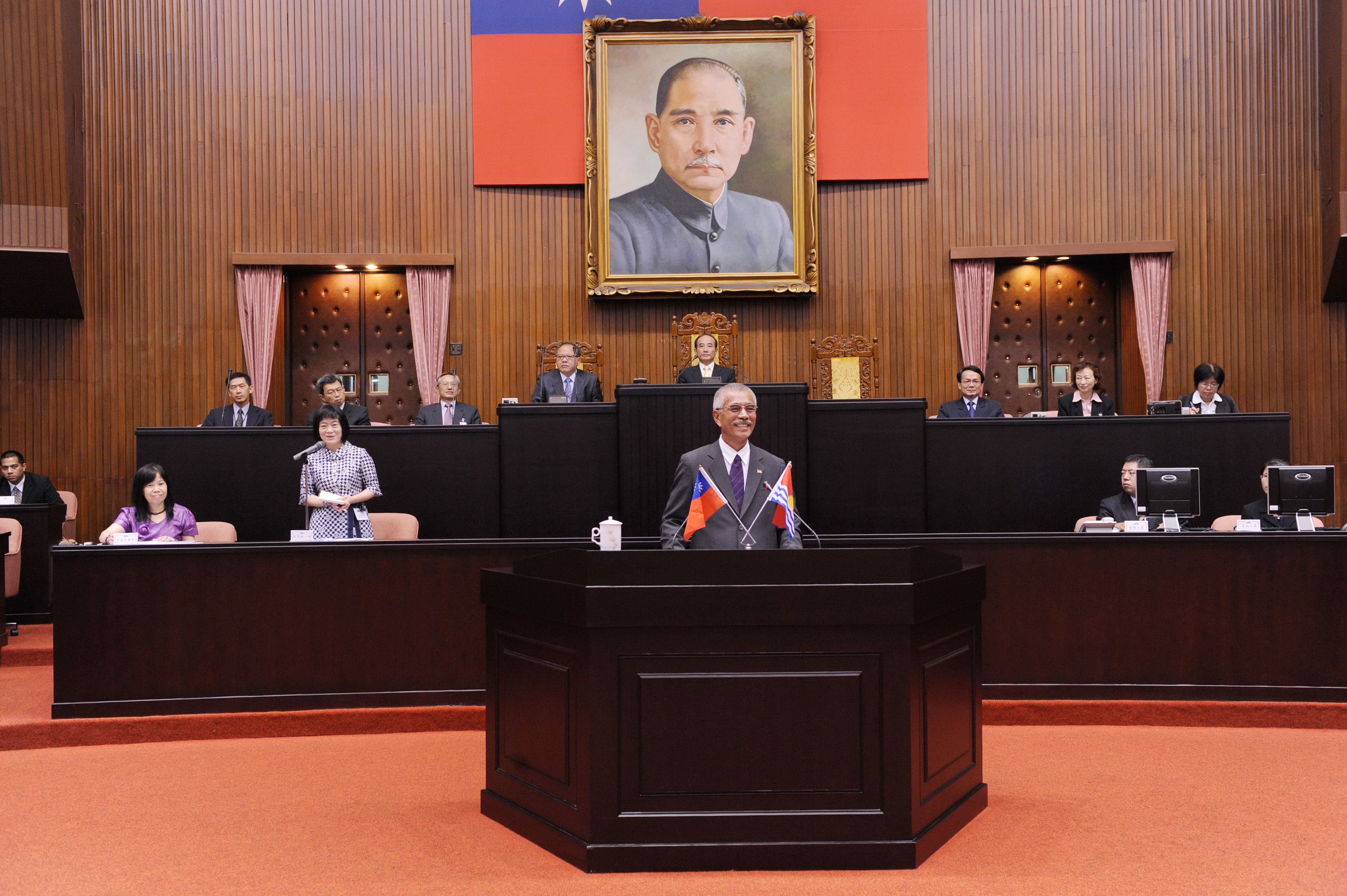
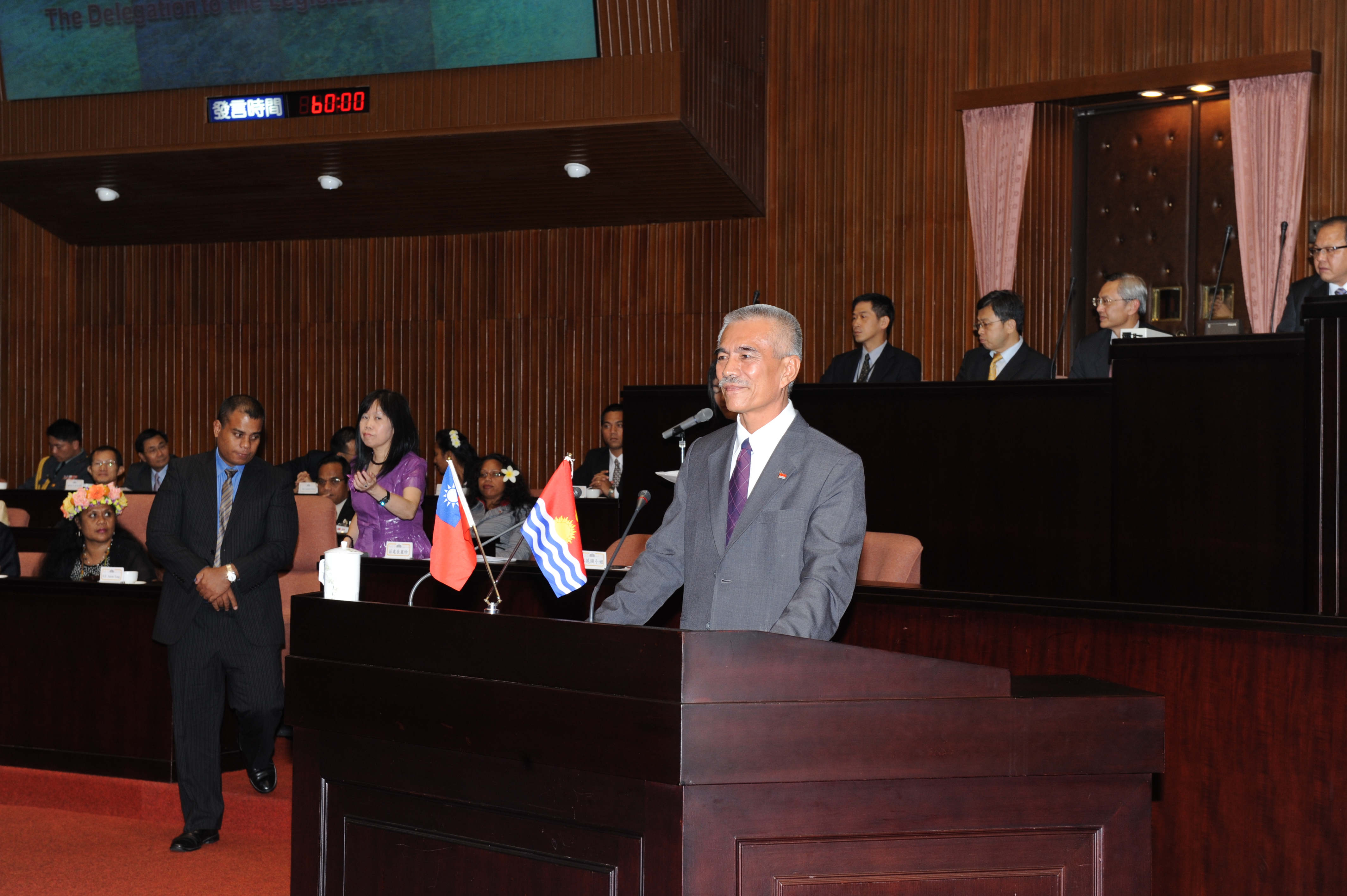
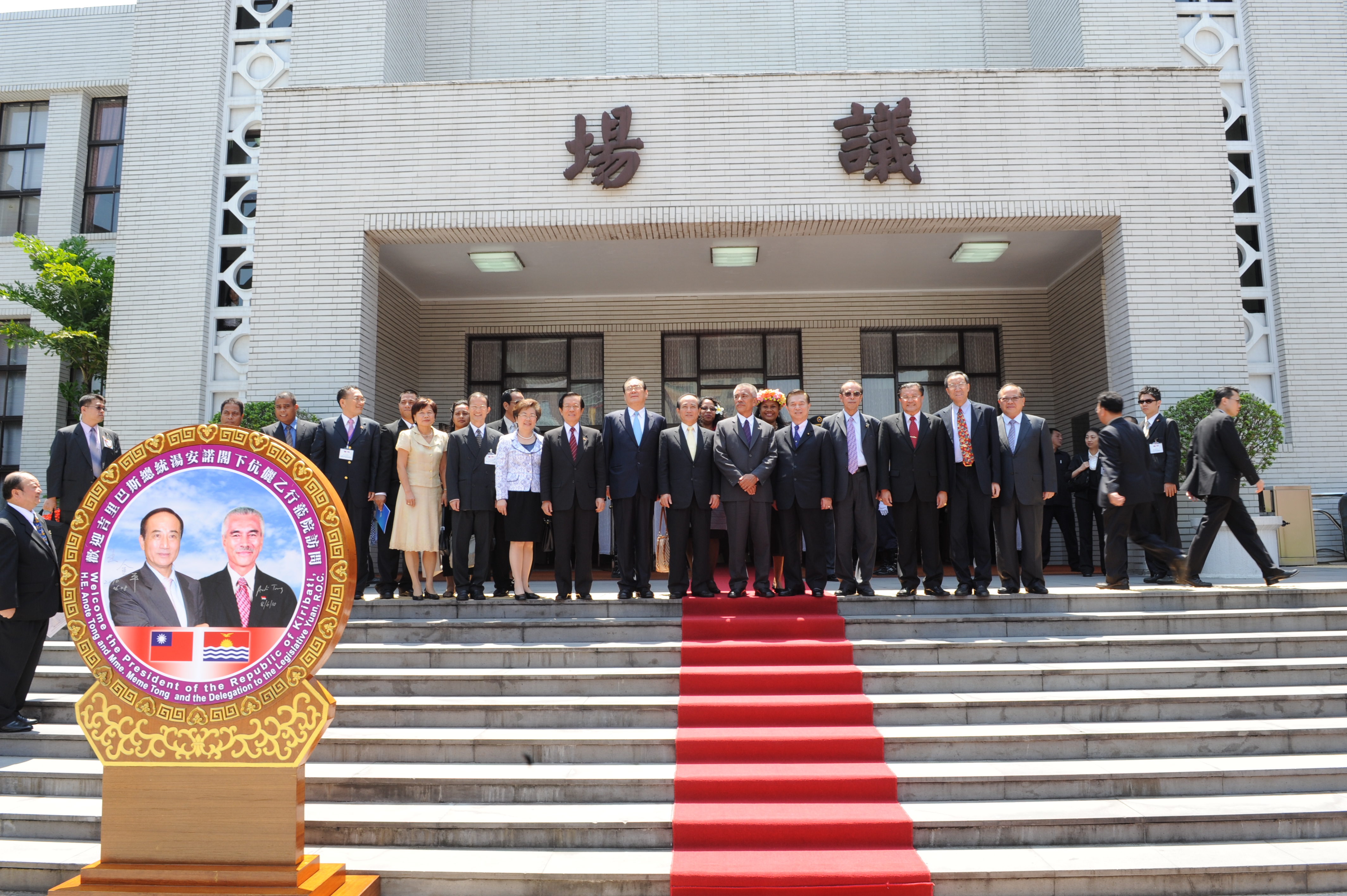
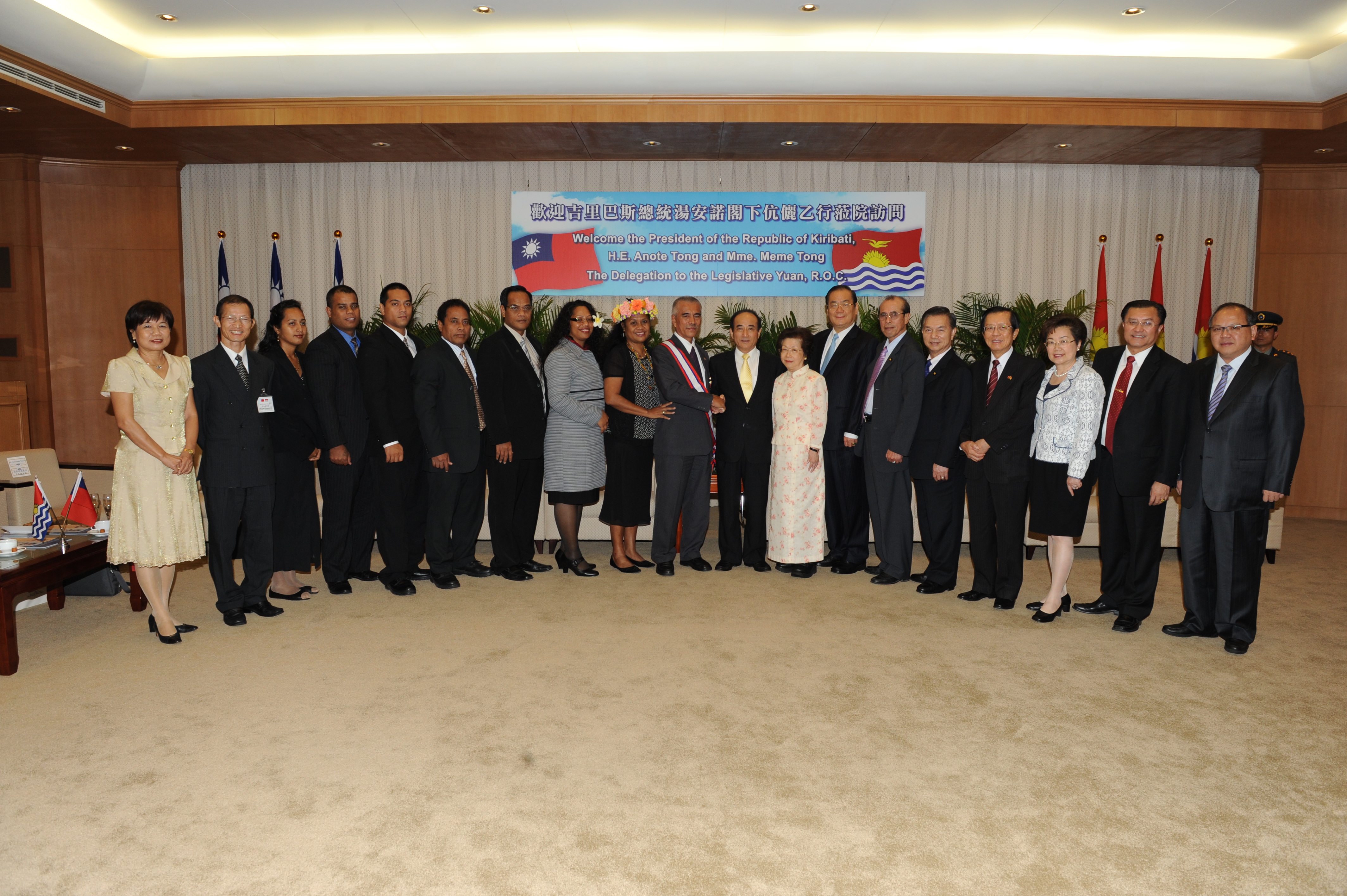
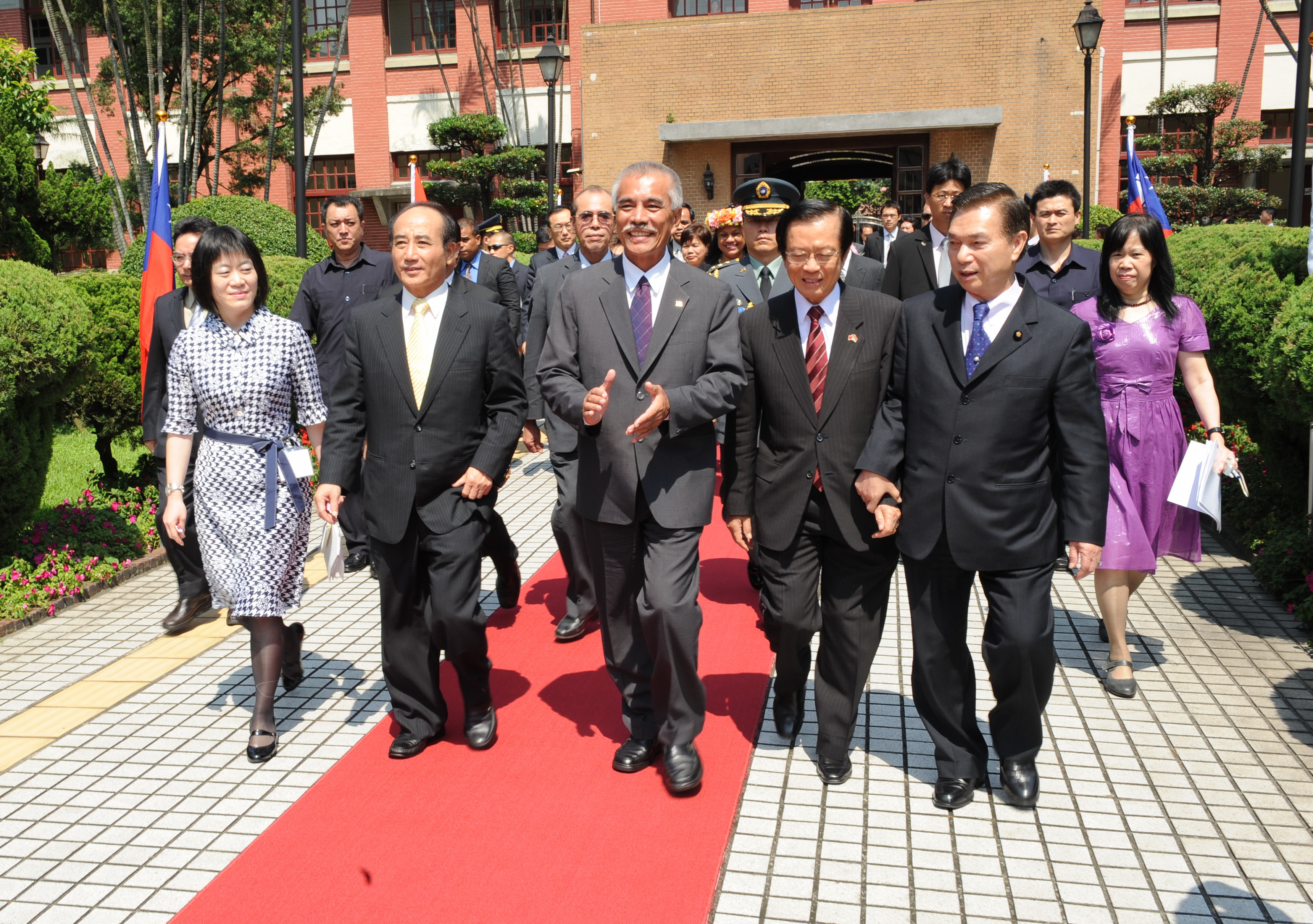
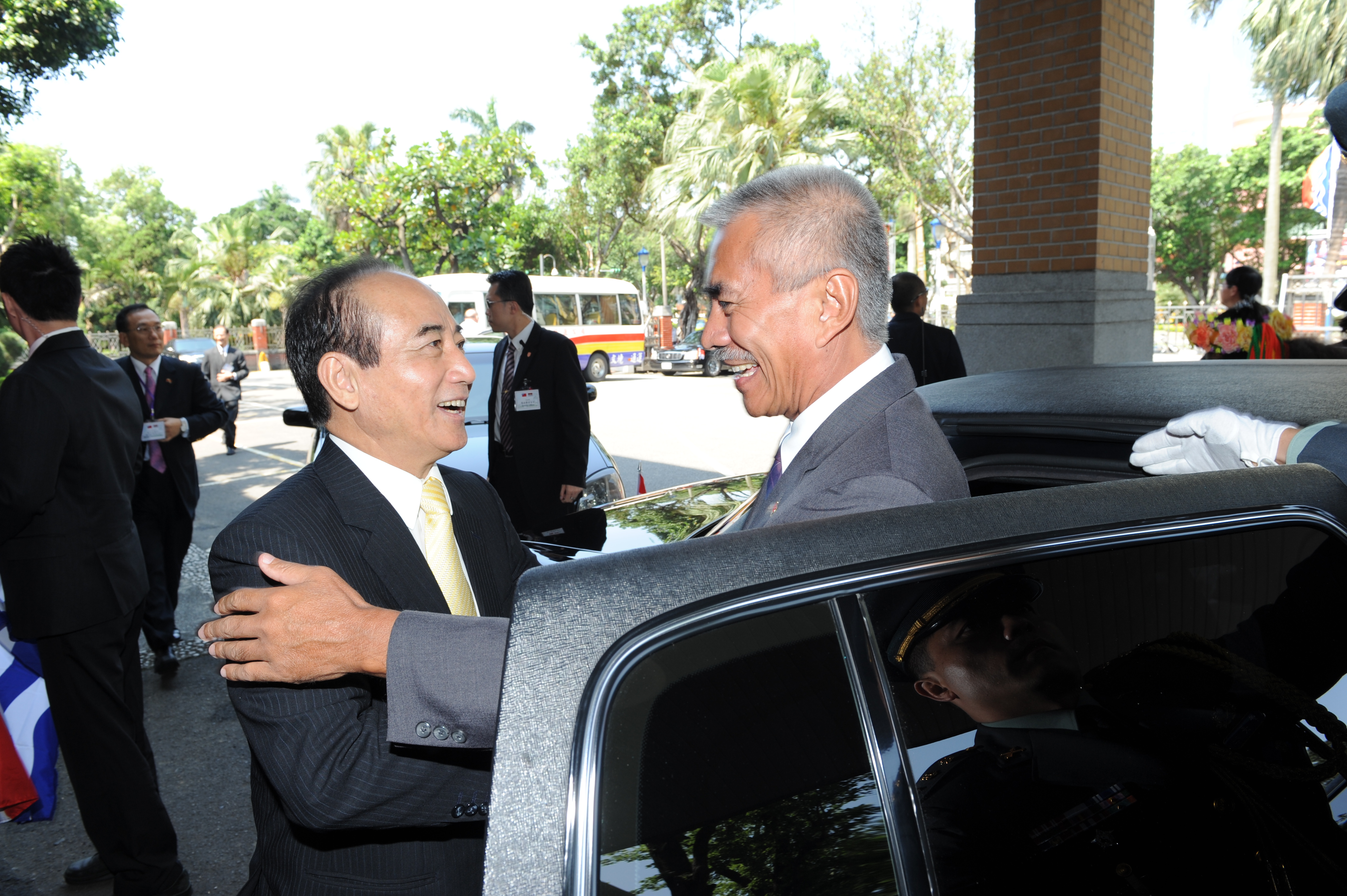
President Jin-Pyng Wang of the Legislative Yuan, Minister Mr. Yang of the Ministry of Foreign Affairs, honored guests, ladies, and gentlemen,
First, I wish to express my most heartfelt greetings and respect to you on behalf of the Republic of Kiribati. In addition, I wish to thank the members of the Legislative Yuan who have stayed up late last night but still made it to my speech despite their mental and physical fatigue. I hope everyone can stay awake and not fall asleep.
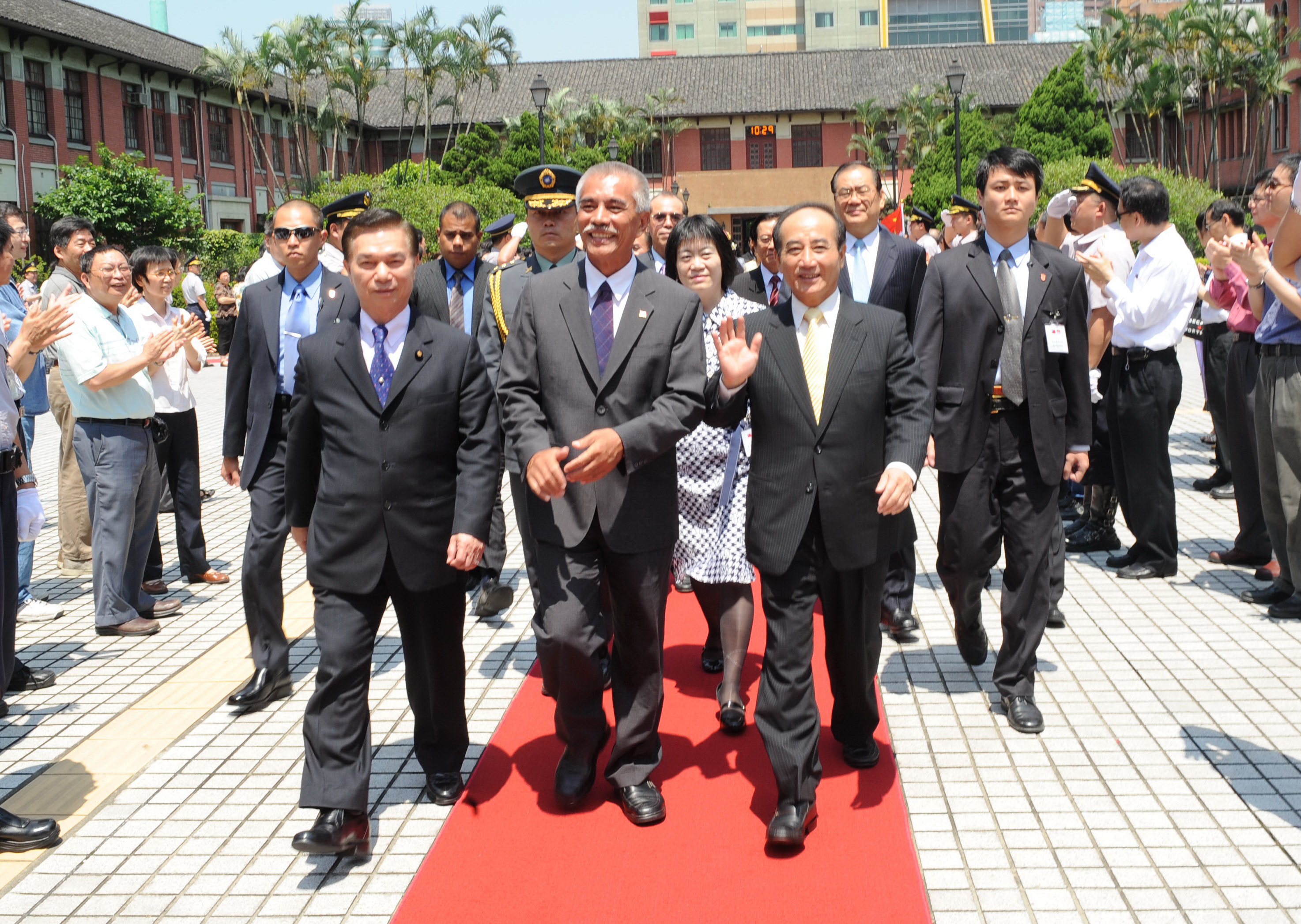
I wish to start by thanking President Ying-Jeou Ma for inviting me to Taiwan and providing me with the opportunity to visit the Legislative Yuan once again. In addition, I wish to thank President Jin-Pyng Wang of the Legislative Yuan for the opportunity to speak at the Legislative Yuan. It is a great honor for me. I also wish to thank you all for your hospitality for my delegation, my wife, and me as soon as we arrived in Taiwan. The people of your nation have always been known for your passion and hospitality which have remained the same on this visit. I am very honored and grateful for the "Medal of Honor for Parliamentary Diplomacy Honored by the Legislative Yuan" from President Jin-Pyng Wang and I wish to thank him for this honor.
The President Mr. Ying-Jeou Ma led a delegation to Kiribati in March this year. The visit was short but very successful. I wish to thank President Ying-Jeou Ma for providing Kiribati and all its people with the opportunity for expressing our gratitude for your long-term support and assistance for development. Since the establishment of diplomatic relations between our countries in 2003, we have continuously strengthened our relations based on a strong foundation of mutual benefits, mutual interests, mutual respect, sincere cooperation, and mutual support. I believe that our two countries will continue to enhance relations.
The topic I wish to discuss today is the issue of climate change. It is an unavoidable issue for us all and we need everyone's support to face and resolve this issue. All the scientific evidence has pointed to the existence of climate change and that it is caused by human activities. The main reason is carbon dioxide emissions created in the industrialization process of humans. Natural disasters have increased and climate patterns have changed across the world. We are experiencing longer droughts and humans have encountered more storms and hurricanes. The August-eighth Flood your country experienced in August last year is a good example of such devastation. I wish to use this opportunity to offer my condolences for the people who have lost their homes and their beloved family members in the August-eighth Flood. The issue we now face in Kiribati is rising sea levels. These examples remind us that we must quickly resolve climate change issues. Regardless of the size or development status, no country can avoid the impact of climate change. The most ironic fact is that countries with the most difficulties mitigating the impact of climate change happen to be those who are not the main drivers of climate change. Rising sea levels pose the strongest threat to low-lying countries. All scientific evidence tells us that climate change poses existential threats to low-lying countries such as Kiribati, Tuvalu, and the Marshall Islands. Rising sea levels will cause seawater intrusion and contaminate the domestic water supply of low-lying countries. This is an issue that we desperately need to resolve. For Kiribati, climate change is a matter of safety as well life and death. We are a low-lying country which is only 2 meters above sea level. If sea levels continue to rise, it will threaten our existence. Our islands are very fragile and we have sustained losses of our infrastructure and properties due to rising sea levels. In addition, the issue of coastal erosion is developing at a speed faster than the government can respond. Therefore, we are particularly grateful for the natural disaster fund provided by Taiwan and the assistance provided for us to protect and rebuild our homes.
We have commenced comprehensive evaluations on issues we will face due to rising sea levels. Of course, we want to remain home and not leave our homeland and we would only consider migration to other places only if we have no other options. Based on our experience, our short-term strategy is to evaluate how we proceed with repairs and reconstruction after sustaining damage. However, this endeavor requires us to mobilize all our resources if we hope to succeed. Our medium-term strategy is to protect our coast line as much as possible so that lives and properties are no longer threatened by coastal erosion. This task requires a comprehensive evaluation and the assistance and investments of other countries. Our long-term strategy is to help our people prepare and teach them that this is an unavoidable issue for the future. In addition, I will also try to help our people acquire more skills so that they can find opportunities for work in other countries.We hope that they have a smooth and swift integration process when they go to a new country. At the same time, we are also very willing to discuss countermeasures with any country interested in this issue. In the past, many people both at home and abroad have criticized my approach and deemed it “defeatist.” I absolutely refute that accusation. All of my countermeasures and actions are pragmatic solutions backed by scientific evidence. It is for this reason that we must act now, before it is too late.
We are losing precious time when we do not act. Kiribati is one of the countries most affected by climate change. When I call on the nations of the world to save energy and reduce carbon emissions, many people question whether such policies will impact their economy or their standards of living. I believe people are inherently wise, and I also believe that the wise choice to be made here is clear. I am not advocating for countries to sacrifice their economic growth or the standards of living of their citizens, but in the face of climate change, we all need to recognize what is happening right now, and that its negative consequences affect us all. This issue is not just one of ethics or morality, but also one of law, and one of responsibility for our international community.
The international community has held many conferences, discussions, and meetings regarding climate change, but none of them seem to be comprehensive enough. For example, the Copenhagen Summit did not include a legally binding agreement. Although the climate change meeting in Mexico later this year is also not comprehensive, we nonetheless look forward to attending. We hope that it provides a solid foundation, and that it can consider the different positions and opinions of different countries. After all, the people of all countries desperately need a binding international climate agreement. I believe that to achieve a legally binding international pact we must invoke people’s moral responsibility, so that we can pressure countries or entities that harm the environment and limit their harmful activities. Therefore, I think that no country should have sovereignty over the issue of greenhouse gas emissions because all countries have to bear the consequences.
The Copenhagen Summit taught us that if we are to make a breakthrough on this issue, we must recognize all of our differences and work towards a solution that we can all accept. In this process, mutual respect and trust between countries are essential. Therefore, we would like to welcome Taiwan to join international organizations to discuss the challenges posed by climate change. As this issue requires a global solution to succeed, all countries must stand united. So far, Taiwan has successfully joined the WHA, and we fully support Taiwan’s bid to join the UNFCCC, so that we may discuss this issue together. In order to gain more international consensus before the Cancun Summit on Climate Change in Mexico this year, Kiribati plans to hold an international conference on climate change in October, and invite people from all fields to express their opinions. We hope that all countries can better understand the challenges of climate change and rising sea-levels that Kiribati is currently facing. Therefore, we also welcome Taiwan to support our efforts and to host or prepare this important international conference with us.
Honorable President Wang, I would also like to highlight that one of the most important aspects of the relationship between our two nations is our mutual cooperation plan. The people of Kiribati enjoy their current standard of living because of all the assistance Taiwan has provided, and we owe a lot of our ongoing development to your help. The assistance provided by Taiwan has deeply impacted multiple aspects of the lives of our citizens and our society, including transportation, basic infrastructure, community development, education, and professional training, among others. The model of aid that Taiwan provides allows us to develop our plans to the fullest, and I highly encourage other countries to follow Taiwan’s highly efficient foreign aid model. In addition, the loan agreement we are going to sign with ICDF today will help us further develop our international airport, so that it may comply with international aviation safety standards, and enable Kiribati to be more connected with the world. This is also a very important part of the sustainable development plan for Kiribati.
Honorable President Wang, another thing worth emphasizing is the outstanding performance of Taiwan’s Agricultural Technical Mission in Kiribati. Thanks to their dedication, many cabinet members and secretaries can now plant fruits and vegetables in their own gardens. The impact of this project is quite immense because it has encouraged the people of Kiribati to eat more fruits and vegetables, allowing us to lead healthier lives and be less dependent on medicine, while reducing reliance on food imports.
All Pacific Island countries can clearly see the achievements of Taiwan’s Agricultural Technical Mission in Kiribati. In the past few years, the Mission has even invited many neighboring countries to Kiribati to share its experiences. It is also worth mentioning that the many volunteer groups from Taiwan stationed in Kiribati have helped us greatly with our development, and facilitated many exchanges between the people of our two countries, so that we can learn from each other and appreciate each other’s cultures. The government of Kiribati will continue to support the development of these relations in order to further strengthen the friendship between our two nations.
I would also like to thank your great nation for providing opportunities to study in Taiwan to our young people. Last night I was very happy to meet many of the Kiribati students in Taiwan. From their expressions, I can see that they are full of pride and gratitude. They mentioned that the most difficult challenge during their studies had been learning Chinese, but I told them that learning is not always a smooth process.
I have committed to expanding the importance of higher education for a long time because it can provide the youth with more diverse ways of thinking. I believe this is essential to expand our horizons. If there is a lack of diversity, the whole society will stagnate. Therefore, I would like to thank your great nation for providing students from Kiribati with the opportunity to study here. I am convinced that after they graduate and return to Kiribati, they will never forget their experiences in Taiwan.
Honorable President Wang, please allow me to take a few minutes to discuss the significance of the bilateral relationship between our two nations. Kiribati is a small country comprised by 33 small islands, most of our islands are coral atolls distributed in the vast oceans. In fact, many people think Kiribati is a water nation because we have more oceans than land. Our exclusive economic zone is the largest in the Pacific Ocean and is abundant in fishery resources. Fishing licenses are still an important source of tax revenue every year for our government; therefore, we invite all countries to participate in our fishery development plan, hoping that this will provide us with a more stable source of income and help us develop sustainable fishery resources. I also hope that the international community continues monitoring the Parties to the Nauru Agreement’s (PNA) Third Implementation Agreement Program, which addresses sustainability in the fishing industry. We undoubtedly believe that this program will provide the people of Kiribati with more opportunities since our fishery resources are a crucial part of our economic growth. I would like to invite Taiwanese fishery-related businesses to further invest and participate in our industry. We have been able to continue to develop because of your support. Thank you very much for your help.
Kiribati is a small developing island country, and a least developed country. We are all aware of the development challenges Kiribati is currently facing. Therefore, we would like to seek assistance from our allies to help our people and our country move forward. We are constantly looking for new development opportunities, rather than relying too much on past models, and I believe your great nation’s booming business community is an important opportunity for us. As the experience of other countries shows, including Taiwan, foreign investment is the most crucial method to promote economic development. For this reason, we hope to attract more foreign investment to boost Kiribati’s economic development. I would also like to reiterate, once again, that we want to deepen our cooperation with your great nation and to attract Taiwanese industry players to invest in our country. For the same reason, I hope to sign a bilateral agreement with your country as soon as possible to facilitate Taiwanese investments in Kiribati.
Honorable President Wang, as I just mentioned, the relationship between our two countries is prosperous because it is built on mutual trust and benefit. Although our contributions to the bilateral relationship are limited, our fishery resources can provide reliable food security and more investment opportunities for your country. At the same time, our maritime transportation services can also provide new investment opportunities for your people. For these reasons, I would like to restate our support for Taiwan’s accession to international organizations and the international community. I would also like to emphasize that our government will continue to work hand in hand with your great nation in the face of all regional and international issues.
As I mentioned earlier, the relationship between our two countries is based on mutual respect for our sovereignty and the sharing of values such as democracy, the rule of law, and human rights. The leaders of a democratic country must be held accountable to their people; leaders must serve their people, not vice versa. For this reason, the interests of the people are more important than any individual benefit. Finally, I would like to thank President Wang once again for allowing me to speak at the Legislative Yuan. I would also like to thank President Ma for extending an invitation to me and my delegation to visit Taiwan. Thank you all for your warm welcome. I believe this visit will further strengthen the bilateral relationship between our two nations.