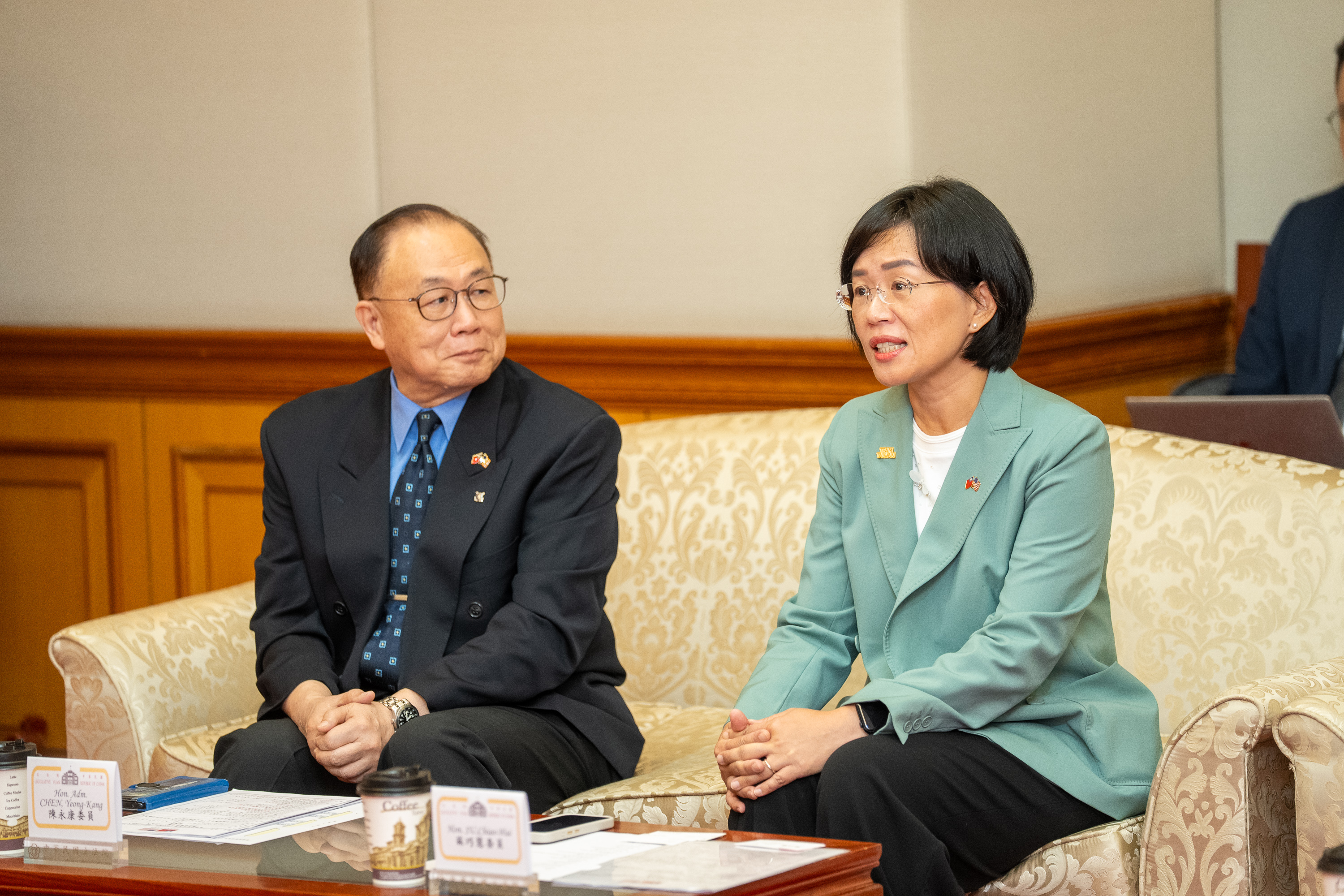
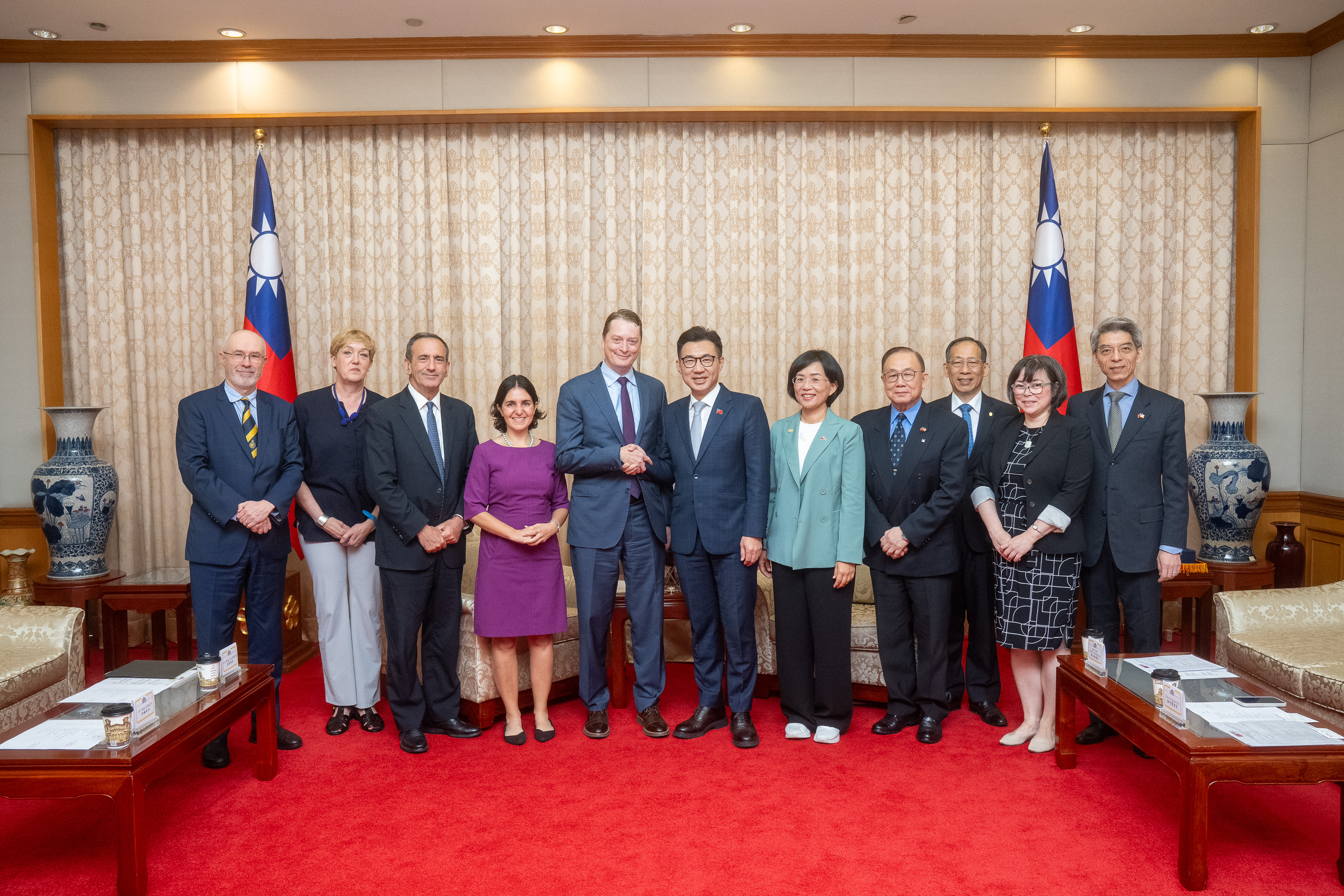
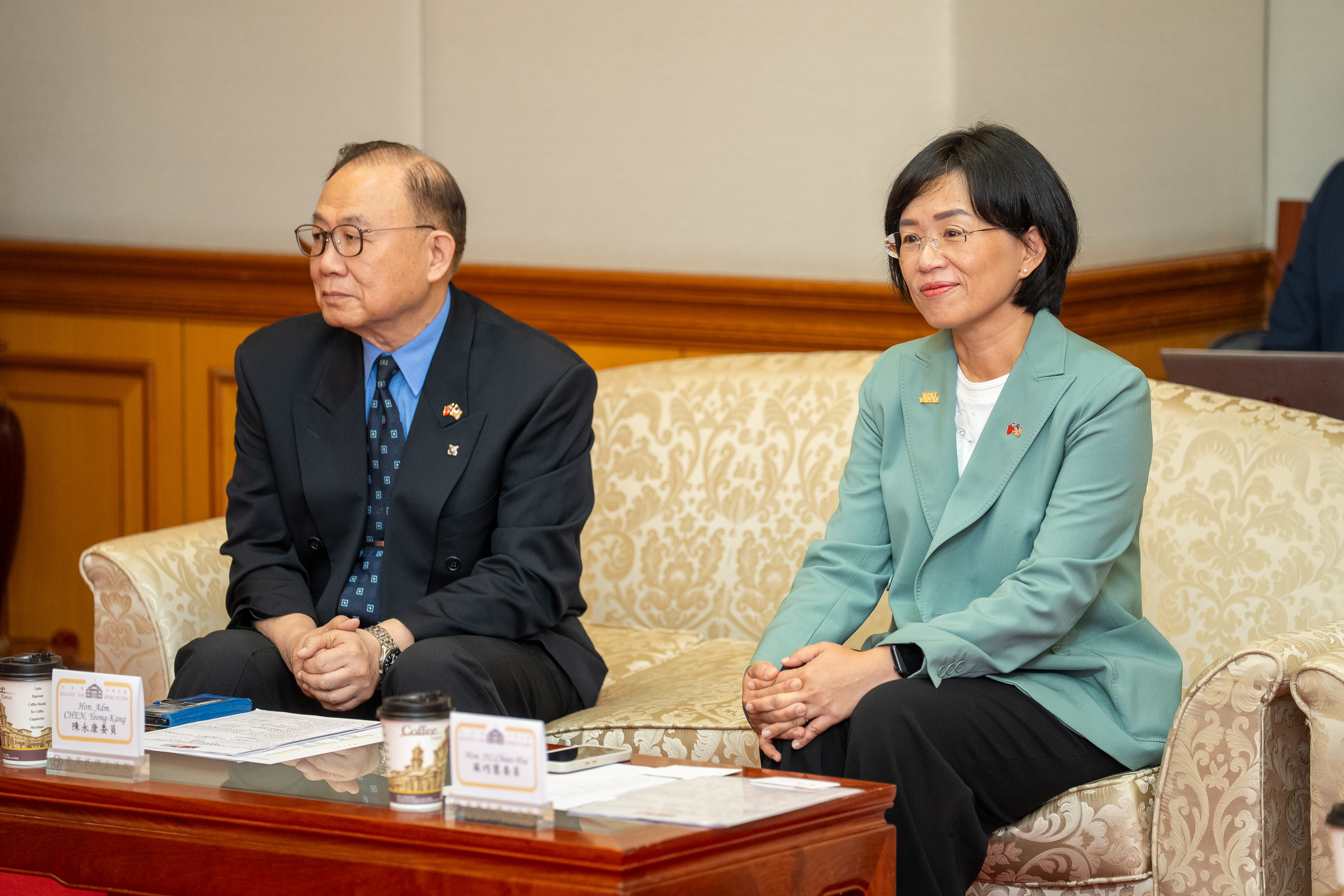
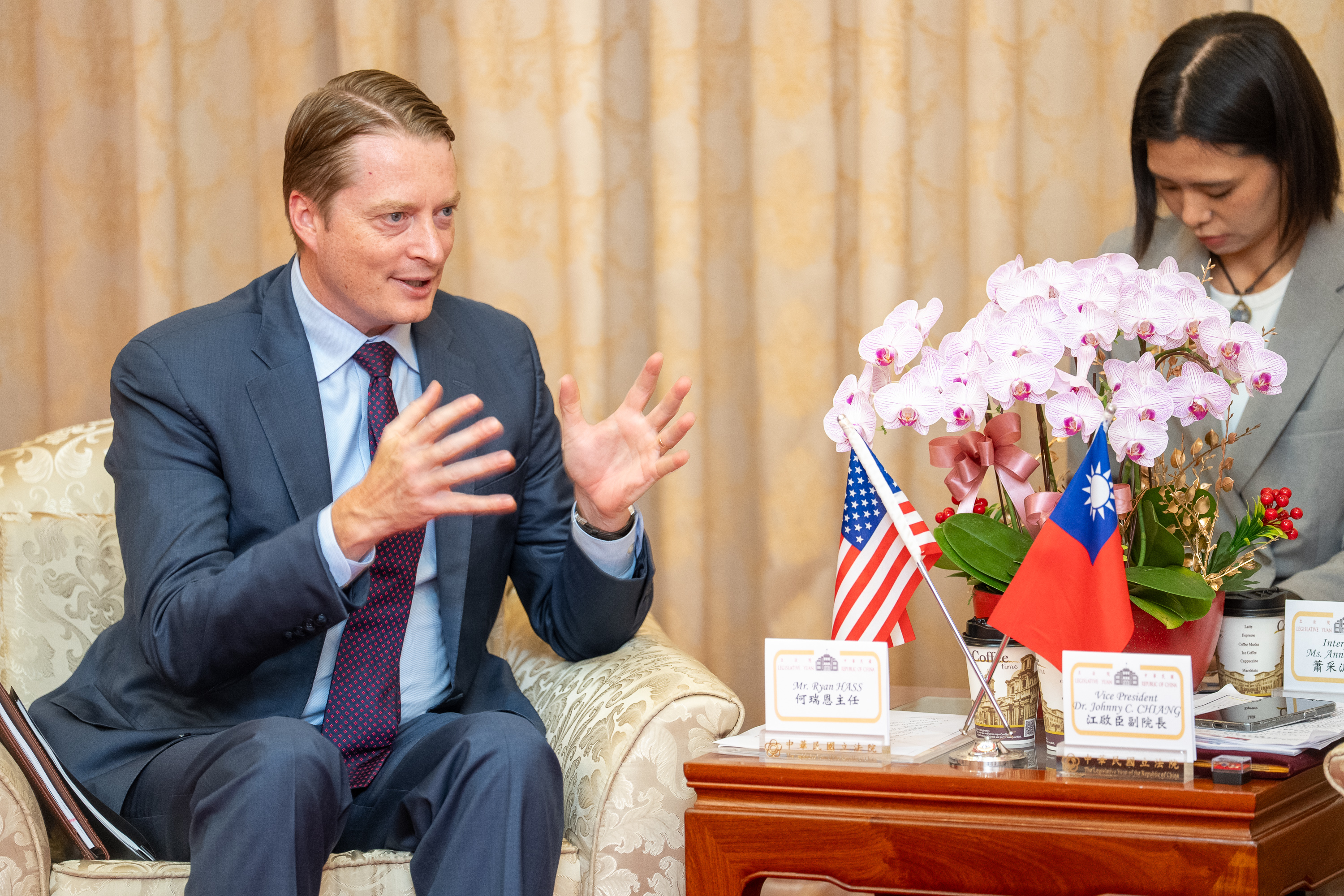
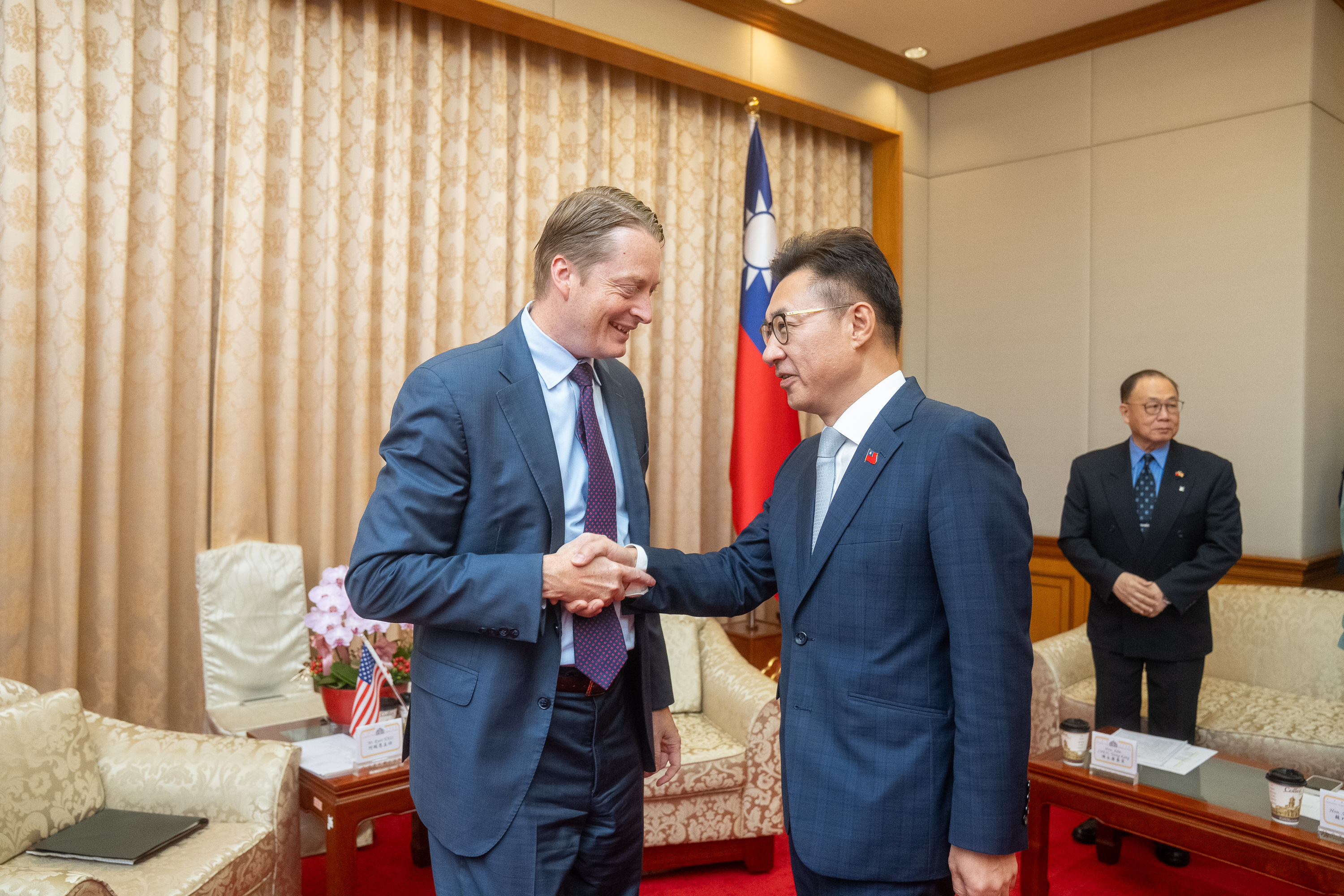
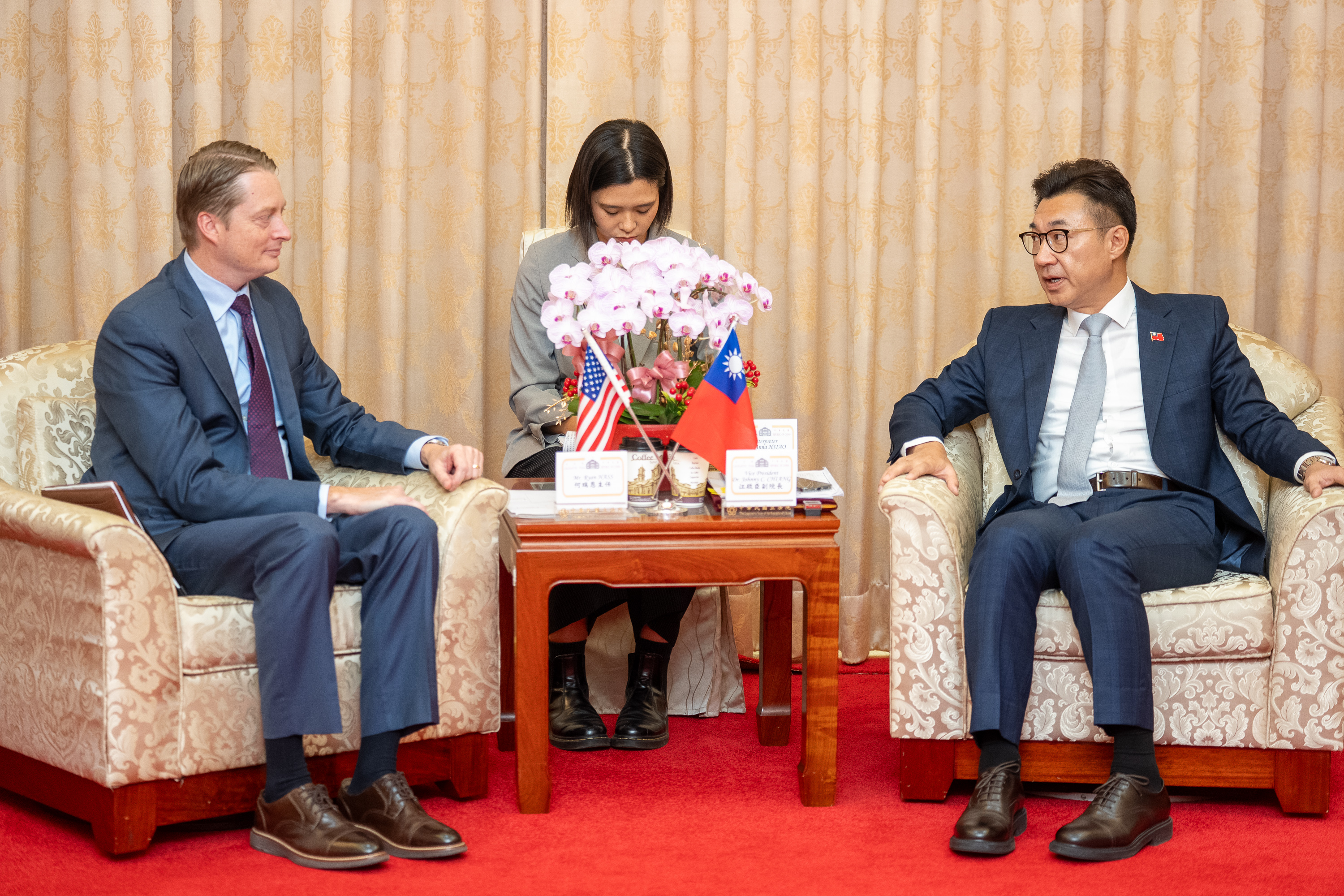
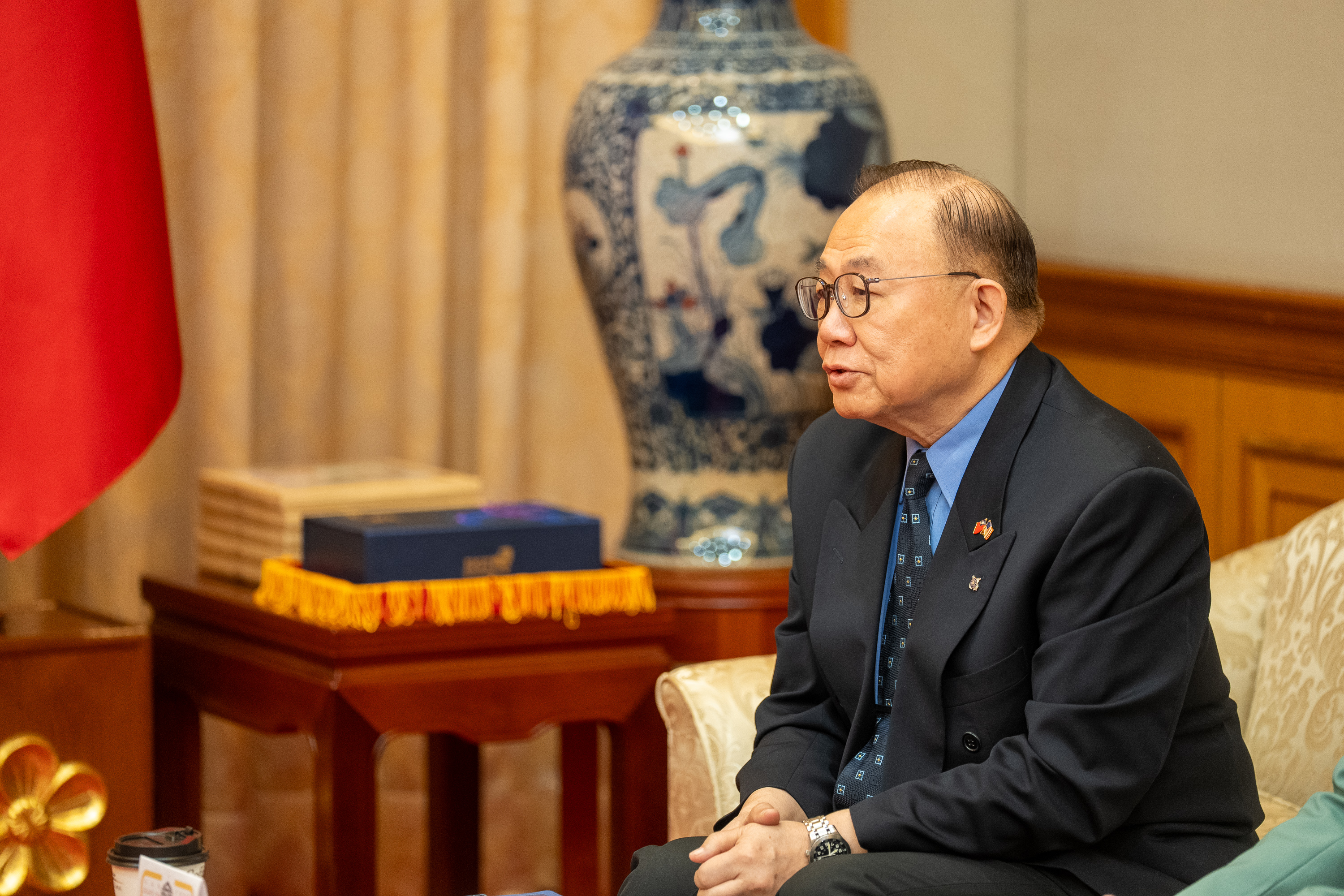
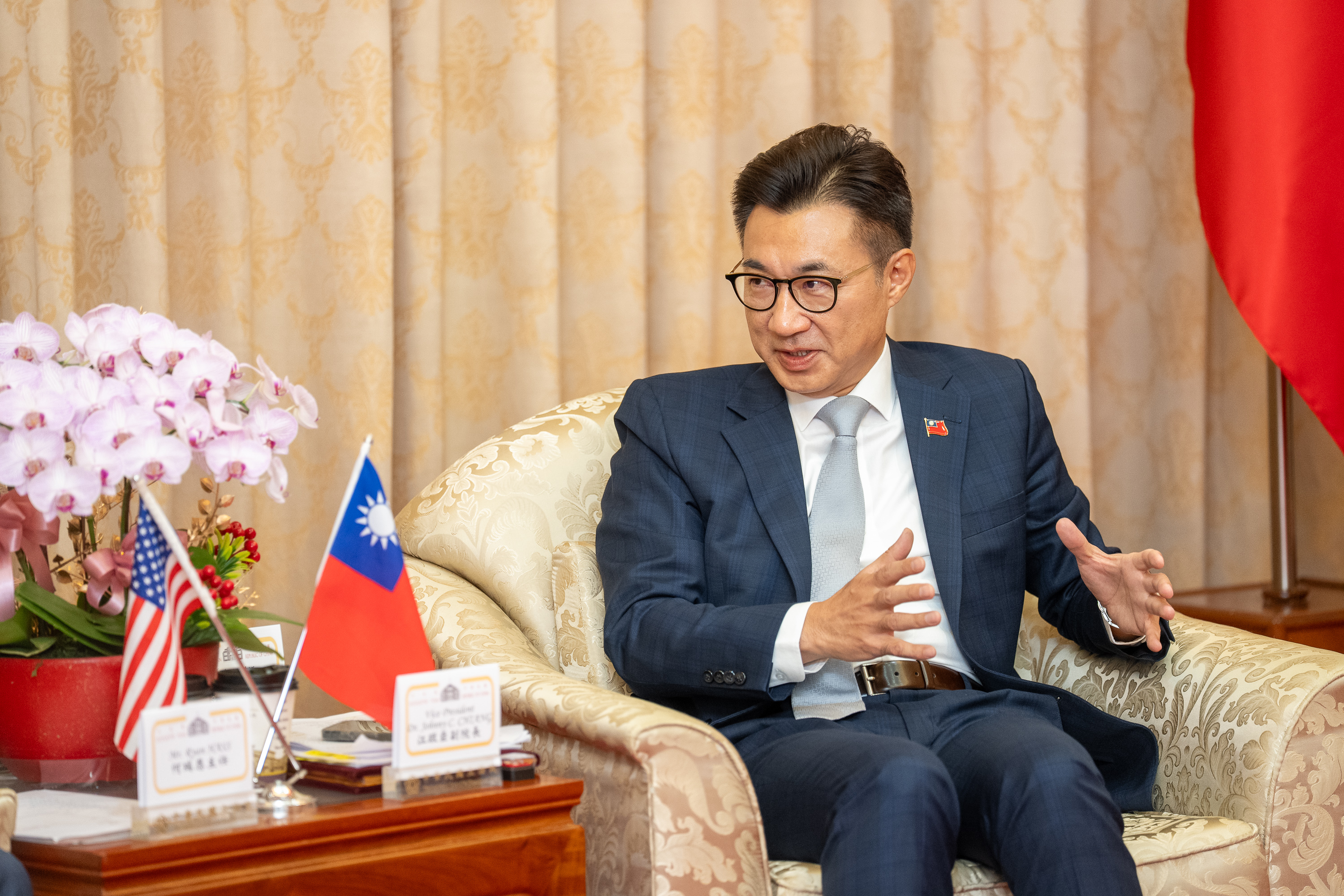
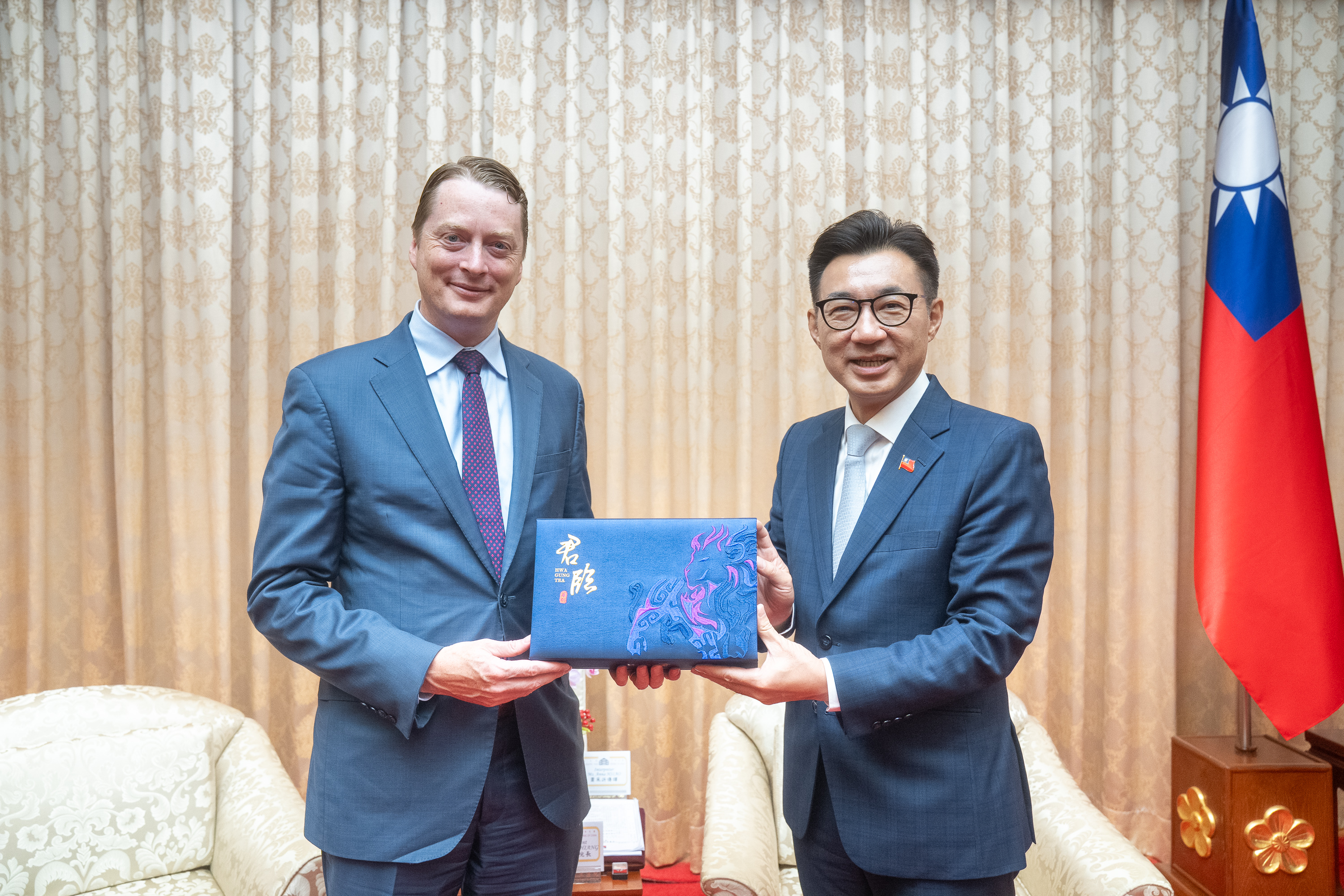
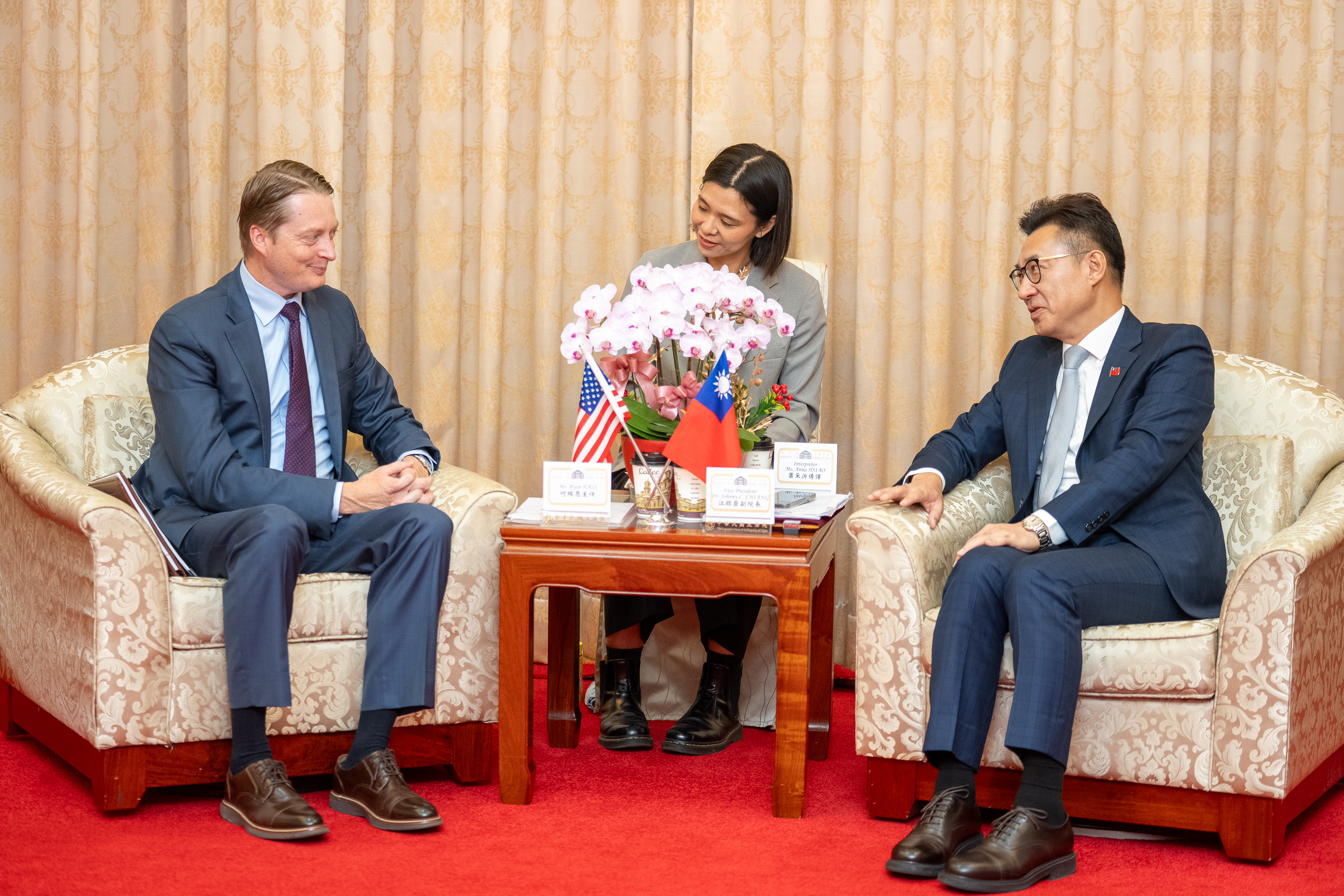
On the morning of August 13, Vice President Johnny C. Chiang of the Legislative Yuan, accompanied by KMT Legislator Chen Yeong-Kang, DPP Legislator Su Chiao-Hui, Department of International Affairs Director Kevin C.F. Lin, and Director-General Chang Chia-Cheng of the Ministry of Foreign Affairs, met with a six-member delegation of scholars and experts from the Brookings Institution.
Vice President Chiang, on behalf of the Legislative Yuan and President Daniel K.Y. Han, extended a warm welcome to the visiting delegation and joined the attending legislators and delegation members for a commemorative photograph. Vice President Chiang introduced the attending legislators to the delegation and expressed his deep appreciation for the longstanding support extended by the United States government to Taiwan, which has enabled the steady deepening and stable development of bilateral relations. Vice President Chiang further noted that the recent Taiwan-U.S. tariff negotiations have drawn widespread attention from both the media and the public. He highlighted concerns regarding the imposition of reciprocal tariffs by the United States, citing his own constituency of Taichung City as an example. As a hub of Taiwan’s industry and manufacturing, and home to many small and medium-sized enterprises, Taichung would face immense pressure if reciprocal tariffs were added on top of existing tariffs. He cautioned that such a scenario could result in a “double tariff” burden, posing severe challenges for businesses and even raising the risk of factory closures.
Vice President Chiang went on to state that over the past five years, the center of Taiwan’s external trade has gradually shifted from mainland China to the United States, with bilateral trade registering significant growth. At present, Taiwan and the United States enjoy a high degree of complementarity and potential for cooperation in industry and supply chains. Vice President Chiang expressed the hope that the tariff negotiations will not only secure the greatest benefits for both sides but also further deepen bilateral trade relations. Looking ahead, how Taiwan balances national interests with industrial development has become a critical issue in advancing Taiwan-U.S. economic and trade cooperation.
In conclusion, Vice President Chiang underscored that Taiwan’s commitment to strengthening its self-defense capabilities should by no means be construed as “free-riding,” but rather as assuming its role as a responsible stakeholder. He emphasized that parties across the political spectrum have reached a consensus on increasing the share of national defense spending as a proportion of GDP. He also extended particular appreciation to U.S. Democratic Representative Raja Krishnamoorthi for recently introducing the “Six Assurances to Taiwan Act,” which seeks to formally codify into U.S. domestic law the “Six Assurances” first articulated during the Reagan administration. He expressed the hope that Taiwan-U.S. relations will continue to deepen on the foundation of the Taiwan Relations Act, and that both sides will work hand in hand to advance bilateral cooperation in various fields, thereby achieving mutual benefit.
Members of the Brookings Institution delegation stated during the meeting that they were deeply honored to visit Taiwan and expressed gratitude to the Legislative Yuan for its warm reception despite its busy schedule. They remarked that during their stay they not only experienced the warmth of the Taiwanese people but also fondly enjoyed Taiwan’s iconic cuisine, such as Din Tai Fung. In addition to offering several observations on the Trump administration’s new policies and the Taiwan-U.S. tariff agreement, the delegation also addressed issues such as the war in Ukraine, the situation in the Middle East, and cross-strait relations involving the United States, China, and Taiwan. They voiced concern over the escalation of regional conflicts worldwide and commended Taiwan for its contributions to peace and stability in the Taiwan Strait. The delegates also cautioned that Taiwan must remain vigilant against the possibility of continued pressure from China under certain circumstances. They further shared U.S. perspectives, noting that many island nations are currently conducting careful assessments of their own security and external affairs. As a key member of the Indo-Pacific region, Taiwan should endeavor to avoid becoming a flashpoint of international conflict akin to Ukraine or Israel.
During the bilateral exchange, Legislator Chen Yeong-Kang noted that, as a member of the Foreign Affairs and National Defense Committee, he has observed Taiwan’s defense budget steadily increasing. In addition to expanding weapons procurement and military deployments, he emphasized the importance of strengthening personnel training and talent retention. He expressed the hope that Taiwan and the United States can work together to cultivate more outstanding young professionals, thereby deepening defense and security exchanges and fostering peace in the Taiwan Strait as well as sustainable development in the region. Legislator Chen further stated that, in the face of a complex international environment and external threats, Taiwan must also carefully consider the issue of energy supply security when confronted with external pressures. He suggested that Taiwan and the United States could strengthen cooperation in protecting information and communications systems as well as critical infrastructure. At the same time, with democracy and the rule of law as guiding principles, both sides should actively pursue the development of emerging technologies such as unmanned aerial vehicles (UAVs) and unmanned underwater vehicles (UUVs), thereby enhancing the scope and capacity of bilateral cooperation.
Legislator Su Chiao-Hui stated that, in the face of a complex and challenging international landscape, Taiwan must present a united front and firmly uphold the shared positions of “Team Taiwan” and “Taiwan First.” As a representative of the ruling party, she emphasized that Taiwan must not only strengthen its defense capabilities but also continue to enhance its economic strength, which is closely tied to the outcome of the Taiwan-U.S. tariff negotiations. Legislator Su further noted that strengthening national and societal resilience is a key principle of the ruling party at present. She cited as an example this year’s Han Kuang Exercises, which for the first time incorporated participation from civil society, describing it as a concrete measure to effectively enhance the resilience of the nation’s overall defense.
The two sides also held extensive exchanges of views on issues including cross-strait relations, advanced AI technologies, China’s cognitive warfare against Taiwan, and nuclear weapons development. The meeting lasted approximately 60 minutes and concluded successfully with the exchange of commemorative gifts and a group photograph.