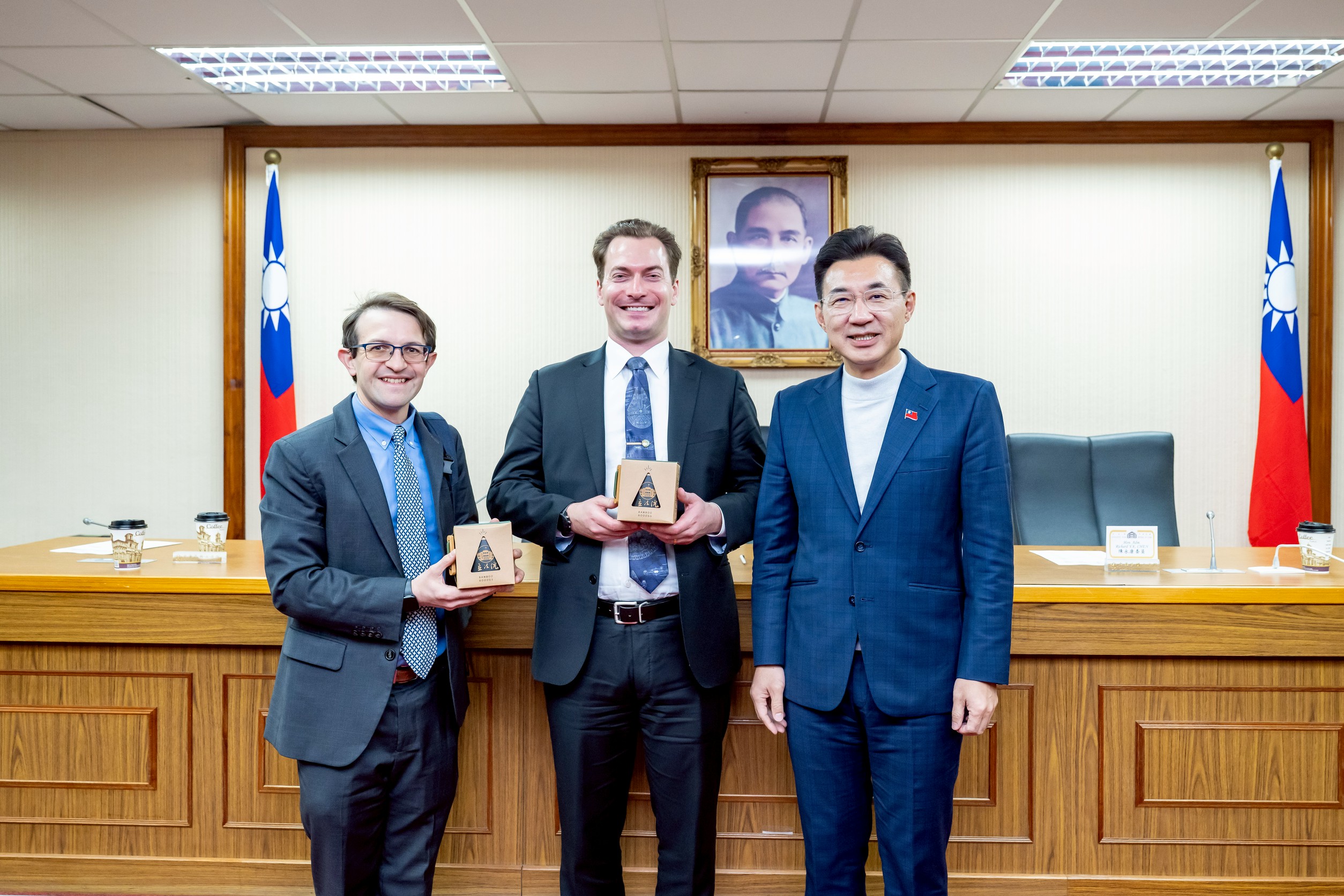
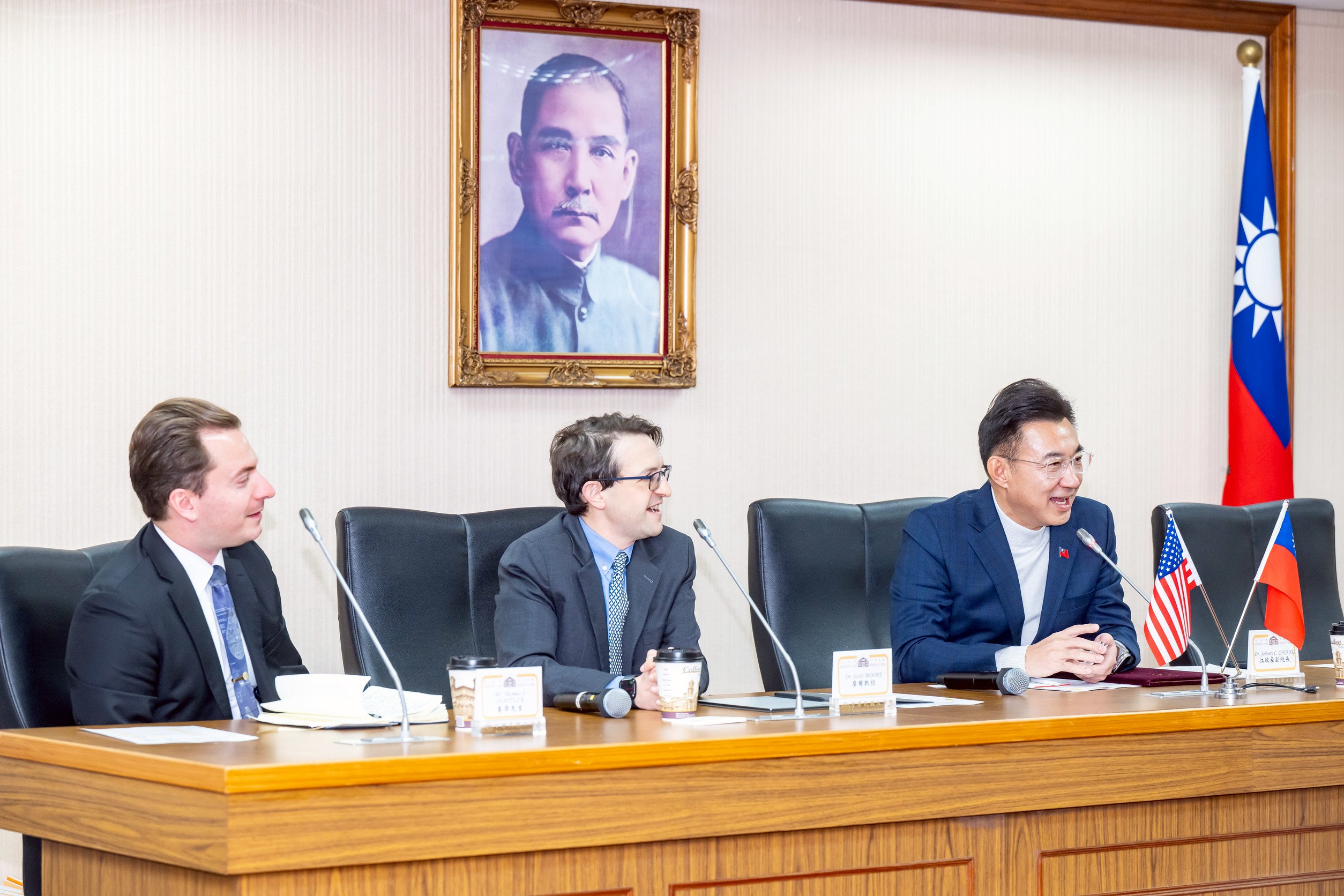
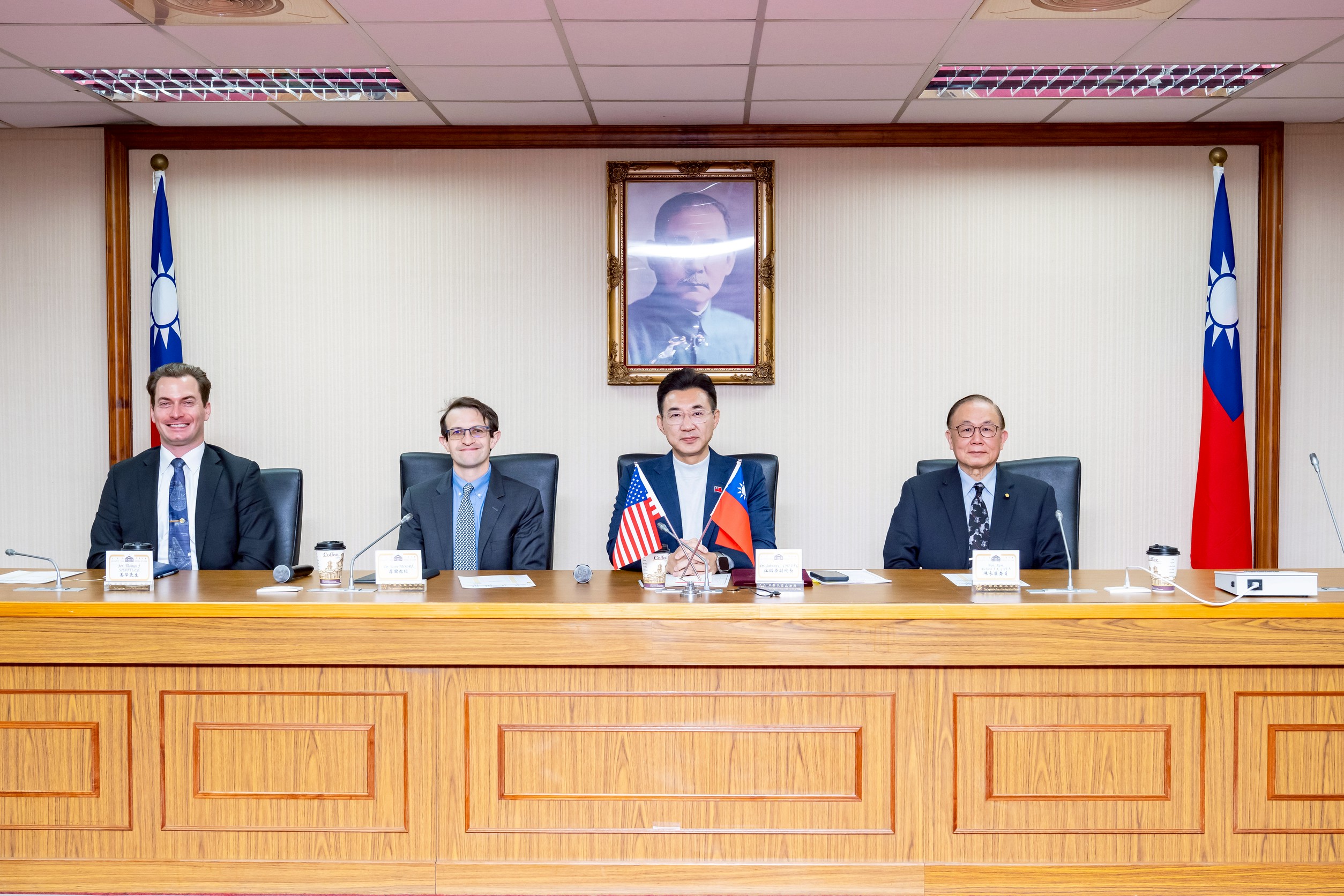
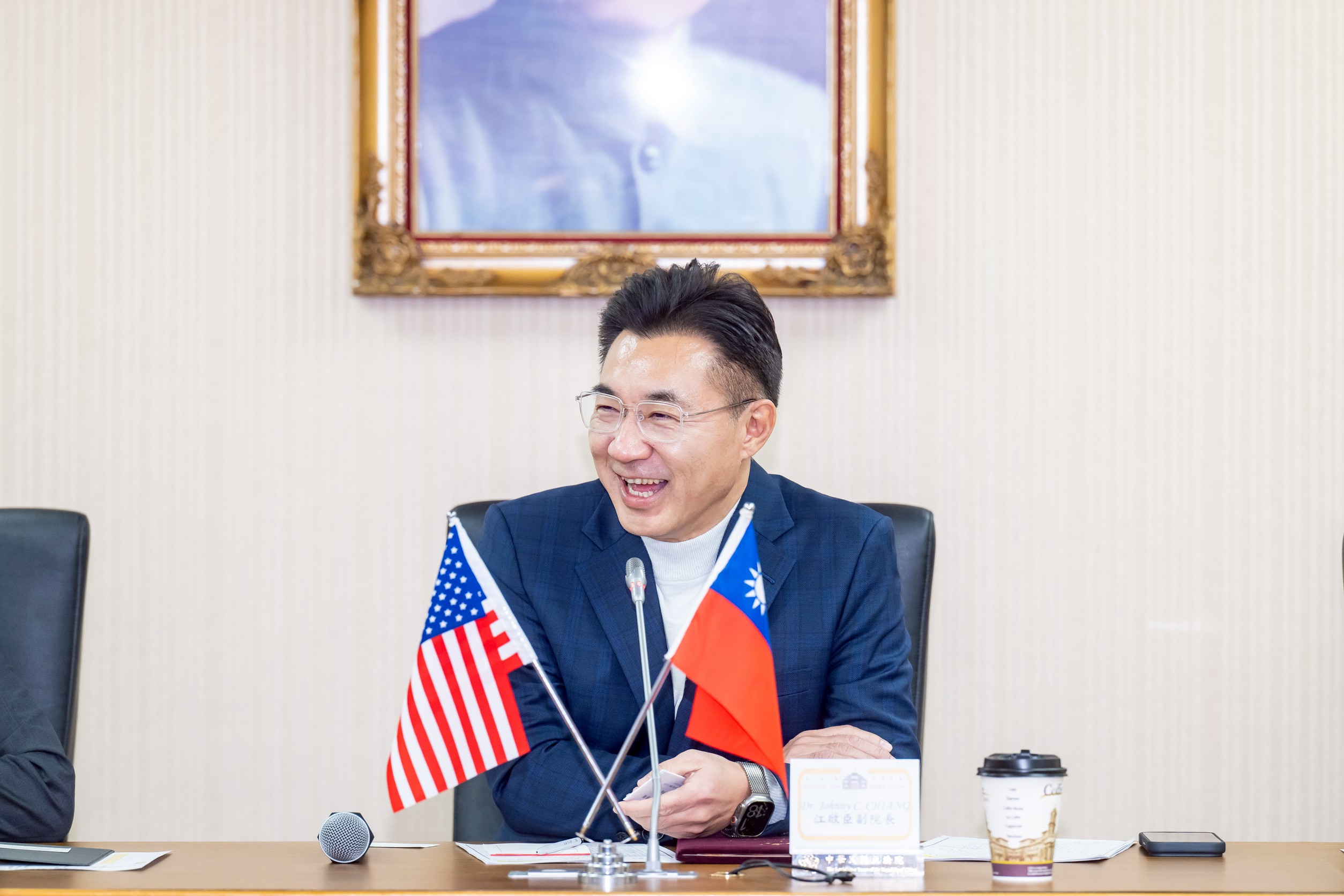
At noon on January 7, Vice President Dr. Johnny C. Chiang (江啟臣) of the Legislative Yuan, accompanied by KMT Legislator Adm. Chen Yeong-Kang, received a delegation of faculty and students from the University of Pennsylvania’s research center.
Legislator Chen first provided the delegation with a brief overview of Taiwan’s strategic position, as well as the broader context of current cross-strait relations and regional dynamics. Vice President Chiang then delivered welcoming remarks, expressing his honor in receiving the delegation from the University of Pennsylvania’s research center to the Legislative Yuan. Vice President Chiang noted that he had earned his master’s degree from the University of Pittsburgh, which gave him a long-standing connection with the University of Pennsylvania, and said he was delighted to host the delegation on this occasion.
Vice President Chiang pointed out that the 11th Legislative Yuan reflects a political landscape in which no single party holds an outright majority. He said that while the executive branch is led by the Democratic Progressive Party (DPP), the Kuomintang (KMT) holds the largest number of seats in the legislature, alongside the newly established Taiwan People’s Party (TPP), together demonstrating the diversity and vitality of Taiwan’s democratic politics. He further noted that although the three parties may differ and engage in vigorous debate on certain domestic issues, they consistently demonstrate a high degree of consensus on key matters such as safeguarding Taiwan’s external relations and ensuring national security, fully reflecting the maturity and resilience of Taiwan’s democratic system.
Vice President Chiang emphasized that Taiwan, as a leading example of democracy in Asia, has long drawn international attention for its political development and governance. He encouraged the students to continue following issues related to Taiwan after returning to the United States, adding that a Taiwan steadfast in its pursuit and defense of democratic values and freedom is deserving of sustained, in-depth study by the international academic community.
During the exchange, members of the delegation inquired about the planning and implementation of Taiwan’s defense budget. Legislator Chen responded that, in addition to prioritizing the procurement of hardware such as weapons systems, the government must also strengthen training, education, as well as operational and application capabilities. He highlighted that by improving its training systems and building robust logistics and maintenance capacities, Taiwan could comprehensively enhance the overall defensive and combat readiness of its armed forces.
In response to further questions, Vice President Chiang said that more than 90 percent of Taiwan’s energy supply relies on imports, with approximately 80 percent of its electricity generated from thermal power, indicating a highly concentrated energy portfolio. He noted that in the face of potential military blockades or regional instability, vulnerabilities remain within the energy supply system. Vice President Chiang added that while the government is actively promoting energy transition and increasing the use of diversified energy sources, strengthening energy resilience remains an urgent and ongoing priority.
The two sides then engaged in in-depth discussions on cross-strait relations, national defense and security, energy transition, Taiwan–U.S. relations, and the current international situation. Vice President Chiang concluded by welcoming the delegation to visit again in the future and encouraged members to travel to Taichung and other cities to experience firsthand Taiwan’s rich and vibrant local culture. The meeting lasted approximately one hour in a warm and candid atmosphere and concluded successfully with both sides exchanging commemorative gifts and taking a group photo. (2026/01/07)