



On the afternoon of January 15, Legislative Yuan President Daniel K.Y. Han (韓國瑜) met with a nine-member delegation of economic resilience and business leaders from the Center for International Private Enterprise (CIPE), accompanied by KMT Legislator Dr. Lin Chien-Chi, DPP Legislator Dr. Chuang Jui-Hsiung, and TPP Legislator Dr. Liu Shu-Pin, among others.

In his remarks, President Han first extended a warm welcome to the visiting guests and noted that the delegation’s professional performance during meetings held in Taiwan had been highly impressive. He also expressed appreciation for the CIPE’s attention to and emphasis on strengthening Taiwan’s economic resilience. President Han pointed out that the delegation members play important roles in their own country’s economic and trade systems and have contributed significantly to fostering international connectivity. He expressed hope that they would continue to leverage their influence and achieve even greater accomplishments in the future.
President Han stated that the Legislative Yuan places great importance on relations with the United States and Japan. Of the current 113 legislators, 73 are members of the Legislative Yuan USA Caucus, while nearly 90 have joined the Taiwan–Japan Friendship Association, fully demonstrating Taiwan’s strong commitment to political and economic ties with both countries. He emphasized that despite its small landmass and limited population within the geopolitical landscape, Taiwan’s pursuit of freedom, democracy, economic resilience, and institutional development has never wavered.
President Han further noted that Taiwan demonstrates strong competitiveness in four key areas: semiconductor wafer manufacturing; its medical sector’s strengths in talent, equipment, and research and development; the global leadership of its small and medium-sized enterprises in traditional industries; and its mature democratic system. He specifically mentioned that as many as 2,100 news and online media journalists are registered to cover the Legislative Yuan, reflecting the high level of attention within the Chinese-speaking world toward Taiwan’s democratic system and development.

Ambassador Nathan Sales, former Acting Under Secretary of State of the United States, delivered remarks stating that this was his first visit to Taiwan and that the delegation comprised professionals from the United States, Japan, and Finland. He commended Taiwan for its outstanding performance despite challenging geopolitical circumstances, describing it as a beacon of democracy and innovation. He emphasized that Taiwan is a highly valued democratic partner to the United States, Japan, and Finland, and expressed hope for continued cooperation to strengthen democratic supply chains and economic resilience.
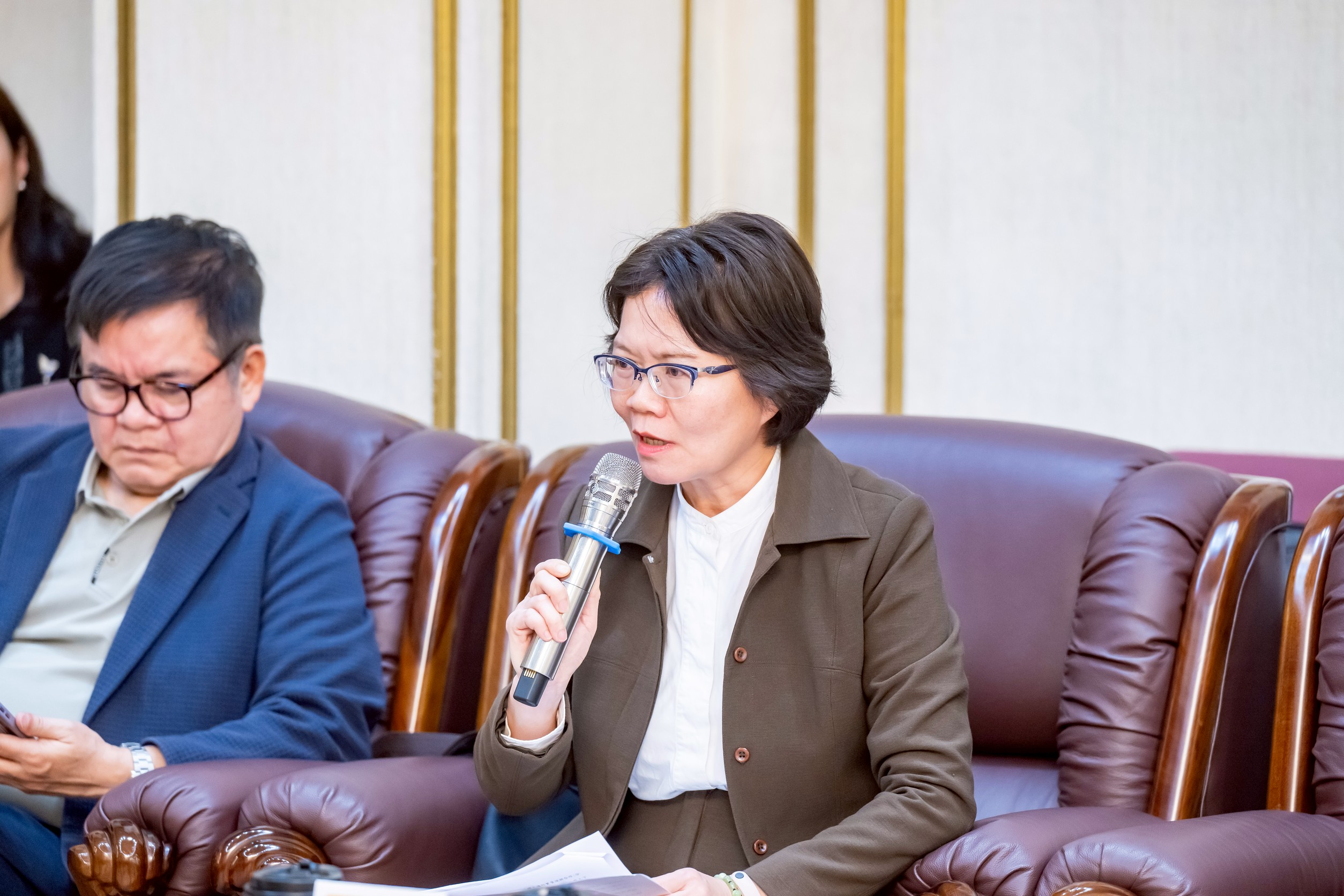
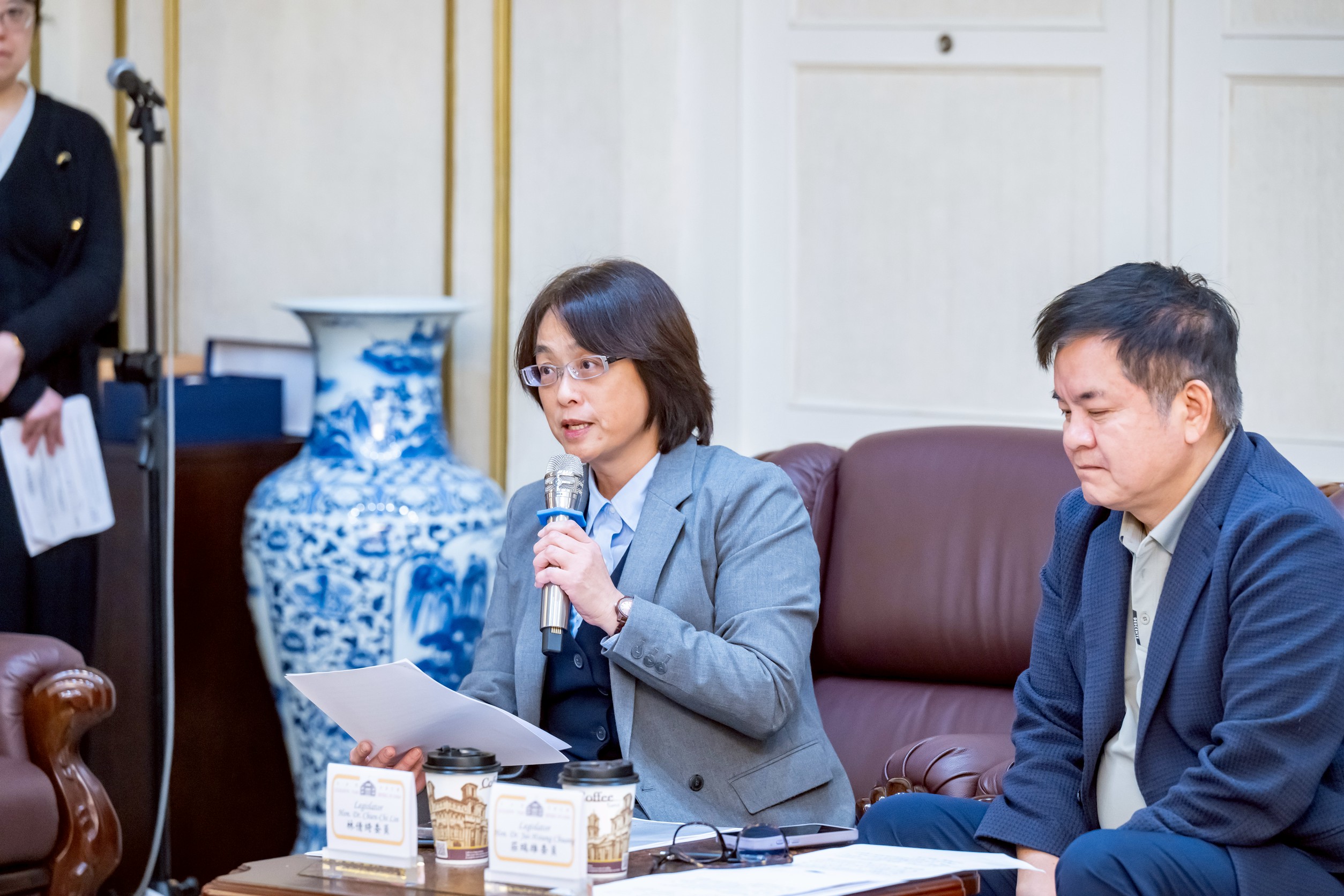
Legislator Lin stated that Taiwan, the United States, and Japan are not only indispensable economic and trade partners but also steadfast allies sharing the rule of law, market principles, and democratic values. She highlighted that economic and trade cooperation among the three parties has expanded beyond traditional industries into digital lifestyles and next-generation strategic sectors. She cited cross-border e-commerce and instant messaging platforms as concrete examples, underscoring the interdependence and close linkage between Taiwan and Japan in the digital economy. In light of artificial intelligence (AI), cloud computing, and digital platforms emerging as core drivers of global competition, she stressed that Taiwan is actively seeking deep technological collaboration with partners in the United States, Japan, and Finland in areas such as algorithm development, data governance standards, and advanced audiovisual applications.
Legislator Chuang remarked that Taiwan has developed through decades of effort and shares core values with democratic nations worldwide, adding that were it not for pressure from neighboring authoritarian regimes, Taiwan’s development achievements would be on par with other advanced countries. He added that in the face of global turbulence, each nation possesses its own industrial strengths, and cooperation in areas such as semiconductors and electric vehicles would bring positive benefits to global supply chains.
Legislator Liu engaged in in-depth exchanges with the delegation on topics including market diversification, semiconductor supply chain deployment, energy security, and AI regulations. A Finnish delegate responded by explaining how Finland has integrated governmental and corporate resources to reduce and diversify economic and trade dependence on Russia, and expressed willingness to share relevant policy experiences with Taiwan to help strengthen its economic resilience.
During the meeting, both sides also exchanged views on international political and economic developments, defense and energy cooperation, and private-sector participation in social resilience. The meeting lasted approximately 60 minutes and proceeded in a cordial atmosphere. The two sides exchanged commemorative gifts and took a group photo, bringing the visit to a successful conclusion. (2026/01/15)