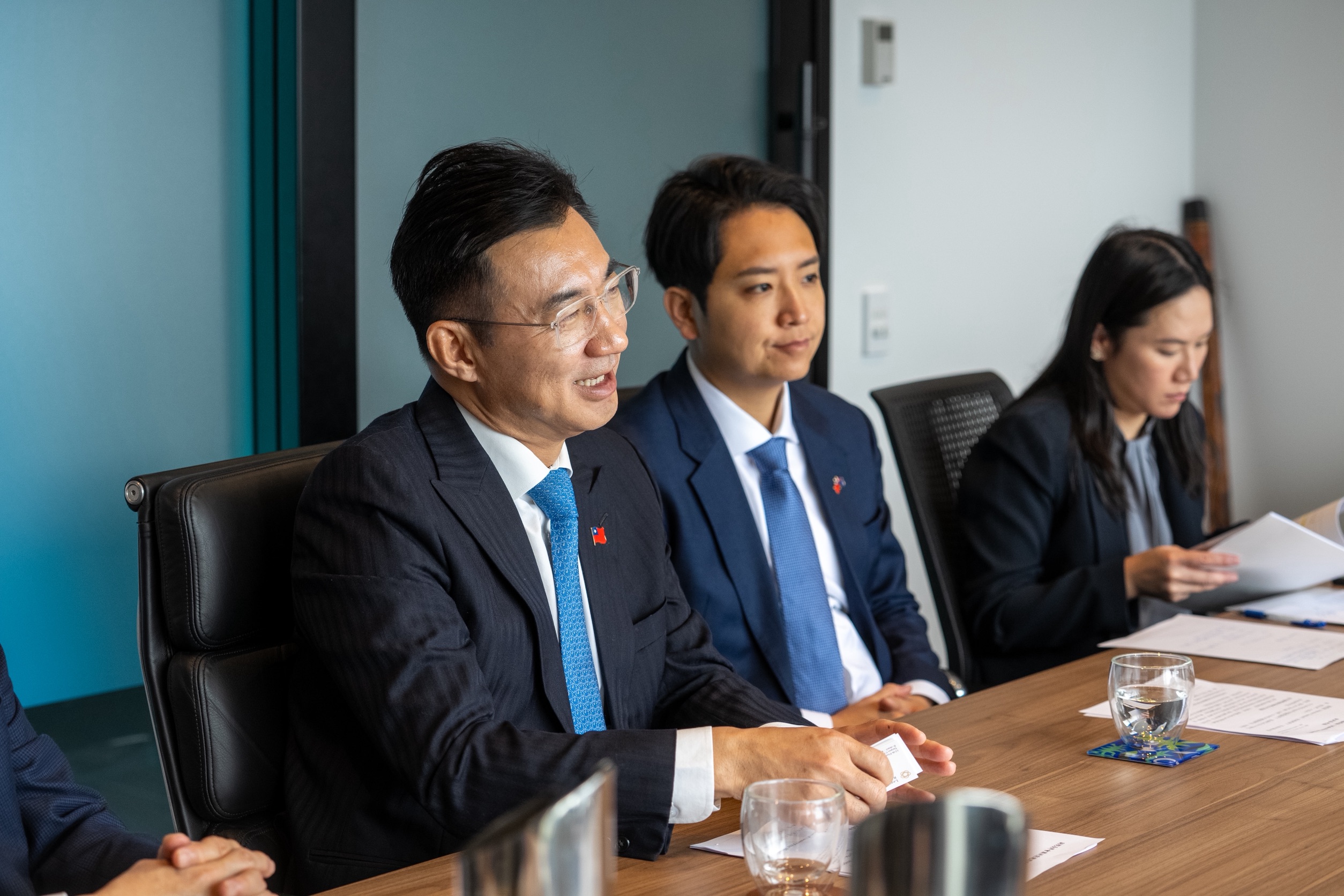
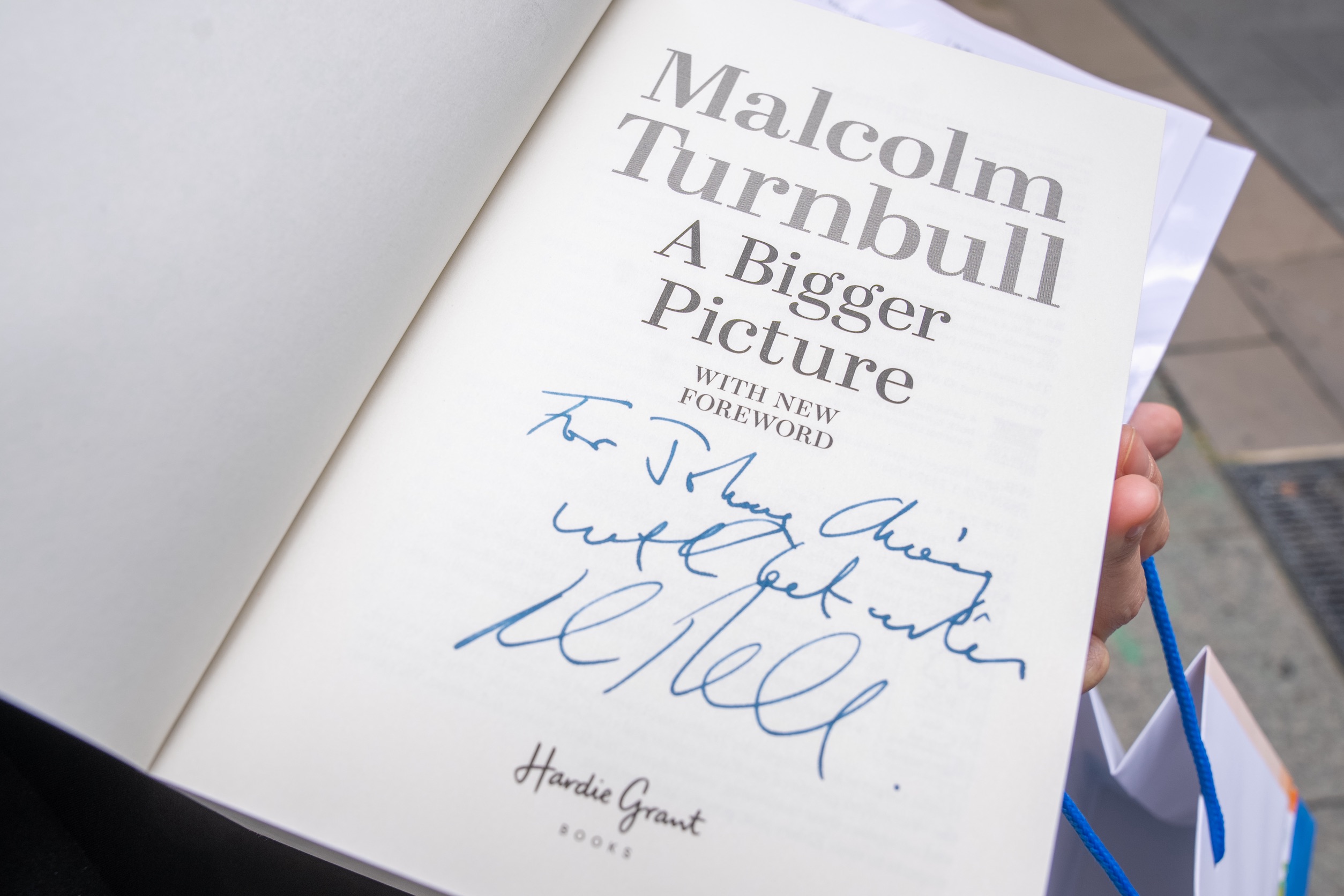
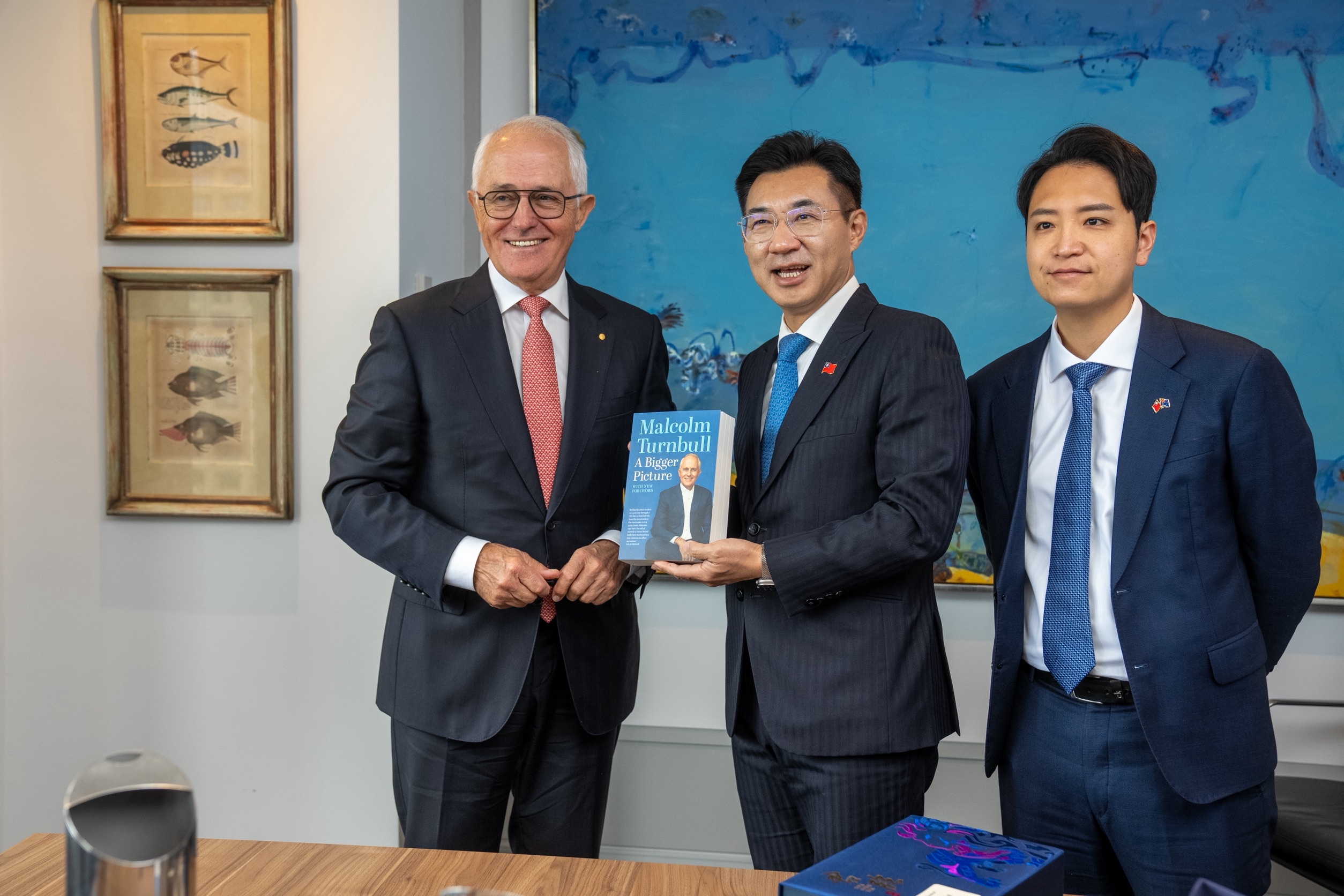
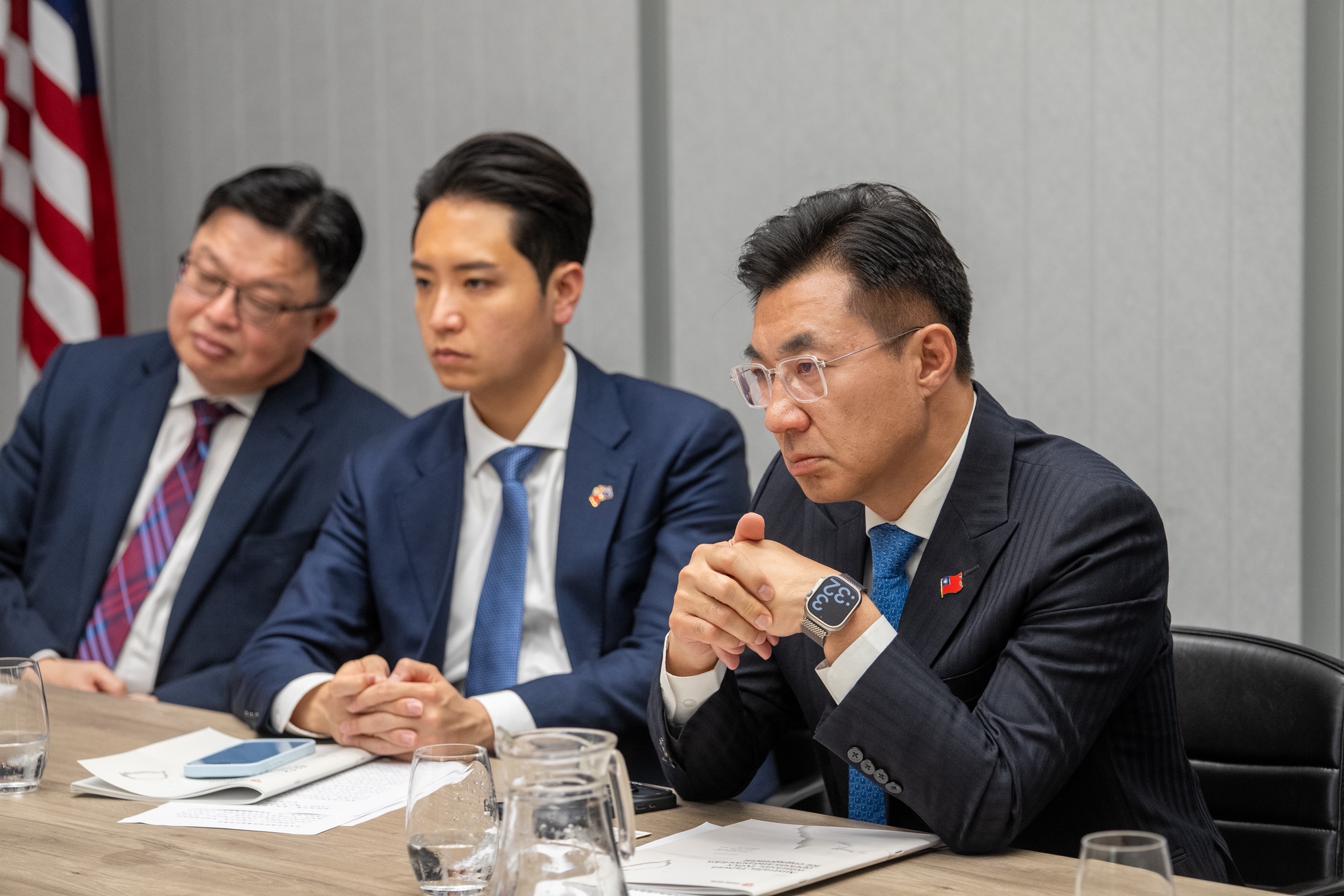
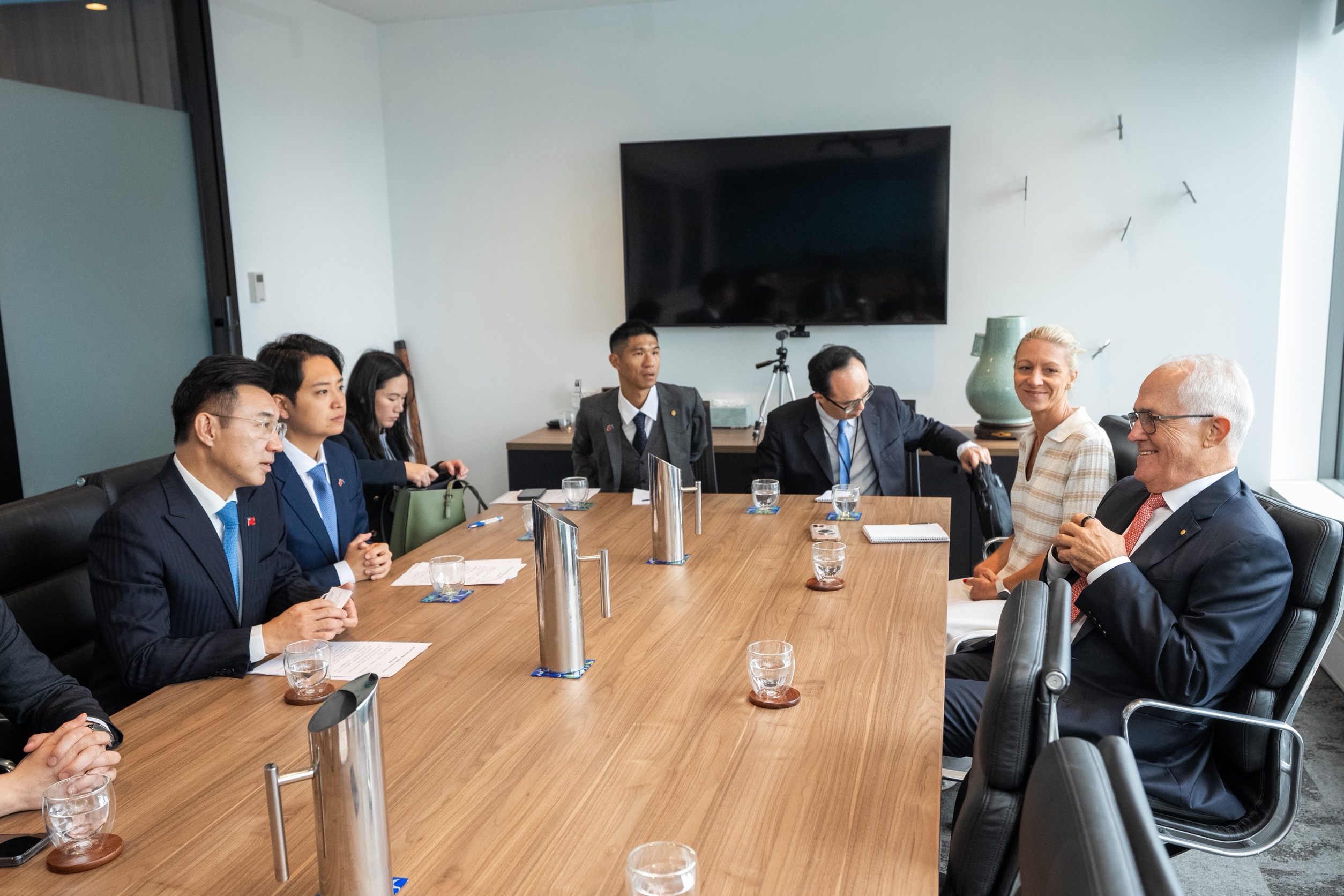
After attending the opening ceremony of the 2nd Session of the World Taiwanese Chambers of Commerce (WTCC) 32nd Board of Directors and Supervisors Meeting on March 9, Vice President Dr. Johnny C. Chiang (江啟臣) of the Legislative Yuan, accompanied by KMT Legislator Lo Ting-Wei, went on to meet with former Australian Prime Minister Malcolm Turnbull. The two sides exchanged views on issues including regional resilience and Taiwan-Australia relations. Vice President Chiang noted that Taiwanese communities and businesses are highly active in Australia and that economic and trade ties between the two sides have grown increasingly close. He added that Australia’s abundant critical minerals and agricultural resources complement Taiwan’s leading role in the global semiconductor supply chain, and expressed hope for more comprehensive cooperation between Taiwan and Australia. Former Prime Minister Turnbull welcomed the delegation and shared his views on the current geopolitical situation. He stated that Australia has consistently worked with its allies to maintain regional peace and stability, and that he particularly agreed with the emphasis on dialogue in Vice President Chiang’s “3D principle” of deterrence, dialogue, and democracy. He added that maintaining communication helps reduce misunderstandings and creates opportunities for positive developments. Vice President Chiang noted that amid rapid shifts in the international landscape, regional stability and economic security have become primary challenges for all nations. He looked forward to drawing on former Prime Minister Turnbull’s extensive experience and broad vision for an in-depth exchange on Indo-Pacific security. Additionally, he expressed hope that Mr. Turnbull would leverage his influence to support Taiwan’s accession to the Comprehensive and Progressive Agreement for Trans-Pacific Partnership (CPTPP). Highlighting the highly complementary nature of Taiwan and Australia's industries, Vice President Chiang stressed that Taiwan's inclusion would significantly benefit both the CPTPP and the global trade network. The two sides also exchanged views on the development of Australia-China relations, economic security, and defense budgets. The meeting lasted approximately one hour and concluded following an exchange of commemorative gifts and a group photo.
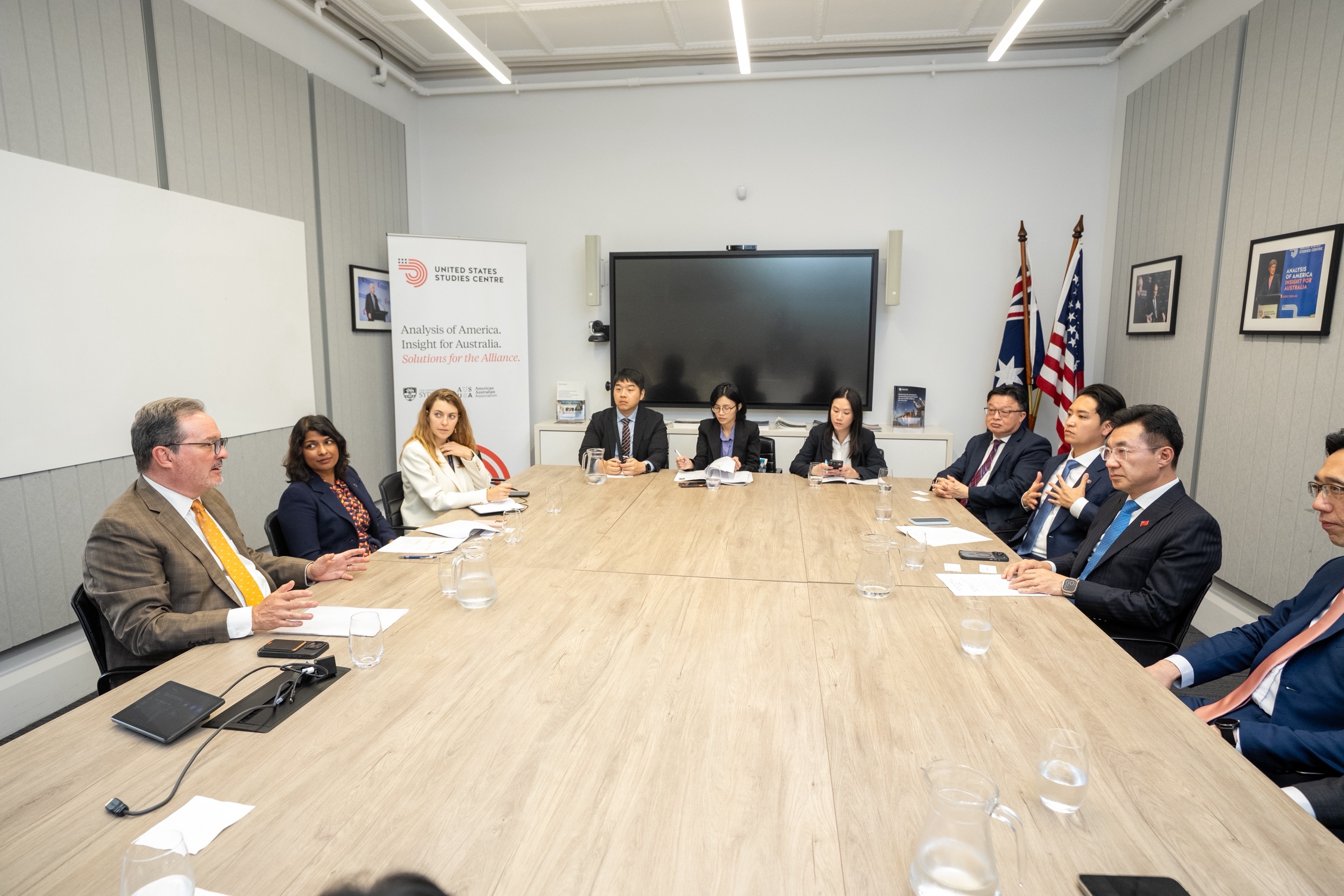
In the afternoon, Vice President Chiang, accompanied by Legislator Lo, met with Professor Michael Green, Chief Executive Officer of the United States Studies Centre (USSC) at the University of Sydney, as well as the Director of its Foreign Policy and Defense Program and senior researchers. Professor Green introduced the founding purpose of the Centre, which is to promote understanding in Australia of the United States’ politics, economy, society, and foreign policy. He also noted that the Centre had recently released a policy report in 2026 titled Australia-Taiwan Relations: Policy Options and Priorities for Engagement. The Director of the Foreign Policy and Defense Program then briefed the delegation on the report, explaining that it examines the current complex geopolitical environment and offers recommendations on how Australia should adjust and refine its approach to Taiwan. Professor Green further noted that the report had only recently been released to the public and that its broader impact was still unfolding. He nevertheless expressed strong hope that it would play a key role in influencing Australian political circles and help Australians better understand Taiwan, Taiwan-Australia relations, the first island chain, and the importance of Indo-Pacific geopolitics. Vice President Chiang noted that Australia is an important partner to Taiwan, with frequent exchanges between the two sides. However, under the influence of the international and geopolitical environment, parliamentary diplomacy has become a key channel for strengthening bilateral relations. He expressed hope for even more exchanges in the future. During the meeting, the two sides also held in-depth discussions on issues including geopolitical developments in the Asia-Pacific region, relations among Australia, the United States, Taiwan, and Japan, and the Australian public’s views on the situation in the Taiwan Strait. The meeting lasted approximately one hour and concluded following an exchange of commemorative gifts and a group photo.
The day’s full schedule of events was marked by a candid and lively atmosphere. Vice President Chiang’s second day of parliamentary diplomacy in Australia concluded successfully. (2026/03/09)