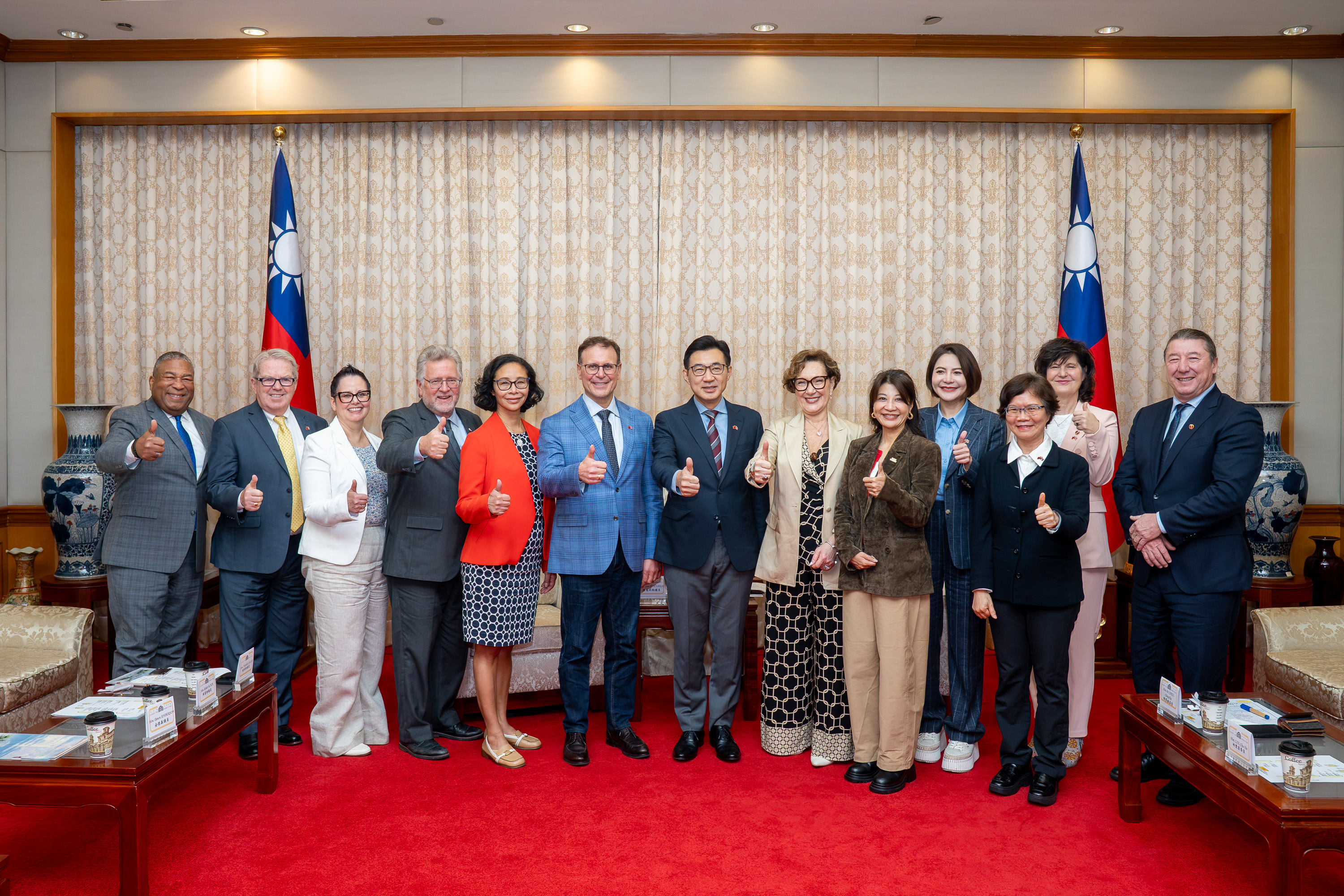
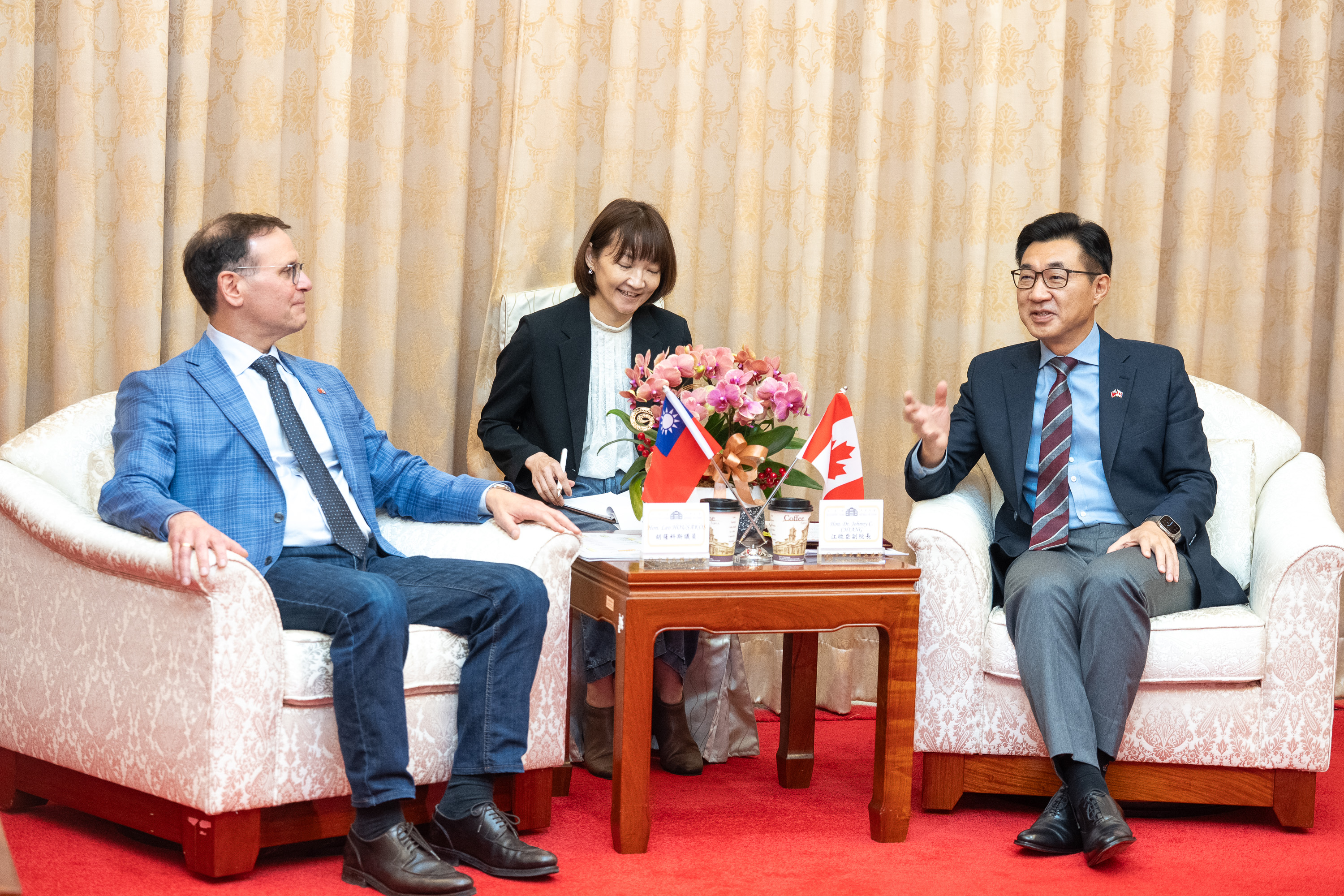
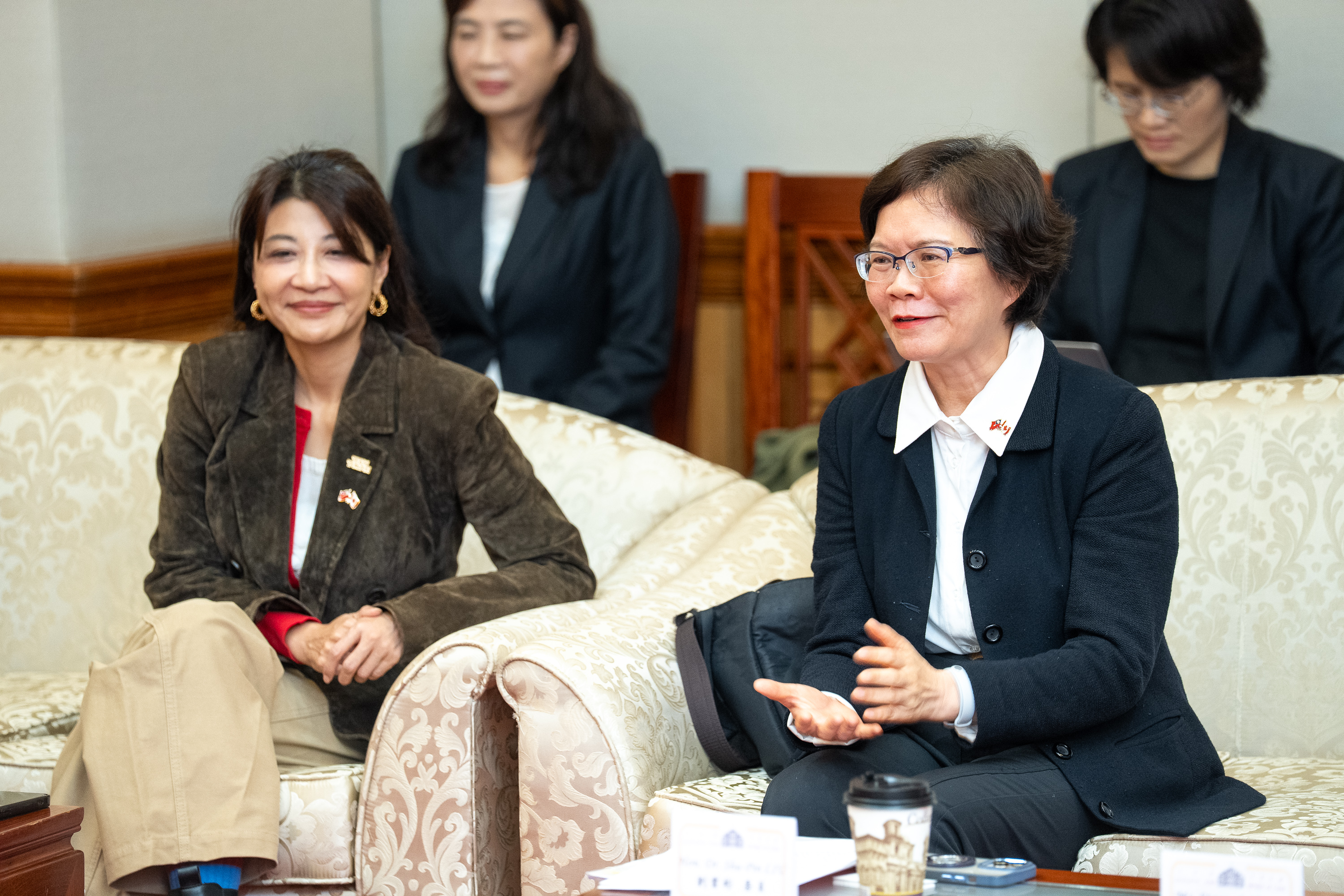
On the afternoon of April 7, Vice President Dr. Johnny C. Chiang (江啟臣) of the Legislative Yuan, accompanied by KMT Legislator Chen Ching-Hui, DPP Legislator Lin Chu-Yin, and TPP Legislator Dr. Liu Shu-Pin, received a nine-member delegation of Canadian Federal Senators led by Senator Leo Housakos.
Vice President Chiang began by extending a sincere welcome to the delegation on behalf of the Legislative Yuan and its President Daniel K.Y. Han (韓國瑜). Vice President Chiang stated that receiving this important Canadian parliamentary delegation during the Legislative Yuan session was of particular significance. Vice President Chiang said that, except for the head of the delegation, this was the first visit to Taiwan and the Legislative Yuan for all delegation members. He expressed hope that the visit would further deepen understanding and cooperation between the parliaments and people of Taiwan and Canada.
Vice President Chiang pointed out that the Canadian Parliament has long provided cross-party support for Taiwan, including support for Taiwan’s participation in international organizations such as the World Health Organization (WHO), the International Civil Aviation Organization (ICAO), and the International Criminal Police Organization (INTERPOL). Vice President Chiang said that Taiwan deeply appreciates the friendship and support Canada Parliament has demonstrated at critical moments. He looks forward to continued cooperation on more international issues in the future. He stated that, in the face of an increasingly complex and changing international landscape, cooperation and mutual trust among democratic countries are particularly important, and that Taiwan and Canada are vital partners that share core values such as freedom, democracy, human rights, and the rule of law.
Vice President Chiang further pointed out that, despite the absence of formal diplomatic relations, Taiwan and Canada have maintained close exchanges in trade, education, culture, and technology. He added that people-to-people engagement has provided the strongest foundation for bilateral relations. Many young Taiwanese study, work, or live in Canada, he said, forging robust people-to-people ties and laying a solid foundation for cooperation at the governmental and parliamentary levels.
Speaking on future bilateral cooperation, Vice President Chiang noted that Taiwan and Canada have made concrete progress in investment and trade in recent years. For example, the two sides signed a Foreign Investment Promotion and Protection Agreement (FIPA), providing a more stable institutional framework for business investment. Looking ahead, the two sides still have broad room for cooperation in technological innovation, educational exchange, industrial cooperation, and supply chain resilience. Additionally, Vice President Chiang said that the Canadian Parliament had established a cross-party Canada-Taiwan Parliamentary Friendship Group, while the Legislative Yuan was also preparing to form an R.O.C. (Taiwan)-Canada Inter-Parliamentary Amity Association. He expressed hope that institutionalized exchanges would deepen bilateral cooperation and facilitate more frequent mutual visits and policy dialogue between parliamentarians on both sides.
Senator Housakos thanked the Legislative Yuan for its warm hospitality. He pointed out that Taiwan plays a critical role in the global democratic community and is an important partner for many countries that cherish democratic values. Senator Housakos stated that government-to-government relations are undoubtedly important, but parliamentary and people-to-people exchanges are even more critical to building long-term and durable cooperation. For that reason, the visit is of particular significance.
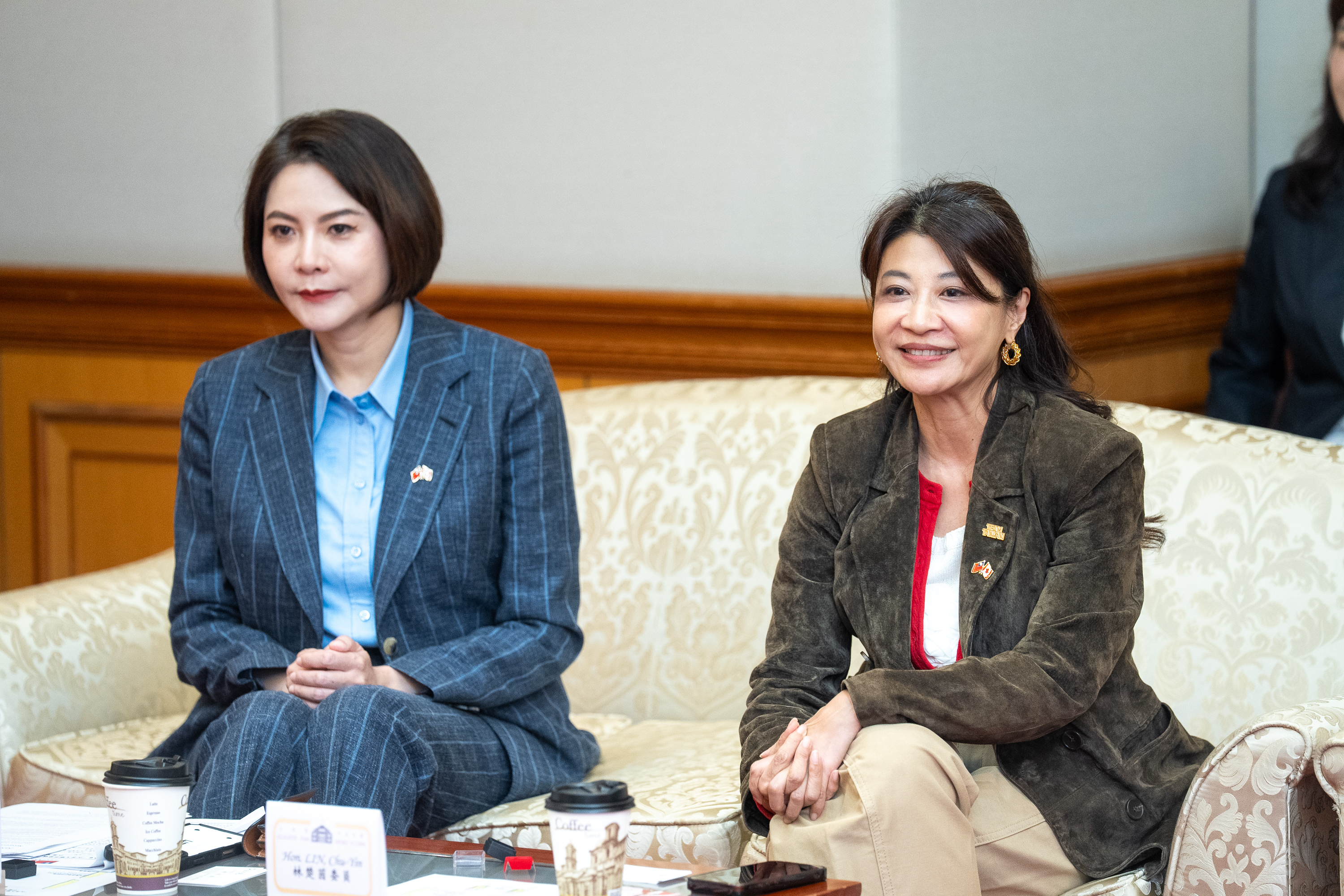
Legislator Chen noted that, as an obstetrician-gynecologist, she paid close attention to Taiwan’s low birth rates, aging population, and demographic changes, and hoped to learn more from Canada’s experience with immigration policy. She also said she felt honored to be helping organize the R.O.C. (Taiwan)-Canada Inter-Parliamentary Amity Association.
Legislator Lin expressed that, as a member of the Foreign Affairs and National Defense Committee, she sincerely welcomed the Canadian delegation and hoped to further deepen bilateral exchanges and cooperation.
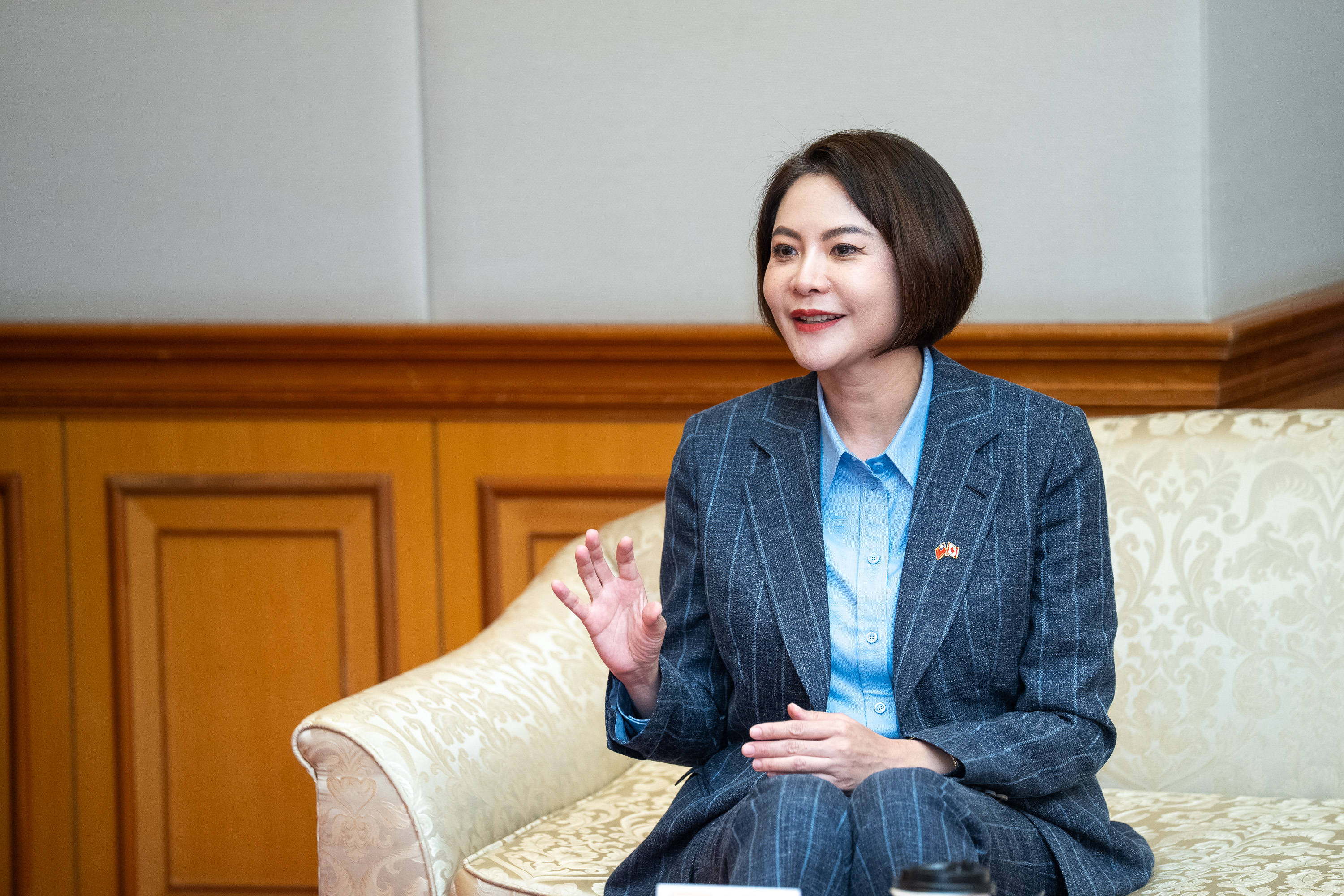
Legislator Liu stated that she had previously taught at universities and, upon the delegation’s request, gave an overview of Taiwan’s indigenous policies and related institutional safeguards, including reserved seats in the Legislative Yuan, the Council of Indigenous Peoples, and Taiwan Indigenous TV, all of which demonstrate Taiwan’s commitment to protecting indigenous rights and supporting cultural development.
Subsequently, the two sides engaged in an extensive exchange of views on energy, healthcare, population policies, low birth rates, parliamentary exchanges, trade cooperation, people-to-people engagement, immigration policy, women’s political participation, and indigenous policies. The Canadian side expressed that Canada has extensive experience in renewable energy and natural resources and hopes to deepen cooperation with Taiwan in green energy and liquefied natural gas (LNG). A Canadian senator also noted that Taiwan’s universal health insurance system and public healthcare system are highly regarded internationally, particularly for its outstanding performance in public health governance during the SARS and COVID-19 outbreaks, from which Canada would like to learn more. The senator said that there are ample opportunities for future cooperation in medical technology and public health management between the two sides.
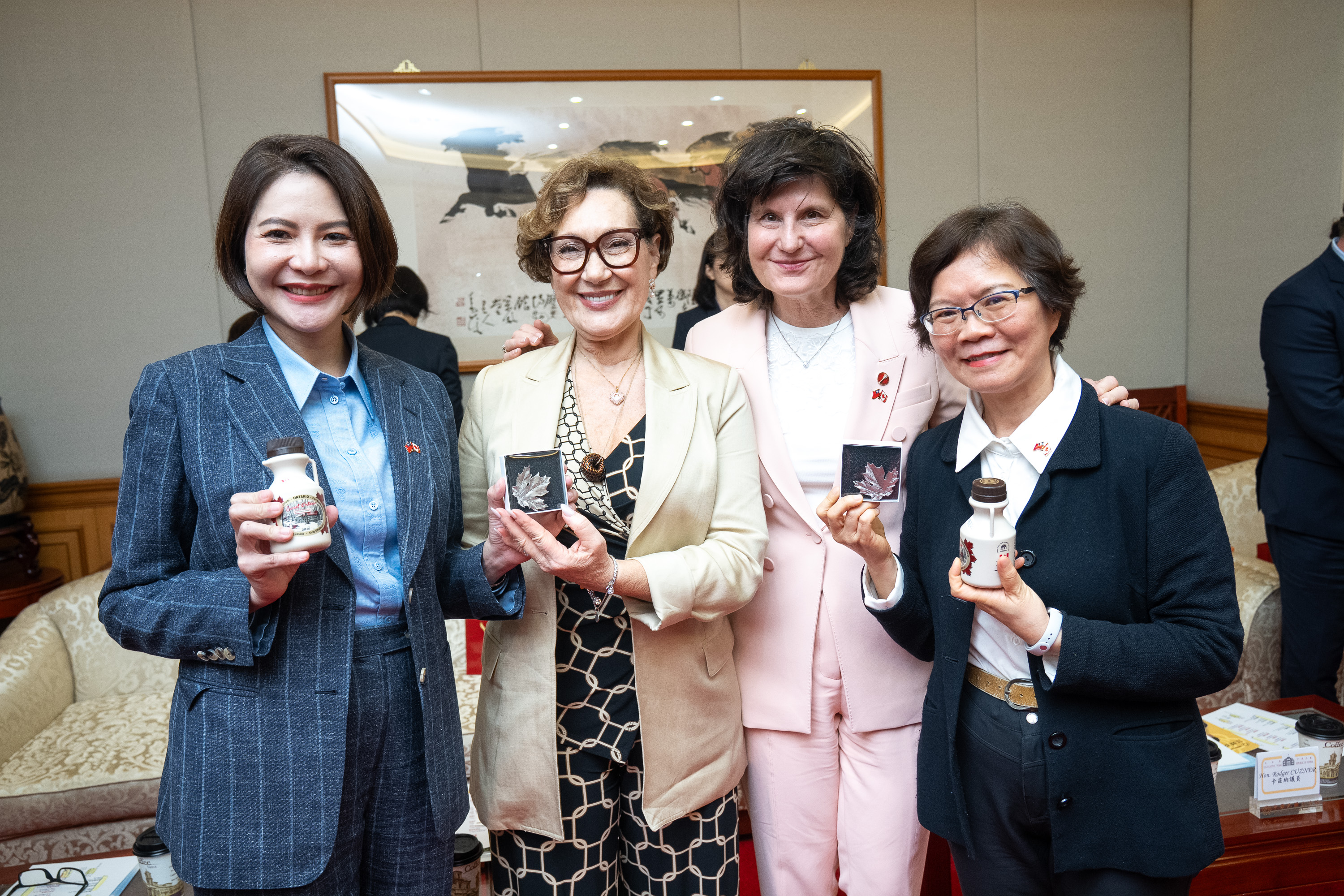
The meeting lasted approximately 60 minutes and concluded in a cordial atmosphere following an exchange of gifts and a group photo. (2026/04/07)