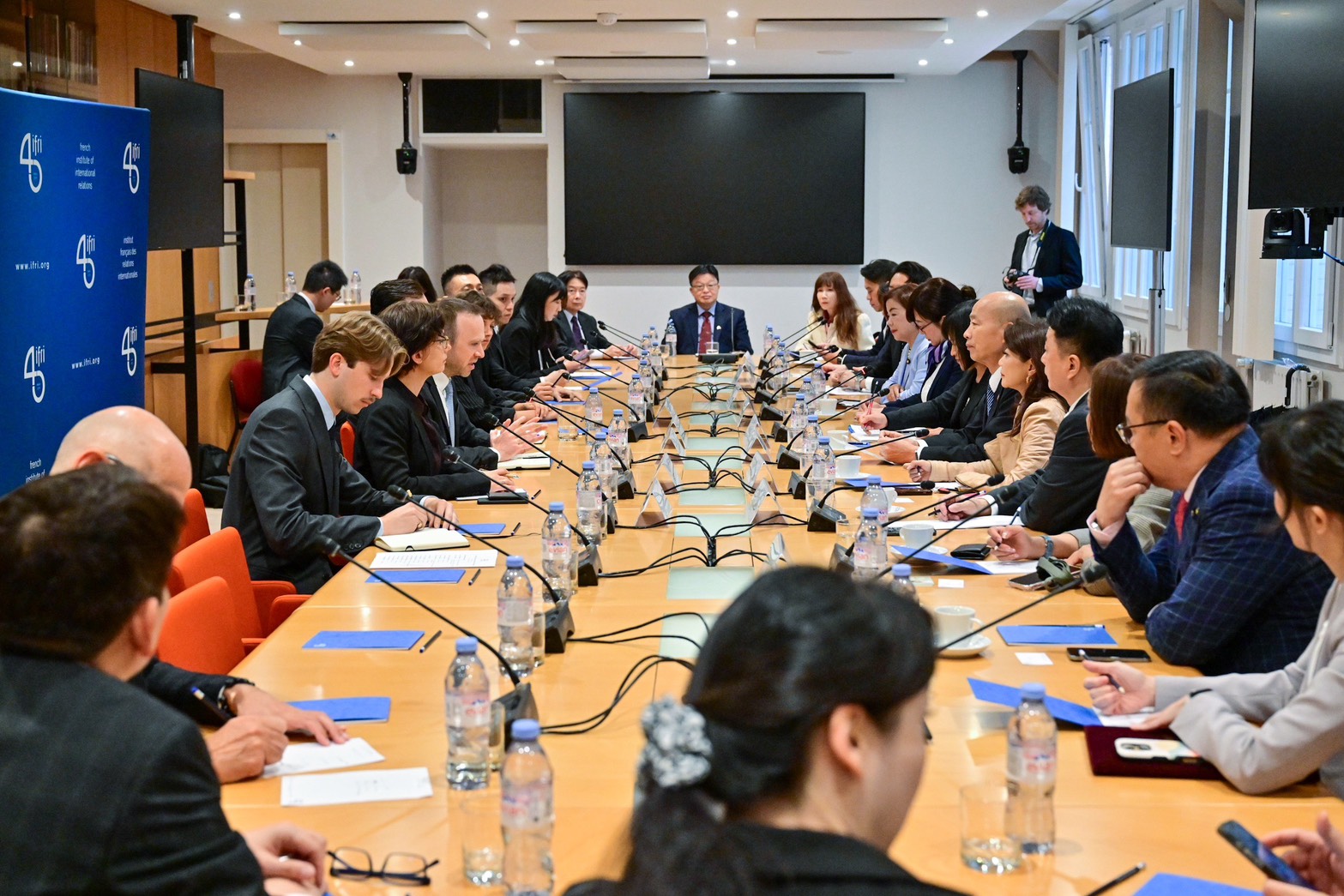
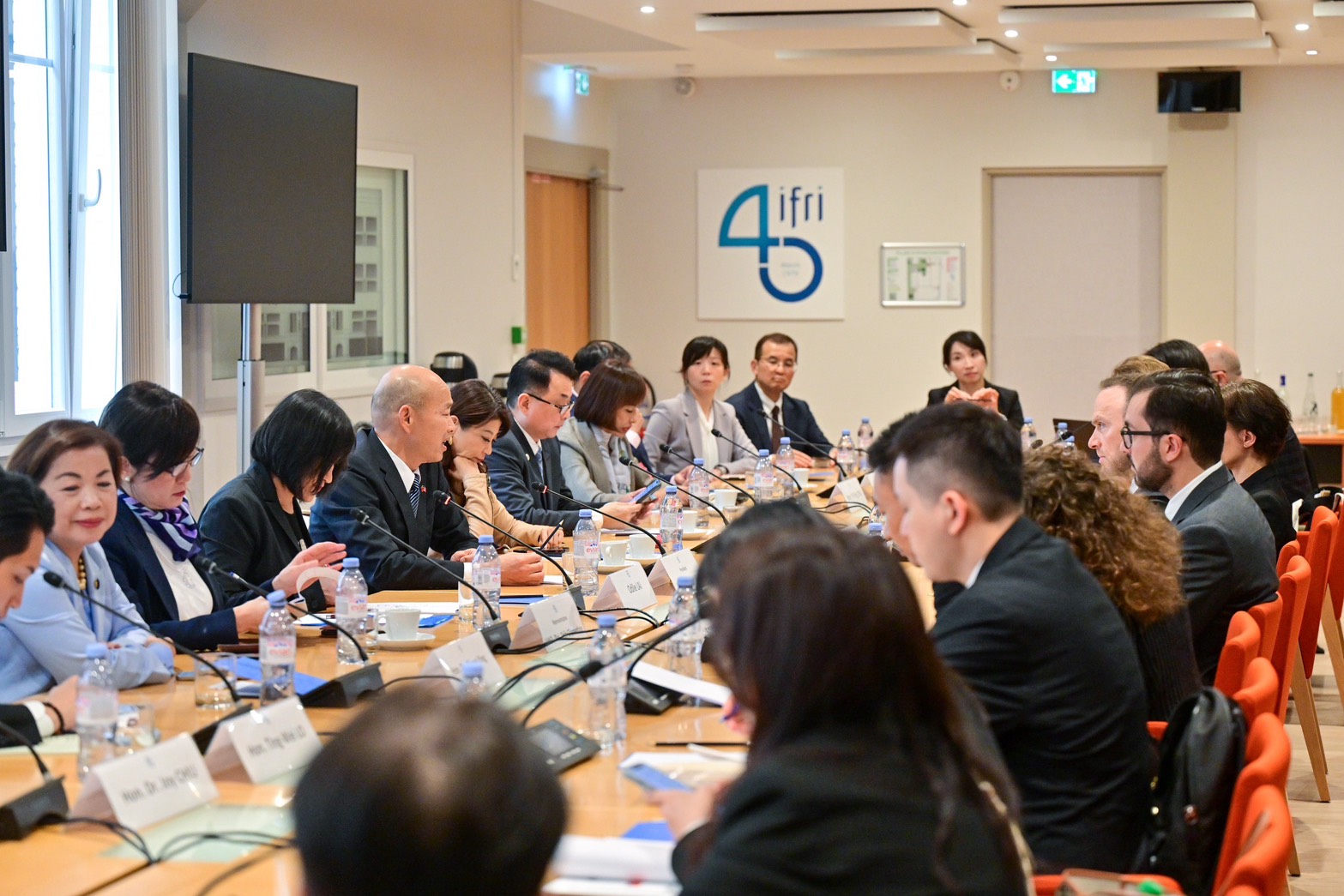
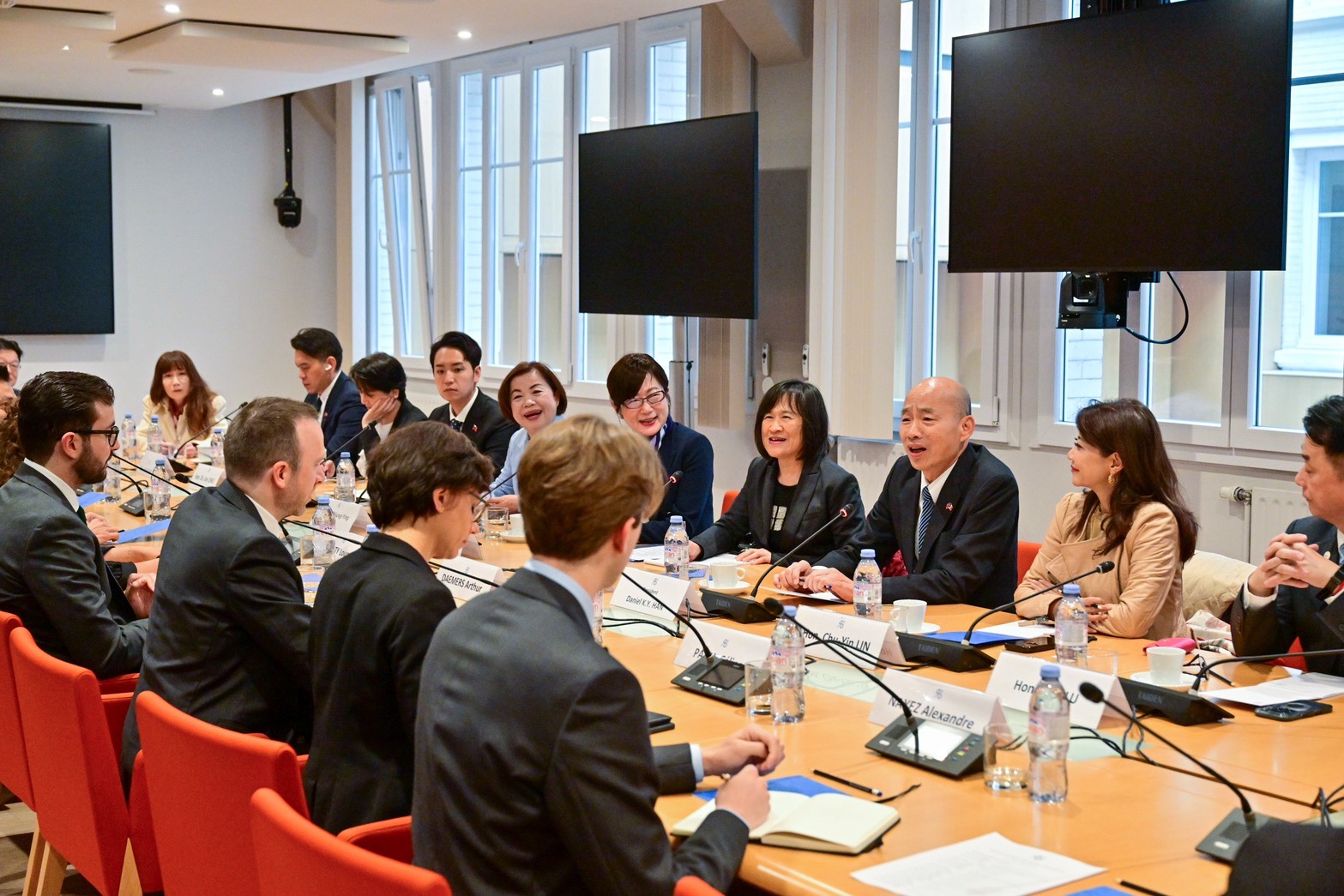
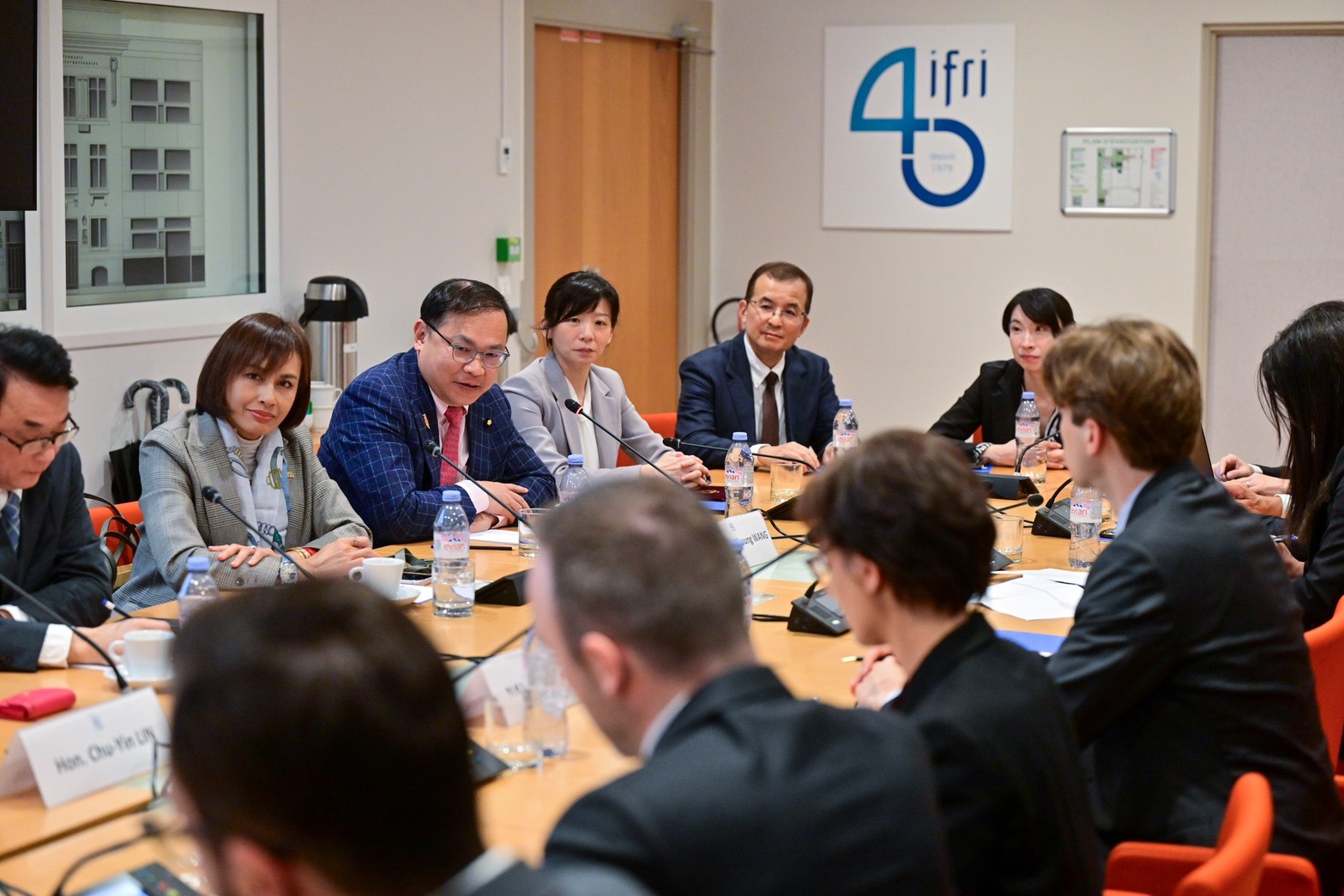
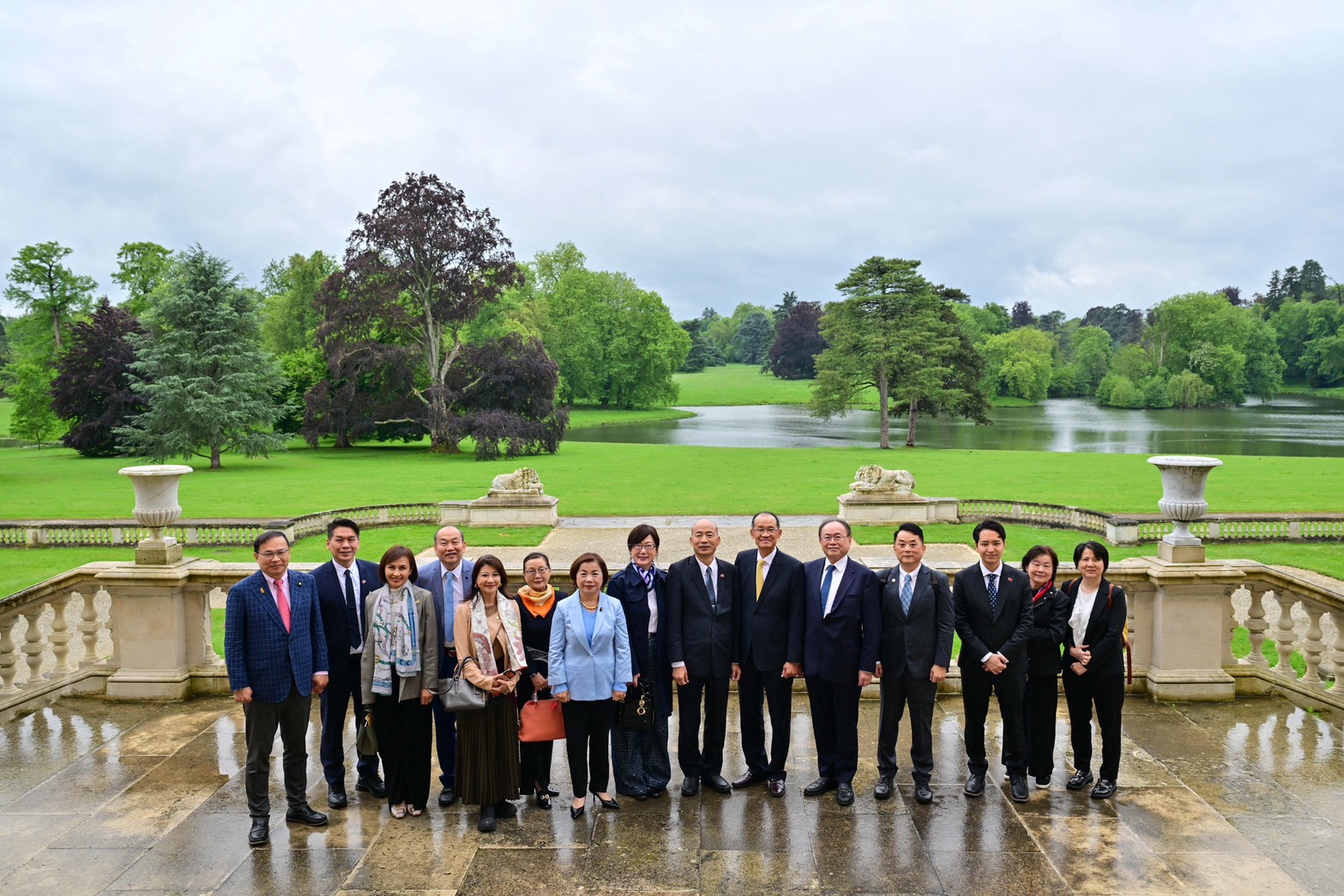
Legislative Yuan President Daniel K.Y. Han (韓國瑜) led a cross-party delegation of legislators on the second day of their visit to France on May 11. Accompanied by Taiwan’s Representative to France, Hao Pei-Chih, the delegation visited the French Institute of International Relations (IFRI) for an exchange. IFRI is one of Europe’s most influential think tanks, with a long-standing focus on international security and foreign policy, as well as in-depth research and analysis of the situation and security in the Taiwan Strait.
In his remarks, President Han first thanked IFRI Executive Director Marc Hecker for receiving the delegation. He then introduced the legislators in attendance and gave an overview of the party composition of the Legislative Yuan. President Han noted in particular that while political debate in Taiwan is often lively, all political parties share a strong consensus on foreign affairs, national defense, and overseas compatriot affairs, and fully support work in these three areas. Legislators from different parties then exchanged in-depth views with the scholars and experts present on issues including Taiwan’s national defense and security, energy resilience, and cross-strait relations, while explaining their respective positions and perspectives. The legislators emphasized that while political parties may differ in their approaches and policy priorities, they are united across party lines in their commitment to safeguarding Taiwan’s democracy, strengthening Taiwan’s defense capabilities, and maintaining peace across the Taiwan Strait.
In his concluding remarks, President Han stated that Taiwan faces many challenges and threats, and that should the situation across the Taiwan Strait change, the most difficult factor to predict would be the extent of international support. He emphasized that the more friends Taiwan has internationally, and the more attention and importance Taiwan receives, the safer Taiwan will be. President Han also noted that throughout his 36 years in politics, his one enduring aspiration has been to avoid war across the Taiwan Strait. In this regard, he expressed hope that friends from all sectors in France could help Taiwan raise its international visibility in three ways. First, as France is a permanent member of the United Nations Security Council, he hoped France could speak up more for Taiwan on the international stage. Second, he looked forward to more visits to Taiwan by people from all sectors of French society to deepen bilateral relations. Finally, he expressed hope that French universities could establish branch campuses in Taiwan, leveraging existing resources to help build Taiwan into an important educational hub in the Asia-Pacific region, thereby creating mutual benefits and shared prosperity. The meeting lasted one hour and concluded in a candid and friendly atmosphere.
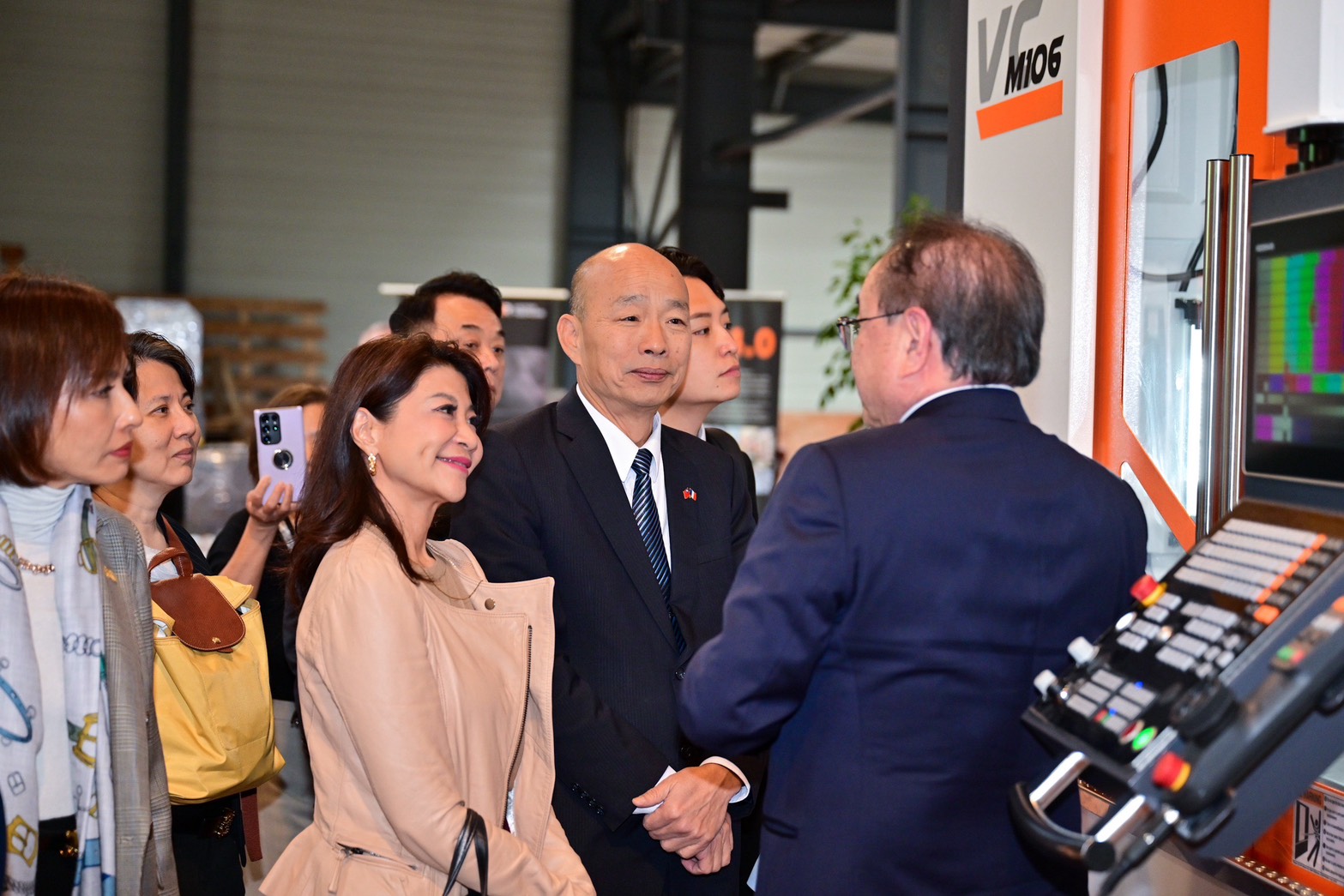
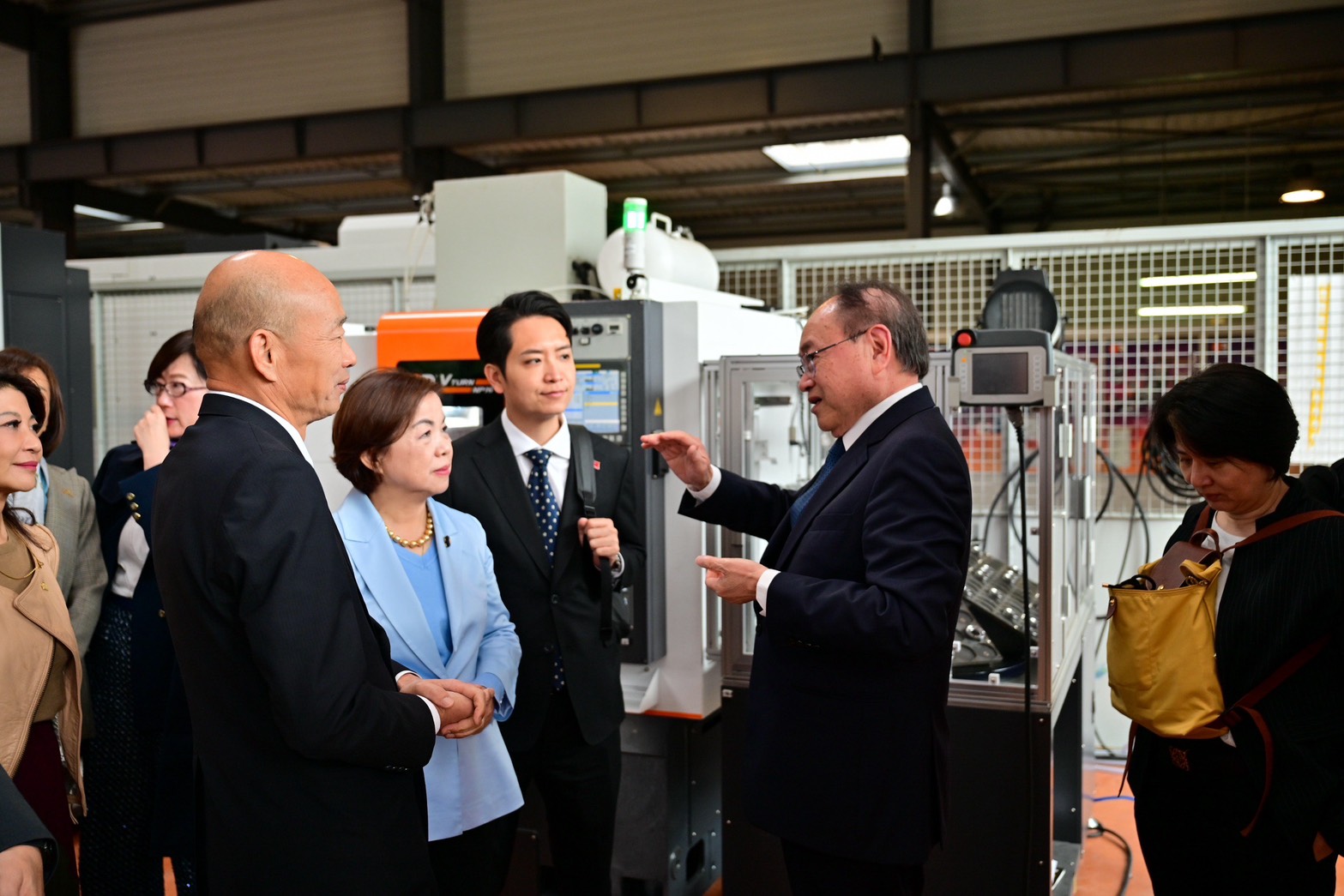
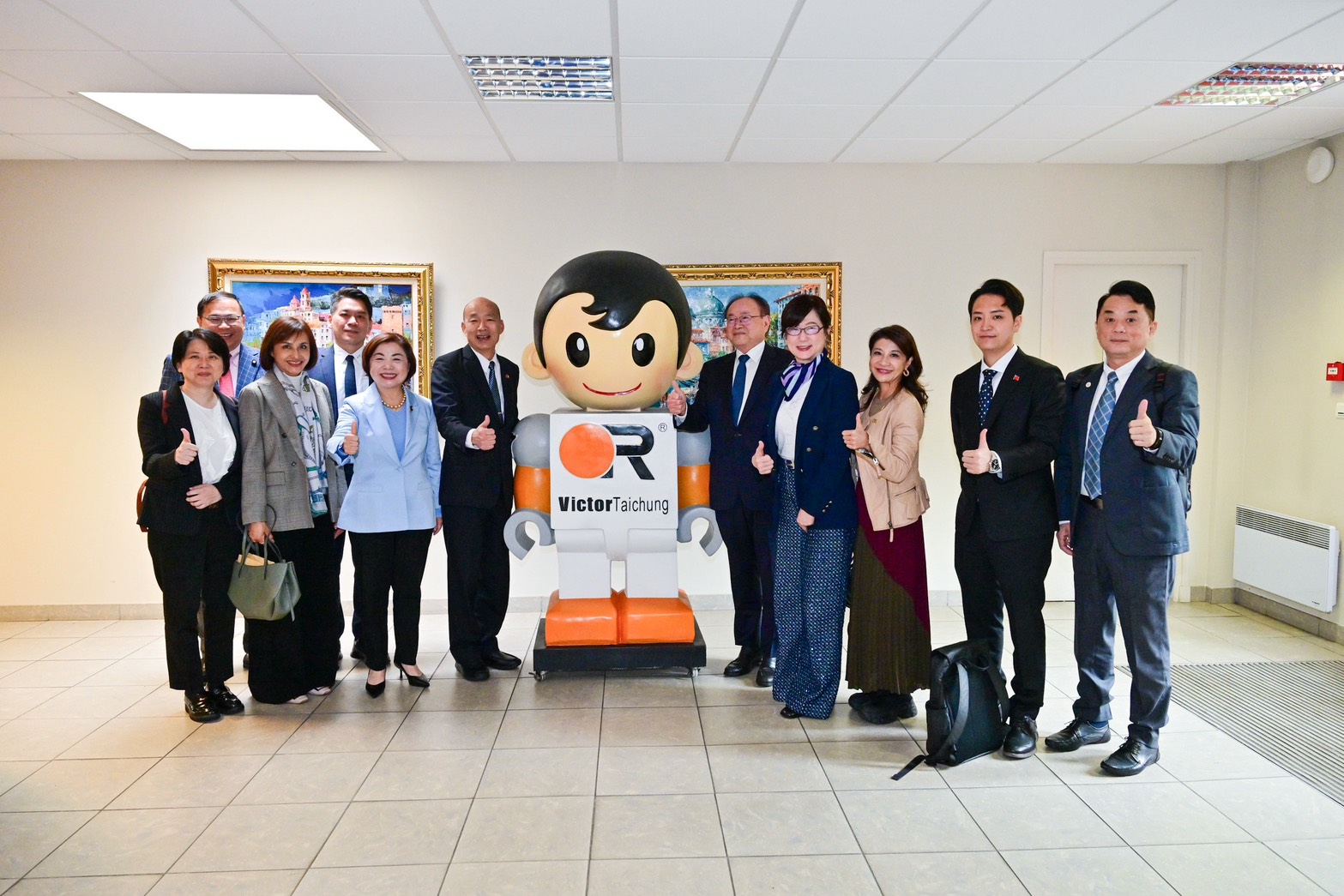
At noon, the delegation was invited by Tsai Kuo-Tai, Honorary President of the World Taiwanese Chambers of Commerce, to visit his manufacturing facility in the suburbs of Paris. The delegation learned firsthand about the operations, industrial development, and practical overseas business experience of Taiwanese businesses in France, and exchanged views on current developments.
After the visit, the delegation attended a welcome luncheon hosted by National Policy Advisor Huang Hsing-Te. President Han and the legislators expressed their appreciation to overseas compatriots for their hard work abroad and for helping lay a solid foundation for Taiwan’s international image and international engagement. They also raised their glasses in tribute to overseas compatriots who have long dedicated themselves to strengthening Taiwan’s presence abroad, creating a warm and lively atmosphere. (20260511)