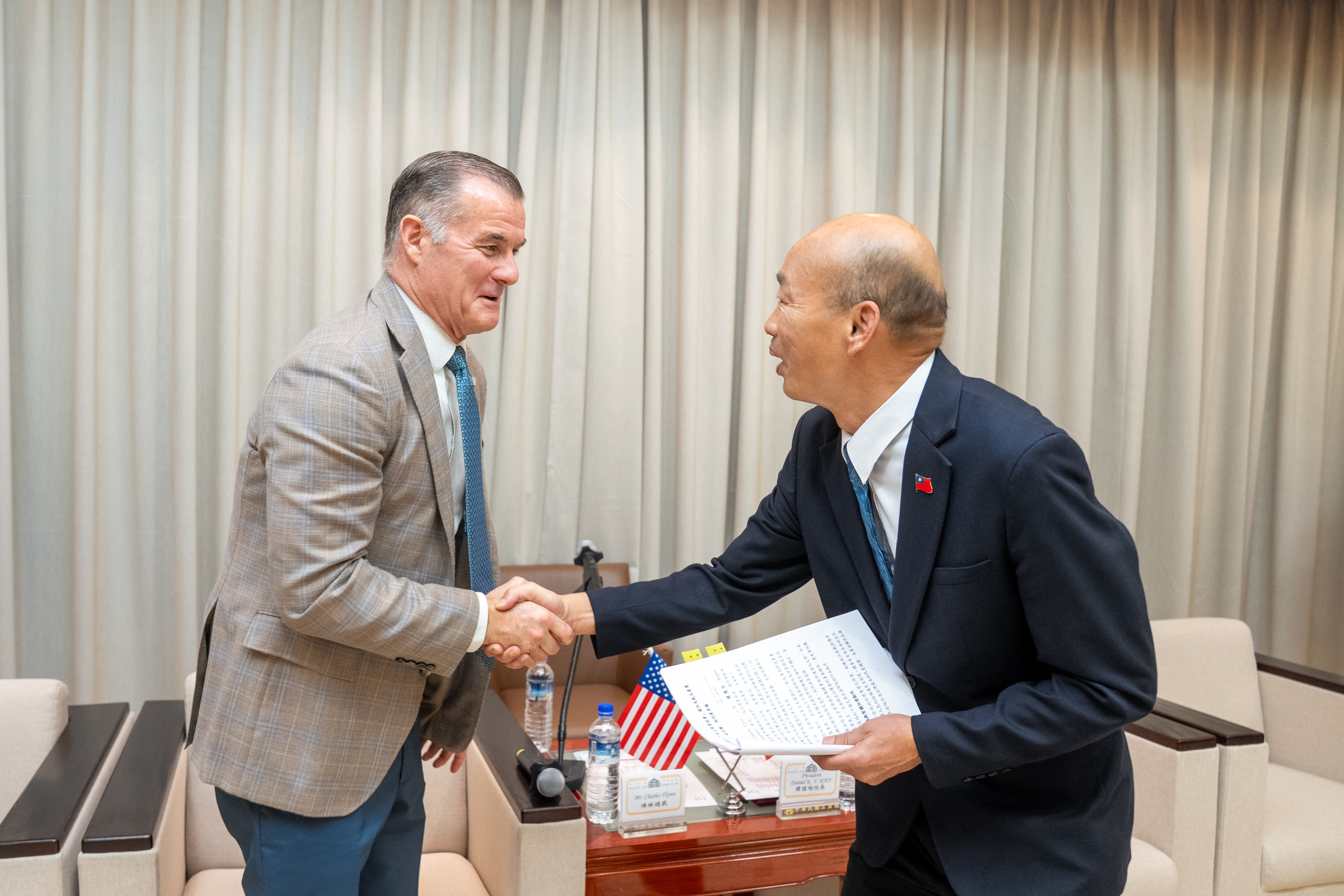
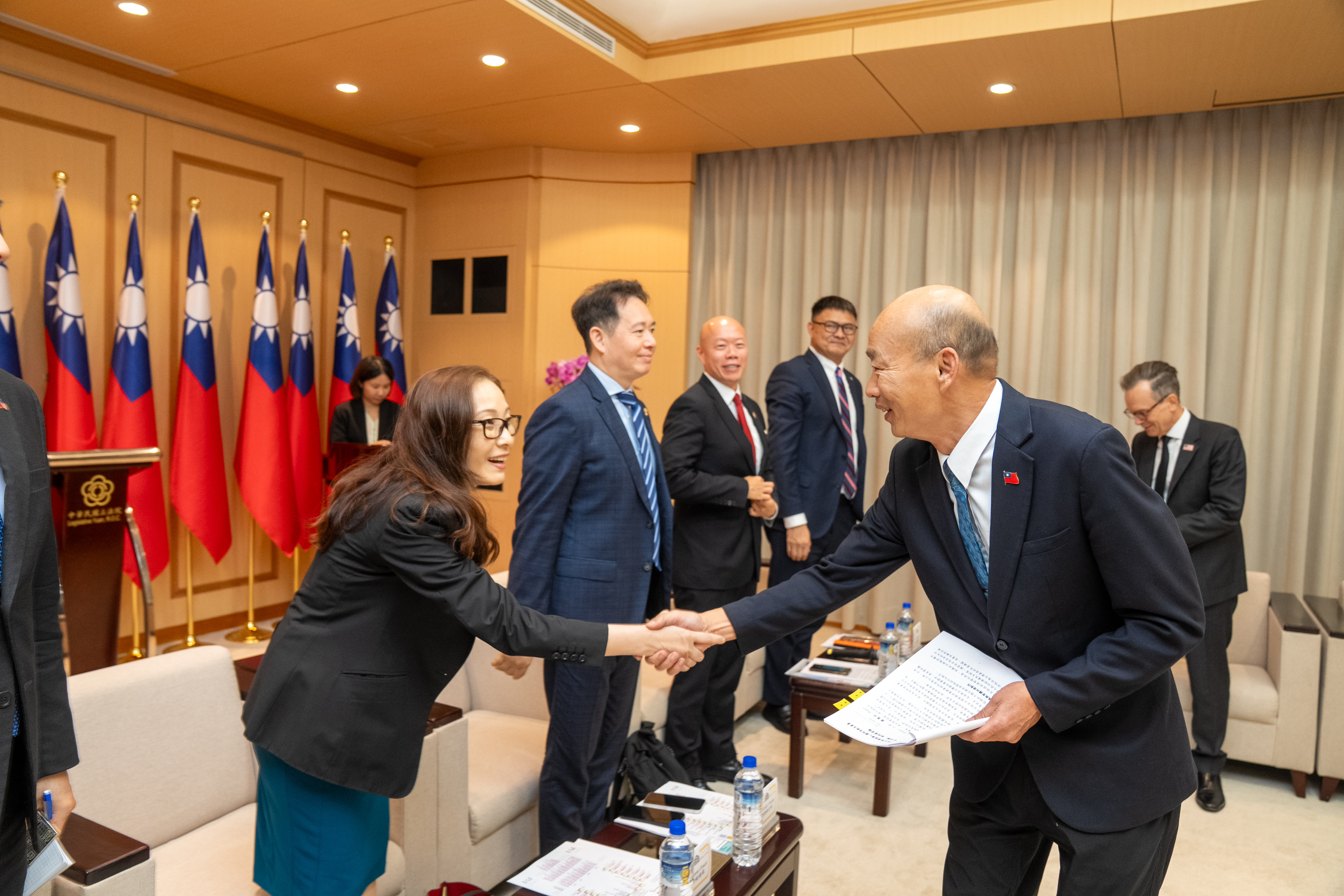
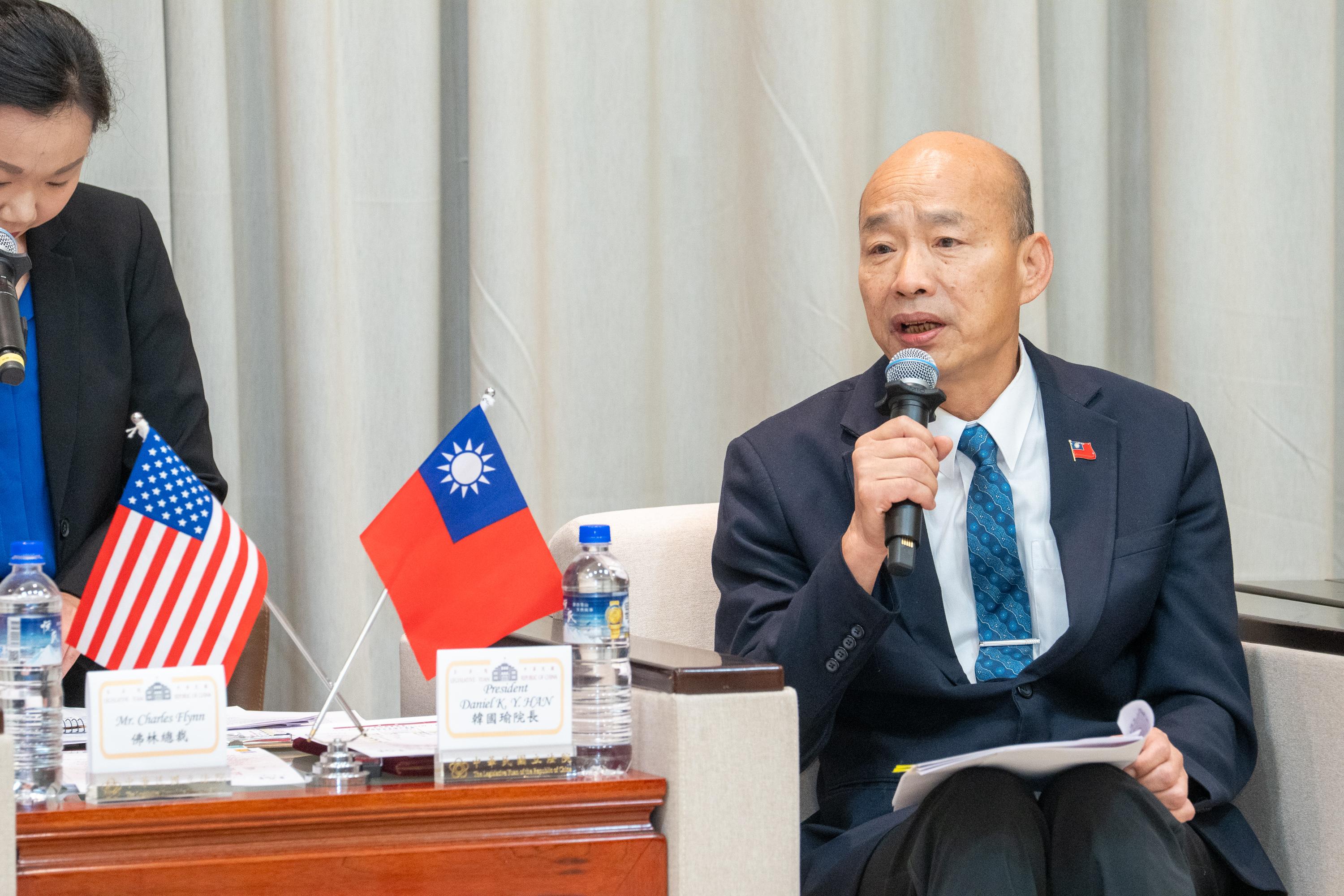
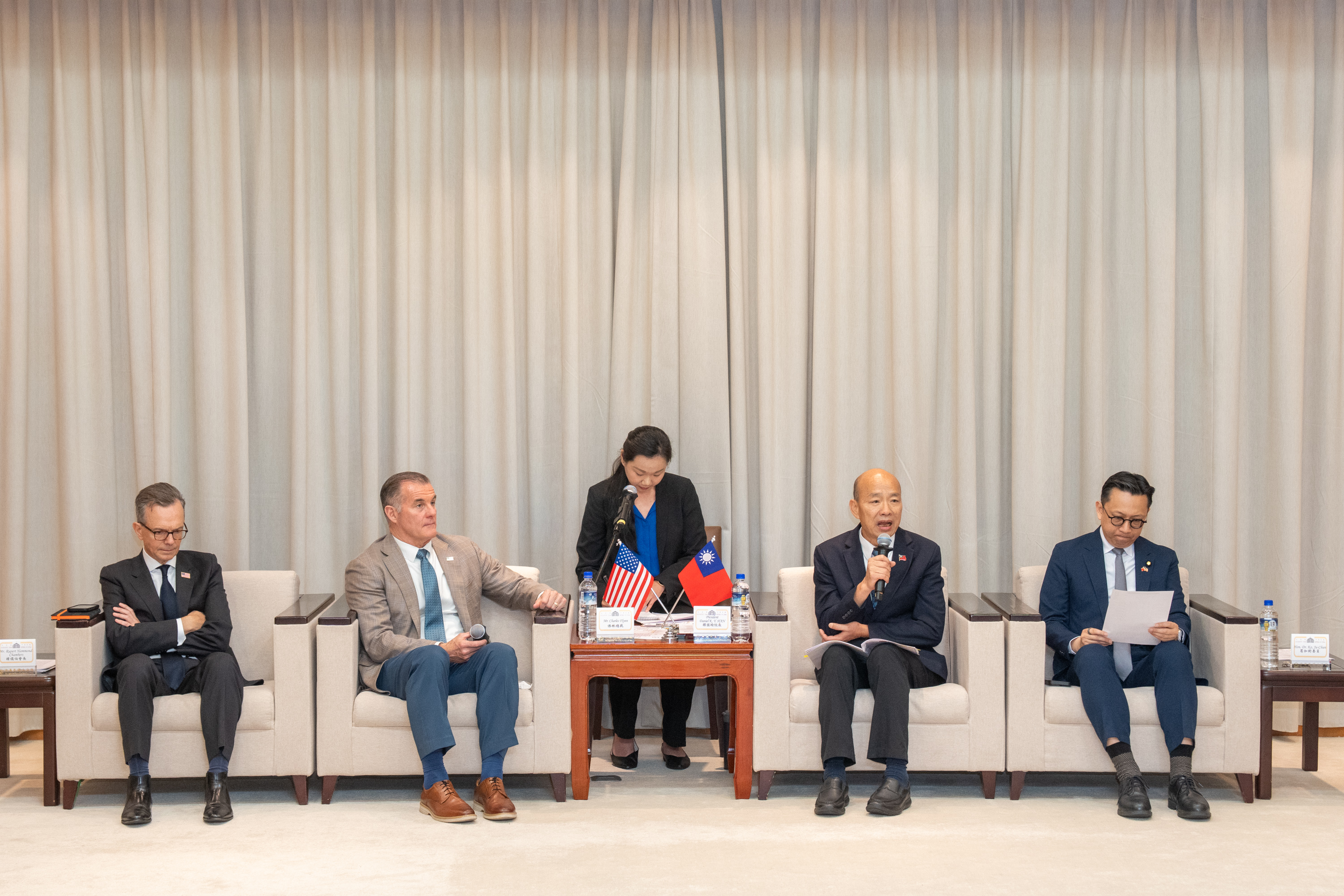
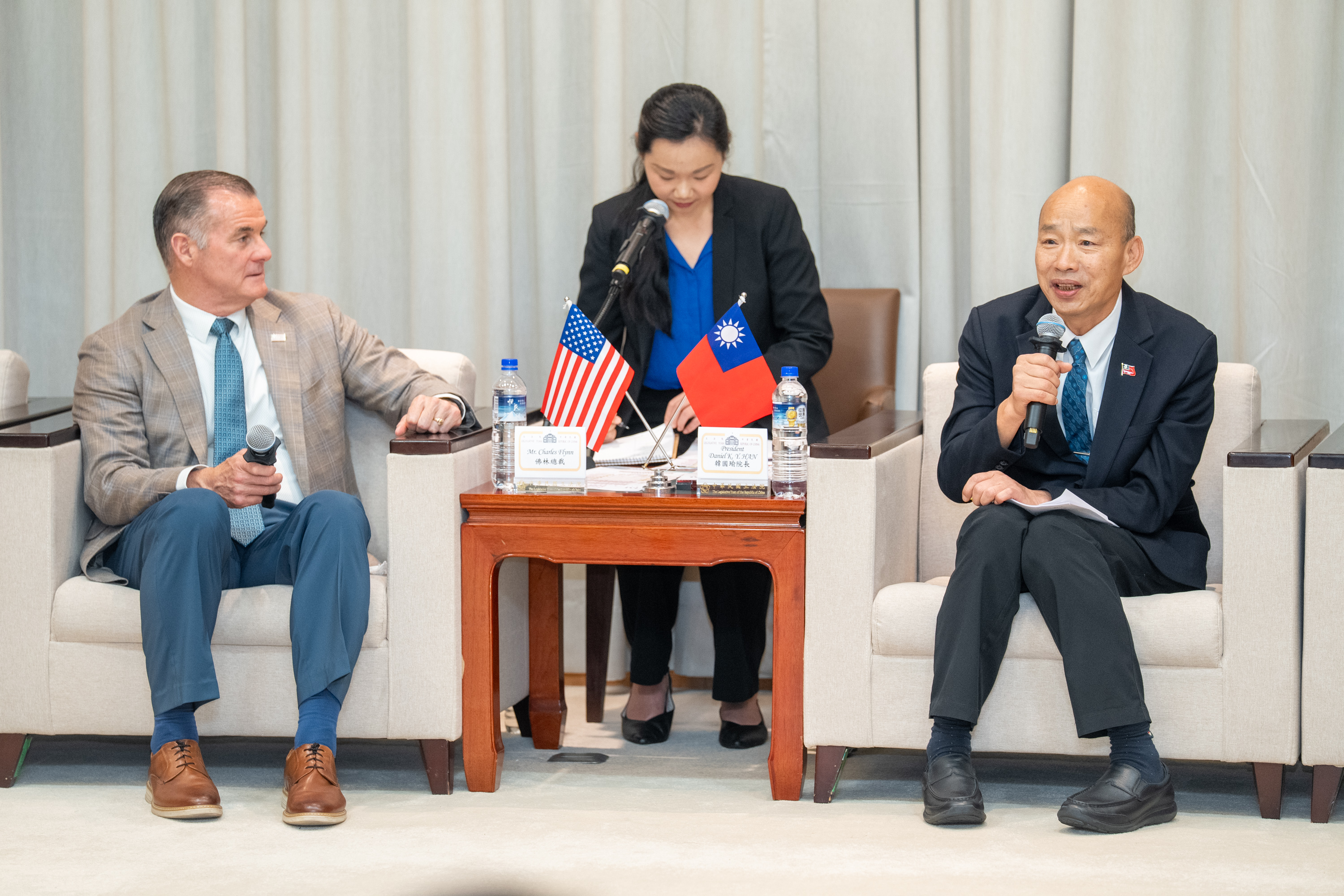
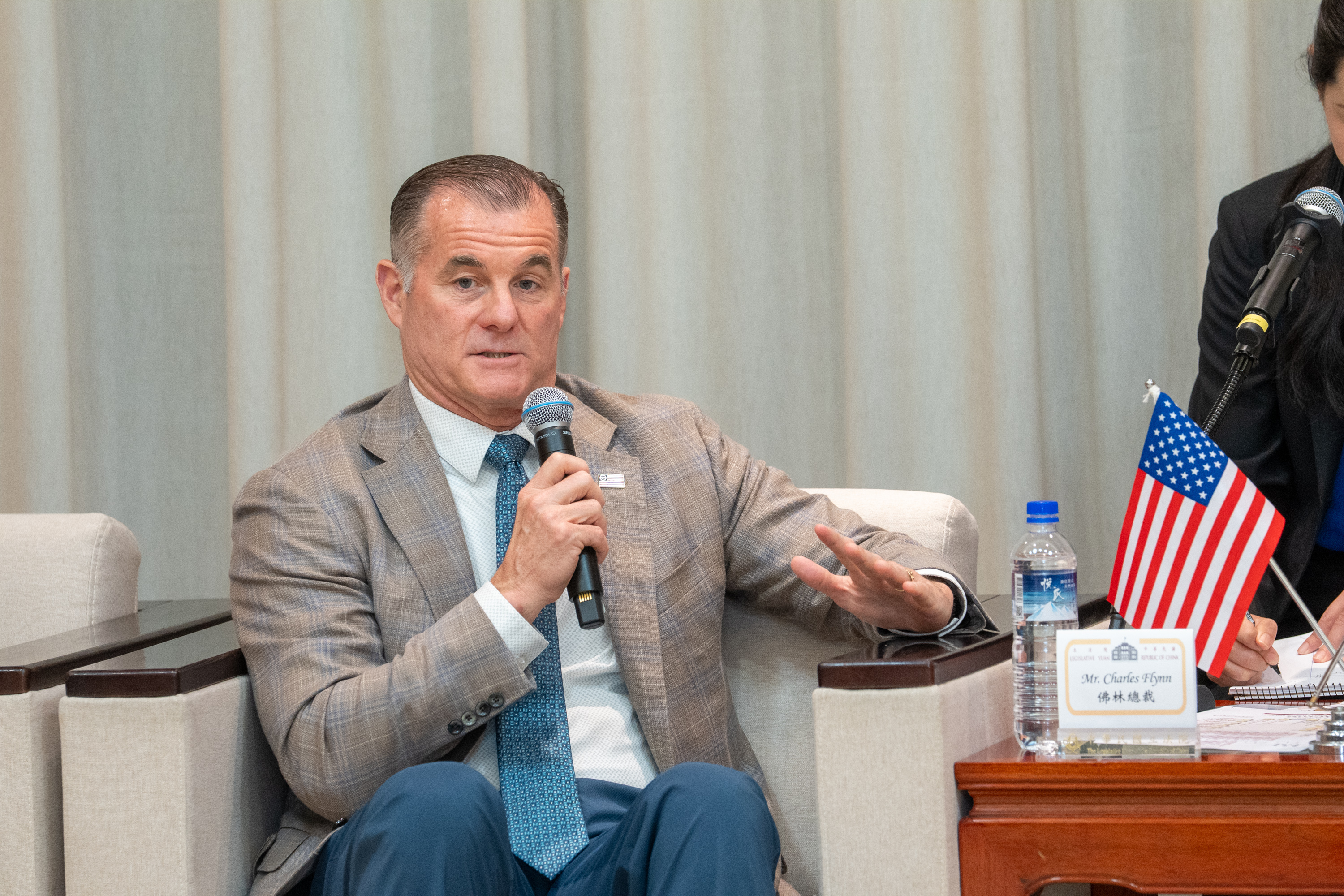
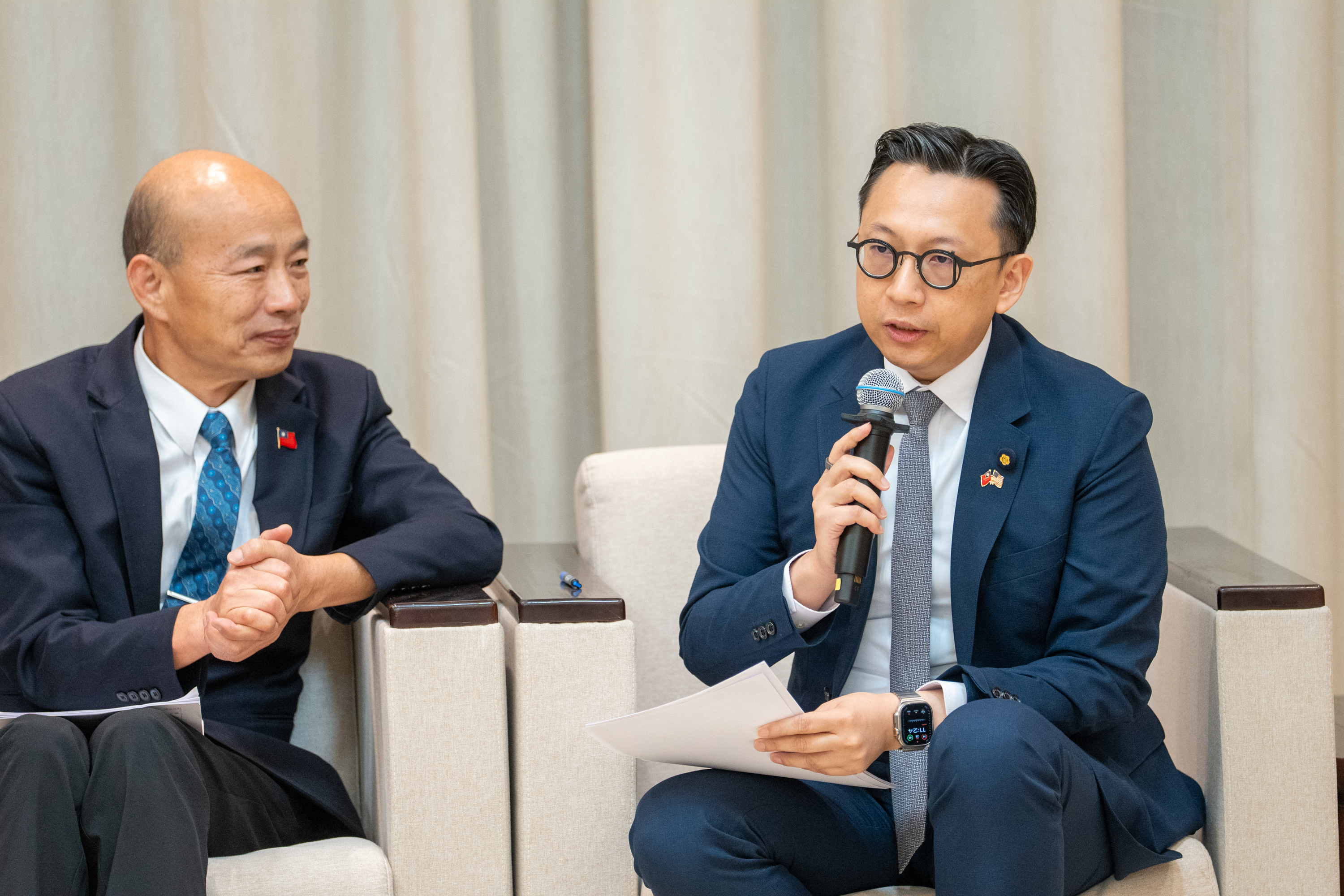
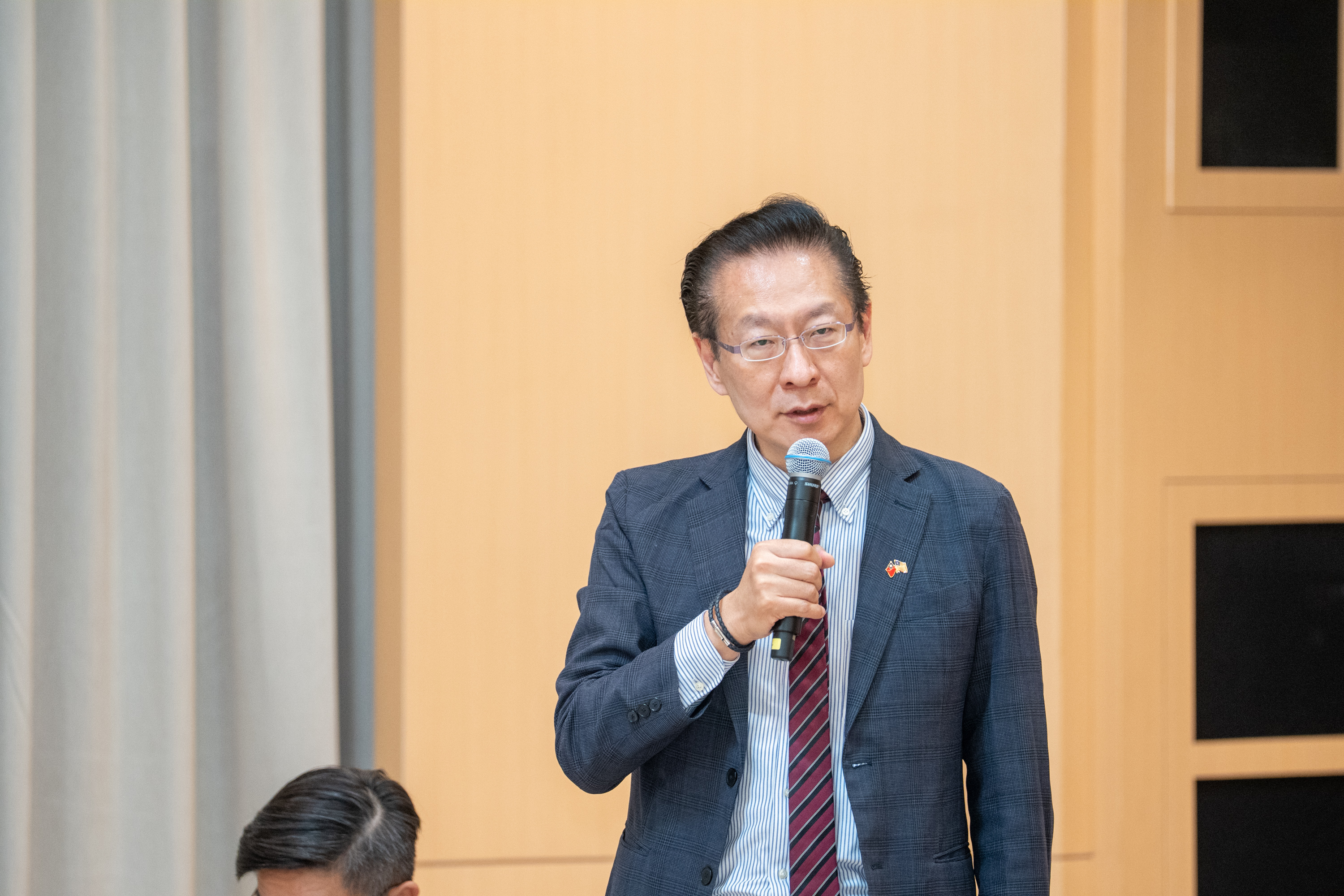
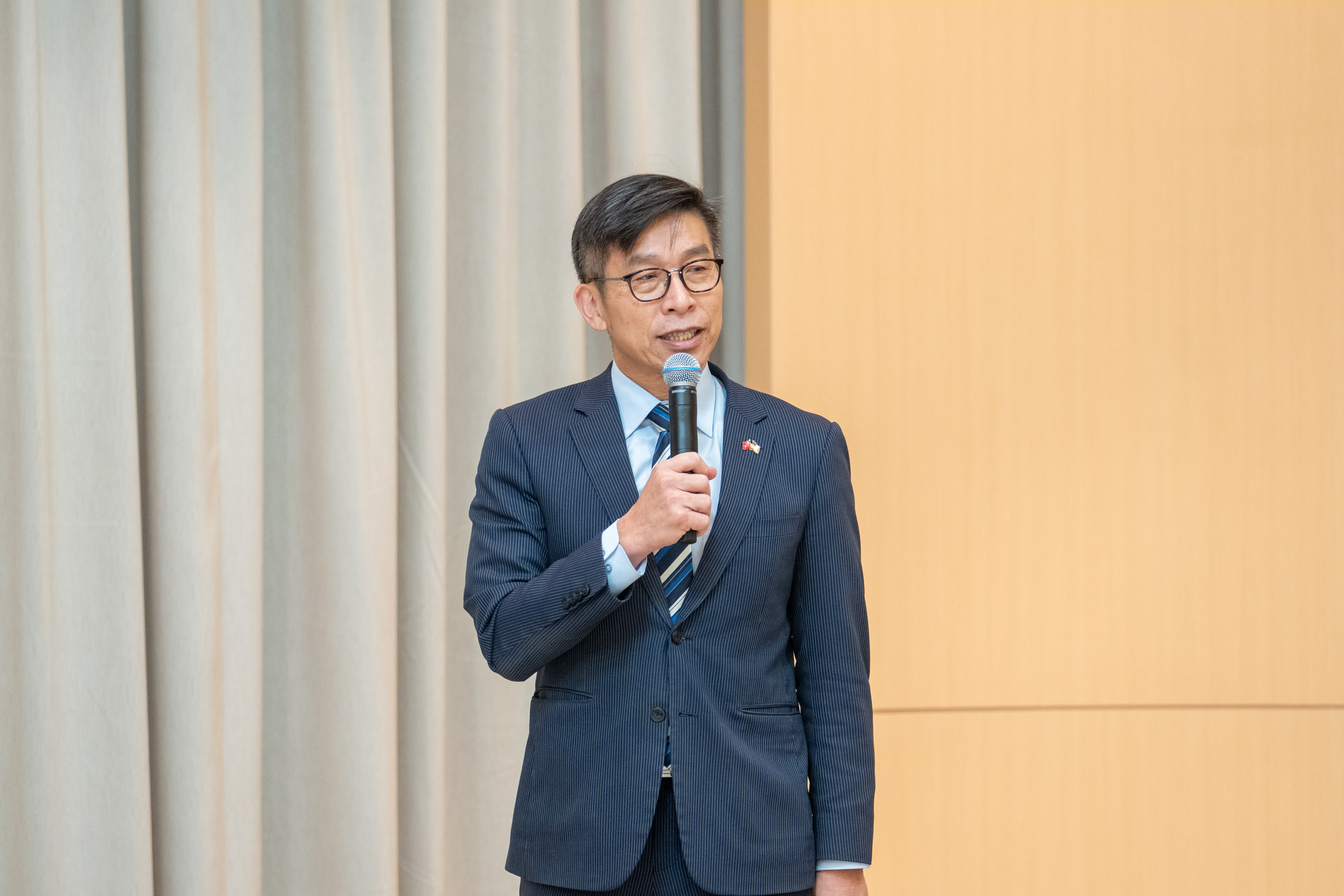
On the morning of May 28, President Daniel K.Y. Han of the Legislative Yuan received a 37-member delegation from the U.S.-Taiwan Business Council (USTBC), comprising representatives from the defense and aerospace industries. The delegation was led by General (Ret.) Charles Flynn, former commanding general of the United States Army Pacific, and Mr. Rupert Hammond-Chambers, President of the USTBC. Also in attendance were KMT Legislator Dr. Ko Ju-Chun, DPP Legislator Chung Chia-Pin, and TPP Legislator Dr. Wang An-Hsiang.
President Han opened the meeting by extending a cordial welcome to the delegation on behalf of the Legislative Yuan and expressing his gratitude to General Flynn and President Hammond-Chambers for their long-standing support of Taiwan’s security and Taiwan-U.S. relations. President Han noted that in the midst of global upheavals, many parts of the world are facing the risk of conflict and war. He remarked that with core values in common such as freedom, democracy, and the rule of law, Taiwan and the U.S. have a shared responsibility and a strong foundation for collaboration in maintaining supply chain security and the stability of the Indo-Pacific. President Han reaffirmed that the Legislative Yuan is actively promoting and accelerating the passage of defense-related bills and budgets in order to fulfill Taiwan’s defense needs. He stated that on May 8 the Legislative Yuan passed the Special Act on Safeguarding National Security and Strengthening Asymmetric Warfare Capabilities Procurement, with a total budget of US$ 25 billion intended to bolster Taiwan’s defense resilience and asymmetric combat capabilities. He added that the examination process for the corresponding budgets is scheduled for completion tomorrow (May 29). Furthermore, he noted that the Yuan will actively support efforts to expedite the deliberation process for the central government’s general budget.
President Han went on to emphasize that, as a small nation, Taiwan’s strengths and capabilities are often underappreciated. He compared Taiwan to a “boiled egg”—small in size, yet teeming with a rich and diverse industrial ecosystem. President Han highlighted four key areas where Taiwan enjoys global competitiveness: semiconductor and chip-making, healthcare and the National Health Insurance system, high-quality traditional manufacturing, and a proudly upheld democratic system. In particular, Taiwan accounts for approximately 90% of the global production of advanced chips, underscoring the nation’s pivotal role in the global high-tech supply chain. President Han further explained to the delegation that the Legislative Yuan operates under a unicameral system comprising 113 legislators from three major political parties: the Kuomintang (KMT), the Democratic Progressive Party (DPP), and the Taiwan People’s Party (TPP). He noted that the passage of bills and budgets relies on building cross-party consensus. In closing, President Han expressed his hope that Taiwan and the U.S. will continue to deepen exchanges and to enhance the partnership with a shared spirit of enthusiasm and friendship.
As the leader of the delegation, General Flynn thanked President Han and the Legislative Yuan for their hospitality and mentioned that, in addition to the Legislative Yuan, the delegation had also met with several government agencies to gain a deeper understanding of Taiwan’s industrial landscape and national defense developments. General Flynn observed that artificial intelligence (AI) technology has not only affected industrial development but has also reshaped modern warfare, which is why the delegation has prioritized areas such as AI, semiconductors, chips, and asymmetric warfare during this visit. He shared that he had twice visited the semiconductor foundries of Taiwan Semiconductor Manufacturing Company (TSMC) in the U.S. and that he believed TSMC plays a critical role as a global semiconductor manufacturer as well as a leader in the global technology industry. General Flynn reiterated that his long-standing support for Taiwan’s effort to reinforce its self-defense capabilities is because Taiwan’s security pertains not only to its own sovereignty, but also to regional peace and stability.
During the bilateral discussions, Legislator Ko responded to issues regarding generative AI and technological sovereignty by highlighting the passage of the Artificial Intelligence Basic Act in 2025, which centers around promoting innovation and R&D, establishing a national-level AI development committee, planning data governance, and building data centers. He indicated that true AI sovereignty is hard to achieve without robust data governance, and this is why Taiwan will continue to partner with international companies in the development of AI-driven software, hardware, and data centers. Regarding the delegation’s inquiry about sovereign wealth funds (SWFs), he emphasized that the three major party caucuses are all supportive of establishing an SWF for Taiwan. He then cited the government’s role in the founding of TSMC as an example to illustrate the importance of joint public-private investment in the early development stages of an industry. Furthermore, he mentioned that the Legislative Yuan’s increased budgetary support for the Taiwan Space Agency and space technologies will foster deeper and more vibrant cooperation with international companies.
Legislator Chung stressed that during this legislative term, he founded and serves as the chair of both the Trans-Pacific Unmanned Vehicle Parliamentary Alliance (TUVPA) and the Trans-Pacific Aerospace Parliamentary Alliance (TAPA). He expressed his hope that the Legislative Yuan would become a platform for Taiwan to advance its exchanges and cooperation with Asia Pacific countries in the fields of unmanned vehicles, aerospace technologies, and the defense industry. He also shared information on the recent developments of the drone and unmanned vehicle industries in Taiwan, noting that drones have played an increasingly pivotal role on modern battlefields, as evidenced by the Russia-Ukraine war. He remarked that besides the military sector, the critical infrastructure industries are also gradually adopting the use of drones and robots for routine inspections. With the widespread integration of AI-driven autonomous technologies, he expressed confidence that there will be enormous potential for unmanned vehicles in the future. Legislator Chung also pointed out that he has recently submitted a draft bill for the Special Statute on Establishing the Unmanned Vehicle Industry, proposing a five-year, US$18 billion budget. He expressed his hope that with a legal framework in place and under the leadership of the Ministry of Economic Affairs, joint private-sector collaboration between Taiwan and the U.S. will be fostered to expedite growth across drone-related industries in Taiwan.
Legislator Wang emphasized that, as a member of the Foreign Affairs and National Defense Committee, he pays close attention to issues regarding defense and security, regional dynamics, and Taiwan-U.S. security cooperation. He hopes Taiwan will continue deepening exchanges and engagement with like-minded countries. In response to the inquiry about Taiwan’s SWF, he reiterated that the TPP had proposed the establishment of an SWF for Taiwan during the presidential election in 2024 and that he hopes the fund will be allocated to key sectors, including national defense, semiconductors, and AI. He indicated that a clearer path for the industry will unlock enormous potential for Taiwan’s development in both software and hardware. He also stated his expectation that further cooperation between Taiwan and the U.S. will be expanded on existing foundations.
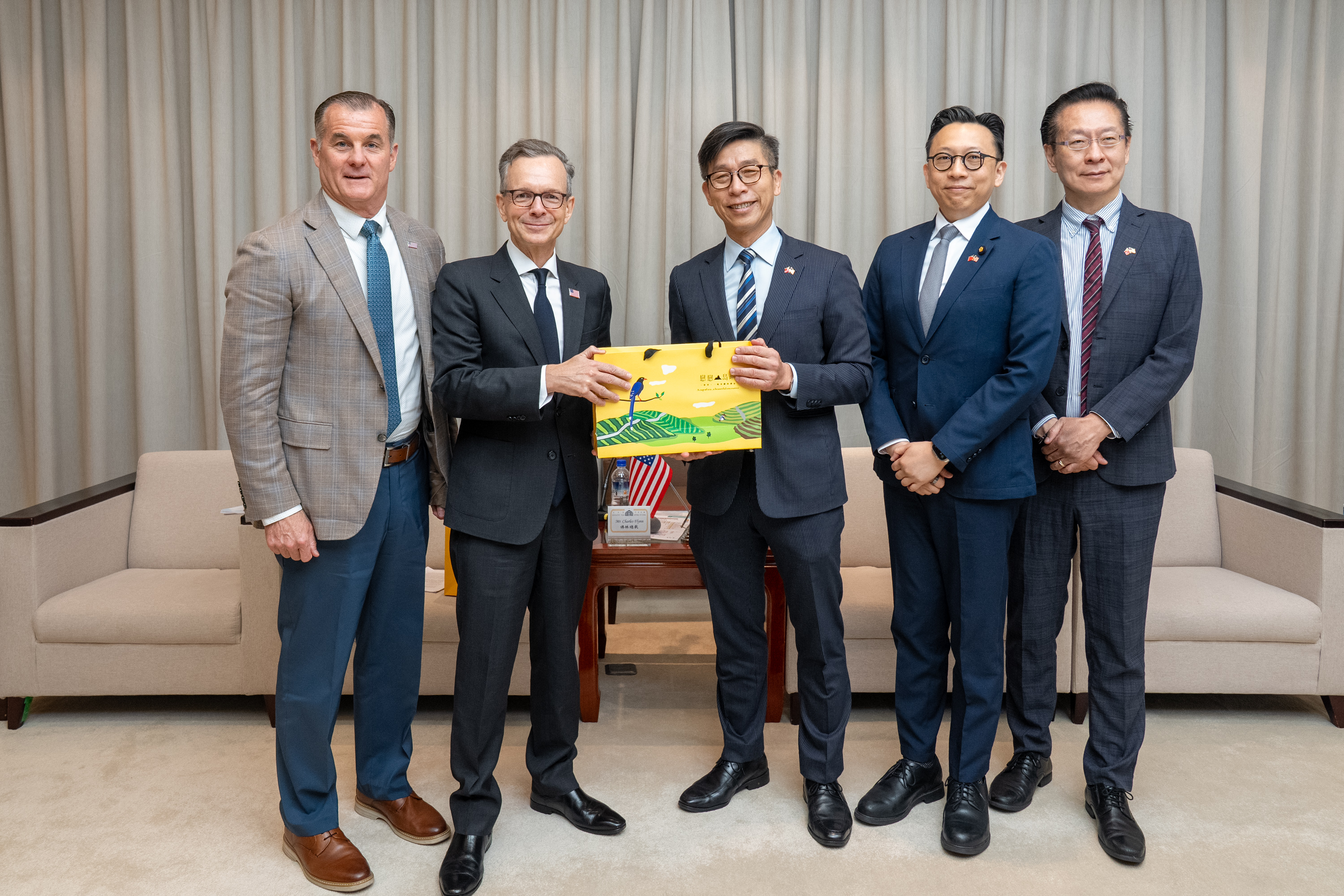
The meeting lasted for 50 minutes and concluded successfully with an exchange of commemorative gifts. (2026/05/28)