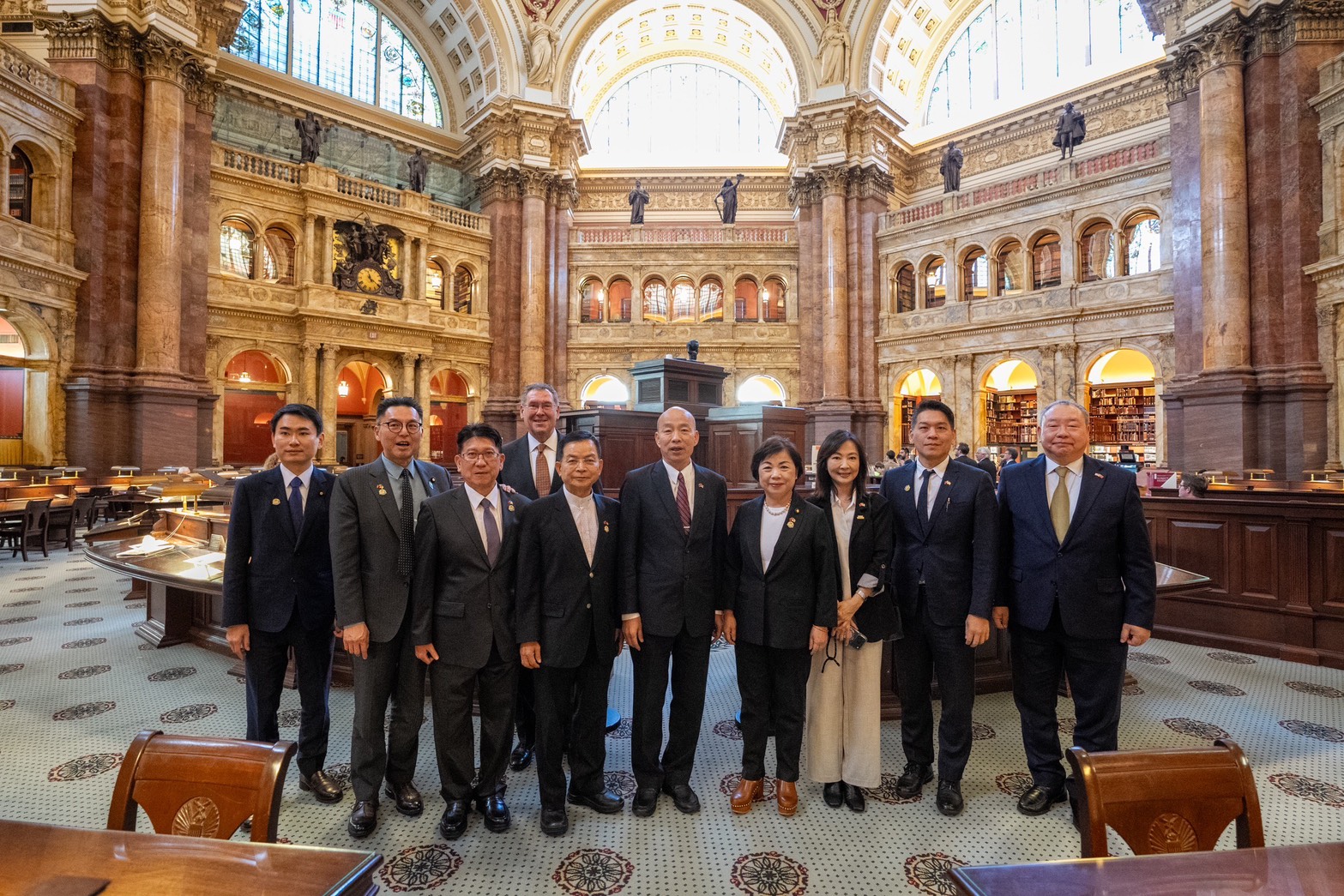
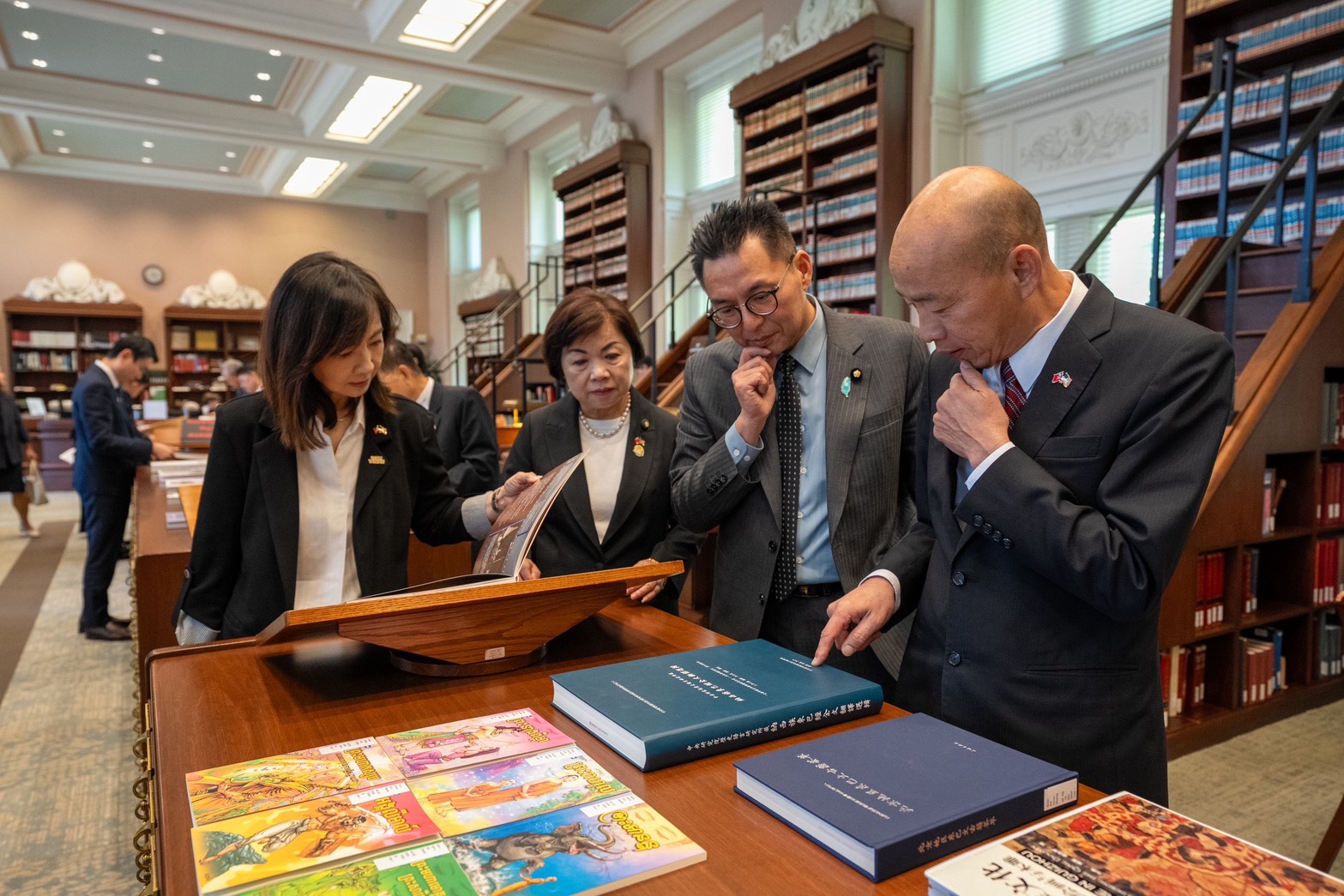
On June 24, Legislative Yuan President Daniel K.Y. Han (韓國瑜) led a cross-party delegation in bilateral exchanges with the U.S. Congress, accompanied by Representative Alexander Tah-Ray Yui of the Taipei Economic and Cultural Representative Office in the United States and others. Arranged by former U.S. Representative Gregg Harper, the delegation visited the historic Library of Congress. Founded in 1800, the Library of Congress is the largest library in the world. The delegation began its first day in Washington, D.C. by visiting, in sequence, the card catalog room, the Asian Reading Room collections, and the precious books and rare volumes provided to Congress by former U.S. President Thomas Jefferson.
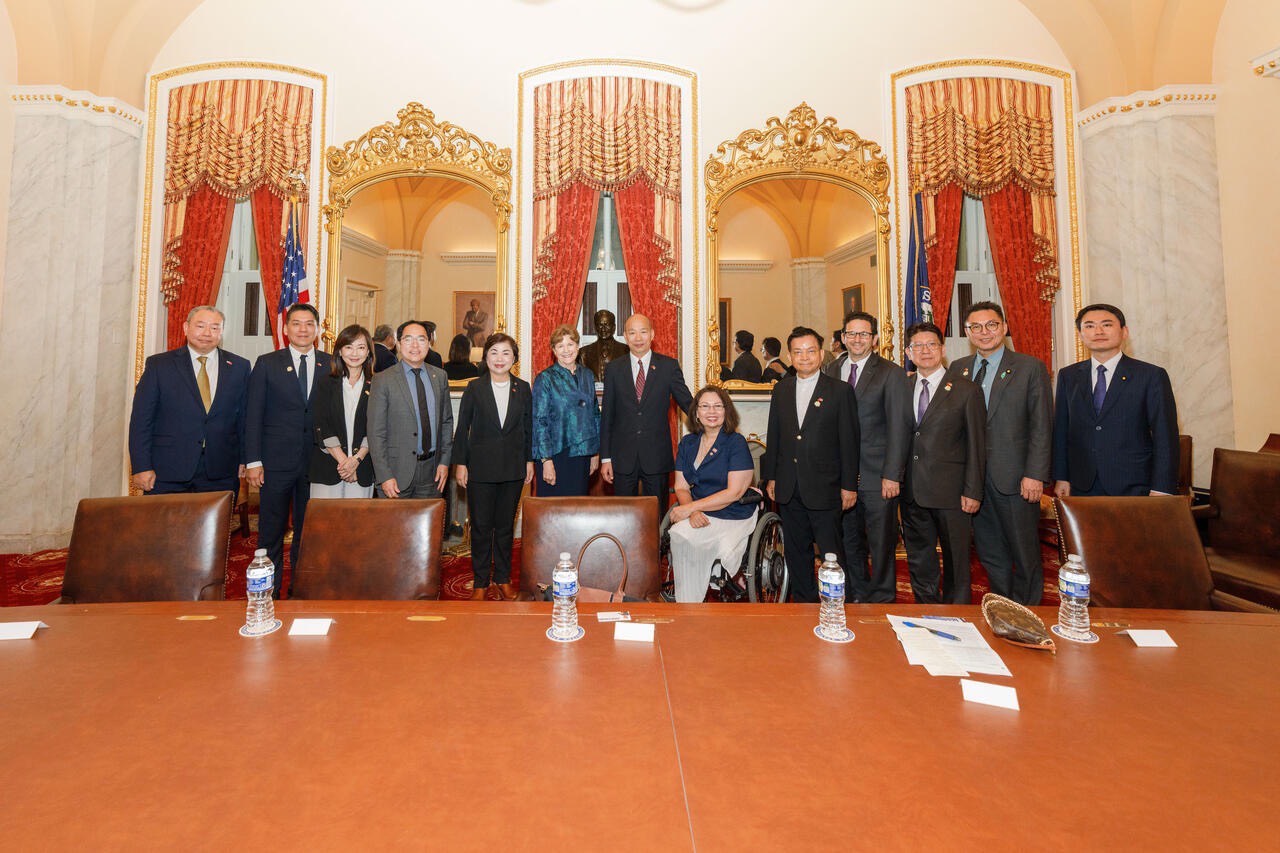
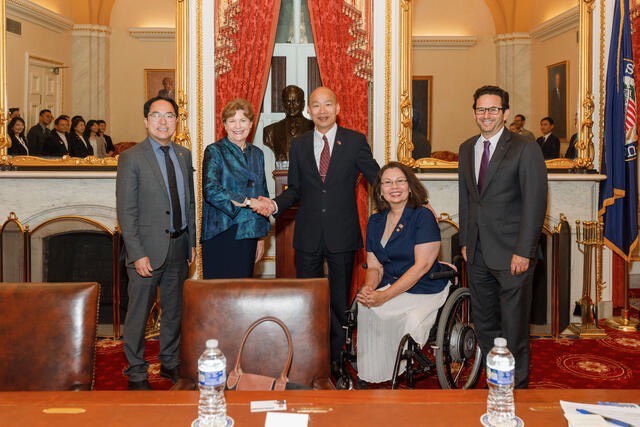
In the afternoon, the delegation proceeded to the dedicated meeting room of the Senate Committee on Foreign Relations in the U.S. Capitol, where it held discussions with seven U.S. senators: Senator Jeanne Shaheen (D-NH), Ranking Member of the Senate Committee on Foreign Relations; Senator Tammy Duckworth (D-IL); Senator Elissa Slotkin (D-MI), Co-Chair of the Senate Taiwan Caucus; Senator Brian Schatz (D-HI); Senator Jacky Rosen (D-NV); Senator Jeff Merkley (D-OR); and Senator Andy Kim (D-NJ). The two sides exchanged in-depth views on strengthening Taiwan–U.S. relations and on Taiwan’s defense and security.
In his remarks, President Han stated that although political parties in Taiwan may hold different positions on domestic issues, they share a strong consensus on national defense and foreign affairs. He noted that the visit coincided with the United States’ celebration of the 250th anniversary of its independence, and that the Founding Fathers would surely be proud of the many remarkable achievements the U.S. has made since its founding.
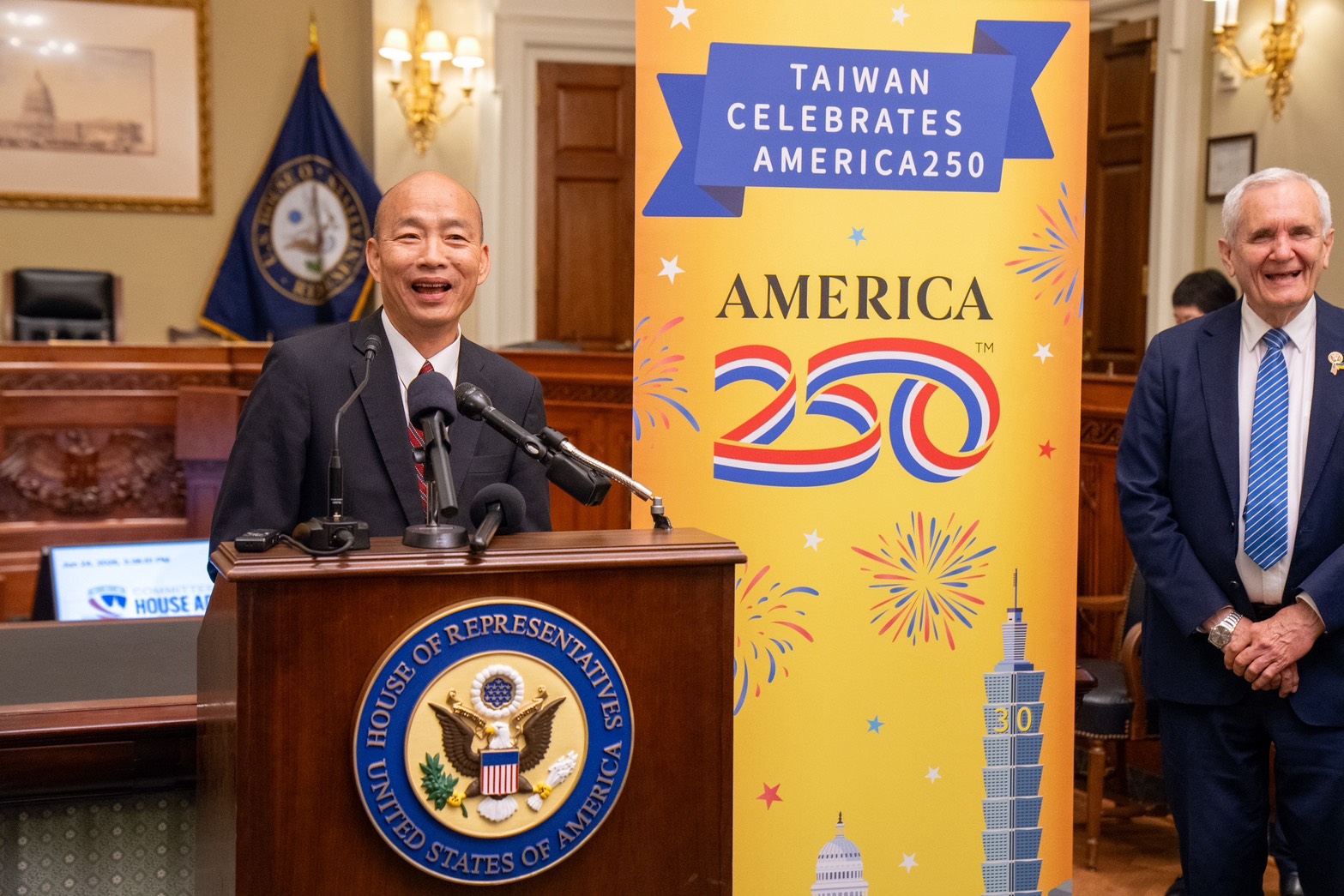
President Han further stated that Taiwan faces many challenges, and that all people in Taiwan clearly understand the importance of strengthening national defense and security. Referring to the symbolism of the Great Seal of the United States, in which a bald eagle holds thirteen arrows and an olive branch, he explained that while a nation builds its strength, it also pursues peace. He said that in the face of current regional challenges, Taiwan will continue to strengthen its defense capabilities, and he expressed gratitude for the United States’ long-standing and firm support for Taiwan’s security and democratic development.
President Han also emphasized that Taiwan–U.S. relations have continued to deepen in recent years, with increasingly close bilateral economic and trade ties. He added that the delegation’s first stop had been Arizona, where it learned about TSMC’s fab construction progress. He said he was pleased to see that the relevant investment and operational plans are now on track, and expressed hope that the U.S. Senate would swiftly pass the Taiwan-U.S. Avoidance of Double Taxation Agreement (ADTA) to further deepen bilateral industrial cooperation and two-way investment.
Members of the delegation and the U.S. senators also exchanged views on strengthening defense and security, promoting cooperation between Taiwan and the U.S. in the defense industry and the joint production of drones, and deepening cooperation with Indo-Pacific partners. The U.S. senators emphasized that the U.S. Congress will continue to support Taiwan in strengthening its self-defense capabilities, and that arms sales to Taiwan should not become a bargaining chip. They also expressed hope that Taiwan and the U.S. will work together to enhance security and resilience, and jointly safeguard regional peace and stability. The exchange lasted approximately 50 minutes and took place in a candid and friendly atmosphere. Both sides agreed that they should continue to deepen the Taiwan–U.S. partnership through parliamentary diplomacy, and maintain close exchanges and cooperation on issues of mutual concern.
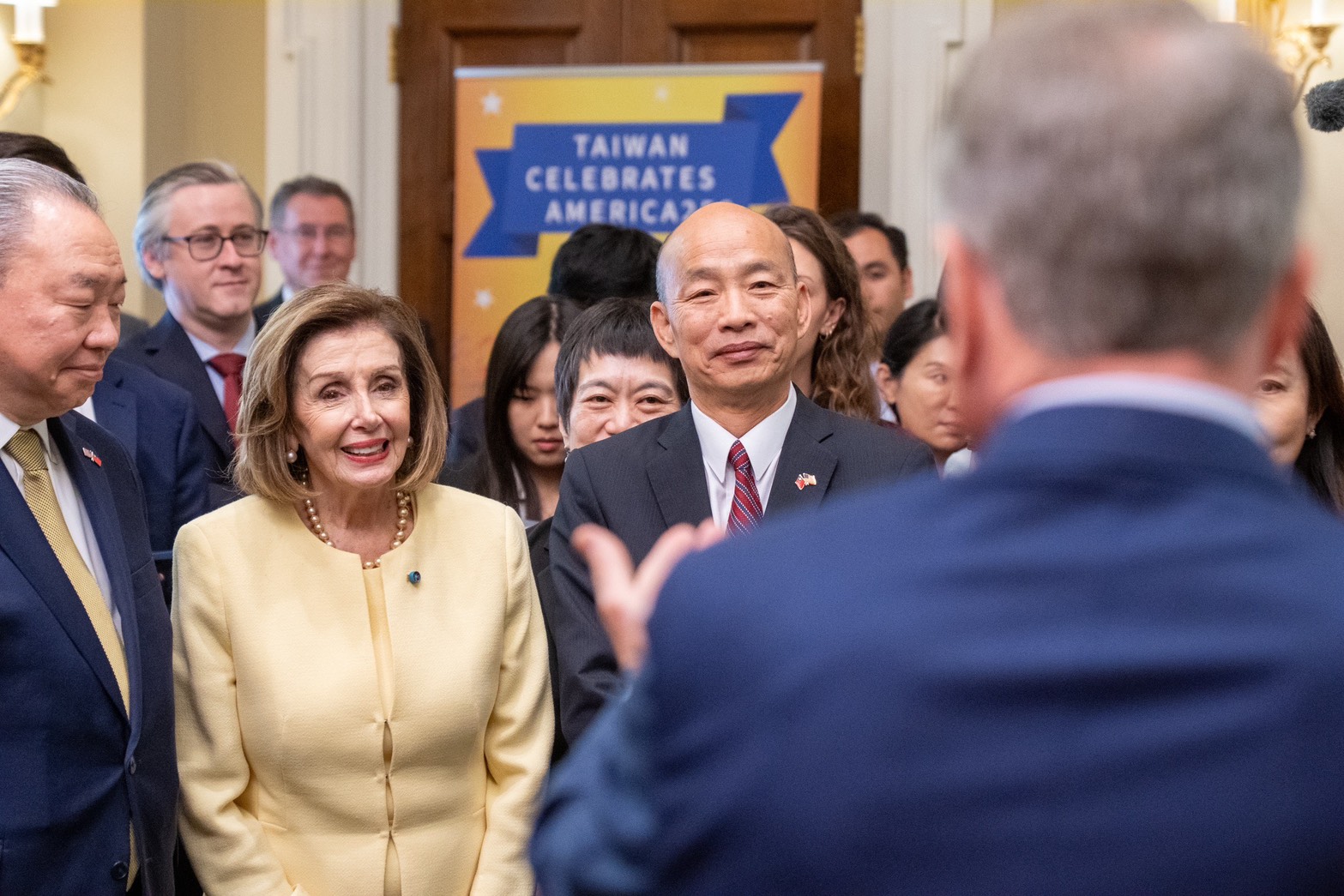
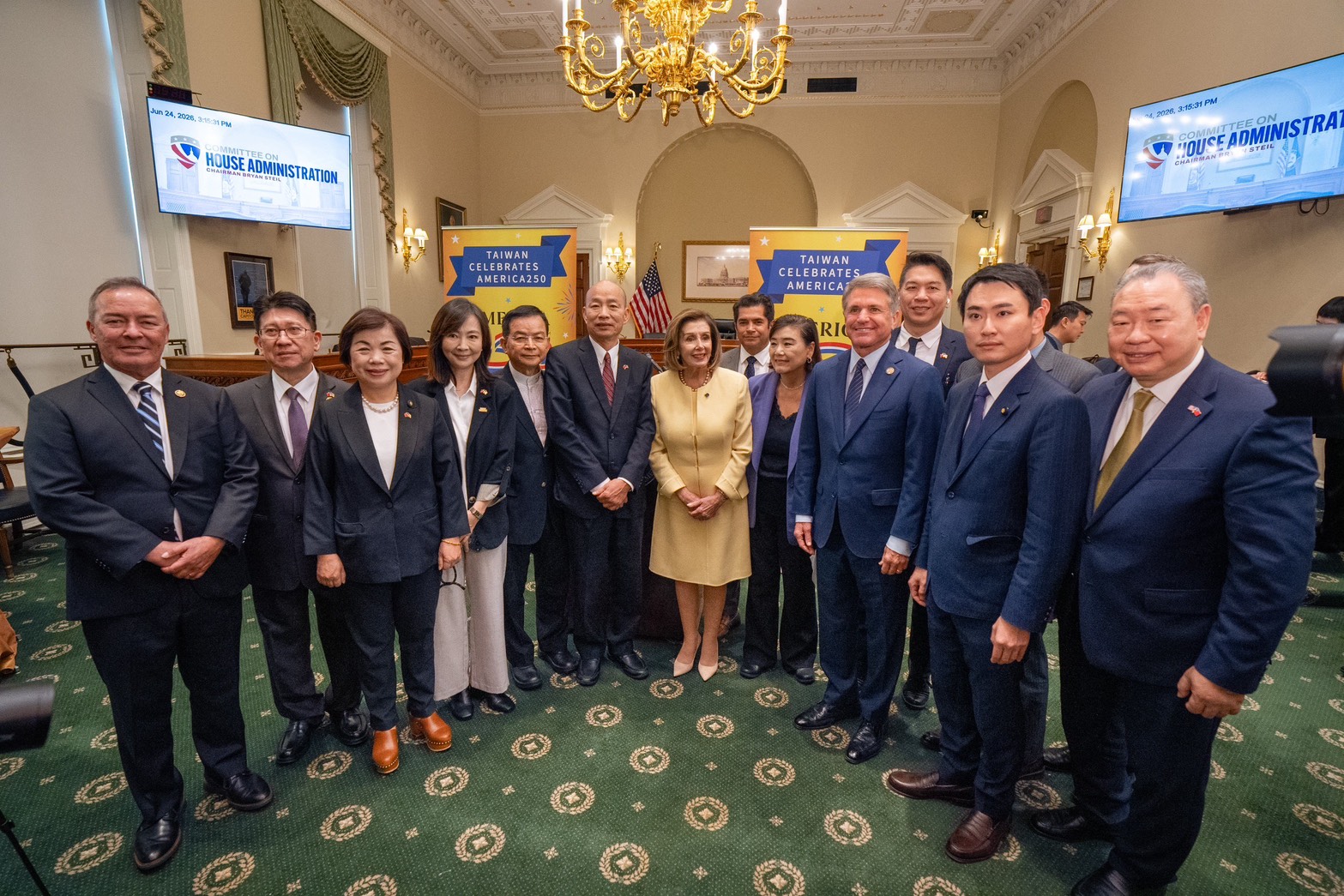
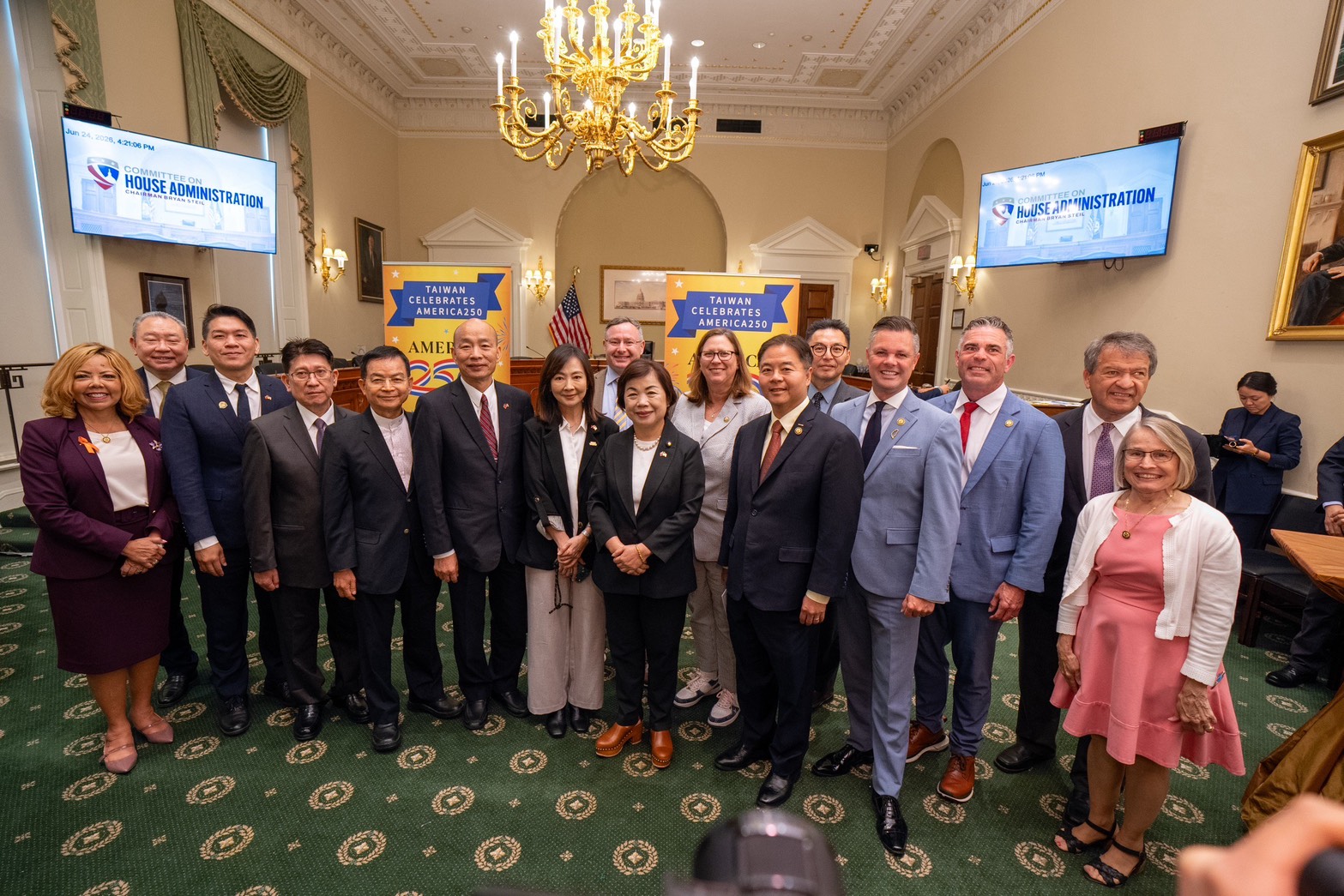
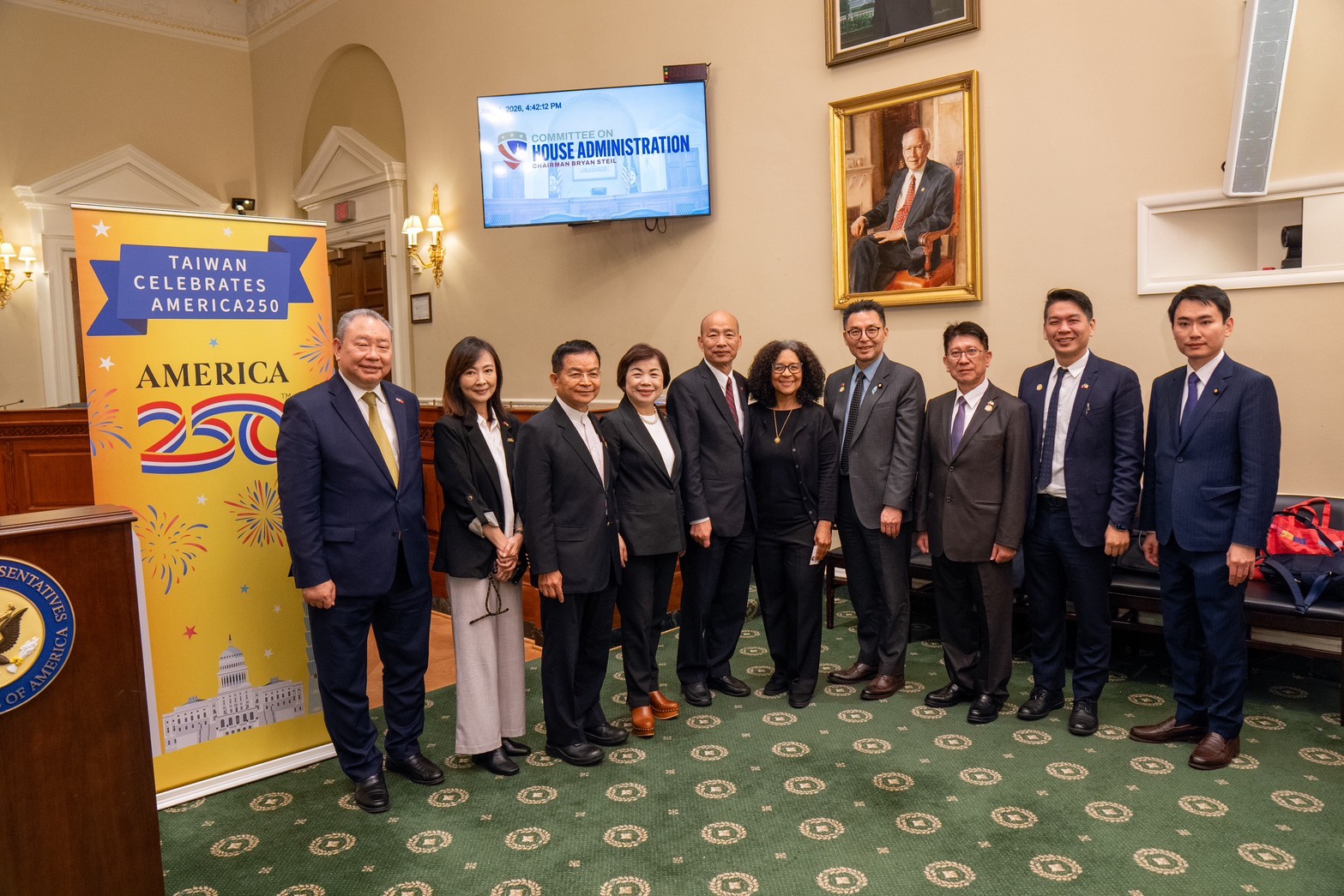
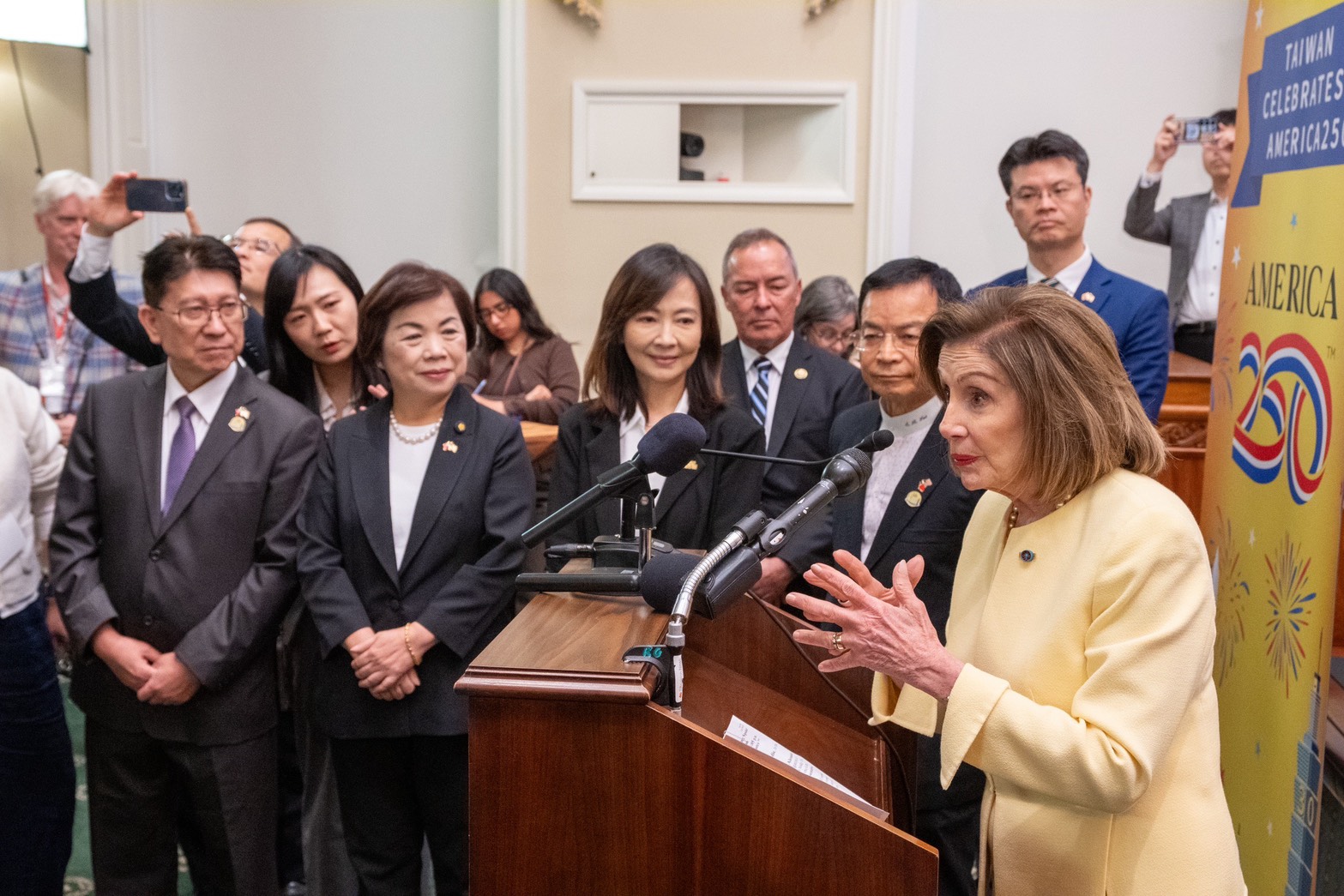
The delegation then attended a congressional welcome reception held at the House of Representatives. A total of 33 members of Congress participated, including Speaker Emerita Nancy Pelosi (D-CA); Chairman Emeritus Michael McCaul (R-TX) of the House Foreign Affairs Committee; House Republican Conference Chair Lisa McClain (R-MI); House Democratic Caucus Vice Chair Ted Lieu (D-CA); and Co-Chairs of the Congressional Taiwan Caucus Ami Bera (D-CA) and Greg Stanton (D-AZ), among others. Their participation demonstrated the strong bipartisan support for Taiwan in the U.S. Congress.
Following introductory remarks by Representative Yui, President Han delivered remarks in which he thanked the U.S. senators for sending a letter welcoming the Legislative Yuan’s cross-party delegation to the U.S., as well as friends in the House of Representatives for their warm hospitality. He said that the delegation wished especially to congratulate the U.S. on the 250th anniversary of its founding and wish the country a happy birthday. President Han stated that the Declaration of Independence, issued at the founding of the U.S., proclaimed the important ideals of freedom, democracy, and unalienable rights, exerting a profound influence on democratic development around the world. He added that Taiwan and the U.S. share democratic values and are firmly committed to safeguarding peace.
President Han further noted that the United States’ education, innovative technology, the strong global position of the U.S. dollar, military strength, and cultural influence are all important symbols of its status as a global power. He also mentioned that the U.S. is Taiwan’s largest trading partner, while Taiwan is the United States’ fourth largest trading partner. He highlighted that total Taiwan–U.S. trade reached US$256 billion last year (2025) and grew 78% year on year in the first quarter of this year (2026), adding that 2026 is expected to be another fruitful year for bilateral cooperation. In closing, President Han shared that Taiwan accounts for only 0.03% of the world’s land area and 0.3% of its population, yet it produces 3% of the world’s industrial products. He said that although Taiwan lacks natural resources, it holds a leading position in high-tech semiconductor manufacturing, has outstanding medical technology and a strong National Health Insurance system, and is home to a thriving community of small and medium-sized enterprises. Additionally, he said, Taiwan is a beacon of democracy in the Chinese-speaking world. However, despite its resilience and hard work, he said, Taiwan remains quite isolated and faces challenges in the international community. Taiwan is willing to shoulder greater responsibility in the international community, he added, and hopes that its friends in the U.S. Congress will continue to support Taiwan and help it participate in international organizations, enabling Taiwan to continue contributing to the international community.
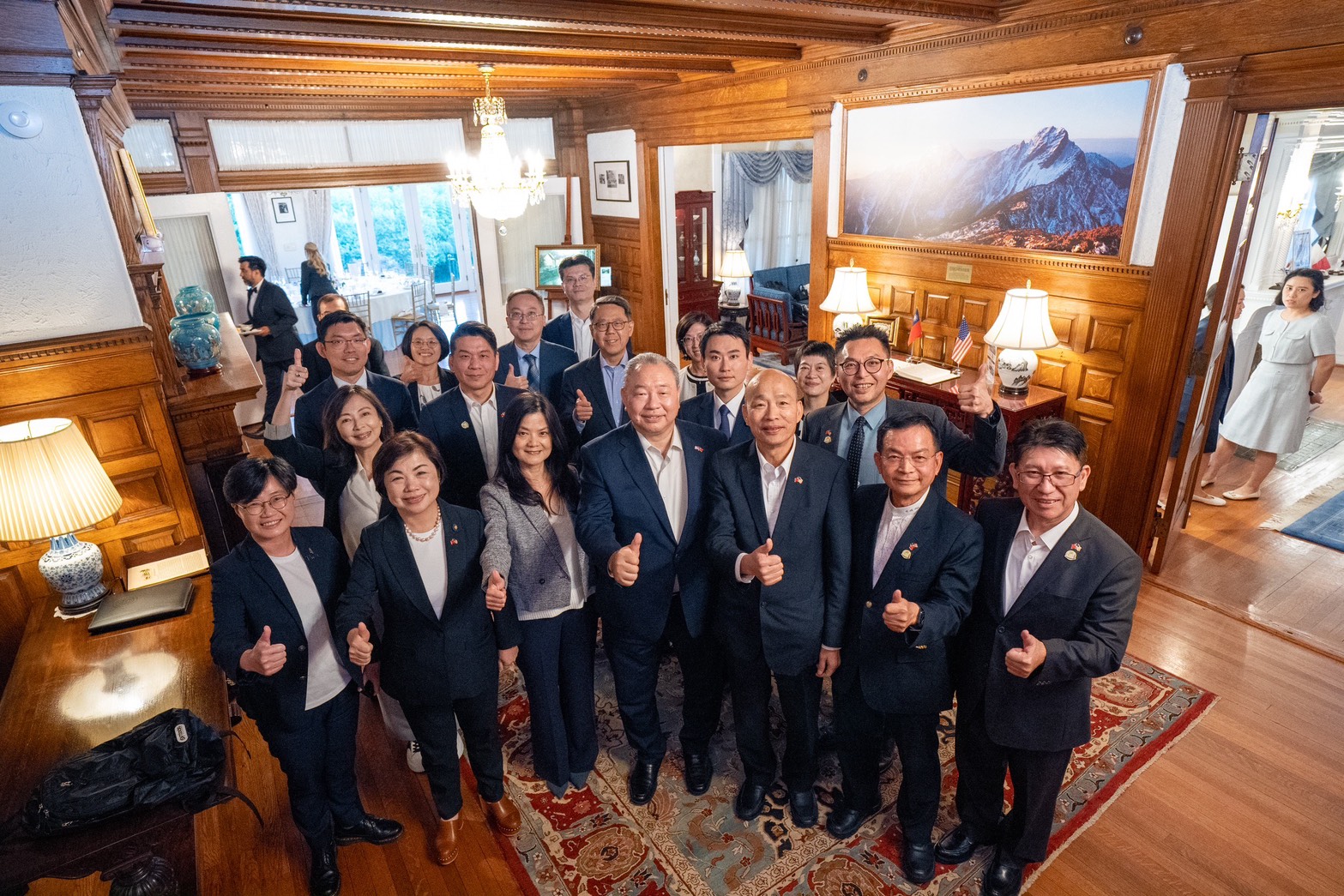
After the reception, Representative Yui hosted a banquet for the delegation at Twin Oaks, where participants engaged in lively exchanges and discussed a wide range of issues at a historic site rich in historical significance and architectural character. The dinner lasted approximately two hours, bringing the delegation’s first day in Washington, D.C. to a close in a warm atmosphere. (2026/06/24)