On June 25, President Daniel K.Y. Han (韓國瑜) of the Legislative Yuan, accompanied by Ambassador Alexander Tah-Ray Yui, Representative of the Taipei Economic and Cultural Representative Office in the United States, and others, met successively with officials from the U.S. Department of War and the White House. The U.S. officials welcomed President Han and the cross-party delegation, and reiterated that U.S. policy toward Taiwan remains unchanged and that the United States will continue to support Taiwan in strengthening its defense capabilities.
During the exchanges, President Han briefed the U.S. officials on the current state of Taiwan’s legislature. He stated that although the Legislative Yuan has only 113 legislators, it is responsible for reviewing major national bills and budgets. Under the current three-party legislature, in which no party holds a majority, differing views on certain issues often lead to diverse and vigorous debate. However, all parties share a strong consensus on strengthening Taiwan’s self-defense capabilities. President Han emphasized that the people of Taiwan cherish democracy and freedom, and that safeguarding democracy has become part of their DNA. Peace and stability across the Taiwan Strait concern not only Taiwan’s security, but also regional and global stability and development. In the face of serious challenges, he said, preventing conflict is an important responsibility for Taiwan’s leaders and the President of the Legislative Yuan. The people of Taiwan also understand that U.S. assistance is vital to maintaining Taiwan’s security. President Han thanked the United States for its long-standing support and expressed hope that Taiwan and the United States would further deepen cooperation in related areas.
President Han also emphasized that, given Taiwan’s difficult international circumstances, the people of Taiwan inevitably feel a sense of loneliness at times. In the face of an increasingly severe situation, he said, the more friends Taiwan has and the more visible Taiwan becomes internationally, the safer Taiwan will be. He therefore expressed hope that the United States would continue to assist Taiwan in raising its international visibility.
During the two exchanges, the two sides also discussed Taiwan-U.S. joint research, development, and production; assistance for Taiwan in developing its unmanned systems industry; delays in arms sales; and U.S. cross-strait policy. The exchanges took place in a candid and friendly atmosphere.
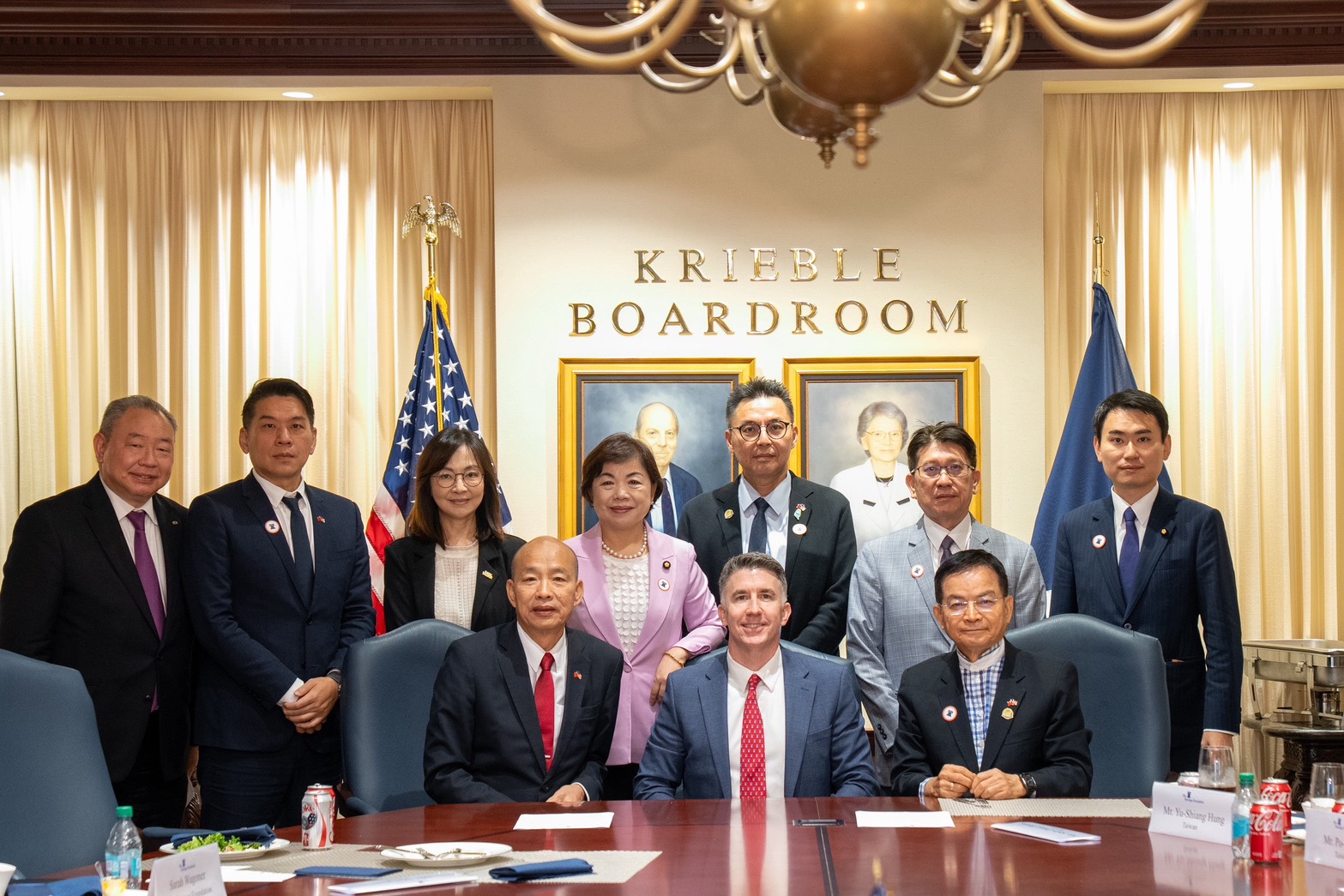
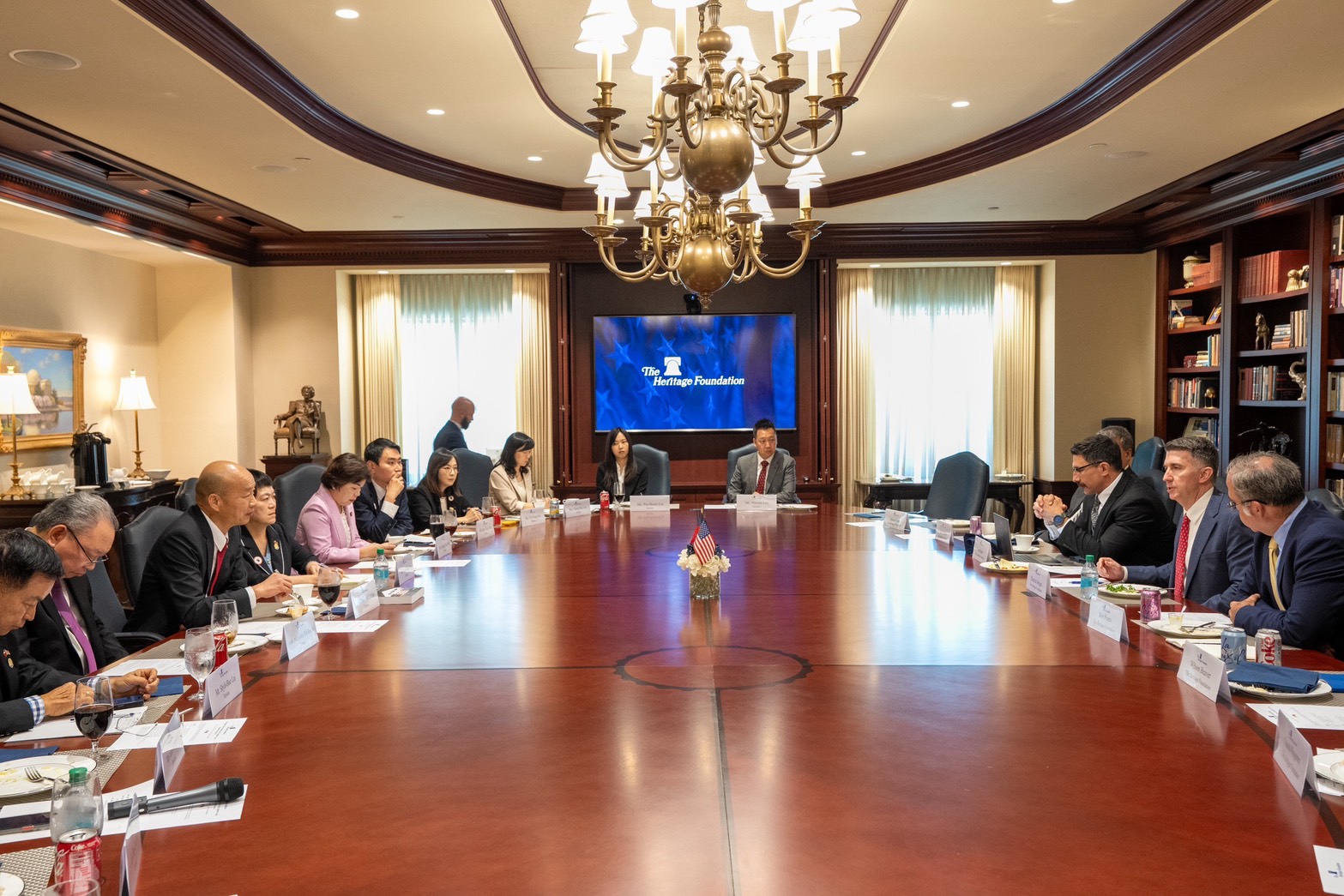
At noon, the delegation attended a luncheon roundtable with the Heritage Foundation, joined by scholars and experts led by Executive Vice President Derrick Morgan. President Han stated that, as President of the Legislative Yuan, he has three major responsibilities: presiding over legislative proceedings, facilitating negotiations among the ruling and opposition parties, and promoting parliamentary diplomacy. In recent years, Taiwan has drawn greater attention from the international community. This attention, he said, stems from the national strength accumulated through the hard work of the people of Taiwan, TSMC’s key position in global supply chains, and Taiwan’s commitment to the values of democracy and freedom. He sincerely thanked the Heritage Foundation for its long-standing attention to Taiwan-related issues and for offering many valuable policy recommendations. He also expressed hope that the two sides would continue to maintain close exchanges and work together to promote the steady development of Taiwan-U.S. relations. During the roundtable, the two sides also held in-depth exchanges on strengthening Taiwan’s asymmetric capabilities, the cross-strait situation, and Taiwan-U.S. defense cooperation.
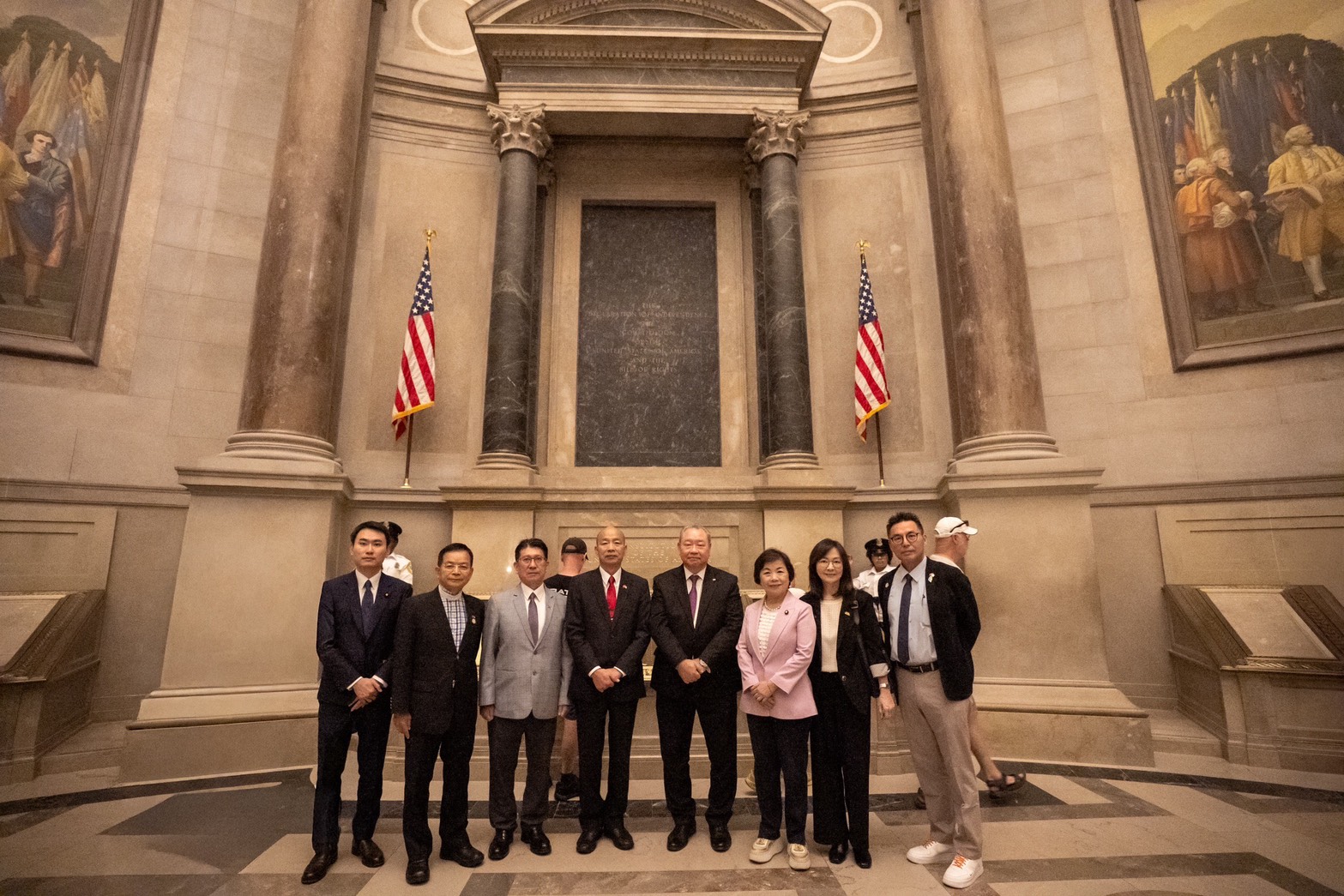
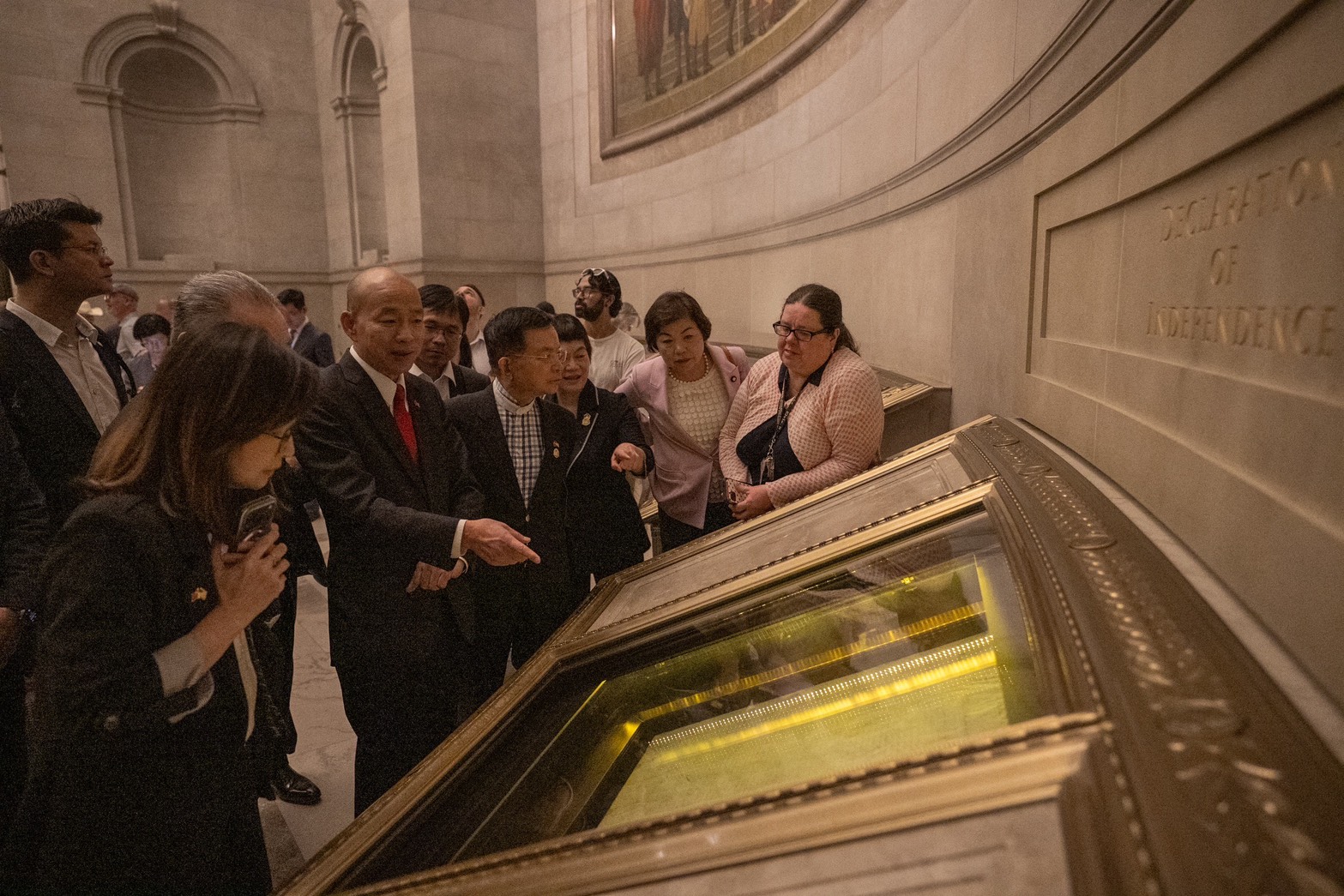
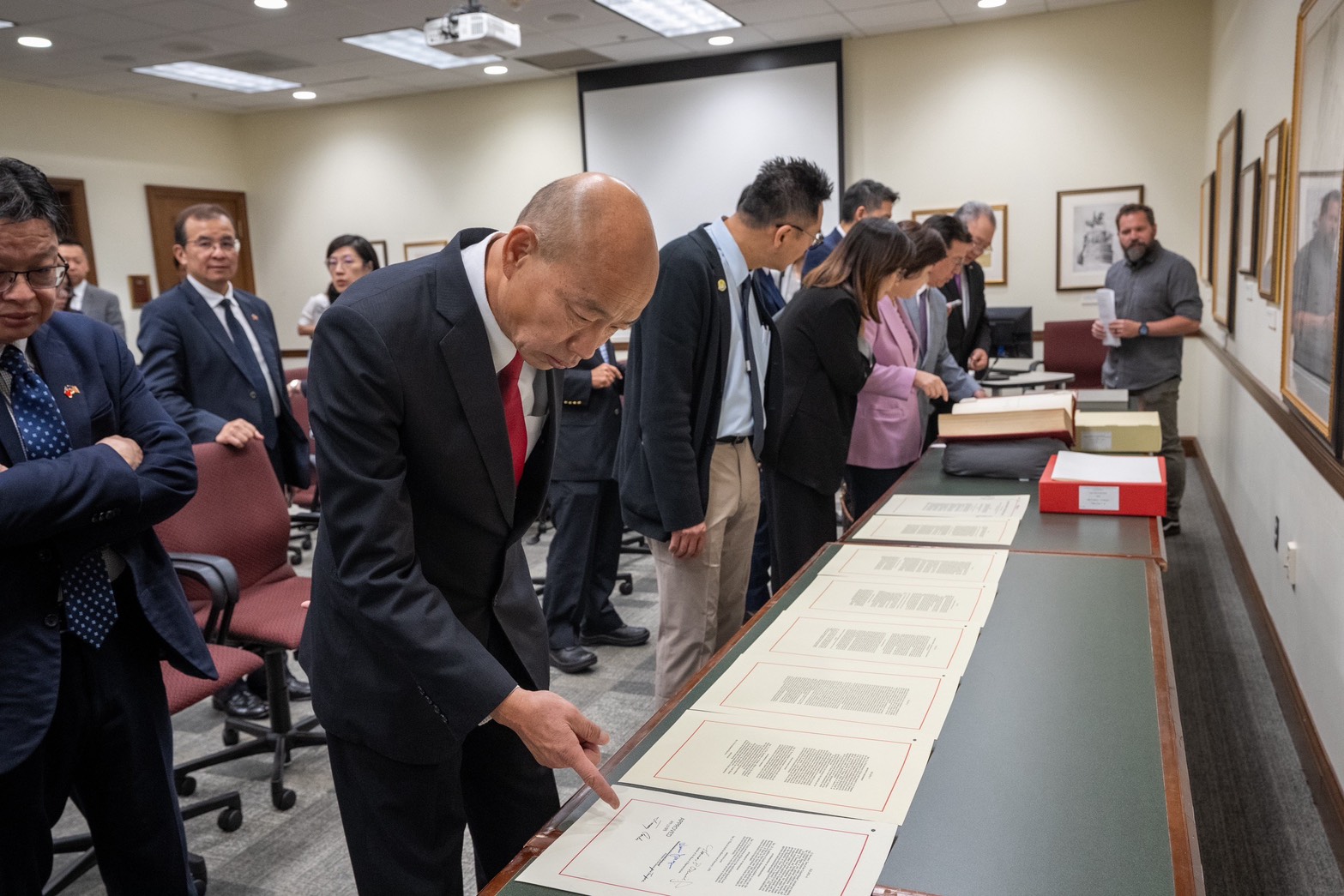
In between official engagements, the delegation also visited the National Archives. In honor of President Han and the delegation’s visit, the National Archives presented several valuable Taiwan-related historical documents, including the original Taiwan Relations Act signed by President Jimmy Carter, which is not part of the permanent exhibits and was specially retrieved from the archives for the occasion. Also presented was the original joint resolution authorizing the U.S. President to employ the U.S. Armed Forces to assist in the defense of Taiwan. Together, these documents highlighted key milestones in the development of Taiwan-U.S. relations. The delegation also had the opportunity to view the original 1776 U.S. Declaration of Independence, bearing witness to an important part of the United States’ journey toward the 250th anniversary of its founding.
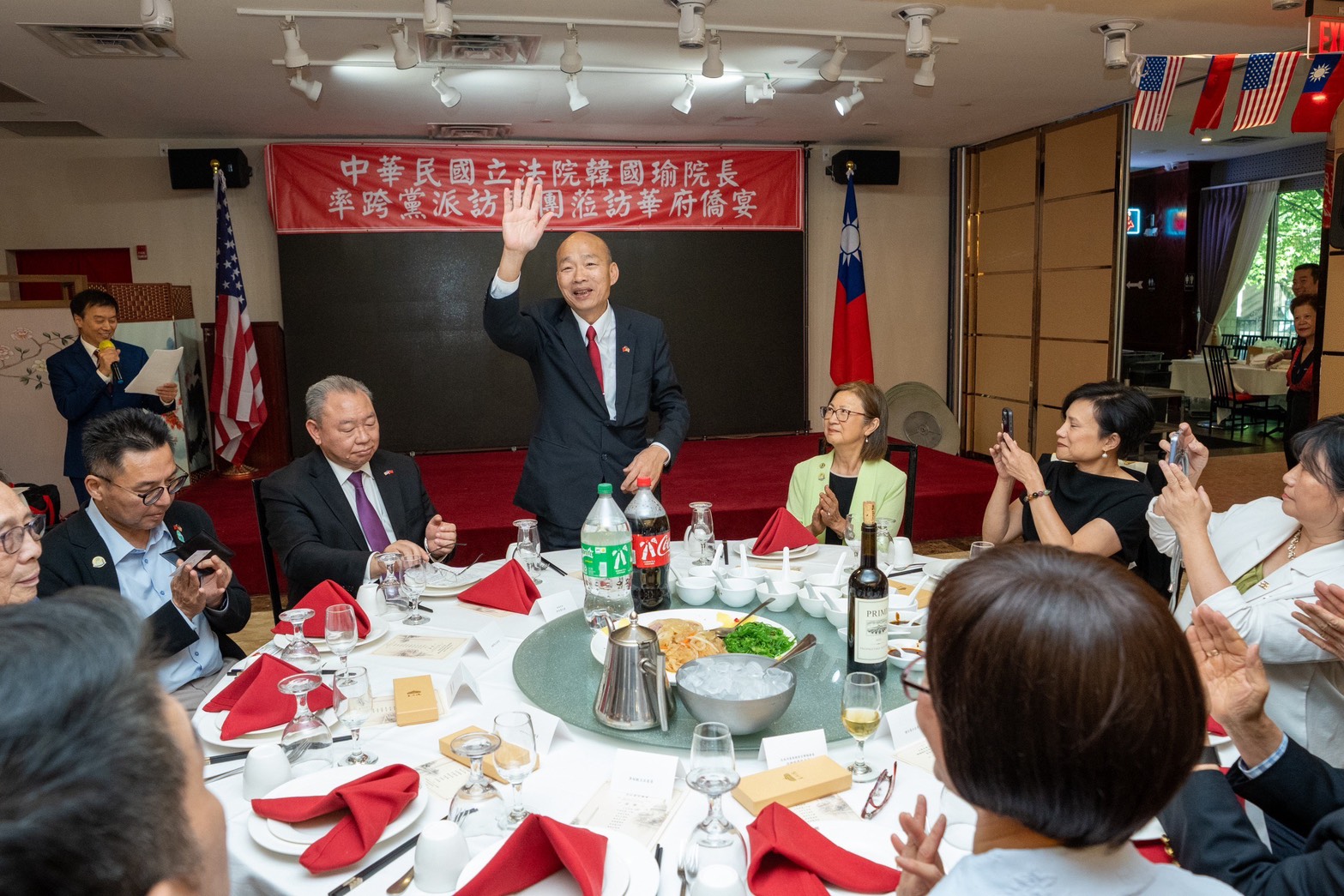
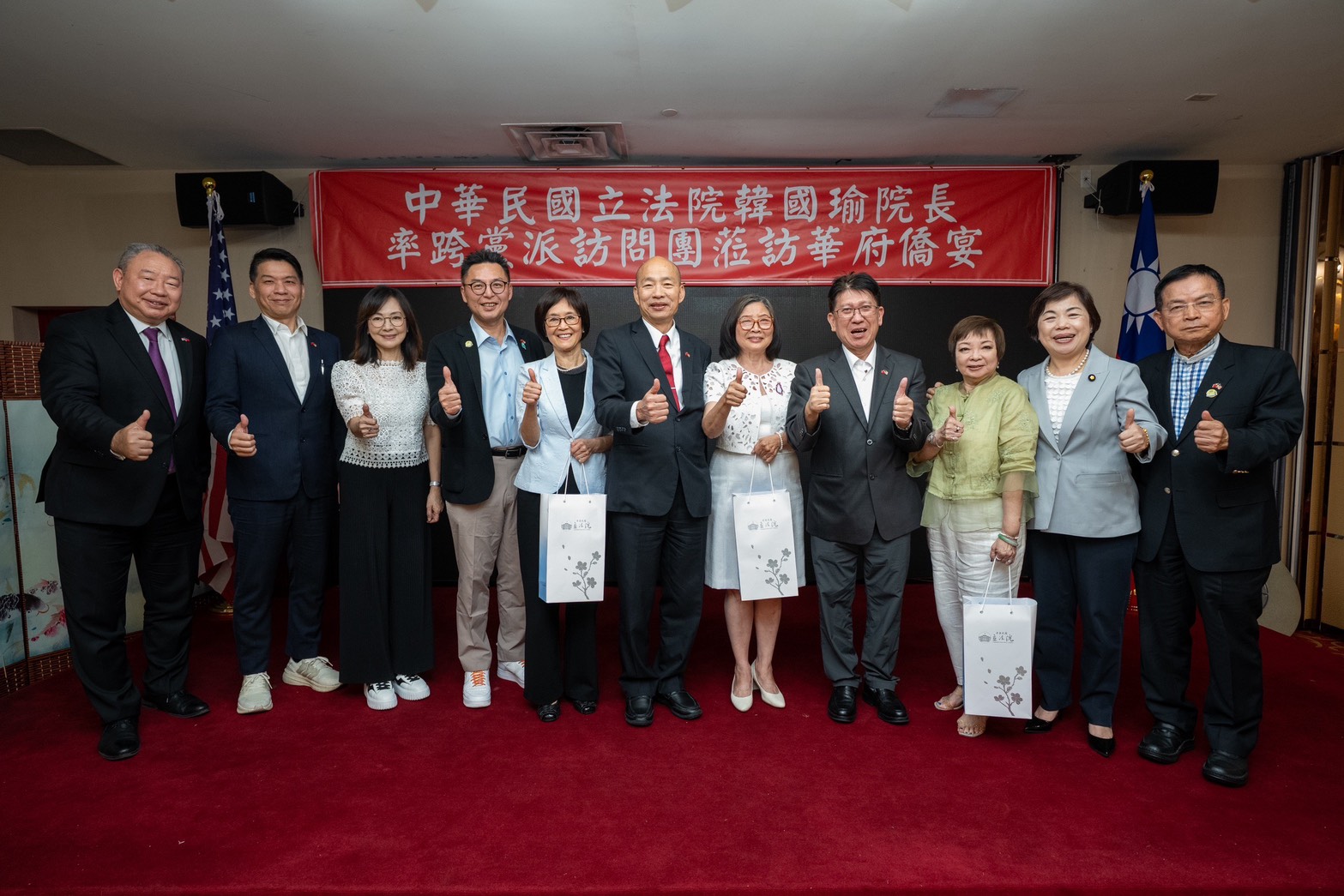
In the evening, President Han and the delegation hosted a dinner in the name of the Legislative Yuan for representatives of the Washington, D.C. overseas compatriot community and Taiwanese business community. The dinner was attended by nearly 120 guests. President Han extended his greetings to the overseas compatriots and Taiwanese business representatives in attendance. He said that many overseas compatriots had traveled abroad with nothing more than a one-way ticket and built new lives in foreign lands. Precisely because such efforts are never easy, overseas Taiwanese should stand united and embrace the spirit of “seeing beyond party colors, whether blue, green, or white, and keeping only Taiwan in their hearts.” President Han then spoke about the curiosity many foreign friends have about how Taiwan has earned international recognition in areas such as small and medium-sized enterprises, semiconductors, and healthcare and National Health Insurance system. He said that it is the years of hard work by countless overseas Taiwanese businesspeople that have allowed the world to see Taiwan’s strength. President Han also shared reflections from the delegation’s exchanges during this visit to the United States. Although the itinerary was brief, the delegation managed to meet with 40 federal senators and representatives, giving him a firsthand sense of the strong support for Taiwan in the U.S. Congress. The Legislative Yuan, he said, will continue to work together with overseas compatriots to strive for Taiwan’s diplomacy. President Han again emphasized that the Legislative Yuan will always be a home away from home for overseas compatriots, and warmly welcomed them to return often for visits. The dinner lasted approximately 90 minutes, bringing the delegation’s second day in Washington, D.C. to a successful conclusion in a warm and lively atmosphere. (2026/06/25)