




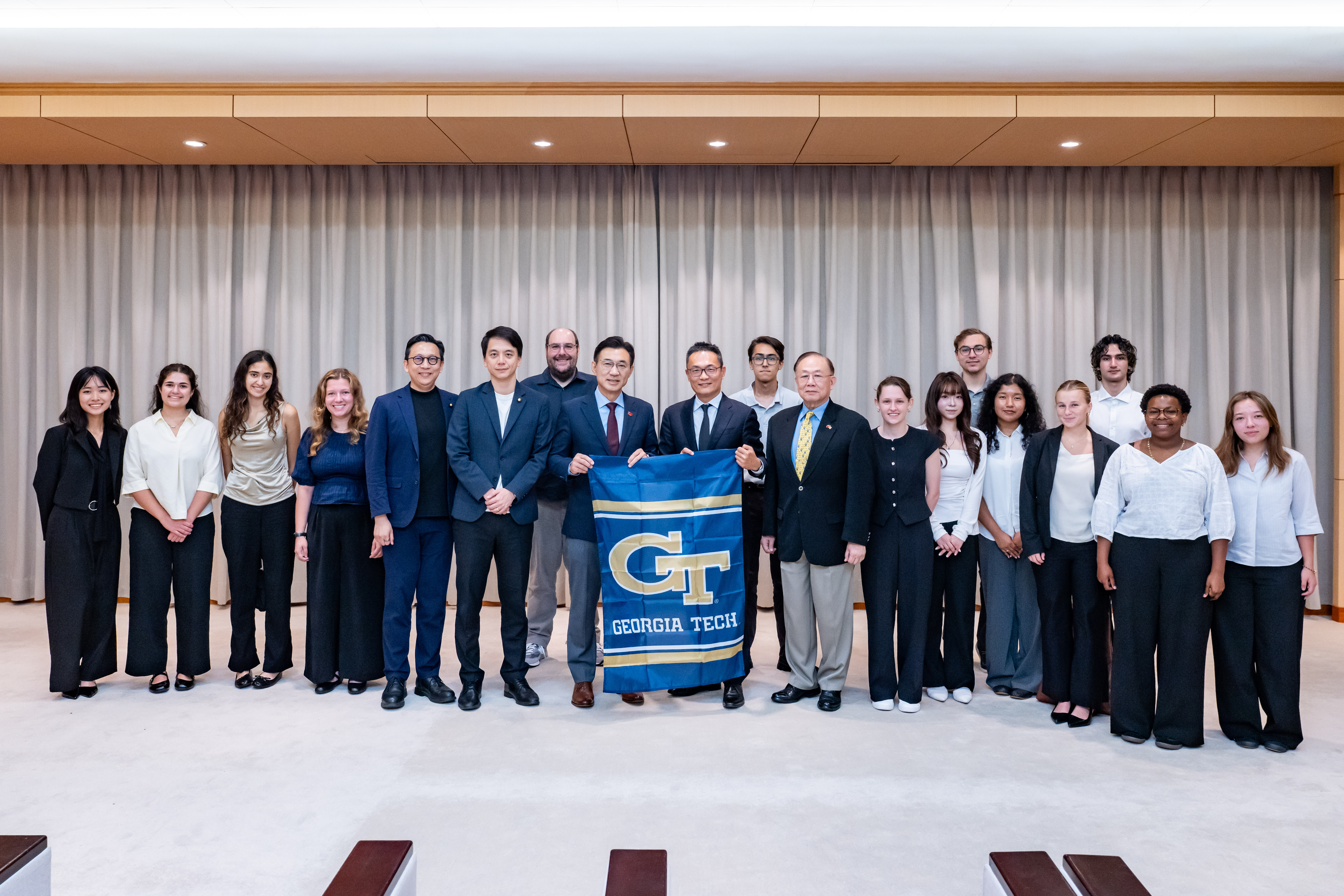
On the afternoon of July 21, Legislative Yuan Vice President Dr. Johnny C. Chiang (江啟臣) received a delegation of faculty and students from the Georgia Institute of Technology led by Professor Dalton Lin. As Vice President Chiang had other official engagements, the meeting was initially chaired by KMT Legislator Adm. Chen Yeong-Kang, who was joined by KMT Legislators Chen Ching-Hui, Niu Hsu-Ting, and Dr. Ko Ju-Chun in exchanging views with the delegation.
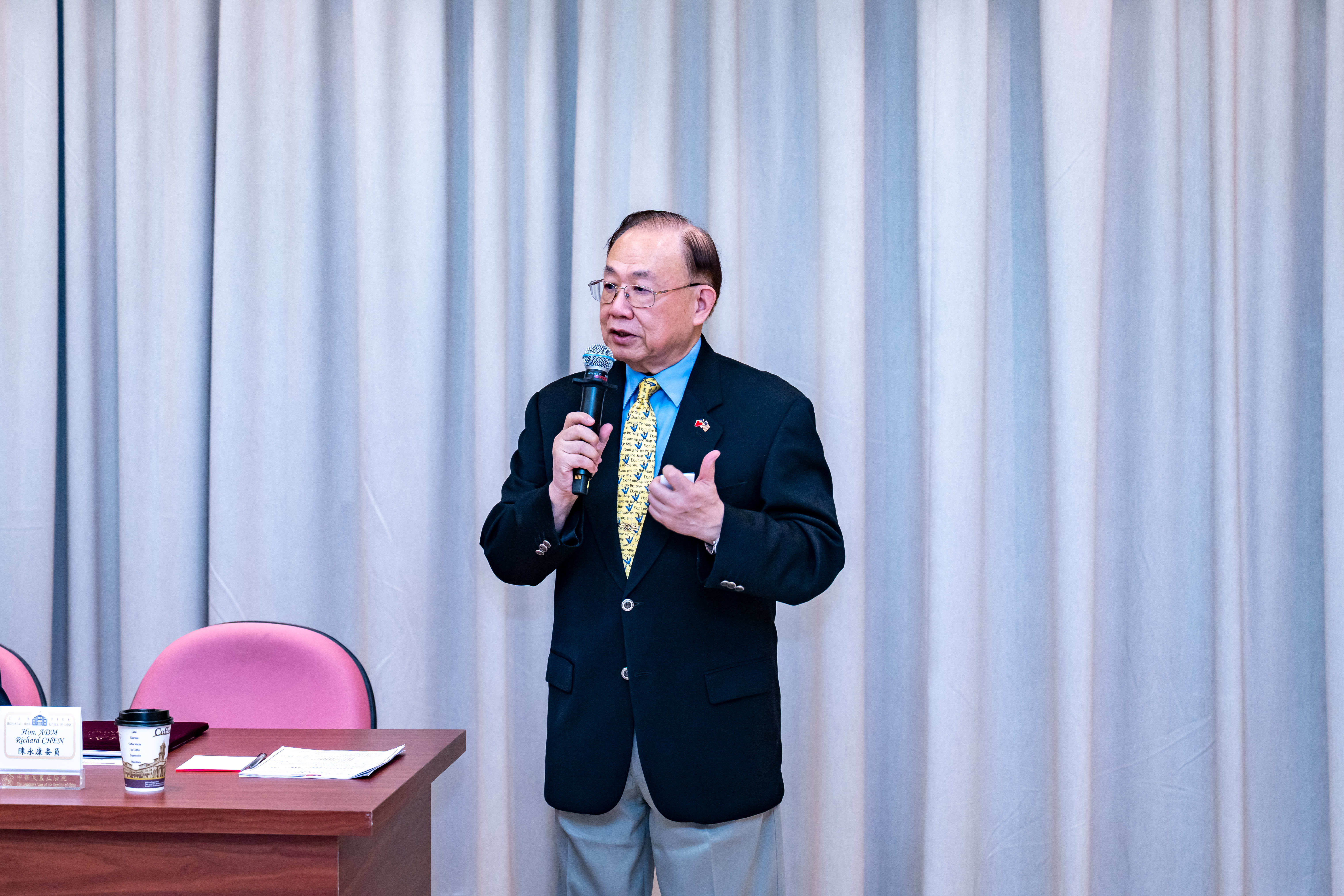
Legislator Chen Yeong-Kang first welcomed the faculty and students from the Georgia Institute of Technology and briefly introduced his 40 years of military service, which included serving as Vice Minister of National Defense for Policy. He noted that all the legislators attending the meeting were legislators-at-large serving on different committees based on their respective areas of expertise. He welcomed the delegation to raise questions and engage in in-depth exchanges on topics including technology, national defense, and international politics.
Professor Lin thanked the Legislative Yuan for arranging the exchange and introduced the Georgia Institute of Technology’s East Asia Study Abroad Program to the attending legislators. Centered on the theme of “geopolitical tensions and societal resilience,” the program seeks to gain a better understanding of Taiwan’s policy thinking on national defense, security, technology, and societal resilience through a visit to the Legislative Yuan.
He noted that, as the Legislative Yuan represents Taiwan’s diverse public opinion, exchanges with legislators from different backgrounds would help students gain a more comprehensive understanding of Taiwan’s democracy, its political system, societal resilience, and the security landscape in the Indo-Pacific, making the study visit more meaningful.
Regarding national defense issues, Legislator Chen Yeong-Kang said that enhancing defense capabilities requires both strategic planning and resource allocation. In addition to upgrading weapons and equipment, he added, greater attention should be paid to battlefield medicine, artificial intelligence (AI), systems integration, and interagency coordination. He further noted that talent development is a key foundation of national security, and that the government should increase investment in education and encourage young people to pursue advanced studies overseas.
Legislator Chen Ching-Hui said that, with a professional background in obstetrics and gynecology and reproductive medicine, she currently focuses primarily on population policy, medical resilience, and food safety. Regarding Taiwan’s medical resilience, she said that attention should be given to energy security, healthcare personnel, and the supply of medicines. Legislator Chen Ching-Hui noted that Taiwan’s nursing shortage has affected healthcare capacity and suggested improving their salaries and working conditions to retain professional talent. She added that Taiwan should also strengthen its domestic pharmaceutical capabilities and enhance medicine supply capacity to further bolster the resilience of the healthcare system.
Legislator Ko said that he has long focused on AI, computer vision, energy, and technology policy. He noted that, as a major technological power, Taiwan should not only continue developing its semiconductor and AI industries, but also strengthen its technological self-reliance and resilience. Legislator Ko said that he welcomed the Legislative Yuan’s passage of the amendments to Article 36 of the Telecommunications Management Act, which opened the way for the development of low-Earth orbit satellite communication services. He expressed hope that this would further improve backup communications mechanisms and enhance Taiwan’s overall resilience.
Legislator Niu emphasized that, in the face of the restructuring of the international order and changes in cross-Strait situation, Taiwan should respond to the global situation with a pragmatic and rational approach, while taking into account national security, economic development, and regional stability. He said Taiwan should continue to deepen cooperation with democratic partners such as the United States while maintaining channels of communication across the Taiwan Strait, reducing the risk of conflict and creating greater strategic space on the premise of safeguarding national interests and security. Legislator Niu noted that building societal resilience requires forging social consensus, and that major policies concerning national defense and foreign affairs should be advanced through rational dialogue and cross-party cooperation to promote policies conducive to the country’s long-term development and continuously strengthen Taiwan’s overall resilience and competitiveness.
Vice President Chiang subsequently arrived at the venue and first extended a warm welcome to the delegation. He noted that Taiwan attaches great importance to security and resilience issues. He added that although political parties across the aisle hold different positions on certain policies, they share a high degree of consensus on safeguarding national security, promoting peace and stability across the Taiwan Strait, and deepening regional cooperation. He also mentioned that in addition to continuously strengthening its self-defense capabilities, Taiwan is actively deepening cooperation with the U.S., Europe, and countries across the Indo-Pacific.
Vice President Chiang further emphasized that although Taiwan is unable to participate in the United Nations and certain international security dialogue mechanisms, as an important member of the global semiconductor supply chain, it should actively participate in international and regional security dialogues to jointly enhance supply chain resilience and promote global security cooperation. He added that the Legislative Yuan will continue to deepen exchanges with democratic partners through parliamentary diplomacy and enhance the international community’s understanding of Taiwan’s democratic system and societal resilience. Vice President Chiang expressed hope that the two sides would continue to deepen their interactions, jointly promote regional peace and prosperity, and wished the delegation a successful and fruitful visit to Taiwan.
The two sides subsequently held in-depth discussions on nuclear energy policy, the geopolitical situation involving the U.S., China, and Taiwan, technological development, and the situation in Hong Kong. The meeting lasted approximately one hour and was held in a warm and cordial atmosphere. Following the exchange of commemorative gifts and a group photo, the meeting concluded successfully. (2026/07/21)