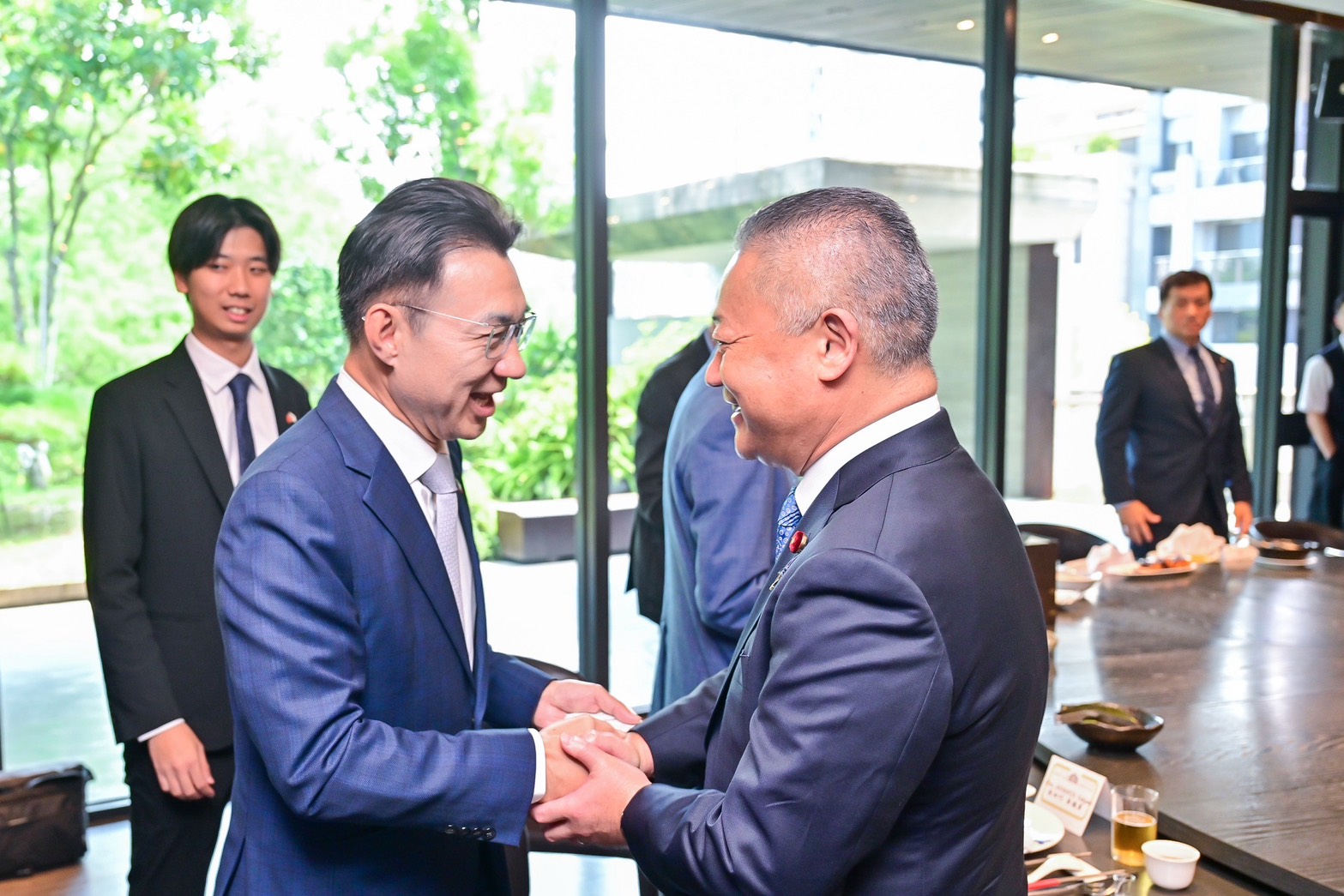
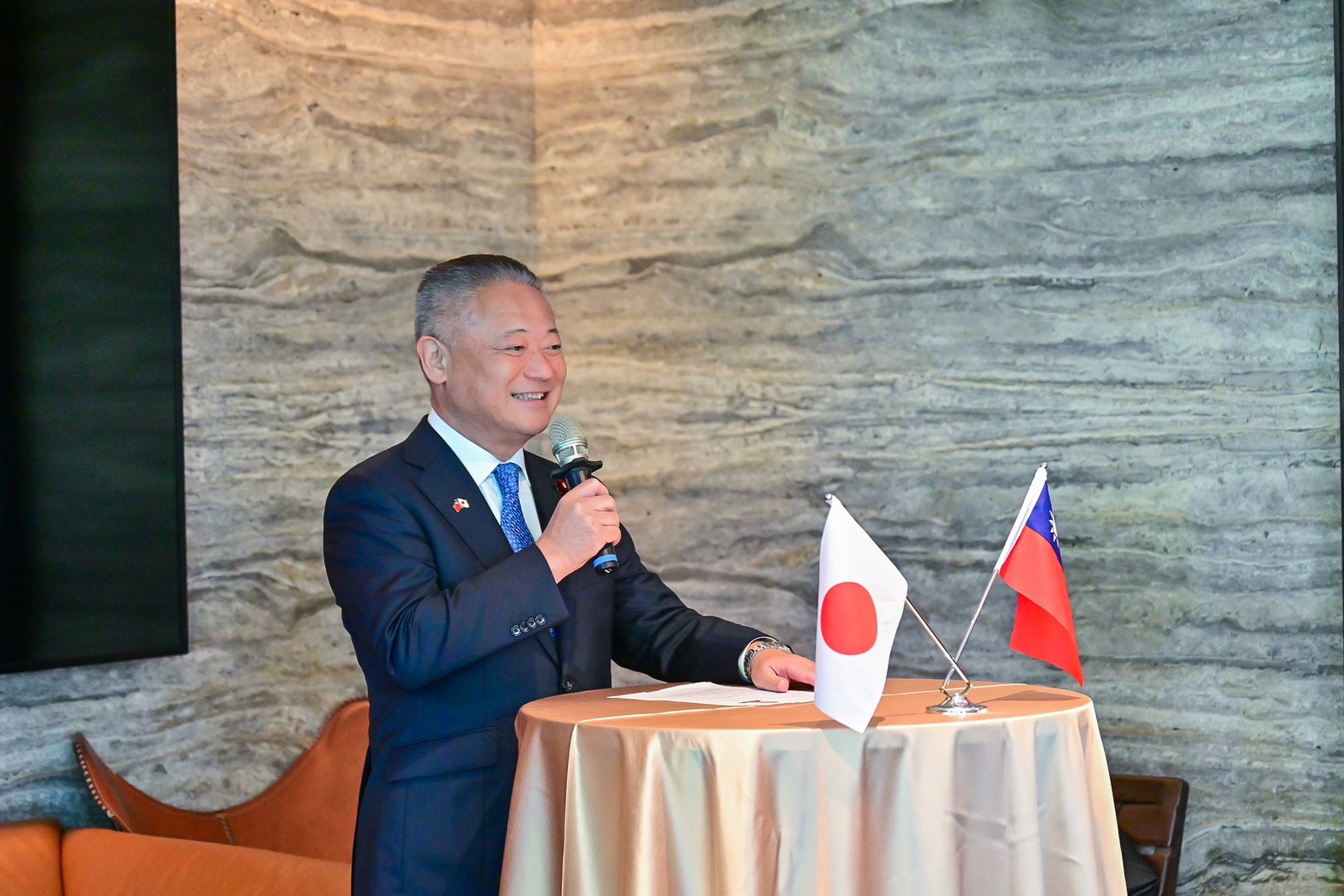
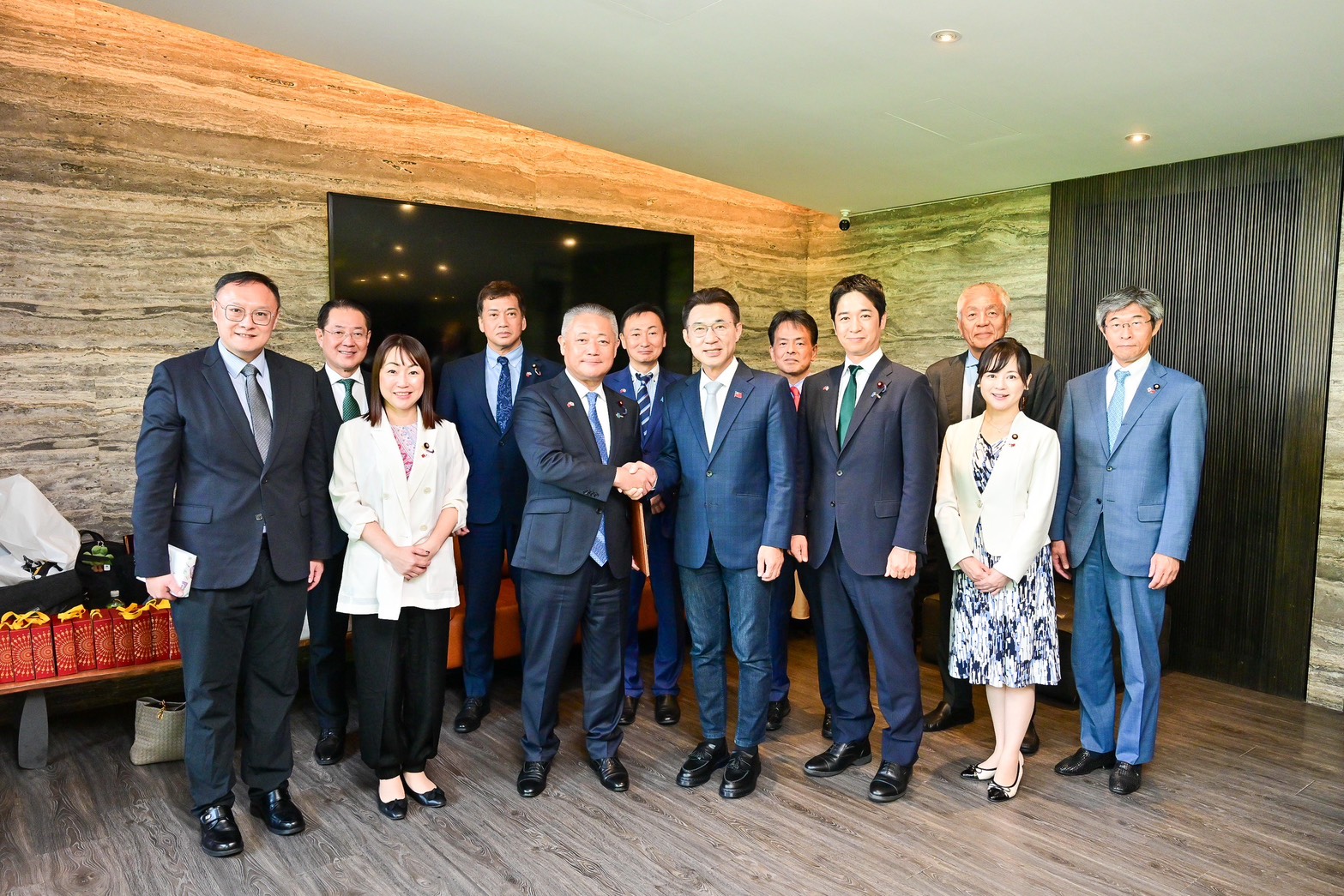
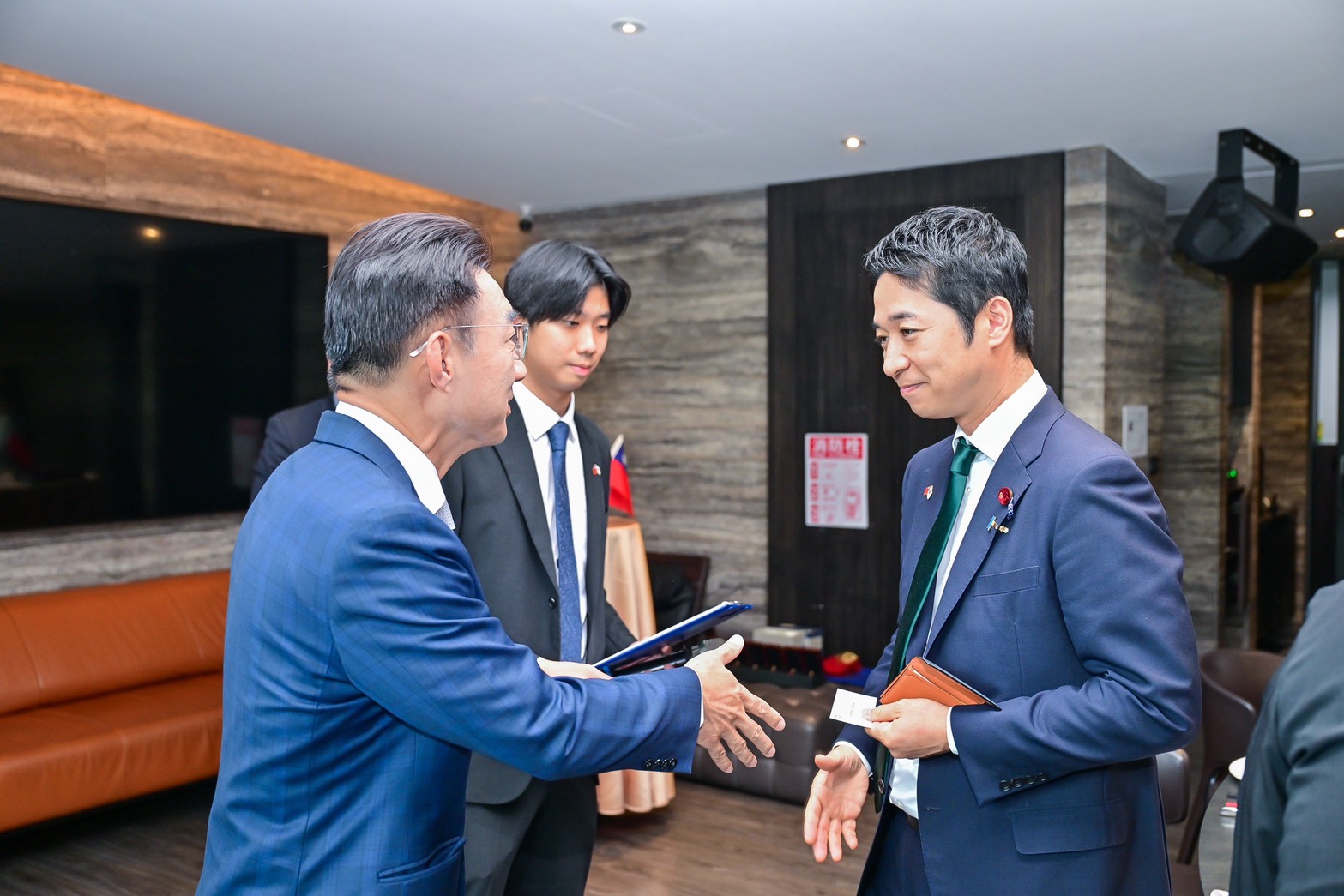
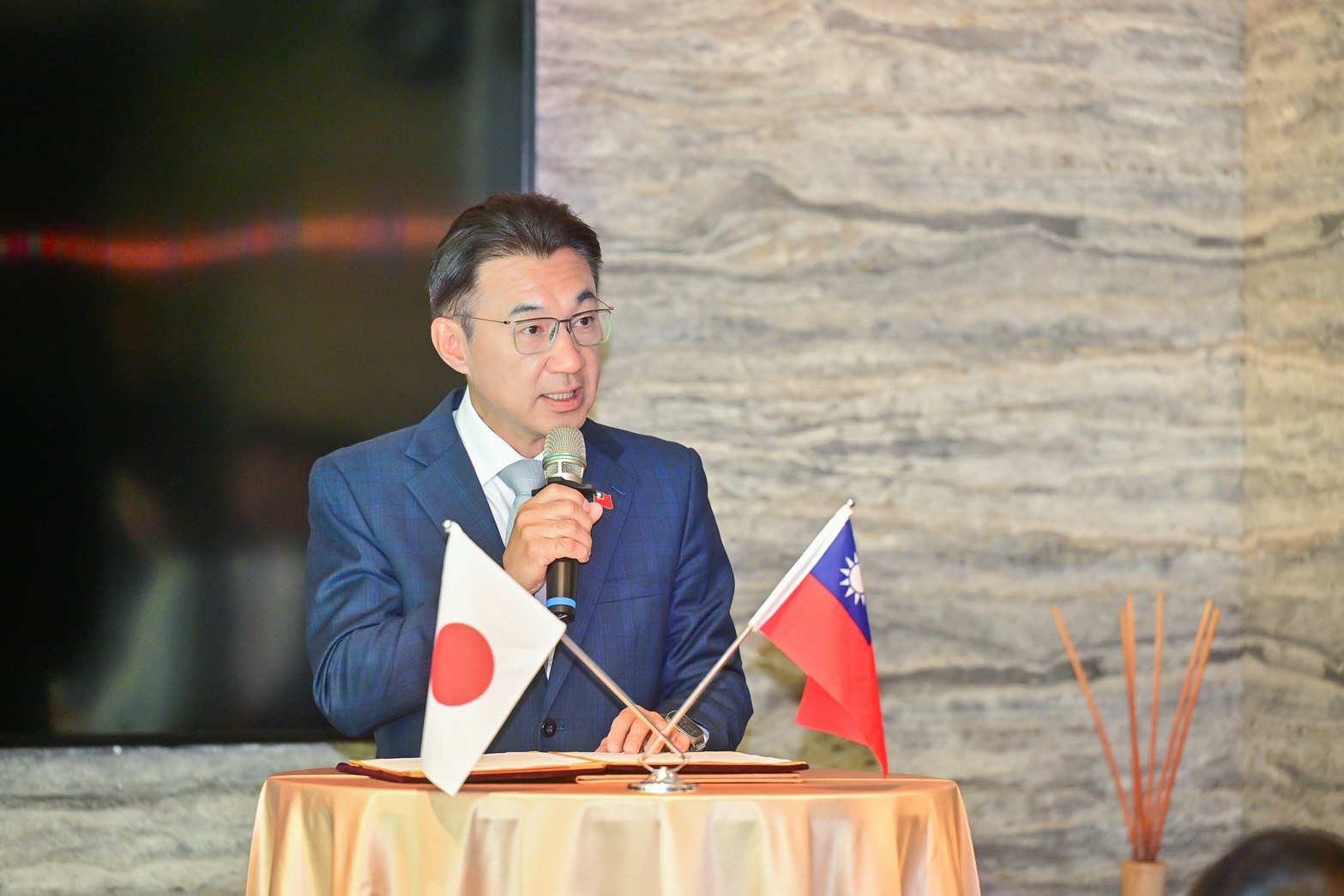
Vice President Dr. Johnny C. Chiang (江啟臣) of the Legislative Yuan hosted a luncheon in Taichung at noon today (September 9) in honor of Representative Baba Nobuyuki and the delegation from the Japan Innovation Party - Republic of China (Taiwan) Friendship Discussion Group. Cheng Chao-Hsin, Deputy Mayor of Taichung, also attended the event.
In his opening remarks, on behalf of the Legislative Yuan and its President Daniel K.Y. Han (韓國瑜), Vice President Chiang extended a sincere welcome to Representative Baba, Co-leader Fujita Fumitake of the Japan Innovation Party (JIP), and members of the JIP delegation. Regarding the recent earthquake in the Kumamoto region, Vice President Chiang conveyed his heartfelt concern and sympathy to those affected by the earthquake on behalf of the people of Taiwan. He emphasized that Taiwan and Japan are both prone to earthquakes and other natural disasters, and that whenever one side faces hardship, the other always extends timely sympathy and support, attesting to the sincere and profound friendship between Taiwan and Japan.
Vice President Chiang recalled that he and Representative Baba have known each other for many years and that he was warmly received by Representative Baba when he led a delegation to Tokyo for meetings of the Asian-Pacific Parliamentarians’ Union (APPU) in March 2024. He noted that two weeks ago, he once again led a 14-member cross-party delegation to Tokyo to attend the APPU General Assembly, during which he also met and exchanged views with Diet Member Ishii Megumi, who was present at the luncheon. He remarked that hosting old friends in his hometown of Taichung felt less like an occasion for parliamentary diplomacy and more like welcoming friends into his home. Vice President Chiang expressed gratitude to the JIP for its longstanding support for Taiwan’s participation in the World Health Assembly (WHA), its attention to Taiwan’s accession to the Comprehensive and Progressive Agreement for Trans-Pacific Partnership (CPTPP), and its continued efforts to promote exchanges between Taiwan and Japan across a wide range of fields.
When talking about the relationship between Taichung and Osaka, Vice President Chiang noted that although neither city is a national capital, both are important industrial and transportation hubs, with robust manufacturing foundations, vibrant small and medium-sized enterprises, and a bold spirit of innovation. He highlighted that Taichung’s strengths lie in precision machinery, machine tools, aerospace, bicycles, and smart manufacturing, while Osaka and the Kansai region have strong capabilities in manufacturing and technological R&D. In light of the advances in artificial intelligence (AI), smart manufacturing, and the restructuring of global supply chains, he expressed the hope of facilitating more exchanges between businesses, combining Taiwan’s manufacturing strengths with Japan’s technological innovation to create new opportunities for development.
In terms of urban governance and people-to-people exchanges, Vice President Chiang stated that Taichung and Osaka face common challenges in transportation, population aging, energy, net-zero transition, and urban digitalization. He stressed that the two cities can share experiences in areas such as smart transportation, AI applications in urban governance, and disaster resilience in the future. He also looked forward to closer people-to-people ties with more exchanges among young people, startups, and business professionals, as well as in tourism, culture, sports, and civil society. Vice President Chiang underscored that enduring friendship depends on close connections between cities, industries, and people. He hoped this visit would serve as a new starting point for Taichung and Osaka to advance from mutual amity to shared development.
In his remarks, Representative Baba thanked Vice President Chiang for his invitation and warm hospitality. In response to Vice President Chiang’s expression of sympathy for those affected by the Kumamoto earthquake, he noted that whenever Japan experiences earthquakes or other natural disasters, Taiwan is always swift to convey its concern and support to the Japanese people. He affirmed that the people of Japan have been deeply moved by such genuine friendship.
Representative Baba recalled that he and Vice President Chiang have maintained exchanges since 2017 and that they met again when Vice President Chiang led a delegation to Tokyo in 2024, reflecting the strong friendship between them. Representative Baba further remarked that the world is gradually entering an era in which local governments draw on their distinctive characteristics and strengths to engage in cooperation and exchanges with one another. He said that this was his first visit to Taichung and he was deeply impressed by its cleanliness, modernity, and unique urban qualities. Representative Baba also mentioned that approximately 170 sister-city or friendship-city relationships have been established between local governments in Taiwan and Japan. He looked forward to expanding cooperation among local governments and jointly building mutually beneficial, win-win partnerships in addition to increasing exchanges at the national level.
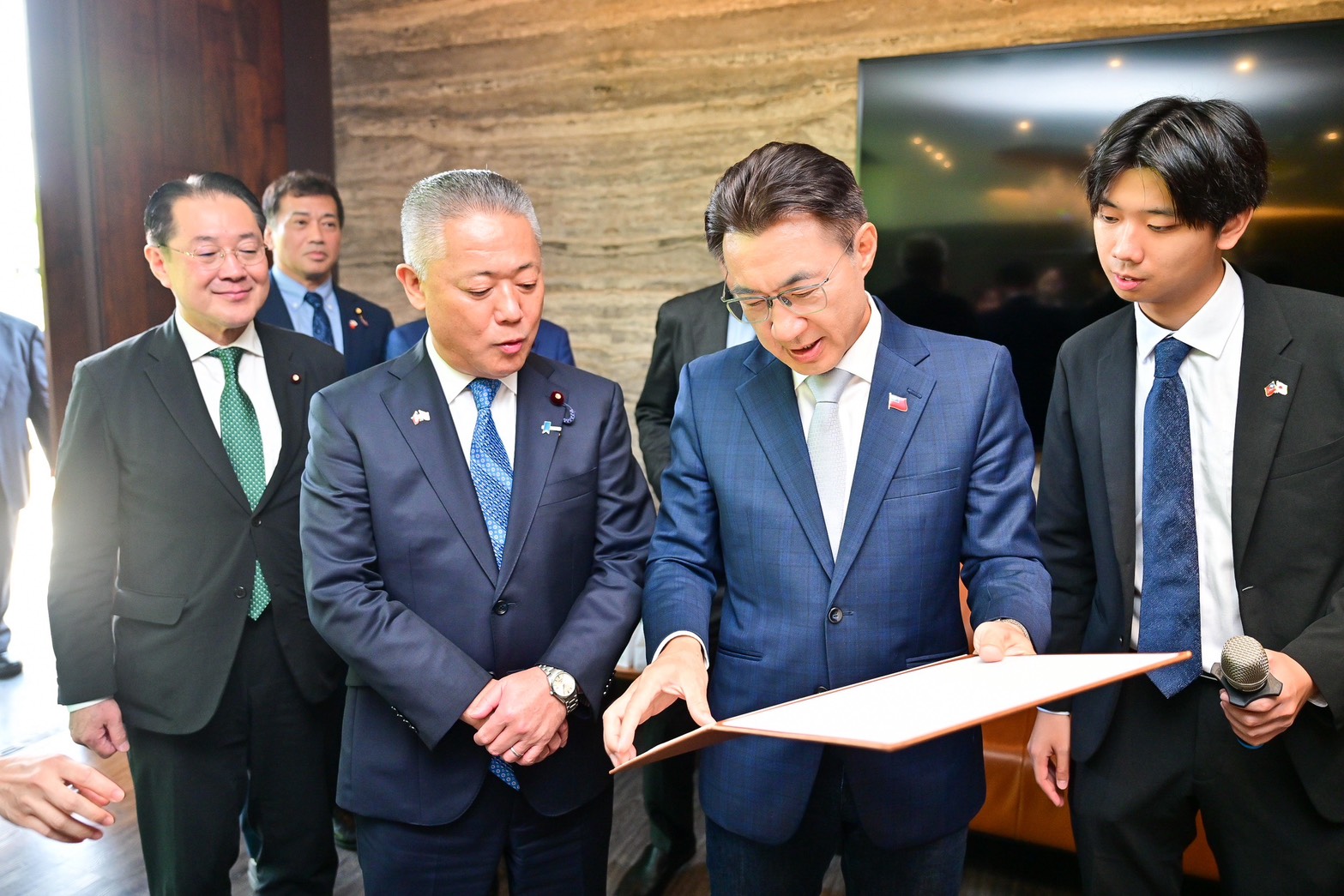
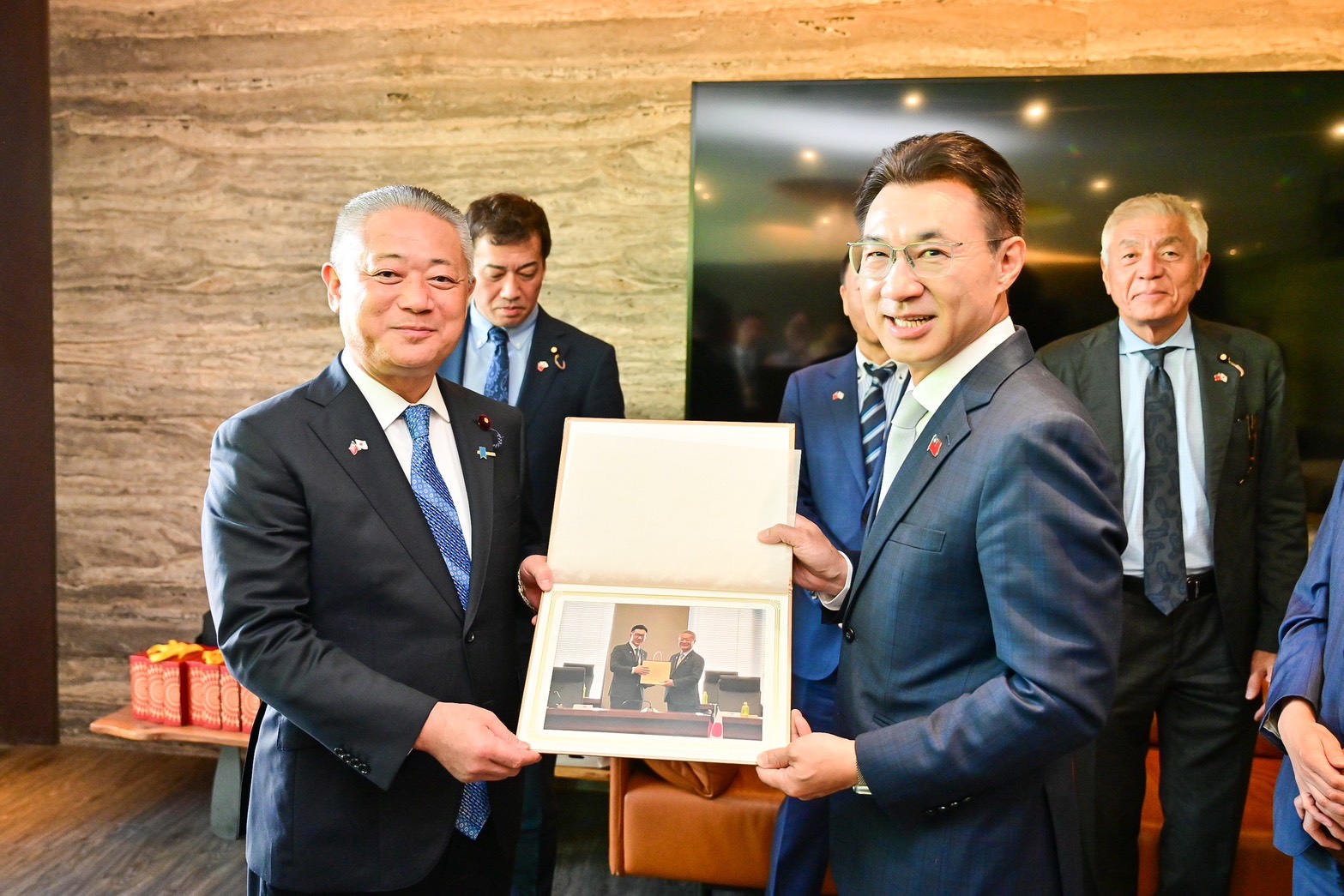
During the luncheon, both sides had in-depth discussions on topics such as direct flights between Taiwan and Japan, urban development, and the sports industry. In closing, Vice President Chiang and the delegation exchanged commemorative gifts and took a group photograph. The luncheon lasted approximately 80 minutes and concluded in a warm and cordial atmosphere. (2026/09/09)