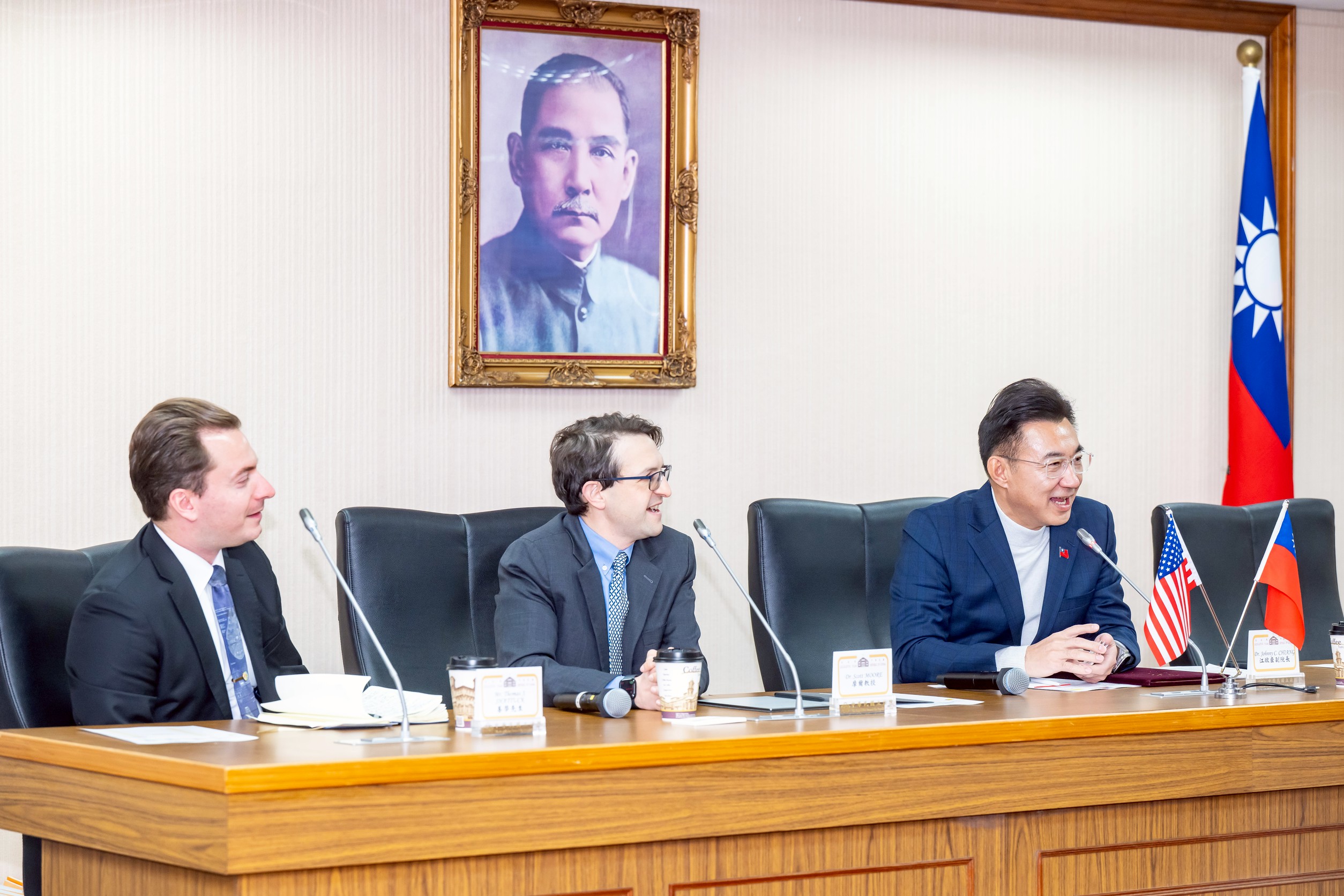
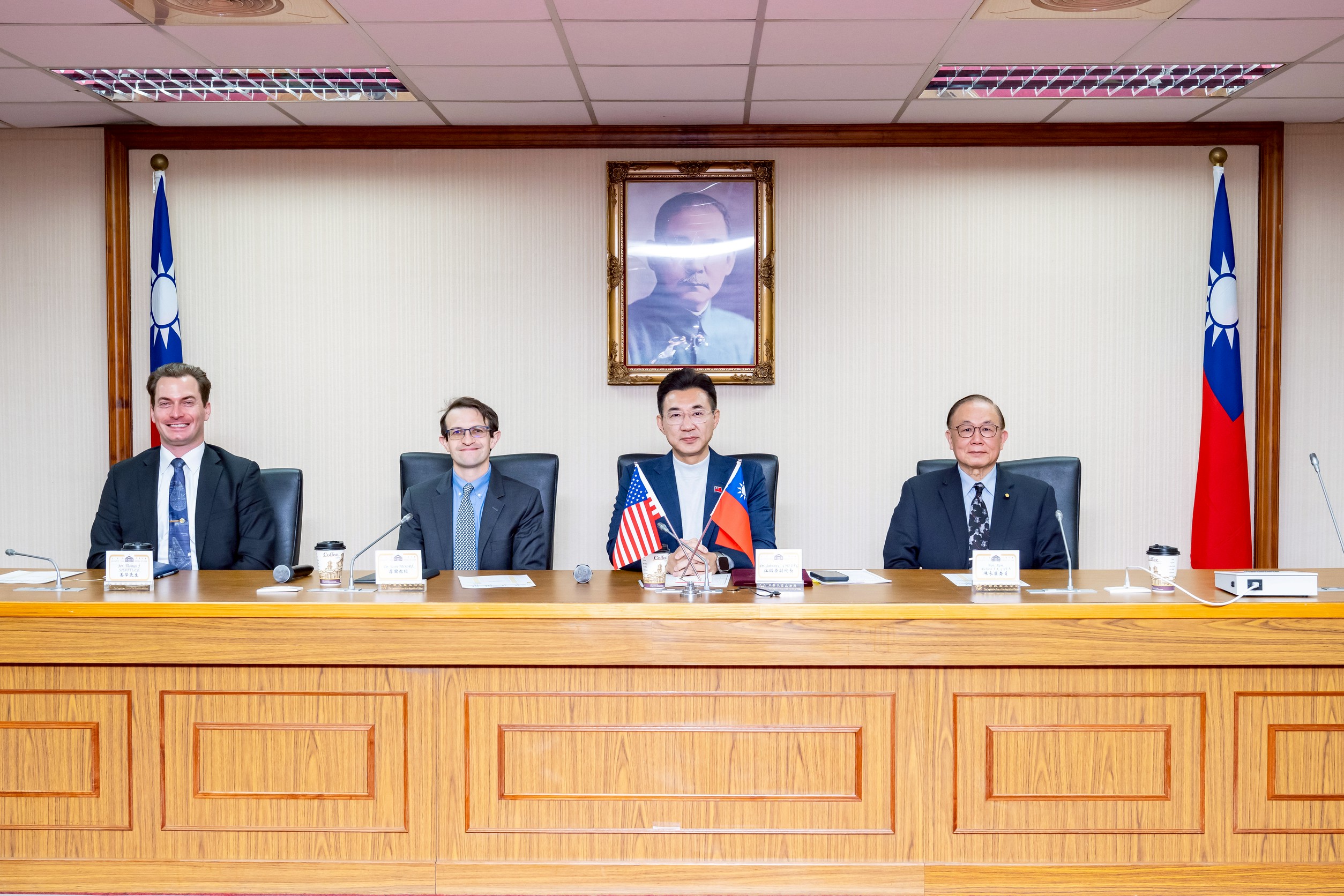
立法院江啟臣副院長於本(1月7)日中午在陳永康委員陪同下,接見「美國賓州大學研究中心師生團」。
At noon on January 7, Vice President Dr. Johnny C. Chiang (江啟臣) of the Legislative Yuan, accompanied by KMT Legislator Adm. Chen Yeong-Kang, received a delegation of faculty and students from the University of Pennsylvania’s research center.
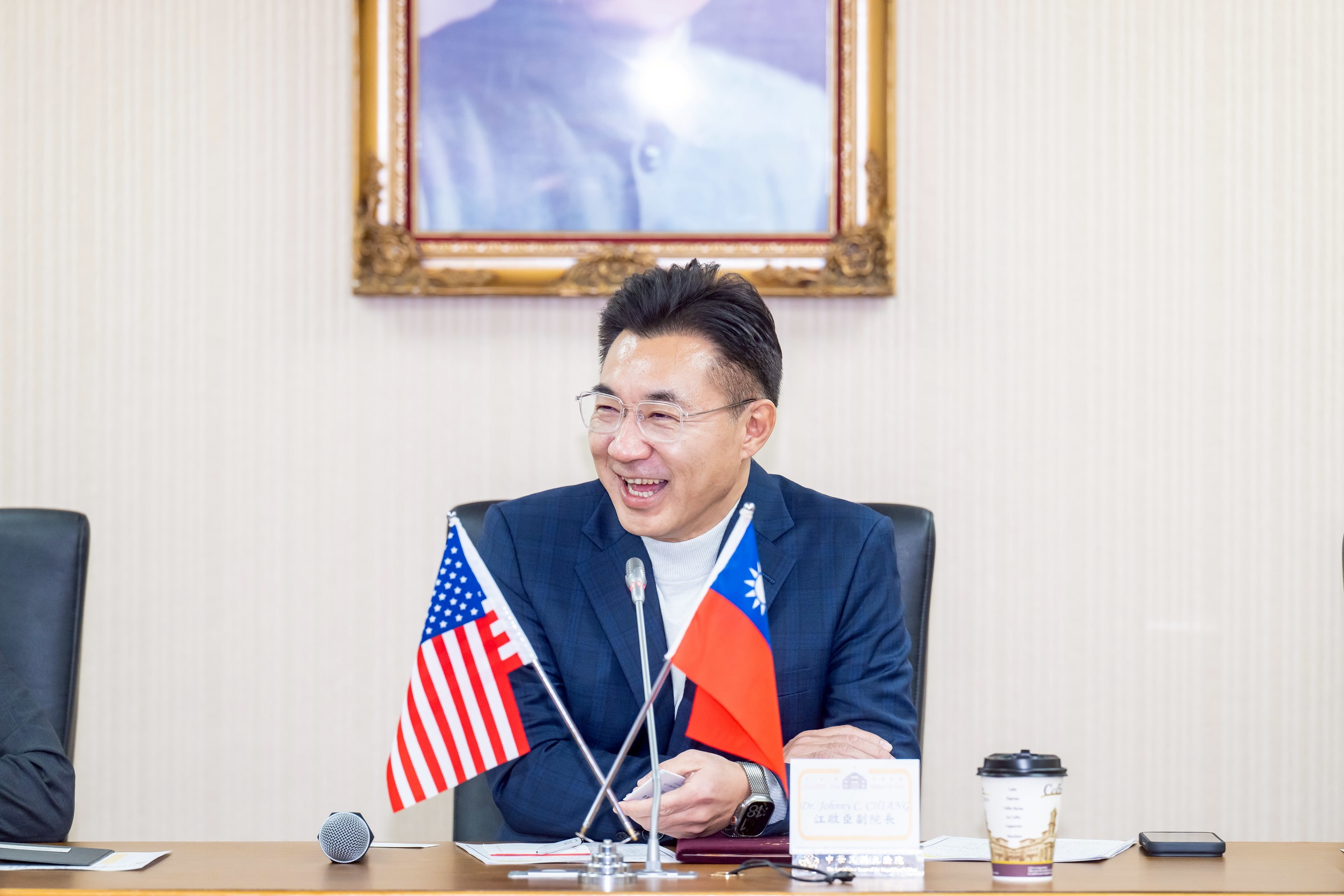
陳永康委員首先向訪團簡要說明台灣的戰略地位,以及當前兩岸情勢與區域關係的整體脈絡。隨後,由江副院長致詞,歡迎「美國賓州大學研究中心師生團」蒞臨立法院交流,並提及自己曾於美國匹茲堡大學(University of Pittsburgh)取得碩士學位,與賓州大學素有淵源,很高興今日在此接待訪團。
Legislator Chen first provided the delegation with a brief overview of Taiwan’s strategic position, as well as the broader context of current cross-strait relations and regional dynamics. Vice President Chiang then delivered welcoming remarks, expressing his honor in receiving the delegation from the University of Pennsylvania’s research center to the Legislative Yuan. Vice President Chiang noted that he had earned his master’s degree from the University of Pittsburgh, which gave him a long-standing connection with the University of Pennsylvania, and said he was delighted to host the delegation on this occasion.
江副院長指出,第11屆立法院呈現「三黨不過半」的政治格局,行政權由民進黨執掌,國會席次以國民黨居多,另有新成立的民眾黨共同參與,展現出台灣民主政治多元而活絡的樣貌。他進一步表示,儘管三黨在部分內政議題上立場不同、辯論熱烈,但在維護台灣對外關係與確保國家安全等關鍵議題上,朝野始終展現高度共識,充分體現民主制度的成熟與韌性。
Vice President Chiang pointed out that the 11th Legislative Yuan reflects a political landscape in which no single party holds an outright majority. He said that while the executive branch is led by the Democratic Progressive Party (DPP), the Kuomintang (KMT) holds the largest number of seats in the legislature, alongside the newly established Taiwan People’s Party (TPP), together demonstrating the diversity and vitality of Taiwan’s democratic politics. He further noted that although the three parties may differ and engage in vigorous debate on certain domestic issues, they consistently demonstrate a high degree of consensus on key matters such as safeguarding Taiwan’s external relations and ensuring national security, fully reflecting the maturity and resilience of Taiwan’s democratic system.
江副院長強調,台灣作為亞洲民主的重要典範,其政治發展與治理動態長期受到國際社會關注。他勉勵在場學生返美後持續關心台灣相關議題,並表示一個堅定追求並捍衛民主與自由價值的台灣,值得國際學界長期且深入的研究與探討。
Vice President Chiang emphasized that Taiwan, as a leading example of democracy in Asia, has long drawn international attention for its political development and governance. He encouraged the students to continue following issues related to Taiwan after returning to the United States, adding that a Taiwan steadfast in its pursuit and defense of democratic values and freedom is deserving of sustained, in-depth study by the international academic community.
交流過程,訪賓詢及我國國防預算編列與執行情形。陳永康委員表示,政府除應重視武器等硬體裝備的採購,更須強化訓練、教育等操作與運用層面,透過完善教育訓練體系及建構後勤維修能量,全面提升國軍整體防衛與作戰能力。
During the exchange, members of the delegation inquired about the planning and implementation of Taiwan’s defense budget. Legislator Chen responded that, in addition to prioritizing the procurement of hardware such as weapons systems, the government must also strengthen training, education, as well as operational and application capabilities. He highlighted that by improving its training systems and building robust logistics and maintenance capacities, Taiwan could comprehensively enhance the overall defensive and combat readiness of its armed forces.
江副院長另應詢表示,台灣能源供應九成以上仰賴進口,電力來源亦有約八成來自火力發電,顯示能源結構高度集中。面對可能發生的軍事封鎖或區域情勢動盪,能源供給體系仍存脆弱環節。儘管政府正推動能源轉型,積極提高多元能源使用比例,但能源韌性建構仍是當前亟須持續強化的重要課題。
In response to further questions, Vice President Chiang said that more than 90 percent of Taiwan’s energy supply relies on imports, with approximately 80 percent of its electricity generated from thermal power, indicating a highly concentrated energy portfolio. He noted that in the face of potential military blockades or regional instability, vulnerabilities remain within the energy supply system. Vice President Chiang added that while the government is actively promoting energy transition and increasing the use of diversified energy sources, strengthening energy resilience remains an urgent and ongoing priority.
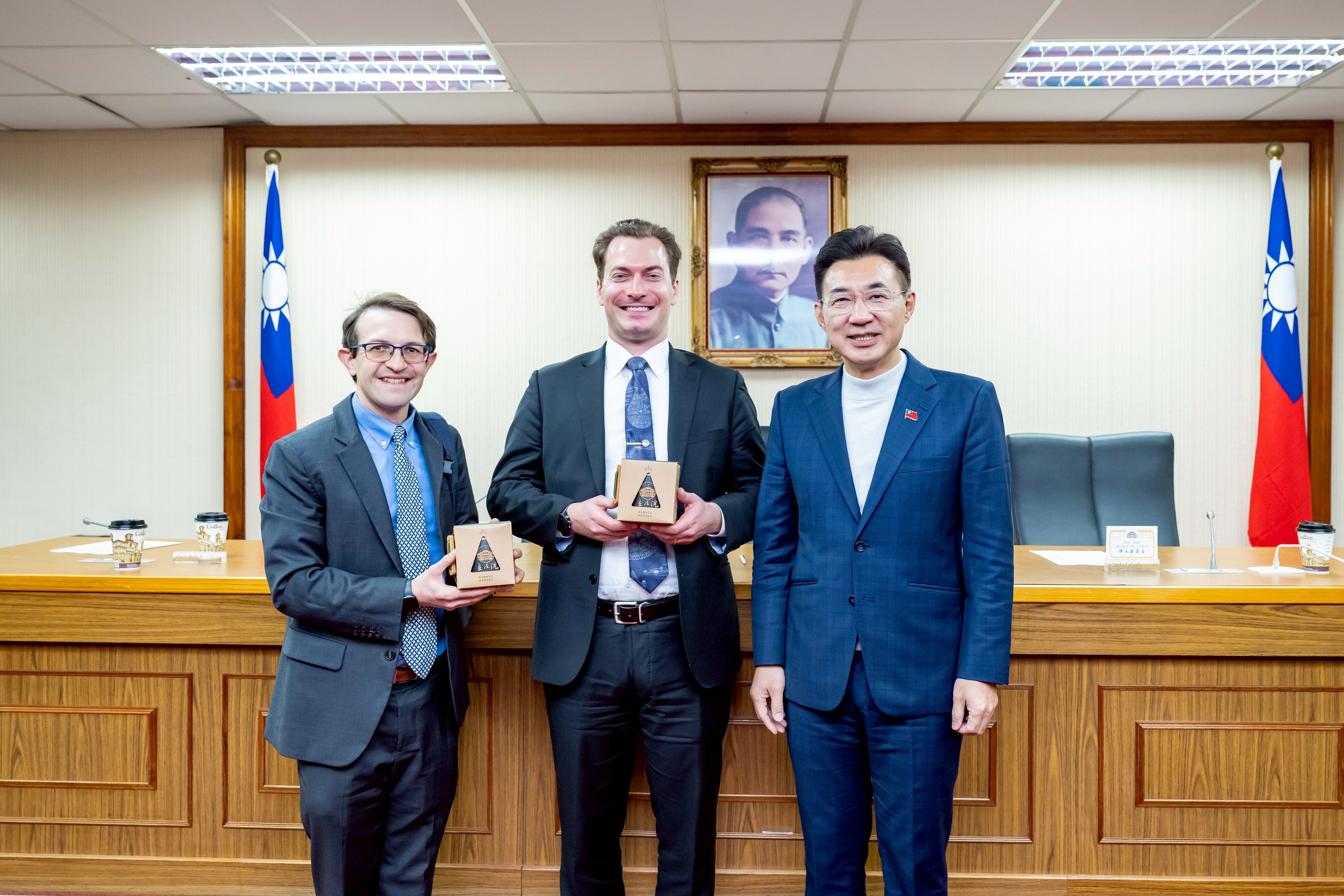
雙方續就兩岸關係、國防安全、能源轉型、台美關係及現今國際局勢等議題深入交換意見,副院長最後歡迎訪賓未來再度來訪,並鼓勵團員到台中等其他城市參訪,親身體驗台灣豐富而動人的地方人文之美。會面歷時約一小時,氣氛熱絡坦誠,在雙方互贈紀念品及合影後圓滿結束。(2026/01/07)
The two sides then engaged in in-depth discussions on cross-strait relations, national defense and security, energy transition, Taiwan–U.S. relations, and the current international situation. Vice President Chiang concluded by welcoming the delegation to visit again in the future and encouraged members to travel to Taichung and other cities to experience firsthand Taiwan’s rich and vibrant local culture. The meeting lasted approximately one hour in a warm and candid atmosphere and concluded successfully with both sides exchanging commemorative gifts and taking a group photo. (2026/01/07)